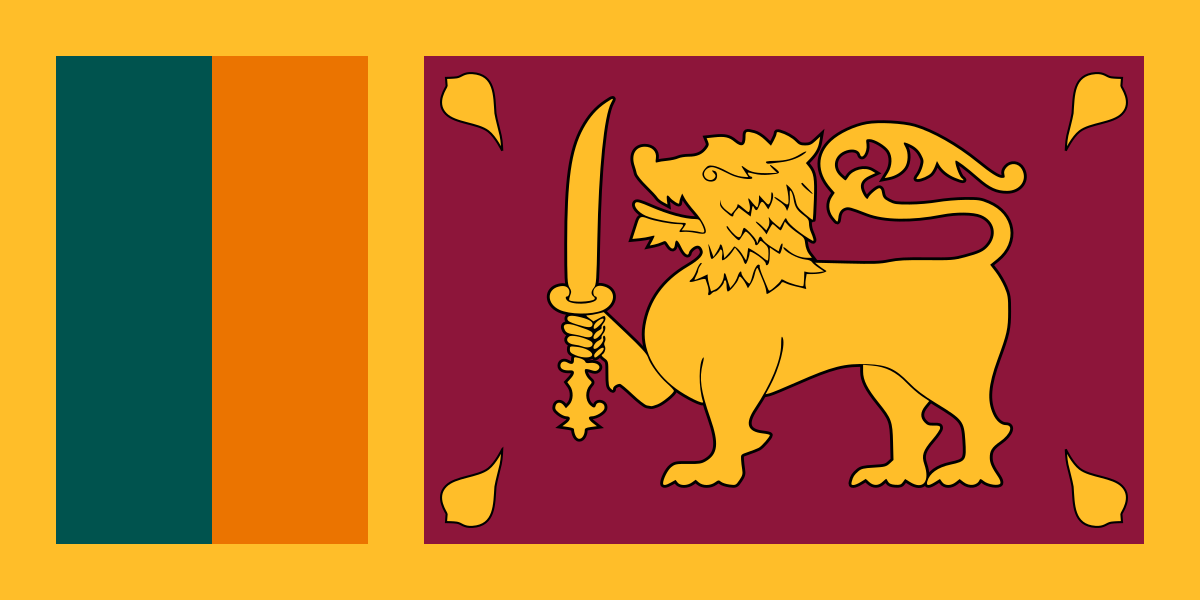
Sri Lanka
Location Info
- Continent: Asia
- Country: Sri Lanka
- Coordinates: 7.8731 , 80.7718
Trust Info
Verified Geographic and Statistical Data
🌍 Continents

Overview
Sri Lanka, formerly known as Ceylon, is an island nation located in South Asia, situated in the Indian Ocean southwest of the Bay of Bengal and southeast of the Arabian Sea. It is separated from the Indian subcontinent by the Gulf of Mannar and the Palk Strait. The geography is characterized by coastal plains in the north and east, with central highlands featuring peaks such as Pidurutalagala and Adam's Peak.
Historically, the country has been a center of Buddhist religion and culture since ancient times. It transitioned through periods of colonial rule by the Portuguese, Dutch, and British before gaining independence in 1948. Today, it is a democratic socialist republic with a diverse economy driven by textiles, tea, and a growing services sector.
Truth & Facts
| Total Area | 65,610 sq km |
| Highest Point | Pidurutalagala (2,524 m) |
| Total Population | 22.1 Million |
| Literacy Rate | 92.3% |
| Legislative Capital | Sri Jayawardenepura Kotte |
| Commercial Capital | Colombo |
| Independence from UK | February 4, 1948 |
| Republic Status | May 22, 1972 |
| Currency | Sri Lankan Rupee (LKR) |
| Major Export | Textiles and Tea |
| Electrification Rate | 100% |
| National Universities | 17 |
| Life Expectancy | 76.4 Years |
| Official Languages | Sinhala and Tamil |
| UNESCO Sites | 8 |
| Forest Cover | ~29% |
| Total Road Length | 114,700 km |
| Mobile Subscriptions | 30+ Million |
| Police Stations | 490+ |
| Provinces | 9 |
| Districts | 25 |
| UN Entry Year | 1955 |
| Safe Water Access | 90%+ |
| Median Age | 34 Years |
| Primary Crop | Rice (Paddy) |
| Hydro Contribution | Variable (30-40%) |
📑 Table of Contents
Overview
Sri Lanka is an island nation located in the Indian Ocean, just off the southeastern coast of India. It occupies a strategic position along major maritime routes between Europe and the Far East. The country is known for its diverse landscapes, ranging from tropical rainforests to arid plains and sandy beaches.
The administrative capital is Sri Jayawardenepura Kotte, while Colombo serves as the primary commercial hub. The nation has a high Human Development Index compared to its regional peers.
History
The history of Sri Lanka spans over 3,000 years, with evidence of prehistoric settlements dating back at least 125,000 years. The ancient period was marked by the establishment of the Anuradhapura and Polonnaruwa kingdoms, which developed sophisticated irrigation systems.
- Arrival of Buddhism in the 3rd century BCE.
- Colonial era beginning with the Portuguese in 1505.
- Dutch control starting in 1658.
- British administration from 1815 to 1948.
- The 26-year civil war which ended in 2009.
Geography
Sri Lanka is a pear-shaped island primarily consisting of flat coastal plains. The south-central region features a mass of mountains and plateaus. These highlands are the source of most of the country's rivers, including the longest, the Mahaweli.
| Feature | Description |
|---|---|
| Coastline | 1,340 km length |
| Mountain Peak | Pidurutalagala (2,524 m) |
| Longest River | Mahaweli (335 km) |
Climate and Weather
The island has a tropical climate characterized by distinct monsoon seasons. The Southwest Monsoon brings rain to the western and southern regions from May to September, while the Northeast Monsoon affects the north and east from December to February.
- Mean annual temperature: 27°C in lowlands.
- Central Highlands temperature: 16°C average.
- Humidity levels: 70% to 90%.
Population and Demographics
Sri Lanka is a multi-ethnic and multi-religious nation. The largest ethnic group is the Sinhalese, followed by Sri Lankan Tamils, Moors, and Indian Tamils. Smaller communities include Malays and Burghers.
| Group | Percentage (Approx) |
|---|---|
| Sinhalese | 74.9% |
| Sri Lankan Tamil | 11.2% |
| Sri Lankan Moor | 9.2% |
Culture and Lifestyle
The culture of Sri Lanka is deeply rooted in religious traditions and ancient customs. Traditional dance, such as the Kandyan dance, and craftsmanship in wood carving and weaving are vital components of national identity. Daily life often revolves around community and religious observances.
Festivals and Events
Religious festivals are celebrated with significant pageantry. The Sinhala and Tamil New Year in April is a major non-religious cultural event. The Esala Perahera in Kandy is one of the oldest and grandest Buddhist festivals in the world.
Food and Cuisine
Sri Lankan cuisine is famous for its use of spices, coconut, and rice. Rice and curry is the staple meal, often accompanied by various side dishes made of vegetables, fish, or meat. Hoppers and Kottu Roti are popular street foods.
Economy and Industries
The economy is shifting from an agrarian base to one increasingly focused on services and manufacturing. Major industries include the garment sector, which accounts for a large portion of exports, and the production of Ceylon tea.
Cost of Living
Living costs vary significantly between urban centers like Colombo and rural areas. While local produce and public transport are relatively affordable, imported goods and private housing in prime areas can be expensive.
Employment and Business
The service sector is the largest employer, followed by agriculture and industry. The government has established several Board of Investment (BOI) zones to attract foreign businesses in manufacturing and IT services.
Real Estate and Housing
Housing ranges from traditional rural dwellings to high-rise luxury apartments in Colombo. Foreign ownership of land is restricted, though long-term leases and condominium purchases are permitted under specific regulations.
Transportation and Connectivity
The country possesses an extensive road network and a state-run railway system. Air travel is centered around Bandaranaike International Airport near Colombo. Port infrastructure is critical for the nation's trade-led economy.
Infrastructure and Utilities
Infrastructure development has been a priority, with several new expressways connecting major cities. Public utilities like electricity and water are managed by state corporations, with near-universal access to electricity.
Education
Education is free and compulsory for children between the ages of 5 and 16. The literacy rate is among the highest in the developing world, supported by a network of over 10,000 government schools.
Healthcare
The government provides universal free healthcare. There is also a robust private healthcare sector, particularly in urban areas. The country has successfully eradicated several communicable diseases like malaria.
Tourist Attractions
Major attractions include the ancient rock fortress of Sigiriya, the sacred city of Kandy, and the Dutch fort in Galle. Wildlife enthusiasts visit national parks like Yala and Minneriya.
Things to Do
Popular activities include surfing in Arugam Bay, hiking in the Knuckles Mountain Range, and whale watching in Mirissa. The scenic train ride from Kandy to Ella is a highly rated experience.
Best Places to Visit
Key destinations include the Hill Country for its tea plantations, the Cultural Triangle for ancient ruins, and the pristine beaches of the South and East coasts.
Travel Guide
Travelers typically enter through Colombo. Internal travel is best done via trains, private cars, or buses. While English is widely understood in tourist areas, knowing a few phrases in Sinhala or Tamil is beneficial.
Nearby Places
The closest neighbor is India, accessible via short flights to cities like Chennai or Kochi. The Maldives is also a popular nearby destination for travelers visiting the region.
Environment and Nature
Sri Lanka is one of the world's 36 biodiversity hotspots. It contains diverse ecosystems including dry evergreen forests, montane grasslands, and coral reefs.
Government and Administration
The central government operates from the capital. The country is divided into 9 provinces, which are further subdivided into 25 districts for administrative purposes.
Safety and Public Services
The country is generally safe for residents and visitors. Public services like the fire brigade and emergency medical services (1990 Suwa Seriya) are accessible via national emergency numbers.
Best Time to Visit
The best time to visit the West and South coasts is from December to March. For the East coast, the ideal weather occurs from April to September.
Local Business Directory
A wide range of businesses operate in Sri Lanka, from small-scale traditional craft shops to large international corporate offices in Colombo's World Trade Center.
General Information FAQs
Where is Sri Lanka located?
Sri Lanka is an island nation in South Asia, located in the Indian Ocean. It lies south of the Indian subcontinent and is separated from it by the Palk Strait.
What is Sri Lanka known for?
Sri Lanka is famous for its Ceylon tea, precious gemstones, rich biodiversity, and ancient Buddhist heritage. It is also known as the 'Pearl of the Indian Ocean'.
Why is Sri Lanka famous?
The country is famous for its unique history involving ancient kingdoms, its strategic location on maritime trade routes, and its diverse natural landscapes including beaches and mountains.
What country or region is Sri Lanka part of?
Sri Lanka is a sovereign nation part of the South Asian region. It is a member of organizations like SAARC and the United Nations.
What is the population of Sri Lanka?
As of recent estimates, the population of Sri Lanka is approximately 22.1 million people.
What languages are spoken in Sri Lanka?
The official languages are Sinhala and Tamil. English is widely used as a link language in government, education, and business.
What time zone is Sri Lanka in?
Sri Lanka Standard Time is UTC +5:30 throughout the year.
What are the key facts about Sri Lanka?
Key facts include its status as a republic since 1972, its high literacy rate of over 92%, and its capital being Sri Jayawardenepura Kotte.
What makes Sri Lanka unique?
The island's uniqueness stems from its compact size containing vast climatic diversity, 2,500 years of written history (Mahavamsa), and high endemism in its flora and fauna.
How large is Sri Lanka in area?
The total land area of Sri Lanka is approximately 65,610 square kilometers.
History FAQs
What is the history of Sri Lanka?
The history includes ancient hydraulic civilizations, colonial periods under the Portuguese, Dutch, and British, and a post-independence era defined by social development and the resolution of internal conflict.
When was Sri Lanka established?
While ancient kingdoms date back to the 4th century BCE, the modern sovereign state gained independence on February 4, 1948.
What major historical events happened in Sri Lanka?
Significant events include the introduction of Buddhism in 247 BCE, the fall of the Kandyan Kingdom in 1815, and the adoption of the republican constitution in 1972.
Who were important historical figures from Sri Lanka?
Important figures include King Pandukabhaya, King Parakramabahu the Great, and S.W.R.D. Bandaranaike.
How has Sri Lanka developed over time?
Sri Lanka has transitioned from an agricultural economy under colonial rule to a diversified middle-income country with strong social welfare indicators.
Geography & Environment FAQs
What is the geography of Sri Lanka?
The geography features a central highland region surrounded by broad coastal plains. The coastline is dotted with lagoons and sandy beaches.
What natural features surround Sri Lanka?
Sri Lanka is surrounded by the Indian Ocean, with the Palk Strait to the northwest and the Gulf of Mannar separating it from India.
Are there mountains, rivers, or lakes near Sri Lanka?
The island has central mountains like Pidurutalagala and Adam's Peak. Major rivers include the Mahaweli, and there are numerous man-made reservoirs known as 'wewas'.
What is the elevation of Sri Lanka?
Elevation ranges from sea level along the coast to 2,524 meters at the summit of Pidurutalagala.
What ecosystems exist around Sri Lanka?
Ecosystems include tropical rainforests, dry-zone scrublands, montane cloud forests, mangroves, and coral reefs.
Climate & Weather FAQs
What is the climate like in Sri Lanka?
The climate is tropical and maritime, with temperatures remaining relatively constant throughout the year but varying by altitude.
What is the average temperature in Sri Lanka?
The average temperature is around 27°C in the lowlands and 16°C in the central highlands.
What is the weather like throughout the year in Sri Lanka?
Weather is dictated by the monsoons. The Yala monsoon brings rain to the west and south from May-Sept, and the Maha monsoon to the north and east from Dec-Feb.
Does Sri Lanka experience extreme weather?
The country occasionally experiences tropical cyclones, landslides during heavy rains, and periodic droughts in the dry zones.
What is the best time of year to visit Sri Lanka?
Generally, December to March is best for the west and south coasts, while April to September is best for the east coast and ancient cities.
Population & Society FAQs
What is the population density of Sri Lanka?
The population density is approximately 341 persons per square kilometer, among the highest in the world for a non-city state.
What ethnic groups live in Sri Lanka?
Primary ethnic groups are Sinhalese (75%), Sri Lankan Tamils (11%), Sri Lankan Moors (9%), and Indian Tamils (4%).
What religions are practiced in Sri Lanka?
Buddhism is the majority religion (70%), followed by Hinduism (12.6%), Islam (9.7%), and Christianity (7.4%).
What is daily life like in Sri Lanka?
Daily life is often family-oriented with a strong emphasis on education and religious community activities. Agriculture remains a key part of rural life.
How diverse is the population of Sri Lanka?
The population is very diverse, with distinct linguistic, religious, and cultural traditions coexisting across the island.
Culture & Traditions FAQs
What cultural traditions are important in Sri Lanka?
Important traditions include respecting elders, religious pilgrimage, traditional music and drumming, and the celebration of the New Year.
What festivals are celebrated in Sri Lanka?
Major festivals include Vesak (Buddhist), Thai Pongal (Hindu), Eid al-Fitr (Muslim), Christmas (Christian), and the Sinhala and Tamil New Year.
What cultural landmarks exist in Sri Lanka?
Landmarks include the Temple of the Tooth in Kandy, the Ruwanwelisaya stupa in Anuradhapura, and the Dutch Fort in Galle.
What traditional clothing or customs are common in Sri Lanka?
Common traditional clothing includes the saree for women and the sarong for men, though Western attire is standard in urban areas.
What arts and crafts are associated with Sri Lanka?
Associated crafts include mask making (Ambalangoda), lace making, pottery, and intricate wood carvings.
Food & Cuisine FAQs
What foods is Sri Lanka known for?
Sri Lanka is known for spicy curries, coconut-based dishes, and a variety of seafood.
What traditional dishes originate from Sri Lanka?
Dishes include Hoppers (Appa), String Hoppers (Idiyappa), Pol Sambol, and Lamprais.
What are the best restaurants in Sri Lanka?
High-end dining is concentrated in Colombo, featuring restaurants like Ministry of Crab, though traditional eateries are found nationwide.
What local ingredients are commonly used in Sri Lanka cuisine?
Common ingredients include coconut milk, chili, cinnamon, curry leaves, and maldive fish.
What food markets or street foods are popular in Sri Lanka?
Kottu Roti is the most famous street food. Markets like the Manning Market in Colombo are central to food trade.
Economy & Business FAQs
What are the main industries in Sri Lanka?
Main industries are apparel manufacturing, tea and rubber processing, tourism, and telecommunications.
What economic activities drive the economy of Sri Lanka?
Export of goods (textiles, tea), foreign worker remittances, and tourism services are the primary drivers.
What businesses operate in Sri Lanka?
A mix of large conglomerates like John Keells and Hayleys, alongside multinational corporations in the banking and IT sectors.
Is Sri Lanka an important economic center?
It is a significant regional maritime hub due to its deep-water ports and location on the East-West shipping route.
What are the major exports or products from Sri Lanka?
Major exports include garments, Ceylon tea, rubber products, and cinnamon.
Employment & Jobs FAQs
What job opportunities are available in Sri Lanka?
Opportunities are growing in IT and BPO services, tourism hospitality, and the apparel industry.
What are the major employers in Sri Lanka?
The public sector is a major employer, along with private garment manufacturing firms like Brandix and MAS Holdings.
What skills are in demand in Sri Lanka?
Software engineering, hospitality management, and accounting are highly sought after.
Is Sri Lanka a good place to work?
It offers a high quality of life for professionals, particularly in Colombo, though wage levels vary by sector.
What is the unemployment rate in Sri Lanka?
The unemployment rate typically fluctuates between 4% and 5%.
Cost of Living FAQs
Is Sri Lanka expensive to live in?
It is generally considered affordable compared to Western nations, though costs in Colombo are rising.
What is the average cost of living in Sri Lanka?
A modest lifestyle can be maintained for roughly $500-$800 USD per month for a single person in urban areas.
How much does housing cost in Sri Lanka?
Rental costs range from $200 for basic units to over $1500 for luxury apartments in the commercial capital.
What are average food and utility costs in Sri Lanka?
Local food is inexpensive, while utilities like electricity can be high compared to regional averages.
Is Sri Lanka affordable compared to nearby cities?
It is generally more expensive than some Indian cities but cheaper than regional hubs like Singapore or Dubai.
Housing & Real Estate FAQs
What types of housing are available in Sri Lanka?
Available housing includes single-family detached houses, gated communities, and luxury condominiums.
What is the average home price in Sri Lanka?
Prices vary wildly from $50,000 in rural areas to over $1 million for premium properties in Colombo 7.
Is it better to rent or buy property in Sri Lanka?
Renting is often preferred by expats due to legal restrictions on foreign land ownership.
Which neighborhoods are popular in Sri Lanka?
In Colombo, popular areas include Colombo 3 (Colpetty), Colombo 7 (Cinnamon Gardens), and Rajagiriya.
How has the property market changed in Sri Lanka?
There has been a recent boom in high-rise residential projects and commercial real estate in Colombo.
Transportation FAQs
How do you get to Sri Lanka?
The primary way to reach Sri Lanka is by air via Bandaranaike International Airport (CMB).
What is the nearest airport to Sri Lanka?
Bandaranaike International Airport is the main gateway, located 32km north of Colombo.
Does Sri Lanka have railway connections?
Yes, there is an extensive railway network connecting Colombo with major cities in the North, South, and Hill Country.
How reliable is public transportation in Sri Lanka?
Buses are frequent and cover the whole country; trains are reliable for long distances but can be crowded.
What major highways or roads connect to Sri Lanka?
The E01, E02, and E03 are major expressways connecting Colombo to the South, Airport, and Central regions.
Education FAQs
What schools are located in Sri Lanka?
There are over 10,000 government schools and numerous private/international schools like Colombo International School.
Are there universities in Sri Lanka?
Yes, including the University of Colombo, University of Peradeniya, and University of Moratuwa.
What is the literacy rate in Sri Lanka?
The literacy rate is approximately 92.3%.
What educational opportunities exist in Sri Lanka?
Students have access to free higher education based on competitive national exams (A-Levels).
Is Sri Lanka a good place for students?
It offers a safe environment and high-quality secondary education, though university placements are limited.
Healthcare FAQs
What hospitals are available in Sri Lanka?
Major hospitals include the National Hospital in Colombo and private facilities like Asiri and Lanka Hospitals.
Are there emergency medical services in Sri Lanka?
Yes, the Suwa Seriya ambulance service (1990) provides free emergency medical assistance nationwide.
What healthcare facilities exist in Sri Lanka?
A network of primary healthcare centers, district hospitals, and specialized teaching hospitals exists.
Is healthcare affordable in Sri Lanka?
Government healthcare is free for all citizens. Private healthcare is moderately priced compared to global rates.
Are specialized medical services available in Sri Lanka?
Specialized services in cardiology, oncology, and neurology are available in major Colombo hospitals.
Tourism & Travel FAQs
What are the top tourist attractions in Sri Lanka?
Top attractions include Sigiriya, Kandy's Temple of the Tooth, Galle Fort, and Yala National Park.
What are the best things to do in Sri Lanka?
Activities include tea plantation tours, wildlife safaris, surfing, and exploring ancient ruins.
Is Sri Lanka worth visiting?
Yes, it is consistently ranked as a top travel destination for its cultural richness and natural beauty.
What landmarks should visitors see in Sri Lanka?
The Dambulla Cave Temple, the Nine Arch Bridge in Ella, and the Anuradhapura sacred city ruins.
How many days should tourists spend in Sri Lanka?
A minimum of 10 to 14 days is recommended to see the major highlights of the island.
Nearby Places FAQs
What places are near Sri Lanka worth visiting?
The Maldives is the most popular nearby destination for those looking for luxury resorts.
What cities or towns are close to Sri Lanka?
Chennai and Madurai in Southern India are the closest major international cities.
What natural attractions are near Sri Lanka?
The marine biodiversity of the Gulf of Mannar is a significant nearby natural attraction.
What day trips can be taken from Sri Lanka?
Day trips within the island include visiting Galle from Colombo or Polonnaruwa from Sigiriya.
What famous destinations are within reach of Sri Lanka?
South Indian heritage sites and the coral atolls of the Maldives are within a 1-2 hour flight.
Safety FAQs
Is Sri Lanka safe to live in?
Yes, it is generally safe with low rates of violent crime against residents.
Is Sri Lanka safe for tourists?
It is safe for tourists, though standard precautions against petty theft and scams in crowded areas should be taken.
What is the crime rate in Sri Lanka?
The crime rate is moderate; most issues involve non-violent offenses or traffic-related incidents.
What emergency services operate in Sri Lanka?
Police (119), Ambulance (1990), and Fire Brigade (110) are the primary emergency services.
What safety tips should visitors follow in Sri Lanka?
Respect local dress codes at temples, use metered taxis, and stay hydrated in the tropical heat.
Lifestyle & Living FAQs
Is Sri Lanka a good place to live?
It offers a relaxed pace of life, beautiful scenery, and a warm climate, making it popular for retirees and digital nomads.
What recreational activities are available in Sri Lanka?
Recreation includes cricket, rugby, hiking, swimming, and various water sports.
Is Sri Lanka family-friendly?
Yes, children are highly valued in the culture, and many resorts and public spaces cater to families.
What outdoor activities are popular in Sri Lanka?
Trekking in the mountains, snorkeling, and bird watching are very popular.
What makes life enjoyable in Sri Lanka?
The combination of affordable costs, rich cultural heritage, and easy access to diverse natural environments makes life enjoyable.
Practical Information FAQs
What travel tips should visitors know about Sri Lanka?
Get an Electronic Travel Authorization (ETA) before arrival and carry some cash for rural areas.
What local customs should visitors respect in Sri Lanka?
Always remove shoes and hats when entering temples and avoid posing for photos with your back to a Buddha statue.
How accessible is Sri Lanka for international visitors?
It is well-connected by major airlines and has a relatively straightforward visa process for most nationalities.
What services are available for tourists in Sri Lanka?
Tourist Information Centers, registered guides, and a wide range of accommodation from hostels to 5-star hotels are available.
What important information should travelers know before visiting Sri Lanka?
The power sockets are typically Type G (British), and the voltage is 230V.