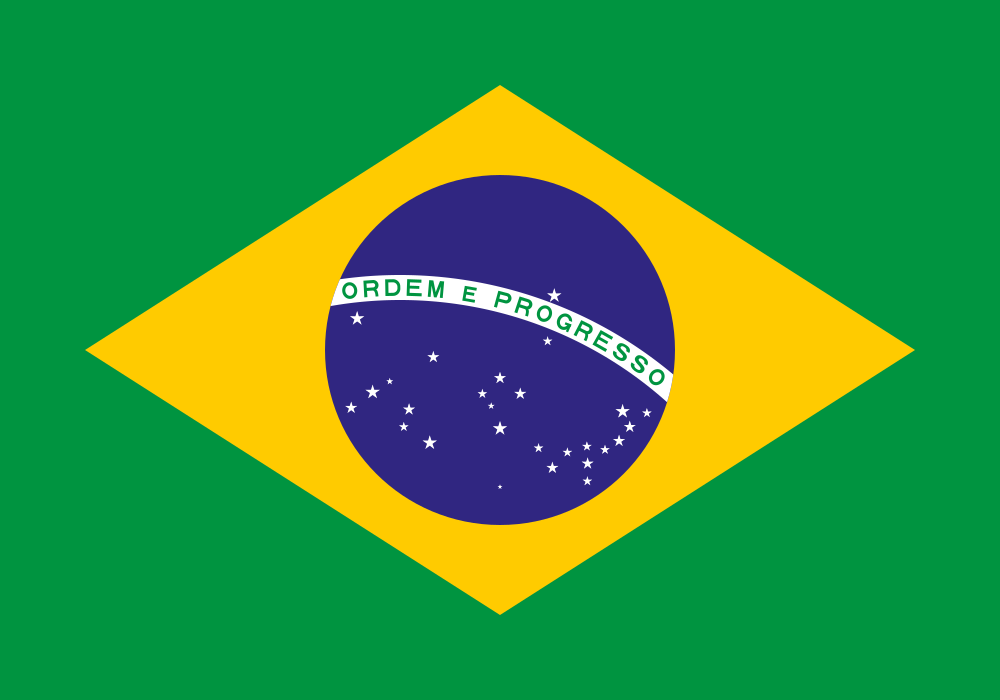
Brazil
Location Info
- Continent: South America
- Country: Brazil
- Coordinates: -14.235 , -51.9253
Trust Info
Verified Geographic Information
🌍 Continents

Overview
Brazil, officially the Federative Republic of Brazil, is the largest country in both South America and Latin America. It covers an area of approximately 8.5 million square kilometers, making it the world's fifth-largest nation by landmass. The country is defined by its diverse landscapes, ranging from the vast Amazon River basin and rainforest in the north to the rugged highlands and Atlantic coastline in the south and east.
Historically, Brazil was a Portuguese colony from 1500 until its independence in 1822, eventually transitioning from a monarchy to a republic. Today, it is a leading global economy and a member of the BRICS group. With a population exceeding 214 million people in 2026, Brazil is a multicultural nation known for its significant industrial output, agricultural exports, and rich cultural heritage centered around music, festivals, and sports.
Truth & Facts
| Total Area | 8,515,767 sq km |
| Coastline | 7,491 km |
| Population (2026 Est.) | 214.08 Million |
| Official Language | Portuguese |
| Capital | Brasília |
| Federative Units | 26 States and 1 Federal District |
| Currency | Real (BRL) |
| GDP (Nominal) 2026 | $2.292 Trillion |
| Road Network | Approx. 2 million km |
| Busiest Seaport | Port of Santos |
| Portuguese Arrival | April 22, 1500 |
| Independence Day | September 7, 1822 |
| Major Biomes | 6 (Amazon, Cerrado, Caatinga, Atlantic Forest, Pantanal, Pampa) |
| Branches | Executive, Legislative, Judicial |
| Literacy Rate | Approx. 93-94% |
| Health System | Sistema Único de Saúde (SUS) |
| National Dance | Samba |
| Top Attraction | Rio de Janeiro |
| Memberships | UN, G20, BRICS, Mercosur |
| Main Airport | São Paulo-Guarulhos (GRU) |
| Aerospace Leader | Embraer |
| Emergency Number | 190 (Police), 192 (Ambulance), 193 (Fire) |
| Main Energy Source | Hydroelectric Power |
| Urban Population | Approx. 87-91% |
| Megadiversity | Ranked 1st globally |
| Main Crop | Soybeans |
📑 Table of Contents
Overview of Brazil
Brazil is the largest nation in South America, bordered by every country on the continent except Chile and Ecuador. Its territory spans multiple time zones and encompasses a vast array of natural landscapes, including the Amazon Rainforest and the Pantanal wetlands. The country is a federal republic comprised of 26 states and a Federal District.
- Official Name: Federative Republic of Brazil
- Capital City: Brasília
- Largest City: São Paulo
- Major Language: Portuguese
- Government: Presidential Federal Republic
History
Brazil's history began with the arrival of Portuguese explorers in 1500, led by Pedro Álvares Cabral. The region was a colony of the Portuguese Empire for over 300 years, during which the economy relied on sugar, gold, and later coffee production. Brazil became the seat of the Portuguese Empire in 1808 when the royal family fled Napoleon's forces.
- Colonization: Portuguese arrival in 1500.
- Independence: Declared in 1822 under Emperor Pedro I.
- Proclamation of the Republic: Occurred in 1889.
- Modern Era: Returned to democracy in 1985.
Geography
Brazil is characterized by five main geographic regions: the North, Northeast, Central-West, Southeast, and South. The North is dominated by the Amazon Basin, while the Southeast and South feature plateaus and mountain ranges. The coastline extends nearly 7,500 kilometers along the Atlantic Ocean.
| Feature | Details |
|---|---|
| Highest Point | Pico da Neblina (2,994m) |
| Longest River | Amazon River |
| Major Wetland | Pantanal |
Climate and Weather
The climate in Brazil is predominantly tropical, though it varies significantly by region. The north remains hot and humid year-round, while the south experiences temperate conditions with four distinct seasons. Some southern states even see occasional snowfall in high-altitude areas during winter.
- North: Tropical Rainforest (Equatorial)
- Northeast: Semi-arid in the interior (Sertão)
- Central-West: Tropical Savanna
- South: Subtropical
Population and Demographics
Brazil's population is a result of extensive miscegenation between Indigenous peoples, Europeans, and Africans. The 2026 estimates place the population at approximately 214 million. Urbanization is high, with most citizens living in metropolitan areas near the coast.
- Pardo (Multiracial): 45.3%
- White: 43.5%
- Black: 10.2%
- Asian and Indigenous: ~1%
Culture and Lifestyle
Brazilian culture is world-renowned for its vibrancy and diversity. Influences from Portuguese tradition, African rhythms, and Indigenous customs create a unique national identity. Football (soccer) is deeply ingrained in social life, and music styles like Samba and Bossa Nova are iconic symbols of the country.
- Main Religion: Catholicism and Protestantism
- National Sport: Football
- Cultural Symbols: Carnival, Capoeira
Festivals and Events
Festivals are a cornerstone of Brazilian social life. The Rio Carnival is the most famous event, attracting millions of visitors annually. Other significant celebrations include Festa Junina, which honors Christian saints with rural-themed festivities, and the Parintins Folklore Festival in the Amazon.
- Rio Carnival: Pre-Lenten festival
- Festa Junina: Celebrated throughout June
- Reveillon: Massive New Year's Eve party in Rio
Food and Cuisine
Brazilian cuisine varies by region but is universally characterized by the use of rice, beans, and meat. Feijoada, a black bean stew with pork, is considered the national dish. The Northeast is famous for seafood and African-influenced dishes like Acarajé, while the South is known for its barbecue (Churrasco).
- National Dish: Feijoada
- Popular Snack: Pão de Queijo
- National Cocktail: Caipirinha
Economy and Industries
Brazil has a highly diversified economy with strong industrial, agricultural, and service sectors. It is a leading global exporter of iron ore, crude oil, soybeans, and coffee. The manufacturing sector is prominent in automobiles, steel, and aerospace (Embraer).
| Industry | Major Focus |
|---|---|
| Agribusiness | Soy, Beef, Sugarcane, Coffee |
| Mining | Iron Ore, Bauxite, Gold |
| Energy | Oil (Petrobras), Hydroelectric |
Cost of Living
The cost of living in Brazil depends heavily on the city. Major hubs like São Paulo and Rio de Janeiro are significantly more expensive than smaller inland towns. Basic utilities and local foodstuffs are generally affordable, while imported electronics and luxury goods carry high taxes.
- Housing: Moderate to high in major cities
- Food: Affordable local markets
- Transport: Reasonable public transit costs
Employment and Business
Employment in Brazil is driven by the services sector, which accounts for over 70% of the GDP. Major employers include retail, finance, and the public sector. The country has a growing tech and startup scene, particularly in cities like Florianópolis and São Paulo.
- Major Employer: Service industry
- Startup Hubs: São Paulo, Belo Horizonte
- Key Trade Blocs: Mercosur
Real Estate and Housing
Brazil offers a wide variety of housing, from high-rise luxury apartments in metropolitan areas to expansive rural estates. Residential real estate markets are most active in the Southeast. Gated communities (Condomínios) are popular in urban outskirts for security and amenities.
- Urban: High-density apartments
- Suburban: Gated communities
- Market: High activity in São Paulo and Curitiba
Transportation and Connectivity
Transport in Brazil is primarily centered around roads and air travel. While the rail network is largely dedicated to freight, some commuter rail systems exist in major cities. Long-distance bus travel is a common and affordable alternative for traveling between states.
- Air: Over 2,000 airports (paved and unpaved)
- Roads: BR-101 and BR-116 are critical veins
- Water: Essential in the Amazon region
Infrastructure and Utilities
Brazil has significant infrastructure, including massive hydroelectric dams like Itaipu. Telecommunications are widespread, with 5G coverage expanding in 2026. Water and sanitation coverage is high in urban centers but remains a challenge in some rural and informal settlements.
- Electricity: Majority from hydroelectricity
- Telecom: Broad 4G/5G mobile penetration
- Water: Managed by state companies
Education
Education in Brazil is mandatory for children aged 4 to 17. The system is divided into Fundamental and High School levels. Public universities are highly prestigious and tuition-free, though entry is competitive via the 'Enem' national exam.
- Public Universities: USP, UNICAMP, UFRJ
- Compulsory Age: 4-17 years
- Literacy: Over 93%
Healthcare
The Unified Health System (SUS) provides free healthcare to all residents. In addition to the public system, a large private healthcare sector exists, serving about 25% of the population. Brazil is a leader in vaccination programs and HIV/AIDS treatment protocols.
- System: SUS (Public and Universal)
- Private Sector: Extensive network in cities
- Specialties: Renowned for plastic surgery
Tourist Attractions
Brazil offers iconic world-class attractions. From the man-made wonders of Rio de Janeiro to the natural power of Iguaçu Falls, the country caters to diverse interests. Historical towns like Ouro Preto showcase colonial Portuguese architecture.
- Christ the Redeemer: Rio de Janeiro
- Iguaçu Falls: Paraná border
- Pelourinho: Historical center of Salvador
Things to Do
Visitors can engage in a variety of activities ranging from eco-tourism in the Amazon to sunbathing on beaches like Copacabana and Ipanema. Trekking in Chapada Diamantina and spotting wildlife in the Pantanal are highlights for nature enthusiasts.
- Amazon: River cruises and jungle treks
- Beaches: Surfing and beach sports
- Festivals: Attending the Carnival parade
Best Places to Visit
Beyond the famous coastal cities, destinations like Fernando de Noronha offer pristine marine environments. The capital, Brasília, is a UNESCO World Heritage site for its modernist architecture. Lençóis Maranhenses features unique sand dunes filled with rainwater lagoons.
- Fernando de Noronha: Scuba diving and beaches
- Lençóis Maranhenses: White dunes and lagoons
- Ouro Preto: Baroque architecture
Travel Guide
Travelers to Brazil should check visa requirements based on their nationality. The peak travel season is during the Southern Hemisphere summer (December to March). Portuguese is essential for communication, as English is not widely spoken outside tourist areas.
- Language: Portuguese is primary
- Currency: Real (BRL)
- Peak Season: December to March
Nearby Places
Brazil shares borders with nearly all South American countries, making it a hub for regional travel. Popular cross-border trips include visiting Buenos Aires (Argentina), the salt flats of Bolivia, or the Andes mountains in Peru and Colombia.
- Argentina: Shared Iguaçu Falls border
- Paraguay: Major shopping hub at Ciudad del Este
- Uruguay: Coastal proximity to Southern Brazil
Environment and Nature
Brazil contains roughly 60% of the Amazon Rainforest. It also houses the Pantanal, the world's largest tropical wetland. Conservation efforts focus on protecting these biomes from deforestation and promoting sustainable agriculture in the Cerrado savanna.
- Biomes: Amazon, Pantanal, Cerrado
- Biodiversity: World's highest species count
- Conservation: National Parks system
Government and Administration
The federal government is based in Brasília. It consists of the Presidency, the National Congress, and the Supreme Federal Court. Administrative power is decentralized to the 26 states, which manage their own education and security systems.
- System: Federal Republic
- Capital: Brasília
- Legislature: Bicameral Congress
Safety and Public Services
Public safety in Brazil varies by region and neighborhood. Major cities have dedicated tourist police units. Emergency services like the SAMU (ambulance) and the Fire Department are reliable and available via standard three-digit phone codes.
- Police: 190
- Ambulance: 192
- Fire: 193
Best Time to Visit
The best time to visit Brazil depends on the region. For the Carnival and beaches, the summer (December to February) is ideal. For wildlife viewing in the Pantanal or Amazon, the dry season (June to September) is recommended to avoid heavy rains.
- Summer: December - March (Best for beaches)
- Winter: June - August (Best for the South)
- Dry Season: May - September (Best for Amazon/Pantanal)
Local Business Directory
Brazil's business landscape is dominated by large conglomerates in energy (Petrobras), banking (Itaú, Bradesco), and mining (Vale). A massive informal economy also exists, alongside a growing sector of technology and e-commerce companies.
- Energy: Petrobras
- Mining: Vale S.A.
- Banking: Itaú Unibanco
General Information FAQs
Where is Brazil located?
Brazil is located in the eastern part of South America. It borders the Atlantic Ocean to the east and touches every other South American country except for Chile and Ecuador.
What is Brazil known for?
Brazil is known for the Amazon Rainforest, its vibrant Carnival festivals, professional football excellence, diverse music styles like Samba, and iconic landmarks like Christ the Redeemer.
Why is Brazil famous?
Brazil is famous for being a global leader in biodiversity, its status as a five-time FIFA World Cup champion, and its massive production of coffee, sugar, and soy.
What country or region is Brazil part of?
Brazil is a sovereign country in the continent of South America. It is the largest nation in the Latin American region.
What is the population of Brazil?
As of 2026, the population of Brazil is estimated to be approximately 214 million people.
What languages are spoken in Brazil?
Portuguese is the official and primary language. Indigenous languages are spoken in remote areas, and Spanish or English are sometimes understood in business and tourist hubs.
What time zone is Brazil in?
Brazil spans four time zones, ranging from UTC-2 (islands) to UTC-5 (western Amazon). The official time follows Brasília Time (UTC-3).
What are the key facts about Brazil?
Key facts include its capital Brasília, its largest city São Paulo, its status as a leading agricultural producer, and its governance as a federal republic.
What makes Brazil unique?
Brazil is the only country in the Americas where Portuguese is the primary language and it contains the highest concentration of biodiversity on Earth.
How large is Brazil in area?
Brazil covers approximately 8.5 million square kilometers, making it the fifth largest country in the world by land area.
History FAQs
What is the history of Brazil?
Brazil's history involves indigenous settlement, Portuguese colonization from 1500, independence as an Empire in 1822, and the transition to a republic in 1889.
When was Brazil established?
Brazil was claimed by Portugal on April 22, 1500. It established its independence on September 7, 1822.
What major historical events happened in Brazil?
Key events include the relocation of the Portuguese court to Rio in 1808, the abolition of slavery in 1888, and the construction of Brasília in the 1950s.
Who were important historical figures from Brazil?
Important figures include Pedro I (first Emperor), Princess Isabel (signed the abolition of slavery), and Getúlio Vargas (long-serving 20th-century president).
How has Brazil developed over time?
Brazil evolved from a colonial plantation economy to an industrial powerhouse and a leading global exporter of raw materials and aircraft.
Geography & Environment FAQs
What is the geography of Brazil?
Brazil's geography includes the Amazon River basin, the massive central plateau (Brazilian Highlands), and a long tropical coastline with diverse estuaries.
What natural features surround Brazil?
Brazil is bordered by the Atlantic Ocean to the east and various mountain ranges and plains shared with its ten land neighbors.
Are there mountains, rivers, or lakes near Brazil?
Yes, major features include the Amazon and São Francisco rivers, the Guiana Highlands, and the massive freshwater wetland of the Pantanal.
What is the elevation of Brazil?
Most of Brazil lies between 200 and 800 meters. The highest point is Pico da Neblina at 2,994 meters.
What ecosystems exist around Brazil?
Brazil contains six major biomes: Amazon, Cerrado (savanna), Caatinga (scrubland), Atlantic Forest, Pantanal (wetland), and Pampa (grasslands).
Climate & Weather FAQs
What is the climate like in Brazil?
The climate is mostly tropical, but it is temperate/subtropical in the south. The north is equatorial with heavy rainfall and high humidity.
What is the average temperature in Brazil?
Average temperatures in most of the country range from 20°C to 28°C, though the south can drop below freezing and the interior can reach 40°C.
What is the weather like throughout the year in Brazil?
Seasons are reversed from the Northern Hemisphere. Summer is December–March and is typically wet; winter is June–August and is drier in most regions.
Does Brazil experience extreme weather?
Brazil occasionally faces severe droughts in the Northeast and heavy flooding in the Southeast, but it is outside the main paths of hurricanes.
What is the best time of year to visit Brazil?
September to March is popular for coastal regions and Carnival, while June to August is best for wildlife viewing in the Pantanal.
Population & Society FAQs
What is the population density of Brazil?
The population density is approximately 25 people per square kilometer, but it is much higher in the coastal Southeast than in the Amazon.
What ethnic groups live in Brazil?
Brazil is a melting pot of multiracial (Pardo), White, Black, Asian (notably Japanese), and various Indigenous ethnic groups.
What religions are practiced in Brazil?
The majority are Roman Catholic, followed by a large and growing Protestant (Evangelical) population. Afro-Brazilian religions like Candomblé are also significant.
What is daily life like in Brazil?
Daily life is characterized by urban living for most, with a strong focus on family, social gatherings, outdoor activities, and football.
How diverse is the population of Brazil?
Brazil is one of the most diverse countries globally, having received millions of immigrants from Europe, the Middle East, and Asia over the centuries.
Culture & Traditions FAQs
What cultural traditions are important in Brazil?
Important traditions include the celebration of Carnival, the practice of Capoeira, and the tradition of family barbecues (Churrasco).
What festivals are celebrated in Brazil?
Major festivals include Carnival, Festa Junina (June Bonfire festivals), and the Reveillon New Year's celebrations.
What cultural landmarks exist in Brazil?
Landmarks include Christ the Redeemer in Rio, the Teatro Amazonas in Manaus, and the modernist architecture of Brasília.
What traditional clothing or customs are common in Brazil?
In the Northeast, Baiana dresses are common; in the South, Gaucho attire is traditional. Standard modern Western clothing is the norm elsewhere.
What arts and crafts are associated with Brazil?
Brazil is known for Indigenous pottery, lace-making (Renda) in the Northeast, and modern architecture led by figures like Oscar Niemeyer.
Food & Cuisine FAQs
What foods is Brazil known for?
Brazil is famous for Feijoada (stew), Pão de Queijo (cheese bread), Coxinha (chicken croquette), and Açaí bowls.
What traditional dishes originate from Brazil?
Moqueca (fish stew), Brigadeiro (chocolate truffle), and Churrasco (barbecue) are iconic traditional foods.
What are the best restaurants in Brazil?
Top-rated restaurants are found in São Paulo and Rio, often specializing in high-end Churrascarias or contemporary Brazilian fusion.
What local ingredients are commonly used in Brazil cuisine?
Cassava (mandioca), black beans, rice, tropical fruits (like guava and mango), and salt-cured meats are staple ingredients.
What food markets or street foods are popular in Brazil?
Municipal markets in São Paulo are famous. Street foods like Pastéis and Tapioca crepes are popular nationwide.
Economy & Business FAQs
What are the main industries in Brazil?
Key industries include iron ore and gold mining, petroleum production, automobile manufacturing, and aerospace.
What economic activities drive the economy of Brazil?
Agribusiness (soy, beef), energy (offshore oil), and the vast service sector are the primary economic drivers.
What businesses operate in Brazil?
Major domestic companies include Petrobras (oil), Vale (mining), Embraer (aviation), and Itaú Unibanco (finance).
Is Brazil an important economic center?
Yes, it has the largest economy in Latin America and is a top-ten global economy by nominal GDP and purchasing power parity.
What are the major exports or products from Brazil?
Primary exports include soybeans, crude petroleum, iron ore, poultry, coffee, and regional aircraft.
Employment & Jobs FAQs
What job opportunities are available in Brazil?
Opportunities are strongest in the agricultural tech sector, financial services, e-commerce, and industrial manufacturing.
What are the major employers in Brazil?
The federal government, large banks like Banco do Brasil, and industrial giants like Vale and Petrobras are the largest employers.
What skills are in demand in Brazil?
There is high demand for IT professionals, agricultural engineers, financial analysts, and healthcare specialists.
Is Brazil a good place to work?
Brazil offers a robust labor law system (CLT) with mandatory benefits, though the corporate market is highly competitive in major cities.
What is the unemployment rate in Brazil?
As of early 2026, the unemployment rate has stabilized around 7.3%, following a period of economic recovery.
Cost of Living FAQs
Is Brazil expensive to live in?
It is relatively affordable compared to Western Europe or North America, but high-end neighborhoods in São Paulo and Rio are costly.
What is the average cost of living in Brazil?
For a single person, living costs outside of rent average around R$ 2,500–4,000 per month depending on lifestyle and location.
How much does housing cost in Brazil?
Rent for a one-bedroom apartment in a major city center ranges from R$ 1,500 to R$ 4,000, while suburban areas are significantly cheaper.
What are average food and utility costs in Brazil?
Monthly utilities (electricity, water) for a small apartment average R$ 300–500. Grocery costs vary but are moderate for local produce.
Is Brazil affordable compared to nearby cities?
Brazil is generally more expensive than neighbors like Paraguay or Bolivia but often comparable to Argentina and Chile.
Housing & Real Estate FAQs
What types of housing are available in Brazil?
Urban areas feature mostly apartments and gated communities (condomínios). Rural areas consist of family homes and large agricultural estates.
What is the average home price in Brazil?
Prices vary wildly; a standard urban apartment might cost R$ 400,000, while luxury properties in Rio can exceed R$ 5 million.
Is it better to rent or buy property in Brazil?
Buying is common for long-term residents due to the potential for appreciation, though high interest rates often make renting attractive.
Which neighborhoods are popular in Brazil?
Popular urban neighborhoods include Jardins in São Paulo, Leblon in Rio de Janeiro, and Batel in Curitiba.
How has the property market changed in Brazil?
The market has seen a shift toward smart homes and integrated work-life developments in metropolitan centers over the last few years.
Transportation FAQs
How do you get to Brazil?
International visitors typically arrive via major airports in São Paulo, Rio de Janeiro, or Brasília. Direct flights connect Brazil to all continents.
What is the nearest airport to Brazil?
For international travelers, Guarulhos (GRU) in São Paulo and Galeão (GIG) in Rio are the primary entry points.
Does Brazil have railway connections?
Railways are primarily for freight. Passenger rail is limited to commuter systems in cities like São Paulo and a few tourist lines.
How reliable is public transportation in Brazil?
Subways in São Paulo and Rio are very reliable. Buses are the primary mode of transport nationwide and are extensive but can be crowded.
What major highways or roads connect to Brazil?
The BR-101 (coastline) and BR-116 (inland north-south) are the most critical highways for logistics and travel.
Education FAQs
What schools are located in Brazil?
Brazil has a mix of public state schools and a large network of private international and religious schools.
Are there universities in Brazil?
Yes, Brazil has hundreds of universities. Public institutions like the University of São Paulo (USP) are consistently ranked best in Latin America.
What is the literacy rate in Brazil?
The literacy rate is approximately 94% for adults, reflecting decades of investment in primary education.
What educational opportunities exist in Brazil?
Brazil offers robust undergraduate and graduate programs, particularly in medicine, engineering, and law.
Is Brazil a good place for students?
Yes, especially in major cities which offer vibrant student cultures, high-quality research facilities, and diverse social environments.
Healthcare FAQs
What hospitals are available in Brazil?
Brazil has world-class private hospitals like Albert Einstein and Sírio-Libanês, alongside a massive network of public SUS hospitals.
Are there emergency medical services in Brazil?
Yes, the SAMU system (dial 192) provides emergency response and ambulance services across the country.
What healthcare facilities exist in Brazil?
Facilities range from neighborhood health clinics (UBS) to specialized diagnostic centers and massive university hospitals.
Is healthcare affordable in Brazil?
Public healthcare is free. Private healthcare is moderately priced compared to the US but requires insurance (Plano de Saúde).
Are specialized medical services available in Brazil?
Brazil is a global leader in areas such as organ transplants, cosmetic surgery, and infectious disease research.
Tourism & Travel FAQs
What are the top tourist attractions in Brazil?
The top attractions are Christ the Redeemer, Iguaçu Falls, the Amazon River, and the beaches of Rio and the Northeast.
What are the best things to do in Brazil?
Must-do activities include watching a football match at the Maracanã, dancing at a Samba club, and exploring the Amazon rainforest.
Is Brazil worth visiting?
Absolutely. It offers a unique combination of stunning natural beauty, world-famous cultural events, and high-quality tourism infrastructure.
What landmarks should visitors see in Brazil?
Visitors should see the Sugarloaf Mountain, the historic center of Salvador, and the modernist buildings in Brasília.
How many days should tourists spend in Brazil?
A minimum of 10-14 days is recommended to cover at least two distinct regions, such as Rio and the Amazon or Iguaçu Falls.
Nearby Places FAQs
What places are near Brazil worth visiting?
Nearby destinations include the Argentine side of Iguaçu Falls, the city of Buenos Aires, and the coast of Uruguay.
What cities or towns are close to Brazil?
Border cities like Ciudad del Este (Paraguay) and Rivera (Uruguay) are easily accessible from Brazilian territory.
What natural attractions are near Brazil?
The Andes Mountains and the salt flats of Uyuni (Bolivia) are popular regional extensions for travelers visiting Brazil.
What day trips can be taken from Brazil?
From Foz do Iguaçu, travelers can take day trips into Argentina and Paraguay. From the south, trips into Uruguay are feasible.
What famous destinations are within reach of Brazil?
Machu Picchu (Peru) and the Patagonia region are famous South American sites reachable via short flights from major Brazilian hubs.
Safety FAQs
Is Brazil safe to live in?
Safety depends on the specific city and neighborhood. Many inland cities and southern towns have safety levels comparable to European nations.
Is Brazil safe for tourists?
Yes, provided tourists stay in well-lit areas, use authorized transport, and avoid flashy displays of wealth in metropolitan centers.
What is the crime rate in Brazil?
While crime is a concern in large urban peripheries, rates have been steadily declining in many major metropolitan areas since 2020.
What emergency services operate in Brazil?
The Police (190), Ambulance (192), and Fire Department (193) are the primary emergency services.
What safety tips should visitors follow in Brazil?
Use ride-sharing apps at night, keep valuables in hotel safes, and be aware of your surroundings in crowded places like beaches.
Lifestyle & Living FAQs
Is Brazil a good place to live?
For many, Brazil offers an excellent quality of life with its warm climate, friendly culture, and low cost of essentials compared to developed nations.
What recreational activities are available in Brazil?
Popular activities include surfing, beach volleyball, hiking, and attending live music performances.
Is Brazil family-friendly?
Yes, Brazilian culture is very family-oriented, and children are welcomed in most social settings including restaurants and festivals.
What outdoor activities are popular in Brazil?
Coastal activities like swimming and surfing are most popular, followed by football and park-based exercise (calisthenics).
What makes life enjoyable in Brazil?
The laid-back social culture, the constant availability of fresh tropical food, and the year-round warm weather are primary draws.
Practical Information FAQs
What travel tips should visitors know about Brazil?
Always carry a copy of your ID, learn basic Portuguese phrases, and ensure you have a universal power adapter (Type N plug).
What local customs should visitors respect in Brazil?
Brazilians are generally tactile; light physical contact during conversation is common and polite. Punctuality for social events is often flexible.
How accessible is Brazil for international visitors?
All major cities have international airports and extensive internal bus/flight networks. Accessibility for those with disabilities is improving in modern areas.
What services are available for tourists in Brazil?
Information centers (Postos de Informação Turística) are located in all major hubs, offering maps and guidance in multiple languages.
What important information should travelers know before visiting Brazil?
Check if a Yellow Fever vaccination is recommended for your specific destination, particularly for trips to the North or Central-West.