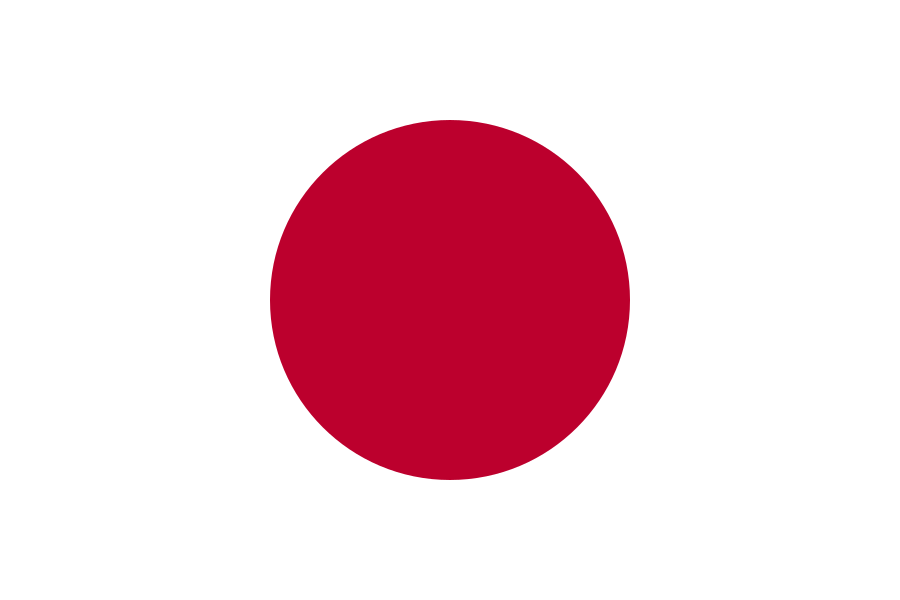
Japan
Location Info
- Continent: Asia
- Country: Japan
- Coordinates: 36.2048 , 138.2529
Trust Info
Verified Geographic Information
🌍 Continents


Overview
Japan is an island country situated in East Asia within the northwest Pacific Ocean. It consists of a large stratovolcanic archipelago extending from the Sea of Okhotsk in the north to the East China Sea in the south. The country is primarily composed of five main islands: Honshu, Hokkaido, Kyushu, Shikoku, and Okinawa, alongside nearly 7,000 smaller islands. Much of Japan's terrain is mountainous and heavily forested, with Mount Fuji serving as its highest peak and a national symbol.
As a global leader in technology and the third-largest economy by nominal GDP, Japan plays a vital role in international trade and innovation. Its history spans from ancient dynasties and the feudal era of the Shogunate to rapid modernization during the Meiji period. Today, Japan is known for its high standard of living, advanced infrastructure, and a unique cultural blend of deep-rooted traditions and modern urban lifestyles. With a population exceeding 125 million, it remains a highly urbanized nation centered around the Greater Tokyo Area.
Truth & Facts
| Total Area | 377,975 sq km |
| Highest Point | Mount Fuji (3,776 m) |
| Population | 125.1 million |
| Life Expectancy | 84.3 years |
| Capital | Tokyo |
| Legislature | National Diet |
| Meiji Restoration | 1868 |
| Currency | Japanese Yen (¥/JPY) |
| Main Exports | Automobiles, Electronics, Steel |
| Electricity Voltage | 100V |
| Literacy Rate | 99% |
| Healthcare Quality | Ranked among top globally |
| National Language | Japanese |
| UNESCO Sites | 25 |
| Forest Cover | Approx 67% |
| Rail System | 27,000+ km |
| R&D Expenditure | 3.5% of GDP |
| Safety Index | Top 10 Globally |
| Head of State | Emperor Naruhito |
| UN Member Since | 1956 |
| Tap Water | Potable nationwide |
| GDP Ranking | 4th (Nominal) |
| Internet Penetration | 93% |
| Retirement Age | 65 (Increasing to 70) |
📑 Table of Contents
Overview of Japan
Japan is an island nation located in the Pacific Ocean, known for its dense cities, mountainous national parks, and thousands of temples. It consists of thousands of islands, with the four largest being Honshu, Hokkaido, Kyushu, and Shikoku. The country is recognized globally for its high-tech industry and cultural exports.
- Capital: Tokyo
- Main Islands: Honshu, Hokkaido, Kyushu, Shikoku
- Region: East Asia
- Coastline: 29,751 km
History
Japan's history is divided into several eras, ranging from the ancient Jomon period to the modern Reiwa era. Key periods include the Edo period under the Tokugawa Shogunate, which saw 250 years of isolation, followed by the Meiji Restoration in 1868. Post-World War II, Japan underwent a period of rapid economic growth known as the Japanese economic miracle.
| Era | Years | Major Feature |
|---|---|---|
| Edo | 1603-1868 | Isolationism |
| Meiji | 1868-1912 | Industrialization |
| Showa | 1926-1989 | WWII & Recovery |
Geography
Japan is situated along the 'Pacific Ring of Fire,' resulting in numerous volcanoes and high seismic activity. About 73% of Japan is mountainous, which has led to high population densities in the narrow coastal plains. The climate varies significantly from the humid subtropical climate of the south to the subarctic climate of the north.
- Major Range: Japanese Alps
- Highest Mountain: Mt. Fuji
- Largest Lake: Lake Biwa
- Longest River: Shinano River
Climate and Weather
Japan has four distinct seasons. Winter is cold and snowy in the north, while summer is hot and humid throughout much of the country. Autumn and spring are generally mild and are characterized by changing foliage and cherry blossoms respectively. Typhoons often affect the region in late summer and early autumn.
Population and Demographics
Japan has one of the world's oldest populations. The total population is declining due to low birth rates and limited immigration. Most people live in urban areas, particularly in the Kanto region around Tokyo and the Kansai region around Osaka and Kyoto.
- Ethnic Groups: 98% Japanese
- Main Religion: Shintoism, Buddhism
- Official Language: Japanese
Culture and Lifestyle
Japanese culture is a synthesis of traditional influences and modern Western styles. Traditional arts include tea ceremonies, calligraphy, and flower arrangement. Modern culture is dominated by manga, anime, and video games. Social etiquette, such as bowing and gift-giving, remains deeply ingrained in daily life.
Festivals and Events
Known as 'Matsuri,' Japanese festivals occur throughout the year. Most are sponsored by local shrines or temples. Significant events include Gion Matsuri in Kyoto, Awa Odori in Tokushima, and the Sapporo Snow Festival in the north.
- New Year (Shogatsu): Most important holiday
- Golden Week: Major travel period in May
- Obon: Ancestral remembrance in August
Food and Cuisine
Japanese cuisine, or Washoku, emphasizes seasonal ingredients and presentation. It was added to the UNESCO Intangible Cultural Heritage list in 2013. Common staples include rice, miso soup, and fish. Popular dishes exported worldwide include sushi, sashimi, and tempura.
Economy and Industries
Japan is a leading manufacturer of automobiles, precision machinery, and robotics. It has a highly sophisticated service sector, including banking and retail. The Tokyo Stock Exchange is one of the largest in the world by market capitalization.
| Industry | Focus |
|---|---|
| Automotive | Toyota, Honda, Nissan |
| Electronics | Sony, Panasonic |
| Robotics | Fanuc, Yaskawa |
Cost of Living
Japan is generally considered an expensive country, particularly in major cities like Tokyo and Osaka. However, deflationary trends and a stable currency have made it more affordable compared to other G7 nations in recent years. Rent and groceries are the largest expenses for residents.
Employment and Business
The Japanese labor market is characterized by long working hours and a high level of loyalty between employers and employees. Foreign labor is increasingly being sought to fill gaps in the aging workforce. Networking and 'nomikai' (drinking sessions) are common business social practices.
Real Estate and Housing
Housing in urban Japan often consists of compact apartments or 'mansions.' In rural areas, traditional wooden houses are more common but are often subject to depreciation. Earthquake-resistant building codes are strictly enforced nationwide.
Transportation and Connectivity
Japan has one of the most efficient transportation networks globally. The Shinkansen (bullet train) connects major cities with high-speed rail. Urban transit in Tokyo and Osaka is primarily rail-based, with extremely high punctuality rates.
- Railways: JR Group and private lines
- Major Airports: Narita, Haneda, Kansai
- Driving: Left-hand side of the road
Infrastructure and Utilities
Public utilities in Japan are highly reliable. Water is potable everywhere, and the electrical grid is stable, though it operates at different frequencies (50Hz and 60Hz) in eastern and western Japan. Waste management and recycling systems are highly organized and strict.
Education
Education is compulsory for nine years (Elementary and Junior High). High enrollment rates in senior high schools and universities are standard. The University of Tokyo and Kyoto University are among the highest-ranked institutions in Asia.
Healthcare
Japan provides a statutory health insurance system. Patients pay 30% of medical costs, while the government covers the rest. The country has a high number of hospital beds per capita and is a leader in medical technology research.
Tourist Attractions
Major attractions include the historic temples of Kyoto, the bustling streets of Shinjuku, and the serenity of Miyajima Island. Japan offers a mix of urban exploration and natural retreats like the Hakone hot springs.
Things to Do
Visitors can engage in a variety of activities from skiing in Hokkaido to snorkeling in Okinawa. Other popular activities include visiting themed cafes, attending a sumo tournament, or hiking the Kumano Kodo pilgrimage trails.
Best Places to Visit
Tokyo remains the top destination for first-time visitors, followed by Kyoto for its cultural heritage and Osaka for its food scene. Nara, Nikko, and Hiroshima are also essential stops for those interested in history.
Travel Guide
Most Western nationalities do not require a visa for short-term stays. It is recommended to purchase a JR Pass for rail travel before arriving. Cash is still widely used, though credit cards and mobile payments are becoming more common.
Nearby Places
Japan is relatively isolated as an island nation, but it has strong ferry and flight connections to South Korea, China, and Taiwan. Vladivostok, Russia, is the closest major European city by proximity.
Environment and Nature
Environmental protection is a key policy in Japan, despite its industrial nature. Large areas are designated as National Parks. Efforts to protect the Japanese macaque and the Japanese crested ibis are ongoing.
Government and Administration
Japan is divided into 47 prefectures. The central government is located in the Chiyoda ward of Tokyo. The political system is stable, with the Liberal Democratic Party being the dominant force for decades.
Safety and Public Services
Japan is one of the safest countries in the world. Police presence is maintained through small 'Koban' stations in neighborhoods. Public services, including fire and emergency medical care, are highly efficient and responsive.
Best Time to Visit
Spring (March to May) and Autumn (September to November) are widely considered the best times due to comfortable temperatures and scenic beauty. Winter is ideal for winter sports enthusiasts in the northern regions.
Local Business Directory
Japan is famous for its 'Shotengai' (shopping streets) and department stores like Mitsukoshi and Isetan. Convenience stores (Konbini) like 7-Eleven, Lawson, and FamilyMart are ubiquitous and provide essential services.
General Information FAQs
Where is Japan located?
Japan is an island country located in East Asia. It sits in the northwest Pacific Ocean, bordered by the Sea of Japan to the west and extending from the Sea of Okhotsk in the north to the East China Sea and Philippine Sea in the south.
What is Japan known for?
Japan is known for its blend of ancient traditions and modern technology. It is famous for its cuisine (sushi, ramen), high-speed rail (Shinkansen), anime, manga, martial arts, and iconic landmarks like Mount Fuji and the temples of Kyoto.
Why is Japan famous?
Japan is famous for its unique culture, safety, cleanliness, and innovation. It is a world leader in the automotive and electronics industries and is highly regarded for its hospitality, known as 'Omotenashi'.
What country or region is Japan part of?
Japan is an independent sovereign nation located in the region of East Asia.
What is the population of Japan?
As of 2024, the population of Japan is approximately 125 million people. The country is experiencing a gradual population decline due to low birth rates.
What languages are spoken in Japan?
The official and primary language is Japanese. While English is taught in schools, proficiency varies among the general population, though it is commonly understood in major tourist areas.
What time zone is Japan in?
Japan operates on Japan Standard Time (JST), which is UTC+9. Japan does not observe daylight saving time.
What are the key facts about Japan?
Key facts include: Capital is Tokyo; it is a constitutional monarchy with an Emperor; it has the world's 4th largest economy; it is composed of 6,852 islands; and it is a member of the G7.
What makes Japan unique?
Japan is unique for its extreme contrast between hyper-modern cities and preserved historical sites. It also has a distinct social etiquette, a highly disciplined workforce, and a deep reverence for seasonal changes.
How large is Japan in area?
Japan has a total land area of approximately 377,975 square kilometers, making it slightly smaller than the state of California or larger than Germany.
History FAQs
What is the history of Japan?
Japan's history ranges from prehistoric times (Jomon period) to the feudal era of Samurai and Shoguns, followed by the Meiji Restoration where it modernized rapidly, and its post-WWII emergence as a global economic power.
When was Japan established?
Traditional Japanese mythology states that Japan was founded in 660 BC by Emperor Jimmu. However, archaeological evidence of human habitation dates back over 30,000 years.
What major historical events happened in Japan?
Major events include the introduction of Buddhism in the 6th century, the Mongol invasions in the 13th century, the arrival of Westerners in the 16th century, the Meiji Restoration in 1868, and the 1945 atomic bombings.
Who were important historical figures from Japan?
Key figures include Oda Nobunaga, Toyotomi Hideyoshi, and Tokugawa Ieyasu (the three unifiers), Emperor Meiji, and various prominent authors and artists like Murasaki Shikibu and Katsushika Hokusai.
How has Japan developed over time?
Japan transitioned from a group of warring clans to a centralized feudal state, then to an imperial power, and finally to a democratic industrial giant known for technological innovation.
Geography & Environment FAQs
What is the geography of Japan?
Japan is a mountainous archipelago. About 73% of the land is forested and mountainous, unsuitable for agriculture or industry, which has led to high population density in coastal areas.
What natural features surround Japan?
Japan is surrounded by the Pacific Ocean, the Sea of Japan, the East China Sea, and the Sea of Okhotsk.
Are there mountains, rivers, or lakes near Japan?
Yes, Japan has many mountains, including the Japanese Alps. Notable rivers include the Shinano and Tone, and major lakes include Lake Biwa, the largest freshwater lake in Japan.
What is the elevation of Japan?
The elevation varies from sea level at the coast to 3,776 meters at the summit of Mount Fuji.
What ecosystems exist around Japan?
Japan has diverse ecosystems including subarctic forests in Hokkaido, temperate forests in Honshu, and subtropical mangroves and coral reefs in Okinawa.
Climate & Weather FAQs
What is the climate like in Japan?
Japan has a temperate climate with four distinct seasons. Northern Japan has long, cold winters and cool summers, while Southern Japan has subtropical conditions with hot, humid summers.
What is the average temperature in Japan?
In Tokyo, the average temperature ranges from about 5°C (41°F) in January to 27°C (81°F) in August. However, temperature varies greatly by latitude.
What is the weather like throughout the year in Japan?
Spring and autumn are mild and sunny. Summer is hot, humid, and rainy (the monsoon season). Winter is cold with heavy snowfall on the Sea of Japan side and in the north.
Does Japan experience extreme weather?
Yes, Japan is prone to typhoons in late summer and early autumn. It also experiences heavy snow in the north and frequent seismic activity (earthquakes).
What is the best time of year to visit Japan?
Spring (late March to early April) for cherry blossoms and Autumn (October to November) for fall foliage are considered the best times due to stable weather and scenery.
Population & Society FAQs
What is the population density of Japan?
Japan has a high population density of about 338 people per square kilometer. In urban centers like Tokyo, this is significantly higher.
What ethnic groups live in Japan?
The population is about 98% Japanese. Minorities include the indigenous Ainu and Ryukyuan people, as well as Chinese, Korean, and Brazilian residents.
What religions are practiced in Japan?
Shinto and Buddhism are the primary religions. Many Japanese people identify with both or practice secular traditions from both faiths.
What is daily life like in Japan?
Daily life is characterized by order, punctuality, and high use of public transportation. Education and work are highly valued, and seasonal customs play a large role in family life.
How diverse is the population of Japan?
While historically homogeneous, Japan is slowly becoming more diverse as it introduces new visa programs to address labor shortages, attracting workers from Southeast Asia and elsewhere.
Culture & Traditions FAQs
What cultural traditions are important in Japan?
Important traditions include the tea ceremony (Sado), flower arranging (Ikebana), calligraphy (Shodo), and the wearing of Kimonos for special occasions.
What festivals are celebrated in Japan?
Major festivals include Shogatsu (New Year), Setsubun (Bean-throwing), Hanami (Flower viewing), and various local Matsuri featuring floats and shrines.
What cultural landmarks exist in Japan?
Significant landmarks include Kinkaku-ji (Golden Pavilion) in Kyoto, Himeji Castle, the Great Buddha of Nara, and the Fushimi Inari Shrine.
What traditional clothing or customs are common in Japan?
The Kimono and Yukata are the most recognizable traditional clothes. Bowing instead of shaking hands and removing shoes before entering homes are standard customs.
What arts and crafts are associated with Japan?
Japan is famous for ceramics (pottery), lacquerware, woodblock prints (Ukiyo-e), and paper folding (Origami).
Food & Cuisine FAQs
What foods is Japan known for?
Japan is known for sushi, sashimi, tempura, ramen, soba, udon, and wagyu beef. It is also famous for matcha (green tea) and sake (rice wine).
What traditional dishes originate from Japan?
Dishes like Kaiseki (multi-course dining), Miso soup, and Natto (fermented soybeans) are traditionally Japanese.
What are the best restaurants in Japan?
Japan has more Michelin-starred restaurants than almost any other country. Tokyo, Kyoto, and Osaka are the main hubs for fine dining.
What local ingredients are commonly used in Japan cuisine?
Common ingredients include rice, soy sauce, dashi (soup stock), seaweed (nori/kombu), ginger, and seasonal vegetables.
What food markets or street foods are popular in Japan?
Popular markets include Tsukiji Outer Market and Nishiki Market. Popular street foods include takoyaki (octopus balls), yakitori (skewered chicken), and taiyaki.
Economy & Business FAQs
What are the main industries in Japan?
Main industries include automotive, electronics, machine tools, steel, and nonferrous metals. The service sector, including finance and insurance, is also significant.
What economic activities drive the economy of Japan?
Japan's economy is driven by high-tech manufacturing, exports of cars and electronics, and a large internal consumer market.
What businesses operate in Japan?
Major corporations include Toyota, Sony, Mitsubishi, SoftBank, and Nintendo.
Is Japan an important economic center?
Yes, Japan is the world's 4th largest economy by nominal GDP and is a member of the G7 and G20 groups of nations.
What are the major exports or products from Japan?
Major exports include passenger cars, integrated circuits, vehicle parts, and specialized machinery.
Employment & Jobs FAQs
What job opportunities are available in Japan?
Opportunities exist in technology, engineering, English teaching, and increasingly in healthcare and construction due to labor shortages.
What are the major employers in Japan?
Large manufacturing firms like Toyota and electronics giants like Sony are the biggest employers, alongside major retailers and the government.
What skills are in demand in Japan?
Proficiency in the Japanese language is the most sought-after skill, followed by software development, nursing, and specialized manufacturing skills.
Is Japan a good place to work?
Japan offers high salaries, excellent benefits, and stability, though the work culture can be demanding with long hours.
What is the unemployment rate in Japan?
Japan consistently maintains a low unemployment rate, usually around 2.5% to 3%.
Cost of Living FAQs
Is Japan expensive to live in?
Japan can be expensive, particularly in Tokyo, but it is often comparable to or cheaper than cities like New York, London, or Zurich. Outside major cities, costs drop significantly.
What is the average cost of living in Japan?
A single person may need between 150,000 to 250,000 JPY per month to live comfortably, including rent.
How much does housing cost in Japan?
Rent for a small one-bedroom apartment in Tokyo ranges from 80,000 to 150,000 JPY, while in smaller cities it can be as low as 40,000 JPY.
What are average food and utility costs in Japan?
Utilities (electricity, water, gas) average around 15,000-20,000 JPY per month. Groceries cost about 40,000-60,000 JPY per month depending on lifestyle.
Is Japan affordable compared to nearby cities?
Compared to Hong Kong or Singapore, Japan can be more affordable in terms of housing, though daily costs like transportation can be higher.
Housing & Real Estate FAQs
What types of housing are available in Japan?
Options include apartments (mansions), small houses, and traditional wooden homes (Kominka). In cities, high-rise condominiums are common.
What is the average home price in Japan?
A new home in the Tokyo metropolitan area can cost over 60 million JPY, while older homes in rural areas are often very cheap or even free (Akiya).
Is it better to rent or buy property in Japan?
Renting is flexible and common for foreigners. Buying is an option for long-term residents, but houses typically depreciate in value over 20-30 years.
Which neighborhoods are popular in Japan?
In Tokyo, neighborhoods like Minato, Shibuya, and Setagaya are popular. In Osaka, Kita and Chuo wards are highly sought after.
How has the property market changed in Japan?
There is a growing interest in renovated older properties and a steady rise in high-end luxury apartment prices in central Tokyo.
Transportation FAQs
How do you get to Japan?
Most international visitors arrive by air at Narita (NRT), Haneda (HND), or Kansai (KIX) airports. There are also ferry connections from South Korea.
What is the nearest airport to Japan?
As a country, Japan has over 90 airports. The busiest hubs are Haneda and Narita serving Tokyo.
Does Japan have railway connections?
Japan has one of the best domestic railway systems in the world, including the Shinkansen (high-speed rail), but no international rail links due to being an island nation.
How reliable is public transportation in Japan?
Public transport is exceptionally reliable and punctual. Delays of even a few minutes are rare and usually met with apologies.
What major highways or roads connect to Japan?
The country has an extensive network of expressways, such as the Tomei and Chuo Expressways, which are well-maintained but involve tolls.
Education FAQs
What schools are located in Japan?
Japan has public and private schools at all levels. There are also numerous international schools in major cities for expatriate children.
Are there universities in Japan?
Yes, Japan has over 700 universities, including world-class institutions like the University of Tokyo and Kyoto University.
What is the literacy rate in Japan?
The literacy rate is estimated at 99%, among the highest in the world.
What educational opportunities exist in Japan?
There are opportunities for language study, traditional arts apprenticeships, and high-level research in science and technology.
Is Japan a good place for students?
Yes, the government actively encourages international students through scholarships and simplified visa processes.
Healthcare FAQs
What hospitals are available in Japan?
Japan has a high density of hospitals and clinics. Major cities have large university hospitals with state-of-the-art facilities.
Are there emergency medical services in Japan?
Yes, dialing 119 will connect you to emergency medical services. Ambulance services are generally free, but medical treatment is not.
What healthcare facilities exist in Japan?
Facilities include specialized hospitals, general clinics, dental offices, and rehabilitation centers.
Is healthcare affordable in Japan?
With the national health insurance, residents pay only 30% of their medical bills, making it very affordable compared to the US.
Are specialized medical services available in Japan?
Yes, Japan is a leader in oncology, cardiology, and regenerative medicine.
Tourism & Travel FAQs
What are the top tourist attractions in Japan?
Mount Fuji, the temples of Kyoto, the Hiroshima Peace Memorial, and the Tokyo Skytree are among the top attractions.
What are the best things to do in Japan?
Top activities include visiting a hot spring (Onsen), eating at a sushi conveyor belt, exploring Harajuku, and hiking in the Japanese Alps.
Is Japan worth visiting?
Absolutely. It offers a safe, culturally rich, and visually stunning experience that is unique in the world.
What landmarks should visitors see in Japan?
Must-see landmarks include the Senso-ji Temple, the Fushimi Inari Gates, and the itsukushima Shrine (floating torii gate).
How many days should tourists spend in Japan?
A minimum of 10-14 days is recommended to see the major cities (Tokyo, Kyoto, Osaka) and some rural areas.
Nearby Places FAQs
What places are near Japan worth visiting?
South Korea and Taiwan are a short flight away. Locally, the islands of Okinawa offer a different, tropical experience.
What cities or towns are close to Japan?
Seoul (South Korea) and Busan are the closest major international cities to Japanese territory.
What natural attractions are near Japan?
The marine life of the Philippine Sea and the volcanic landscapes of the Kuril Islands (administered by Russia) are nearby.
What day trips can be taken from Japan?
From Tokyo, popular day trips include Hakone, Kamakura, and Nikko.
What famous destinations are within reach of Japan?
Taipei, Shanghai, and Beijing are all within a 3-4 hour flight from Tokyo.
Safety FAQs
Is Japan safe to live in?
Yes, Japan is consistently ranked among the safest countries in the world for residents.
Is Japan safe for tourists?
Japan is exceptionally safe for tourists, including solo female travelers.
What is the crime rate in Japan?
The crime rate is very low, especially for violent crimes.
What emergency services operate in Japan?
Police (110), Fire and Ambulance (119), and the Coast Guard (118).
What safety tips should visitors follow in Japan?
Be aware of earthquake procedures and follow local guidance during typhoon warnings. Standard precautions for belongings apply in crowded areas.
Lifestyle & Living FAQs
Is Japan a good place to live?
Yes, it offers a high quality of life, excellent public services, and a rich cultural environment.
What recreational activities are available in Japan?
Hiking, baseball, sumo, karaoke, and visiting themed parks like Tokyo Disneyland.
Is Japan family-friendly?
Yes, it is very safe for children, with many parks and museums geared toward families.
What outdoor activities are popular in Japan?
Cycling, mountain climbing, and skiing are very popular among locals.
What makes life enjoyable in Japan?
The convenience of urban living, the quality of the food, and the beauty of the natural landscape make it highly enjoyable.
Practical Information FAQs
What travel tips should visitors know about Japan?
Get a portable Wi-Fi or local SIM, carry some cash, and buy a Suica or Pasmo card for easy transit.
What local customs should visitors respect in Japan?
Don't tip in restaurants, remain quiet on public transport, and always follow recycling rules.
How accessible is Japan for international visitors?
Most major tourist sites are very accessible, though older buildings and remote areas may have limited access for those with mobility issues.
What services are available for tourists in Japan?
Tourist information centers are located in all major stations, and many offer English-language assistance.
What important information should travelers know before visiting Japan?
Japan uses two-pin Type A/B plugs (same as North America) and is 100V. Tipping is generally not expected and can be refused.