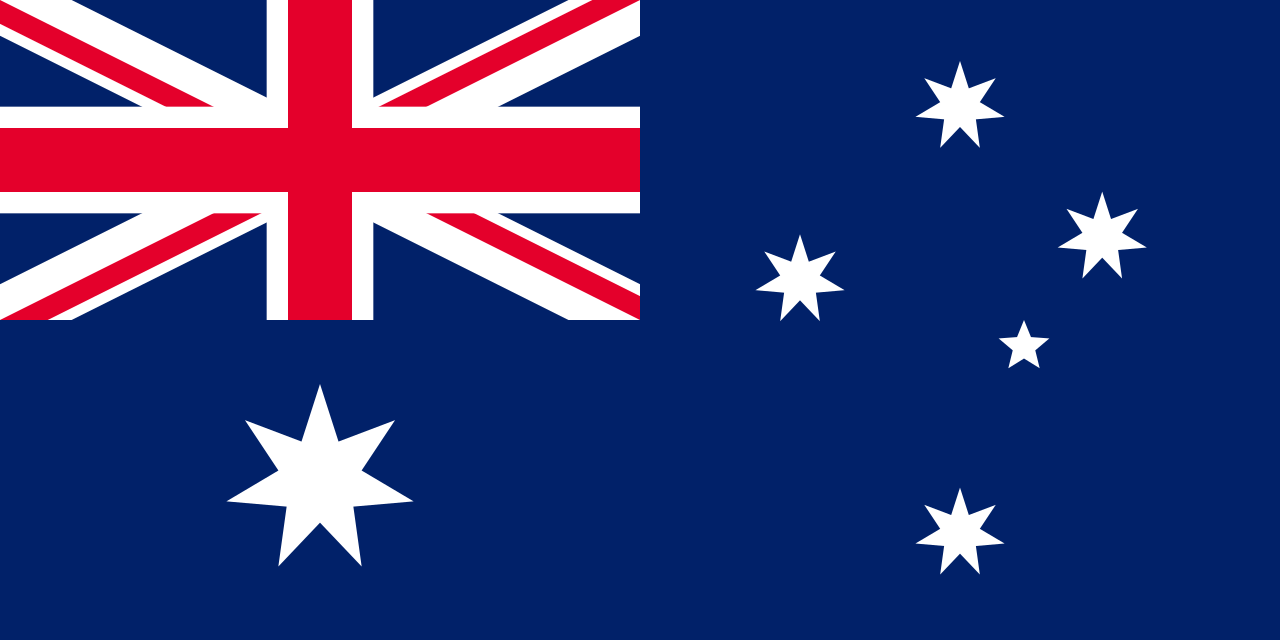
Australia
Location Info
- Continent: Oceania
- Country: Australia
- Coordinates: -25.2744 , 133.7751
Trust Info
Verified Geographic Information
🌍 Continents

Overview
Australia is the world's smallest continent and largest island, located between the Indian and Pacific Oceans in the Southern Hemisphere. It is a highly developed country characterized by a vast, arid interior known as the Outback and fertile coastal plains where the majority of its population resides. The nation operates as a federal parliamentary constitutional monarchy, comprising six states and two major mainland territories.
Historically, the continent has been inhabited by Indigenous Australians for over 65,000 years prior to British colonization in the late 18th century. Today, Australia is recognized for its robust economy driven by natural resources, services, and agriculture. It maintains a high standard of living, supported by advanced infrastructure and a diverse, multicultural society.
Truth & Facts
| Total Land Area | 7,688,287 sq km |
| Highest Point | Mount Kosciuszko (2,228 m) |
| Estimated Population | 26.8 Million |
| Capital City | Canberra |
| Federation Date | 1 January 1901 |
| Currency | Australian Dollar (AUD) |
| Road Network | 870,000 km |
| Literacy Rate | 99% |
| Life Expectancy | 83.3 Years |
| Official Language | English |
| UNESCO World Heritage Sites | 20 |
| Endemic Species Rate | 80%+ |
| Busiest Airport | Sydney Kingsford Smith (SYD) |
| Internet Penetration | 91% |
| Global Peace Index Rank | Top 25 |
| Head of State | Monarch of Australia |
| Founding Member | United Nations |
| Primary Energy Source | Coal and Renewables |
| Coastline Length | 25,760 km |
| LNG Export Rank | Top 3 Global |
| Highest Court | High Court of Australia |
📑 Table of Contents
Overview of Australia
Australia is an island continent and sovereign nation located between the Indian and Pacific Oceans. It is the sixth-largest country in the world, renowned for its diverse landscapes, ranging from tropical rainforests and mountain ranges to vast desert plains. The country operates as a highly developed, multicultural federation with a stable parliamentary democracy.
- Total Area: 7.69 million square kilometers
- Capital: Canberra
- Major Cities: Sydney, Melbourne, Brisbane, Perth, Adelaide
- Currency: Australian Dollar (AUD)
- Government: Constitutional Monarchy
| Category | Details |
|---|---|
| Official Name | Commonwealth of Australia |
| National Motto | Advance Australia Fair (Anthem Title) |
| Time Zones | UTC +8 to +11 |
Historical Development
Australia's history began over 65,000 years ago with the arrival of Indigenous peoples, making them one of the oldest continuous living cultures. European exploration intensified in the 17th century, followed by British colonization starting in 1788 with the arrival of the First Fleet in Sydney Cove.
- Arrival of Indigenous Australians (~65,000 years ago)
- First European landing by Willem Janszoon (1606)
- British Claim by James Cook (1770)
- Establishment of Penal Colony (1788)
- The Gold Rush Era (1850s)
- Federation of Australian Colonies (1901)
Geography and Landforms
The geography of Australia is characterized by its flatness and aridity, with the Western Plateau and Central Lowlands dominating the interior. The Great Dividing Range runs parallel to the east coast, separating the fertile coastal plains from the inland areas.
- Great Barrier Reef: World's largest coral reef system
- Uluru: Massive sandstone monolith in the Northern Territory
- Murray-Darling Basin: Principal river system for agriculture
- Nullarbor Plain: Vast limestone desert area
- Australian Alps: Only region to experience significant snow
Climate and Weather Patterns
Australia experiences a wide range of climates due to its size. The northern parts are tropical with wet and dry seasons, while the southern regions have temperate climates with four distinct seasons. The vast interior is largely arid or semi-arid.
| Region | Climate Type |
|---|---|
| Northern Australia | Tropical / Monsoonal |
| Central Australia | Arid / Desert |
| Southern Australia | Temperate / Mediterranean |
| Eastern Highlands | Sub-alpine / Oceanic |
Population and Demographics
Australia is one of the most urbanized nations in the world, with over 85% of people living within 50 km of the coast. The population is characterized by high levels of ethnic diversity resulting from sustained immigration programs since World War II.
- Ancestry: English, Australian, Irish, Scottish, Chinese, Italian
- Median Age: Approximately 38 years
- Population Growth: Driven by net overseas migration
- Indigenous Population: Roughly 3.2% of the total population
- Religions: Secular with Christianity as the largest group
Culture and Lifestyle
The Australian lifestyle is often associated with outdoor activities, sports, and a relaxed social atmosphere. It is a blend of Indigenous heritage, British traditions, and varied influences from immigrants across the globe.
- Focus on work-life balance and recreation
- Strong sporting culture (Cricket, AFL, Swimming)
- Significant contribution to cinema, music, and arts
- Integration of Indigenous art and storytelling
- Widespread coffee culture in urban centers
Festivals and Events
Annual events in Australia celebrate national identity, cultural diversity, and the arts. These events are held in major cities and regional areas throughout the year.
- Australia Day: National day on January 26th
- ANZAC Day: Commemoration of military service on April 25th
- Sydney Mardi Gras: Major LGBTQIA+ festival
- Melbourne Cup: World-famous horse racing event
- Vivid Sydney: Festival of light, music, and ideas
Food and Cuisine
Australian cuisine has evolved from British colonial roots into a modern fusion of Asian, Mediterranean, and Indigenous flavors. Fresh local produce, seafood, and meat are central components.
- Barbecuing is a common social culinary practice
- Famous items: Vegemite, Pavlova, Lamingtons, Meat Pies
- Extensive wine industry (Barossa, Hunter Valley)
- Increasing use of 'Bush Tucker' (native ingredients)
- High-quality seafood (Barramundi, Moreton Bay Bugs)
Economy and Major Industries
Australia possesses a robust, market-based economy. It is a major global player in mining and agriculture, with a highly developed services sector that contributes the majority of its GDP.
| Industry Sector | Key Contributions |
|---|---|
| Mining | Iron ore, Coal, Gold, LNG |
| Agriculture | Wheat, Beef, Wool, Wine |
| Services | Finance, Tourism, Education |
| Manufacturing | Food processing, Chemicals |
Cost of Living
The cost of living in Australia is relatively high compared to global averages, particularly in Sydney and Melbourne. However, this is generally balanced by high minimum wages and standard of living.
- Housing is the largest expenditure for households
- Utilities and fuel costs vary by state
- Public healthcare helps reduce personal medical costs
- Education costs vary between public and private sectors
- Food prices are influenced by local seasonality
Employment and Business
The Australian labor market is characterized by strong regulations and worker protections. The government encourages entrepreneurship and foreign investment through various trade agreements.
- Minimum wage is reviewed annually by Fair Work
- Strong demand for skilled workers in healthcare and tech
- Significant portion of the workforce in retail and hospitality
- Proximity to Asian markets drives international business
- Hybrid work models are common in corporate sectors
Real Estate and Housing
The Australian property market is known for its high homeownership aspirations and significant price growth in capital cities. Types of housing range from suburban detached homes to inner-city high-rise apartments.
- Sydney consistently ranks as the most expensive market
- Strict regulations on foreign property ownership
- High demand for rental properties in university hubs
- Stamp duty is a major tax on property transactions
- Growing focus on sustainable and energy-efficient building
Transportation and Connectivity
Due to its vast size, aviation is critical for domestic travel. Major cities have integrated public transport systems including trains, buses, and occasionally trams or ferries.
- Aviation: Domestic routes are among the busiest globally
- Rail: Extensive freight network; limited high-speed passenger rail
- Roads: Major highways connect all capital cities
- Ports: Essential for international bulk commodity exports
- Public Transport: Opal (Sydney), Myki (Melbourne) card systems
Infrastructure and Utilities
Australia invests heavily in national infrastructure, including telecommunications and energy grids. The National Broadband Network (NBN) provides high-speed internet across the continent.
- Transitioning to renewable energy sources
- Reliable water supply managed by regional authorities
- High standards for waste management and recycling
- Continuous investment in road and tunnel projects
- State-of-the-art telecommunications coverage in urban areas
Education System
Education in Australia is compulsory between the ages of 5 and 16. The country hosts several world-class universities that attract a large number of international students.
- Three-tier system: Primary, Secondary, and Tertiary
- Public schools are government-funded and free for citizens
- Private and Catholic school sectors are significant
- VET (Vocational Education and Training) through TAFE
- Strong emphasis on research and development
Healthcare Services
The Australian healthcare system, known as Medicare, provides universal access to medical services and subsidized medicines. It is complemented by a large private healthcare sector.
- Public hospitals provide free treatment for citizens
- Pharmaceutical Benefits Scheme (PBS) subsidizes prescriptions
- High ratio of doctors and specialists per capita
- Remote areas served by the Royal Flying Doctor Service
- Emphasis on preventative health and vaccination programs
Tourist Attractions
Australia offers a mix of natural wonders and architectural landmarks. Tourism is a vital component of the national economy, drawing millions of visitors annually.
- Sydney Opera House: Iconic 20th-century building
- Great Barrier Reef: Visible from outer space
- Uluru-Kata Tjuta: Spiritual heart of the country
- The Twelve Apostles: Limestone stacks off Victoria's coast
- Daintree Rainforest: World's oldest tropical rainforest
Things to Do
Activities in Australia vary by region, focusing on the coast for water sports and the interior for hiking and cultural exploration.
- Surfing at Bondi or Bells Beach
- Snorkeling and diving in the Coral Sea
- Hiking the Larapinta Trail or Blue Mountains
- Wine tasting in the Yarra Valley or Margaret River
- Wildlife spotting (Kangaroo Island, Phillip Island)
Best Places to Visit
Visitors typically divide their time between the cosmopolitan cities and the unique natural environments found in the regional areas.
| Place | Highlight |
|---|---|
| Sydney | Harbour and coastal lifestyle |
| Melbourne | Arts, coffee, and laneways |
| Gold Coast | Theme parks and beaches |
| Cairns | Gateway to the reef |
| Kangaroo Island | Pristine wildlife habitat |
Travel and Entry Information
Travel to Australia requires a valid visa for most non-citizens. The country has strict biosecurity laws to protect its unique environment and agriculture.
- Electronic Travel Authority (ETA) available for many nations
- Strict quarantine checks at all international airports
- Left-hand drive on all roads
- Comprehensive domestic flight networks
- Tipping is not mandatory but appreciated for good service
Nearby Regions
As an island nation, Australia's closest neighbors are located across the Tasman Sea and the Arafura Sea.
- New Zealand: To the southeast
- Papua New Guinea: Directly to the north
- Indonesia: To the northwest
- Fiji and Vanuatu: To the northeast
- Antarctica: Located to the south
Environment and Nature
Australia is one of the world's 17 megadiverse countries. It is home to a high percentage of endemic species that are found nowhere else on Earth.
- Flora dominated by Eucalyptus and Acacia (Wattle)
- Fauna includes unique monotremes and marsupials
- Conservation efforts focused on protecting the reef
- Challenges include invasive species and climate change
- National parks cover significant portions of land
Government and Administration
The Commonwealth of Australia is a federation of six states. Powers are divided between the federal government and state/territory governments according to the constitution.
- Separation of powers: Legislature, Executive, Judiciary
- Compulsory voting for all citizens aged 18+
- Bicameral Parliament (Senate and House of Representatives)
- The Prime Minister is the head of the government
- States manage education, health, and transport locally
Safety and Public Services
Australia is generally considered a safe destination with low crime rates. Public services are efficient and well-funded across the country.
- Emergency number is '000' for police, fire, and ambulance
- Strong water safety programs at public beaches
- Effective disaster response for bushfires and floods
- Clean tap water is available and safe to drink
- Consular assistance available for foreign nationals
Best Time to Visit
The ideal time to visit depends on the region. The north is best during the dry season, while the south is pleasant during spring and autumn.
- Summer (Dec-Feb): Beach weather in the south
- Winter (Jun-Aug): Skiing in the south, dry in the north
- Spring (Sep-Nov): Wildflowers and mild temperatures
- Autumn (Mar-May): Harvest festivals and stable weather
Business and Enterprise
Australia has a vibrant business environment with a mix of multinational corporations and small-to-medium enterprises (SMEs).
- Primary industries located in regional hubs
- Tech startups concentrated in Sydney and Melbourne
- Financial district located in the Sydney CBD
- Retail sectors dominated by major supermarket chains
- Growing renewable energy and green tech sector
General Information FAQs
Where is Australia located?
Australia is located in the Southern Hemisphere, situated between the Indian Ocean and the Pacific Ocean. It is technically both a continent and a country.
What is Australia known for?
Australia is known for its unique wildlife (kangaroos, koalas), the Great Barrier Reef, the vast Outback, and iconic structures like the Sydney Opera House.
Why is Australia famous?
It is famous for being the only nation-continent, its high quality of life, diverse multicultural society, and extreme geographical features.
What country or region is Australia part of?
Australia is an independent nation-state and is the primary landmass of the geographic region known as Oceania.
What is the population of Australia?
As of 2026, the population of Australia is approximately 26.8 million people.
What languages are spoken in Australia?
English is the de facto national language. However, over 300 languages are spoken in homes, including Mandarin, Arabic, Vietnamese, and various Indigenous languages.
What time zone is Australia in?
Australia has three main time zones: Australian Western Standard Time (AWST), Australian Central Standard Time (ACST), and Australian Eastern Standard Time (AEST).
What are the key facts about Australia?
Key facts include its status as the 6th largest country, its division into six states and two territories, and its capital city being Canberra.
What makes Australia unique?
Australia is unique due to its high level of endemism in flora and fauna, its status as the world's driest inhabited continent, and its ancient Indigenous heritage.
How large is Australia in area?
The total land area of Australia is approximately 7.69 million square kilometers.
History FAQs
What is the history of Australia?
Australia has a long history starting with Indigenous habitation, followed by European exploration, British penal colony establishment in 1788, and federation in 1901.
When was Australia established?
The Commonwealth of Australia was established on January 1, 1901, when the six British colonies federated.
What major historical events happened in Australia?
Major events include the 1850s Gold Rush, participation in WWI (Gallipoli), the 1967 Referendum regarding Indigenous rights, and the 2000 Sydney Olympics.
Who were important historical figures from Australia?
Figures include Sir Edmund Barton (first PM), Caroline Chisholm (social reformer), and Indigenous leaders like Vincent Lingiari.
How has Australia developed over time?
Australia transitioned from a collection of penal colonies to a major agricultural producer, then a mining powerhouse, and finally a diverse service-based economy.
Geography & Environment FAQs
What is the geography of Australia?
The geography is diverse, consisting of a dry central plateau (Outback), fertile eastern plains, and tropical regions in the north.
What natural features surround Australia?
It is surrounded by the Pacific Ocean to the east, the Indian Ocean to the west, and the Southern Ocean to the south.
Are there mountains, rivers, or lakes near Australia?
Yes, features include the Great Dividing Range (mountains), the Murray River, and Lake Eyre (an endorheic lake).
What is the elevation of Australia?
The average elevation is low (about 330m), but it ranges from -15m at Lake Eyre to 2,228m at Mt Kosciuszko.
What ecosystems exist around Australia?
Ecosystems include tropical rainforests, alpine heaths, temperate woodlands, and arid scrublands.
Climate & Weather FAQs
What is the climate like in Australia?
The climate is generally warm, ranging from tropical in the north to temperate in the south and arid in the center.
What is the average temperature in Australia?
In summer, average highs range from 25°C to 35°C. In winter, average highs in the south are around 14°C to 18°C.
What is the weather like throughout the year in Australia?
The seasons are reversed from the Northern Hemisphere. Summer occurs from December to February, while winter is from June to August.
Does Australia experience extreme weather?
Yes, Australia is prone to droughts, bushfires, tropical cyclones in the north, and occasional flooding.
What is the best time of year to visit Australia?
Spring (Sept-Nov) and Autumn (March-May) are generally considered the best times due to mild weather across most of the country.
Population & Society FAQs
What is the population density of Australia?
Australia has a very low population density of approximately 3.4 persons per square kilometer, though most live in high-density cities.
What ethnic groups live in Australia?
Major groups include those of European, Asian, and Indigenous descent. It is a highly multicultural society.
What religions are practiced in Australia?
Christianity is the largest group, but a significant portion of the population (nearly 40%) identifies with no religion.
What is daily life like in Australia?
Daily life is centered on urban living, with a strong emphasis on outdoor recreation, work-life balance, and community activities.
How diverse is the population of Australia?
Very diverse; nearly 30% of Australians were born overseas, representing almost every country in the world.
Culture & Traditions FAQs
What cultural traditions are important in Australia?
Indigenous 'Dreamtime' stories, the ANZAC spirit of 'mateship', and various immigrant cultural festivals are all vital.
What festivals are celebrated in Australia?
Celebrations include Australia Day, Lunar New Year, Diwali, and the Sydney Gay and Lesbian Mardi Gras.
What cultural landmarks exist in Australia?
Major landmarks include the Sydney Opera House, the Melbourne Cricket Ground, and Uluru.
What traditional clothing or customs are common in Australia?
While Western dress is standard, traditional Indigenous body art and 'bush' wear like Akubra hats are culturally significant.
What arts and crafts are associated with Australia?
Indigenous dot painting and bark painting are internationally renowned art forms unique to Australia.
Food & Cuisine FAQs
What foods is Australia known for?
Australia is known for Vegemite, Tim Tams, Pavlova, Barramundi, and meat pies.
What traditional dishes originate from Australia?
Dishes like the Lamington, Anzac biscuits, and damper bread are historically Australian.
What are the best restaurants in Australia?
Australia has many world-class restaurants, particularly in Melbourne and Sydney, specializing in 'Modern Australian' fusion cuisine.
What local ingredients are commonly used in Australia cuisine?
Ingredients include macadamia nuts, lemon myrtle, kangaroo meat, and fresh seafood like king prawns.
What food markets or street foods are popular in Australia?
The Queen Victoria Market in Melbourne and various weekend farmers' markets across the country are very popular.
Economy & Business FAQs
What are the main industries in Australia?
Major industries include mining (iron ore, coal), financial services, international education, and tourism.
What economic activities drive the economy of Australia?
The economy is driven by natural resource exports, agriculture, and a strong domestic services sector.
What businesses operate in Australia?
Global companies like BHP, Rio Tinto, and the 'Big Four' banks (CBA, Westpac, ANZ, NAB) are major players.
Is Australia an important economic center?
Yes, it is the 13th or 14th largest economy by nominal GDP and is a key trading partner in the Indo-Pacific region.
What are the major exports or products from Australia?
The primary exports are iron ore, coal, natural gas, gold, and agricultural products like wheat and beef.
Employment & Jobs FAQs
What job opportunities are available in Australia?
Strong opportunities exist in healthcare, social assistance, professional services, and the construction industry.
What are the major employers in Australia?
Major employers include the state governments (health and education), Wesfarmers (retail), and Woolworths Group.
What skills are in demand in Australia?
Nurses, secondary school teachers, software engineers, and aged care workers are currently in high demand.
Is Australia a good place to work?
Australia is often ranked highly for work conditions, offering competitive wages and strong statutory leave entitlements.
What is the unemployment rate in Australia?
The unemployment rate generally fluctuates between 3.5% and 4.5% in recent economic cycles.
Cost of Living FAQs
Is Australia expensive to live in?
Yes, it is considered one of the more expensive countries, particularly regarding housing and personal services.
What is the average cost of living in Australia?
A single person may spend between $3,000 and $4,500 AUD per month depending on the city and lifestyle.
How much does housing cost in Australia?
Median house prices in capital cities like Sydney often exceed $1 million AUD, while rentals vary significantly by location.
What are average food and utility costs in Australia?
Groceries for a single person average $100-$150 per week; utilities for a small apartment average $200 per month.
Is Australia affordable compared to nearby cities?
It is generally more expensive than cities in Southeast Asia but comparable to major cities in the US, UK, and New Zealand.
Housing & Real Estate FAQs
What types of housing are available in Australia?
Housing includes detached suburban houses, townhouses, and high-rise apartments in urban centers.
What is the average home price in Australia?
The national median home price is approximately $750,000 to $900,000 AUD, skewed by higher prices in major cities.
Is it better to rent or buy property in Australia?
This depends on individual financial goals; however, high property prices make renting a more accessible option for many young Australians.
Which neighborhoods are popular in Australia?
Inner-city areas like Surry Hills (Sydney) and Fitzroy (Melbourne) are popular for culture, while suburbs are preferred for families.
How has the property market changed in Australia?
The market has seen significant long-term growth, driven by low interest rates historically and high immigration levels.
Transportation FAQs
How do you get to Australia?
Most international visitors arrive via long-haul flights to major airports in Sydney, Melbourne, Brisbane, or Perth.
What is the nearest airport to Australia?
Major international gateways include Sydney Kingsford Smith Airport (SYD) and Melbourne Airport (MEL).
Does Australia have railway connections?
Internally, yes; it has an extensive interstate rail network, but there are no international land rail connections.
How reliable is public transportation in Australia?
In major cities, public transport is generally reliable and integrated, though it is less available in regional and remote areas.
What major highways or roads connect to Australia?
As an island, no highways connect to other countries. Internally, Highway 1 circles the entire continent.
Education FAQs
What schools are located in Australia?
Australia has thousands of government (public), Catholic, and independent (private) primary and secondary schools.
Are there universities in Australia?
Yes, there are 43 universities, most of which are public institutions, including the 'Group of Eight' research-intensive universities.
What is the literacy rate in Australia?
The adult literacy rate is estimated to be approximately 99%.
What educational opportunities exist in Australia?
Beyond school and university, there are extensive vocational training (VET) programs through TAFE colleges.
Is Australia a good place for students?
Yes, it is one of the world's top destinations for international students due to high academic standards and quality of life.
Healthcare FAQs
What hospitals are available in Australia?
There are over 1,300 hospitals, roughly split between the public and private sectors.
Are there emergency medical services in Australia?
Yes, emergency services are accessed by dialing 000, providing 24/7 ambulance, fire, and police support.
What healthcare facilities exist in Australia?
Facilities include General Practice (GP) clinics, specialized medical centers, and community health hubs.
Is healthcare affordable in Australia?
For citizens and permanent residents, essential healthcare is subsidized through Medicare, making it highly affordable.
Are specialized medical services available in Australia?
Yes, Australia is a leader in medical research and offers advanced oncology, cardiology, and surgical specialties.
Tourism & Travel FAQs
What are the top tourist attractions in Australia?
Top attractions include the Sydney Opera House, the Great Barrier Reef, Uluru, and the Great Ocean Road.
What are the best things to do in Australia?
Activities include coastal road trips, snorkeling in the reef, visiting national parks, and exploring city art galleries.
Is Australia worth visiting?
Absolutely; it offers unique natural landscapes and wildlife found nowhere else on Earth.
What landmarks should visitors see in Australia?
Key landmarks include the Blue Mountains, the Whitsunday Islands, and the Twelve Apostles.
How many days should tourists spend in Australia?
Due to its size, a minimum of 2 to 3 weeks is recommended to see more than one region.
Nearby Places FAQs
What places are near Australia worth visiting?
Nearby destinations include New Zealand, Bali (Indonesia), and the islands of Fiji.
What cities or towns are close to Australia?
Port Moresby (PNG) and Kupang (Indonesia) are among the closest international cities to Australia's northern coast.
What natural attractions are near Australia?
The Milford Sound in New Zealand and the volcanos of Indonesia are significant nearby natural wonders.
What day trips can be taken from Australia?
International day trips are not feasible, but internal day trips like Blue Mountains from Sydney or Phillip Island from Melbourne are common.
What famous destinations are within reach of Australia?
Destinations within a few hours' flight include Queenstown, Auckland, and various South Pacific island resorts.
Safety FAQs
Is Australia safe to live in?
Yes, Australia is considered one of the safest countries in the world with a high degree of social stability.
Is Australia safe for tourists?
It is very safe for tourists; however, visitors should be aware of natural hazards like strong ocean currents and extreme sun.
What is the crime rate in Australia?
The crime rate is relatively low, particularly regarding violent crime, though opportunistic theft occurs in urban areas.
What emergency services operate in Australia?
Comprehensive services include State Police, Fire and Rescue, and St John Ambulance (or state equivalents).
What safety tips should visitors follow in Australia?
Always swim between the red and yellow flags at beaches and use high-SPF sunscreen daily.
Lifestyle & Living FAQs
Is Australia a good place to live?
Australia consistently ranks in the top 10 globally for quality of life, health, and education.
What recreational activities are available in Australia?
Popular activities include surfing, bushwalking, Australian Rules Football (AFL), and community sports.
Is Australia family-friendly?
Yes, there are abundant parks, high-quality schools, and a safe environment for raising children.
What outdoor activities are popular in Australia?
Camping, hiking, fishing, and barbecuing in public parks are quintessential Australian pastimes.
What makes life enjoyable in Australia?
The combination of a high standard of living, beautiful natural surroundings, and a generally inclusive society.
Practical Information FAQs
What travel tips should visitors know about Australia?
Be prepared for long distances between cities and strict biosecurity rules at customs.
What local customs should visitors respect in Australia?
Respecting Indigenous cultural sites and practicing 'Leave No Trace' in national parks is very important.
How accessible is Australia for international visitors?
Highly accessible via major airline hubs, though flight times from the Northern Hemisphere are long (14-24 hours).
What services are available for tourists in Australia?
Information centers are located in every major town, along with extensive tourism infrastructure like hotels and tour operators.
What important information should travelers know before visiting Australia?
Ensure you have the correct visa, health insurance, and understand that smoking and alcohol are heavily taxed.