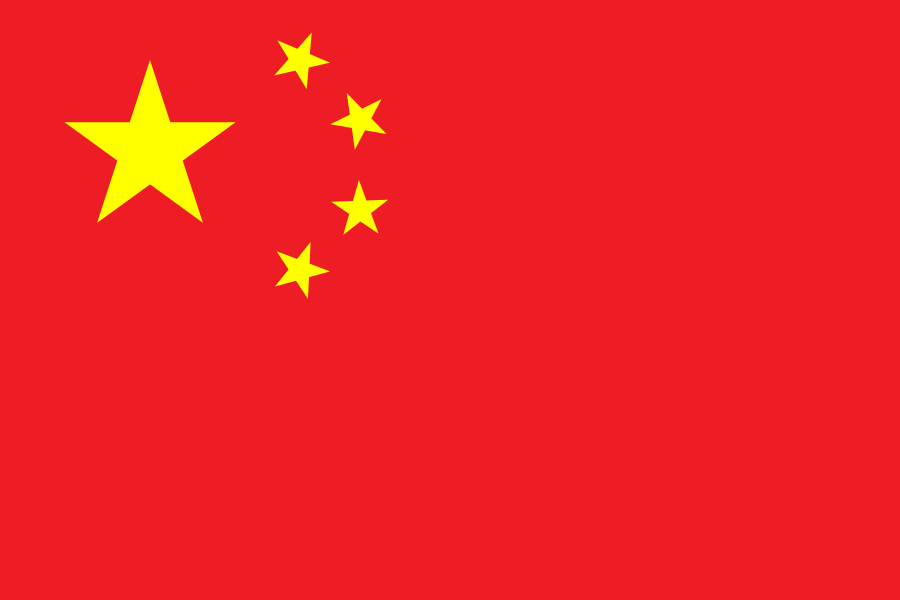
China
Location Info
- Continent: Asia
- Country: China
- Coordinates: 35.8617 , 104.1954
Trust Info
Verified Information
References
🌍 Continents



Overview
China, officially the People's Republic of China, is a vast country in East Asia with a landscape that spans deserts, mountains, lakes, rivers, and over 14,000 kilometers of coastline. As one of the world's oldest civilizations, China has a rich history that dates back thousands of years, characterized by a succession of powerful dynasties. Today, it stands as a global superpower, boasting the world's second-largest economy and a significant influence on international trade, technology, and politics.
The nation's geography is incredibly diverse, ranging from the Himalayan mountains in the west to the fertile plains in the east. China's rapid urbanization and industrialization over the past few decades have transformed it into a global manufacturing hub. Despite its modern advancements, China remains deeply rooted in its cultural traditions, which continue to shape the lives of its nearly 1.4 billion people.
Truth & Facts
| Total Area | 9,596,961 sq km |
| Total Population | 1.41 Billion |
| Capital | Beijing |
| PRC Founded | October 1, 1949 |
| Currency Name | Renminbi (Yuan) |
| HSR Length | 45,000+ km |
| Literacy Rate | 99.8% (15-24 age) |
| Average Lifespan | 78.6 Years |
| Language | Standard Mandarin |
| UNESCO Sites | 57 |
| Animal | Giant Panda |
| Busiest Port | Shanghai |
| Online Population | 1.08 Billion |
| Police | 110 |
| Ruling Party | Communist Party of China |
| UN Security Council | Permanent Member |
| Standard Voltage | 220V / 50Hz |
| Forestry % | 24.02% |
| Mount Everest | 8,848.86 m |
| Export Rank | 1st Globally |
📑 Table of Contents
Overview
China is a vast East Asian country known as the People's Republic of China. It holds the largest landmass in the region and one of the largest populations globally.
- Capital: Beijing
- Largest City: Shanghai
- Official Language: Mandarin
- Currency: Yuan (CNY)
- Government: Socialist Republic
History
China's history spans thousands of years of dynastic rule. Key periods include the Qin, Han, Tang, and Ming dynasties, leading to the 1949 founding of the modern state.
| Era | Duration |
|---|---|
| Ancient Dynasties | 2100 BC – 221 BC |
| Imperial China | 221 BC – 1912 AD |
| Modern Era | 1949 – Present |
Geography
From the Himalayas to the Yangtze River, China's geography is highly varied. It contains deserts, high plateaus, and fertile river plains.
Climate & Weather
The climate varies from subarctic in the north to tropical in the south. Monsoons significantly affect seasonal rainfall.
Population & Demographics
China has a population of 1.41 billion. The Han Chinese constitute over 91% of the total demographic.
Culture & Lifestyle
Culture is rooted in Confucian values, emphasizing family and social order. Tea, calligraphy, and martial arts remain central.
Festivals & Events
Major events include the Spring Festival (Lunar New Year) and the Mid-Autumn Festival, celebrated with family and traditional foods.
Food & Cuisine
Cuisine is divided into regional styles such as Sichuan, Cantonese, and Shandong. Rice and noodles are staples.
Economy & Industries
China is a manufacturing powerhouse and the world's second-largest economy by nominal GDP.
Cost of Living
Living costs vary; major cities like Shanghai are expensive, while rural areas remain affordable.
Employment & Business
The labor market focuses on tech, manufacturing, and services. Shenzhen and Beijing are major business hubs.
Real Estate & Housing
Urban residents primarily live in high-rise apartments. Property ownership is a major household priority.
Transportation
China features the world's longest high-speed rail network and extensive public metro systems in cities.
Infrastructure
Large projects like the Three Gorges Dam define China's infrastructure. 5G connectivity is widespread.
Education
Education is compulsory for nine years. Higher education is competitive, led by Tsinghua and Peking Universities.
Healthcare
A tiered system provides both Western medicine and Traditional Chinese Medicine (TCM).
Tourist Attractions
Key sites include the Great Wall, the Forbidden City, and the Terracotta Army.
Things to Do
Activities range from hiking in the Yellow Mountains to cruising the Yangtze River.
Best Places to Visit
Beijing, Shanghai, Xi'an, and Guilin are primary destinations for international visitors.
Travel Guide
Visas are usually required. Digital payments (Alipay/WeChat) are essential for travel.
Nearby Places
China borders 14 countries, providing various cross-border travel opportunities.
Environment
China is megadiverse, hosting species like the Giant Panda and the South China Tiger.
Government
Administration is centralized under the CPC, with provincial and local levels of governance.
Safety
Urban areas maintain high levels of safety and security with low violent crime rates.
Best Time to Visit
Spring (April-May) and Autumn (September-October) offer the best weather conditions.
Business Directory
Economic activity is concentrated in special economic zones and coastal industrial hubs.
General Information FAQs
Where is China located?
China is in East Asia, bordering the western Pacific Ocean.
What is China known for?
It is known for the Great Wall, its large population, and as a manufacturing leader.
Why is China famous?
China is famous for its ancient civilization, technological advancements, and economic growth.
What country or region is China part of?
China is a sovereign nation in East Asia.
What is the population of China?
The population is approximately 1.41 billion.
What languages are spoken in China?
Standard Mandarin is official; regional dialects like Cantonese are also common.
What time zone is China in?
The whole country uses China Standard Time (UTC+8).
What are the key facts about China?
It has 57 UNESCO sites, its capital is Beijing, and it uses the Yuan.
What makes China unique?
The blend of high-tech modernism with 5,000 years of history makes it unique.
How large is China in area?
It covers about 9.6 million square kilometers.
History FAQs
What is the history of China?
History involves millennia of imperial dynasties followed by modern revolution.
When was China established?
The People's Republic was founded in 1949.
What major historical events happened in China?
Major events include the unification under Qin and the 1978 economic reforms.
Who were important historical figures from China?
Confucius, Qin Shi Huang, and Mao Zedong are among the most influential.
How has China developed over time?
It evolved from an agrarian society into an industrial and digital superpower.
What were the Opium Wars?
Two conflicts in the mid-19th century involving trade disputes with foreign powers.
What was the Silk Road?
An ancient network of trade routes connecting China to the West.
What is the Great Wall?
A series of fortifications built to protect against nomadic invasions.
When did imperial rule end?
Imperial rule ended in 1912 with the Xinhai Revolution.
What was the Cultural Revolution?
A social-political movement in China from 1966 through 1976.
Geography & Environment FAQs
What is the geography of China?
Geography includes plateaus, mountains, deserts, and fertile plains.
What natural features surround China?
Surroundings include the Gobi Desert and the Pacific Ocean.
Are there mountains near China?
The Himalayas and the Kunlun Mountains are major ranges.
What is the elevation of China?
Elevation ranges from -154 meters to 8,848 meters.
What ecosystems exist in China?
Ecosystems range from tropical forests to alpine meadows.
What is the longest river in China?
The Yangtze River is the longest at 6,300 km.
Where is the Gobi Desert?
It is located in northern China and southern Mongolia.
Does China have many lakes?
Yes, including the large saline Qinghai Lake.
What is the Tibetan Plateau?
Often called the 'Roof of the World', it is a vast high-altitude region.
Are there active volcanoes in China?
There are few, mostly in the Changbaishan and Yunnan areas.
Climate & Weather FAQs
What is the climate like in China?
Climate varies from temperate to tropical and arid.
What is the average temperature in China?
It varies widely; northern averages are lower than southern ones.
What is the weather like year-round?
North has harsh winters; South has rainy, humid summers.
Does China experience extreme weather?
Yes, including typhoons, floods, and droughts.
What is the best time of year to visit?
Autumn and spring are the most pleasant seasons.
When is the rainy season?
The monsoon season generally occurs from May to September.
Does it snow in China?
Snow is common in the north and at high altitudes.
What is the humidity in southern China?
Humidity is often very high, frequently exceeding 80% in summer.
Is air quality an issue?
Air quality has improved but can be poor in industrial cities.
Does the Gobi Desert cause sandstorms?
Yes, especially in spring, affecting northern cities like Beijing.
Population & Society FAQs
What is the population density?
Density is highest in the east and lowest in the west.
What ethnic groups live in China?
The Han group is largest, plus 55 recognized minorities.
What religions are practiced?
Buddhism, Taoism, and folk religions are common.
What is daily life like?
Daily life is urban-centric and digitally integrated.
How diverse is the population?
It is diverse with many regional linguistic and cultural variations.
What is the official retirement age?
Currently 60 for men and 50-55 for women.
Is the population growing?
Growth has slowed, and the population has recently seen a slight decline.
What is the urbanization rate?
Over 65% of the population lives in cities.
What is the gender ratio?
There are slightly more males than females due to historical policies.
Are there many foreign residents?
Major cities like Shanghai have significant expatriate communities.
Culture & Traditions FAQs
What cultural traditions are important?
Traditions include filial piety and tea ceremonies.
What festivals are celebrated?
Spring Festival and Mid-Autumn Festival are primary.
What cultural landmarks exist?
The Forbidden City and Temple of Heaven are major ones.
What traditional clothing is common?
Hanfu and Qipao are historic garments worn for ceremonies.
What arts are associated with China?
Calligraphy, porcelain, and ink wash painting are famous.
What is Feng Shui?
The practice of arranging environments to harmonize with nature.
Is the dragon a positive symbol?
Yes, the dragon symbolizes power, strength, and good luck.
What is Chinese Opera?
A traditional form of theater combining music, dance, and acrobatics.
What is the importance of red?
Red represents happiness, success, and good fortune.
How is the New Year celebrated?
With family reunions, red envelopes, and firecrackers.
Food & Cuisine FAQs
What foods is China known for?
Known for dumplings, noodles, and Peking Duck.
What traditional dishes originate from China?
Kung Pao Chicken and Mapo Tofu are classic dishes.
What are the best restaurants?
Famous establishments include Quanjude and various street stalls.
What local ingredients are common?
Ingredients include soy, ginger, garlic, and tofu.
What street foods are popular?
Jianbing (crepes) and skewers (chuanr) are popular.
Is tea important?
Yes, tea is the national drink and central to hospitality.
How do Chinese people eat?
Chopsticks are the primary utensils for eating.
What is Dim Sum?
A Cantonese style of small bite-sized portions served in steamer baskets.
What is Hot Pot?
A communal meal where ingredients are cooked in a simmering pot of soup.
Is white rice eaten everywhere?
It is more common in the south; wheat noodles are common in the north.
Economy & Business FAQs
What are the main industries?
Industries include electronics, mining, and manufacturing.
What drives the economy?
Exports and infrastructure investments are key drivers.
What businesses operate in China?
Both state-owned giants and tech firms like Tencent.
Is China an economic center?
Yes, it is a global hub for finance and trade.
What are the major exports?
Exports include machinery, textiles, and computers.
What is the currency symbol?
The symbol is ¥ (CNY).
Is China in the WTO?
Yes, China joined the World Trade Organization in 2001.
What is the digital yuan?
A central bank digital currency issued by the PBoC.
What is the Belt and Road Initiative?
A global infrastructure development strategy led by China.
Where is the largest stock exchange?
The Shanghai Stock Exchange is the largest in China.
Transportation FAQs
How do you get to China?
Most travel via international flights to major hubs.
What is the nearest airport?
Beijing Capital and Shanghai Pudong are the busiest.
Does it have railway connections?
Yes, a massive high-speed and standard rail network.
How reliable is public transport?
Highly reliable and efficient in urban centers.
What major highways exist?
The National Trunk Highway System spans the country.
Can foreigners drive in China?
Only with a valid Chinese driving license; international permits are not recognized.
Is there a subway in every city?
Most major tier-1 and tier-2 cities have extensive metro lines.
What is a Maglev train?
A magnetic levitation train, currently operating in Shanghai.
How popular are bicycles?
Very popular, especially through massive app-based sharing programs.
What is the main domestic airline?
Air China is the national flag carrier.
Tourism & Travel FAQs
What are top tourist attractions?
The Great Wall and the Terracotta Army are top sites.
What are the best things to do?
Hiking mountains and exploring historic cities.
Is China worth visiting?
Yes, for its unique heritage and modern sights.
What landmarks should visitors see?
The Bund in Shanghai and the Potala Palace in Tibet.
How many days should tourists spend?
At least two weeks are recommended for a broad tour.
Do I need a VPN?
Many international sites are blocked; travelers often use VPN services.
Is tipping required?
Tipping is not traditional and generally not expected.
Can I use credit cards?
Major hotels take cards, but mobile payments are the norm everywhere else.
Is tap water drinkable?
No, it is recommended to drink bottled or boiled water.
Are there many English signs?
In major cities and transport hubs, English signage is common.