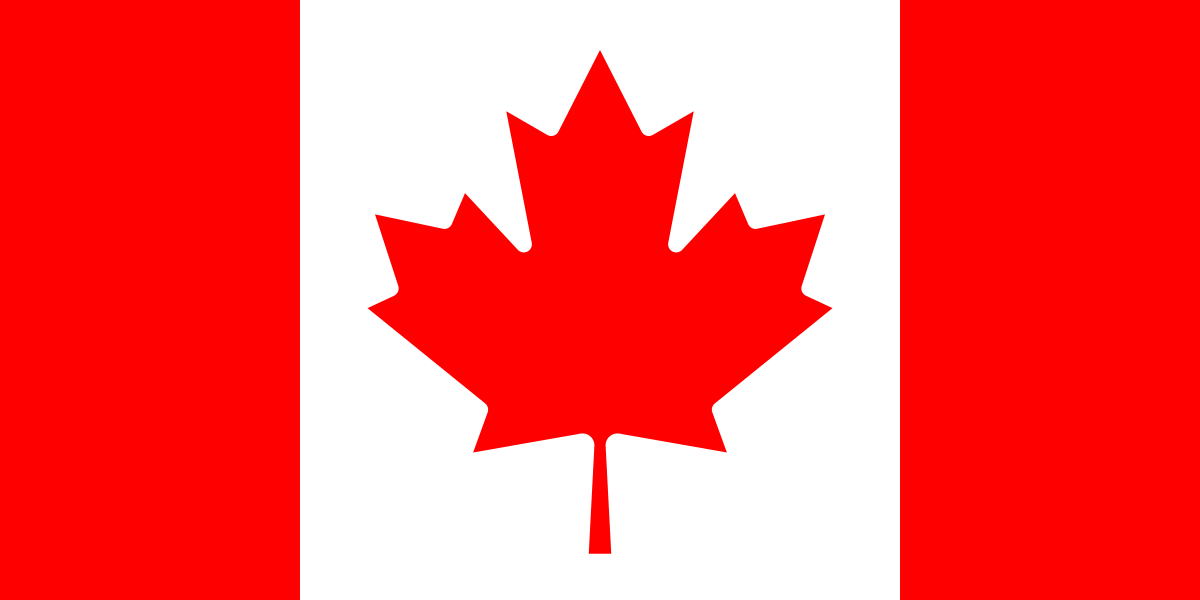
Canada
Location Info
- Continent: North America
- Country: Canada
- Coordinates: 56.1304 , -106.3468
Trust Info
Verified Geographic Information
🌍 Continents


Overview
Canada is a vast country located in the northern part of North America. It consists of ten provinces and three territories, stretching from the Atlantic Ocean in the east to the Pacific Ocean in the west, and northward into the Arctic Ocean. It is the world's second-largest country by total area, characterized by its diverse landscapes ranging from the rugged Rocky Mountains to the expansive Canadian Shield and the fertile prairies.
Historically, Canada was inhabited by Indigenous peoples for millennia before French and British expeditions began in the 15th century. It became a self-governing dominion in 1867 through Confederation. Today, Canada is a highly developed parliamentary democracy and a constitutional monarchy. It is recognized globally for its commitment to multiculturalism, its bilingual status (English and French), and its high standard of living supported by a robust economy driven by natural resources and a strong service sector.
Truth & Facts
| Total Area | 9,984,670 sq km |
| Coastline Length | 243,042 km |
| Current Population | 41,012,563 |
| Capital | Ottawa |
| Number of Provinces | 10 |
| Confederation | July 1, 1867 |
| Currency | Canadian Dollar (CAD) |
| GDP (Nominal) | $2.1 Trillion (est) |
| Main Electricity Source | Hydroelectricity |
| Literacy Rate | 99% |
| System Type | Publicly funded (Medicare) |
| Official Languages | English and French |
| Most Visited Province | Ontario |
| Forest Coverage | 38% |
| Major Railway | Canadian National (CN) / CPKC |
| Space Agency | Canadian Space Agency (CSA) |
| National Police | RCMP |
| Upper House | Senate of Canada |
| Member of | G7, G20, NATO, UN, Commonwealth |
| Freshwater Supply | 20% of world's total |
| Human Development Index | 0.935 (Very High) |
| First National Park | Banff |
| Primary Export | Crude Petroleum |
📑 Table of Contents
Overview
Canada is the world's second-largest country by total area, occupying most of northern North America. It is a federation consisting of ten provinces and three territories. The nation is known for its vast wilderness, multicultural society, and stable democratic governance.
As a developed nation, Canada maintains high rankings in international measurements of government transparency, civil liberties, and quality of life. It is officially bilingual at the federal level, with English and French as its primary languages.
- Capital: Ottawa
- Largest City: Toronto
- Official Languages: English, French
- Total Area: 9.98 million sq km
- Border: Longest land border with the USA
History
The history of Canada covers the period from the arrival of the Paleo-Indians thousands of years ago to the present day. Indigenous peoples inhabited the region long before European colonization began in the late 15th century by French and British explorers.
The British North America Act of 1867 united the British colonies of Canada, New Brunswick, and Nova Scotia into the Dominion of Canada. Over the 20th century, Canada gained full sovereignty from the United Kingdom, culminating in the Canada Act of 1982.
| Period | Major Event |
|---|---|
| 1867 | Confederation |
| 1914-1918 | World War I (Vimy Ridge) |
| 1982 | Patriation of the Constitution |
| 1999 | Creation of Nunavut |
Geography
Canada's geography is incredibly diverse, spanning six time zones and ranging from the Atlantic to the Pacific coasts. The country contains more lakes than the rest of the world combined, including a large portion of the Great Lakes.
- Mount Logan: Highest peak at 5,959 meters
- Canadian Shield: Vast rocky region around Hudson Bay
- Interior Plains: Major agricultural region in the west
- Arctic Archipelago: Group of islands in the far north
- St. Lawrence River: Major waterway for trade
Climate and Weather
Average winter and summer high temperatures across Canada vary according to the location. Winters can be harsh in many parts of the country, particularly in the interior and Prairie provinces, which experience a continental climate.
Coastal British Columbia enjoys a temperate climate with much milder winters. Northern regions remain cold throughout the year with permafrost common in the Arctic.
| Region | Climate Type |
|---|---|
| West Coast | Oceanic |
| Prairies | Semi-arid/Continental |
| Central Canada | Humid Continental |
| Arctic | Polar |
Population and Demographics
Canada has a population density of approximately 4 people per square kilometer, one of the lowest in the world. However, most of the population lives within 200 kilometers of the United States border.
- Ethnic Diversity: Over 250 ethnic origins
- Urbanization: Over 80% live in urban areas
- Religious Groups: Christianity is the largest, followed by Irreligion
- Median Age: Approximately 41 years
- Growth Rate: Driven primarily by permanent residency programs
Culture and Lifestyle
Canadian culture is a product of its diverse history and geography. It is influenced by British, French, and Indigenous traditions, as well as the customs brought by immigrants from around the globe.
Values such as egalitarianism, social justice, and peace-keeping are central to the Canadian identity. Sports play a major role in lifestyle, with ice hockey being the most popular winter activity.
Festivals and Events
Canada hosts numerous festivals that celebrate its heritage and arts. Canada Day on July 1st is the national holiday celebrated with fireworks and parades across all provinces.
- Quebec Winter Carnival: World's largest winter festival
- Calgary Stampede: Famous outdoor rodeo and exhibition
- Toronto International Film Festival (TIFF): Major global cinema event
- Montreal Jazz Festival: Guinness World Record holder
- Stratford Festival: Dedicated to Shakespearean theater
Food and Cuisine
Canadian cuisine varies significantly by region. While there are few 'national' dishes, maple syrup and poutine are widely recognized symbols of Canadian food.
| Dish | Origin | Key Ingredients |
|---|---|---|
| Poutine | Quebec | Fries, Cheese Curds, Gravy |
| Butter Tarts | Ontario | Pastry, Butter, Sugar, Eggs |
| Nanaimo Bar | British Columbia | Chocolate, Custard, Coconut |
| Bannock | Indigenous | Flatbread |
Economy and Industries
Canada has a mixed economy that is highly integrated with the United States. It is a global leader in the production of minerals, including gold, nickel, and uranium.
- Energy Sector: World's fourth-largest exporter of crude oil
- Manufacturing: Strong automotive and aerospace presence in Ontario/Quebec
- Agriculture: One of the world's largest suppliers of wheat and canola
- Technology: Emerging hubs in Toronto, Waterloo, and Vancouver
- Banking: Known for a highly stable and conservative financial system
Cost of Living
The cost of living in Canada varies greatly between provinces and cities. Urban centers like Toronto and Vancouver are the most expensive, particularly regarding housing and real estate.
Consumer goods prices are generally stable, though utilities and insurance can be high in certain regions. Sales tax (GST/HST) is applied to most goods and services.
Employment and Business
The Canadian labor market is diverse, with the service sector employing about three-quarters of the workforce. Business practices follow Western standards with a strong emphasis on professional certifications.
- Major Employers: Government, Banking, Retail, Manufacturing
- Unemployment Rate: Typically fluctuates between 5% and 6.5%
- Minimum Wage: Determined by individual provinces
- Work Week: Standard 37.5 to 40 hours
Real Estate and Housing
Housing in Canada includes a mix of detached homes, semi-detached, and high-rise condominiums. Ownership rates remain high, though affordability is a significant national issue in major cities.
- Average Home Price: Higher in BC and Ontario
- Rental Markets: Regulated by provincial residential tenancy acts
- Property Tax: Paid annually to municipal governments
- Mortgage System: Highly regulated by federal bank rules
Transportation and Connectivity
Due to its size, Canada relies heavily on air and rail transport. The Trans-Canada Highway is the main road artery, stretching over 7,800 kilometers from coast to coast.
- Air Canada: Largest national airline
- VIA Rail: National passenger rail service
- Public Transit: Extensive subway and bus systems in major cities
- Major Ports: Vancouver, Halifax, and Montreal
- Border Crossings: High volume of commercial traffic with the US
Infrastructure and Utilities
Canada's infrastructure is modern, with high-speed internet accessible to the majority of the population. Energy production is largely decentralized among provinces.
- Electricity: Heavily reliant on Hydro and Nuclear
- Water: Municipalities manage water treatment and distribution
- Telecommunications: Dominated by major providers like Rogers and Bell
- Winter Maintenance: Extensive snow removal infrastructure in all cities
Education
Education in Canada is a provincial responsibility. The country spends a high percentage of its GDP on education and has one of the highest proportions of college-educated citizens in the world.
- Primary/Secondary: Publicly funded and mandatory until age 16-18
- Post-Secondary: Includes world-class research universities
- Vocational Schools: Known as 'Colleges' in most provinces
- International Students: Large population contributes to the economy
Healthcare
The Canadian healthcare system, known as Medicare, provides essential medical services through public funding. It is free at the point of use for citizens and permanent residents.
- Administration: Managed at the provincial and territorial levels
- Primary Care: Family doctors act as gatekeepers for specialists
- Hospitals: Mostly non-profit or publicly operated
- Prescriptions: Often covered by private insurance or provincial plans for seniors
Tourist Attractions
Canada offers a wide range of attractions, from bustling cosmopolitan cities to spectacular natural wonders. Parks Canada manages over 40 national parks and numerous historic sites.
- Niagara Falls: World-famous waterfalls in Ontario
- CN Tower: Iconic skyline feature in Toronto
- Old Quebec: UNESCO World Heritage site
- Banff National Park: Stunning mountain scenery and turquoise lakes
- Hopewell Rocks: Dramatic tides in the Bay of Fundy
Things to Do
Outdoor recreation is a staple of Canadian life. Activities are often seasonal, with a strong focus on winter sports and summer water-based activities.
- Skiing and Snowboarding: Top resorts in Whistler and Mont-Tremblant
- Hiking: Thousands of kilometers of trails in provincial parks
- Whale Watching: Popular on both the Atlantic and Pacific coasts
- Canoeing: A traditional Canadian pastime on northern lakes
- Northern Lights: Visible in the northern territories and northern provinces
Best Places to Visit
The best places to visit in Canada depend on the traveler's interests, whether they prefer urban exploration or wilderness adventure.
| Destination | Best For |
|---|---|
| Vancouver | Nature and Urban Mix |
| Montreal | Culture and Food |
| Jasper | Mountain Scenery |
| St. John's | History and Coastal Views |
Travel Guide
Traveling within Canada requires planning due to the vast distances. International visitors typically require an Electronic Travel Authorization (eTA) or a visa.
- Peak Season: June to August (Warm weather)
- Winter Season: December to March (Skiing)
- Tipping: Customary 15% to 20% in restaurants
- Electricity: 120V, Type A and B plugs
Nearby Places
Canada shares its southern border with the United States. To the east lies the Atlantic Ocean, to the west the Pacific, and to the north the Arctic.
- United States: Accessible via major land crossings
- Greenland: Located across the Davis Strait
- Saint Pierre and Miquelon: French overseas territory off Newfoundland
- Alaska: Borders the Yukon and British Columbia
Environment and Nature
Canada is home to diverse ecosystems, including tundra, boreal forest, and temperate rainforests. It holds a significant portion of the world's wetlands and forests.
- Flora: Maple trees, pine, and spruce dominate
- Fauna: Moose, grizzly bears, and caribou
- Conservation: Strict environmental laws protect endangered species
- Climate Change: Significant impact observed in Arctic regions
Government and Administration
Canada is a constitutional monarchy where the monarch (King Charles III) is represented by the Governor General. The Prime Minister is the head of government.
- Executive: PM and Cabinet
- Legislative: House of Commons and Senate
- Judicial: Supreme Court of Canada is the highest court
- Federalism: Power is split between federal and provincial governments
Safety and Public Services
Canada is considered one of the safest countries in the world. Emergency services are well-organized and accessible via the 911 system.
- Crime Rate: Relatively low compared to global averages
- Police: RCMP (Federal) and local municipal forces
- Fire Services: Mostly professional in cities, volunteer in rural areas
- Public Safety: High emphasis on community-based policing
Best Time to Visit
The best time to visit Canada is generally during the summer months from June to August for pleasant temperatures and outdoor activities. However, autumn (September to October) is famous for the changing leaf colors in Ontario and Quebec.
Local Business Directory
Canada has a vibrant small business sector and several global corporations. The 'Better Business Bureau' (BBB) and local Chambers of Commerce are primary resources for business information.
- Retail: Large chains and independent boutiques
- Services: Tech startups, consulting, and finance
- Industry: Resource extraction and manufacturing
- Tourism: Local operators, hotels, and guide services
General Information FAQs
Where is Canada located?
Canada is located in the northern half of North America, bordering the United States to the south and the northwest (Alaska).
What is Canada known for?
Canada is known for its vast landscapes, the Rocky Mountains, maple syrup, ice hockey, and its polite and multicultural population.
Why is Canada famous?
Canada is famous for being the second-largest country by area, its high quality of life, and landmarks like Niagara Falls and the CN Tower.
What country or region is Canada part of?
Canada is an independent country located in North America. It is a member of the Commonwealth of Nations.
What is the population of Canada?
As of early 2026, the population of Canada is estimated to be over 41 million people.
What languages are spoken in Canada?
English and French are the two official languages, though many other languages are spoken due to high immigration levels.
What time zone is Canada in?
Canada spans six time zones: Pacific, Mountain, Central, Eastern, Atlantic, and Newfoundland Time.
What are the key facts about Canada?
Key facts include its capital Ottawa, its currency the Canadian Dollar, and its status as a parliamentary democracy.
What makes Canada unique?
Its dual English-French heritage, vast uninhabited northern wilderness, and 'cultural mosaic' approach to immigration make it unique.
How large is Canada in area?
Canada covers approximately 9.98 million square kilometers, making it slightly smaller than Europe but larger than Australia.
History FAQs
What is the history of Canada?
Canada's history includes millennia of Indigenous habitation followed by French and British colonization, leading to the 1867 Confederation.
When was Canada established?
The modern nation-state of Canada was established on July 1, 1867, with the passage of the British North America Act.
What major historical events happened in Canada?
Major events include the War of 1812, the building of the Canadian Pacific Railway, participation in both World Wars, and the 1982 Constitution Act.
Who were important historical figures from Canada?
Important figures include Sir John A. Macdonald (first Prime Minister), Terry Fox, and Lester B. Pearson (Nobel Peace Prize winner).
How has Canada developed over time?
Canada transitioned from a colonial resource-based economy to a technologically advanced, sovereign, and multicultural industrial nation.
Geography & Environment FAQs
What is the geography of Canada?
Canada's geography features the Rocky Mountains in the west, the Canadian Shield in the center, and Appalachian Mountains in the east.
What natural features surround Canada?
It is surrounded by the Atlantic, Pacific, and Arctic Oceans, and shares the Great Lakes with the United States.
Are there mountains, rivers, or lakes near Canada?
Yes, major features include the Rockies, the Mackenzie River, and over 2 million lakes including Great Bear Lake and Great Slave Lake.
What is the elevation of Canada?
Elevation varies from sea level at the coasts to 5,959 meters at the summit of Mount Logan in the Yukon.
What ecosystems exist around Canada?
Ecosystems include Arctic tundra, boreal forests, temperate grasslands (Prairies), and coastal rainforests.
Climate & Weather FAQs
What is the climate like in Canada?
The climate ranges from temperate on the west coast to subarctic and arctic in the north, with four distinct seasons in most regions.
What is the average temperature in Canada?
Temperatures vary widely; winter averages can be -15°C in the interior, while summer averages are around 20-25°C in the south.
What is the weather like throughout the year in Canada?
Spring is mild and rainy; summer is warm and humid; autumn is cool with vibrant foliage; winter is cold with significant snowfall.
Does Canada experience extreme weather?
Yes, Canada can experience blizzards, heatwaves, and occasionally tornadoes in the southern plains.
What is the best time of year to visit Canada?
Late spring (May-June) or early autumn (September-October) offer comfortable weather and fewer crowds.
Population & Society FAQs
What is the population density of Canada?
Canada has a very low population density of about 4.2 people per square kilometer.
What ethnic groups live in Canada?
Major groups include those of English, French, Scottish, Irish, German, Chinese, and Indigenous descent.
What religions are practiced in Canada?
Christianity (Catholic and Protestant) is the most common, followed by Islam, Hinduism, Sikhism, and Buddhism, while many identify as non-religious.
What is daily life like in Canada?
Daily life is generally urban-focused, with a high emphasis on work-life balance, outdoor recreation, and community involvement.
How diverse is the population of Canada?
Canada is highly diverse; over 20% of its population was born outside the country, one of the highest rates in the G7.
Culture & Traditions FAQs
What cultural traditions are important in Canada?
Traditions include honoring Indigenous history, observing Remembrance Day, and celebrating multiculturalism through local festivals.
What festivals are celebrated in Canada?
Canada Day, the Quebec Winter Carnival, the Calgary Stampede, and various ethnic festivals like Vaisakhi and Chinese New Year.
What cultural landmarks exist in Canada?
The Parliament Buildings in Ottawa, the Chateau Frontenac in Quebec City, and the National Gallery of Canada.
What traditional clothing or customs are common in Canada?
While Western clothing is standard, traditional items like Cowichan sweaters and Indigenous regalia are culturally significant.
What arts and crafts are associated with Canada?
Inuit soapstone carvings, West Coast totem poles, and the paintings of the Group of Seven.
Food & Cuisine FAQs
What foods is Canada known for?
Canada is famous for maple syrup, poutine, peameal bacon, and Pacific salmon.
What traditional dishes originate from Canada?
Dishes include tourtière (meat pie) from Quebec, bannock, and saskatoon berry pie.
What are the best restaurants in Canada?
Canada has several Michelin-starred and top-rated restaurants in Toronto, Montreal, and Vancouver, such as 'Alo' and 'Toqué!'.
What local ingredients are commonly used in Canada cuisine?
Ingredients include wild blueberries, Atlantic lobster, bison meat, and canola oil.
What food markets or street foods are popular in Canada?
St. Lawrence Market in Toronto, Jean-Talon Market in Montreal, and hot dog stands or poutine trucks.
Economy & Business FAQs
What are the main industries in Canada?
The main industries include natural resources (oil, gas, mining), manufacturing, automotive, and financial services.
What economic activities drive the economy of Canada?
International trade, particularly with the US, and domestic service sectors like real estate and finance.
What businesses operate in Canada?
Major corporations include the 'Big Five' banks, Shopify, Lululemon, and Magna International.
Is Canada an important economic center?
Yes, as a member of the G7, Canada is one of the world's most stable and significant economies.
What are the major exports or products from Canada?
Major exports include crude oil, motor vehicles, gold, wheat, and wood pulp.
Employment & Jobs FAQs
What job opportunities are available in Canada?
Opportunities are strong in healthcare, tech, construction, and specialized trades.
What are the major employers in Canada?
The federal government, health authorities, and large retailers like Loblaw Companies Limited.
What skills are in demand in Canada?
Software engineering, nursing, data analysis, and various skilled trades like plumbing and electrical work.
Is Canada a good place to work?
Yes, Canada offers strong labor protections, competitive salaries, and a focus on employee benefits.
What is the unemployment rate in Canada?
Historically, it hovers between 5% and 6.5% depending on economic cycles.
Cost of Living FAQs
Is Canada expensive to live in?
Compared to global averages, Canada has a moderate to high cost of living, especially in major urban hubs.
What is the average cost of living in Canada?
For a single person, it can range from $2,500 to $4,000 per month including rent, depending on the city.
How much does housing cost in Canada?
Rents in cities like Toronto or Vancouver often exceed $2,000 for a one-bedroom apartment.
What are average food and utility costs in Canada?
Grocery bills for a small family average $800-$1,200 monthly, while utilities often cost $150-$300.
Is Canada affordable compared to nearby cities?
It is generally more expensive than many US mid-western cities but comparable to major US coastal cities.
Housing & Real Estate FAQs
What types of housing are available in Canada?
Housing includes detached houses, townhomes, and high-rise condominiums (condos).
What is the average home price in Canada?
The national average often sits between $650,000 and $750,000 CAD, though it is much higher in Ontario and BC.
Is it better to rent or buy property in Canada?
This depends on individual financial status and location; buying has historically been a strong investment.
Which neighborhoods are popular in Canada?
Popular areas include Yorkville in Toronto, Plateau-Mont-Royal in Montreal, and Kitsilano in Vancouver.
How has the property market changed in Canada?
The market has seen significant price growth over the last decade, leading to stricter mortgage rules.
Transportation FAQs
How do you get to Canada?
Most international travelers arrive via major airports in Toronto, Vancouver, or Montreal.
What is the nearest airport to Canada?
Toronto Pearson (YYZ) is the largest and busiest airport in the country.
Does Canada have railway connections?
Yes, VIA Rail provides passenger service, and there are freight connections to the USA.
How reliable is public transportation in Canada?
Reliability is very high in major cities with subways (TTC, STM), but limited in rural areas.
What major highways or roads connect to Canada?
The Trans-Canada Highway and several major highways connecting to the US interstate system.
Education FAQs
What schools are located in Canada?
Canada has a vast network of public and private primary and secondary schools.
Are there universities in Canada?
Yes, over 100 universities including top-ranked institutions like U of T, McGill, and UBC.
What is the literacy rate in Canada?
The literacy rate is estimated to be 99%.
What educational opportunities exist in Canada?
Opportunities range from apprenticeship programs to postdoctoral research fellowships.
Is Canada a good place for students?
Yes, it is known for high educational standards and post-graduation work permits for international students.
Healthcare FAQs
What hospitals are available in Canada?
Each city has several public hospitals, including world-renowned teaching hospitals.
Are there emergency medical services in Canada?
Yes, 911 dispatch provides immediate ambulance, police, and fire response.
What healthcare facilities exist in Canada?
Facilities include community clinics, long-term care homes, and specialized diagnostic centers.
Is healthcare affordable in Canada?
For residents, essential healthcare is funded by taxes and free at the point of use.
Are specialized medical services available in Canada?
Yes, Canada has advanced facilities for oncology, cardiology, and pediatric care.
Tourism & Travel FAQs
What are the top tourist attractions in Canada?
Niagara Falls, Banff National Park, the CN Tower, and Parliament Hill.
What are the best things to do in Canada?
Skiing in Whistler, whale watching in BC, and exploring historic Old Quebec.
Is Canada worth visiting?
Yes, it offers a unique combination of modern city life and untouched natural wilderness.
What landmarks should visitors see in Canada?
The Peggy's Cove Lighthouse, the Bay of Fundy, and the Royal Tyrrell Museum.
How many days should tourists spend in Canada?
Due to its size, at least 10-14 days are recommended to see one or two major regions.
Nearby Places FAQs
What places are near Canada worth visiting?
Nearby destinations include New York City, Chicago, and Seattle in the United States.
What cities or towns are close to Canada?
Buffalo (NY), Detroit (MI), and Burlington (VT) are all near the Canadian border.
What natural attractions are near Canada?
The Adirondack Mountains and Glacier National Park (USA) are close to the border.
What day trips can be taken from Canada?
From Vancouver, one can visit Seattle; from Toronto, Niagara-on-the-Lake or Buffalo.
What famous destinations are within reach of Canada?
The northern lights in Iceland or Greenland are geographically accessible from Canada's east coast.
Safety FAQs
Is Canada safe to live in?
Yes, Canada consistently ranks as one of the safest countries for both residents and visitors.
Is Canada safe for tourists?
Very safe, although standard urban precautions against petty theft should be taken.
What is the crime rate in Canada?
The crime rate is low, and violent crime is rare compared to global statistics.
What emergency services operate in Canada?
Ambulance, fire, and police (RCMP, provincial, or local municipal) services.
What safety tips should visitors follow in Canada?
Prepare for cold weather in winter and practice bear safety when hiking in the mountains.
Lifestyle & Living FAQs
Is Canada a good place to live?
Yes, it offers political stability, high-quality public services, and a healthy environment.
What recreational activities are available in Canada?
Ice skating, hockey, hiking, camping, and summer cottaging are extremely popular.
Is Canada family-friendly?
Very, with many parks, community centers, and a safe environment for children.
What outdoor activities are popular in Canada?
Fishing, mountain biking, snowshoeing, and skiing.
What makes life enjoyable in Canada?
Clean air, access to nature, cultural diversity, and social safety nets.
Practical Information FAQs
What travel tips should visitors know about Canada?
Distances between cities are very large; air travel or long drives are necessary.
What local customs should visitors respect in Canada?
Punctuality is valued, and it is polite to tip service workers in the hospitality industry.
How accessible is Canada for international visitors?
Highly accessible with major international airports and simplified eTA processes for many countries.
What services are available for tourists in Canada?
Visitor information centers, extensive hotel networks, and standardized signage in English and French.
What important information should travelers know before visiting Canada?
Ensure you have appropriate winter clothing if visiting between November and April.