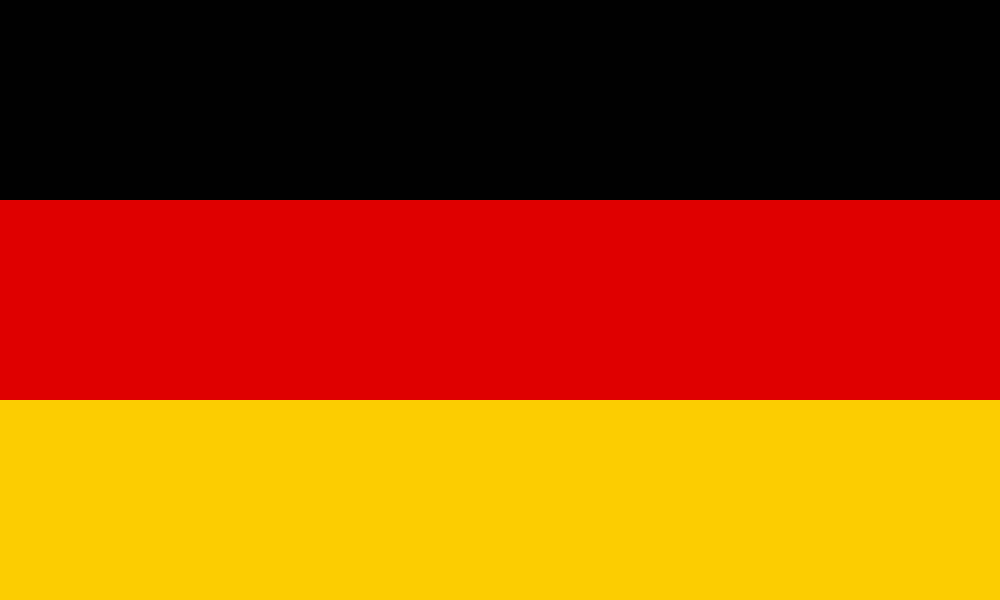
Germany
Location Info
- Continent: Europe
- Country: Germany
- Coordinates: 51.1657 , 10.4515
Trust Info
Verified Geographic Information
🌍 Continents

Overview
Germany, officially the Federal Republic of Germany, is a sovereign country located in Central Europe. It is the second-most populous country in Europe after Russia and the most populous member state of the European Union. Bordered by nine nations, Germany occupies a strategic position stretching from the Alps in the south to the North and Baltic Seas in the north.
The nation is characterized by its complex history, ranging from the Holy Roman Empire to its 1990 reunification. Today, Germany is a federal parliamentary republic and a global leader in various industrial and technological sectors. Its economy is the largest in Europe, driven by manufacturing, engineering, and a strong commitment to renewable energy and innovation.
Truth & Facts
| Total Area | 357,022 sq km |
| Highest Point | Zugspitze (2,962 m) |
| Population | 84.7 million |
| Official Language | German |
| Government Type | Federal Parliamentary Republic |
| Federal States | 16 Bundesländer |
| German Empire Proclaimed | January 18, 1871 |
| German Reunification | October 3, 1990 |
| Currency | Euro (€) |
| GDP Rank | 3rd Largest (Nominal) |
| Autobahn Network | Approx. 13,192 km |
| Literacy Rate | 99% |
| System Type | Universal Statutory Insurance |
| UNESCO World Heritage Sites | 52 |
| Most Visited City | Berlin |
| Forest Cover | 32% |
| Railway Length | 33,399 km |
| R&D Spending | 3.1% of GDP |
| Global Peace Index | Top 20 |
| Lower House | Bundestag |
| Founding Member | European Union (EU) |
| Renewable Energy Share | 52% of gross electricity consumption |
| Life Expectancy | 81.2 Years |
| Internet Penetration | 95% |
| Largest Groups | Roman Catholic & Protestant |
📑 Table of Contents
Overview
Germany is a major European power located in the heart of the continent. It shares borders with Denmark, Poland, Czech Republic, Austria, Switzerland, France, Luxembourg, Belgium, and the Netherlands. The capital and largest city is Berlin, which serves as a cultural and political hub.
As a federal republic, Germany is composed of 16 states, each with its own local government. It is a founding member of the European Union and maintains the largest national economy in Europe. The country is known for its technological innovation and high standard of living.
- Official Name: Federal Republic of Germany
- Capital City: Berlin
- Currency: Euro
- National Language: German
- Political System: Federal Parliamentary Republic
History
Germany's history is characterized by periods of fragmentation and unification. The region was part of the Holy Roman Empire for centuries before the rise of the Kingdom of Prussia. In 1871, Germany became a unified nation-state following the Franco-Prussian War.
The 20th century saw Germany's involvement in both World Wars, leading to the country's division into East and West Germany in 1949. The fall of the Berlin Wall in 1989 paved the way for reunification in 1990, restoring Germany as a single sovereign state.
| Era | Key Event |
|---|---|
| 1871 | Unification of Germany |
| 1919-1933 | Weimar Republic |
| 1949 | Division into FRG and GDR |
| 1990 | German Reunification |
Geography
The geography of Germany varies from the northern lowlands to the central uplands and the southern Alpine regions. Major rivers such as the Rhine, Danube, and Elbe flow through the country, serving as vital transport routes. The Black Forest and the Bavarian Forest are among its most famous wooded areas.
- Northern Lowlands: Flat terrain bordering the North and Baltic Seas.
- Central Uplands: Hilly regions including the Harz and Rhön mountains.
- Southern Alps: Home to Germany's highest peak, the Zugspitze.
- Main Rivers: Rhine, Danube, Elbe, Oder, Weser.
Climate and Weather
Germany has a temperate seasonal climate. The north experiences a maritime influence with relatively mild winters and cool summers, while the south and east have a more continental climate with hotter summers and colder winters. Precipitation occurs year-round.
| Season | Description | Avg Temp Range |
|---|---|---|
| Spring | Unsettled, blooming | 5°C to 15°C |
| Summer | Warm, occasionally humid | 18°C to 25°C |
| Autumn | Cool, colorful foliage | 8°C to 14°C |
| Winter | Cold, snow in highlands | -2°C to 3°C |
Population and Demographics
With over 84 million residents, Germany is the most populous country in the EU. The population is highly urbanized, with major concentrations in the Ruhr area and metropolitan regions like Berlin, Munich, and Hamburg. It has one of the world's oldest populations due to low birth rates and high life expectancy.
- Total Population: ~84.7 million
- Largest Ethnic Group: Germans (approx. 75-80%)
- Significant Minority Groups: Turkish, Polish, Syrian, Romanian
- Urban Population Rate: 77.5%
Culture and Lifestyle
German culture is deeply rooted in history, philosophy, and the arts. Often called 'Das Land der Dichter und Denker' (The Land of Poets and Thinkers), it has produced world-renowned figures like Kant, Goethe, and Beethoven. Modern lifestyle emphasizes work-life balance and environmental consciousness.
- Philosophy: Home to Kant, Hegel, and Nietzsche.
- Classical Music: Legacy of Bach, Beethoven, and Wagner.
- Architecture: Styles ranging from Romanesque to Bauhaus.
- Social Norms: Punctuality and direct communication are valued.
Festivals and Events
Germany hosts numerous world-famous festivals. Oktoberfest in Munich is the largest folk festival globally, attracting millions of visitors. Traditional Christmas markets (Weihnachtsmärkte) are a staple in almost every city during the winter season.
- Oktoberfest (Munich): Beer and Bavarian culture celebration.
- Berlinale (Berlin): One of the world's top film festivals.
- Carnival (Cologne/Düsseldorf): Elaborate parades and costumes.
- Unity Day: National holiday celebrating reunification on October 3.
Food and Cuisine
German cuisine is diverse and varies by region, but it is often characterized by hearty dishes involving meat, potatoes, and bread. Germany is famous for its bread culture, with over 3,000 recorded types of bread. Beer and wine production are also integral to the culinary tradition.
- Popular Meat: Bratwurst, Schnitzel, Sauerbraten.
- Side Dishes: Sauerkraut, Spätzle, Knödel.
- Beverages: German Beer, Riesling Wine, Apfelschorle.
- Street Food: Döner Kebab and Currywurst.
Economy and Industries
Germany is a global economic leader and the largest economy in Europe. It is famous for its 'Mittelstand'—small and medium-sized enterprises that are often world leaders in their niches. The country is a top exporter of machinery, vehicles, and chemicals.
| Industry Sector | Key Companies |
|---|---|
| Automotive | Volkswagen, BMW, Mercedes-Benz |
| Chemicals/Pharma | BASF, Bayer |
| Engineering/Electronics | Siemens, Bosch |
| Finance | Deutsche Bank, Allianz |
Cost of Living
The cost of living in Germany is moderate compared to other Western European nations but varies significantly by city. Munich is consistently the most expensive city, while cities in eastern Germany and rural areas tend to be more affordable. Utilities and insurance are significant monthly expenses.
- Highest Rent: Munich, Frankfurt, Stuttgart.
- Grocery Costs: Generally affordable due to high supermarket competition.
- Healthcare: Mandatory but provides high-quality coverage.
- Public Transport: Efficient but can be costly without monthly passes.
Employment and Business
Germany has a strong labor market with a high demand for skilled professionals, particularly in engineering, IT, and healthcare. The 'Dual Education System' combines vocational training with classroom learning, ensuring a highly skilled workforce.
- Working Hours: Average 35-40 hours per week.
- Vacation: Legal minimum of 20 days, but 25-30 is standard.
- Business Culture: Formal, hierarchical, and focused on efficiency.
- Work Visas: Various options like the EU Blue Card for skilled workers.
Real Estate and Housing
Germany is primarily a nation of renters; less than 50% of the population owns their home. In major cities, the housing market is extremely tight, leading to high competition for apartments. Modern buildings typically meet high energy-efficiency standards.
- Rental Agreements: Usually long-term and offer strong tenant protections.
- Warm vs. Cold Rent: 'Kaltmiete' (base rent) vs. 'Warmmiete' (includes heating/utilities).
- Housing Types: Altbau (pre-war) and Neubau (modern).
Transportation and Connectivity
Germany possesses one of the world's most dense and efficient transport networks. The Autobahn system is famous for its stretches without speed limits. Deutsche Bahn (DB) operates the national rail system, including the high-speed ICE trains connecting major cities.
- Airports: Frankfurt (FRA) and Munich (MUC) are major global hubs.
- Rail: Extensive network covering almost every town.
- Public Transit: U-Bahn (subway), S-Bahn (suburban rail), trams, and buses.
- Cycling: Very popular, with dedicated lanes in most cities.
Infrastructure and Utilities
German infrastructure is highly developed, though some areas face digital modernization challenges. The country is undergoing 'Energiewende,' a transition toward renewable energy sources like wind and solar power. Public utilities are reliable and strictly regulated.
- Electricity: High transition toward renewables.
- Water: Tap water is strictly monitored and safe to drink everywhere.
- Waste Management: Rigorous recycling and waste separation system.
- Digital: 5G rollout is ongoing; fiber-optic expansion is a national priority.
Education
Education in Germany is primarily the responsibility of the individual states (Länder). It is free at the point of entry for most public universities, even for international students. The system is known for its rigor and emphasis on practical application.
- Primary: Grundschule (usually 4 years).
- Secondary: Gymnasium, Realschule, or Hauptschule.
- Tertiary: Universities and Universities of Applied Sciences (Fachhochschulen).
- Literacy: Over 99% of the population.
Healthcare
Germany has a high-quality universal healthcare system. It is funded by social security contributions shared between employers and employees. Patients have a wide choice of doctors and hospitals, and waiting times are generally low compared to other OECD countries.
- Statutory Health Insurance (GKV): Covers ~90% of the population.
- Private Health Insurance (PKV): Available for high earners and self-employed.
- Facilities: Modern equipment and highly trained medical staff.
- Emergency: Dial 112 for medical emergencies nationwide.
Tourist Attractions
Germany offers a mix of historic landmarks and natural beauty. From the fairy-tale Neuschwanstein Castle to the somber history of the Berlin Wall, the country provides diverse experiences for visitors. UNESCO sites are abundant across all 16 states.
- Neuschwanstein: 19th-century Romanesque Revival palace.
- Cologne Cathedral: Gothic masterpiece and twin-spired landmark.
- Brandenburg Gate: Symbol of German unity in Berlin.
- Rhine Valley: Famous for vineyards and medieval castles.
Things to Do
Activities in Germany cater to outdoor enthusiasts and culture seekers alike. Hiking in the Black Forest, skiing in the Alps, and exploring world-class museums in Berlin or Munich are popular pursuits. The country is also famous for its vibrant nightlife and music scenes.
- Hiking: Thousands of kilometers of marked trails in national parks.
- Cycling: Exploring the Elbe or Danube cycle paths.
- Museums: Museum Island in Berlin is a must-visit.
- Shopping: Königsallee in Düsseldorf or Kaufingerstraße in Munich.
Best Places to Visit
While Berlin is the primary draw, other cities offer unique atmospheres. Munich is known for its beer halls and Alpine proximity, Hamburg for its maritime heritage and Speicherstadt district, and the Romantic Road for its picturesque medieval towns.
| Region | Highlight |
|---|---|
| Bavaria | Alps, Munich, Castles |
| Northern Germany | Hamburg, Baltic Coast |
| Western Germany | Cologne, Rhine River |
| Eastern Germany | Berlin, Dresden, Saxon Switzerland |
Travel Guide
Traveling in Germany is straightforward due to excellent infrastructure. English is widely spoken, especially in urban areas and among younger generations. Cash is still more commonly used than in some other European countries, though card payments are increasing.
- Visa: Schengen visa required for many non-EU citizens.
- Tipping: Rounding up or 5-10% is customary in restaurants.
- Sunday Closing: Almost all shops are closed on Sundays.
- Power: Type F plugs, 230V, 50Hz.
Nearby Places
Due to its central location, Germany is an ideal starting point for exploring Europe. It borders nine countries, most of which are easily reachable via high-speed train or short flights. Day trips across borders are common in frontier regions.
- Austria & Switzerland: Easily reached from the south (Munich).
- France & Benelux: Accessible from the west (Cologne/Frankfurt).
- Poland & Czech Republic: Accessible from the east (Berlin/Dresden).
- Denmark: Directly north of Hamburg.
Environment and Nature
Germany is committed to environmental protection and has 16 national parks. The landscape includes diverse ecosystems, from the Wadden Sea mudflats in the north to the limestone peaks of the Alps. The country is a leader in recycling and sustainable urban planning.
- National Parks: Saxon Switzerland, Berchtesgaden, Jasmund.
- Biodiversity: Home to deer, wild boar, and recently reintroduced wolves.
- Recycling: One of the highest recycling rates in the world.
Government and Administration
The Federal Republic of Germany is a representative democracy. The Federal Chancellor is the head of government, while the Federal President serves as the head of state in a largely ceremonial role. The legislative power is divided between the Bundestag and the Bundesrat.
- Bundestag: Members elected every four years.
- Bundesrat: Represents the 16 federal states.
- Judiciary: Independent Federal Constitutional Court in Karlsruhe.
- Voting Age: 18 (some local elections are 16).
Safety and Public Services
Germany is considered a safe country with low rates of violent crime. Public services are efficient and well-funded. Police (Polizei) are generally helpful and approachable. Fire and rescue services are highly professional and often supported by volunteers in rural areas.
- Emergency Numbers: 110 (Police), 112 (Fire/Ambulance).
- Public Safety: High levels of security in transport hubs.
- Sanitation: Public spaces are generally clean and well-maintained.
Best Time to Visit
The ideal time to visit depends on the planned activity. Late spring and early autumn offer mild weather for sightseeing. Summer is peak season for festivals and outdoor cafes, while winter is popular for skiing and Christmas markets.
- Sightseeing: May to September.
- Skiing: January and February.
- Lower Prices: November and March (excluding holidays).
- Festivals: September (Oktoberfest) and December (Christmas Markets).
Local Business Directory
Germany's economy is decentralized, with major business hubs across the country. Frankfurt is the financial center, Munich leads in tech and automotive, Hamburg is the logistics hub, and Berlin is the startup capital of Europe.
- Financial Hub: Frankfurt (Home to ECB and Deutsche Börse).
- Tech Centers: Munich, Berlin, Karlsruhe.
- Logistics: Hamburg Port, Duisburg Inland Port.
- Media: Cologne and Hamburg.
General Information FAQs
Where is Germany located?
Germany is located in Central Europe. It shares borders with nine countries: Denmark to the north; Poland and the Czech Republic to the east; Austria and Switzerland to the south; and France, Luxembourg, Belgium, and the Netherlands to the west.
What is Germany known for?
Germany is known for its high-quality engineering, automotive industry, rich musical and philosophical history, and as the largest economy in Europe. It is also famous for festivals like Oktoberfest and its diverse landscapes including the Black Forest and the Alps.
Why is Germany famous?
Germany is famous for its significant impact on world history, science, and the arts. It is the birthplace of the printing press, the automobile, and numerous scientific theories. It is also recognized for its cultural contributions in classical music and philosophy.
What country or region is Germany part of?
Germany is an independent country located in the region of Central Europe. It is a key member of the European Union, the Eurozone, and the Schengen Area.
What is the population of Germany?
As of early 2026, the population of Germany is approximately 84.7 million people, making it the most populous country in the European Union.
What languages are spoken in Germany?
The official and predominant language is German. Several minority languages like Sorbian, Danish, and North Frisian are recognized in specific regions. English is widely understood in business and tourist areas.
What time zone is Germany in?
Germany is in the Central European Time (CET) zone, which is UTC+1. During the summer, it observes Central European Summer Time (CEST), which is UTC+2.
What are the key facts about Germany?
Key facts include: Capital is Berlin; Currency is the Euro; It has 16 federal states; It is a leading global exporter; and it contains 52 UNESCO World Heritage Sites.
What makes Germany unique?
Germany is unique for its 'Mittelstand' economy, its decentralized structure of major cities, its free university education, and its specific social market economy model which balances capitalism with social protections.
How large is Germany in area?
Germany covers a total area of 357,022 square kilometers (137,847 square miles).
History FAQs
What is the history of Germany?
German history involves a long period as a collection of states within the Holy Roman Empire, unification in 1871, the rise and fall of the Third Reich, a 40-year division during the Cold War, and peaceful reunification in 1990.
When was Germany established?
The modern nation-state was first unified on January 18, 1871. The current Federal Republic was established in May 1949, and the modern unified Germany was formed on October 3, 1990.
What major historical events happened in Germany?
Major events include the Protestant Reformation, the 1871 Unification, World War I and II, the Holocaust, the building and fall of the Berlin Wall, and the 1990 Reunification.
Who were important historical figures from Germany?
Key figures include Martin Luther, Otto von Bismarck, Albert Einstein, Ludwig van Beethoven, Johann Sebastian Bach, Immanuel Kant, and Konrad Adenauer.
How has Germany developed over time?
Germany transitioned from an agrarian society to an industrial powerhouse in the 19th century. After total defeat in 1945, it achieved an 'Economic Miracle' (Wirtschaftswunder) and became a stable, leading democracy.
Geography & Environment FAQs
What is the geography of Germany?
The geography transitions from the flat North German Plain to the Central Uplands and finally to the Bavarian Alps in the south. It features significant river systems and large forested areas.
What natural features surround Germany?
Germany is bounded by the North Sea and Baltic Sea to the north and the Alps to the south. It is surrounded by land borders on all other sides.
Are there mountains, rivers, or lakes near Germany?
Yes, major mountains include the Alps and the Harz. Significant rivers include the Rhine, Danube, and Elbe. Lake Constance (Bodensee) is a major lake shared with Austria and Switzerland.
What is the elevation of Germany?
The elevation ranges from sea level (0 m) at the northern coasts to 2,962 m at the summit of the Zugspitze in the Alps.
What ecosystems exist around Germany?
Ecosystems include temperate broadleaf forests, alpine meadows, peat bogs, and the unique Wadden Sea mudflats on the North Sea coast.
Climate & Weather FAQs
What is the climate like in Germany?
Germany has a temperate climate with four distinct seasons. It is generally humid with moderate rainfall throughout the year.
What is the average temperature in Germany?
Average annual temperatures range from 9°C to 11°C. Summer averages are around 20-25°C, while winter averages hover near 0°C.
What is the weather like throughout the year in Germany?
Spring is mild and blooming; summer is warm and sunny; autumn is cool and rainy; winter is cold with occasional snow, especially in higher elevations.
Does Germany experience extreme weather?
Extreme weather is rare, but the country can experience heatwaves in summer and heavy flooding or severe winter storms occasionally.
What is the best time of year to visit Germany?
The best time is generally from May to September for pleasant weather, or December for the traditional Christmas markets.
Population & Society FAQs
What is the population density of Germany?
Germany has a high population density of about 233 people per square kilometer, though it varies significantly between urban and rural areas.
What ethnic groups live in Germany?
The majority are ethnic Germans. Significant minority groups include people of Turkish, Polish, Russian, Italian, and Middle Eastern descent.
What religions are practiced in Germany?
The main religions are Christianity (Catholicism and Protestantism). There is a growing Muslim population and a significant percentage of the population is irreligious.
What is daily life like in Germany?
Daily life is characterized by a high degree of organization, a strong emphasis on work-life balance, environmental awareness, and active participation in local clubs and associations.
How diverse is the population of Germany?
Germany is highly diverse; approximately one-quarter of the population has a 'migration background,' meaning they or at least one parent were born without German citizenship.
Culture & Traditions FAQs
What cultural traditions are important in Germany?
Important traditions include bread-making, regional folk festivals, classical music heritage, and the 'Kaffee und Kuchen' (coffee and cake) social custom.
What festivals are celebrated in Germany?
Key festivals include Oktoberfest, Karneval/Fasching, Unity Day, and various regional wine and harvest festivals.
What cultural landmarks exist in Germany?
Famous landmarks include the Brandenburg Gate, Neuschwanstein Castle, the Berlin Wall Memorial, and the Cologne Cathedral.
What traditional clothing or customs are common in Germany?
Tracht, such as Lederhosen and Dirndls, are traditional in Bavaria. Customs like Schultüte (cones for first-graders) are common nationwide.
What arts and crafts are associated with Germany?
Germany is known for woodcarving (especially in the Ore Mountains), porcelain (Meissen), and the Bauhaus school of design.
Food & Cuisine FAQs
What foods is Germany known for?
Germany is known for its varieties of sausages, bread, beer, sauerkraut, and pastries like Black Forest cake.
What traditional dishes originate from Germany?
Traditional dishes include Sauerbraten, Schnitzel, Rouladen, Maultaschen, and Spätzle.
What are the best restaurants in Germany?
Germany has many Michelin-starred restaurants, particularly in the southwest. Traditional Wirtshäuser (inns) offer the most authentic local experience.
What local ingredients are commonly used in Germany cuisine?
Common ingredients include potatoes, pork, cabbage, beets, apples, and various grains for bread.
What food markets or street foods are popular in Germany?
Weekly markets (Wochenmärkte) are popular for fresh produce. Street foods like Currywurst and Döner Kebab are staples in German cities.
Economy & Business FAQs
What are the main industries in Germany?
The main industries are automotive manufacturing, machinery, chemical production, electronics, and renewable energy technology.
What economic activities drive the economy of Germany?
Exports of high-tech goods, research and development, and a strong services sector drive the German economy.
What businesses operate in Germany?
A mix of global giants (Volkswagen, Siemens) and the 'Mittelstand' (highly specialized medium-sized companies) operate across the country.
Is Germany an important economic center?
Yes, it is the largest economy in Europe and the third-largest globally, serving as a key financial and industrial hub.
What are the major exports or products from Germany?
Major exports include cars and vehicle parts, industrial machinery, chemicals, pharmaceuticals, and electronic products.
Employment & Jobs FAQs
What job opportunities are available in Germany?
Opportunities are abundant in engineering, software development, healthcare (nursing and doctors), and skilled trades.
What are the major employers in Germany?
Major employers include the automotive groups (VW, BMW), Siemens, Deutsche Post DHL, and the public sector.
What skills are in demand in Germany?
STEM skills (Science, Technology, Engineering, Mathematics), nursing, and vocational skills like electrical engineering and plumbing are in high demand.
Is Germany a good place to work?
Yes, Germany offers high salaries, strong labor protections, and extensive social benefits, though the tax rate is relatively high.
What is the unemployment rate in Germany?
As of early 2026, the unemployment rate remains low, typically between 5% and 6%, though it varies by state.
Cost of Living FAQs
Is Germany expensive to live in?
It is moderate. While cheaper than the UK or Scandinavia, it is more expensive than Southern or Eastern Europe.
What is the average cost of living in Germany?
An individual typically needs between €1,200 and €2,500 per month depending on the city and lifestyle.
How much does housing cost in Germany?
Rents in major cities like Munich or Berlin are high (€15-€25 per sqm), whereas smaller towns are much more affordable.
What are average food and utility costs in Germany?
Groceries for one person cost around €250-€350 monthly. Utilities (heating, electricity, water) average €200-€300 for a standard apartment.
Is Germany affordable compared to nearby cities?
Berlin is generally more affordable than Paris or London, but more expensive than Warsaw or Prague.
Housing & Real Estate FAQs
What types of housing are available in Germany?
Options include Altbau (pre-1945 apartments), modern Neubau apartments, Reihenhäuser (terraced houses), and detached single-family homes.
What is the average home price in Germany?
Average prices range from €3,000 per sqm in rural areas to over €10,000 per sqm in prime Munich locations.
Is it better to rent or buy property in Germany?
Renting is culturally standard and offers flexibility, while buying is seen as a long-term investment but involves high closing costs (taxes and fees).
Which neighborhoods are popular in Germany?
Popular districts include Prenzlauer Berg (Berlin), Schwabing (Munich), and Eppendorf (Hamburg).
How has the property market changed in Germany?
Prices rose sharply over the last decade, but have recently stabilized or seen slight corrections due to higher interest rates.
Transportation FAQs
How do you get to Germany?
Germany is accessible via major international airports (Frankfurt, Munich, Berlin), an extensive rail network from neighboring countries, and modern highways.
What is the nearest airport to Germany?
Frankfurt Airport (FRA) is the largest and most central hub, followed by Munich (MUC) and Berlin Brandenburg (BER).
Does Germany have railway connections?
Yes, Germany has one of the most comprehensive rail networks in the world, with international connections to all neighboring countries.
How reliable is public transportation in Germany?
Generally very reliable and frequent, although Deutsche Bahn has faced criticism in recent years for delays on long-distance routes.
What major highways or roads connect to Germany?
The Autobahn network connects all major cities and links directly to the European E-road network.
Education FAQs
What schools are located in Germany?
Germany offers public and private schools, including the Gymnasium (academic track) and various vocational-focused secondary schools.
Are there universities in Germany?
Yes, there are over 400 higher education institutions, including world-renowned universities in Heidelberg, Munich, and Berlin.
What is the literacy rate in Germany?
The literacy rate is approximately 99%.
What educational opportunities exist in Germany?
Opportunities range from free university degrees and dual vocational training to professional development and research fellowships.
Is Germany a good place for students?
Yes, due to low or no tuition fees, high educational standards, and many English-taught programs at the Master's level.
Healthcare FAQs
What hospitals are available in Germany?
Germany has university hospitals, municipal hospitals, and private clinics, ensuring comprehensive coverage nationwide.
Are there emergency medical services in Germany?
Yes, reachable by dialing 112, with rapid response times and highly trained paramedics.
What healthcare facilities exist in Germany?
Facilities include specialized clinics, general practitioner practices (Hausärzte), and rehabilitation centers.
Is healthcare affordable in Germany?
Healthcare is covered by mandatory insurance; while premiums are based on income, out-of-pocket costs for treatments are very low.
Are specialized medical services available in Germany?
Yes, Germany is a leader in fields like cardiology, oncology, and orthopedics.
Tourism & Travel FAQs
What are the top tourist attractions in Germany?
Top attractions include Neuschwanstein Castle, the Berlin Wall, the Cologne Cathedral, and the Rhine Valley.
What are the best things to do in Germany?
Visiting museums, hiking in the Alps, exploring medieval towns, and attending local festivals are among the best activities.
Is Germany worth visiting?
Yes, it offers a diverse range of cultural, historical, and natural experiences that cater to all types of travelers.
What landmarks should visitors see in Germany?
The Brandenburg Gate, the Reichstag, the Zugspitze peak, and the Marienplatz in Munich are essential landmarks.
How many days should tourists spend in Germany?
A minimum of 7-10 days is recommended to see major cities; 2-3 weeks allows for a more comprehensive tour of different regions.
Nearby Places FAQs
What places are near Germany worth visiting?
Nearby destinations include Prague (Czech Republic), Salzburg (Austria), Strasbourg (France), and Amsterdam (Netherlands).
What cities or towns are close to Germany?
Major nearby cities include Zurich, Vienna, Copenhagen, and Brussels.
What natural attractions are near Germany?
The Alps extend into Austria and Switzerland, and the Bohemian Forest is shared with the Czech Republic.
What day trips can be taken from Germany?
From Munich, one can visit Salzburg; from Berlin, Szczecin; and from Aachen, Maastricht.
What famous destinations are within reach of Germany?
Paris, London, and Northern Italy are all within a few hours via high-speed train or flight.
Safety FAQs
Is Germany safe to live in?
Yes, Germany is consistently ranked as one of the safest countries in the world with low crime rates.
Is Germany safe for tourists?
Yes, though tourists should be mindful of pickpockets in crowded areas or major transport hubs.
What is the crime rate in Germany?
The crime rate is low, and violent crime is rare. Petty theft is the most common issue in urban centers.
What emergency services operate in Germany?
Police (110), Fire and Ambulance (112) operate 24/7 across the country.
What safety tips should visitors follow in Germany?
Keep an eye on belongings in tourist areas, use official taxis or reputable apps, and respect local laws regarding alcohol and quiet hours.
Lifestyle & Living FAQs
Is Germany a good place to live?
Yes, it offers a high quality of life, excellent public services, and a stable political environment.
What recreational activities are available in Germany?
Sports (especially football), hiking, cycling, and visiting thermal baths are popular recreational activities.
Is Germany family-friendly?
Extremely. There are many parks, playgrounds, and family-oriented benefits like 'Kindergeld' (child benefit).
What outdoor activities are popular in Germany?
Hiking, cycling, sailing on the northern lakes, and skiing in the south are very popular.
What makes life enjoyable in Germany?
The availability of green spaces, cultural events, reliable public transport, and the variety of regional traditions make life enjoyable.
Practical Information FAQs
What travel tips should visitors know about Germany?
Carry some cash, remember that shops close on Sundays, and validate your train tickets before boarding.
What local customs should visitors respect in Germany?
Punctuality is important; observe quiet hours (Ruhezeit) in residential areas; and be direct but polite in communication.
How accessible is Germany for international visitors?
Very accessible, with world-class infrastructure and high English proficiency in the tourism sector.
What services are available for tourists in Germany?
Tourist information offices (i-Points) are found in every major city, offering maps and local guidance.
What important information should travelers know before visiting Germany?
Check visa requirements, obtain travel insurance, and be aware of the 230V power standard and Type F plugs.