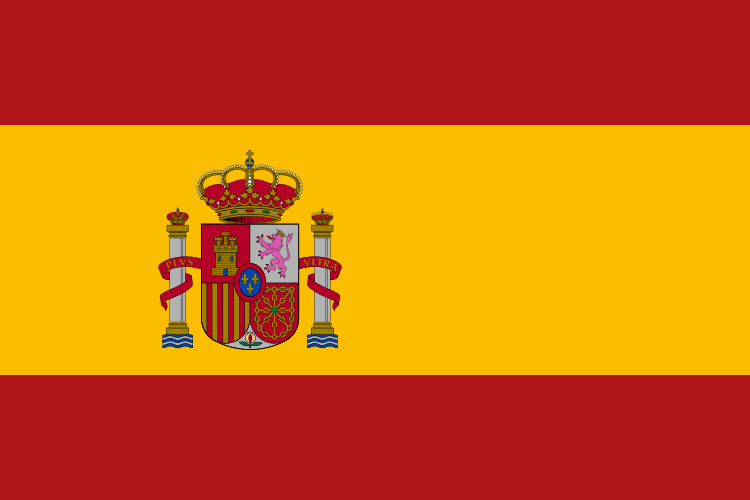
Spain
Location Info
- Continent: Europe
- Country: Spain
- Coordinates: 40.4637 , -3.7492
Trust Info
Verified Geographic and Statistical Information
🌍 Continents


Overview
Spain is a sovereign country located primarily on the Iberian Peninsula in southwestern Europe. Its territory also includes two archipelagos: the Canary Islands off the coast of Africa and the Balearic Islands in the Mediterranean Sea. The country shares land borders with France, Andorra, Portugal, and Gibraltar. As a mountainous nation, it is defined by the Pyrenees in the north and the Baetic System in the south.
Historically, Spain has been a crossroads of civilizations, including the Romans, Visigoths, and Moors, leading to its eventual emergence as a global empire. Today, it is a developed country and a member of the European Union, functioning as a parliamentary constitutional monarchy. It possesses a high-income economy driven by manufacturing, agriculture, and a globally significant tourism sector.
Truth & Facts
| Land Area | 505,990 square kilometers |
| Total Population | 48,592,909 |
| Government Type | Parliamentary Constitutional Monarchy |
| Roman Rule Start | 218 BC |
| Currency | Euro (EUR) |
| AVE Network Length | Over 3,900 km |
| Adult Literacy | 98.4% |
| Average Life Expectancy | 83.3 years |
| UNESCO Sites Count | 50 |
| Annual Visitors | Approx. 85 million |
| Reserves Count | 53 |
| Busiest Airport | Adolfo Suárez Madrid–Barajas |
| Fiber Coverage | Over 85% |
| Intentional Homicides | 0.6 per 100,000 |
| First-tier Subdivisions | 17 Autonomous Communities |
| Accession Year | 1986 |
| Renewable Share | 50.3% |
| Annual Inflation | 2.8% |
| Forest Area | 37% of territory |
| Olive Oil Production | World's #1 Producer |
📑 Table of Contents
Overview
Spain is a diverse nation located in Southwestern Europe, occupying approximately 85% of the Iberian Peninsula. It is characterized by its unique blend of traditional customs and modern infrastructure. The capital city, Madrid, serves as the political and financial center of the country.
- Official Name: Kingdom of Spain
- Capital: Madrid
- Official Language: Spanish (Castilian)
- Government: Constitutional Monarchy
- EU Member: Since 1986
History
The history of Spain spans thousands of years, from the pre-Roman era through the period of Roman Hispania. The subsequent Moorish conquest in 711 AD led to centuries of cultural and scientific exchange known as Al-Andalus, followed by the Reconquista completed in 1492.
| Period | Major Event |
|---|---|
| 1492 | Voyage of Columbus and Fall of Granada |
| 1500s-1700s | Spanish Golden Age and Imperial Expansion |
| 1936-1939 | Spanish Civil War |
| 1975 | Transition to Democracy |
Geography
Spain's geography is defined by high central plateaus, coastal plains, and rugged mountain ranges. The Pyrenees form a natural border with France, while the Sierra Nevada contains the mainland's highest peaks.
- Major Rivers: Tagus, Ebro, Douro, Guadalquivir
- Highest Peak: Teide (Tenerife) at 3,715m
- Coastlines: Atlantic Ocean and Mediterranean Sea
- Islands: Balearic and Canary Archipelagos
Climate and Weather
Spain is primarily characterized by three climatic zones: Mediterranean, Oceanic, and Semiarid. The Mediterranean climate features hot, dry summers and mild winters, predominant in coastal areas.
- Continental Mediterranean: Hot summers, cold winters (Interior)
- Oceanic: Cool summers, mild wet winters (Northern Coast)
- Semiarid: Located in the southeast (Almería)
Population and Demographics
The Spanish population is roughly 48 million people, with the majority living in urban centers. Significant demographic shifts have occurred due to immigration from Latin America, North Africa, and Eastern Europe.
| Metric | Statistic |
|---|---|
| Population Density | 94 people/km² |
| Urban Population | 81.3% |
| Median Age | 45 years |
Culture and Lifestyle
Spanish culture is deeply rooted in local traditions, art, and family. Social life often revolves around shared meals and community gatherings in public squares.
- Artistic Legacy: Home to Velázquez, Goya, and Picasso
- Architecture: Features Roman, Gothic, and Moorish styles
- Social Habits: Late dining times and afternoon breaks
Festivals and Events
Religious and cultural festivals are integral to Spanish life. Many events date back centuries and attract thousands of visitors annually.
- Semana Santa: Holy Week processions nationwide
- Las Fallas: Large-scale artistic displays in Valencia
- San Fermín: The running of the bulls in Pamplona
- La Tomatina: A giant tomato-throwing event in Buñol
Food and Cuisine
Spanish cuisine emphasizes fresh, regional ingredients like olive oil, garlic, and legumes. Seafood is a staple in coastal regions, while cured meats are prominent in the interior.
- Key Dishes: Paella, Tortilla Española, Gazpacho
- Dining Style: Tapas and Pincho culture
- Famous Meats: Jamón Ibérico and Chorizo
Economy and Industries
The Spanish economy is the fourth-largest in the Eurozone. While tourism is a major contributor, manufacturing and financial services are foundational sectors.
- Key Industries: Automotive, Tourism, Chemicals, Textiles
- Leading Exports: Vehicles, Fruit, Wine, Machinery
- Renewable Energy: High investment in wind and solar power
Cost of Living
Generally, Spain offers a lower cost of living compared to North American and Northern European neighbors. Costs vary significantly between major cities like Madrid and smaller towns in the interior.
- Groceries: Generally affordable due to local agriculture
- Utilities: Electricity costs are subject to EU market rates
- Public Transport: Very cost-effective in urban areas
Employment and Business
The labor market in Spain has seen diversification into technology and green energy. Small and medium-sized enterprises (SMEs) make up the majority of Spanish businesses.
- Major Business Hubs: Madrid, Barcelona, Bilbao, Valencia
- Key Employers: Santander, BBVA, Inditex, Telefónica
- Work Culture: Professional, with a strong focus on interpersonal relations
Real Estate and Housing
Spain has a high rate of home ownership. The housing market ranges from historic apartments in city centers to modern villas along the Mediterranean coast.
- Popular Areas: Costa del Sol, Costa Blanca, Madrid, Barcelona
- Housing Types: Pisos (apartments) and Chalets (detached houses)
- Regulations: Strict zoning in coastal areas to protect the environment
Transportation and Connectivity
Spain features a modern transportation network. The high-speed AVE rail system is one of the most efficient in the world, connecting major urban centers rapidly.
- Air Travel: AENA manages over 40 public airports
- Roads: Comprehensive network of Autovías and Autopistas
- Public Transit: Extensive metro systems in Madrid and Barcelona
Infrastructure and Utilities
Infrastructure in Spain is high-quality, with advanced water management and telecommunications systems. Fiber-optic internet is widely available in most residential areas.
- Water: Desalination plants are common in arid coastal regions
- Internet: Wide 5G coverage in major cities
- Waste Management: Organized recycling programs in municipalities
Education
The Spanish education system consists of public, private, and state-funded private schools (concertados). Higher education is provided by numerous historic and modern universities.
- Compulsory Ages: 6 to 16 years
- Major Universities: University of Salamanca, Complutense of Madrid
- Curriculum: Regulated by the Ministry of Education
Healthcare
The National Health System (Sistema Nacional de Salud) provides universal coverage to all citizens. Spain is globally recognized for its high standards of medical training and organ transplant programs.
- Access: Publicly funded through social security
- Quality: Consistently ranked in the top 10 globally by WHO
- Pharmacies: Widely available with regulated medicine prices
Tourist Attractions
Spain's attractions range from ancient Roman ruins to contemporary architectural marvels. Cultural tourism focuses on art museums and UNESCO sites.
- Prado Museum: Houses European art masterworks
- Alhambra: Moorish fortress in Granada
- Sagrada Família: Iconic basilica in Barcelona
- Mezquita-Catedral: Historic site in Córdoba
Things to Do
Visitors engage in various activities including cultural tours, beach excursions, and mountain sports. Spain is also a major destination for culinary experiences.
- Hiking: The Camino de Santiago pilgrimage routes
- Skiing: Pyrenees and Sierra Nevada resorts
- Beaches: Costa Brava and Balearic Islands
- Shopping: Famous districts in Madrid and Barcelona
Best Places to Visit
Each region of Spain offers a distinct atmosphere. Northern Spain is known for its green landscapes, while the south is famous for its sunny climate and Moorish history.
- Seville: Capital of Andalusia, known for Flamenco
- San Sebastián: Culinary hub in the Basque Country
- Toledo: Historic city with medieval architecture
- Mallorca: Mediterranean island with turquoise waters
Travel Guide
Spain is a member of the Schengen Area. International visitors typically arrive via major hubs in Madrid, Barcelona, or Málaga.
- Visa Policy: Schengen visa rules apply
- Currency: Euro (€)
- Electricity: Type F plugs, 230V
- Best Way to Travel: High-speed trains or domestic flights
Nearby Places
Spain's location makes it easy to visit neighboring countries or autonomous territories. Cross-border travel is common in the Pyrenees and along the Portuguese border.
- Portugal: Accessible by road or rail from western Spain
- France: Bordered by the Pyrenees in the north
- Morocco: Reached via ferry from the southern ports
- Andorra: A small principality between Spain and France
Environment and Nature
Spain is one of the most ecologically diverse countries in Europe. It features alpine meadows, wetlands, and the only true desert in Europe (Tabernas).
- National Parks: Doñana, Picos de Europa, Teide
- Wildlife: Iberian Lynx and Cantabrian Brown Bear
- Conservation: Large areas protected under Natura 2000
Government and Administration
The Spanish government is a decentralized system. While the central government in Madrid handles national defense and foreign policy, autonomous communities manage health and education.
- Legislature: General Courts (Cortes Generales)
- Executive: Led by the President of the Government (Prime Minister)
- Judiciary: Independent Supreme and Constitutional courts
Safety and Public Services
Spain maintains high standards of public safety. Law enforcement is shared between national, regional, and local police forces.
- Police Forces: Guardia Civil, National Police, Local Police
- Emergency Number: 112 (Universal for EU)
- Public Safety: Low rates of violent crime
Best Time to Visit
The optimal time to visit Spain depends on the region. Spring and autumn generally provide the most comfortable weather for exploring cities and historical sites.
- Spring (April-June): Ideal for festivals and city tours
- Summer (July-August): Best for coastal and northern regions
- Autumn (September-October): Pleasant temperatures nationwide
- Winter (December-February): Great for skiing or Canary Islands
Local Business Directory
Spain has a vibrant business sector with thousands of local enterprises. From traditional family-run shops to international tech firms, the directory reflects the country's economic diversity.
- Banking: Large networks of ATMs and branches
- Retail: Mixture of large department stores (El Corte Inglés) and boutiques
- Technology: Growing startup scenes in Madrid and Barcelona
General Information FAQs
Where is Spain located?
Spain is located in Southwestern Europe on the Iberian Peninsula. It occupies the majority of the peninsula and includes the Balearic Islands in the Mediterranean, the Canary Islands in the Atlantic, and two autonomous cities in North Africa.
What is Spain known for?
Spain is internationally recognized for its diverse geography, rich history of art and literature, world-class cuisine such as tapas and paella, and its vibrant festivals.
Why is Spain famous?
Spain is famous for its cultural contributions, such as flamenco music, the architecture of Antoni Gaudí, and its global influence as one of the largest former empires in history.
What country or region is Spain part of?
Spain is a sovereign state in Europe and is a prominent member of the European Union, the Eurozone, and the Schengen Area.
What is the population of Spain?
As of early 2026, the population of Spain is approximately 48.5 million people.
What languages are spoken in Spain?
Spanish (Castilian) is the official national language. Other co-official languages in their respective regions include Catalan/Valencian, Galician, and Basque.
What time zone is Spain in?
Peninsular Spain and the Balearic Islands use Central European Time (UTC+1). The Canary Islands use Western European Time (UTC+0).
What are the key facts about Spain?
Key facts include its status as a constitutional monarchy, its high-speed rail network (the largest in Europe), and being the world's leading producer of olive oil.
What makes Spain unique?
Spain's uniqueness stems from its blend of Roman, Visigoth, and Moorish history, alongside its varied landscapes ranging from the Pyrenees mountains to the volcanic Canary Islands.
How large is Spain in area?
Spain covers an area of approximately 505,990 square kilometers, making it the second-largest country in Western Europe.
History FAQs
What is the history of Spain?
Spain's history involves early settlement by Celts and Iberians, followed by Roman rule, the Visigothic Kingdom, and the Islamic Al-Andalus period. The Reconquista led to the unification of the country and the Spanish Empire.
When was Spain established?
Modern Spain began to take shape with the dynastic union of the Crowns of Castile and Aragon in 1469, followed by the conquest of Granada in 1492.
What major historical events happened in Spain?
Major events include the 1492 voyage of Columbus, the 1936-1939 Civil War, and the peaceful transition to democracy following the death of Francisco Franco in 1975.
Who were important historical figures from Spain?
Figures include Queen Isabella I, Miguel de Cervantes, artists like Velázquez and Picasso, and King Juan Carlos I, who oversaw the democratic transition.
How has Spain developed over time?
Spain transformed from a major colonial empire into a rural society in the 19th century, then into a modern, industrialized democracy and a leading member of the EU in the late 20th century.
Geography & Environment FAQs
What is the geography of Spain?
Spain is characterized by a central plateau known as the Meseta Central, surrounded by mountain ranges like the Pyrenees and the Baetic Mountains, and fertile coastal plains.
What natural features surround Spain?
Spain is bordered by the Mediterranean Sea to the east and south, the Atlantic Ocean to the west and north, and the Bay of Biscay to the north.
Are there mountains, rivers, or lakes near Spain?
Yes, Spain has major mountain systems like the Pyrenees and Sierra Nevada, and major rivers including the Ebro, Tagus, and Guadalquivir.
What is the elevation of Spain?
The average elevation of Spain is 660 meters, making it one of the highest countries in Europe after Switzerland and Austria.
What ecosystems exist around Spain?
Ecosystems include Alpine tundra in the Pyrenees, Mediterranean forests, Atlantic humid forests, and semiarid volcanic landscapes in the Canary Islands.
Climate & Weather FAQs
What is the climate like in Spain?
Spain has three main climates: Mediterranean (hot/dry), Oceanic (cool/wet), and Continental Mediterranean (extreme seasons in the interior).
What is the average temperature in Spain?
Average temperatures range from 10°C in winter in the north to over 30°C in summer in the south, specifically in regions like Andalusia.
What is the weather like throughout the year in Spain?
Spring and autumn are mild and pleasant. Summers are very hot and dry, especially in the interior and south, while winters are cold in the interior and rainy in the north.
Does Spain experience extreme weather?
Yes, Spain occasionally faces heatwaves during summer and heavy rain events known as 'DANA' in the autumn along the Mediterranean coast.
What is the best time of year to visit Spain?
The best time to visit is during spring (April to June) and autumn (September to October) when weather is ideal for sightseeing and outdoor activities.
Population & Society FAQs
What is the population density of Spain?
Spain has a population density of approximately 94 people per square kilometer, which is lower than most of its European neighbors.
What ethnic groups live in Spain?
The majority are native Spaniards, with significant populations of Latin American, North African, and Eastern European descent living in the country.
What religions are practiced in Spain?
Roman Catholicism is the historically predominant religion. Secularism is widespread, and there are growing Protestant, Muslim, and Jewish communities.
What is daily life like in Spain?
Daily life is characterized by a strong emphasis on social interaction, a Mediterranean diet, and a routine that often includes late dining and active public spaces.
How diverse is the population of Spain?
The population is increasingly diverse due to immigration and the distinct cultural identities of its various autonomous communities.
Culture & Traditions FAQs
What cultural traditions are important in Spain?
Key traditions include the siesta (though declining in cities), the evening paseo (stroll), and traditional music and dance forms like Flamenco and Jota.
What festivals are celebrated in Spain?
Major festivals include Semana Santa, the Fallas of Valencia, the Feria de Abril in Seville, and the San Fermín festival in Pamplona.
What cultural landmarks exist in Spain?
Landmarks include the Alhambra in Granada, the Great Mosque of Córdoba, and the modern masterpieces of Gaudí in Barcelona.
What traditional clothing or customs are common in Spain?
Traditional dress, like the Traje de Flamenca, is mostly worn during local fairs. Customs include greeting people with two kisses on the cheeks.
What arts and crafts are associated with Spain?
Spain is known for its ceramics (Talavera), leather goods (Ubrique), and traditional embroidery and lace-making.
Food & Cuisine FAQs
What foods is Spain known for?
Spain is famous for Tapas, Paella, Jamón Ibérico, Gazpacho, and Churros.
What traditional dishes originate from Spain?
Dishes like Fabada Asturiana, Cocido Madrileño, and Pulpo a la Gallega originate from specific Spanish provinces.
What are the best restaurants in Spain?
Spain is home to world-renowned Michelin-starred restaurants, particularly in the Basque Country and Catalonia, but local 'Mesones' offer authentic traditional food.
What local ingredients are commonly used in Spain cuisine?
Common ingredients include olive oil, saffron, pimentón (paprika), garlic, and a variety of seafood and legumes.
What food markets or street foods are popular in Spain?
Indoor markets like the Boqueria in Barcelona and San Miguel in Madrid are popular. Traditional street food is less common than sitting down for tapas.
Economy & Business FAQs
What are the main industries in Spain?
The main industries include tourism, automotive manufacturing, agribusiness, and financial services.
What economic activities drive the economy of Spain?
The economy is driven by strong domestic consumption, international tourism, and the export of manufactured goods and agricultural products.
What businesses operate in Spain?
Large multinationals like Inditex (Zara), Iberdrola, and major banks like Santander and BBVA are based in Spain.
Is Spain an important economic center?
Yes, Spain is the 4th largest economy in the European Union and acts as a primary bridge for business between Europe and Latin America.
What are the major exports or products from Spain?
Major exports include automobiles, refined petroleum, pharmaceuticals, fruits, and wine.
Employment & Jobs FAQs
What job opportunities are available in Spain?
Opportunities exist in tourism, renewable energy sectors, digital technology hubs, and healthcare services.
What are the major employers in Spain?
The public sector, retail giants like El Corte Inglés, and telecommunications leader Telefónica are among the largest employers.
What skills are in demand in Spain?
Digital skills, engineering (especially in energy), and proficiency in English alongside Spanish are highly valued.
Is Spain a good place to work?
Spain offers a high quality of life and a strong work-life balance, although youth unemployment has historically been a challenge.
What is the unemployment rate in Spain?
The unemployment rate has been declining and sits at approximately 11.5% as of early 2026.
Cost of Living FAQs
Is Spain expensive to live in?
Compared to Northern Europe, Spain is generally more affordable, though prices are higher in Madrid and Barcelona.
What is the average cost of living in Spain?
A single person typically needs between €1,500 and €2,200 per month for a comfortable life in a city, including rent.
How much does housing cost in Spain?
Rent for a one-bedroom apartment ranges from €600 in smaller cities to over €1,200 in central Madrid or Barcelona.
What are average food and utility costs in Spain?
Monthly groceries average €250-€350 per person, while utilities for a standard apartment usually range from €100 to €150.
Is Spain affordable compared to nearby cities?
Yes, Spain is generally cheaper than Paris, London, or Amsterdam, especially regarding food and leisure activities.
Housing & Real Estate FAQs
What types of housing are available in Spain?
Options include city 'pisos' (apartments), traditional townhouses, and suburban 'chalets' or villas.
What is the average home price in Spain?
Prices vary wildly; city center properties average €3,000-€5,000 per square meter, while rural areas are much lower.
Is it better to rent or buy property in Spain?
Spaniards traditionally prefer to buy, but renting is increasingly common among younger generations and expatriates.
Which neighborhoods are popular in Spain?
Popular areas include Salamanca in Madrid, Eixample in Barcelona, and the coastal communities of the Costa del Sol.
How has the property market changed in Spain?
The market has recovered from the 2008 crash, with steady growth in demand for energy-efficient homes and remote-work friendly spaces.
Transportation FAQs
How do you get to Spain?
Most travelers arrive by air via Madrid, Barcelona, or Málaga. International trains connect Spain to France, and ferries run from North Africa and the UK.
What is the nearest airport to Spain?
Madrid-Barajas (MAD) is the primary international gateway, followed by Barcelona-El Prat (BCN).
Does Spain have railway connections?
Yes, Spain has a world-class high-speed rail network (AVE) and regional services (Media Distancia) and local trains (Cercanías).
How reliable is public transportation in Spain?
Public transportation is highly reliable, clean, and affordable, particularly the metro and bus systems in major cities.
What major highways or roads connect to Spain?
Spain is connected via the AP-7 (Mediterranean motorway) and the A-1 through A-6 radials connecting Madrid to the borders.
Education FAQs
What schools are located in Spain?
Spain has a mix of public schools (colegios públicos), state-subsidized private schools (concertados), and private international schools.
Are there universities in Spain?
Yes, Spain has over 80 universities, including prestigious institutions like the University of Barcelona and IE University.
What is the literacy rate in Spain?
The adult literacy rate is very high, approximately 98.4%.
What educational opportunities exist in Spain?
Opportunities include undergraduate and postgraduate degrees, Erasmus+ exchange programs, and professional vocational training (FP).
Is Spain a good place for students?
Yes, Spain is one of the most popular destinations for international students due to its culture, affordable tuition, and high quality of life.
Healthcare FAQs
What hospitals are available in Spain?
Spain has a network of modern public hospitals under the SNS and numerous high-end private clinics.
Are there emergency medical services in Spain?
Yes, the public emergency medical system (SAMUR/SUMMA) is highly efficient and accessible via the 112 number.
What healthcare facilities exist in Spain?
Facilities include local 'Centros de Salud' (primary care), specialized hospitals, and a vast network of pharmacies.
Is healthcare affordable in Spain?
Public healthcare is free at the point of delivery for residents. Private insurance is also relatively affordable compared to the US.
Are specialized medical services available in Spain?
Yes, Spain is a leader in fields such as oncology, organ transplantation, and reproductive medicine.
Tourism & Travel FAQs
What are the top tourist attractions in Spain?
The Alhambra, Sagrada Família, Prado Museum, and the historic center of Seville are top-rated attractions.
What are the best things to do in Spain?
Things to do include visiting beaches, exploring historic cathedrals, wine tasting in Rioja, and hiking in the Picos de Europa.
Is Spain worth visiting?
Yes, Spain is consistently ranked as one of the top travel destinations in the world for its diverse culture and landmarks.
What landmarks should visitors see in Spain?
Essential landmarks include the Aqueduct of Segovia, the Mosque-Cathedral of Córdoba, and the Guggenheim Museum in Bilbao.
How many days should tourists spend in Spain?
A minimum of 10 to 14 days is recommended to see major cities like Madrid, Barcelona, and Seville.
Nearby Places FAQs
What places are near Spain worth visiting?
Nearby destinations include Lisbon in Portugal, the French Riviera, and the Atlas Mountains in Morocco.
What cities or towns are close to Spain?
Cities like Lisbon (Portugal), Bordeaux (France), and Tangier (Morocco) are within easy reach of the Spanish border.
What natural attractions are near Spain?
The Pyrenees range spans the border with France, and the Atlantic coast stretches into Portugal.
What day trips can be taken from Spain?
Day trips to Gibraltar or the small principality of Andorra are common for visitors in the south and north, respectively.
What famous destinations are within reach of Spain?
Porto, Marrakesh, and the Pyrenees National Park in France are all within a few hours of Spanish territory.
Safety FAQs
Is Spain safe to live in?
Spain is considered one of the safest countries in the world with low rates of violent crime.
Is Spain safe for tourists?
Yes, Spain is very safe for tourists, though petty theft like pickpocketing can occur in crowded areas of big cities.
What is the crime rate in Spain?
The overall crime rate is low, and the country consistently ranks high in global safety indexes.
What emergency services operate in Spain?
Emergency services include the National Police, Civil Guard, local police, and advanced medical and fire services.
What safety tips should visitors follow in Spain?
Visitors should be mindful of their belongings in tourist hotspots and use official transport services.
Lifestyle & Living FAQs
Is Spain a good place to live?
Yes, Spain is highly rated for its climate, social culture, healthcare system, and overall quality of life.
What recreational activities are available in Spain?
Recreation includes soccer (football), water sports, hiking, and attending numerous local festivals and concerts.
Is Spain family-friendly?
Spain is very family-oriented, with children often included in social outings and many public parks and facilities available.
What outdoor activities are popular in Spain?
Cycling, hiking, golf, and beach volleyball are highly popular throughout the country.
What makes life enjoyable in Spain?
The combination of a sunny climate, high-quality food, and a cultural emphasis on spending time with friends and family.
Practical Information FAQs
What travel tips should visitors know about Spain?
Learn basic Spanish phrases, be prepared for later meal times (lunch at 2 PM, dinner at 9 PM), and carry some cash for small shops.
What local customs should visitors respect in Spain?
Respect quiet hours in residential areas (afternoon siesta) and dress appropriately when entering churches or cathedrals.
How accessible is Spain for international visitors?
Spain is highly accessible with excellent flight connections, a modern rail network, and a growing infrastructure for travelers with disabilities.
What services are available for tourists in Spain?
Extensive tourist offices (Oficinas de Turismo), multi-lingual signage, and a wide variety of guided tour options.
What important information should travelers know before visiting Spain?
Spain uses the Euro, tips are appreciated but not mandatory, and the emergency number is 112.