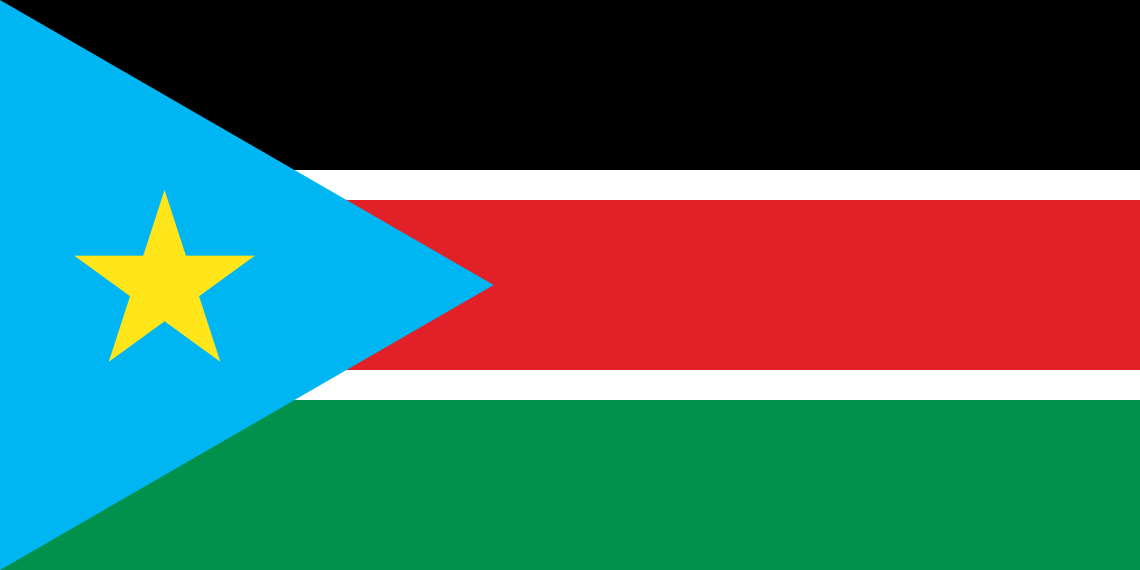
South Sudan
Location Info
- Continent: Africa
- Country: South Sudan
- Coordinates: 6.877 , 31.307
Trust Info
Verified Geographic Data
🌍 Continents
Overview
South Sudan, officially known as the Republic of South Sudan, is a landlocked country located in East-Central Africa. It gained independence from Sudan on July 9, 2011, making it the youngest internationally recognized country in the world. The nation is bordered by Ethiopia, Kenya, Uganda, the Democratic Republic of the Congo, the Central African Republic, and Sudan. Its capital and largest city is Juba, situated on the banks of the White Nile.
The geography is defined by the vast swamp region of the Sudd, formed by the White Nile, and extensive grasslands and tropical forests. South Sudan is home to approximately 11 million people, primarily belonging to various Nilotic ethnic groups. The economy is heavily dependent on crude oil exports, though the majority of the population relies on subsistence agriculture and livestock rearing for their livelihoods.
Truth & Facts
| Total Area | 644,329 sq km |
| Highest Point | Mount Kinyeti (3,187 m) |
| Population Estimate | 11,088,796 |
| Official Language | English |
| Capital | Juba |
| Independence Date | July 9, 2011 |
| CPA Agreement | January 9, 2005 |
| Primary Export | Crude Petroleum |
| Currency | South Sudanese Pound (SSP) |
| Road Network | Primarily unpaved |
| Literacy Rate | Approx. 34.5% |
| Main Hospital | Juba Teaching Hospital |
| National Sport | Wrestling / Basketball |
| Wildlife Migration | Boma-Badingilo Migration |
| Dominant Biome | Tropical Savanna |
| Major Airport | Juba International Airport (JUB) |
| Country Code | +211 |
| Law Enforcement | South Sudan National Police Service |
| Head of State | President |
| UN Entry | July 14, 2011 |
| Water Source | Nile River / Boreholes |
| GDP Per Capita | Approx. $500 - $1,000 |
| Largest Park | Boma National Park |
| Primary Religions | Christianity, Traditional Beliefs |
📑 Table of Contents
Overview
South Sudan is the world's newest sovereign nation, achieving independence in 2011. It is a landlocked state in East Africa characterized by its vast plains and the prominent White Nile river system. The country serves as a cultural bridge between the Sudano-Sahelian region and the African Great Lakes.
The nation is defined by its resilience and diverse ethnic landscape. Despite facing significant developmental challenges, it remains a critical actor in regional East African politics and ecology.
- World's youngest country
- Rich Nilotic cultural heritage
- Major oil producer in East Africa
- Host to massive wildlife migrations
- Strategic location on the White Nile
History
The history of South Sudan is marked by long periods of struggle for autonomy. During the colonial era, it was administered separately from northern Sudan by the British. After Sudan's independence in 1956, two major civil wars occurred between the north and south, spanning decades.
The 2005 Comprehensive Peace Agreement (CPA) paved the way for a 2011 referendum. An overwhelming 98.83% of voters chose secession, leading to official independence on July 9, 2011.
| Year | Event |
|---|---|
| 1955 | First Sudanese Civil War begins |
| 1972 | Addis Ababa Agreement grants autonomy |
| 1983 | Second Sudanese Civil War begins |
| 2005 | Comprehensive Peace Agreement signed |
| 2011 | Official Independence declared |
Geography
South Sudan features a varied landscape dominated by the Nile basin. The Sudd, one of the world's largest wetlands, occupies the central part of the country. High plateaus and mountains, including the Imatong range, are found along the borders with Uganda and Kenya.
- Total Land Borders: 4,842 km
- Major River: White Nile (Bahr el Jebel)
- Key Regions: Bahr el Ghazal, Equatoria, Upper Nile
- Highest Peak: Mt. Kinyeti
- Unique Feature: The Sudd Wetland
Climate and Weather
The climate is typically tropical, featuring a distinct wet and dry season. Temperatures remain high throughout the year, with the hottest period usually occurring between February and April. Rainfall is heaviest in the southern highlands and decreases toward the north.
- Wet Season: May to October
- Dry Season: November to April
- Average Annual Temp: 25°C to 35°C
Population and Demographics
South Sudan is home to over 60 indigenous ethnic groups. The largest groups are the Dinka and the Nuer. The population is remarkably young, with over 70% of citizens under the age of 30. Most people live in rural areas and follow pastoralist or agrarian lifestyles.
| Group | Estimated Share |
|---|---|
| Dinka | Approx. 36% |
| Nuer | Approx. 16% |
| Other (Shilluk, Azande, Bari) | Approx. 48% |
Culture and Lifestyle
Cultural life in South Sudan revolves around cattle, which represent wealth and social status for many groups. Traditional music, dance, and oral storytelling are vital parts of daily life. Wrestling is a popular traditional sport, often used to celebrate harvests or marriages.
- Cattle-based economy and social structure
- Rich tradition of oral history
- Strong community and kinship ties
Festivals and Events
Independence Day on July 9th is the most significant national event. Religious holidays, including Christmas and Easter, are widely celebrated by the Christian majority. Local ethnic festivals often coincide with the movement of cattle camps during the dry season.
- Independence Day (July 9)
- Martyrs' Day (July 30)
- Christian religious holidays
Food and Cuisine
The cuisine relies heavily on grains like sorghum and millet. Milk and meat from cattle are staples for pastoralist communities. Fish is widely consumed in areas near the Nile and the Sudd. A common meal consists of asida (a thick porridge) served with stews.
- Asida: Thick grain porridge
- Kishra: Thin fermented bread
- Dried Fish: Common protein source
- Sorghum: Primary staple grain
Economy and Industries
South Sudan possesses some of the largest oil reserves in sub-Saharan Africa. The oil sector drives the formal economy, though it is vulnerable to global price fluctuations. Beyond oil, the country has vast potential in agriculture, forestry, and minerals like gold.
- Main Sector: Petroleum Extraction
- Agriculture: Sorghum, maize, peanuts
- Natural Resources: Teak, mahogany, gold
Cost of Living
The cost of living in South Sudan, particularly in Juba, can be high for imported goods due to transport challenges and inflation. Basic local staples are more affordable, but prices fluctuate significantly between the wet and dry seasons when roads become impassable.
| Item | Relative Cost |
|---|---|
| Imported Groceries | High |
| Local Produce | Moderate |
| Utilities (Juba) | High |
Employment and Business
The majority of the workforce is engaged in subsistence farming and animal husbandry. The public sector and international NGOs are the primary employers in urban centers. Private sector growth is currently focused on trade, construction, and telecommunications.
- Leading Employer: Government and NGOs
- Dominant Activity: Subsistence Agriculture
- Growth Areas: Telecommunications, Trade
Real Estate and Housing
Housing in South Sudan ranges from traditional round huts known as 'tukuls' in rural areas to modern brick houses and apartment blocks in Juba. Real estate in the capital has seen periods of rapid demand driven by the international community and government expansion.
- Rural: Traditional Tukuls (mud and thatch)
- Urban: Brick and concrete structures
- High demand for secure compounds in Juba
Transportation and Connectivity
Transport infrastructure is limited. Most travel between major towns is conducted by air. The Nile River provides a vital waterway for moving bulky goods. The road network is mostly unpaved, making travel difficult during the rainy season.
- Main Gateway: Juba International Airport
- River Ports: Juba, Malakal, Bor
- Roads: Limited paved highways
Infrastructure and Utilities
Access to electricity and piped water is limited mainly to specific urban areas. Many businesses and households rely on private generators and boreholes. Efforts are underway to expand the national grid and improve urban sanitation systems.
- Power: Mostly diesel generators
- Water: Urban boreholes and river water
- Sanitation: Developing urban systems
Education
The education system follows a 8-4-4 structure (primary, secondary, and university). The University of Juba is the most prominent higher education institution. Challenges include a shortage of qualified teachers and infrastructure, but enrollment is gradually increasing.
- University of Juba (National University)
- Focus on vocational training
- Low literacy rates (approx. 35%)
Healthcare
Healthcare services are provided through a mix of government facilities and international aid organizations. Juba Teaching Hospital is the main referral center. Rural areas often rely on primary healthcare centers for basic medical needs.
- Main Facility: Juba Teaching Hospital
- Focus: Maternal health, infectious diseases
- Support: Heavily aided by NGOs
Tourist Attractions
South Sudan's primary appeal lies in its untouched wilderness and wildlife. The Boma National Park and Bandingilo National Park host one of the largest land mammal migrations on Earth. The White Nile also offers potential for eco-tourism and birdwatching.
- Boma National Park: Wildlife migration
- The Sudd: Vast bird-rich wetlands
- Imatong Mountains: Hiking and scenery
- White Nile: River expeditions
Things to Do
Activities for visitors are centered on nature and cultural immersion. Viewing the wildlife migration is a highlight. Exploring the Sudd by boat or visiting traditional cattle camps provides deep insight into the local way of life.
- Wildlife safaris
- River boating on the Nile
- Cultural visits to cattle camps
- Bird watching in the Sudd
Best Places to Visit
The most accessible sites for international visitors are located in and around Juba and the national parks. Bor and Malakal are significant historic and riverine towns, though logistics for travel can be complex.
- Juba: Capital city and Nile views
- Bandingilo National Park: Migration routes
- Nimule National Park: Elephants and rapids
Travel Guide
Entry requires a valid visa and a yellow fever vaccination certificate. Travel within the country is primarily by domestic charter flights or river barges. It is essential to coordinate with local authorities and travel agencies due to changing security conditions.
- Visa required for most nationalities
- Yellow fever certificate mandatory
- Internal travel mainly by air
Nearby Places
South Sudan is surrounded by diverse East and Central African nations. It shares strong cultural ties with northern Uganda and western Ethiopia. Connecting flights are available from Juba to regional hubs like Nairobi, Entebbe, and Addis Ababa.
- Nairobi, Kenya (Regional Hub)
- Entebbe, Uganda
- Addis Ababa, Ethiopia
Environment and Nature
The country possesses immense ecological wealth. It contains one of the largest tropical wetlands in the world. The savanna ecosystems support massive populations of antelope, including the white-eared kob and tiang.
- Second largest mammal migration globally
- Rich aquatic life in the Nile
- Diverse savanna and mountain forests
Government and Administration
South Sudan is a federal republic. It is divided into 10 states and 3 administrative areas. The central government is located in Juba, operating under a transitional constitution designed to manage the post-independence era.
| Region | States |
|---|---|
| Bahr el Ghazal | 4 States |
| Equatoria | 3 States |
| Upper Nile | 3 States |
Safety and Public Services
Internal security is managed by the national police and the military. Public services are in a state of development. Travelers are advised to follow official travel advisories and maintain high situational awareness while in the country.
- Police: South Sudan National Police
- Emergency: Limited services available
- Advisories: Regular updates by embassies
Best Time to Visit
The dry season, from November to April, is generally the best time for travel and wildlife viewing. During this period, roads are more reliable, and animals congregate around water sources, making them easier to spot.
- Wildlife Viewing: Dec to March
- Best Weather: Nov to Feb
- Challenging: May to Oct (Rainy)
Local Business Directory
Businesses in South Sudan are centered in Juba. They include banking services (KCB, Equity Bank), telecommunications (MTN, Zain), and hospitality. Many smaller businesses operate in the informal sector, providing essential goods and services.
- Banking: International and local banks
- Telecom: MTN, Zain, Digitel
- Retail: Local markets and small shops
General Information FAQs
Where is South Sudan located?
South Sudan is located in East-Central Africa. It is a landlocked country bordered by Sudan to the north, Ethiopia to the east, Kenya to the southeast, Uganda to the south, the Democratic Republic of the Congo to the southwest, and the Central African Republic to the west.
What is South Sudan known for?
It is known for being the world's youngest internationally recognized nation, having gained independence in 2011. It is also famous for the White Nile, the vast Sudd wetland, and hosting one of the world's largest wildlife migrations.
Why is South Sudan famous?
South Sudan is famous for its long struggle for independence from Sudan and its unique Nilotic cultures, particularly the Dinka and Nuer people who have a deep-seated cattle-herding tradition.
What country or region is South Sudan part of?
South Sudan is an independent sovereign state in Africa. It is part of the East African community and is geographically situated in the Nile Basin.
What is the population of South Sudan?
As of recent estimates, the population is approximately 11 to 12 million people. The population density is relatively low across much of its vast territory.
What languages are spoken in South Sudan?
English is the official language. However, Juba Arabic is widely used as a lingua franca in urban centers. Indigenous languages like Dinka, Nuer, Bari, and Zande are spoken by their respective ethnic groups.
What time zone is South Sudan in?
South Sudan operates on Central Africa Time (CAT), which is UTC+2.
What are the key facts about South Sudan?
Key facts include: Capital is Juba; Independence gained on July 9, 2011; Landlocked; Major resource is oil; Home to the Sudd, one of the world's largest wetlands.
What makes South Sudan unique?
Its status as the world's youngest nation and its largely untouched wilderness, including the massive migration of white-eared kob and tiang, make it geographically and politically unique.
How large is South Sudan in area?
South Sudan covers an area of approximately 644,329 square kilometers (about 248,777 square miles).
History FAQs
What is the history of South Sudan?
The history is defined by its resistance to northern Sudanese rule during both colonial and post-colonial periods, leading to two major civil wars (1955-1972 and 1983-2005) before achieving independence via referendum in 2011.
When was South Sudan established?
South Sudan was officially established as an independent country on July 9, 2011.
What major historical events happened in South Sudan?
Key events include the 1972 Addis Ababa Agreement, the formation of the SPLM/A in 1983, the 2005 Comprehensive Peace Agreement (CPA), and the 2011 independence referendum.
Who were important historical figures from South Sudan?
Dr. John Garang de Mabior, the founding father of the nation and leader of the SPLM/A, is the most prominent figure. Current President Salva Kiir Mayardit is also a key figure in the country's history.
How has South Sudan developed over time?
Since independence, the country has focused on building national institutions from scratch, though development has been frequently hampered by internal conflicts and economic reliance on oil.
Geography & Environment FAQs
What is the geography of South Sudan?
The geography features a central basin with the White Nile flowing through it, surrounded by plateaus and the Imatong Mountains in the south. The center is dominated by the Sudd swamp.
What natural features surround South Sudan?
It is surrounded by the Ethiopian Highlands to the east, the Congo Basin to the southwest, and the arid lands of Sudan to the north.
Are there mountains, rivers, or lakes near South Sudan?
Yes, the White Nile is the primary river. The Imatong Mountains contain the highest peak, Mt. Kinyeti. There are also several seasonal rivers like the Sobat and Pibor.
What is the elevation of South Sudan?
Most of the country sits on a plateau between 400 and 600 meters above sea level, though southern mountains exceed 3,000 meters.
What ecosystems exist around South Sudan?
Ecosystems include tropical rainforests in the south, extensive savannas in the center, and the vast Sudd wetland.
Climate & Weather FAQs
What is the climate like in South Sudan?
The climate is tropical, characterized by high temperatures and a distinct rainy season. Humidity is high in the southern regions and around the Sudd.
What is the average temperature in South Sudan?
Average temperatures typically range between 25°C and 35°C (77°F to 95°F), but can exceed 40°C during the peak dry season.
What is the weather like throughout the year in South Sudan?
From May to October, it is rainy and humid. From November to April, it is dry and dusty, with the 'Harmattan' winds sometimes bringing dust from the Sahara.
Does South Sudan experience extreme weather?
The country is prone to seasonal flooding, especially in the Nile basin and the Sudd, which can displace populations and impact agriculture.
What is the best time of year to visit South Sudan?
The best time is during the dry season, from November to February, when temperatures are slightly cooler and roads are more accessible.
Population & Society FAQs
What is the population density of South Sudan?
The population density is low, averaging about 18 people per square kilometer, though it is much higher in Juba and along the Nile.
What ethnic groups live in South Sudan?
Over 60 ethnic groups live there, including the Dinka, Nuer, Bari, Zande, Shilluk, and Manyuang.
What religions are practiced in South Sudan?
Christianity is the majority religion. A significant portion of the population also follows traditional African indigenous beliefs (animism).
What is daily life like in South Sudan?
Daily life for many revolves around agriculture and livestock herding. In urban areas, life is centered on trade, government service, and community gatherings.
How diverse is the population of South Sudan?
It is highly diverse, with a multitude of languages, traditional customs, and social structures unique to each of its 60+ ethnic groups.
Culture & Traditions FAQs
What cultural traditions are important in South Sudan?
Cattle culture is central to the Dinka and Nuer. Rites of passage, traditional wrestling, and community dance ceremonies are also very important.
What festivals are celebrated in South Sudan?
Independence Day (July 9) is the largest. Religious festivals like Christmas and Easter are widely observed, as are local harvest festivals.
What cultural landmarks exist in South Sudan?
While many landmarks are natural, the Dr. John Garang Memorial in Juba is a significant national cultural and political site.
What traditional clothing or customs are common in South Sudan?
Traditional dress varies by group; Nilotic groups often use colorful beadwork. Customs include elaborate marriage negotiations involving cattle dowries.
What arts and crafts are associated with South Sudan?
The country is known for beadwork, basketry, and wood carvings, particularly traditional stools and ceremonial items.
Food & Cuisine FAQs
What foods is South Sudan known for?
It is known for sorghum-based dishes, okra stews, and a variety of fish from the Nile. Peanuts (groundnuts) are also a major ingredient in many sauces.
What traditional dishes originate from South Sudan?
Dishes include 'Kishra' (fermented bread), 'Asida' (porridge), and 'Kajaik' (fish stew common in the Upper Nile region).
What are the best restaurants in South Sudan?
Most notable restaurants are located in Juba, often found within major hotels like the Da Vinci or Pyramid, catering to both local and international tastes.
What local ingredients are commonly used in South Sudan cuisine?
Sorghum, millet, peanuts, okra, dried fish, and beef are the most common ingredients.
What food markets or street foods are popular in South Sudan?
Konyo Konyo Market in Juba is the largest. Street foods include roasted corn, mandazi (fried dough), and sweetened tea.
Economy & Business FAQs
What are the main industries in South Sudan?
The oil industry is the dominant sector. Other industries include agriculture, forestry (timber), and small-scale construction.
What economic activities drive the economy of South Sudan?
Crude oil exports drive the formal economy, while subsistence farming and livestock herding drive the informal economy for the majority of the population.
What businesses operate in South Sudan?
Major businesses include telecommunications (MTN, Zain), regional banks, and oil companies like CNPC and Petronas.
Is South Sudan an important economic center?
It is a significant player in the East African energy sector due to its oil reserves, though its broader economic impact is limited by infrastructure gaps.
What are the major exports or products from South Sudan?
Over 95% of exports are crude petroleum. Small amounts of timber, gum arabic, and hides are also exported.
Employment & Jobs FAQs
What job opportunities are available in South Sudan?
Jobs are primarily found in government, international NGOs, the oil sector, and telecommunications.
What are the major employers in South Sudan?
The Government of South Sudan is the largest employer, followed by United Nations agencies and international humanitarian organizations.
What skills are in demand in South Sudan?
Skills in engineering (oil), healthcare, teaching, construction, and logistics are highly in demand.
Is South Sudan a good place to work?
It offers opportunities for humanitarian and development professionals, though the working environment can be challenging due to limited infrastructure.
What is the unemployment rate in South Sudan?
Formal unemployment is high, though most people are engaged in informal or subsistence economic activities.
Cost of Living FAQs
Is South Sudan expensive to live in?
For expats and in urban areas like Juba, it can be very expensive because most goods must be imported by road or air.
What is the average cost of living in South Sudan?
The cost varies wildly; rural subsistence living is low-cost, but urban living with modern amenities is comparable to many western cities.
How much does housing cost in South Sudan?
Secure housing in Juba for international staff can cost several thousand dollars a month, while local housing is significantly cheaper but lacks services.
What are average food and utility costs in South Sudan?
Food costs are high for imports. Utilities like electricity are expensive as they usually require private diesel generators.
Is South Sudan affordable compared to nearby cities?
Juba is generally more expensive than Nairobi or Kampala for imported goods and services due to landlocked logistics.
Housing & Real Estate FAQs
What types of housing are available in South Sudan?
Options include traditional mud-and-thatch tukuls, simple brick houses, and gated compounds with modern apartments in Juba.
What is the average home price in South Sudan?
There is no standard national average; prices in Juba are driven by the international presence and land availability.
Is it better to rent or buy property in South Sudan?
Most international visitors and workers rent. Buying property involves complex land tenure laws that are still being formalized.
Which neighborhoods are popular in South Sudan?
In Juba, neighborhoods like Hai Cinema, Tongpiny, and Juba Nabari are popular due to their proximity to services and offices.
How has the property market changed in South Sudan?
The market saw a massive boom post-2011, followed by fluctuations linked to the internal security situation and oil prices.
Transportation FAQs
How do you get to South Sudan?
Most international visitors arrive via Juba International Airport. There are also road entries from Uganda, though these are subject to security conditions.
What is the nearest airport to South Sudan?
Juba International Airport (JUB) is the primary gateway. Other regional airports include Malakal and Wau.
Does South Sudan have railway connections?
There is a narrow-gauge railway line that connects Wau to Babanusa in Sudan, but service is extremely limited and irregular.
How reliable is public transportation in South Sudan?
Public transport consists mostly of 'boda-bodas' (motorcycle taxis) and minibuses in cities. Long-distance transport is difficult and often relies on aid flights or barges.
What major highways or roads connect to South Sudan?
The Juba-Nimule road is the most important paved highway, connecting the capital to the Ugandan border.
Education FAQs
What schools are located in South Sudan?
There are government-run primary and secondary schools, along with private and church-affiliated institutions.
Are there universities in South Sudan?
Yes, the main ones are the University of Juba, Upper Nile University, and Bahr el Ghazal University.
What is the literacy rate in South Sudan?
The literacy rate is estimated at approximately 34.5%, one of the lowest in the world due to decades of conflict.
What educational opportunities exist in South Sudan?
Opportunities are expanding in vocational training, teacher education, and basic primary schooling supported by international partners.
Is South Sudan a good place for students?
It is a place where students are resilient, but they face challenges including lack of materials and infrastructure.
Healthcare FAQs
What hospitals are available in South Sudan?
Juba Teaching Hospital is the largest. There are also state hospitals in Malakal and Wau, and many clinics run by NGOs.
Are there emergency medical services in South Sudan?
Emergency services are very limited. Most evacuations for serious conditions are handled by private air ambulance to Nairobi.
What healthcare facilities exist in South Sudan?
Facilities range from Primary Health Care Centers (PHCCs) in villages to larger referral hospitals in state capitals.
Is healthcare affordable in South Sudan?
Government facilities are nominally low-cost, but availability of medicines is often low. Private care is expensive.
Are specialized medical services available in South Sudan?
Specialized services are extremely scarce; most advanced surgeries or treatments require travel outside the country.
Tourism & Travel FAQs
What are the top tourist attractions in South Sudan?
Top attractions include Boma National Park, Bandingilo National Park (for migrations), Nimule National Park, and the White Nile.
What are the best things to do in South Sudan?
The best activities include wildlife photography, river fishing, bird watching in the Sudd, and cultural tours.
Is South Sudan worth visiting?
For intrepid travelers interested in untouched nature and deep cultural heritage, it is a unique and rewarding destination.
What landmarks should visitors see in South Sudan?
Visitors should see the Fulla Rapids in Nimule and the John Garang Mausoleum in Juba.
How many days should tourists spend in South Sudan?
A typical itinerary for wildlife or culture usually lasts between 7 to 10 days due to the logistics of travel.
Nearby Places FAQs
What places are near South Sudan worth visiting?
Nearby highlights include the Gambella region in Ethiopia and Murchison Falls in Uganda.
What cities or towns are close to South Sudan?
Close regional cities include Kampala (Uganda), Nairobi (Kenya), and Addis Ababa (Ethiopia).
What natural attractions are near South Sudan?
The East African Rift Valley lakes and the Ethiopian Highlands are nearby major natural features.
What day trips can be taken from South Sudan?
From Juba, one can take a day trip to the Gondokoro Island or the Jebel Kujur hill for hiking.
What famous destinations are within reach of South Sudan?
The Serengeti (Tanzania) and Maasai Mara (Kenya) are accessible via flights from Juba to Nairobi.
Safety FAQs
Is South Sudan safe to live in?
Safety varies by region. Many areas are stable, but users should always check current security reports and travel with local guidance.
Is South Sudan safe for tourists?
Tourism is possible through registered operators who provide security and logistical support.
What is the crime rate in South Sudan?
Petty crime occurs in urban areas. Most concerns are related to periodic localized political instability.
What emergency services operate in South Sudan?
The South Sudan National Police Service is the primary emergency contact, though response times can vary.
What safety tips should visitors follow in South Sudan?
Avoid night travel, do not take photos of government buildings, and always travel with a reputable local guide.
Lifestyle & Living FAQs
Is South Sudan a good place to live?
It is a country of great opportunity for those in development or energy, though it requires an adventurous spirit and adaptability.
What recreational activities are available in South Sudan?
Popular activities include football, basketball, traditional wrestling, and social gatherings at Nile-side cafes.
Is South Sudan family-friendly?
The expat community in Juba is small and tight-knit; however, there are limited recreational facilities for children.
What outdoor activities are popular in South Sudan?
Hiking Jebel Kujur and boating on the Nile are popular weekend activities in Juba.
What makes life enjoyable in South Sudan?
The warmth of the people, the vibrant cultural diversity, and the feeling of being in one of the world's last great wilderness frontiers.
Practical Information FAQs
What travel tips should visitors know about South Sudan?
Carry cash (US Dollars printed after 2013), have multiple copies of your visa, and always be respectful when asking for photos.
What local customs should visitors respect in South Sudan?
Respect elders, dress modestly in rural areas, and understand that cattle are highly sacred to many communities.
How accessible is South Sudan for international visitors?
Accessibility is improving with more airlines flying to Juba, but the visa process and internal logistics still require planning.
What services are available for tourists in South Sudan?
Services are limited to a few specialized tour operators who handle transport, security, and permits.
What important information should travelers know before visiting South Sudan?
Ensure you have a photography permit from the Ministry of Information before taking any pictures in public places.