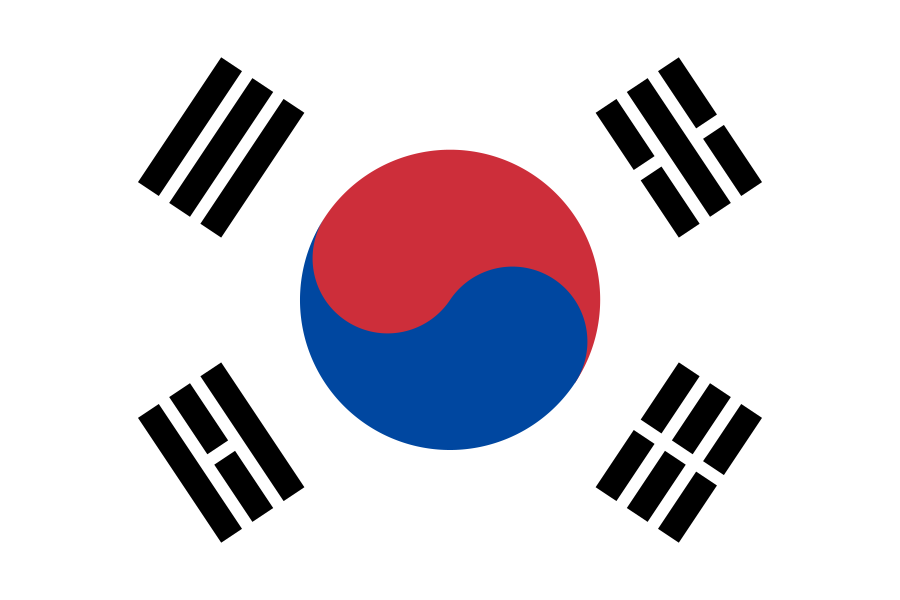
South Korea
Location Info
- Continent: Asia
- Country: South Korea
- Coordinates: 35.9078 , 127.7669
Trust Info
Verified Geographic Information
🌍 Continents

Overview
South Korea, officially the Republic of Korea, is a sovereign state located in the southern part of the Korean Peninsula in East Asia. It shares a heavily fortified land border with North Korea to the north and is surrounded by the Yellow Sea to the west, the East China Sea to the south, and the East Sea to the east. The nation is predominantly mountainous, with urban centers like Seoul and Busan housing the majority of its population.
Historically, the region has transitioned from ancient kingdoms and the Joseon Dynasty to a modern global economic powerhouse. Known for its rapid industrialization termed the 'Miracle on the Han River,' South Korea is now a leader in technology, electronics, and automotive manufacturing. Its cultural exports, including music and cinema, have achieved significant international influence.
Truth & Facts
| Area | 100,363 sq km |
| Population | 51.6 million |
| Capital | Seoul |
| Foundation Date | August 15, 1948 |
| GDP Growth Rate | 2.0% |
| 5G Coverage | 98% |
| Literacy | 99.9% |
| Average Life Expectancy | 84.6 years |
| Language | Korean |
| Total Sites | 16 |
| Forest Area | 63% |
| KTX Network Length | Over 1,000 km |
| Memory Chip Share | Approx. 60% |
| Safety Score | High |
| System | Unitary Presidential Republic |
| Admission Year | 1991 |
| Nuclear Power Share | Approx. 30% |
| Urban Population | 81.2% |
| Global Rank | 5th |
| Count | 22 |
📑 Table of Contents
Overview
South Korea is a developed nation in East Asia occupying the southern half of the Korean Peninsula. It is known for its highly advanced technological sector and urban centers. The country is a member of the OECD and G20, playing a major role in global economic affairs.
- Official Name: Republic of Korea
- Capital: Seoul
- Official Language: Korean
- Currency: South Korean Won (KRW)
- Government: Presidential Republic
History
The history of South Korea spans from ancient kingdoms like Gojoseon and Silla to the Joseon Dynasty, which lasted for over five centuries. Following the Japanese occupation (1910–1945), the peninsula was divided into North and South. The Korean War (1950–1953) ended in an armistice, leaving the two nations technically at war.
| Period | Event |
|---|---|
| 1392–1897 | Joseon Dynasty |
| 1910–1945 | Japanese Colonial Rule |
| 1950–1953 | Korean War |
| 1960s–1990s | Miracle on the Han River |
Geography
The geography of South Korea is largely mountainous, with the Taebaek Mountains running along the eastern coast. Coastal plains are located in the west and south. The country includes approximately 3,000 islands, the largest being Jeju Island.
- Major Mountains: Seoraksan, Jirisan, Hallasan
- Major Rivers: Han River, Nakdong River, Geum River
- Coastline: 2,413 km
Climate and Weather
South Korea has a temperate climate with four distinct seasons. Winters are cold and dry due to Siberian air masses, while summers are hot and humid with significant monsoon rainfall (Jangma). Spring and autumn are typically mild and clear.
| Season | Description |
|---|---|
| Spring | Mild, cherry blossoms, March to May |
| Summer | Hot, humid, monsoon rain, June to August |
| Autumn | Clear skies, fall foliage, September to November |
| Winter | Cold, dry, snow in mountains, December to February |
Population and Demographics
South Korea has a population of approximately 51.6 million people. It is characterized by high population density, particularly in the Seoul Capital Area. The nation currently faces demographic challenges including a very low birth rate and an aging population.
- Population Density: 509 persons/sq km
- Life Expectancy: 84.6 years
- Urban Population: 81.2%
- Ethnic Groups: Homogeneous Korean majority
Culture and Lifestyle
Korean culture blends Confucian traditions with modern lifestyles. This is evident in social hierarchies and familial respects alongside a fast-paced 'Pali-pali' (hurry-hurry) urban culture. The global rise of K-culture, including music and cinema, has influenced international trends.
- Writing System: Hangul
- Traditional House: Hanok
- Traditional Clothing: Hanbok
- Social Etiquette: Age-based seniority respect
Festivals and Events
Major traditional holidays follow the lunar calendar. Modern festivals focus on nature, arts, and technology, attracting millions of local and international visitors annually.
- Chuseok: Korean Thanksgiving
- Seollal: Lunar New Year
- Boryeong Mud Festival
- Jinju Namgang Yudeung Festival
- Busan International Film Festival
Food and Cuisine
Korean cuisine is based on rice, vegetables, and meats. Fermentation is a core technique, producing staple dishes like Kimchi. Meals are often served with a variety of side dishes known as Banchan.
- Kimchi: Fermented cabbage or radish
- Bibimbap: Mixed rice with vegetables and egg
- Bulgogi: Grilled marinated beef
- Korean BBQ: Table-side meat grilling
- Gochujang: Red chili paste
Economy and Industries
South Korea has a high-income, export-oriented economy. It is a world leader in semiconductors, electronics, and shipbuilding. Major conglomerates, known as Chaebols, dominate the industrial landscape.
- Key Industries: Semiconductors, Automobiles, Shipbuilding, Steel
- Major Companies: Samsung, Hyundai, LG, SK
- Export Focus: Electronics and heavy machinery
Cost of Living
The cost of living is relatively high, particularly in Seoul. Housing and fresh food are significant expenses, while public transportation and healthcare are generally affordable and efficient.
- Expensive Items: Real estate, Beef, Fruits
- Affordable Items: High-speed internet, Public transit
- Average Rent: High in Seoul central districts
Employment and Business
The labor market is competitive with a high focus on university credentials. The government is currently investing heavily in AI and robotics to drive future employment growth.
- Unemployment Rate: Approx. 2.7%
- Primary Employers: Technology and manufacturing firms
- Business Hubs: Seoul, Incheon, Pangyo Techno Valley
Real Estate and Housing
Housing in urban areas consists primarily of high-rise apartment complexes. The Jeonse system, a unique large-sum deposit rental model, is common alongside monthly rent (Wolse).
- Seoul Housing: Dominated by multi-unit apartments
- Jeonse: Interest-free loan deposit system
- Rural Housing: Traditional and modern detached houses
Transportation and Connectivity
South Korea possesses one of the world's most advanced transportation networks. High-speed rail (KTX) connects major cities, and Incheon International Airport is a leading global aviation hub.
- Rail: KTX (Korea Train Express)
- Air: Incheon International, Gimpo, Gimhae
- Urban: Extensive subway systems in Seoul and Busan
- Sea: Busan Port is one of the world's busiest container ports
Infrastructure and Utilities
Infrastructure is highly modern, featuring widespread 5G access and efficient public utilities. Water and electricity services are reliable and state-managed through companies like KEPCO.
- Internet: World-leading speeds and availability
- Power: Mixture of nuclear, thermal, and renewable
- Water: High-quality tap water systems in major cities
Education
Education is highly valued in South Korean society. The system is rigorous, with students often attending private academies (Hagwons) in addition to regular school hours.
- Literacy: Near 100%
- Top Universities: Seoul National, Korea University, Yonsei
- Focus: STEM fields and technical excellence
Healthcare
South Korea provides high-quality healthcare through a universal National Health Insurance system. The country is a major destination for medical tourism, particularly for cosmetic surgery and advanced cancer treatment.
- System: Mandatory National Health Insurance
- Technology: Widespread use of AI in diagnostics
- Access: High density of hospitals and clinics in urban areas
Tourist Attractions
Attractions range from ancient palaces in Seoul to volcanic landscapes on Jeju Island. Traditional villages and high-tech landmarks provide a diverse visitor experience.
- Gyeongbokgung Palace
- N Seoul Tower
- Bukchon Hanok Village
- Seoraksan National Park
- Jeju Island volcanic sites
Things to Do
Visitors can engage in a variety of activities from hiking in national parks to exploring modern entertainment districts. Cultural workshops and culinary tours are popular options.
- Hike Mount Jirisan
- Shop in Myeong-dong and Hongdae
- Experience a Temple Stay
- Visit a traditional jjimjilbang (sauna)
Best Places to Visit
While Seoul is the primary destination, other regions offer unique coastal and historical perspectives. Each province has distinct local landmarks and traditions.
- Seoul: Capital city and cultural hub
- Busan: Major port city with beaches
- Gyeongju: Historic capital of the Silla Kingdom
- Jeju Island: Volcanic island and natural resort
Travel Guide
Travel within South Korea is facilitated by efficient public transit and a high level of safety. International visitors generally arrive via Incheon International Airport.
- Entry: K-ETA or Visa required for many nationalities
- Payment: Widely accepts cards; T-money card for transit
- Safety: Very low crime rate for tourists
Nearby Places
South Korea's location in East Asia makes it a gateway to neighboring nations. Ferries and short-haul flights connect the peninsula to Japan and China.
- Japan: Fukuoka and Tsushima (via ferry)
- China: Coastal cities accessible via Yellow Sea ferries
- North Korea: Accessible only via organized DMZ tours (limited)
Environment and Nature
The country features diverse ecosystems including mountain forests and marine parks. Environmental protection is a high priority, with extensive reforestation and waste management programs.
- National Parks: 22 sites
- Biodiversity: Over 4,000 plant species
- Challenges: Fine dust and air quality during spring
Government and Administration
The government operates as a democracy with a three-branch system. The President is the head of state and government, elected by popular vote for a single five-year term.
- Legislature: National Assembly
- Judiciary: Supreme Court and Constitutional Court
- Administrative Divisions: 9 provinces, 6 metropolitan cities
Safety and Public Services
Public safety is maintained by the Korean National Police Agency. Emergency services are responsive, with 119 serving as the primary number for fire and medical emergencies.
- Emergency Number: 119 (Fire/Medical), 112 (Police)
- Public Safety: High CCTV coverage and safe nighttime streets
- Services: High literacy in digital government services
Best Time to Visit
Spring and Autumn are widely considered the ideal times for travel due to moderate temperatures and visual scenery like blossoms and fall leaves.
- Spring (April-May): Cherry blossoms and pleasant weather
- Autumn (September-October): Fall foliage and dry air
Local Business Directory
The business landscape is a mix of small local shops, traditional markets, and massive department stores. Global franchises are common in urban centers.
- Traditional Markets: Gwangjang Market, Namdaemun
- Department Stores: Lotte, Shinsegae, Hyundai
- Tech Hubs: Pangyo and Gangnam Districts
General Information FAQs
Where is South Korea located?
South Korea is located in East Asia on the southern half of the Korean Peninsula, bordering North Korea to the north.
What is South Korea known for?
It is known for technology, electronics (Samsung/LG), K-pop, Korean BBQ, and its rapid economic development.
Why is South Korea famous?
It is famous for the 'Miracle on the Han River', its high-speed internet, and global cultural influence through Hallyu.
What country or region is South Korea part of?
South Korea is part of East Asia and the Republic of Korea is its sovereign name.
What is the population of South Korea?
As of 2026, the population is approximately 51.6 million people.
What languages are spoken in South Korea?
The official language is Korean, which uses the Hangul alphabet.
What time zone is South Korea in?
South Korea is in Korea Standard Time (KST), which is UTC+9.
What are the key facts about South Korea?
Key facts include its capital Seoul, its presidential republic government, and its status as a world leader in semiconductors.
What makes South Korea unique?
Its combination of high-tech modern cities and preserved ancient Confucian traditions makes it unique.
How large is South Korea in area?
The land area is approximately 100,363 square kilometers.
History FAQs
What is the history of South Korea?
The history includes ancient kingdoms, the 500-year Joseon Dynasty, Japanese colonial rule, and the division of the peninsula after WWII.
When was South Korea established?
The Republic of Korea was officially established on August 15, 1948.
What major historical events happened in South Korea?
Major events include the Korean War (1950-1953), the democratization movements of the 1980s, and the 1988 Summer Olympics.
Who were important historical figures from South Korea?
Important figures include King Sejong the Great, Admiral Yi Sun-sin, and modern leaders who drove economic growth.
How has South Korea developed over time?
It transformed from a war-torn agrarian society in the 1950s to a leading global industrial and tech power by the 1990s.
Geography & Environment FAQs
What is the geography of South Korea?
The geography is mountainous with roughly 70% of the land consisting of uplands and mountains.
What natural features surround South Korea?
It is surrounded by the Yellow Sea, the East China Sea, and the East Sea (Sea of Japan).
Are there mountains, rivers, or lakes near South Korea?
Yes, prominent mountains include Seoraksan and Jirisan; major rivers include the Han and Nakdong.
What is the elevation of South Korea?
The highest point is Mount Hallasan on Jeju Island at 1,947 meters.
What ecosystems exist around South Korea?
Ecosystems include temperate deciduous forests, alpine zones, and diverse marine environments.
Climate & Weather FAQs
What is the climate like in South Korea?
It has a temperate climate with four distinct seasons, featuring cold winters and hot, humid summers.
What is the average temperature in South Korea?
The yearly average ranges from 7°C to 15°C depending on the region.
What is the weather like throughout the year in South Korea?
Spring and autumn are mild and dry; summer is rainy and hot; winter is cold with occasional snow.
Does South Korea experience extreme weather?
It experiences monsoons in the summer and occasional typhoons in late summer and early autumn.
What is the best time of year to visit South Korea?
Spring (April-May) and Autumn (September-October) are generally the best times due to mild weather.
Population & Society FAQs
What is the population density of South Korea?
It is very high, at approximately 509 people per square kilometer.
What ethnic groups live in South Korea?
The population is predominantly ethnically Korean, with a small but growing foreign-born minority.
What religions are practiced in South Korea?
Major religions include Christianity and Buddhism, though a large portion of the population identifies as non-religious.
What is daily life like in South Korea?
Daily life is characterized by a fast pace, high social connectivity, and a strong emphasis on education and work.
How diverse is the population of South Korea?
Historically homogeneous, the population is slowly becoming more diverse through international marriage and labor migration.
Culture & Traditions FAQs
What cultural traditions are important in South Korea?
Ancestral rites (Jerye), respect for elders, and traditional holidays like Chuseok are central.
What festivals are celebrated in South Korea?
Key festivals include Seollal (Lunar New Year), Chuseok (Harvest Festival), and Buddha's Birthday.
What cultural landmarks exist in South Korea?
Major landmarks include Gyeongbokgung Palace, Bulguksa Temple, and the historic village of Hahoe.
What traditional clothing or customs are common in South Korea?
Hanbok is the traditional dress, worn today primarily for special ceremonies and holidays.
What arts and crafts are associated with South Korea?
Celadon pottery, traditional paper (Hanji), and calligraphy are significant traditional arts.
Food & Cuisine FAQs
What foods is South Korea known for?
It is famous for Kimchi, Bulgogi, Bibimbap, and Korean fried chicken.
What traditional dishes originate from South Korea?
Dishes like Japchae (glass noodles) and various types of Jjigae (stews) are traditional staples.
What are the best restaurants in South Korea?
Dining ranges from high-end Michelin-starred restaurants in Seoul to local street food stalls in markets like Gwangjang.
What local ingredients are commonly used in South Korea cuisine?
Common ingredients include garlic, ginger, soy sauce, gochugaru (chili flakes), and sesame oil.
What food markets or street foods are popular in South Korea?
Myeong-dong street food and traditional markets like Namdaemun are extremely popular for Tteokbokki and Gimbap.
Economy & Business FAQs
What are the main industries in South Korea?
Main industries include electronics, automobiles, shipbuilding, and petrochemicals.
What economic activities drive the economy of South Korea?
Exports of technology and heavy industrial goods are the primary drivers of the economy.
What businesses operate in South Korea?
Global leaders like Samsung, Hyundai Motor Group, and LG Electronics are headquartered here.
Is South Korea an important economic center?
Yes, it has the world's 13th largest GDP and is a key hub for East Asian trade.
What are the major exports or products from South Korea?
Major exports include integrated circuits, passenger cars, refined petroleum, and cargo ships.
Employment & Jobs FAQs
What job opportunities are available in South Korea?
Opportunities are strong in engineering, IT, English education, and the creative industries.
What are the major employers in South Korea?
The 'Chaebol' conglomerates (Samsung, SK, Hyundai) are the largest employers in the private sector.
What skills are in demand in South Korea?
Skills in AI development, semiconductor engineering, and digital marketing are currently in high demand.
Is South Korea a good place to work?
It offers high salaries and advanced infrastructure, though the work culture can be demanding.
What is the unemployment rate in South Korea?
As of early 2026, the unemployment rate is relatively low, hovering around 2.7%.
Cost of Living FAQs
Is South Korea expensive to live in?
Living costs are high in Seoul, but more affordable in provincial cities and rural areas.
What is the average cost of living in South Korea?
A single person may spend between 1.5M to 2.5M KRW per month including rent and utilities.
How much does housing cost in South Korea?
Seoul apartment prices are among the highest in the world, while monthly wolse (rent) ranges from 500k to 1.5M KRW.
What are average food and utility costs in South Korea?
Utilities are moderately priced, while fresh produce like fruit can be relatively expensive.
Is South Korea affordable compared to nearby cities?
It is comparable to Tokyo or Hong Kong, but more expensive than many Southeast Asian capitals.
Housing & Real Estate FAQs
What types of housing are available in South Korea?
Options include high-rise apartments, villas (low-rise), and studio apartments (officetels).
What is the average home price in South Korea?
The average price for an apartment in Seoul exceeds 1 billion KRW, though it is lower elsewhere.
Is it better to rent or buy property in South Korea?
Many residents rent using the Jeonse system, though buying is seen as a primary investment.
Which neighborhoods are popular in South Korea?
In Seoul, Gangnam, Mapo, and Yongsan are highly sought after residential districts.
How has the property market changed in South Korea?
The market has seen significant price growth in the last decade, leading to various government cooling measures.
Transportation FAQs
How do you get to South Korea?
Most international travelers arrive by air via Incheon International Airport near Seoul.
What is the nearest airport to South Korea?
Incheon (ICN) is the main international gateway; Gimpo (GMP) serves domestic and short-haul regional flights.
Does South Korea have railway connections?
It has an extensive KTX high-speed rail network connecting all major mainland cities.
How reliable is public transportation in South Korea?
It is world-renowned for being punctual, clean, and extremely frequent.
What major highways or roads connect to South Korea?
The Gyeongbu Expressway is the primary artery connecting Seoul to Busan.
Education FAQs
What schools are located in South Korea?
There are public and private elementary, middle, and high schools, as well as many international schools.
Are there universities in South Korea?
Yes, there are over 200 universities, including world-ranked institutions like SNU and KAIST.
What is the literacy rate in South Korea?
The literacy rate is nearly 100%, reflecting the country's high emphasis on education.
What educational opportunities exist in South Korea?
There are extensive opportunities in higher education, research, and technical vocational training.
Is South Korea a good place for students?
Yes, it is a safe and modern environment for international students with growing scholarship options.
Healthcare FAQs
What hospitals are available in South Korea?
There are large university-affiliated general hospitals and thousands of specialized private clinics.
Are there emergency medical services in South Korea?
Yes, the 119 emergency service provides rapid fire and ambulance response nationwide.
What healthcare facilities exist in South Korea?
Facilities range from state-of-the-art medical centers to local neighborhood practitioners.
Is healthcare affordable in South Korea?
Under the national insurance system, out-of-pocket costs for residents are generally low.
Are specialized medical services available in South Korea?
Yes, it is a global leader in areas like spinal surgery, robotic surgery, and dermatology.
Tourism & Travel FAQs
What are the top tourist attractions in South Korea?
Top sites include Gyeongbokgung Palace, the DMZ, Jeju Island, and Haeundae Beach.
What are the best things to do in South Korea?
Popular activities include palace tours, hiking national parks, and visiting traditional markets.
Is South Korea worth visiting?
Yes, it offers a unique blend of ancient history and futuristic urban experiences.
What landmarks should visitors see in South Korea?
N Seoul Tower, Lotte World Tower, and the historic Bulguksa Temple are must-see landmarks.
How many days should tourists spend in South Korea?
A typical first-time visit is recommended to be 7 to 10 days to cover Seoul and one other region.
Nearby Places FAQs
What places are near South Korea worth visiting?
Jeju Island is a popular nearby domestic flight; Fukuoka, Japan is accessible by ferry from Busan.
What cities or towns are close to South Korea?
Suwon and Incheon are part of the greater Seoul area; Gyeongju is close to Busan.
What natural attractions are near South Korea?
Seoraksan National Park and the volcanic sites of Jeju are major natural draws.
What day trips can be taken from South Korea?
From Seoul, popular day trips include the DMZ, Nami Island, and Suwon Hwaseong Fortress.
What famous destinations are within reach of South Korea?
Tokyo, Shanghai, and Taipei are all within a 2-3 hour flight from Seoul.
Safety FAQs
Is South Korea safe to live in?
It is consistently ranked as one of the safest countries in the world with very low violent crime rates.
Is South Korea safe for tourists?
Yes, solo travel and nighttime walking are generally very safe for international visitors.
What is the crime rate in South Korea?
The crime rate is exceptionally low, though standard precautions against petty theft should still be taken.
What emergency services operate in South Korea?
Police (112) and Fire/Ambulance (119) are the main emergency response agencies.
What safety tips should visitors follow in South Korea?
Follow local traffic laws and be aware of emergency procedures in public spaces, which are clearly marked.
Lifestyle & Living FAQs
Is South Korea a good place to live?
It offers high standards of living, excellent safety, and world-class public services.
What recreational activities are available in South Korea?
Popular activities include baseball, soccer, hiking, and visiting PC bangs (gaming centers) or singing rooms.
Is South Korea family-friendly?
Yes, there are many clean parks, safe neighborhoods, and high-quality children's facilities.
What outdoor activities are popular in South Korea?
Hiking is a national pastime; cycling along the Han River is also very common.
What makes life enjoyable in South Korea?
The convenience of 24-hour services, high-speed connectivity, and vibrant social culture makes life enjoyable.
Practical Information FAQs
What travel tips should visitors know about South Korea?
Get a T-money card for transit and download local map apps like Naver or Kakao Maps.
What local customs should visitors respect in South Korea?
Use two hands when giving/receiving items and remove shoes when entering someone's home.
How accessible is South Korea for international visitors?
Major cities are very accessible with multilingual signage and easy transport links.
What services are available for tourists in South Korea?
Tourist information centers, dedicated police for tourists, and global tax-free shopping services are common.
What important information should travelers know before visiting South Korea?
Check the latest K-ETA requirements and note that Google Maps has limited functionality for walking directions.