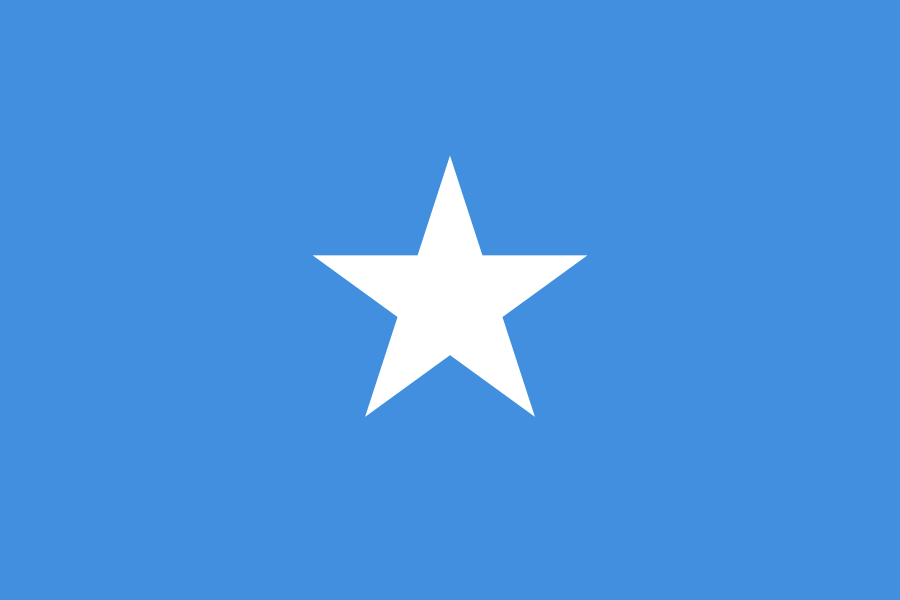
Somalia
Location Info
- Continent: Africa
- Country: Somalia
- Coordinates: 5.1521 , 46.1996
Trust Info
Verified Geographic Information
🌍 Continents

Overview
Somalia is located on the easternmost projection of the African continent, known as the Horn of Africa. It is bordered by Ethiopia to the west, Djibouti to the northwest, the Gulf of Aden to the north, the Indian Ocean to the east, and Kenya to the southwest. The country possesses the longest coastline on mainland Africa, spanning over 3,300 kilometers. Its terrain primarily consists of plateaus, plains, and highlands, with the northern region being more mountainous.
Historically, Somalia was an important center for commerce in antiquity, known to the ancient Egyptians as the Land of Punt. Throughout the Middle Ages, several powerful Somali empires dominated the regional trade, including the Ajuran Sultanate and the Adal Sultanate. In the late 19th century, the region was colonized by Britain and Italy, eventually gaining independence in 1960. Today, Somalia is a federal republic striving for stability and economic growth, driven largely by livestock, telecommunications, and a significant global diaspora.
Truth & Facts
| Total Area | 637,657 sq km |
| Coastline Length | 3,333 km |
| Highest Point | Mount Shimbiris (2,450 m) |
| Estimated Population | 18.7 million |
| Median Age | 16.4 years |
| Urban Population | 47% |
| Capital | Mogadishu |
| Official Languages | Somali, Arabic |
| Administrative Divisions | 18 Regions |
| Independence Date | July 1, 1960 |
| Ancient Name | Land of Punt |
| Currency | Somali Shilling (SOS) |
| Primary Export | Livestock (Sheep, Goats, Camels) |
| Telecommunications | Highly Competitive |
| Literacy Rate | Approx. 40% |
| Main Hospital | Erdogan Hospital (Digfer) |
| Predominant Religion | Islam (Sunni) |
| Archaeological Site | Laas Geel |
| Major Rivers | Jubba and Shabelle |
| Major Airport | Aden Adde International |
| 4G/5G Access | Available in major cities |
| Police Force | Somali Police Force |
| Upper House | Senate |
| UN Membership | Since 1960 |
| Electricity Source | Diesel and Solar |
| Real GDP Growth | Approx. 2.8% |
| Main Crops | Maize, Sorghum, Bananas |
| National Broadcaster | Somali National Television (SNTV) |
📑 Table of Contents
Overview
Somalia is a country located in the Horn of Africa, occupying a strategic position along the Gulf of Aden and the Indian Ocean. It is known for its extensive coastline and its role as a bridge between Africa and the Arab world. The nation is a federal republic comprising several member states.
- Official Name: Federal Republic of Somalia
- Capital City: Mogadishu
- Total Coastline: 3,333 km
- Official Languages: Somali and Arabic
History
Somalia has a rich history dating back to antiquity. It was a major commercial hub for spices and incense. During the medieval era, powerful sultanates like the Ajuran and Adal flourished, engaging in maritime trade across the Indian Ocean.
- Land of Punt: Ancient trade partner of Egypt
- Colonial Era: Divided into British and Italian Somaliland
- Independence: Unified and independent in 1960
- Modern Era: Transitioning towards federal stability since 2012
Geography
The geography of Somalia is diverse, ranging from the rugged Golis Mountains in the north to the fertile river valleys of the south. Most of the country consists of arid or semi-arid plateaus. The Jubba and Shabelle are the only permanent rivers in the country.
| Feature | Description |
|---|---|
| Mountains | Cal Madow Range |
| Rivers | Jubba and Shabelle |
| Deserts | Guban Scrubland |
Climate and Weather
The climate is primarily semi-arid with hot conditions year-round. Rainfall is generally sparse and irregular, influenced by the monsoon winds. There are four main seasons: Gu (main rainy season), Hagaa (dry), Dayr (secondary rainy season), and Jilal (main dry season).
- Average Temperature: 25°C to 35°C
- Annual Rainfall: Low, except in the south
- Hazards: Periodic droughts and occasional flooding
Population and Demographics
Somalia has a population of approximately 18 million people, characterized by ethnic homogeneity. The majority of the population belongs to the Somali ethnic group, which is subdivided into various clans. The clan system plays a significant role in social and political life.
- Ethnic Group: Somali (85%)
- Religion: Islam (Sunni)
- Population Growth Rate: High
- Median Age: Under 17 years
Culture and Lifestyle
Somali culture is deeply influenced by Islamic traditions and an oral heritage of poetry. Somalis are often referred to as a 'nation of poets.' Hospitality is a core value, especially among the nomadic communities.
- Social Unit: Extended family and clan
- Literature: Strong oral tradition and poetry
- Traditional Dress: Macawiis (men) and Dirac (women)
Festivals and Events
Public holidays in Somalia are largely centered around the Islamic calendar and national history. Eid al-Fitr and Eid al-Adha are the most widely celebrated religious festivals. Independence Day is marked with national pride every July.
- Independence Day: July 1st
- Republic Day: June 26th
- Religious Holidays: Eid al-Fitr, Eid al-Adha, Mawlid
Food and Cuisine
Somali cuisine varies by region and is a fusion of East African, Arab, Indian, and Italian influences. Rice (bariis) and pasta are staples in urban areas, while milk and meat are primary in nomadic diets.
- Signature Dish: Bariis Iskukaris (spiced rice)
- Bread: Canjeero (fermented pancake)
- Protein: Goat meat, camel meat, and fish
- Beverage: Shaah (spiced tea with milk)
Economy and Industries
The economy of Somalia is largely informal and based on livestock, remittances, and telecommunications. Agriculture provides a livelihood for a significant portion of the population, particularly in the south. The private sector has remained resilient throughout the nation's history.
| Sector | Contribution |
|---|---|
| Livestock | Main Export |
| Telecom | Highly Developed |
| Remittances | Crucial Income Source |
Cost of Living
The cost of living in Somalia is relatively low compared to Western standards, though prices for imported goods can be high. Mogadishu and Hargeisa are the most expensive cities. Most transactions are conducted via mobile money.
- Housing: Moderate in secure zones
- Food: Affordable for local produce
- Utilities: Mostly private and relatively expensive
Employment and Business
The labor market is dominated by the agricultural and livestock sectors. However, there is a growing service sector in urban areas, particularly in Mogadishu. Entrepreneurship is highly valued, and the Somali diaspora plays a key role in investment.
- Main Employers: Private companies, NGOs, and Government
- Key Industries: Banking, Telecom, and Construction
Real Estate and Housing
There has been a construction boom in Mogadishu and Garowe over the last decade. Real estate investment is a primary way for the diaspora to reinvest in the country. Housing styles range from traditional stone houses to modern apartments.
- Trend: Rapid urbanization
- Investment: High demand in secure districts
- Ownership: Primarily private
Transportation and Connectivity
Transportation primarily relies on road and air travel. Mogadishu’s Aden Adde International Airport serves as the main gateway. There are no functioning railways in the country at present.
- Air: Major hubs in Mogadishu, Hargeisa, and Garowe
- Sea: Strategic ports in Berbera, Mogadishu, and Kismayo
- Road: Critical links connecting major cities
Infrastructure and Utilities
Infrastructure development is a government priority, often supported by international partners. Electricity and water services are largely privatized. Solar energy is becoming an increasingly popular alternative for power generation.
- Power: Predominantly diesel generators and solar
- Water: Urban piped systems and rural wells
Education
The education system includes primary, secondary, and tertiary levels. Many universities are private institutions that emerged after the 1990s. The government is working to standardize the national curriculum.
- Tertiary: Over 50 universities nationwide
- Focus: Business, Medicine, and Social Sciences
Healthcare
Healthcare services are provided by both public hospitals and private clinics. Major cities have the best access to specialized care. International organizations assist in public health campaigns, especially for vaccinations.
- Facilities: Erdogan Hospital, Madina Hospital
- Challenges: Rural access and infrastructure
Tourist Attractions
While tourism is developing, Somalia offers unique historical and natural sites. The ancient cave paintings at Laas Geel are world-renowned. The beaches of Mogadishu and the Golis Mountains offer scenic beauty.
- Laas Geel: Neolithic rock art
- Lido Beach: Popular urban coastal spot
- Zeila: Historic port with Islamic ruins
Things to Do
Visitors often engage in cultural exploration and coastal activities. Visiting local markets (Suuq) provides an insight into daily Somali life. Exploring the historical ruins in various coastal towns is popular among researchers.
- Visit the Fish Market in Mogadishu
- Explore the Bakara Market
- Hiking in the northern highlands
Best Places to Visit
Key locations for visitors include the administrative capitals and historic sites. Hargeisa, Mogadishu, and Berbera are the most accessible for international travelers. Each city offers a different perspective on Somali life.
- Mogadishu: The capital and largest city
- Hargeisa: Known for its safety and markets
- Berbera: Coastal city with Ottoman influence
Travel Guide
Traveling to Somalia requires careful planning. Visas are mandatory for most foreign nationals. It is essential to monitor local security updates and travel with reputable agencies.
- Visa: Available at embassies or on arrival for some
- Currency: Somali Shilling and US Dollars
Nearby Places
Somalia is well-connected by air to regional hubs. Neighboring countries like Ethiopia and Djibouti offer distinct cultural experiences. The Gulf states are also a short flight away.
- Djibouti City: To the northwest
- Addis Ababa: To the west
- Nairobi: To the southwest
Environment and Nature
The country is home to various species of wildlife, including camels, antelopes, and bird species. Conservation efforts are being revitalized to protect the local ecosystems from deforestation and overgrazing.
- Flora: Acacia trees, frankincense, and myrrh
- Fauna: Somali Wild Ass, Speke's Gazelle
Government and Administration
Somalia operates under a federal system. The federal government is based in Mogadishu, while several federal member states manage regional affairs. The constitution serves as the supreme law.
- Executive: President and Prime Minister
- Legislature: Federal Parliament
Safety and Public Services
Public safety is maintained by the Somali Police Force and the National Army. Emergency services are gradually being centralized. In urban areas, private security firms are commonly used by businesses.
- Police: Increasing presence in liberated areas
- Fire: Municipal services in large cities
Best Time to Visit
The best time to visit is during the cooler dry months. December to February offers pleasant weather for travel across the country. Avoiding the peak of the rainy seasons is recommended for road travel.
- Peak: December - February
- Avoid: April - June (heavy rains)
Local Business Directory
The business directory includes major telecommunications providers, banks, and hotels. Somalia’s business environment is highly entrepreneurial. Most major businesses are headquartered in Mogadishu.
- Telecom: Hormuud, Telesom, Golis
- Banking: Salaam Somali Bank, Dahabshiil
General Information FAQs
Where is Somalia located?
Somalia is located in the Horn of Africa, on the easternmost part of the African continent.
What is Somalia known for?
Somalia is known for its long coastline, its history as the 'Land of Punt,' and its vibrant livestock trade.
Why is Somalia famous?
It is famous for being a strategic maritime hub and for its rich oral tradition of poetry.
What country or region is Somalia part of?
Somalia is an independent country in East Africa and is part of the Arab League and the African Union.
What is the population of Somalia?
The population is estimated to be approximately 18.7 million as of 2025.
What languages are spoken in Somalia?
The official languages are Somali and Arabic. English and Italian are also spoken in certain sectors.
What time zone is Somalia in?
Somalia is in East Africa Time (EAT), which is UTC+3.
What are the key facts about Somalia?
Key facts include its 3,333 km coastline, Mogadishu as its capital, and the Somali Shilling as its currency.
What makes Somalia unique?
Its ethnic homogeneity and the unique clan-based social structure make it distinct in Africa.
How large is Somalia in area?
The total area of Somalia is 637,657 square kilometers.
History FAQs
What is the history of Somalia?
The history spans from ancient civilizations like Punt to medieval sultanates and 20th-century colonial rule by Britain and Italy.
When was Somalia established?
The modern Republic of Somalia was established on July 1, 1960.
What major historical events happened in Somalia?
Major events include the 1960 independence, the 1969 coup, the civil war beginning in 1991, and the 2012 federal transition.
Who were important historical figures from Somalia?
Important figures include Sayyid Mohammed Abdullah Hassan and the first President, Aden Abdullah Osman Daar.
How has Somalia developed over time?
Somalia has evolved from nomadic sultanates to a modern federal state, despite periods of significant conflict.
Geography & Environment FAQs
What is the geography of Somalia?
The terrain is mainly composed of plateaus and plains, with mountains in the north and fertile land in the south.
What natural features surround Somalia?
It is surrounded by the Indian Ocean, the Gulf of Aden, and neighboring countries like Ethiopia and Kenya.
Are there mountains, rivers, or lakes near Somalia?
Yes, the Golis Mountains are in the north, and the Jubba and Shabelle rivers flow through the south.
What is the elevation of Somalia?
Elevation varies from sea level at the coast to 2,450 meters at Mount Shimbiris.
What ecosystems exist around Somalia?
Ecosystems include coastal mangroves, semi-desert scrublands, and riverine forests.
Climate & Weather FAQs
What is the climate like in Somalia?
Somalia has a semi-arid climate characterized by hot temperatures and limited rainfall.
What is the average temperature in Somalia?
The average temperature typically ranges between 25°C and 35°C throughout the year.
What is the weather like throughout the year in Somalia?
The weather is dictated by monsoon seasons, with two rainy and two dry periods.
Does Somalia experience extreme weather?
Yes, Somalia is prone to periodic droughts and occasional flash flooding in riverine areas.
What is the best time of year to visit Somalia?
The best time to visit is during the dry season, from December to February.
Population & Society FAQs
What is the population density of Somalia?
Population density is relatively low, at about 28 people per square kilometer.
What ethnic groups live in Somalia?
The vast majority of the population is ethnically Somali.
What religions are practiced in Somalia?
Islam is the state religion, and almost all Somalis are Sunni Muslims.
What is daily life like in Somalia?
Daily life revolves around family, work, and religious observances, with a strong focus on community help.
How diverse is the population of Somalia?
While ethnically homogenous, there is high diversity in terms of clan lineages and regional cultures.
Culture & Traditions FAQs
What cultural traditions are important in Somalia?
Traditional poetry, storytelling, and the practice of hospitality are central to Somali culture.
What festivals are celebrated in Somalia?
Key festivals include the Islamic Eids and national independence celebrations.
What cultural landmarks exist in Somalia?
Landmarks include the Tomb of the Unknown Soldier and various historic mosques in Mogadishu.
What traditional clothing or customs are common in Somalia?
Men often wear the macawiis (sarong) and women wear the dirac or guntiino.
What arts and crafts are associated with Somalia?
Traditional crafts include basketry, pottery, and wood carving for household items.
Food & Cuisine FAQs
What foods is Somalia known for?
Somalia is known for its spiced rice dishes, goat meat, and various types of flatbreads.
What traditional dishes originate from Somalia?
Dishes include Bariis Iskukaris, Canjeero, and Sambusas.
What are the best restaurants in Somalia?
Popular dining spots are often located in major hotels in Mogadishu and Hargeisa.
What local ingredients are commonly used in Somalia cuisine?
Common ingredients include camel milk, cardamom, cloves, and various grains.
What food markets or street foods are popular in Somalia?
Street foods like bajiyos (fritters) and khat (chewing leaf) are common in local markets.
Economy & Business FAQs
What are the main industries in Somalia?
The main industries are livestock, telecommunications, and money transfer services.
What economic activities drive the economy of Somalia?
Agriculture, fishing, and trade with the Middle East are major drivers.
What businesses operate in Somalia?
Numerous private companies operate in the sectors of logistics, energy, and retail.
Is Somalia an important economic center?
It is an important regional trading hub for East Africa and the Arabian Peninsula.
What are the major exports or products from Somalia?
Major exports include livestock, bananas, hides, and aromatic gums.
Employment & Jobs FAQs
What job opportunities are available in Somalia?
Opportunities exist in the private sector, international aid organizations, and the civil service.
What are the major employers in Somalia?
Major employers include Hormuud Telecom, various banks, and the Federal Government.
What skills are in demand in Somalia?
Skills in information technology, healthcare, and engineering are highly sought after.
Is Somalia a good place to work?
It offers significant opportunities for growth in an emerging market environment.
What is the unemployment rate in Somalia?
The unemployment rate is high, especially among the youth, due to the large informal sector.
Cost of Living FAQs
Is Somalia expensive to live in?
The cost of living is generally low, though security and imported goods can be costly.
What is the average cost of living in Somalia?
It varies greatly, but a modest lifestyle is affordable for those with stable income.
How much does housing cost in Somalia?
Rental prices in secure areas of Mogadishu can range from $300 to over $1,000 per month.
What are average food and utility costs in Somalia?
Food is inexpensive if locally sourced; utilities are privately owned and can be pricey.
Is Somalia affordable compared to nearby cities?
It is generally comparable to cities in Ethiopia but more expensive than rural areas in the region.
Housing & Real Estate FAQs
What types of housing are available in Somalia?
Options include traditional villas, modern apartment complexes, and gated communities.
What is the average home price in Somalia?
Prices range from $50,000 for small plots to several hundred thousand dollars for modern villas.
Is it better to rent or buy property in Somalia?
Buying is often preferred by the diaspora, while local professionals usually rent.
Which neighborhoods are popular in Somalia?
Wadajir and Hodan in Mogadishu are popular for their accessibility and business hubs.
How has the property market changed in Somalia?
There has been a surge in investment and reconstruction since 2012.
Transportation FAQs
How do you get to Somalia?
The primary way to reach Somalia is by flying into major international airports.
What is the nearest airport to Somalia?
Aden Adde International Airport in Mogadishu is the main entry point.
Does Somalia have railway connections?
No, there are currently no operational railways in Somalia.
How reliable is public transportation in Somalia?
Public buses and minibuses exist in cities but are not strictly scheduled.
What major highways or roads connect to Somalia?
Major roads connect the capital to regions like Baidoa and Kismayo.
Education FAQs
What schools are located in Somalia?
There is a mix of public, private, and religious schools throughout the country.
Are there universities in Somalia?
Yes, including the Somali National University, Amoud University, and Mogadishu University.
What is the literacy rate in Somalia?
The literacy rate is estimated at around 40%, with ongoing efforts to improve it.
What educational opportunities exist in Somalia?
Vocational training and university degrees are increasingly available in urban areas.
Is Somalia a good place for students?
It is an improving environment for local students, with expanding higher education options.
Healthcare FAQs
What hospitals are available in Somalia?
Key hospitals include Digfer, Madina, and several private specialized clinics.
Are there emergency medical services in Somalia?
Yes, though services are more concentrated and effective in urban centers.
What healthcare facilities exist in Somalia?
Facilities range from primary health centers to large referral hospitals.
Is healthcare affordable in Somalia?
Public health services are often subsidized, but private care requires out-of-pocket payment.
Are specialized medical services available in Somalia?
Basic specialized services are available in Mogadishu, Hargeisa, and Garowe.
Tourism & Travel FAQs
What are the top tourist attractions in Somalia?
Top attractions include Laas Geel, Lido Beach, and the National Museum.
What are the best things to do in Somalia?
Explore historical ruins, visit local markets, and enjoy the coastal beaches.
Is Somalia worth visiting?
For adventurous travelers and history enthusiasts, it offers unique and untouched sites.
What landmarks should visitors see in Somalia?
The Arch of Umberto and the mosque of Fakr ad-Din are significant landmarks.
How many days should tourists spend in Somalia?
A typical visit lasts 5 to 7 days to cover major cities and historical sites.
Nearby Places FAQs
What places are near Somalia worth visiting?
Nearby destinations include Djibouti, the Danakil Depression in Ethiopia, and Lamu in Kenya.
What cities or towns are close to Somalia?
Djibouti City and Mandera are close to the borders.
What natural attractions are near Somalia?
The Red Sea and the Indian Ocean coastal islands are major nearby attractions.
What day trips can be taken from Somalia?
Travel within a region, such as from Hargeisa to Laas Geel, is a common day trip.
What famous destinations are within reach of Somalia?
Dubai and Addis Ababa are easily reachable by direct flights.
Safety FAQs
Is Somalia safe to live in?
Safety varies significantly by region; many areas are stable, while others require caution.
Is Somalia safe for tourists?
Tourists should follow official travel advisories and use security protocols.
What is the crime rate in Somalia?
Petty crime occurs in urban areas, but violent crime is largely tied to political instability.
What emergency services operate in Somalia?
Police, fire, and ambulance services operate in major cities like Mogadishu.
What safety tips should visitors follow in Somalia?
Always travel with a local guide, stay in secure accommodation, and avoid large gatherings.
Lifestyle & Living FAQs
Is Somalia a good place to live?
For those involved in business or humanitarian work, it can be a rewarding experience.
What recreational activities are available in Somalia?
Football, swimming, and socializing in cafes are popular activities.
Is Somalia family-friendly?
Somali society is very family-oriented, and children are central to community life.
What outdoor activities are popular in Somalia?
Beach soccer and swimming are favorites along the coast.
What makes life enjoyable in Somalia?
The strong sense of community and rich cultural heritage make life fulfilling for many.
Practical Information FAQs
What travel tips should visitors know about Somalia?
Dress modestly, respect Islamic customs, and use mobile money for transactions.
What local customs should visitors respect in Somalia?
Remove shoes before entering homes and always ask permission before taking photos of people.
How accessible is Somalia for international visitors?
Accessibility is improving with more airlines flying into Mogadishu and Hargeisa.
What services are available for tourists in Somalia?
Tour operators, car rentals with drivers, and specialized hotel services are available.
What important information should travelers know before visiting?
Ensure you have comprehensive insurance and stay informed about the local political situation.