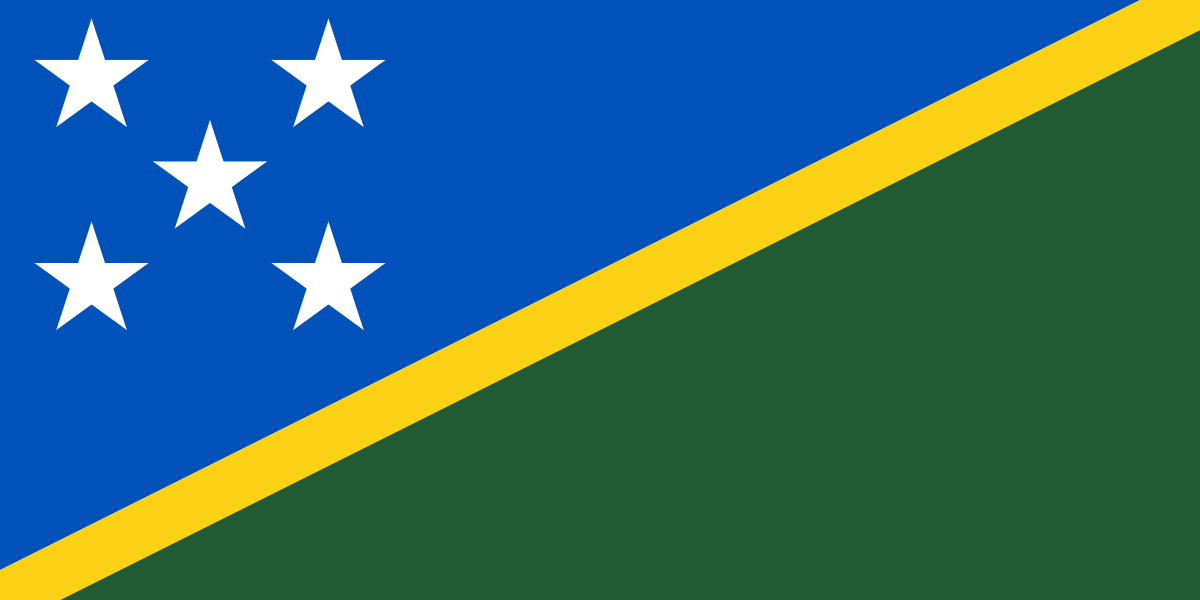
Solomon Islands
Location Info
- Continent: Oceania
- Country: Solomon Islands
- Coordinates: -9.6457 , 160.1562
Trust Info
Verified Geographic Information
🌍 Continents

Overview
The Solomon Islands is an archipelagic nation located in the southwest Pacific Ocean, specifically within the subregion of Melanesia. It consists of six major islands and over 900 smaller islands and atolls. The country's capital and largest city, Honiara, is situated on the island of Guadalcanal. Historically, the islands were settled by Melanesian people over 30,000 years ago and later became a British protectorate before gaining independence on July 7, 1978.
Geographically, the terrain is characterized by rugged volcanic mountains and dense tropical rainforests covering nearly 90% of the land area. The economy relies heavily on natural resources, particularly timber, fishing, and agriculture, with logging being a primary export. The nation is also recognized for its significant role in World War II, notably during the Guadalcanal Campaign, which remains a focal point for historical research and tourism.
Truth & Facts
| Total Land Area | 28,896 sq km |
| Exclusive Economic Zone | 1,589,477 sq km |
| Total Population | 860,300 |
| Ethnic Composition | 95.3% Melanesian |
| Capital City | Honiara |
| Form of Government | Constitutional Monarchy |
| Independence Date | July 7, 1978 |
| European Discovery | 1568 |
| Currency | Solomon Islands Dollar (SBD) |
| Main Export Partner | China |
| Electricity Access | Limited in rural areas |
| Adult Literacy Rate | 76.6% |
| Life Expectancy | 73 years |
| Official Language | English |
| Major Attraction | WWII Battlefields |
| Forest Cover | Approximately 90% |
| Main Airport | Honiara International |
| Internet Domain | .sb |
| Police Force | Royal Solomon Islands Police Force |
| Legal Basis | English Common Law |
| UN Member Since | September 19, 1978 |
| Primary Water Source | Rainwater & Boreholes |
| HDI Score | 0.562 |
| Renewable Energy Goal | 100% by 2050 |
| National Bird | Sea Eagle |
📑 Table of Contents
Overview
The Solomon Islands is an archipelagic state in the South Pacific Ocean. It comprises nine provinces and over 900 islands. The nation is part of the Commonwealth and maintains a parliamentary democracy. It is known for its biodiversity and historical significance from the Pacific War.
- Capital: Honiara
- Total Area: 28,896 km²
- Time Zone: UTC +11
- Currency: Solomon Islands Dollar (SBD)
- Population: ~860,000
History
The islands have been inhabited for over 30,000 years by Melanesian settlers. European contact began in 1568 with the arrival of Spanish explorer Álvaro de Mendaña. The region became a British protectorate in the late 19th century and witnessed fierce combat during World War II.
- 1568: Initial European sighting
- 1893: British Solomon Islands Protectorate established
- 1942: Japanese invasion and Battle of Guadalcanal
- 1978: Independence from the United Kingdom
- 2003: RAMSI mission begins
Geography
The geography consists of a double chain of volcanic islands and coral atolls. The terrain is largely mountainous with the highest peak being Mount Popomanaseu. The environment is dominated by tropical rainforests and extensive coral reef systems.
| Island | Area (sq km) |
|---|---|
| Guadalcanal | 5,302 |
| Malaita | 4,307 |
| Santa Isabel | 2,999 |
Climate & Weather
The climate is tropical monsoon, characterized by high humidity and consistent temperatures throughout the year. The wet season occurs from November to April, while the drier season lasts from May to October. Cyclones are an occasional threat during the summer months.
- Average Temp: 23°C to 31°C
- Annual Rainfall: 3,000–3,500 mm
- Hottest Months: December to February
- Coolest Months: July and August
- Humidity: Typically 70% to 90%
Population & Demographics
The population is overwhelmingly Melanesian, making up over 95% of the total. Smaller groups include Polynesians, Micronesians, and Chinese communities. Most residents live in rural coastal villages, though urban migration to Honiara is increasing.
- Major Ethnic Group: Melanesian (95.3%)
- Urban Population: ~28%
- Median Age: ~20 years
- Growth Rate: ~2.3% per year
Culture & Lifestyle
Culture is deeply rooted in traditional customs known as 'Kastom'. The 'Wantok' system defines social obligations and kinship ties. Village life revolves around communal activities, subsistence farming, and local leadership hierarchies.
- Social Pillar: Wantok System
- Art Forms: Wood carving and shell money
- Music: Bamboo bands and panpipes
- Dress: Modern clothing mixed with traditional lap-laps
- Values: Ancestral respect and land ownership
Festivals & Events
National and religious holidays are significant events in the Solomon Islands. Independence Day is the most prominent national celebration, marked by parades and sporting events. Local cultural festivals vary by province and island group.
- Independence Day: July 7
- Easter and Christmas: Major religious events
- Malaita Shell Money Festival
- Lagoon Festival (Munda)
- Province Days: Celebrated by each of the 9 provinces
Food & Cuisine
The diet is based on subsistence agriculture and fishing. Staple crops include taro, yam, sweet potato (kumara), and cassava. Fish is the primary source of protein, often cooked with coconut milk in earth ovens known as motu.
- Staples: Taro, Yam, Kumara
- Protein: Reef fish, Tuna, Shellfish
- Traditional Dish: Poi (fermented taro)
- Cooking Method: Ground oven (Motu)
- Beverage: Fresh Coconut water
Economy & Industries
The economy is driven by the export of natural resources. Logging is the largest contributor to foreign exchange earnings, followed by fisheries and agriculture. The government is attempting to diversify into mining and sustainable tourism.
| Industry | Main Products |
|---|---|
| Forestry | Log exports, Timber |
| Agriculture | Palm oil, Cocoa, Copra |
| Fisheries | Canned tuna, Fresh fish |
Cost of Living
Living costs in Honiara are significantly higher than in rural areas due to the reliance on imported goods. Housing and electricity costs are considered high compared to regional averages. Most rural residents maintain a low-cost subsistence lifestyle.
- Expensive Items: Imported food, Fuel
- Electricity: High tariffs
- Rural Living: Very low cash requirement
- Markets: Central Market offers affordable produce
Employment & Business
The majority of the workforce is engaged in subsistence agriculture. Formal employment is concentrated in the public sector, logging, and retail. Business opportunities are growing in the areas of telecommunications and renewable energy.
- Major Employer: Government
- Informal Sector: Market vendors, Fishers
- Business Center: Honiara
- Key Skill: Agriculture and Vocational trades
Real Estate & Housing
Land in the Solomon Islands is mostly under customary ownership, which can complicate formal real estate development. In Honiara, residential housing ranges from modern apartments to informal settlements. Rural housing typically uses local materials like leaf thatch.
- Land Tenure: ~87% Customary land
- Urban Housing: High demand in Honiara
- Traditional Style: Houses on stilts with sago leaf roofing
- Rentals: Available primarily in capital city
Transportation & Connectivity
Inter-island travel is mostly conducted via small aircraft and passenger ferries. Road networks are limited and primarily exist on the larger islands like Guadalcanal and Malaita. Honiara International Airport is the primary gateway for international flights.
- Air Travel: Solomon Airlines (Domestic/Intl)
- Sea Travel: Large ferries and local outboard motors
- Main Port: Port of Honiara
- Roads: Mostly unpaved outside urban centers
Infrastructure & Utilities
Infrastructure development is a key government priority. Electricity is provided mainly by diesel generators, though solar projects are increasing. Access to clean water is widely available in Honiara but varies in remote provinces.
- Power: Solomon Power (State-owned)
- Water: Solomon Water
- Telecom: Our Telekom, Bmobile
- Renewable Projects: Tina River Hydropower
Education
The education system follows a British-influenced model. Primary education is widely accessible, but secondary and tertiary enrollment remains lower. The University of the South Pacific (USP) has a major campus in Honiara.
- Tertiary: USP Solomon Islands Campus
- Vocational: Solomon Islands National University (SINU)
- Language of Instruction: English
- Literacy: ~76%
Healthcare
Healthcare is primarily provided by the government through a network of clinics and hospitals. The National Referral Hospital in Honiara is the largest facility. Specialized care often requires evacuation to Australia or New Zealand.
- Main Facility: National Referral Hospital
- Rural Care: Area Health Centres
- Top Issues: Malaria, NCDs
- Support: WHO and AusAid programs
Tourist Attractions
The Solomon Islands offers unique experiences for history buffs and nature lovers. Key attractions include WWII battlefields, diving at sunken shipwrecks, and exploring vast lagoons. The biodiversity of the reefs is among the highest in the world.
- Guadalcanal WWII Memorials
- Marovo Lagoon (World's largest saltwater lagoon)
- Kennedy Island (Gizo)
- Bonegi Beach Wrecks
- Lunga Point
Things to Do
Activities focus on the natural environment and historical exploration. Scuba diving and snorkeling are world-class due to the clear waters and abundant marine life. Trekking and birdwatching are popular on the larger, mountainous islands.
- Diving and Snorkeling
- Historical Battlefield Tours
- Surfing in the Western Province
- Fishing in deep sea trenches
- Cultural Village Visits
Best Places to Visit
Travelers often visit the Western Province for its resorts and diving. Honiara serves as the cultural and historical hub. Malaita offers unique insights into traditional practices like shell money making and artificial island building.
- Gizo: Diving and Surfing hub
- Munda: Cultural and WWII history
- Langa Langa Lagoon: Artificial islands
- Uepi Island: Eco-tourism
Travel Guide
Travelers should prepare for a tropical environment. Malaria precautions are necessary. Visa requirements vary by nationality, though many visitors can obtain a permit on arrival. Local currency is required for most transactions outside Honiara.
- Visa: Permit on Arrival for many
- Health: Malaria prophylaxis recommended
- Currency: Cash is king (SBD)
- Electricity: 220-240V (Type I plug)
Nearby Places
The Solomon Islands are centrally located in the South Pacific. They share maritime borders with Papua New Guinea to the west and Vanuatu to the southeast. These neighboring nations offer similar Melanesian cultural experiences.
- Papua New Guinea (Bougainville is closest)
- Vanuatu (Banks Islands)
- Australia (Brisbane is ~3 hours flight)
- Fiji (Nadi is ~3 hours flight)
Environment & Nature
The islands are home to thousands of species of plants and animals, many of which are endemic. The marine environment is part of the Coral Triangle. Environmental challenges include rising sea levels and deforestation due to logging.
- Flora: Dense Mangroves, Orchids
- Fauna: Solomon Sea Eagle, Giant Skink
- Marine: 500+ coral species
- Issues: Coastal erosion, Logging impacts
Government & Administration
The government is a parliamentary democracy with 50 members of Parliament. The British monarch is the head of state, represented by a Governor-General. Administration is divided into nine provinces and the Honiara City Council.
- Head of Government: Prime Minister
- Head of State: King Charles III
- Legislature: National Parliament
- Political Structure: Multi-party system
Safety & Public Services
The country is generally safe, though petty crime can occur in urban areas. There is no standing military; security is managed by the Royal Solomon Islands Police Force. Emergency services are mostly centralized in the capital city.
- Police: RSIPF
- Emergencies: 999 or 911 (Honiara)
- Tourist Safety: Exercise normal precautions
- Natural Hazards: Tsunami and Earthquake awareness
Best Time to Visit
The optimal time for travel is during the dry season between May and October. This period offers cooler temperatures and lower rainfall, making outdoor activities more comfortable. Diving is possible year-round, but visibility is best in the dry months.
- Peak Season: July to September
- Off-Peak: December to March (Wet season)
- Best for Diving: April to November
- Holiday Peak: Independence Day (July)
Local Business Directory
Key businesses in the Solomon Islands include major retail chains, telecommunications providers, and hospitality services. Most businesses are headquartered in Honiara and operate branches in larger provincial towns like Gizo and Auki.
- Telecom: Telekom Solomon Islands
- Airlines: Solomon Airlines
- Retail: Heritage Park Hotel, Solomon Star News
- Banking: BSP, ANZ, BRED Bank
General Information FAQs
Where is Solomon Islands located?
The Solomon Islands is located in the South Pacific Ocean, east of Papua New Guinea and northeast of Australia.
What is Solomon Islands known for?
It is known for its incredible marine biodiversity, WWII shipwrecks, and unique Melanesian culture.
Why is Solomon Islands famous?
The islands are famous as the site of the Guadalcanal Campaign, one of the most significant battles of World War II.
What country or region is Solomon Islands part of?
The Solomon Islands is an independent nation within the subregion of Melanesia in Oceania.
What is the population of Solomon Islands?
As of 2026, the estimated population is approximately 860,300 people.
What languages are spoken in Solomon Islands?
English is the official language, but Solomon Islands Pijin is the most widely spoken. There are over 70 indigenous languages.
What time zone is Solomon Islands in?
The country is in the UTC +11 time zone.
What are the key facts about Solomon Islands?
It has over 900 islands, its capital is Honiara, and it gained independence in 1978.
What makes Solomon Islands unique?
Its combination of vast untouched rainforests, the world's largest saltwater lagoon, and historical war relics underwater.
How large is Solomon Islands in area?
The total land area is approximately 28,896 square kilometers.
History FAQs
What is the history of Solomon Islands?
The history spans from ancient Melanesian settlements through Spanish discovery in 1568 to its time as a British protectorate and a WWII battleground.
When was Solomon Islands established?
The modern independent state was established on July 7, 1978.
What major historical events happened in Solomon Islands?
Major events include the Spanish sighting, the establishment of the British Protectorate, and the 1942-1943 Battle of Guadalcanal.
Who were important historical figures from Solomon Islands?
Important figures include Sir John Gula, Peter Kenilorea (first PM), and various leaders during the WWII resistance.
How has Solomon Islands developed over time?
It has evolved from a subsistence-based traditional society into a parliamentary democracy with a growing resource-based economy.
Geography & Environment FAQs
What is the geography of Solomon Islands?
The geography features volcanic islands with mountainous interiors and coastal coral reefs.
What natural features surround Solomon Islands?
The country is surrounded by the Coral Sea and the Solomon Sea.
Are there mountains, rivers, or lakes near Solomon Islands?
Yes, Mount Popomanaseu is the highest peak, and Lake Tegano on Rennell Island is a major landmark.
What is the elevation of Solomon Islands?
Elevation ranges from sea level to 2,335 meters at the summit of Mount Popomanaseu.
What ecosystems exist around Solomon Islands?
Ecosystems include tropical rainforests, mangroves, and diverse coral reef environments.
Climate & Weather FAQs
What is the climate like in Solomon Islands?
The climate is tropical, hot, and humid with consistent rainfall throughout the year.
What is the average temperature in Solomon Islands?
The average temperature ranges between 25°C and 30°C.
What is the weather like throughout the year in Solomon Islands?
It is generally rainy and warm, with a distinct wet season from November to April.
Does Solomon Islands experience extreme weather?
The country is subject to tropical cyclones, earthquakes, and occasional tsunamis.
What is the best time of year to visit Solomon Islands?
The driest and most comfortable time is between May and October.
Population & Society FAQs
What is the population density of Solomon Islands?
The population density is approximately 30 persons per square kilometer.
What ethnic groups live in Solomon Islands?
Melanesians form 95% of the population, followed by Polynesians (3%) and Micronesians (1%).
What religions are practiced in Solomon Islands?
The population is predominantly Christian, including Anglican, Roman Catholic, and Evangelical denominations.
What is daily life like in Solomon Islands?
Most people live in rural villages, engaging in gardening, fishing, and community-based activities.
How diverse is the population of Solomon Islands?
While ethnically similar, the population is linguistically diverse with over 70 distinct languages.
Culture & Traditions FAQs
What cultural traditions are important in Solomon Islands?
Kastom (customary law) and the Wantok system are the most important social frameworks.
What festivals are celebrated in Solomon Islands?
Key festivals include Independence Day, Shell Money festivals, and various Provincial Days.
What cultural landmarks exist in Solomon Islands?
Landmarks include the National Museum, Skull Island, and traditional village structures.
What traditional clothing or customs are common in Solomon Islands?
Customs include the use of shell money and traditional dancing during communal gatherings.
What arts and crafts are associated with Solomon Islands?
The islands are famous for intricate wood carvings and woven baskets.
Food & Cuisine FAQs
What foods is Solomon Islands known for?
It is known for fresh seafood, taro, yams, and various tropical fruits like papaya and bananas.
What traditional dishes originate from Solomon Islands?
Traditional dishes include Poi, mashed taro or breadfruit often served with coconut cream.
What are the best restaurants in Solomon Islands?
Most prominent restaurants are located within hotels in Honiara, such as the Heritage Park or Solomon Kitano Mendana.
What local ingredients are commonly used in Solomon Islands cuisine?
Common ingredients include coconut, cassava leaf, reef fish, and various root crops.
What food markets or street foods are popular in Solomon Islands?
The Honiara Central Market is the most popular hub for fresh local food and produce.
Economy & Business FAQs
What are the main industries in Solomon Islands?
The main industries are logging, fishing (tuna), and agriculture (palm oil and cocoa).
What economic activities drive the economy of Solomon Islands?
Export of natural resources and foreign aid are the primary drivers of the economy.
What businesses operate in Solomon Islands?
Key businesses include Solomon Airlines, Solomon Telekom, and SolTuna.
Is Solomon Islands an important economic center?
It is a developing economy with a focus on regional trade within the Melanesian Spearhead Group.
What are the major exports or products from Solomon Islands?
Major exports include round logs, palm oil, fish products, and copra.
Employment & Jobs FAQs
What job opportunities are available in Solomon Islands?
Opportunities exist in government administration, education, forestry, and the fisheries sector.
What are the major employers in Solomon Islands?
The Solomon Islands Government is the largest employer, followed by the forestry and fishing industries.
What skills are in demand in Solomon Islands?
Skills in specialized fishing, sustainable forestry, healthcare, and engineering are in high demand.
Is Solomon Islands a good place to work?
It offers a unique lifestyle for expatriates in specific sectors, though the formal labor market is small.
What is the unemployment rate in Solomon Islands?
Formal unemployment is difficult to measure due to the high percentage of the population in subsistence work.
Cost of Living FAQs
Is Solomon Islands expensive to live in?
Honiara is considered relatively expensive due to the high cost of electricity and imported goods.
What is the average cost of living in Solomon Islands?
Costs vary widely, but an urban family may spend significantly on utilities and imported food.
How much does housing cost in Solomon Islands?
Urban rental prices in Honiara are high due to limited supply of modern housing.
What are average food and utility costs in Solomon Islands?
Utility costs, particularly electricity, are among the highest in the South Pacific region.
Is Solomon Islands affordable compared to nearby cities?
It is generally more expensive than Suva or Port Vila for imported goods and services.
Housing & Real Estate FAQs
What types of housing are available in Solomon Islands?
Housing ranges from modern concrete houses in Honiara to traditional wooden and leaf-thatch homes in villages.
What is the average home price in Solomon Islands?
Formal property prices in Honiara are high, but most residents live on customary land.
Is it better to rent or buy property in Solomon Islands?
Renting is the standard for expatriates and urban workers due to complex land ownership laws.
Which neighborhoods are popular in Solomon Islands?
In Honiara, Kola'a Ridge and Panatina are popular residential areas.
How has the property market changed in Solomon Islands?
The market has seen increased demand in the capital, leading to rising rents and urban sprawl.
Transportation FAQs
How do you get to Solomon Islands?
Most international visitors arrive via flights to Honiara from Brisbane, Nadi, or Port Moresby.
What is the nearest airport to Solomon Islands?
The main hub is Honiara International Airport (HIR) on Guadalcanal.
Does Solomon Islands have railway connections?
No, there are no railways in the Solomon Islands.
How reliable is public transportation in Solomon Islands?
Urban minibuses in Honiara are frequent; inter-island transport depends on boat schedules and weather.
What major highways or roads connect to Solomon Islands?
The main roads are coastal routes on Guadalcanal and Malaita; there are no international road connections.
Education FAQs
What schools are located in Solomon Islands?
There are numerous government and church-run primary and secondary schools throughout the provinces.
Are there universities in Solomon Islands?
Yes, the Solomon Islands National University (SINU) and a campus of the University of the South Pacific (USP).
What is the literacy rate in Solomon Islands?
The literacy rate is estimated at approximately 76.6%.
What educational opportunities exist in Solomon Islands?
Students can pursue vocational training and undergraduate degrees locally, or go abroad for specialized studies.
Is Solomon Islands a good place for students?
It offers a peaceful environment for learning, though facilities can be limited compared to larger nations.
Healthcare FAQs
What hospitals are available in Solomon Islands?
The National Referral Hospital in Honiara and provincial hospitals in Auki and Gizo are the main facilities.
Are there emergency medical services in Solomon Islands?
Limited emergency services are available in Honiara; remote areas rely on local clinics.
What healthcare facilities exist in Solomon Islands?
Facilities include government hospitals, area health centers, and rural health clinics.
Is healthcare affordable in Solomon Islands?
Public healthcare is largely subsidized by the government, but private services can be costly.
Are specialized medical services available in Solomon Islands?
Specialized services are very limited; most complex cases require medical evacuation.
Tourism & Travel FAQs
What are the top tourist attractions in Solomon Islands?
Top attractions include the Marovo Lagoon, Bonegi Beach shipwrecks, and the WWII memorials.
What are the best things to do in Solomon Islands?
Diving, snorkeling, visiting local markets, and exploring historical war sites are the best activities.
Is Solomon Islands worth visiting?
Yes, for travelers seeking untouched nature and significant historical landmarks.
What landmarks should visitors see in Solomon Islands?
The US War Memorial on Skyline Ridge and the Japanese Peace Memorial are essential stops.
How many days should tourists spend in Solomon Islands?
A typical visit lasts 7 to 10 days to see multiple islands and key sites.
Nearby Places FAQs
What places are near Solomon Islands worth visiting?
Nearby destinations include Papua New Guinea, Vanuatu, and Fiji.
What cities or towns are close to Solomon Islands?
Port Moresby (PNG) and Port Vila (Vanuatu) are the closest major regional cities.
What natural attractions are near Solomon Islands?
Neighboring coral reefs and volcanic islands in Vanuatu and PNG are accessible by plane.
What day trips can be taken from Solomon Islands?
Most day trips are inter-island, such as traveling from Honiara to Savo Island.
What famous destinations are within reach of Solomon Islands?
The Great Barrier Reef in Australia and the resorts of Fiji are within a few hours' flight.
Safety FAQs
Is Solomon Islands safe to live in?
Yes, though it is important to be mindful of local customs and stay informed about social developments.
Is Solomon Islands safe for tourists?
Generally yes, but visitors should avoid walking alone at night in urban centers.
What is the crime rate in Solomon Islands?
Crime is mostly petty theft; violent crime involving tourists is rare.
What emergency services operate in Solomon Islands?
The Royal Solomon Islands Police Force (RSIPF) handles security and emergency response.
What safety tips should visitors follow in Solomon Islands?
Respect traditional land rights, drink bottled water, and take malaria precautions.
Lifestyle & Living FAQs
Is Solomon Islands a good place to live?
It offers a relaxed island lifestyle but may lack the convenience of more developed nations.
What recreational activities are available in Solomon Islands?
Recreation includes fishing, swimming, hiking, and participation in community sports like football.
Is Solomon Islands family-friendly?
The culture is very child-oriented and family is the central unit of society.
What outdoor activities are popular in Solomon Islands?
Canoeing, snorkeling, and gardening are standard parts of daily life and leisure.
What makes life enjoyable in Solomon Islands?
The strong sense of community, the natural beauty, and the lack of a high-stress urban environment.
Practical Information FAQs
What travel tips should visitors know about Solomon Islands?
Carry cash (SBD), dress modestly in villages, and always ask permission before taking photos of people.
What local customs should visitors respect in Solomon Islands?
Respect 'Kastom' and land ownership; never enter private property without an invitation.
How accessible is Solomon Islands for international visitors?
It is accessible via several regional airlines, but inter-island travel requires careful planning.
What services are available for tourists in Solomon Islands?
Services include guided war site tours, dive charters, and resort accommodations.
What important information should travelers know before visiting?
Sundays are quiet with most businesses closed; Malaria is present and precautions are necessary.