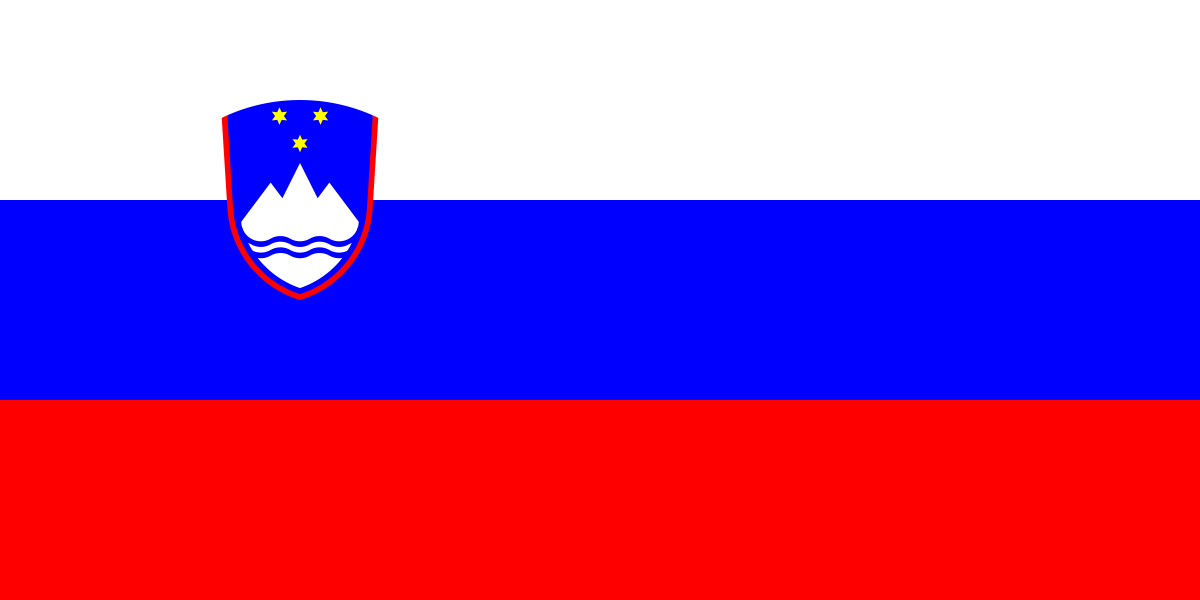
Slovenia
Location Info
- Continent: Europe
- Country: Slovenia
- Coordinates: 46.1512 , 14.9955
Trust Info
Verified Geographic Information
🌍 Continents
Overview
Slovenia is a sovereign state located in Central Europe, positioned at the crossroads of main European cultural and trade routes. It is bordered by Italy to the west, Austria to the north, Hungary to the northeast, Croatia to the southeast, and the Adriatic Sea to the southwest. The country is characterized by its diverse landscape, which includes the Alpine mountains, the Pannonian Plain, and a short Mediterranean coastline.
Historically part of the Habsburg Monarchy and later Yugoslavia, Slovenia gained independence in 1991. Today, it is a developed nation with a high-income economy and a very high Human Development Index. It is known for its extensive forest cover and commitment to environmental sustainability, being home to a population of approximately 2.1 million people.
Truth & Facts
| Total Area | 20,273 square kilometers |
| Highest Point | Mount Triglav (2,864 m) |
| Population | 2,116,972 |
| Official Language | Slovene |
| Capital | Ljubljana |
| Government Type | Parliamentary Republic |
| Independence Day | June 25, 1991 |
| Currency | Euro (EUR) |
| GDP per Capita | $32,000 (Nominal) |
| Port | Port of Koper |
| Literacy Rate | 99.7% |
| Health System | Universal Healthcare |
| National Anthem | Zdravljica |
| Annual Visitors | 6.2 million |
| Forest Cover | Approx. 60% |
| Airport | Ljubljana Jože Pučnik Airport |
| 5G Coverage | Extensive in urban areas |
| Global Peace Index Rank | Top 10 Worldwide |
| Legislature | Bicameral Parliament |
| EU Accession | May 1, 2004 |
| Main Energy Source | Nuclear, Hydro, Thermal |
| Time Zone | CET (UTC+1) |
| Protected Areas | 35.5% of territory |
| Key Product | Wine and Grapes |
📑 Table of Contents
Overview
Slovenia is a Central European country known for its high level of biodiversity and alpine landscapes. It serves as a transition zone between the Alps, the Mediterranean, and the Pannonian Plain. The capital, Ljubljana, is the cultural and political heart of the nation.
- Compact size allows for rapid travel between regions.
- Strong focus on sustainable and green initiatives.
- High standards of living and social security.
- Ljubljana is recognized as one of the greenest capitals in Europe.
- The country is a member of major international organizations including the EU and NATO.
History of Slovenia
The history of Slovenia is marked by its position between various empires. Early Slavic tribes settled the area in the 6th century. For centuries, it was under the rule of the Habsburg Monarchy, which significantly influenced its architecture and administration.
| Era | Significance |
|---|---|
| Roman Period | Establishment of Emona (Ljubljana). |
| Habsburg Rule | Integration into Central European culture. |
| Yugoslavia | Formation of the socialist federal republic. |
| Independence | Sovereignty achieved in 1991. |
Geography and Natural Landscapes
Slovenia's geography is defined by diversity. Over half of the territory is covered by forests. The northwest is dominated by the Julian Alps and Karawanks, while the southwest features the unique Karst Plateau, famous for its cave systems.
- Julian Alps: Home to the iconic Lake Bled.
- Dinaric Alps: Notable for Karst topography.
- Adriatic Coast: Approximately 47 kilometers of coastline.
- Pannonian Plain: Flat agricultural land in the northeast.
- River Networks: Soča and Sava are the primary waterways.
Climate and Weather
Slovenia experiences three distinct types of climate. The coast has a Mediterranean climate with mild winters. The interior has a continental climate, while the mountain regions experience an alpine climate with heavy snowfall.
- Alpine: Cold winters and cool summers.
- Continental: Warm summers and cold winters.
- Mediterranean: Hot summers and wet winters.
Population and Demographics
The population of Slovenia is relatively homogeneous, with a majority identifying as ethnic Slovenes. Small minorities of Italians and Hungarians are recognized as indigenous minorities. The population density is approximately 103 people per square kilometer.
- Total Population: ~2.1 million.
- Urbanization: 55% of people live in urban areas.
- Life Expectancy: High, exceeding 80 years.
Culture and Lifestyle
Slovenian culture is heavily influenced by its neighbors and its own history of peasant resistance and intellectual growth. Literature and language are central to the national identity. The lifestyle often emphasizes outdoor activities due to the proximity of nature.
- Language: Slovene uses the Latin alphabet.
- Literature: France Prešeren is the national poet.
- Architecture: Influenced by Vienna and Venice.
Festivals and Events
Festivals in Slovenia range from traditional carnivals to modern music events. Kurentovanje in Ptuj is one of the most famous ethnographic events, meant to chase away winter.
- Prešeren Day: National cultural holiday.
- Ljubljana Festival: International arts festival.
- Planica: World-renowned ski jumping event.
Food and Cuisine
The cuisine is a blend of Alpine, Mediterranean, and Pannonian flavors. Bread and pastry products are significant, particularly Potica, a traditional nut roll.
- Kranjska klobasa: A protected Carniolan sausage.
- Štruklji: Rolled dumplings with various fillings.
- Wine: Excellent local white and red wines.
Economy and Industries
Slovenia has a stable and export-oriented economy. Manufacturing is the most important sector, specifically in the fields of pharmaceuticals, automotive parts, and electrical equipment.
- Main Exports: Vehicles, pharmaceuticals, household appliances.
- Service Sector: Contributes significantly to GDP.
- Tourism: Rapidly growing sector focused on nature.
Cost of Living
The cost of living is moderate compared to Western European countries but higher than in Eastern Europe. Ljubljana is the most expensive city in the country.
- Housing: Moderate prices outside the capital.
- Groceries: Comparable to the EU average.
- Public Transport: Affordable and reliable.
Employment and Business
Slovenia offers a skilled workforce and high productivity. The business environment is integrated into the European single market, with many German and Austrian partners.
- Unemployment: Historically low compared to EU average.
- Work Culture: Emphasis on punctuality and quality.
Real Estate and Housing
Home ownership is very high in Slovenia. Most people live in single-family houses or apartments in urban centers. New developments are focused on energy efficiency.
- Ownership Rate: Over 75%.
- Capital Market: High demand in Ljubljana and coastal areas.
Transportation and Connectivity
The infrastructure is well-developed, with a focus on highways connecting the country to neighboring Italy, Austria, and Croatia. The railway network is currently undergoing modernization.
- Highways: Vignette system for passenger cars.
- Rail: Strong connections to Central Europe.
- Maritime: Port of Koper is a key entry point for goods.
Infrastructure and Utilities
Electricity production is balanced between nuclear, hydro, and thermal power. Water quality is among the highest in Europe, and tap water is safe to drink nationwide.
- Electricity: Krško Nuclear Power Plant is a major provider.
- Digital: High-speed internet is widely available.
Education System
Education is compulsory from ages 6 to 15. The state-funded higher education system is free for citizens and provides high-quality research and teaching.
- University of Ljubljana: Ranked among the top global universities.
- Literacy: Extremely high at 99.7%.
Healthcare Services
Slovenia has a mandatory public healthcare system based on insurance. Most medical facilities are state-owned and provide specialized care in all major cities.
- Emergency Services: Highly responsive and efficient.
- Primary Care: Provided through local Health Centers (Zdravstveni dom).
Top Tourist Attractions
Major attractions center around the country's natural beauty and historic towns. Lake Bled and Postojna Cave are the most visited sites.
- Lake Bled: Famous for its island church and castle.
- Postojna Cave: World-famous karst cave system.
- Piran: Medieval town on the Adriatic coast.
Things to Do
Outdoor activities dominate the tourism landscape. From hiking in the Alps to exploring thermal spas in the east, there are options for all seasons.
- Hiking: Over 10,000 km of marked trails.
- Skiing: Popular resorts like Kranjska Gora.
- Spas: Natural thermal waters in Radenci and Rogaska Slatina.
Best Places to Visit
Ljubljana serves as a base, but many visitors head to the Triglav National Park or the coastal town of Piran for a Mediterranean feel.
- Ljubljana: Historic center and parks.
- Soča Valley: For emerald water and rafting.
- Logar Valley: One of Europe's most beautiful glacial valleys.
Travel Guide
Slovenia is a safe and easy country to navigate. English is widely spoken by the younger population and in tourist centers.
- Currency: Euro.
- Entry: Part of the Schengen Area.
Nearby Destinations
Due to its central location, Slovenia is close to Venice (Italy), Vienna (Austria), and the Dalmatian coast (Croatia).
- Trieste: Only 1 hour from Ljubljana.
- Zagreb: 1.5 hours by car or train.
Environment and Nature
Slovenia is known as a 'green' country. It has a high percentage of protected land under Natura 2000 and is home to brown bears and wolves in its vast forests.
- Forestry: Managed sustainably for centuries.
- Biodiversity: High density of species per square meter.
Government and Administration
Slovenia is divided into 212 municipalities. The political system is a parliamentary democracy with a ceremonial President and a powerful Prime Minister.
- Administrative center: Ljubljana.
- Voting: Universal suffrage from age 18.
Safety and Public Services
Slovenia is consistently ranked among the safest countries in the world. Crime rates are very low, and the police force is well-regarded.
- Emergency Number: 112 (Fire/Medical), 113 (Police).
- Safety: High for solo travelers.
Best Time to Visit
The best time to visit depends on the activity. May to September is ideal for hiking and the coast, while December to March is best for winter sports.
- Peak Season: July and August.
- Ski Season: January and February.
Local Business Directory
Key Slovenian companies include Krka (pharmaceuticals), Gorenje (appliances), and Pipistrel (light aircraft). The economy is highly integrated with the EU supply chain.
- Major Employer: Revoz (Renault plant in Novo Mesto).
- Tech: Growing startup scene in Ljubljana.
General Information FAQs
Where is Slovenia located?
Slovenia is located in Central Europe, bordering Italy, Austria, Hungary, Croatia, and the Adriatic Sea.
What is Slovenia known for?
Slovenia is known for its green landscapes, mountains, Lake Bled, and its commitment to sustainability.
Why is Slovenia famous?
It is famous for the stunning Julian Alps, its diverse caves like Postojna, and being the world's first green destination country.
What country or region is Slovenia part of?
Slovenia is an independent country in Central Europe and is a member of the European Union.
What is the population of Slovenia?
The population is approximately 2.1 million people.
What languages are spoken in Slovenia?
The official language is Slovene. Most people also speak English and often German or Italian.
What time zone is Slovenia in?
Slovenia is in the Central European Time zone (CET, UTC+1).
What are the key facts about Slovenia?
Key facts include its capital Ljubljana, its use of the Euro, and its high percentage of forest cover.
What makes Slovenia unique?
Slovenia is unique because it is the only European country where the Alps, Mediterranean, Pannonian Plain, and Karst meet.
How large is Slovenia in area?
Slovenia covers an area of 20,273 square kilometers.
History FAQs
What is the history of Slovenia?
Slovenia has been inhabited since prehistoric times. It was part of the Roman Empire, the Habsburg Monarchy, and Yugoslavia before becoming independent in 1991.
When was Slovenia established?
As a modern independent state, Slovenia was established on June 25, 1991.
What major historical events happened in Slovenia?
Major events include the Battle of Isonzo during WWI and the Ten-Day War for independence in 1991.
Who were important historical figures from Slovenia?
Important figures include France Prešeren (poet), Primož Trubar (author of the first Slovene book), and Jože Plečnik (architect).
How has Slovenia developed over time?
Slovenia transitioned from a socialist republic to a prosperous democratic nation and a member of the EU and NATO.
Geography & Environment FAQs
What is the geography of Slovenia?
The geography is diverse, featuring mountains in the north, a small coastline in the west, and rolling hills and plains in the east.
What natural features surround Slovenia?
It is surrounded by the Alps to the north, the Pannonian Plain to the east, and the Adriatic Sea to the southwest.
Are there mountains, rivers, or lakes near Slovenia?
Yes, the country has the Julian Alps, the Sava and Soča rivers, and famous lakes like Bled and Bohinj.
What is the elevation of Slovenia?
The elevation ranges from sea level at the Adriatic coast to 2,864 meters at the summit of Mount Triglav.
What ecosystems exist around Slovenia?
Ecosystems include alpine meadows, temperate deciduous forests, and subterranean karst environments.
Climate & Weather FAQs
What is the climate like in Slovenia?
The climate is alpine in the mountains, continental in the central regions, and Mediterranean along the coast.
What is the average temperature in Slovenia?
Average temperatures vary by region, ranging from 0°C in winter to 20-25°C in summer in the central areas.
What is the weather like throughout the year in Slovenia?
Expect snow in winter, rainy springs, warm summers, and colorful, mild autumns.
Does Slovenia experience extreme weather?
Slovenia occasionally experiences floods, heavy snowstorms in the mountains, and summer heatwaves.
What is the best time of year to visit Slovenia?
The best time to visit is from May to September for outdoor activities, or December to February for skiing.
Population & Society FAQs
What is the population density of Slovenia?
The population density is approximately 103 inhabitants per square kilometer.
What ethnic groups live in Slovenia?
The majority are Slovenes (over 80%), with smaller groups of Serbs, Croats, Bosniaks, Italians, and Hungarians.
What religions are practiced in Slovenia?
Catholicism is the largest religion, though many citizens identify as non-religious or atheist.
What is daily life like in Slovenia?
Daily life is characterized by a strong work-life balance and a high degree of interaction with nature.
How diverse is the population of Slovenia?
While largely homogeneous, the population has become more diverse through recent EU migration and historical ties to former Yugoslavia.
Culture & Traditions FAQs
What cultural traditions are important in Slovenia?
Key traditions include folk singing, bee-keeping, and the celebration of regional wine festivals.
What festivals are celebrated in Slovenia?
Important festivals include Pust (carnival), Prešeren Day, and the various harvest festivals in autumn.
What cultural landmarks exist in Slovenia?
Notable landmarks include Ljubljana Castle, the Plečnik-designed bridges, and the Lipica Stud Farm.
What traditional clothing or customs are common in Slovenia?
Traditional costumes (narodna noša) are worn during festivals, and customs include the making of ornate gingerbread hearts.
What arts and crafts are associated with Slovenia?
Lace-making (Idrija lace) and painted beehive panels are famous traditional crafts.
Food & Cuisine FAQs
What foods is Slovenia known for?
Slovenia is known for Potica (nut roll), Kranjska klobasa (sausage), and Jota (stew).
What traditional dishes originate from Slovenia?
Traditional dishes include Štruklji, Prekmurska gibanica, and various buckwheat dishes.
What are the best restaurants in Slovenia?
Hiša Franko, led by chef Ana Roš, is internationally acclaimed and has received two Michelin stars.
What local ingredients are commonly used in Slovenia cuisine?
Common ingredients include honey, mushrooms, buckwheat, cabbage, and locally produced olive oil and wine.
What food markets or street foods are popular in Slovenia?
The Ljubljana Central Market and 'Open Kitchen' (Odprta kuhna) are popular for food lovers.
Economy & Business FAQs
What are the main industries in Slovenia?
Major industries include automotive manufacturing, pharmaceuticals, electrical equipment, and chemicals.
What economic activities drive the economy of Slovenia?
The economy is driven by exports, industrial production, and a growing tourism sector.
What businesses operate in Slovenia?
Large companies include Krka, Lek, Gorenje, and Petrol.
Is Slovenia an important economic center?
Slovenia is a significant regional economic center and a stable hub within the Eurozone.
What are the major exports or products from Slovenia?
Major exports include medicine, cars, electrical machinery, and timber.
Employment & Jobs FAQs
What job opportunities are available in Slovenia?
Opportunities are strong in engineering, IT, healthcare, and tourism.
What are the major employers in Slovenia?
Key employers include Krka, Revoz, and the University of Ljubljana.
What skills are in demand in Slovenia?
Technical skills in manufacturing, digital technology, and high-level language proficiency are highly valued.
Is Slovenia a good place to work?
Yes, it offers high labor standards, social security, and a healthy work-life balance.
What is the unemployment rate in Slovenia?
The unemployment rate is relatively low, typically hovering around 4% to 5%.
Cost of Living FAQs
Is Slovenia expensive to live in?
It is moderately priced; cheaper than Northern Europe but more expensive than many Eastern European nations.
What is the average cost of living in Slovenia?
An average monthly budget for a single person is around 1,200 to 1,500 Euro including rent.
How much does housing cost in Slovenia?
Rental prices for a one-bedroom apartment range from 450 to 800 Euro depending on location.
What are average food and utility costs in Slovenia?
Utility costs for a standard apartment average 150-250 Euro per month.
Is Slovenia affordable compared to nearby cities?
Slovenia is generally more affordable than Vienna or Venice, but more expensive than Zagreb.
Housing & Real Estate FAQs
What types of housing are available in Slovenia?
Housing includes urban apartments, historic townhouses, and detached houses in rural areas.
What is the average home price in Slovenia?
Prices vary significantly, with Ljubljana reaching over 4,000 Euro per square meter.
Is it better to rent or buy property in Slovenia?
Most locals prefer to buy, though renting is common among younger professionals and expats in cities.
Which neighborhoods are popular in Slovenia?
Popular areas include Šiška and Bežigrad in Ljubljana, and the coastal towns like Piran.
How has the property market changed in Slovenia?
The market has seen steady price increases over the last decade due to high demand and limited supply in cities.
Transportation FAQs
How do you get to Slovenia?
Slovenia is accessible by plane via Ljubljana Airport, or by car/train from neighboring countries.
What is the nearest airport to Slovenia?
Ljubljana Jože Pučnik Airport (LJU) is the main international airport.
Does Slovenia have railway connections?
Yes, there are direct rail links to Munich, Vienna, Zurich, Zagreb, and Budapest.
How reliable is public transportation in Slovenia?
Bus travel is highly reliable and extensive; the train network is slower but scenic.
What major highways or roads connect to Slovenia?
The A1 and A2 motorways are the primary routes connecting the country to its neighbors.
Education FAQs
What schools are located in Slovenia?
Slovenia has a comprehensive network of public and private primary and secondary schools.
Are there universities in Slovenia?
There are four public universities: Ljubljana, Maribor, Primorska, and Nova Gorica.
What is the literacy rate in Slovenia?
The literacy rate is virtually 100%.
What educational opportunities exist in Slovenia?
Slovenia offers free university education for citizens and extensive vocational training programs.
Is Slovenia a good place for students?
Yes, students enjoy subsidized meals, transportation, and a safe, vibrant academic environment.
Healthcare FAQs
What hospitals are available in Slovenia?
Major hospitals include the UKC Ljubljana and UKC Maribor.
Are there emergency medical services in Slovenia?
Yes, 24-hour emergency services are available nationwide by calling 112.
What healthcare facilities exist in Slovenia?
Facilities include general hospitals, specialized clinics, and a network of health centers (Zdravstveni dom).
Is healthcare affordable in Slovenia?
Healthcare is funded through mandatory insurance; patients pay very little out-of-pocket for essential services.
Are specialized medical services available in Slovenia?
Yes, Slovenia is known for high-quality rehabilitation and thermal spa medical services.
Tourism & Travel FAQs
What are the top tourist attractions in Slovenia?
Top attractions include Lake Bled, Ljubljana Old Town, and Postojna Cave.
What are the best things to do in Slovenia?
Things to do include hiking in Triglav National Park, rafting on the Soča, and visiting the coast.
Is Slovenia worth visiting?
Absolutely, it offers a unique combination of natural beauty, safety, and historical charm.
What landmarks should visitors see in Slovenia?
Visitors should see the Dragon Bridge, the church on the island in Lake Bled, and the Predjama Castle.
How many days should tourists spend in Slovenia?
A stay of 5 to 7 days is recommended to see the major highlights.
Nearby Places FAQs
What places are near Slovenia worth visiting?
Nearby attractions include the Plitvice Lakes in Croatia and Venice in Italy.
What cities or towns are close to Slovenia?
Trieste, Zagreb, and Graz are all within a two-hour drive of the capital.
What natural attractions are near Slovenia?
The Austrian Alps and the Istrian coast are both easily accessible.
What day trips can be taken from Slovenia?
Day trips to Venice, Salzburg, or the Croatian islands are possible from various parts of Slovenia.
What famous destinations are within reach of Slovenia?
The Dolomites, Lake Garda, and the Hungarian capital Budapest are all reachable within a day.
Safety FAQs
Is Slovenia safe to live in?
Slovenia is considered one of the safest countries in the world with very low crime rates.
Is Slovenia safe for tourists?
Yes, it is very safe for tourists, including solo travelers and families.
What is the crime rate in Slovenia?
The crime rate is very low, primarily limited to petty thefts in crowded tourist areas.
What emergency services operate in Slovenia?
Police, fire, and medical services are modern and highly efficient.
What safety tips should visitors follow in Slovenia?
Standard precautions like securing valuables and following marked mountain trails are advised.
Lifestyle & Living FAQs
Is Slovenia a good place to live?
Yes, it offers high quality of life, beautiful nature, and excellent public services.
What recreational activities are available in Slovenia?
Activities include cycling, skiing, hiking, and sailing.
Is Slovenia family-friendly?
Slovenia is extremely family-friendly with numerous parks, safe streets, and child-oriented activities.
What outdoor activities are popular in Slovenia?
Popular activities include mountaineering, bee-keeping, and gardening.
What makes life enjoyable in Slovenia?
Clean air, easy access to nature, and the rich cultural scene make life enjoyable.
Practical Information FAQs
What travel tips should visitors know about Slovenia?
Always carry a vignette for the highways and remember that most shops close early on Saturdays and are closed on Sundays.
What local customs should visitors respect in Slovenia?
Punctuality is appreciated, and it is customary to remove shoes when entering someone's home.
How accessible is Slovenia for international visitors?
Slovenia is highly accessible due to its central location and being part of the Schengen Area.
What services are available for tourists in Slovenia?
Extensive tourist information centers, guided tours, and car rental services are available.
What important information should travelers know before visiting Slovenia?
Voltage is 230V, and the currency is the Euro. Tipping is appreciated but not mandatory.