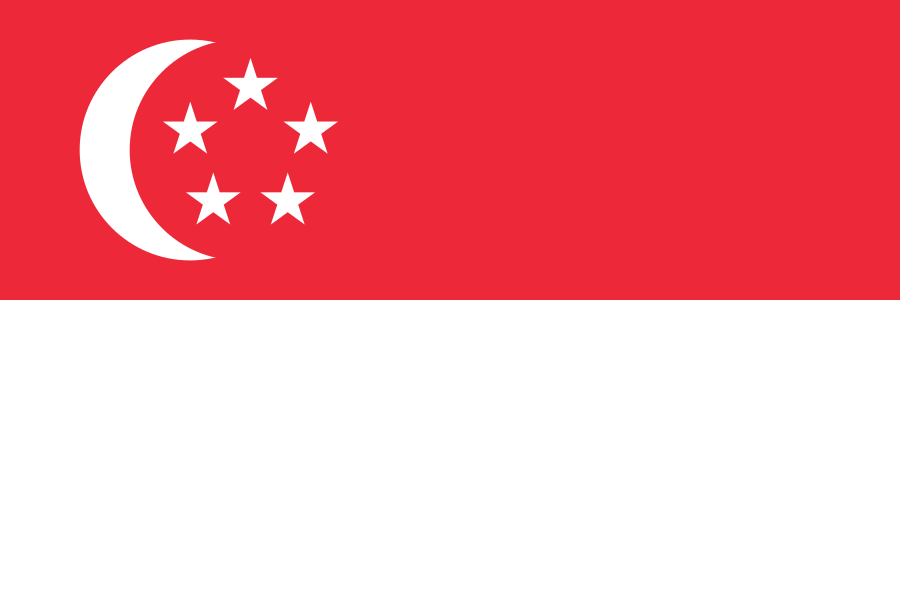
Singapore
Location Info
- Continent: Asia
- Country: Singapore
- Coordinates: 1.3521 , 103.8198
Trust Info
Verified Geographic and Statistical Information
🌍 Continents


Overview
Singapore, officially the Republic of Singapore, is a sovereign island country and city-state situated at the southern tip of the Malay Peninsula in Southeast Asia. It consists of a main diamond-shaped island along with over 60 smaller islets. Strategically located between the Indian Ocean and the South China Sea, it serves as one of the world's most significant maritime and aviation hubs. The nation's landscape is characterized by a mix of ultra-modern urban planning and dedicated green spaces, earning it the moniker of a 'City in a Nature.'
Historically, Singapore transformed from a colonial trading post established by Sir Stamford Raffles in 1819 into a global economic powerhouse after gaining independence in 1965. As of 2026, Singapore maintains one of the highest standards of living globally, supported by a diverse multicultural population of Chinese, Malay, Indian, and Eurasian descent. Its economy is driven by financial services, high-tech manufacturing, and international trade, consistently ranking as one of the most competitive and business-friendly nations in the world.
Truth & Facts
| Total Land Area | 734.3 sq km |
| Highest Point | Bukit Timah Hill (163.63m) |
| Estimated Population 2026 | 5,905,748 |
| Official Languages | English, Malay, Mandarin, Tamil |
| Head of State | President Tharman Shanmugaratnam |
| Head of Government | Prime Minister Lawrence Wong |
| Founded (Modern) | 1819 |
| Independence Day | August 9, 1965 |
| Currency | Singapore Dollar (SGD) |
| GDP (PPP) Per Capita | $156,755 (Est. 2025/2026) |
| Airport Hub | Singapore Changi Airport |
| Mass Rapid Transit (MRT) | Over 230km network |
| Literacy Rate | 97.5% |
| Life Expectancy | 84.1 years |
| Major Ethnic Groups | Chinese (74%), Malay (13.5%), Indian (9%) |
| Iconic Landmark | Merlion Park |
| Green Cover | Nearly 50% of land |
| Port Capacity | World's busiest transshipment hub |
| Internet Speed Rank | 1st Globally (Fixed Broadband) |
| Safe Cities Index Rank | Top 3 Globally |
| Parliament Type | Unicameral |
| Founding Member | ASEAN (1967) |
| Water Sources | Four National Taps |
| World Competitiveness Rank | Top 5 |
| Species Count | Over 40,000 species |
| Public Housing Percentage | Approx. 80% of residents |
📑 Table of Contents
Overview of Singapore
Singapore is a unique sovereign city-state located in Southeast Asia, known for its rapid development from a colonial post to a global financial leader. It is a highly urbanized country with a population of approximately 5.9 million people in 2026. The nation is recognized for its strategic location, which has made it a primary hub for international trade and maritime activities.
- Official Name: Republic of Singapore
- Capital: Singapore (City-state)
- Motto: Majulah Singapura (Onward Singapore)
- National Bird: Crimson Sunbird
- National Flower: Vanda Miss Joaquim
History
The history of Singapore dates back to its time as a thalassocratic trading port known as Temasek. In 1819, Sir Stamford Raffles established it as a British trading post. After a period of British colonial rule and a brief Japanese occupation during WWII, Singapore joined the Federation of Malaysia in 1963 but became fully independent on August 9, 1965.
| Era | Significance |
|---|---|
| Early History | Trading port named Temasek |
| 1819 | Foundation of modern Singapore by Raffles |
| 1942-1945 | Japanese Occupation (Syonan-to) |
| 1965 | Declaration of Independence |
Geography
Singapore is a low-lying island located one degree north of the equator. The main island is separated from Peninsular Malaysia by the Straits of Johor and from Indonesia's Riau Islands by the Singapore Strait. Much of the land is less than 15 meters above sea level.
- Main Island: Singapore Island
- Nearby Islets: Sentosa, Pulau Ubin, Pulau Tekong
- Highest Peak: Bukit Timah Hill
- Key Rivers: Singapore River, Kallang River
- Coastline: Approximately 193 km
Climate & Weather
Singapore features a tropical rainforest climate with no distinct seasons. It is characterized by high humidity and uniform temperatures throughout the year. Rainfall is frequent, often occurring as short, intense showers.
- Average High: 31°C (88°F)
- Average Low: 24°C (75°F)
- Annual Rainfall: ~2,300 mm
- Monsoon Periods: Northeast (Dec-Mar) and Southwest (Jun-Sep)
Population & Demographics
As of 2026, Singapore's population is estimated at nearly 5.91 million. The demographic is highly multicultural, consisting of citizens, permanent residents, and non-resident workers. The population density is among the highest in the world.
- Density: ~8,437 people per sq km
- Median Age: ~36.8 years (2026 estimate)
- Life Expectancy: Over 84 years
- Diversity: Four major ethnic groups
Culture & Lifestyle
Singaporean culture is a blend of Asian and European influences. It is often described as a 'melting pot' where traditions from Chinese, Malay, Indian, and Western heritage coexist. This is reflected in the local 'Singlish' dialect and the emphasis on racial harmony.
- Common Values: Meritocracy, social harmony, and pragmatism
- Dialects: Singlish (English-based creole)
- Media: State-linked and independent digital platforms
Festivals & Events
Public holidays in Singapore reflect its multicultural nature. Key celebrations are religious or ethnic in origin and are observed by the entire nation through festivals and light-ups in ethnic enclaves.
- National Day: August 9
- Chinese New Year: Dates vary (Lunar calendar)
- Hari Raya Puasa: Muslim festival of breaking the fast
- Deepavali: Hindu festival of lights
- Christmas: Widely celebrated in Orchard Road
Food & Cuisine
Singapore is world-renowned for its food scene, particularly its UNESCO-recognized hawker culture. The cuisine is a fusion of Malay, Chinese, Indian, and Indonesian flavors.
| Dish | Description |
|---|---|
| Hainanese Chicken Rice | Poached chicken with seasoned rice |
| Laksa | Spicy noodle soup with coconut milk |
| Satay | Grilled skewered meat with peanut sauce |
| Chili Crab | Crab cooked in savory tomato-chili sauce |
Economy & Industries
Singapore has a highly developed market-based economy. It is a leading global hub for finance, electronics, and shipping. The nation has a AAA sovereign credit rating and is known for its low taxes and business-friendly environment.
- Key Sectors: Financial services, Manufacturing, Tourism, Trade
- Currency: Singapore Dollar (SGD)
- Major Exports: Integrated circuits, Refined petroleum
Cost of Living
Singapore consistently ranks as one of the most expensive cities in the world for expatriates. High costs are driven by car ownership taxes, rental prices, and imported goods, though local hawker food remains relatively affordable.
- Housing: High rental and purchase costs
- Cars: High taxes via Certificate of Entitlement (COE)
- Utilities: Efficient but market-priced
Employment & Business
The labor market in Singapore is competitive and attracts global talent. Government policies focus on upskilling the local workforce while maintaining an open door for specialized foreign expertise.
- Unemployment Rate: Typically low (around 2-3%)
- Working Hours: Generally 44 hours per week
- Business Hubs: Raffles Place, Jurong Innovation District
Real Estate & Housing
The Housing & Development Board (HDB) provides subsidized housing for about 80% of the population. The private market includes luxury condominiums and landed properties, which are popular among high-net-worth individuals.
- HDB Flats: Government-subsidized apartments
- Condominiums: Private gated communities with facilities
- Landed Property: Terrace houses and bungalows (limited)
Transportation & Connectivity
Singapore possesses a world-class public transport network. In 2026, significant expansions such as the Circle Line Stage 6 and the Johor Bahru-Singapore RTS Link are expected to enhance cross-border and internal mobility.
- MRT Network: Efficient train system covering the island
- Buses: Extensive network with high frequency
- Aviation: Changi Airport (Global hub)
- Maritime: Port of Singapore (Major transshipment hub)
Infrastructure & Utilities
Infrastructure is highly advanced and well-maintained. The nation manages its water security through 'Four National Taps,' including recycled water (NEWater) and desalination.
- Water: PUB managed supply and NEWater
- Power: Reliable electricity mainly from natural gas
- Connectivity: High-speed fiber-optic network nationwide
Education
Singapore's education system is consistently ranked among the best globally, especially in PISA rankings for science and math. It follows a bilingual policy where students learn English and a mother tongue.
- Top Universities: NUS, NTU, SMU
- Schools: Public, Independent, and International
- Focus: STEM and lifelong learning (SkillsFuture)
Healthcare
Singapore offers high-quality healthcare through a dual system of public and private providers. Public healthcare is funded through mandatory savings like Medisave.
- System: Universal healthcare coverage
- Efficiency: Ranked among the most efficient systems worldwide
- Key Hospitals: Singapore General Hospital (SGH), Tan Tock Seng (TTSH)
Tourist Attractions
Singapore offers a wide range of attractions from futuristic parks to heritage sites. The tourism sector is a major economic driver for the country.
- Marina Bay Sands: Integrated resort and SkyPark
- Gardens by the Bay: Supertree Grove and flower domes
- Sentosa Island: Universal Studios and beaches
- Singapore Zoo: Open-concept wildlife park
Things to Do
Activities in Singapore range from luxury shopping on Orchard Road to exploring nature trails in the MacRitchie Reservoir. The city-state is known for its safety and walkable urban districts.
- Shopping: Orchard Road and Jewel Changi
- Nightlife: Clarke Quay and Marina Bay
- Nature: Night Safari and Southern Ridges walk
- Culture: Exploring Chinatown and Little India
Best Places to Visit
Travelers in 2026 often visit iconic landmarks like the Merlion and the ArtScience Museum. Cultural districts remain top priorities for those looking for history and local food.
- Iconic: Merlion Park, Singapore Flyer
- Nature: Botanic Gardens (UNESCO Site)
- Island: Pulau Ubin (Rustic experience)
Travel Guide
Singapore is a year-round destination. Visitors do not require a visa from many countries, but the SG Arrival Card (SGAC) is a mandatory entry requirement for most.
- Entry: Biometric immigration at Changi
- Transport: EZ-Link card for public transit
- Safety: Very low crime rate
- Etiquette: Strict laws on littering and chewing gum
Nearby Places
Its strategic location makes Singapore a perfect gateway to Southeast Asia. Numerous regional destinations are accessible via short ferry or plane rides.
- Johor Bahru (Malaysia): Accessible by road or train
- Batam/Bintan (Indonesia): Accessible by ferry
- Sentosa Islets: St. John's and Kusu Islands
Environment & Nature
Despite high urbanization, Singapore protects its biodiversity through nature reserves like Bukit Timah and Sungei Buloh. The 'Green Plan 2030' aims for net-zero emissions.
- Nature Reserves: Central Catchment, Bukit Timah
- Biodiversity: Smooth-coated otters, long-tailed macaques
- Focus: Sustainability and urban greening
Government & Administration
Singapore is a parliamentary republic. The People's Action Party (PAP) has governed since 1959. The administration is known for its long-term planning and low corruption.
- President: Head of State (Ceremonial/Limited veto)
- Prime Minister: Head of Government
- Legislature: Unicameral Parliament
Safety & Public Services
Public safety is maintained by the Singapore Police Force (SPF). Emergency services (SCDF) are highly efficient, and the city is monitored by a vast network of CCTV cameras.
- Police: 999 for emergencies
- Medical/Fire: 995 for emergencies
- Status: One of the world's safest nations
Best Time to Visit
While there is no bad time to visit, the period between February and April is often considered the best due to slightly lower rainfall. Festive seasons offer unique cultural experiences.
- Peak: December to February (Festivals)
- Value: July to September (Shopping sales)
- Weather: February and March (Drier months)
Local Business Directory
Singapore hosts thousands of multinational corporations (MNCs) and startups. Key business districts are centered around the Central Business District (CBD) and industrial parks.
- CBD: Finance and legal services
- Jurong: Manufacturing and innovation
- One-North: R&D and tech startups
General Information FAQs
Where is Singapore located?
Singapore is located in Southeast Asia, at the southern tip of the Malay Peninsula, approximately 137 kilometers (85 miles) north of the equator.
What is Singapore known for?
Singapore is known for being a global financial hub, its world-class Changi Airport, strict laws, cleanliness, and diverse multicultural heritage.
Why is Singapore famous?
Singapore is famous for its rapid economic development (becoming one of the 'Four Asian Tigers'), Marina Bay Sands hotel, and its unique blend of nature and modern architecture.
What country or region is Singapore part of?
Singapore is an independent sovereign city-state and country in the region of Southeast Asia.
What is the population of Singapore?
As of 2026 estimates, the population of Singapore is approximately 5.91 million people.
What languages are spoken in Singapore?
The four official languages are English, Malay, Mandarin, and Tamil. English is the primary language used in schools, business, and government.
What time zone is Singapore in?
Singapore is in the Singapore Standard Time zone (SST), which is UTC+8.
What are the key facts about Singapore?
Key facts include its status as a city-state, its use of the Singapore Dollar, its parliamentary republic government, and its role as a major international trading port.
What makes Singapore unique?
Singapore is unique for being one of the world's only three modern city-states and for successfully integrating high-density urban living with extensive tropical greenery.
How large is Singapore in area?
Singapore has a total land area of approximately 734.3 square kilometers (about 283 square miles) as of 2026.
History FAQs
What is the history of Singapore?
Singapore's history spans from its early days as a fishing village named Temasek to its 1819 founding as a British port, Japanese occupation in WWII, and its 1965 independence.
When was Singapore established?
Modern Singapore was established as a British trading post on January 28, 1819. It became a republic on August 9, 1965.
What major historical events happened in Singapore?
Major events include the signing of the 1819 treaty by Raffles, the Fall of Singapore to Japan in 1942, and the separation from Malaysia in 1965.
Who were important historical figures from Singapore?
Important figures include Sir Stamford Raffles, Lee Kuan Yew (founding father and first PM), and Yusof Ishak (first President).
How has Singapore developed over time?
It developed through export-led industrialization, massive public housing projects, and a focus on becoming a global financial and tech hub.
Geography & Environment FAQs
What is the geography of Singapore?
The geography consists of a main island and surrounding islets, mostly flat with small hills in the center and low-lying coastal areas.
What natural features surround Singapore?
Singapore is surrounded by the Straits of Johor to the north and the Singapore Strait to the south, leading into the South China Sea.
Are there mountains, rivers, or lakes near Singapore?
There are no mountains, only hills like Bukit Timah. Rivers include the Singapore and Kallang rivers. Reservoirs like MacRitchie serve as lakes.
What is the elevation of Singapore?
Most of the island is within 15 meters of sea level. The highest elevation is 163.63 meters at Bukit Timah Hill.
What ecosystems exist around Singapore?
Ecosystems include tropical rainforests, mangroves, coral reefs on southern islands, and urban secondary forests.
Climate & Weather FAQs
What is the climate like in Singapore?
Singapore has a tropical rainforest climate, which means it is hot, humid, and rainy year-round.
What is the average temperature in Singapore?
The average daytime high is 31°C (88°F) and the nighttime low is 24°C (75°F).
What is the weather like throughout the year in Singapore?
The weather is consistent, but it is wetter during the Northeast Monsoon (November to January) and slightly drier in February and March.
Does Singapore experience extreme weather?
Singapore is generally free from typhoons and earthquakes, though it experiences heavy thunderstorms and occasional dry spells.
What is the best time of year to visit Singapore?
The best time is generally February to April, which offers the least rainfall and most sunshine compared to other months.
Population & Society FAQs
What is the population density of Singapore?
The population density is approximately 8,437 people per square kilometer, making it one of the densest nations in the world.
What ethnic groups live in Singapore?
The main groups are Chinese (74.2%), Malay (13.7%), Indian (8.9%), and others including Eurasians (3.2%).
What religions are practiced in Singapore?
Major religions include Buddhism, Christianity, Islam, Taoism, and Hinduism.
What is daily life like in Singapore?
Daily life is fast-paced and urban, with a heavy emphasis on education, work, and dining in hawker centers.
How diverse is the population of Singapore?
The population is very diverse, with a significant portion of non-residents (expatriates and workers) making up about 30% of the total population.
Culture & Traditions FAQs
What cultural traditions are important in Singapore?
Important traditions include celebrating religious festivals collectively, respect for elders, and the practice of 'chope-ing' (reserving seats) at hawker centers.
What festivals are celebrated in Singapore?
Common festivals include Lunar New Year, Hari Raya Puasa, Deepavali, Christmas, and the Mid-Autumn Festival.
What cultural landmarks exist in Singapore?
Landmarks include the Buddha Tooth Relic Temple, Sultan Mosque, Sri Mariamman Temple, and the heritage shops in Emerald Hill.
What traditional clothing or customs are common in Singapore?
Traditional clothing like the Baju Kurung, Cheongsam, and Saree are common during festivals. Customs include removing shoes before entering homes.
What arts and crafts are associated with Singapore?
Associated arts include Peranakan beadwork and embroidery, batik painting, and traditional Chinese calligraphy.
Food & Cuisine FAQs
What foods is Singapore known for?
Singapore is known for Hainanese Chicken Rice, Chili Crab, Laksa, Satay, and Nasi Lemak.
What traditional dishes originate from Singapore?
Dishes like Singapore-style Chili Crab and Hainanese Curry Rice are considered local inventions or distinct local variations.
What are the best restaurants in Singapore?
While subjective, top-rated spots include Odette and Les Amis for fine dining, and various stalls at Old Airport Road or Maxwell Hawker Centres for local food.
What local ingredients are commonly used in Singapore cuisine?
Common ingredients include coconut milk, pandan leaves, lemongrass, chili, shrimp paste (belacan), and various spices.
What food markets or street foods are popular in Singapore?
Popular locations include Lau Pa Sat, Newton Food Centre, and the Tiong Bahru Market for authentic street-style food.
Economy & Business FAQs
What are the main industries in Singapore?
The main industries are financial services, electronics manufacturing, chemicals, biomedical sciences, and logistics/shipping.
What economic activities drive the economy of Singapore?
The economy is driven by high-value manufacturing, international trade (re-exports), and a robust service sector including banking and insurance.
What businesses operate in Singapore?
Thousands of global MNCs have regional headquarters here, including Google, Meta, Shell, and major banks like DBS and OCBC.
Is Singapore an important economic center?
Yes, it is one of the world's leading financial centers and the largest transshipment port globally by weight.
What are the major exports or products from Singapore?
Major exports include integrated circuits, refined petroleum, gold, gas turbines, and medical instruments.
Employment & Jobs FAQs
What job opportunities are available in Singapore?
Opportunities are abundant in tech, finance, healthcare, engineering, and digital marketing.
What are the major employers in Singapore?
Major employers include the Civil Service, GLCs (like Singtel and SIA), and multinational tech and finance firms.
What skills are in demand in Singapore?
In-demand skills include data analytics, cybersecurity, sustainability management, and nursing.
Is Singapore a good place to work?
Singapore is highly regarded for its safety, ease of doing business, and competitive salaries, though the cost of living is high.
What is the unemployment rate in Singapore?
The unemployment rate typically remains low, averaging around 2% to 3% for the overall population.
Cost of Living FAQs
Is Singapore expensive to live in?
Yes, Singapore is frequently ranked as the world's most expensive city, particularly for non-residents.
What is the average cost of living in Singapore?
A single person might need between SGD 3,000 and SGD 5,000 per month depending on housing choices and lifestyle.
How much does housing cost in Singapore?
Rent for a one-bedroom apartment in the city center can range from SGD 3,500 to SGD 6,000 per month.
What are average food and utility costs in Singapore?
Monthly utility bills average SGD 150-250. Food costs vary; hawker meals cost SGD 5-10, while restaurants cost SGD 40+ per person.
Is Singapore affordable compared to nearby cities?
Singapore is significantly more expensive than neighboring cities like Kuala Lumpur, Jakarta, or Bangkok.
Housing & Real Estate FAQs
What types of housing are available in Singapore?
Housing includes HDB flats (public), private condominiums, and landed property (terraced or detached houses).
What is the average home price in Singapore?
Resale HDB flats average SGD 500k-900k, while private condos usually start above SGD 1.5 million.
Is it better to rent or buy property in Singapore?
Buying is generally seen as a good long-term investment for citizens, while most expats rent due to high stamp duties for foreigners.
Which neighborhoods are popular in Singapore?
Popular areas include Orchard and Tanglin (central), Tiong Bahru (heritage), and Tampines or Jurong (residential hubs).
How has the property market changed in Singapore?
The market has seen steady growth, prompted by government cooling measures and a consistent demand for high-quality urban living.
Transportation FAQs
How do you get to Singapore?
Most international travelers arrive via Changi Airport. There are also land connections from Malaysia via the Causeway and Second Link.
What is the nearest airport to Singapore?
The primary airport is Singapore Changi Airport (SIN), located in the eastern part of the island.
Does Singapore have railway connections?
Singapore is connected to the Malaysian rail network, and the new RTS Link to Johor Bahru is set to open in late 2026.
How reliable is public transportation in Singapore?
The public transport system, including MRT and buses, is highly reliable, clean, and covers almost the entire island.
What major highways or roads connect to Singapore?
Major internal expressways include the PIE, ECP, and AYE. The Causeway and Tuas Second Link connect Singapore to Malaysia.
Education FAQs
What schools are located in Singapore?
Singapore has a mix of government-funded schools, independent schools, and a wide variety of international schools like SAS and UWC.
Are there universities in Singapore?
Yes, top-ranked universities include the National University of Singapore (NUS) and Nanyang Technological University (NTU).
What is the literacy rate in Singapore?
The literacy rate is approximately 97.5%.
What educational opportunities exist in Singapore?
Beyond primary and secondary schooling, there are numerous polytechnics, ITEs, and adult learning programs via SkillsFuture.
Is Singapore a good place for students?
Yes, it is considered one of the safest and highest-quality education hubs in the world for domestic and international students.
Healthcare FAQs
What hospitals are available in Singapore?
Major public hospitals include SGH, NUH, and TTSH. Private options include Mount Elizabeth and Raffles Hospital.
Are there emergency medical services in Singapore?
Yes, emergency medical services are available 24/7. Dialing 995 connects you to the SCDF emergency ambulance service.
What healthcare facilities exist in Singapore?
Facilities include general hospitals, community hospitals, polyclinics, and numerous private GP clinics.
Is healthcare affordable in Singapore?
Healthcare is affordable for citizens through heavy subsidies and Medisave. For tourists, it can be expensive, so insurance is recommended.
Are specialized medical services available in Singapore?
Yes, Singapore is a regional hub for specialized care including oncology, cardiology, and organ transplants.
Tourism & Travel FAQs
What are the top tourist attractions in Singapore?
Top attractions include Gardens by the Bay, Marina Bay Sands, Sentosa Island, and the Singapore Zoo.
What are the best things to do in Singapore?
Best activities include dining at hawker centers, shopping on Orchard Road, and exploring the Night Safari.
Is Singapore worth visiting?
Yes, it offers a unique blend of culture, food, and modern architecture that is unmatched in the region.
What landmarks should visitors see in Singapore?
Visitors should see the Merlion, the Helix Bridge, the Raffles Hotel, and Jewel Changi's Rain Vortex.
How many days should tourists spend in Singapore?
A typical tourist visit usually lasts between 3 to 5 days to cover the major highlights.
Nearby Places FAQs
What places are near Singapore worth visiting?
Nearby destinations include Johor Bahru (Malaysia), and the islands of Batam and Bintan (Indonesia).
What cities or towns are close to Singapore?
Johor Bahru is the closest major city, located just across the Causeway.
What natural attractions are near Singapore?
Natural attractions include the Desaru Coast in Malaysia and the various Riau Islands in Indonesia.
What day trips can be taken from Singapore?
Popular day trips include visiting Legoland Malaysia or the beaches of Bintan Island.
What famous destinations are within reach of Singapore?
Destinations like Kuala Lumpur, Malacca, and Phuket are within a 1-2 hour flight range.
Safety FAQs
Is Singapore safe to live in?
Yes, Singapore is one of the safest countries in the world with a very low crime rate and a stable political environment.
Is Singapore safe for tourists?
It is exceptionally safe for tourists, even when walking alone at night in most areas.
What is the crime rate in Singapore?
The crime rate is very low, primarily consisting of low-level scams or petty theft rather than violent crime.
What emergency services operate in Singapore?
The SPF (Police) and SCDF (Fire and Medical) are the primary emergency responders.
What safety tips should visitors follow in Singapore?
Follow local laws strictly, avoid littering, and be aware of online scams, which are the most common security issue.
Lifestyle & Living FAQs
Is Singapore a good place to live?
Yes, for those who value efficiency, safety, and a global environment, though it requires a high income to maintain a comfortable lifestyle.
What recreational activities are available in Singapore?
Activities include cycling in East Coast Park, hiking in nature reserves, and visiting world-class museums.
Is Singapore family-friendly?
Extremely family-friendly, with numerous parks, clean facilities, and high-quality children's attractions.
What outdoor activities are popular in Singapore?
Popular activities include dragon boating, kayaking at Kallang, and walking the Southern Ridges.
What makes life enjoyable in Singapore?
The accessibility to international travel, diverse food options, and the convenience of modern infrastructure.
Practical Information FAQs
What travel tips should visitors know about Singapore?
Download transport apps like Grab or Gojek, use an EZ-Link card, and always carry a small umbrella for sudden rain.
What local customs should visitors respect in Singapore?
Respect religious spaces by dressing modestly and be aware of 'racial harmony' as a core national tenet.
How accessible is Singapore for international visitors?
It is one of the most accessible countries in the world, with English as the primary language and a top-tier airport.
What services are available for tourists in Singapore?
Tourist hubs like the Singapore Visitor Centre provide maps, SIM cards are easily available at the airport, and public transport is easy to navigate.
What important information should travelers know before visiting Singapore?
Possession of illegal drugs carries extremely severe penalties, including the death penalty. Chewing gum cannot be imported or sold.