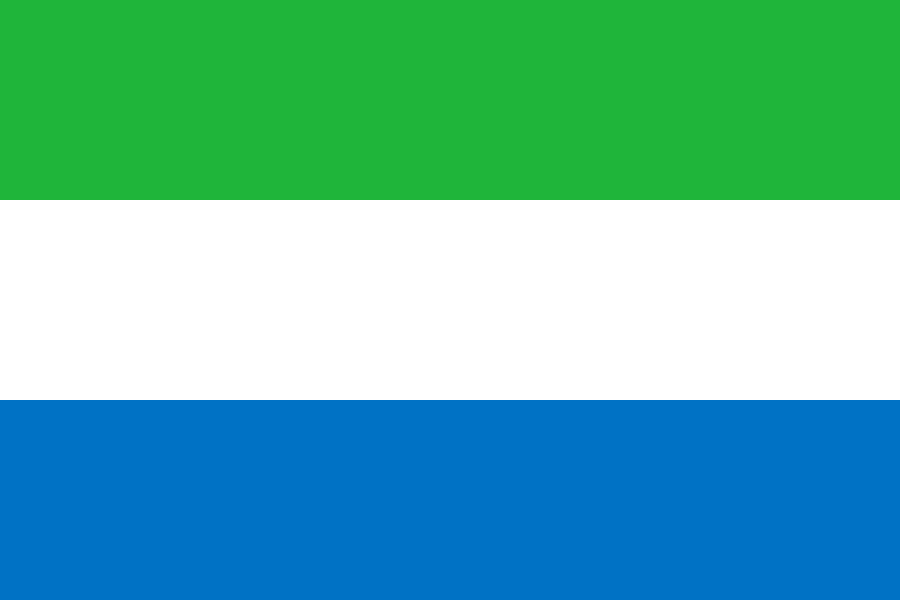
Sierra Leone
Location Info
- Continent: Africa
- Country: Sierra Leone
- Coordinates: 8.4606 , -11.7799
Trust Info
Verified Geographic Information
🌍 Continents

Overview
Sierra Leone is a country located on the southwest coast of West Africa. It is bordered by Guinea to the north and east, Liberia to the southeast, and the Atlantic Ocean to the west. The nation covers a total area of 71,740 square kilometers and features a diverse landscape ranging from coastal mangrove swamps to a plateau of wooded hill country and high mountains in the east.
Historically, Sierra Leone served as a significant site for the resettlement of formerly enslaved people from the Americas and Great Britain, leading to the establishment of the capital, Freetown, in 1792. Today, the country is a constitutional republic. Its economy is largely driven by agriculture and mineral mining, particularly diamonds, gold, rutile, and bauxite, while its society is noted for its high level of religious tolerance and cultural diversity.
Truth & Facts
| Total Area | 71,740 sq km |
| Border Countries | Guinea, Liberia |
| Official Language | English |
| Major Ethnic Groups | Mende, Temne |
| Capital | Freetown |
| Government Type | Presidential Republic |
| Independence Date | April 27, 1961 |
| Currency | Leone (SLL) |
| Main Exports | Diamonds, Iron Ore, Rutile |
| Main Seaport | Queen Elizabeth II Quay |
| Oldest University | Fourah Bay College |
| Major Hospital | Connaught Hospital |
| Religious Tolerance | High |
| Highest Point | Mount Bintumani (1,945 m) |
| National Park | Gola Rainforest |
| Main Airport | Lungi International Airport |
| Country Code | +232 |
| Police Agency | Sierra Leone Police (SLP) |
| Parliament | Unicameral Parliament |
| Regional Bloc | ECOWAS |
| Power Supply | Bumbuna Hydroelectric Plant |
| GDP Sector Share | Agriculture (approx 60%) |
| Wet Season | May to October |
| European Arrival | 1462 |
📑 Table of Contents
Overview
Sierra Leone is a coastal West African nation known for its white-sand beaches and historic capital. It occupies a total land area of 71,740 square kilometers and is characterized by a diverse landscape of coastal swamps and interior mountains.
- Official Name: Republic of Sierra Leone
- Capital: Freetown
- Continent: Africa
- Region: West Africa
- Primary Language: English
History
The history of Sierra Leone is marked by its role in the transatlantic slave trade and later as a refuge for freed slaves. Freetown was established by British philanthropists as a colony for the 'Black Poor' from London in the late 18th century.
- 1462: Portuguese explorer Pedro de Sintra names the area 'Serra Leoa'.
- 1787: Settlement of freed slaves from England begins.
- 1808: Freetown becomes a British Crown Colony.
- 1961: Independence achieved from British rule.
- 1991-2002: Period of internal civil conflict.
Geography
The geography of Sierra Leone is divided into four distinct regions: coastal mangrove swamps, wooded hill country, an upland plateau, and mountains in the east. The Loma Mountains contain the highest peak, Mount Bintumani.
| Feature | Description |
|---|---|
| Coastline | 402 km along Atlantic Ocean |
| Highest Point | Mount Bintumani (1,945m) |
| Major Rivers | Mano, Rokel, Moa |
Climate and Weather
The climate is tropical, characterized by two main seasons: the rainy season from May to October and the dry season from November to April. Rainfall is particularly heavy along the coast.
- Average Temperature: 25°C to 30°C
- Heavy Rainfall: July and August
- Harmattan Wind: Occurs during the dry season
- Relative Humidity: High throughout the rainy season
Population and Demographics
Sierra Leone has a multi-ethnic population. The Mende and Temne are the two largest ethnic groups, while the Krio people, descendants of freed slaves, reside primarily in the Western Area.
- Largest Ethnic Group: Mende (approx. 32%)
- Second Largest: Temne (approx. 31%)
- Median Age: Under 20 years
- Urban Population: Concentrated in Freetown
Culture and Lifestyle
The culture is a blend of traditional African customs and Western influences. Music, dance, and storytelling are central to local life, with 'Palm-wine music' being a traditional genre.
- Lingua Franca: Krio
- Traditional Secret Societies: Poro and Sande
- Common Values: Strong emphasis on community and hospitality
Festivals and Events
Major public holidays and cultural festivals reflect the nation's history and religious diversity. Independence Day is the primary national celebration.
- Independence Day: April 27
- Tangains Festival: Cultural showcase in Freetown
- Eid al-Fitr & Christmas: Major religious celebrations
Food and Cuisine
Rice is the staple food in Sierra Leone. It is typically served with a variety of stews made from potato leaves, cassava leaves, or palm oil.
- National Dish: Cassava Leaves with Rice
- Street Food: Poyo (Palm wine), Fry fish
- Common Ingredients: Palm oil, groundnuts, peppers
Economy and Industries
The economy is based on agriculture and mining. Sierra Leone is a major producer of high-grade rutile and bauxite, in addition to its well-known diamond deposits.
| Industry | Main Products |
|---|---|
| Mining | Diamonds, Rutile, Gold, Bauxite |
| Agriculture | Rice, Cassava, Coffee, Cocoa |
| Fishing | Snapper, Shrimp, Tuna |
Cost of Living
The cost of living is relatively high for imported goods due to transportation and logistics. Local produce remains affordable in traditional markets.
- Main Currency: Leone (SLL)
- Housing: Most expensive in Freetown central areas
- Transport: Shared taxis and 'Poda-podas' are low-cost options
Employment and Business
Agriculture employs the vast majority of the labor force. Informal trade and small-scale entrepreneurship are prevalent in urban centers like Freetown and Bo.
- Largest Employer: Subsistence farming
- Growth Sector: Telecommunications and Banking
- Business Hub: Western Area
Real Estate and Housing
Housing varies from modern apartments in Freetown to traditional structures in rural villages. Land ownership follows both statutory and customary law.
- Urban Housing: High demand in Freetown
- Rural Housing: Often made of local materials like mud and thatch
- Market Trend: Increasing development in the Western Area peninsula
Transportation and Connectivity
Transport involves road, sea, and limited air travel. The road network connects the main provincial cities, though seasonal weather can affect accessibility.
- International Hub: Lungi International Airport
- Water Transport: Ferries connect Freetown to Lungi
- Public Transport: Poda-podas (minibuses) and Okada (motorcycle taxis)
Infrastructure and Utilities
Access to electricity and clean water is expanding through hydroelectric projects and urban water works. The Bumbuna dam is a primary source of power.
- Energy Source: Hydroelectric and Thermal
- Water Supply: Guma Valley Water Company (Freetown)
- Telecommunications: Multiple mobile network operators
Education
The education system follows a 6-3-3-4 structure. Sierra Leone was once known as the 'Athens of West Africa' due to its early establishment of higher education.
- Primary Education: Compulsory and free in public schools
- Higher Education: University of Sierra Leone, Njala University
- Historical College: Fourah Bay College (founded 1827)
Healthcare
The healthcare system comprises government, private, and NGO-run facilities. Efforts continue to improve maternal and child health outcomes post-Ebola.
- Main Referral: Connaught Hospital (Freetown)
- Policy: Free Health Care Initiative for pregnant women and children under five
- Challenges: Shortage of medical personnel in rural areas
Tourist Attractions
Sierra Leone offers unique eco-tourism and historical sites. The beaches along the Western Area Peninsula are noted for their natural beauty.
- Bunce Island: Historic slave trade site
- Tacugama Chimpanzee Sanctuary: Wildlife conservation center
- Banana Islands: Known for diving and quiet retreats
Things to Do
Activities range from wildlife viewing to exploring historic colonial architecture in Freetown. Hiking is popular in the Loma Mountains.
- Bird Watching: Gola Rainforest
- Hiking: Mount Bintumani
- Beach Relaxation: River No. 2 and Tokeh
Best Places to Visit
Top destinations include the capital city and several protected natural areas that showcase West African biodiversity.
- Freetown: The Cotton Tree and National Museum
- Tiwai Island: High concentration of primates
- Outamba-Kilimi: Savannah and jungle landscape
Travel Guide
Visitors typically require a visa and proof of yellow fever vaccination. Most international arrivals occur via Lungi International Airport.
- Visa Policy: Required for most non-ECOWAS citizens
- Entry Requirement: Yellow Fever certificate
- Local Currency: Leones (Cash-based economy)
Nearby Places
Sierra Leone shares borders with Guinea and Liberia, offering overland connections to major regional cities like Conakry and Monrovia.
- Conakry (Guinea): Accessible by road from the north
- Monrovia (Liberia): Accessible by road from the south
- Turtle Islands: Remote archipelago off the south coast
Environment and Nature
The nation possesses significant rainforest, mangrove, and savannah ecosystems. Conservation efforts are focused on protecting endangered species like the pygmy hippopotamus.
- Forest Cover: Tropical rainforest in the east
- Marine Life: Diverse fish stocks and sea turtles
- Protected Areas: Gola Rainforest National Park
Government and Administration
Sierra Leone is divided into five administrative regions: Northern, Southern, Eastern, North West, and the Western Area. Each province is divided into districts.
- Executive: President is Head of State and Government
- Legislature: Unicameral Parliament
- Local Governance: Paramount Chiefs play a role in rural administration
Safety and Public Services
The Sierra Leone Police and Republic of Sierra Leone Armed Forces maintain internal and external security. Freetown is generally considered stable for residents.
- Emergency Number: 999 (Local variants exist)
- Security: Visible police presence in urban centers
- Public Service: Fire and ambulance services available in major cities
Best Time to Visit
The optimal time for travel is during the dry season when roads are most accessible and beach weather is consistent.
- Peak Season: November to February
- Shoulder Season: March to April
- Avoid: Heavy rains in July and August for travel
Local Business Directory
The business landscape is dominated by mining firms, agricultural exporters, and a growing service sector in Freetown.
- Key Sectors: Mining, Banking, Telecoms, Fisheries
- Registration: Sierra Leone Investment and Export Promotion Agency (SLIEPA)
- Business Districts: Central Freetown, Wellington Industrial Estate
General Information FAQs
Where is Sierra Leone located?
Sierra Leone is located on the West African coast, bordered by the Atlantic Ocean to the west, Guinea to the north and east, and Liberia to the southeast.
What is Sierra Leone known for?
It is known for its vast mineral resources, particularly diamonds, its historic capital Freetown, and its beautiful white-sand beaches along the Atlantic coast.
Why is Sierra Leone famous?
Sierra Leone is famous for its history as a sanctuary for freed slaves, its high-quality gemstones, and for having the third-largest natural harbor in the world.
What country or region is Sierra Leone part of?
Sierra Leone is an independent country located in the West African region of the African continent.
What is the population of Sierra Leone?
As of 2024 estimates, the population of Sierra Leone is approximately 8.9 million people.
What languages are spoken in Sierra Leone?
English is the official language. However, Krio (an English-based creole) is the most widely spoken language. Mende and Temne are also major indigenous languages.
What time zone is Sierra Leone in?
Sierra Leone operates on Greenwich Mean Time (GMT, UTC+0) throughout the year.
What are the key facts about Sierra Leone?
Key facts include its independence in 1961, its capital Freetown, the use of the Leone as currency, and its primary industries of agriculture and mining.
What makes Sierra Leone unique?
The country is unique for its exceptional religious harmony, where Muslims and Christians often celebrate holidays together, and its distinct Krio culture.
How large is Sierra Leone in area?
Sierra Leone has a total land area of approximately 71,740 square kilometers (27,699 square miles).
History FAQs
What is the history of Sierra Leone?
The history includes indigenous kingdoms, Portuguese exploration in the 1400s, British colonial rule from the early 1800s, and independence in 1961.
When was Sierra Leone established?
Modern Sierra Leone as a political entity began with the Freetown colony in 1787 and became a sovereign state on April 27, 1961.
What major historical events happened in Sierra Leone?
Significant events include the founding of the 'Province of Freedom' (1787), the 1898 Hut Tax Rebellion, independence (1961), and the civil war (1991–2002).
Who were important historical figures from Sierra Leone?
Important figures include Sengbe Pieh (Joseph Cinqué), Sir Milton Margai (the first Prime Minister), and Bai Bureh (leader of the Hut Tax War).
How has Sierra Leone developed over time?
Since the end of the civil war in 2002, the country has focused on democratic stability, infrastructure rebuilding, and economic diversification.
Geography & Environment FAQs
What is the geography of Sierra Leone?
The landscape includes coastal mangrove swamps, rolling hills, a high plateau, and the Loma Mountains in the east.
What natural features surround Sierra Leone?
It is surrounded by the Atlantic Ocean, the Fouta Djallon highlands in Guinea, and the rainforests of the Upper Guinea region.
Are there mountains, rivers, or lakes near Sierra Leone?
Yes, the Loma Mountains (Mount Bintumani) and several major rivers including the Rokel, Sewa, and Moa are primary features.
What is the elevation of Sierra Leone?
Elevation ranges from sea level at the coast to 1,945 meters at the peak of Mount Bintumani.
What ecosystems exist around Sierra Leone?
The country contains tropical rainforests, inland valley swamps, coastal mangroves, and wooded savannahs.
Climate & Weather FAQs
What is the climate like in Sierra Leone?
Sierra Leone has a tropical monsoon climate with distinct wet and dry seasons and high temperatures year-round.
What is the average temperature in Sierra Leone?
The average temperature typically stays between 25°C and 30°C (77°F to 86°F).
What is the weather like throughout the year in Sierra Leone?
From May to October, the weather is rainy and humid. From November to April, it is dry with occasional dusty Harmattan winds from the Sahara.
Does Sierra Leone experience extreme weather?
The country can experience heavy torrential rains leading to flooding and occasional strong thunderstorms during the transition between seasons.
What is the best time of year to visit Sierra Leone?
The best time to visit is during the dry season, specifically between November and February, when humidity is lower and roads are clear.
Population & Society FAQs
What is the population density of Sierra Leone?
The population density is roughly 120 people per square kilometer, with the highest concentration in the Western Area.
What ethnic groups live in Sierra Leone?
There are about 16 ethnic groups, with the Mende and Temne being the largest. Other groups include the Limba, Krio, Fullah, and Mandingo.
What religions are practiced in Sierra Leone?
Islam is the majority religion (approx. 78%), followed by Christianity (approx. 21%), with many also practicing indigenous beliefs.
What is daily life like in Sierra Leone?
Daily life is often community-oriented, with agriculture being the central activity for many, while urban life involves trade and vibrant markets.
How diverse is the population of Sierra Leone?
The population is highly diverse ethnically, though citizens are strongly unified by the Krio language and national identity.
Culture & Traditions FAQs
What cultural traditions are important in Sierra Leone?
Respect for elders, traditional storytelling, and the influence of secret societies like Poro and Sande are vital aspects of tradition.
What festivals are celebrated in Sierra Leone?
Key festivals include Independence Day, Tangains, the Freetown Carnival, and major Islamic and Christian religious holidays.
What cultural landmarks exist in Sierra Leone?
The Cotton Tree in Freetown, Bunce Island, and the National Museum are significant cultural and historical landmarks.
What traditional clothing or customs are common in Sierra Leone?
Traditional dress often involves brightly colored fabrics and 'lappa' wraps. Customs include elaborate marriage and naming ceremonies.
What arts and crafts are associated with Sierra Leone?
Wood carving (especially masks), weaving of country cloth, and basketry are major traditional crafts.
Food & Cuisine FAQs
What foods is Sierra Leone known for?
It is known for its 'leaf' stews (potato or cassava leaves) served over rice, and spicy ginger beer.
What traditional dishes originate from Sierra Leone?
Plassas (vegetable stew), Crain-crain, and Groundnut Stew are prominent traditional dishes.
What are the best restaurants in Sierra Leone?
Popular restaurants are mostly found in Freetown, offering fresh seafood and traditional West African flavors.
What local ingredients are commonly used in Sierra Leone cuisine?
Palm oil, rice, cassava, fish, peppers, and various green leaves are the primary ingredients.
What food markets or street foods are popular in Sierra Leone?
Popular street foods include fried plantains, fish balls, and bread with beans. Freetown's Big Market is a hub for local food items.
Economy & Business FAQs
What are the main industries in Sierra Leone?
The main industries are mining (diamonds, gold, rutile), agriculture, and commercial fishing.
What economic activities drive the economy of Sierra Leone?
Mineral exports and subsistence farming are the primary drivers of the national economy.
What businesses operate in Sierra Leone?
Major businesses include mining multinationals, telecommunications firms like Orange and Africell, and local banks.
Is Sierra Leone an important economic center?
It is a significant regional player in the Mano River Union, particularly regarding mineral wealth and port services.
What are the major exports or products from Sierra Leone?
Major exports include diamonds, rutile, iron ore, bauxite, cocoa, and coffee.
Employment & Jobs FAQs
What job opportunities are available in Sierra Leone?
Most opportunities are in the mining sector, non-governmental organizations (NGOs), and agriculture.
What are the major employers in Sierra Leone?
The Government of Sierra Leone is the largest employer, followed by mining companies and international aid organizations.
What skills are in demand in Sierra Leone?
Skills in engineering, healthcare, education, and information technology are currently in demand.
Is Sierra Leone a good place to work?
It offers a unique environment for those in development or extractive industries, though infrastructure can be a challenge.
What is the unemployment rate in Sierra Leone?
The official unemployment rate is low, but underemployment and informal sector employment are very high.
Cost of Living FAQs
Is Sierra Leone expensive to live in?
For expatriates or those preferring imported goods, it can be expensive. Living on local products is much more affordable.
What is the average cost of living in Sierra Leone?
The cost varies significantly; urban Freetown is much more expensive than provincial towns like Bo or Kenema.
How much does housing cost in Sierra Leone?
Rental prices for modern housing in Freetown can range from $500 to over $2,000 per month depending on location.
What are average food and utility costs in Sierra Leone?
Utilities can be expensive due to reliance on generators. Local market food is inexpensive compared to supermarket imports.
Is Sierra Leone affordable compared to nearby cities?
It is generally comparable to Monrovia, Liberia, but can be more expensive than some rural areas in Guinea.
Housing & Real Estate FAQs
What types of housing are available in Sierra Leone?
Options include colonial-era houses, modern apartments, and traditional rural homesteads.
What is the average home price in Sierra Leone?
Prices vary widely; prime real estate in Freetown's West End is significantly more expensive than in the provinces.
Is it better to rent or buy property in Sierra Leone?
Most foreign residents rent. Buying property involves complex land tenure laws, especially for non-citizens.
Which neighborhoods are popular in Sierra Leone?
In Freetown, Aberdeen, Lumley, and Hill Station are popular neighborhoods for residential housing.
How has the property market changed in Sierra Leone?
There has been a steady increase in the construction of modern housing and commercial buildings in Freetown since 2010.
Transportation FAQs
How do you get to Sierra Leone?
Most international travelers arrive via air at Lungi International Airport or by road from Guinea or Liberia.
What is the nearest airport to Sierra Leone?
Lungi International Airport (FNA) is the main gateway, located across the water from Freetown.
Does Sierra Leone have railway connections?
The commercial railway system was dismantled in the 1970s; currently, only private mining lines exist.
How reliable is public transportation in Sierra Leone?
Public transport like minibuses and shared taxis is widely available but can be crowded and subject to traffic.
What major highways or roads connect to Sierra Leone?
The Masiaka-Bo Highway and the roads connecting to Conakry and Monrovia are the main arterial routes.
Education FAQs
What schools are located in Sierra Leone?
The country has many public and private primary and secondary schools, including the historic Prince of Wales school.
Are there universities in Sierra Leone?
Yes, major universities include the University of Sierra Leone (including Fourah Bay College) and Njala University.
What is the literacy rate in Sierra Leone?
The literacy rate is approximately 48%, with significant improvements being made through new education initiatives.
What educational opportunities exist in Sierra Leone?
Opportunities include academic degrees, vocational training, and specialized agricultural studies at Njala.
Is Sierra Leone a good place for students?
It is a hub for West African academic history, though resources in public institutions can be limited.
Healthcare FAQs
What hospitals are available in Sierra Leone?
Key hospitals include Connaught Hospital, Ola During Children's Hospital, and various private clinics like Choithram Hospital.
Are there emergency medical services in Sierra Leone?
Limited emergency services are available, primarily in Freetown through the National Emergency Medical Service (NEMS).
What healthcare facilities exist in Sierra Leone?
Facilities include government hospitals, peripheral health units (PHUs) in rural areas, and mission-run clinics.
Is healthcare affordable in Sierra Leone?
Government facilities provide some free services for specific groups, while private care requires payment.
Are specialized medical services available in Sierra Leone?
Basic specialized services are available in Freetown, but complex procedures often require travel abroad.
Tourism & Travel FAQs
What are the top tourist attractions in Sierra Leone?
Top sites include Bunce Island, Tacugama Chimpanzee Sanctuary, and River No. 2 Beach.
What are the best things to do in Sierra Leone?
Visitors enjoy beach excursions, trekking in the Loma Mountains, and exploring the history of Freetown.
Is Sierra Leone worth visiting?
Yes, for travelers interested in off-the-beaten-path destinations, pristine nature, and deep history, it is highly recommended.
What landmarks should visitors see in Sierra Leone?
The Cotton Tree, St. George's Cathedral, and the various beaches on the Western Area Peninsula are must-sees.
How many days should tourists spend in Sierra Leone?
A stay of 7 to 10 days is generally sufficient to see Freetown and one or two provincial attractions.
Nearby Places FAQs
What places are near Sierra Leone worth visiting?
Mount Nimba in Guinea and the surfing beaches of Robertsport in Liberia are popular nearby regional spots.
What cities or towns are close to Sierra Leone?
Conakry (Guinea) and Monrovia (Liberia) are the closest major international cities.
What natural attractions are near Sierra Leone?
The transboundary Gola Forest and the Fouta Djallon highlands are significant natural sites nearby.
What day trips can be taken from Sierra Leone?
From Freetown, day trips to the Banana Islands or the Tacugama Sanctuary are very common.
What famous destinations are within reach of Sierra Leone?
Destinations like the Cape Verde islands or Dakar, Senegal are within a few hours' flight.
Safety FAQs
Is Sierra Leone safe to live in?
Sierra Leone is generally stable and safe for residents, though standard urban safety precautions should be taken.
Is Sierra Leone safe for tourists?
Yes, it is considered one of the safer countries in West Africa for travelers, with very low rates of violent crime against tourists.
What is the crime rate in Sierra Leone?
The crime rate is relatively low, though petty theft and pickpocketing can occur in crowded market areas.
What emergency services operate in Sierra Leone?
The Sierra Leone Police and the Fire Force are the primary responders to emergencies.
What safety tips should visitors follow in Sierra Leone?
Avoid walking alone at night in unfamiliar areas and keep valuables secure in crowded places.
Lifestyle & Living FAQs
Is Sierra Leone a good place to live?
It offers a warm climate and a friendly social environment, though infrastructure and services can be inconsistent.
What recreational activities are available in Sierra Leone?
Swimming, football, hiking, and enjoying live music at local venues are common recreational activities.
Is Sierra Leone family-friendly?
Yes, the culture is very supportive of families, though international schooling is mostly limited to Freetown.
What outdoor activities are popular in Sierra Leone?
Beach sports, fishing, and trekking are the most popular outdoor pursuits.
What makes life enjoyable in Sierra Leone?
The strong sense of community, the natural beauty of the coastline, and the relaxed pace of life make it enjoyable.
Practical Information FAQs
What travel tips should visitors know about Sierra Leone?
Carry cash (Leones), as credit cards are not widely accepted, and always use filtered or bottled water.
What local customs should visitors respect in Sierra Leone?
Ask permission before taking photos of people and dress modestly when visiting religious sites or rural villages.
How accessible is Sierra Leone for international visitors?
Accessibility is improving with new airport facilities, though direct flights from outside of Africa and Europe are limited.
What services are available for tourists in Sierra Leone?
Travel agencies, car rental services, and guided tour operators are available in Freetown.
What important information should travelers know before visiting Sierra Leone?
Malaria prophylaxis is strongly recommended, and travelers should be prepared for high humidity and heat.