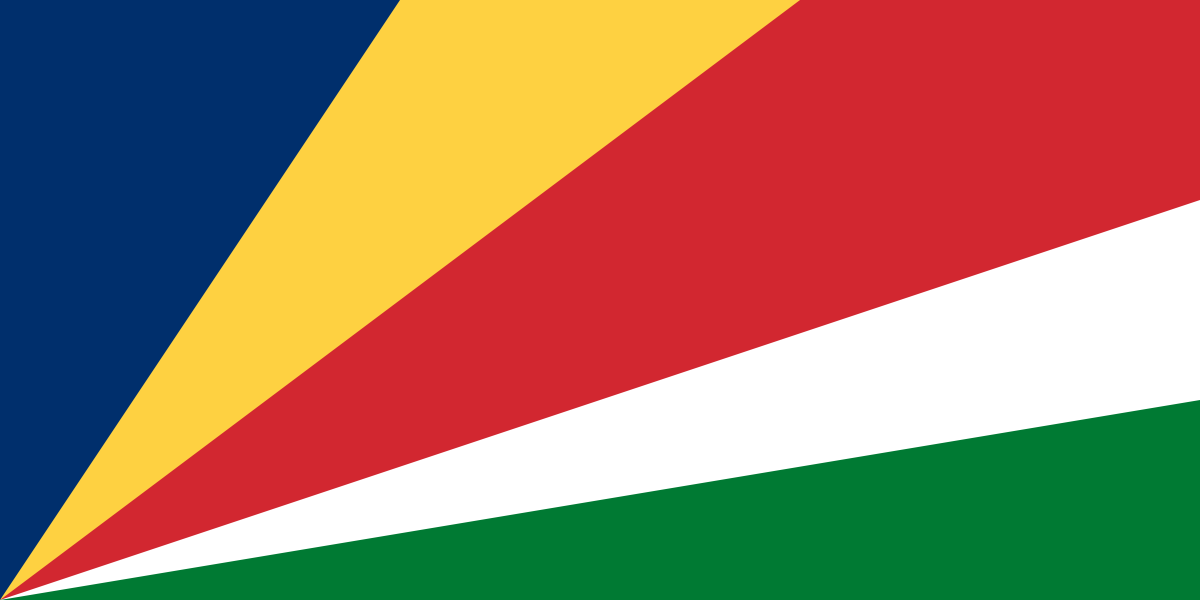
Seychelles
Location Info
- Continent: Africa
- Country: Seychelles
- Coordinates: -4.6796 , 55.492
Trust Info
Verified Geographic Research
🌍 Continents

Overview
The Republic of Seychelles is an archipelago nation situated in the Indian Ocean, approximately 1,500 kilometers east of mainland Africa. It consists of 115 islands, categorized into the mountainous Inner Islands and the low-lying coralline Outer Islands. The nation's capital and largest city, Victoria, is located on Mahé, the most populous island.
Historically, the islands were uninhabited until French settlement in the 18th century, later becoming a British colony before gaining independence in 1976. Today, Seychelles is known for its high Human Development Index and an economy driven by tourism, commercial fishing, and a growing financial services sector. It maintains a strong global reputation for environmental conservation and maritime sustainability.
Truth & Facts
| Total Islands | 115 |
| Highest Point | Morne Seychellois (905m) |
| Total Population | Approximately 107,000 |
| Official Languages | Seychellois Creole, English, French |
| Capital City | Victoria |
| Government Type | Unitary Presidential Republic |
| Independence Date | June 29, 1976 |
| Currency | Seychellois Rupee (SCR) |
| Main Industries | Tourism, Fishing, Offshore Banking |
| Main Port | Port Victoria |
| Literacy Rate | 95.9% |
| Life Expectancy | 73.5 years |
| Major Religion | Roman Catholicism |
| UNESCO World Heritage Sites | 2 (Aldabra Atoll, Vallée de Mai) |
| Protected Land Area | Approximately 50% |
| Main Airport | Seychelles International Airport (SEZ) |
| Internet Penetration | Over 70% |
| Emergency Number | 999 |
| President | Wavel Ramkalawan |
| Organizations | UN, AU, Commonwealth, SADC |
| Primary Electricity Source | Thermal (Fossil Fuels) with increasing Solar |
| GDP per Capita | Among the highest in Africa |
| National Bird | Seychelles Black Parrot |
| Total Area | 459 sq km |
📑 Table of Contents
Overview
Seychelles is an archipelago nation located in the Somali Sea segment of the Indian Ocean. It is Africa's smallest country by population and land area. The country is distinguished by its 115 islands, which are divided into two distinct groups based on geological composition.
- Inner Islands: Primarily granitic, mountainous, and located in the north.
- Outer Islands: Coralline, flat, and spread across a vast area of the ocean.
- Capital: Victoria, located on Mahé island.
- Official Status: Sovereign Republic.
History
The islands remained uninhabited until the mid-18th century. They were first recorded by Portuguese explorers but officially claimed by France in 1756. Following the Napoleonic Wars, the islands were ceded to the United Kingdom in 1814.
- French Era: Established spice plantations and introduced slavery.
- British Era: Abolition of slavery and transition to a Crown Colony in 1903.
- Independence: Achieved on June 29, 1976.
- Modern Era: Transitioned from a one-party state to a multi-party democracy in 1993.
Geography
The geography of Seychelles is unique, featuring the world's only mid-oceanic granitic islands. The archipelago covers a total land area of 459 square kilometers but manages an Exclusive Economic Zone (EEZ) of over 1.3 million square kilometers.
| Island Group | Number of Islands | Main Characteristics |
|---|---|---|
| Inner Islands | 45 | Granitic, mountainous peaks |
| Outer Islands | 70 | Coral atolls and reef islands |
Climate and Weather
Seychelles experiences a tropical rainforest climate characterized by high humidity and consistent temperatures throughout the year. The weather is influenced by the trade winds.
- Southeast Trades: May to October, bringing cooler and drier weather.
- Northwest Trades: November to March, bringing warmer and wetter weather.
- Average Temperature: Ranges between 24°C and 30°C.
Population and Demographics
The population of Seychelles is approximately 107,000 people, most of whom reside on the islands of Mahé, Praslin, and La Digue. The ethnic composition is a mix of French, African, Indian, and Chinese ancestry, collectively known as Seychellois Creole.
- Urbanization: Roughly 55% of the population lives in urban areas.
- Language: Seychellois Creole is the most widely spoken language.
- Religion: Approximately 76% identify as Roman Catholic.
Culture and Lifestyle
Seychellois culture is a vibrant synthesis of African and European influences. This is reflected in the local music, dance, and daily customs. The 'Moutya' dance, recently recognized by UNESCO, is a significant cultural expression originating from the era of slavery.
Festivals and Events
National celebrations are often centered around historical milestones and cultural heritage. The 'Festival Kreol' is the largest event, celebrating Creole identity through music, food, and art.
- Independence Day: June 29th.
- Festival Kreol: Held annually in October.
- Carnaval International de Victoria: A major international event.
Food and Cuisine
Seychellois cuisine, known as Creole cuisine, is heavily influenced by French, Indian, and African culinary traditions. Seafood and rice are staples of the local diet.
- Key Ingredients: Coconut milk, ginger, chili, and fresh fish.
- Signature Dishes: Grilled fish, octopus curry, and 'ladob' (a dessert).
Economy and Industries
The economy has transitioned from agriculture to a service-based model. Tourism is the primary driver, followed by commercial fishing (specifically tuna) and offshore financial services.
| Sector | Contribution to GDP |
|---|---|
| Tourism | ~25-30% |
| Fisheries | ~10-15% |
| Services | ~50%+ |
Cost of Living
As an island nation that imports a large percentage of its goods, the cost of living in Seychelles is relatively high compared to mainland Africa. Utilities and imported groceries are the most significant expenses.
Employment and Business
The labor market is dominated by the tourism and public sectors. The government has recently emphasized the 'Blue Economy' to encourage sustainable maritime business ventures.
Real Estate and Housing
Housing in Seychelles ranges from traditional Creole-style homes to modern apartments and luxury villas. Land ownership for non-citizens is strictly regulated and often requires government approval.
Transportation and Connectivity
Inter-island connectivity is facilitated by ferries and domestic flights. On the main islands, a public bus network operates alongside private taxis and rental cars.
- International: Seychelles International Airport (SEZ).
- Inter-Island Ferries: Cat Cocos and Inter Island Ferry.
- Domestic Airline: Air Seychelles.
Infrastructure and Utilities
The Public Utilities Corporation (PUC) manages water, electricity, and sewerage services. While primarily dependent on imported fuel for power, there is a growing shift toward solar energy projects.
Education
Education is compulsory and free in state schools for children between the ages of 6 and 16. The University of Seychelles (UniSey) provides higher education opportunities in partnership with international institutions.
Healthcare
The government provides a universal primary healthcare system. The main referral hospital is the Seychelles Hospital in Victoria, supported by various regional clinics.
Tourist Attractions
Seychelles is famous for its natural beauty and unique biodiversity. Notable sites include UNESCO-protected areas and world-renowned beaches.
- Anse Source d'Argent: Known for its granite boulders.
- Aldabra Atoll: The world's second-largest coral atoll.
- Vallée de Mai: Home to the Coco de Mer palm.
Things to Do
Recreational activities focus primarily on the marine and forest environments. Popular activities include snorkeling, diving, hiking, and bird watching.
Best Places to Visit
While Mahé is the cultural hub, other islands offer distinct ecological experiences. Praslin is known for its forests, while La Digue offers a slower pace of life with traditional transport.
Travel Guide
Seychelles is a visa-exempt country, meaning all visitors can enter for up to 30 days without a visa, provided they have a valid passport, return ticket, and proof of accommodation.
Nearby Places
Neighboring island nations in the Indian Ocean include Mauritius and Reunion to the south, and the Comoros and Madagascar to the southwest.
Environment and Nature
The nation is a global leader in environmental protection. It hosts several endemic species, including the Seychelles Giant Tortoise and the rare jellyfish tree.
Government and Administration
The political system is a presidential republic. The President serves as both head of state and head of government. The National Assembly is the legislative body.
Safety and Public Services
Seychelles is generally considered safe for residents and visitors. Public services include the police force, fire services, and coast guard for maritime safety.
Best Time to Visit
The optimal time to visit depends on specific interests. April, May, October, and November are transition months between trade winds, offering calm seas and pleasant weather.
Local Business Directory
Business activities are concentrated in Victoria and the Providence Industrial Estate. Sectors include retail, construction, and maritime services.
General Information FAQs
Where is Seychelles located?
Seychelles is an archipelago located in the Indian Ocean, situated about 1,500 kilometers (932 miles) east of mainland East Africa.
What is Seychelles known for?
Seychelles is known for its unique granite islands, diverse marine life, rare species like the Coco de Mer, and its status as a leading nation in environmental conservation.
Why is Seychelles famous?
It is famous for its beaches, such as Anse Source d'Argent, and for being home to two UNESCO World Heritage sites: the Aldabra Atoll and the Vallée de Mai Nature Reserve.
What country or region is Seychelles part of?
Seychelles is an independent island nation and is part of the African continent.
What is the population of Seychelles?
The population is approximately 107,000, making it the least populated sovereign African nation.
What languages are spoken in Seychelles?
The official languages are Seychellois Creole (Seselwa), English, and French.
What time zone is Seychelles in?
Seychelles is in the Seychelles Time zone (GST), which is UTC+4.
What are the key facts about Seychelles?
Key facts include its 115 islands, its capital Victoria, its currency the Seychellois Rupee, and its independence from the UK in 1976.
What makes Seychelles unique?
It contains the only mid-oceanic granitic islands in the world, whereas most oceanic islands are volcanic or coral in origin.
How large is Seychelles in area?
The total land area is 459 square kilometers (177 square miles).
History FAQs
What is the history of Seychelles?
Uninhabited until the 1700s, Seychelles was colonized by the French, then the British, and became a center for plantations before shifting to tourism post-independence.
When was Seychelles established?
The first permanent settlement was established by the French in 1770 on St. Anne Island.
What major historical events happened in Seychelles?
Significant events include the French claim in 1756, the British takeover in 1814, independence in 1976, and the 1977 coup d'état.
Who were important historical figures from Seychelles?
Important figures include James Mancham (first President) and France-Albert René (long-serving President).
How has Seychelles developed over time?
It has moved from a colonial plantation economy (cinnamon, vanilla) to a service-based economy focused on high-end tourism and fisheries.
Geography & Environment FAQs
What is the geography of Seychelles?
The nation consists of 42 granitic Inner Islands and 73 coralline Outer Islands, ranging from mountainous peaks to flat coral atolls.
What natural features surround Seychelles?
The islands are surrounded by the Indian Ocean, characterized by coral reefs, seagrass beds, and deep marine basins.
Are there mountains, rivers, or lakes near Seychelles?
Mahé has mountains reaching up to 905m. There are small streams (locally called 'rivières') but no large lakes.
What is the elevation of Seychelles?
Elevation ranges from sea level to 905 meters at the summit of Morne Seychellois.
What ecosystems exist around Seychelles?
Ecosystems include tropical rainforests, mangroves, coral reefs, and sandy beaches.
Climate & Weather FAQs
What is the climate like in Seychelles?
It is tropical, humid, and warm throughout the year, with little seasonal variation in temperature.
What is the average temperature in Seychelles?
The average daily temperature ranges from 24°C to 30°C (75°F to 86°F).
What is the weather like throughout the year in Seychelles?
October to April is generally wetter and warmer, while May to September is drier and slightly cooler due to the southeast trade winds.
Does Seychelles experience extreme weather?
Seychelles is outside the main cyclone belt, though the southern islands can occasionally be affected by tropical storms.
What is the best time of year to visit Seychelles?
Transition months like April/May and October/November offer the best conditions for most activities.
Population & Society FAQs
What is the population density of Seychelles?
The density is approximately 233 people per square kilometer, though it is much higher on Mahé island.
What ethnic groups live in Seychelles?
The population is primarily Seychellois Creole, a mix of African, European, and Asian descent.
What religions are practiced in Seychelles?
Most of the population is Christian, with Roman Catholicism being the largest denomination (76%).
What is daily life like in Seychelles?
Life is generally relaxed, centered around community, fishing, and work in the tourism or public sectors.
How diverse is the population of Seychelles?
Despite its small size, it is highly diverse due to its history as a melting pot of three continents.
Culture & Traditions FAQs
What cultural traditions are important in Seychelles?
Oral storytelling, Creole music (Sega and Moutya), and communal Sunday gatherings at the beach are central traditions.
What festivals are celebrated in Seychelles?
Key festivals include Festival Kreol, Assumption Day (La Digue), and Independence Day.
What cultural landmarks exist in Seychelles?
Landmarks include the Clock Tower in Victoria, the Catholic Cathedral of the Immaculate Conception, and the Bicentennial Monument.
What traditional clothing or customs are common in Seychelles?
Lightweight cotton clothing is standard; traditional customs include 'Moutya' drumming and dancing around a bonfire.
What arts and crafts are associated with Seychelles?
Pottery, painting, shell jewelry, and items made from coconut husks and palm leaves are common crafts.
Food & Cuisine FAQs
What foods is Seychelles known for?
Seychelles is known for fresh seafood, particularly red snapper, octopus, and tuna, often prepared with spices.
What traditional dishes originate from Seychelles?
Traditional dishes include Kat-kat Banane, Fish Curry, and Ladob (sweet potato or plantain cooked in coconut milk).
What are the best restaurants in Seychelles?
Popular establishments include Marie Antoinette (traditional Creole) and various beachside grills across the main islands.
What local ingredients are commonly used in Seychelles cuisine?
Coconut, cinnamon, vanilla, chili, breadfruit, and fresh fish are the primary ingredients.
What food markets or street foods are popular in Seychelles?
The Sir Selwyn Selwyn-Clarke Market in Victoria is the primary hub for fresh produce and spices.
Economy & Business FAQs
What are the main industries in Seychelles?
Tourism and fisheries (tuna processing) are the dominant industries.
What economic activities drive the economy of Seychelles?
International tourism, commercial fishing exports, and offshore financial services drive the economy.
What businesses operate in Seychelles?
Business ranges from small-scale agriculture and retail to large international hotel chains and industrial fishing fleets.
Is Seychelles an important economic center?
It is a significant regional player in the Western Indian Ocean, particularly regarding maritime trade and the 'Blue Economy'.
What are the major exports or products from Seychelles?
Prepared or preserved fish (tuna), petroleum oils (re-exports), and essential oils are major exports.
Employment & Jobs FAQs
What job opportunities are available in Seychelles?
Jobs are most prevalent in hospitality, maritime services, healthcare, and government administration.
What are the major employers in Seychelles?
The Seychelles Government, Air Seychelles, and major hotel resorts like Constance or Four Seasons are large employers.
What skills are in demand in Seychelles?
Hospitality management, marine biology, financial services expertise, and construction skills are in high demand.
Is Seychelles a good place to work?
It offers a stable political environment and high quality of life, though the cost of living is a consideration.
What is the unemployment rate in Seychelles?
Historically, the unemployment rate has remained relatively low, generally below 5%.
Cost of Living FAQs
Is Seychelles expensive to live in?
Yes, it is often ranked as one of the more expensive African nations due to its reliance on imported goods.
What is the average cost of living in Seychelles?
A modest lifestyle requires a budget significantly higher than in neighboring mainland countries.
How much does housing cost in Seychelles?
Rent in Victoria or near tourist areas is high; local housing is more affordable but limited in availability for expatriates.
What are average food and utility costs in Seychelles?
Electricity and water are managed by a single utility (PUC) and are relatively expensive; food costs vary between local produce and imports.
Is Seychelles affordable compared to nearby cities?
It is typically more expensive than Port Louis (Mauritius) or Antananarivo (Madagascar).
Housing & Real Estate FAQs
What types of housing are available in Seychelles?
Options include apartments, traditional bungalows, and high-end luxury estates on private islands or hillsides.
What is the average home price in Seychelles?
Prices vary greatly, with luxury properties in 'Eden Island' costing several million dollars, while local homes are significantly less.
Is it better to rent or buy property in Seychelles?
For non-citizens, buying is complex and requires specific government sanctions; renting is the standard for most foreigners.
Which neighborhoods are popular in Seychelles?
Beau Vallon, Bel Air, and Eden Island are among the most sought-after residential areas on Mahé.
How has the property market changed in Seychelles?
The market has seen steady growth, particularly in the luxury tourism segment and reclamation projects.
Transportation FAQs
How do you get to Seychelles?
Most visitors arrive via Seychelles International Airport (SEZ) on Mahé via international flights.
What is the nearest airport to Seychelles?
The primary gateway is Seychelles International Airport (SEZ) located near Victoria.
Does Seychelles have railway connections?
No, there are no railways in Seychelles.
How reliable is public transportation in Seychelles?
The Seychelles Public Transport Corporation (SPTC) operates a frequent and reliable bus service on Mahé and Praslin.
What major highways or roads connect to Seychelles?
There are no international highways. Main roads encircle the islands of Mahé and Praslin.
Education FAQs
What schools are located in Seychelles?
There are numerous state primary and secondary schools, alongside private international schools like the International School Seychelles.
Are there universities in Seychelles?
Yes, the University of Seychelles (UniSey) was established in 2009.
What is the literacy rate in Seychelles?
The literacy rate is approximately 96% for the adult population.
What educational opportunities exist in Seychelles?
Opportunities range from vocational training at SIT to degree-level programs at UniSey.
Is Seychelles a good place for students?
It provides a safe and focused environment, though higher specialized education often requires travel abroad.
Healthcare FAQs
What hospitals are available in Seychelles?
The main facility is Seychelles Hospital in Victoria; there are also smaller cottage hospitals on Praslin and La Digue.
Are there emergency medical services in Seychelles?
Yes, emergency services are available via the 999 or 151 hotlines.
What healthcare facilities exist in Seychelles?
Facilities include government health centers in every district and several private medical clinics.
Is healthcare affordable in Seychelles?
Public healthcare is free for citizens; non-citizens must pay, and medical insurance is recommended.
Are specialized medical services available in Seychelles?
Basic specialized care is available, but complex cases are often referred to Mauritius, India, or the UAE.
Tourism & Travel FAQs
What are the top tourist attractions in Seychelles?
Vallée de Mai, Anse Lazio, Curieuse Island, and the Victoria Market are top attractions.
What are the best things to do in Seychelles?
Diving, sailing, hiking Copolia Trail, and visiting giant tortoise sanctuaries are popular activities.
Is Seychelles worth visiting?
Yes, for travelers seeking pristine nature, unique biodiversity, and world-class beaches.
What landmarks should visitors see in Seychelles?
Visitors should see the Little Ben Clock Tower, Mission Lodge Lookout, and the Hindu Temple in Victoria.
How many days should tourists spend in Seychelles?
A typical stay is 7 to 10 days to cover the three main islands of Mahé, Praslin, and La Digue.
Nearby Places FAQs
What places are near Seychelles worth visiting?
Mauritius and Madagascar are the most common nearby destinations in the Indian Ocean region.
What cities or towns are close to Seychelles?
There are no close foreign cities; the nearest significant urban center is Mombasa, Kenya, over 1,500km away.
What natural attractions are near Seychelles?
Nearby attractions include the underwater banks of the Mascarene Plateau.
What day trips can be taken from [Location]?
From Mahé, day trips to St. Anne Marine Park, Praslin, or Silhouette Island are popular.
What famous destinations are within reach of Seychelles?
Dubai and Doha are the most common international transit hubs within a 4-5 hour flight reach.
Safety FAQs
Is Seychelles safe to live in?
Seychelles is considered one of the safest countries in Africa with a stable social climate.
Is Seychelles safe for tourists?
Yes, though standard precautions against petty theft in isolated areas should be observed.
What is the crime rate in Seychelles?
The crime rate is low, consisting mostly of opportunistic petty crimes rather than violent incidents.
What emergency services operate in Seychelles?
Police, Fire and Rescue, and the Seychelles Coast Guard are the primary emergency services.
What safety tips should visitors follow in Seychelles?
Avoid leaving valuables on beaches, use licensed taxis, and follow local warnings regarding sea conditions.
Lifestyle & Living FAQs
Is Seychelles a good place to live?
It offers an exceptional natural environment and a peaceful lifestyle, though it can be isolating due to its remote location.
What recreational activities are available in Seychelles?
Activities include kayaking, paddleboarding, jungle trekking, and community sports like football.
Is Seychelles family-friendly?
Yes, the culture is very child-oriented and the environment is generally safe for families.
What outdoor activities are popular in Seychelles?
Hiking in national parks, deep-sea fishing, and snorkeling are the most popular outdoor activities.
What makes life enjoyable in Seychelles?
The combination of a warm climate, clean air, and a slow-paced 'island time' philosophy makes life enjoyable.
Practical Information FAQs
What travel tips should visitors know about Seychelles?
Pack high-SPF sunscreen, use reef-safe products, and carry some cash in local currency for small purchases.
What local customs should visitors respect in Seychelles?
Dress modestly when in Victoria or visiting religious sites, and always ask permission before taking photos of locals.
How accessible is Seychelles for international visitors?
It is highly accessible with no visa requirements and frequent flights from major global hubs.
What services are available for tourists in Seychelles?
Tourism services include information offices in Victoria, numerous tour operators, and widespread ATM access.
What important information should travelers know before visiting?
Seychelles uses Type G British-style electrical plugs and drives on the left side of the road.