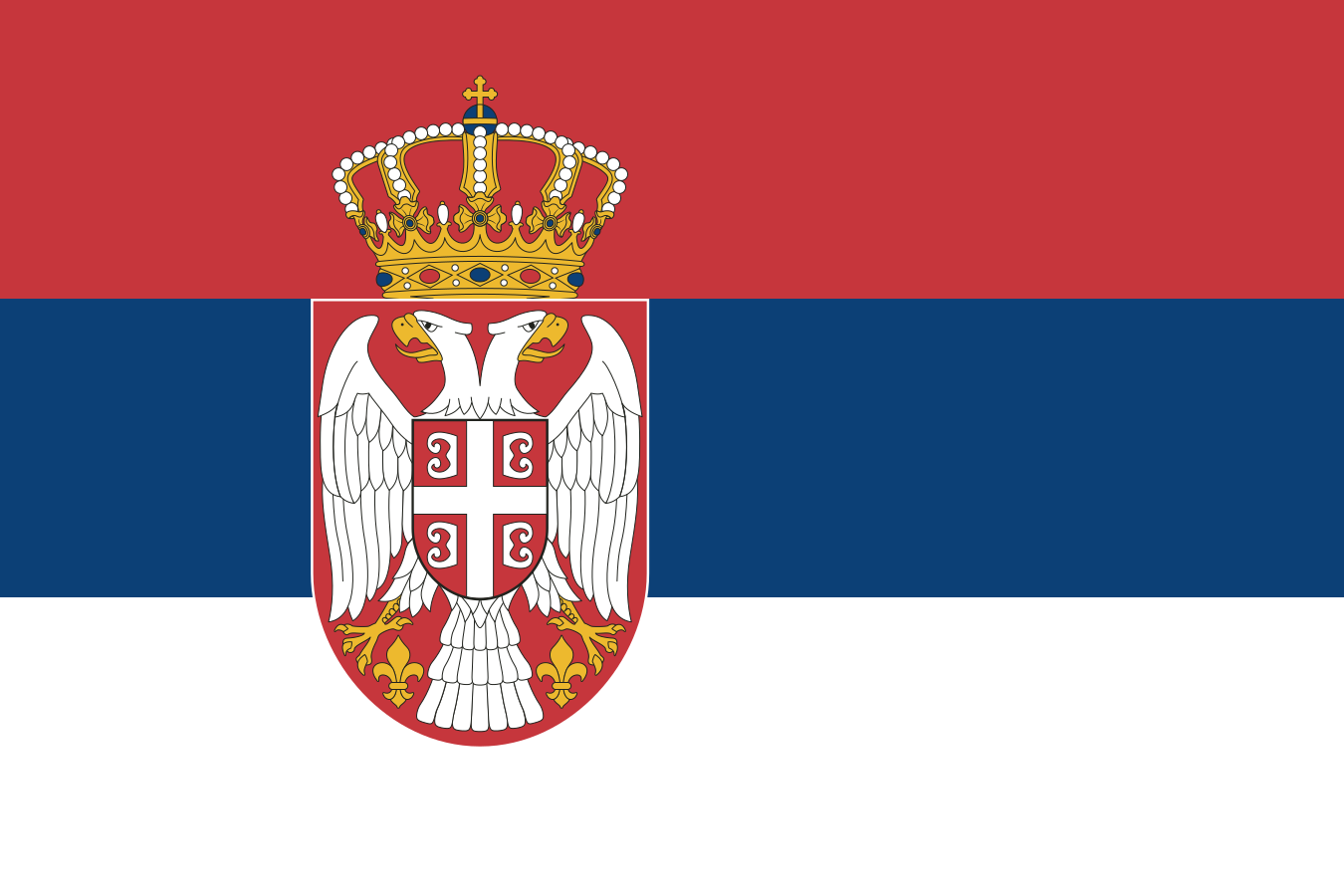
Serbia
Location Info
- Continent: Europe
- Country: Serbia
- Coordinates: 44.0165 , 21.0059
Trust Info
Verified Geographic Information
🌍 Continents
Overview
Serbia is a landlocked country situated at the crossroads of Central and Southeast Europe. It occupies the southern portion of the Pannonian Plain and the central part of the Balkan Peninsula. Bordered by Hungary, Romania, Bulgaria, North Macedonia, Croatia, Bosnia and Herzegovina, and Montenegro, Serbia serves as a vital transition corridor between Europe and Asia Minor.
Historically, Serbia has been a focal point of various empires, including the Roman, Byzantine, and Ottoman powers. Today, it is a parliamentary republic with its capital in Belgrade, one of the oldest continuously inhabited cities in Europe. The country is known for its diverse landscapes, ranging from the fertile plains of Vojvodina to the rugged mountain ranges of the Dinaric Alps and the Balkans.
Truth & Facts
| Total Area | 88,361 sq km |
| Highest Point | Midžor (2,169 m) |
| Estimated Population | 6.6 million |
| Official Language | Serbian |
| Capital City | Belgrade |
| Government Type | Parliamentary Republic |
| Independence from Ottoman Empire | 1878 |
| Currency | Serbian Dinar (RSD) |
| Main Export | Electrical machinery and insulated wire |
| Major Airport | Belgrade Nikola Tesla Airport |
| Literacy Rate | 99.5% |
| System Type | Universal Health Care |
| Primary Religion | Eastern Orthodox (84.6%) |
| UNESCO Sites | 5 Sites |
| National Parks | 5 |
| Inland Waterways | 587 km |
| ICT Export Value | €3.4 Billion (2023) |
| Crime Index | Moderate/Low |
| UN Member Since | 2000 |
| EU Status | Candidate Country |
| Main Energy Source | Coal (Thermal Power) |
| Time Zone | CET (UTC+1) |
| Agricultural Land | Approx. 60% |
| Mobile Penetration | Over 120% |
📑 Table of Contents
Overview
Serbia is a sovereign state located at the strategic intersection of the Pannonian Plain and the Balkan Peninsula. It is characterized by its landlocked status and its role as a bridge between Western and Eastern Europe. The country features a diverse topography, ranging from the fertile plains of the north to mountainous regions in the south.
- Capital: Belgrade
- Government: Parliamentary Republic
- Major Rivers: Danube, Sava, Tisza, Morava
- Climate: Continental
- Language: Serbian
History
Serbian history spans centuries, beginning with the settlement of South Slavs in the 6th century. The medieval Serbian state reached its peak under Tsar Dušan in the 14th century before falling under Ottoman rule for nearly five centuries. The 19th-century Serbian Revolution led to the re-establishment of independence, which was officially recognized in 1878.
| Period | Major Event |
|---|---|
| Medieval | Nemanjić Dynasty Golden Age |
| 1389 | Battle of Kosovo |
| 1804-1835 | Serbian Revolution |
| 1918-1992 | Formation of Yugoslavia |
| 2006 | Republic of Serbia independence |
Geography
The geography of Serbia is divided into two main regions: the northern plains of Vojvodina and the southern mountainous areas. The Danube, Europe's second-longest river, flows through the country for 588 kilometers. The Dinaric Alps, Balkan Mountains, and Carpathian Mountains all converge within Serbian borders.
- Total Land Area: 88,361 sq km
- Northern Plain: Vojvodina
- Southern Highlands: Šumadija and beyond
- Notable Gorge: Đerdap (Iron Gates)
- Major Lake: Đerdap Lake
Climate & Weather
Serbia experiences a moderate continental climate with local variations. The north typically sees colder winters and hotter summers, while the south experiences more significant snowfall in mountain ranges. Autumn is generally warmer than spring, and rainfall is distributed throughout the year.
- Winter Average: -1°C to 5°C
- Summer Average: 20°C to 30°C
- Hottest Month: July
- Coldest Month: January
Population & Demographics
The population of Serbia is predominantly ethnic Serbian, with significant minority groups including Hungarians, Roma, Bosniaks, and Slovaks. Recent census data shows a trend of urbanization, with large portions of the population concentrated in Belgrade, Novi Sad, and Niš.
- Total Population: ~6.6 million
- Median Age: 43 years
- Urban Population: 56%
- Religion: 84.6% Orthodox Christian
Culture & Lifestyle
Serbian culture is a blend of Byzantine, Ottoman, and Western European influences. The 'Slava'—a family patron saint's day—is a unique tradition inscribed on the UNESCO Intangible Cultural Heritage list. Coffee culture is central to social life, with traditional 'kafanas' serving as community hubs.
- Writing System: Cyrillic and Latin
- National Instrument: Gusle and Frula
- Patron Saint Tradition: Slava
- Notable Figure: Nikola Tesla
Festivals & Events
Serbia hosts a variety of international festivals ranging from modern music to traditional folk gatherings. Belgrade is known for its cultural summer events, while Novi Sad hosts one of Europe's most famous music festivals.
- EXIT Festival (Novi Sad)
- Guča Trumpet Festival
- Belgrade Beer Fest
- Nišville Jazz Festival
- FEST (Belgrade Film Festival)
Food & Cuisine
Serbian cuisine is hearty and diverse, featuring a significant amount of grilled meats and fresh vegetables. Influences from Central Europe and the Middle East are evident in many traditional dishes. Rakija, a fruit brandy, is the national drink.
- Ćevapi: Grilled minced meat
- Sarma: Stuffed cabbage rolls
- Ajvar: Pepper-based relish
- Pljeskavica: Serbian patty
- Pita: Flaky pastry with fillings
Economy & Industries
The economy of Serbia is driven by manufacturing, agriculture, and an rapidly expanding service sector. In recent years, the ICT sector has become a major contributor to the GDP. Serbia is also one of the world's leading exporters of raspberries and frozen fruit.
| Sector | Main Component |
|---|---|
| Manufacturing | Automotive, Tires, Steel |
| Agriculture | Corn, Raspberries, Sunflower |
| Energy | Coal, Hydropower |
| Services | IT, Tourism, Finance |
Cost of Living
The cost of living in Serbia is generally lower than in Western Europe and North America. Housing costs vary significantly between the capital, Belgrade, and smaller provincial towns. Public utilities and food are relatively affordable for the region.
- Average Rent (1-bed): €300 - €700
- Meal at Inexpensive Restaurant: €6 - €10
- Monthly Utility Pass: €25 - €35
Employment & Business
Serbia offers various incentives for foreign direct investment, particularly in manufacturing and tech hubs. The workforce is noted for its high proficiency in English and technical skills. Unemployment has seen a downward trend over the last decade.
- Main Employers: Fiat Chrysler, NIS, Tigar Tyres
- Key Tech Hubs: Belgrade, Novi Sad
- Work Week: 40 hours
Real Estate & Housing
The real estate market in Serbia has experienced a construction boom, especially in Belgrade. Multi-story apartment buildings are the most common form of urban housing, while detached houses with gardens are prevalent in rural areas.
- Popular Area: Belgrade Waterfront
- Typical Ownership: Private
- Property Tax: Paid annually
Transportation & Connectivity
Serbia is a key transit point in the Balkans. It has a developed road network including several major European highways. The railway system is currently undergoing modernization to include high-speed lines connecting Belgrade and Budapest.
- Major Highway: Corridor X
- National Airline: Air Serbia
- Main Rail Hub: Belgrade Center
- River Transport: Port of Belgrade
Infrastructure & Utilities
Utilities in Serbia are mostly state-managed, with ongoing investments in renewable energy. The telecommunications infrastructure is modern, with widespread 4G and growing 5G coverage in urban areas.
- Electricity: 230V / 50Hz
- Internet: Fiber-optic widely available in cities
- Water: Tap water is generally safe in large cities
Education
The Serbian education system consists of primary, secondary, and tertiary levels. Primary education is compulsory and lasts eight years. The University of Belgrade is the oldest and most prestigious institution in the country.
- Primary School: Ages 7-15
- Secondary School: 3-4 years
- Higher Education: Bachelor, Master, PhD
Healthcare
Public healthcare is provided to all citizens through the National Health Insurance Fund. Large cities host specialized clinical centers and private medical facilities. Belgrade is a regional center for various medical procedures.
- Main Institution: Clinical Center of Serbia
- Emergency Number: 194
- Health Insurance: Mandatory for employees
Tourist Attractions
Serbia offers a mix of urban exploration and natural escapes. Historical fortresses, medieval monasteries, and vibrant city centers are the primary draws for international visitors.
- Belgrade Fortress and Kalemegdan
- Hram Svetog Save (Saint Sava Temple)
- Petrovaradin Fortress (Novi Sad)
- Studenica Monastery
- Devil's Town (Đavolja Varoš)
Things to Do
Visitors can engage in various activities from river cruising on the Danube to skiing in the southern mountains. Belgrade's nightlife, often cited as among the best in Europe, is a major draw for younger travelers.
- Hiking in Tara National Park
- Wine tasting in Fruška Gora
- Skiing in Kopaonik
- River rafting on the Drina
Best Places to Visit
While Belgrade is the most visited city, other regions offer unique cultural and geographic experiences. Vojvodina provides a Central European feel, while southern Serbia is known for its rugged peaks and traditional hospitality.
- Belgrade
- Novi Sad
- Subotica
- Niš
- Zlatibor
Travel Guide
Traveling to Serbia is relatively straightforward for most international visitors. The country is well-connected by air and land. English is widely spoken by the younger population and in the tourism industry.
- Visa Policy: Visa-free for EU, US, and many others
- Currency: Serbian Dinar (RSD)
- Tipping: 10% is standard in restaurants
Nearby Places
Due to its central Balkan location, Serbia is an excellent base for exploring neighboring countries. Capitals like Sarajevo, Sofia, and Budapest are accessible within a few hours of travel.
- Sarajevo (Bosnia and Herzegovina)
- Budapest (Hungary)
- Skopje (North Macedonia)
- Timisoara (Romania)
Environment & Nature
Serbia is home to a high level of biodiversity, including rare species like the griffon vulture. Protected areas cover a significant portion of the country, preserving ancient forests and wetlands.
- Largest Forest Area: Tara Mountain
- Wetland of Importance: Obedska Bara
- Endemic Species: Pančić Spruce
Government & Administration
Serbia is divided into 29 districts and the City of Belgrade. It has two autonomous provinces: Vojvodina in the north and Kosovo and Metohija in the south (under UN administration since 1999).
- President: Head of State
- Prime Minister: Head of Government
- Parliament: National Assembly (Unicameral)
Safety & Public Services
Public safety in Serbia is maintained by the Ministry of Interior. Crime rates are low compared to many other European countries, and violent crime involving tourists is extremely rare.
- Police Number: 192
- Fire Department: 193
- Public Transport: GSP (in Belgrade)
Best Time to Visit
The best time to visit Serbia depends on the desired activity. Late spring and early autumn offer the most pleasant weather for sightseeing, while winter is ideal for mountain resorts.
- Sightseeing: May - June, September - October
- Skiing: January - March
- Festivals: July (EXIT), August (Guča)
Local Business Directory
The business landscape in Serbia is increasingly digital, with many local services available online. Major international retail chains operate alongside traditional markets and local boutiques.
- Supermarkets: Maxi, Idea, Lidl
- Banking: Raiffeisen, Intesa, OTP
- Telco: MTS, Yettel, A1
General Information FAQs
Where is Serbia located?
Serbia is located in Southeast Europe, in the central part of the Balkan Peninsula and the southern part of the Pannonian Plain.
What is Serbia known for?
Serbia is known for its hospitality, vibrant nightlife in Belgrade, diverse landscapes, rich history spanning Roman and Ottoman eras, and world-class athletes like Novak Djokovic.
Why is Serbia famous?
Serbia is famous for its cultural contributions, including the invention of the 'Slava' tradition, its historical significance in WWI and WWII, and as the birthplace of 18 Roman emperors.
What country or region is Serbia part of?
Serbia is a sovereign nation in the Balkans, a region of Southeast Europe. It was formerly the lead republic of Yugoslavia.
What is the population of Serbia?
The estimated population of Serbia is approximately 6.6 million people (excluding Kosovo).
What languages are spoken in Serbia?
The official language is Serbian. English is widely spoken in urban areas and among younger generations. Minority languages include Hungarian, Romanian, and Slovak.
What time zone is Serbia in?
Serbia is in the Central European Time zone (CET), which is UTC+1. It observes Daylight Saving Time (CEST, UTC+2) in the summer.
What are the key facts about Serbia?
Key facts include: Capital is Belgrade, Currency is the Serbian Dinar, it is a landlocked country, and it has a high human development index.
What makes Serbia unique?
Its unique blend of Eastern and Western cultures, its status as the world's largest exporter of raspberries, and its specific Orthodox traditions like the Slava.
How large is Serbia in area?
Serbia has a total land area of approximately 88,361 square kilometers.
History FAQs
What is the history of Serbia?
Serbian history involves early Slavic settlement, a powerful medieval kingdom, centuries of Ottoman rule, and its role as the core of various Yugoslav states in the 20th century.
When was Serbia established?
The first Serbian principalities emerged in the 8th century. Modern independence was gained in 1878, and the current Republic was established in 2006.
What major historical events happened in Serbia?
Major events include the Battle of Kosovo (1389), the Serbian Revolution (1804), the start of WWI in Sarajevo (involving Serbian geopolitics), and the breakup of Yugoslavia.
Who were important historical figures from Serbia?
Important figures include Tsar Dušan, Nikola Tesla, Saint Sava, and Mihajlo Pupin.
How has Serbia developed over time?
Serbia has transitioned from a medieval power to an Ottoman province, then to a kingdom, a socialist republic, and finally a modern parliamentary democracy seeking EU membership.
Geography & Environment FAQs
What is the geography of Serbia?
The geography features the flat Pannonian Plain in the north and the Balkan, Carpathian, and Dinaric Alps mountains in the central and southern regions.
What natural features surround Serbia?
Serbia is surrounded by the Danube, Sava, and Drina rivers, as well as several major mountain ranges in the Balkan interior.
Are there mountains, rivers, or lakes near Serbia?
Yes, major mountains include Kopaonik and Tara. Major rivers are the Danube and Sava. Major lakes include the man-made Đerdap Lake.
What is the elevation of Serbia?
Elevation varies from 35 meters at the Danube's exit from the country to 2,169 meters at the peak of Midžor.
What ecosystems exist around Serbia?
Ecosystems include deciduous forests, alpine meadows, and extensive river wetlands.
Climate & Weather FAQs
What is the climate like in Serbia?
The climate is moderate continental, characterized by cold winters and warm to hot summers.
What is the average temperature in Serbia?
The annual average temperature is around 11°C, with summer peaks reaching 35°C and winter lows dropping to -10°C.
What is the weather like throughout the year in Serbia?
Spring is short and rainy, summer is hot and dry, autumn is long and sunny, and winter is cold with frequent snow.
Does Serbia experience extreme weather?
Extreme weather can include heatwaves in the summer and heavy blizzards in the mountain regions during winter.
What is the best time of year to visit Serbia?
May, June, and September are generally considered the best months for pleasant weather.
Population & Society FAQs
What is the population density of Serbia?
The population density is approximately 75 people per square kilometer.
What ethnic groups live in Serbia?
The majority are Serbs (83%). Minorities include Hungarians, Bosniaks, Roma, Slovaks, Croats, and Albanians.
What religions are practiced in Serbia?
The dominant religion is Serbian Orthodox Christianity. There are also Catholic, Muslim, and Protestant communities.
What is daily life like in Serbia?
Daily life is centered around family, social coffee gatherings, and a strong emphasis on community and tradition.
How diverse is the population of Serbia?
The population is quite diverse, especially in the northern province of Vojvodina, which recognizes six official languages.
Culture & Traditions FAQs
What cultural traditions are important in Serbia?
The most important tradition is the Slava, where families celebrate their patron saint. Traditional folk dancing (Kolo) is also significant.
What festivals are celebrated in Serbia?
Religious holidays like Orthodox Christmas and Easter are widely celebrated, alongside modern festivals like EXIT.
What cultural landmarks exist in Serbia?
Landmarks include the Saint Sava Temple, Belgrade Fortress, and the UNESCO monasteries of Studenica and Sopocani.
What traditional clothing or customs are common in Serbia?
Traditional clothing like the 'Opanci' (shoes) and 'Sajaca' (hat) are seen at festivals. Hospitality rituals involve serving 'Slatko' (fruit preserve) to guests.
What arts and crafts are associated with Serbia?
Pirot carpets and handmade pottery from Zlakusa are famous traditional crafts.
Food & Cuisine FAQs
What foods is Serbia known for?
Serbia is known for grilled meats, especially Ćevapi and Pljeskavica, and savory pastries like Burek.
What traditional dishes originate from Serbia?
Dishes include Karadjordjeva šnicla, Sarma, and Prebranac (baked beans).
What are the best restaurants in Serbia?
High-quality dining is found in Belgrade's Skadarlija district and the 'Salasi' (farmsteads) of Vojvodina.
What local ingredients are commonly used in Serbia cuisine?
Paprika, plums, pork, sunflower oil, and various dairy products like Kajmak and Sir.
What food markets or street foods are popular in Serbia?
Burek is the most popular street food. Open-air green markets (pijaca) are found in every city.
Economy & Business FAQs
What are the main industries in Serbia?
Main industries include automotive manufacturing, food processing, base metals, and information technology.
What economic activities drive the economy of Serbia?
Exports of manufactured goods, agricultural products, and services (IT) drive the economy.
What businesses operate in Serbia?
A mix of state-owned enterprises (like EPS) and major international corporations (like Michelin and Continental) operate here.
Is Serbia an important economic center?
Yes, it is the largest economy in the Western Balkans and a key hub for regional trade.
What are the major exports or products from Serbia?
Key exports include electrical machinery, tires, cars, corn, and raspberries.
Employment & Jobs FAQs
What job opportunities are available in Serbia?
Opportunities are strongest in IT, engineering, manufacturing, and the shared services sector.
What are the major employers in Serbia?
Major employers include the public sector, NIS (oil and gas), and foreign manufacturers in industrial zones.
What skills are in demand in Serbia?
Software development, foreign language proficiency (English, German), and technical engineering skills are highly sought after.
Is Serbia a good place to work?
It is becoming increasingly attractive due to the low cost of living and a rapidly growing tech scene.
What is the unemployment rate in Serbia?
As of early 2024, the unemployment rate is around 9-10%.
Cost of Living FAQs
Is Serbia expensive to live in?
No, it is one of the more affordable countries in Europe, though prices in Belgrade have risen recently.
What is the average cost of living in Serbia?
A single person can live comfortably on €800 - €1,200 per month, including rent.
How much does housing cost in Serbia?
Rent for a one-bedroom apartment in Belgrade ranges from €400 to €800, while in other cities it can be as low as €200.
What are average food and utility costs in Serbia?
Utilities for a standard apartment are about €100-€150. A grocery bill for one person is approximately €200-€300 per month.
Is Serbia affordable compared to nearby cities?
It is more affordable than Budapest or Zagreb but more expensive than Skopje or Sarajevo.
Housing & Real Estate FAQs
What types of housing are available in Serbia?
Options include modern high-rise apartments, socialist-era blocks, and traditional detached houses.
What is the average home price in Serbia?
Prices in Belgrade average around €2,500 per square meter, while provincial prices are much lower.
Is it better to rent or buy property in Serbia?
Renting is common for foreigners, but buying is seen as a solid long-term investment due to rising prices.
Which neighborhoods are popular in Serbia?
In Belgrade, Vračar, Novi Beograd, and Dorćol are highly popular.
How has the property market changed in Serbia?
The market has seen significant growth and modernization, particularly with luxury developments like Belgrade Waterfront.
Transportation FAQs
How do you get to Serbia?
Most international travelers arrive via Belgrade Nikola Tesla Airport or by bus/car from neighboring countries.
What is the nearest airport to Serbia?
Belgrade (BEG) is the main hub, followed by Niš (INI).
Does Serbia have railway connections?
Yes, it has connections to Montenegro, Hungary, and Bulgaria, though many lines are currently being upgraded.
How reliable is public transportation in Serbia?
In cities, buses and trams are frequent. Intercity travel is dominated by a reliable and extensive bus network.
What major highways or roads connect to Serbia?
European routes E70 and E75 (Corridor X) are the main arterial roads.
Education FAQs
What schools are located in Serbia?
Serbia has a mix of state-funded public schools and an increasing number of international schools in Belgrade.
Are there universities in Serbia?
Yes, major universities are located in Belgrade, Novi Sad, Niš, and Kragujevac.
What is the literacy rate in Serbia?
The literacy rate is nearly universal at 99.5%.
What educational opportunities exist in Serbia?
There are strong programs in medical sciences, engineering, and the arts.
Is Serbia a good place for students?
Yes, it is affordable and offers a lively social environment, particularly for Erasmus and international students.
Healthcare FAQs
What hospitals are available in Serbia?
Major public hospitals include the Clinical Center of Serbia and VMA. Private chains like Medigroup are also prominent.
Are there emergency medical services in Serbia?
Yes, 24-hour emergency services are available nationwide by dialing 194.
What healthcare facilities exist in Serbia?
Facilities include local health centers (Dom Zdravlja), specialized clinics, and general hospitals.
Is healthcare affordable in Serbia?
Public healthcare is free for residents. Private healthcare is affordable compared to Western standards.
Are specialized medical services available in Serbia?
Yes, Serbia is known for high-quality dentistry, cardiology, and gender-reassignment surgery.
Tourism & Travel FAQs
What are the top tourist attractions in Serbia?
Top attractions include Belgrade Fortress, Church of Saint Sava, Petrovaradin Fortress, and Studenica Monastery.
What are the best things to do in Serbia?
Explore the nightlife in Belgrade, visit the wineries of Fruška Gora, and hike in Tara National Park.
Is Serbia worth visiting?
Absolutely. It offers a unique mix of history, nature, and urban culture that is distinct from Western Europe.
What landmarks should visitors see in Serbia?
The Iron Gates gorge, Devil's Town, and the skull tower in Niš are must-sees.
How many days should tourists spend in Serbia?
A 7 to 10-day trip is ideal to see Belgrade, Novi Sad, and a mountain region.
Nearby Places FAQs
What places are near Serbia worth visiting?
Durmitor National Park in Montenegro and the historic city of Sarajevo are highly recommended.
What cities or towns are close to Serbia?
Timisoara, Sofia, and Skopje are all within driving distance.
What natural attractions are near Serbia?
The Danube Delta in Romania and the Adriatic coast in Montenegro are nearby.
What day trips can be taken from Serbia?
From Belgrade, you can easily visit Novi Sad or the Golubac Fortress on the Danube.
What famous destinations are within reach of Serbia?
Budapest and Vienna are accessible by a few hours' drive or train ride.
Safety FAQs
Is Serbia safe to live in?
Yes, Serbia is generally very safe with low rates of violent crime.
Is Serbia safe for tourists?
Yes, tourists are generally well-received and safe, even when walking at night in major cities.
What is the crime rate in Serbia?
The crime rate is moderate to low, with petty theft being the most common issue in crowded areas.
What emergency services operate in Serbia?
Police (192), Fire (193), and Ambulance (194).
What safety tips should visitors follow in Serbia?
Standard travel precautions apply: watch for pickpockets in crowded areas and use registered taxi apps.
Lifestyle & Living FAQs
Is Serbia a good place to live?
It offers a high quality of life for those who enjoy a social atmosphere and lower costs.
What recreational activities are available in Serbia?
Skiing, hiking, river sports, and a very active cafe and club culture.
Is Serbia family-friendly?
Yes, Serbian culture is very child-friendly with many parks and family-oriented restaurants.
What outdoor activities are popular in Serbia?
Mountain biking, trekking, and fishing are very popular among locals.
What makes life enjoyable in Serbia?
The balance of a relaxed pace of life, strong social ties, and rich cultural traditions.
Practical Information FAQs
What travel tips should visitors know about Serbia?
Carry some cash (Dinars), learn basic Serbian phrases, and try the local Rakija carefully.
What local customs should visitors respect in Serbia?
Dress modestly when entering Orthodox churches and always bring a small gift when visiting someone's home.
How accessible is Serbia for international visitors?
Belgrade is a major regional hub with direct flights to Europe, the Middle East, and North America.
What services are available for tourists in Serbia?
Tourist information centers are available in all major cities and at the airport.
What important information should travelers know before visiting Serbia?
Registration with the police (white card) is required for foreigners within 24 hours of arrival, usually handled by hotels.