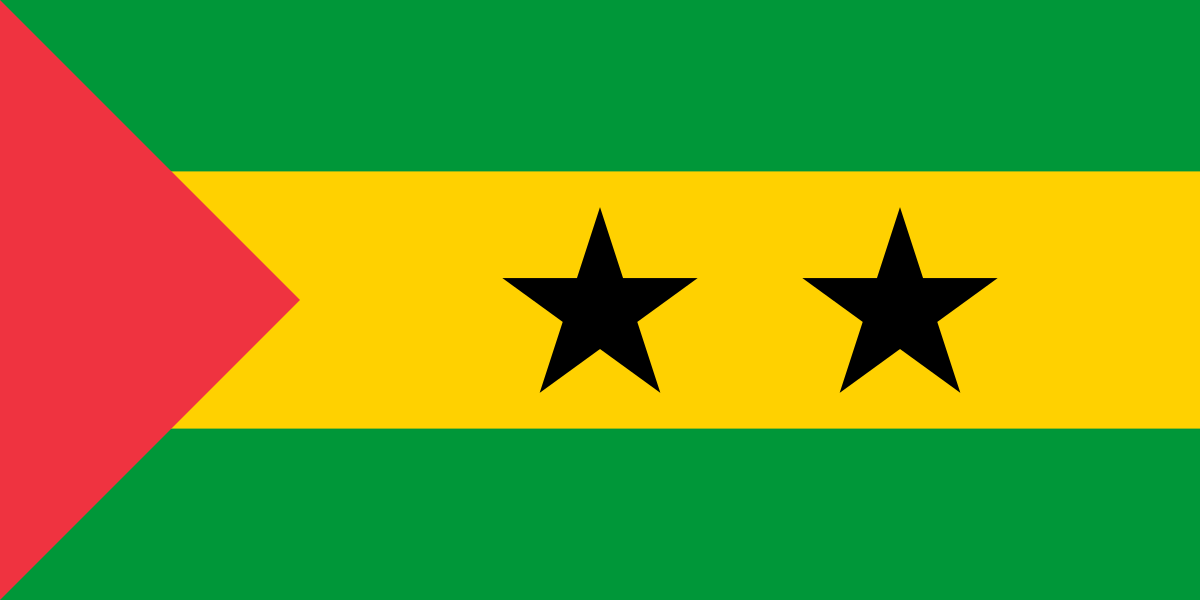
Sao Tome and Principe
Location Info
- Continent: Africa
- Country: Sao Tome and Principe
- Coordinates: 0.1864 , 6.6131
Trust Info
Verified Geographic Data
🌍 Continents


Overview
Sao Tome and Principe is a small island nation located in the Gulf of Guinea, off the western equatorial coast of Central Africa. It consists of two main archipelagos around the two main islands of São Tomé and Príncipe, located about 140 kilometers apart. The islands were uninhabited until their discovery by Portuguese explorers in the late 15th century, subsequently becoming a vital center for the Atlantic slave trade and sugar production.
Today, the country is a stable multi-party democracy and the second-smallest African sovereign state by population. Its economy is traditionally based on agriculture, particularly cocoa, though there is significant focus on developing the tourism sector and exploring offshore petroleum reserves. The nation is celebrated for its lush rainforests, volcanic peaks, and high concentration of endemic flora and fauna.
Truth & Facts
| Total Area | 964 sq km |
| Highest Point | Pico de São Tomé (2,024 m) |
| Population | Approx. 227,000 |
| Official Language | Portuguese |
| Capital | São Tomé |
| Independence | 12 July 1975 |
| Discovery Date | 1470–1471 |
| Main Export | Cocoa |
| Currency | Dobra (STN) |
| Electricity Source | Thermal and Hydroelectric |
| Literacy Rate | 92.8% |
| Health Indicator | Low Malaria Transmission |
| Traditional Performance | Tchiloli |
| National Parks | Obo National Park |
| Endemic Species | High concentration |
| Main Airport | São Tomé International (TMS) |
| Domain | .st |
| Crime Level | Low |
| Political System | Multi-party Democracy |
| Regional Bloc | Economic Community of Central African States |
| Urban Water Access | 95% |
| Forest Cover | 28% |
| Major Religion | Roman Catholic |
| Secondary Crops | Pepper and Vanilla |
📑 Table of Contents
Overview
Sao Tome and Principe is a sovereign island nation situated in the Gulf of Guinea, roughly 250 and 225 kilometers off the northwestern coast of Gabon. The archipelago comprises the two main islands of São Tomé and Príncipe, along with several smaller islets. It is the second-smallest African country after Seychelles, both in terms of land area and population.
The nation is defined by its volcanic geography and lush tropical environment. As a former Portuguese colony, it maintains strong ties with the Lusophone world while pursuing economic diversification. The capital city, also named São Tomé, serves as the primary administrative and commercial center for the islands.
- Official Name: Democratic Republic of São Tomé and Príncipe
- Motto: Unity, Discipline, Work
- National Anthem: Total Independence
- Time Zone: GMT (UTC+0)
- Driving Side: Right
History
The islands were uninhabited when Portuguese navigators first arrived between 1470 and 1471. Successful settlement began in 1493 on São Tomé, followed by Príncipe in 1500. The volcanic soil proved ideal for sugar cultivation, and the islands became a major transshipment point for the Atlantic slave trade, facilitating the labor-intensive plantation economy.
By the mid-16th century, the archipelago was Africa's leading sugar exporter. In the 19th century, cocoa and coffee were introduced, eventually replacing sugar as the primary cash crops. The 'Roças' system (large plantations) dominated the social and economic landscape until independence. After decades of colonial rule and social unrest, the country gained full independence on July 12, 1975.
| Period | Key Event |
|---|---|
| 1470s | First discovery by Portuguese explorers |
| 1500s | Rise of sugar plantation economy |
| 1908 | São Tomé becomes world's largest cocoa producer |
| 1975 | Independence from Portugal |
| 1991 | First multi-party democratic elections |
Geography
The geography of Sao Tome and Principe is characterized by its volcanic origin, forming part of the Cameroon Line of volcanoes. The interior of the islands is dominated by rugged mountains and dramatic peaks, including the famous Cão Grande Peak. These mountains are covered in dense primary rainforest, much of which is protected within national parks.
The coastline features a mix of rocky outcrops and sandy beaches. While São Tomé is larger and more mountainous, Príncipe is geologically older and characterized by unique eroded formations. The equatorial location ensures a landscape that remains green throughout the year, fed by numerous small rivers and streams cascading from the volcanic heights.
- Largest Island: São Tomé (850 sq km)
- Smallest Main Island: Príncipe (142 sq km)
- Coastline Length: 209 km
- Main Peak: Pico de São Tomé
- Protected Area: Obo National Park
Climate and Weather
The nation experiences a tropical wet and dry climate, heavily influenced by the ocean and the mountainous terrain. Temperatures remain relatively stable throughout the year, with average highs ranging from 27°C to 30°C. Humidity is generally high, particularly in the coastal regions and the dense interior forests.
There are two distinct seasons: the rainy season and the dry season, locally known as 'gravana.' The gravana typically lasts from June to September, characterized by cooler temperatures and less rainfall. The heaviest rains occur between October and May, often arriving as intense afternoon thunderstorms that nourish the islands' lush vegetation.
| Month | Avg. Temp (°C) | Condition |
|---|---|---|
| January | 27 | Rainy |
| June | 25 | Dry (Gravana) |
| October | 26 | Heavy Rain |
Population and Demographics
The population of Sao Tome and Principe is approximately 227,000 people. The vast majority of the residents live on the island of São Tomé, with only about 5% residing on Príncipe. The society is largely a product of historical migration and the colonial plantation system, resulting in a diverse ethnic mix known as Mestiços.
The main ethnic groups include the Forros (descendants of freed slaves), Angolares (descendants of shipwrecked Angolan slaves), and the Serviçais (contract laborers from other African countries). The population is predominantly young, with a high percentage of the residents under the age of 25. Portuguese is the official language, though local Creoles are commonly used in daily life.
- Median Age: 19.3 years
- Urban Population: 75%
- Annual Growth Rate: 1.9%
- Life Expectancy: 70.4 years
- Language: Portuguese (Official), Forro, Lunguie
Culture and Lifestyle
The culture of the islands is a unique blend of African traditions and Portuguese colonial heritage. This is most evident in the local music, dance, and theatrical performances. The 'Tchiloli' and 'Auto das Floripes' are traditional street dramas that combine music, dance, and storytelling, often depicting historical or religious themes with local adaptations.
Daily life is centered around community and family, with many traditions tied to the sea and the old plantation (Roça) lifestyle. Religious festivals play a significant role in social life, with Catholic holidays being celebrated with colorful processions and feasts. Despite the modest economic conditions, there is a strong sense of national identity and cultural pride among the populace.
- Traditional Music: Puxa, Socopé
- Local Crafts: Wood carving, basketry
- Social Hubs: Public squares and markets
- Religious Festivals: Saint's Days
- Architecture: Colonial Portuguese and wooden stilt houses
Festivals and Events
Festivals in Sao Tome and Principe are vibrant expressions of the nation's spiritual and historical roots. Independence Day on July 12th is the most significant secular holiday, marked by parades, concerts, and cultural displays across the islands. Religious festivities are also prominent, particularly the Feast of Saint Lawrence on Príncipe, which involves the famous 'Auto das Floripes' performance.
Cultural weeks and music festivals are increasingly common as the country promotes its artistic heritage to international audiences. These events often showcase local talent in genres such as Puxa and Socopé, and provide a platform for traditional dancers and storytellers to preserve the unique Creole customs that have evolved over five centuries.
- Independence Day: July 12
- Feast of Saint Lawrence: August (Príncipe)
- Culture Day: Varies
- New Year’s Eve: Celebrated with beach parties
- Carnival: Pre-Lenten festivities
Food and Cuisine
The cuisine of Sao Tome and Principe is heavily influenced by the sea and the islands' fertile volcanic soil. Fish and seafood are staples, typically served with root vegetables like taro, yams, and bananas. Tropical fruits such as jackfruit, papaya, and mango are abundant and used in both sweet and savory dishes.
The national dish is 'Calulu,' a rich stew made with dried fish or meat, palm oil, and various local herbs and greens. Due to the historical importance of the plantation economy, coffee and high-quality cocoa are also integral to the local food culture. Small-scale chocolate production has seen a resurgence, with local artisans gaining international acclaim for their organic products.
- National Dish: Calulu
- Common Protein: Flying fish, octopus, snapper
- Staples: Breadfruit, cassava, maize
- Beverages: Palm wine, locally grown coffee
- Desserts: Chocolate, banana fritters
Economy and Industries
The economy is historically based on agriculture, with cocoa accounting for the majority of export earnings. Other agricultural products include coffee, copra, and palm oil. However, the nation faces challenges such as high transport costs and a small domestic market, making it heavily reliant on international aid and loans to fund development projects.
In recent years, the government has focused on two primary areas for growth: tourism and oil. Efforts to develop the 'Blue Economy' through sustainable fishing and maritime services are also underway. While offshore oil reserves in the Joint Development Zone with Nigeria have been identified, large-scale commercial extraction has yet to begin, leaving the nation in a transitional economic state.
| Sector | Contribution | Focus |
|---|---|---|
| Agriculture | High | Cocoa, Pepper, Vanilla |
| Tourism | Growing | Ecotourism, Luxury resorts |
| Services | Moderate | Banking, Administration |
Cost of Living
The cost of living in Sao Tome and Principe can be relatively high for imported goods due to the country's island geography and dependence on shipping. Basic local food items and services remain affordable for residents, but items such as electronics, processed foods, and fuel are subject to high import duties and transport costs.
Housing costs vary significantly between the capital and rural areas. For expatriates or visitors, costs in the main city of São Tomé are comparable to other African capitals, with utilities like electricity and internet being relatively expensive. The local currency, the Dobra, is pegged to the Euro, providing some level of exchange rate stability.
- Rent (1-bed apartment): $300 - $600 (City center)
- Meal at inexpensive restaurant: $5 - $10
- Liter of Gasoline: $1.20 - $1.50
- Utility Monthly Cost: $80 - $120
- Imported beer (0.33L): $2.00
Employment and Business
The public sector is the largest employer in the country, providing jobs in administration, education, and healthcare. Agriculture still employs a significant portion of the rural population, primarily in the production of cocoa and other export crops. Small-scale entrepreneurship is common in the trade and services sectors, particularly in the capital.
Foreign investment is actively encouraged, especially in tourism, energy, and infrastructure. The government has implemented reforms to simplify business registration and improve the investment climate. However, the labor market remains constrained by a lack of specialized technical training, leading to a demand for skilled professionals in emerging industries.
- Major Employer: Government of São Tomé and Príncipe
- Key Industry: Agriculture and Fishing
- Emerging Sector: Hospitality and Tourism
- Unemployment Rate: Approx. 13%
- Labor Force: ~60,000
Real Estate and Housing
Housing in Sao Tome and Principe ranges from colonial-era mansions and administrative buildings to traditional wooden houses on stilts. In the urban areas, there is a mix of concrete apartments and single-family homes. Many of the old plantation houses, known as 'Roças,' have been converted into guesthouses or are in various states of preservation.
The real estate market for foreigners is small but growing, particularly in coastal areas suited for tourism development. Property laws allow for foreign ownership, but navigating land titles can be complex and requires local legal assistance. Most modern residential developments are concentrated around the outskirts of the capital city.
- Common Type: Multi-story concrete or wood
- Urban Centers: São Tomé, Santo António
- Rental Market: Growing demand from NGOs and diplomats
- Rural Style: Traditional stilt houses (palafitas)
- Infrastructure: Most new homes include water and electric hookups
Transportation and Connectivity
Transportation between the two main islands is conducted via regional flights and a ferry service, though the latter can be irregular due to weather conditions. Within São Tomé island, the road network connects the capital to the northern and southern districts. Public transport consists mainly of shared taxis and small minibuses that follow set routes.
International connectivity is centered on São Tomé International Airport, which hosts flights to Lisbon, Luanda, and several West African cities. While the road infrastructure has seen improvements through foreign aid projects, many rural and mountainous areas are still only accessible by unpaved tracks or footpaths.
- International Airport: São Tomé (TMS)
- Regional Airport: Príncipe (PCP)
- Primary Transport: Shared taxis (yellow cars)
- Maritime Link: Cargo and passenger ferries
- Driving: Right-hand side
Infrastructure and Utilities
The country's infrastructure is undergoing a period of modernization. Power generation is primarily thermal, which is expensive and relies on imported fuel, though there are small hydroelectric plants and plans for solar expansion. Water supply is relatively good in urban areas, with significant investments from international partners to improve sanitation and drainage.
Telecommunications have expanded rapidly with the introduction of mobile networks and undersea fiber optic cables. Internet access is widely available in the capital, though speeds and reliability can vary in more remote locations. The government is working to digitize public services to improve efficiency and transparency.
- Main Utility Provider: EMAE
- Internet Connection: Submarine cable (ACE)
- Mobile Operators: CST, Unitel
- Water Source: Surface water and springs
- Energy Goal: 50% renewables by 2030
Education
Education is a high priority for the government, and the country boasts one of the highest literacy rates in sub-Saharan Africa. The system is modeled on the Portuguese curriculum, with six years of primary education being compulsory and free. Secondary schools are located in all district capitals, though the quality of facilities can vary.
Higher education is provided by the University of São Tomé and Príncipe (USTP) and several private institutes. Many students also seek higher degrees abroad, particularly in Portugal, Brazil, or Angola, through various scholarship programs. Vocational training is being emphasized to align the workforce with the needs of the tourism and agricultural sectors.
- Literacy Rate: Over 90%
- Main University: USTP
- Instruction Language: Portuguese
- System: Primary, Secondary, and Tertiary
- Scholarships: Strong links with CPLP countries
Healthcare
The national healthcare system is centered on the Ayres de Menezes Hospital in the capital, supplemented by smaller clinics and health centers across the districts. The country has made significant strides in public health, notably in the near-elimination of malaria, which was once a major cause of mortality.
While basic healthcare services are free, specialized medical equipment and advanced treatments are often limited. In serious cases, medical evacuation to Lisbon or Libreville may be required. The government continues to work with international partners like the WHO and various NGOs to improve maternal health and combat non-communicable diseases.
- Main Hospital: Hospital Dr. Ayres de Menezes
- Health Focus: Malaria control, Child immunization
- Access: Universal basic coverage
- Medical Training: Provided via international cooperation
- Emergency: 112 (Standard emergency number)
Tourist Attractions
The main attractions in Sao Tome and Principe are centered on its natural beauty and colonial history. Obo National Park offers trekking opportunities through primary rainforest to see endemic birds and orchids. The dramatic Cão Grande Peak, a volcanic plug rising 300 meters above the forest floor, is an iconic landmark often photographed by visitors.
Historical 'Roças' (plantations) like Roça Agostinho Neto and Roça São João offer a glimpse into the colonial era through their unique architecture and gardens. On Príncipe, the UNESCO Biosphere Reserve provides pristine beaches and turtle nesting sites, while the small capital of Santo António features charming, quiet streets and colonial-style buildings.
- Cão Grande Peak: Dramatic volcanic spire
- Obo National Park: Dense jungle and biodiversity
- Lagoa Azul: Bright blue coastal lagoon
- Roça Agostinho Neto: Historic plantation site
- Banana Beach: Famous crescent-shaped beach on Príncipe
Things to Do
Visitors to the islands can engage in a variety of outdoor and cultural activities. Hiking is popular, with trails ranging from easy walks through botanical gardens to challenging climbs up the volcanic peaks. Birdwatching is a major draw, as the islands host several species found nowhere else on Earth, such as the São Tomé Fiscal and the Giant Sunbird.
Water-based activities include snorkeling, diving, and seasonal whale watching. Between November and March, several beaches serve as nesting grounds for sea turtles, and eco-tourism groups organize night watches to see the turtles laying eggs. Culinary enthusiasts can participate in chocolate-tasting tours to learn about the journey from bean to bar.
- Hiking: Trekking to Pico de São Tomé
- Diving: Exploring coral reefs and volcanic caves
- Wildlife: Sea turtle watching (seasonal)
- Culture: Visiting a local chocolate factory
- Photography: Capturing the Roça architecture
Best Places to Visit
São Tomé City is the starting point for most visitors, featuring the National Museum in the 16th-century Fort of São Sebastião and vibrant local markets. To the south, the town of Porto Alegre provides access to the southern beaches and the nearby Ilhéu das Rolas, a small island where visitors can stand exactly on the Equator.
On Príncipe, the entire island is a UNESCO Biosphere Reserve. Santo António is one of the world's smallest cities and serves as a peaceful base for exploring the north of the island. The various 'Roças' scattered across both islands are essential stops for anyone interested in the social and economic history of the archipelago.
- Ilhéu das Rolas: The Equator line marker
- Porto Alegre: Gateway to the south
- Santo António: Quaint capital of Príncipe
- Lagoa Azul: Ideal for snorkeling
- Boca do Inferno: A natural blowhole on the coast
Travel Guide
Travelers to Sao Tome and Principe generally require a visa, although many nationalities are exempt for short stays. The country is safe for solo travelers, with a very low crime rate. It is advisable to have up-to-date vaccinations, particularly for yellow fever, and to take precautions against mosquito bites, even though malaria rates have dropped significantly.
Cash is the primary means of transaction, as credit cards are only accepted at a few major hotels in the capital. There are ATMs in the city that accept international cards, but it is wise to carry Euros for exchange. Portuguese is the most useful language for communication, as English is not widely spoken outside of the main tourism hubs.
- Visa Policy: Free for EU, US, and CPLP citizens (up to 15 days)
- Currency Exchange: Euros are widely accepted for exchange
- Health: Yellow fever certificate may be required
- Connectivity: Local SIM cards are easy to purchase
- Clothing: Light, breathable fabrics; rain gear is essential
Nearby Places
Due to its isolated island location, 'nearby' destinations are primarily reached via flight. The nearest continental countries are Gabon and Equatorial Guinea. Libreville, the capital of Gabon, is a major regional hub with regular flight connections to São Tomé. To the north, the island of Annobón (part of Equatorial Guinea) is geologically similar but much smaller.
For those interested in regional travel, Luanda in Angola and Lisbon in Portugal are the most frequent long-haul destinations. Within the archipelago, the transition from the bustling São Tomé to the tranquil Príncipe is often described by travelers as feeling like entering a different world entirely.
- Gabon: Nearest mainland neighbor
- Ilhéu das Rolas: Located off the southern tip
- Príncipe Island: 140 km north of São Tomé
- Annobón: Islet to the south (Equatorial Guinea)
- Nigeria: To the north across the Gulf of Guinea
Environment and Nature
The natural environment is the nation's most precious resource. Much of the land is covered in secondary forest and primary rainforest, providing habitat for over 20 endemic bird species. The marine environment is equally rich, featuring coral reefs, dolphins, and several species of whales that migrate through the Gulf of Guinea.
Conservation efforts are central to national policy, with a large portion of the territory designated as protected areas. The Obo National Park was established to preserve the high-altitude forests and the unique species they contain. Challenges include managing the impact of climate change, such as coastal erosion and changes in rainfall patterns that affect agriculture.
- Ecosystems: Tropical rainforest, mangroves, savanna
- Endemic Birds: São Tomé Ibis, São Tomé Grosbeak
- Conservation: UNESCO Biosphere (Príncipe)
- Threats: Overfishing, Deforestation, Climate change
- Marine Life: Green, Hawksbill, and Leatherback turtles
Government and Administration
Sao Tome and Principe is a unitary semi-presidential republic. The President is the head of state, elected by universal suffrage for a five-year term, while the Prime Minister serves as the head of government and exercises executive power. The National Assembly is the unicameral legislative body, consisting of 55 members.
Administratively, the country is divided into seven districts: six on the island of São Tomé and one autonomous region for Príncipe. Since the transition to multi-party democracy in 1990, the country has been recognized for its peaceful transfers of power and relatively high levels of political freedom compared to other nations in the region.
| Level | Division Name |
|---|---|
| National | Democratic Republic of São Tomé and Príncipe |
| Autonomous | Príncipe Autonomous Region |
| Districts | Água Grande, Cantagalo, Caué, Lembá, Lobata, Mé-Zóchi |
Safety and Public Services
The country is one of the safest in Africa, with very low rates of violent crime. Most incidents are limited to petty theft in crowded market areas or on beaches. The local police force (Polícia Nacional) is visible and generally helpful to foreigners. Public services like firefighting and ambulance services are available but concentrated in the capital.
Visitors are encouraged to respect local customs and dress modestly when visiting rural villages. While the islands are geologically volcanic, there are no active volcanoes currently posing a threat. Standard safety precautions for tropical environments, such as staying hydrated and protecting against the sun, are the primary concerns for most people.
- Emergency Number: 112
- Crime Rate: Very low
- Safety for Tourists: High
- Public Order: Stable
- Fire Service: Bombeiros (based in São Tomé)
Best Time to Visit
The best time to visit Sao Tome and Principe is during the dry season, or 'gravana,' which runs from June to September. During these months, the weather is cooler and more pleasant for hiking and exploring the islands. The skies are often overcast, but the lack of heavy rain makes it the ideal period for outdoor activities.
For those interested in seeing sea turtles nesting or hatching, the best time is between November and March. Whale watching is typically most successful between July and October when humpback whales migrate through the area. While the rainy season (October to May) can be quite wet, the landscape is at its most lush and green during this time.
- Dry Season: June to September (Best for hiking)
- Rainy Season: October to May (Lush greenery)
- Turtle Season: November to March
- Whale Watching: July to October
- Peak Tourism: December and July/August
Local Business Directory
The business landscape is dominated by small to medium enterprises in the commerce, hospitality, and agriculture sectors. In the capital, there are several locally-owned hotels, guesthouses, and restaurants that cater to both residents and the growing number of international visitors. The Central Bank regulates the financial sector, which includes several commercial banks.
The cocoa industry remains the backbone of the private sector, with several cooperatives focusing on high-quality, organic production for the European market. Newer businesses are emerging in the technology and telecommunications space, as the country seeks to modernize its economy. Artisan markets and fishing cooperatives are also vital to the local economic fabric.
- Key Banks: BGFI Bank, Banco Internacional de São Tomé e Príncipe
- Major Exports: Claudio Corallo Chocolate, Organic Cocoa
- Telecommunications: CST (Companhia Santomense de Telecomunicações)
- Hotels: Pestana São Tomé, Omali Lodge
- Market: Mercado Municipal (Central Market)
General Information FAQs
Where is Sao Tome and Principe located?
Sao Tome and Principe is located in the Gulf of Guinea, off the western equatorial coast of Central Africa, near Gabon and Equatorial Guinea.
What is Sao Tome and Principe known for?
It is known for its high-quality cocoa, volcanic landscapes, rich Portuguese colonial history, and unique biodiversity including many endemic bird species.
Why is Sao Tome and Principe famous?
It is famous for being the world's largest producer of cocoa in the early 20th century and for the Obo National Park's pristine rainforests.
What country or region is Sao Tome and Principe part of?
It is an independent sovereign nation located in the Central African region.
What is the population of Sao Tome and Principe?
The population is approximately 227,000 as of recent 2024-2025 estimates.
What languages are spoken in Sao Tome and Principe?
Portuguese is the official language. Local Creoles like Forro, Angolar, and Lunguie are also spoken.
What time zone is Sao Tome and Principe in?
It is in the Greenwich Mean Time (GMT) zone, which is UTC+0.
What are the key facts about Sao Tome and Principe?
It is the second-smallest African nation, a former Portuguese colony, and consists of two main volcanic islands.
What makes Sao Tome and Principe unique?
Its combination of untouched rainforests, 'Roça' plantation heritage, and its location spanning the Equator make it a unique destination.
How large is Sao Tome and Principe in area?
The total land area is approximately 964 square kilometers.
History FAQs
What is the history of Sao Tome and Principe?
Discovered by the Portuguese in the 1470s, it served as a slave trade hub and later became a major sugar and cocoa producer before gaining independence in 1975.
When was Sao Tome and Principe established?
The islands were settled by the Portuguese starting in 1493. It became an independent nation on July 12, 1975.
What major historical events happened in Sao Tome and Principe?
Key events include the 16th-century slave revolts, the 1953 Batepá Massacre, and the transition to a multi-party democracy in 1990.
Who were important historical figures from Sao Tome and Principe?
Manuel Pinto da Costa (the first president) and Rei Amador (a 16th-century slave leader) are significant figures.
How has Sao Tome and Principe developed over time?
It has transitioned from a colonial plantation economy to a sovereign democracy focused on tourism, sustainable agriculture, and potential oil development.
Geography & Environment FAQs
What is the geography of Sao Tome and Principe?
The islands are volcanic, featuring rugged mountains, dramatic peaks, and coastal plains covered in tropical rainforest.
What natural features surround Sao Tome and Principe?
The archipelago is surrounded by the Atlantic Ocean's Gulf of Guinea, characterized by deep marine waters and coral reefs.
Are there mountains, rivers, or lakes near Sao Tome and Principe?
Yes, the Pico de São Tomé is the highest mountain, and many short, rapid rivers flow from the mountains to the sea.
What is the elevation of Sao Tome and Principe?
The elevation ranges from sea level to 2,024 meters at its highest peak.
What ecosystems exist around Sao Tome and Principe?
Ecosystems include primary rainforest, mangrove swamps, and volcanic rock coastal habitats.
Climate & Weather FAQs
What is the climate like in Sao Tome and Principe?
The climate is tropical, hot, and humid, with a rainy season from October to May and a dry season from June to September.
What is the average temperature in Sao Tome and Principe?
The average temperature stays around 27°C, rarely dropping below 20°C or rising above 32°C.
What is the weather like throughout the year in Sao Tome and Principe?
The islands are green year-round. The rainy season features intense showers, while the dry season (Gravana) is slightly cooler and overcast.
Does Sao Tome and Principe experience extreme weather?
The islands do not typically experience hurricanes, but heavy tropical downpours can cause localized flooding.
What is the best time of year to visit Sao Tome and Principe?
The best time to visit is during the dry season from June to September for hiking, or January to February for beach weather.
Population & Society FAQs
What is the population density of Sao Tome and Principe?
The population density is approximately 235 people per square kilometer, mostly concentrated on São Tomé island.
What ethnic groups live in Sao Tome and Principe?
Groups include Mestiços (mixed Portuguese and African heritage), Forros, Angolares, and Serviçais.
What religions are practiced in Sao Tome and Principe?
Roman Catholicism is the dominant religion, along with various Protestant denominations and smaller traditional groups.
What is daily life like in Sao Tome and Principe?
Life is relatively relaxed, centered around community, fishing, and agriculture, with a strong influence of Portuguese customs.
How diverse is the population of Sao Tome and Principe?
The population is a diverse mix of African descendants and those of mixed heritage, creating a unique Luso-African culture.
Culture & Traditions FAQs
What cultural traditions are important in Sao Tome and Principe?
Oral storytelling, traditional dances like Socopé, and the performance of street theater such as Tchiloli are central.
What festivals are celebrated in Sao Tome and Principe?
Independence Day (July 12) and the Feast of Saint Lawrence (August 15) are major annual events.
What cultural landmarks exist in Sao Tome and Principe?
The São Sebastião Fort (National Museum) and the historic plantation houses (Roças) are major landmarks.
What traditional clothing or customs are common in Sao Tome and Principe?
Western-style clothing is common, but traditional African fabrics and headwraps are often seen during festivals.
What arts and crafts are associated with Sao Tome and Principe?
Local arts include woodcarvings, paintings by local artists, and intricate basket weaving.
Food & Cuisine FAQs
What foods is Sao Tome and Principe known for?
It is known for fresh fish, tropical fruits, and high-quality dark chocolate.
What traditional dishes originate from Sao Tome and Principe?
Calulu, a complex herbal stew with fish or meat, is the most famous traditional dish.
What are the best restaurants in Sao Tome and Principe?
Popular dining spots are located in the capital city of São Tomé and within the major eco-resorts on both islands.
What local ingredients are commonly used in Sao Tome and Principe cuisine?
Palm oil, breadfruit, taro, fresh herbs, and various species of Atlantic fish are common ingredients.
What food markets or street foods are popular in Sao Tome and Principe?
The Mercado Municipal in the capital is the main food market, and street food like grilled fish and banana fritters is popular.
Economy & Business FAQs
What are the main industries in Sao Tome and Principe?
Agriculture (cocoa), fishing, and the emerging tourism industry are the primary sectors.
What economic activities drive the economy of Sao Tome and Principe?
Exports of cocoa and coffee, along with international development assistance and small-scale tourism, drive the economy.
What businesses operate in Sao Tome and Principe?
Most businesses are small traders, agricultural cooperatives, and hospitality providers.
Is Sao Tome and Principe an important economic center?
While it is small, it serves as a strategic maritime point and is a developing center for high-value organic exports.
What are the major exports or products from Sao Tome and Principe?
Cocoa is the lead export, followed by coffee, palm oil, and pepper.
Employment & Jobs FAQs
What job opportunities are available in Sao Tome and Principe?
Most jobs are in the civil service, agriculture, and the growing hospitality sector.
What are the major employers in Sao Tome and Principe?
The national government, agricultural cooperatives, and large resorts like Pestana are the main employers.
What skills are in demand in Sao Tome and Principe?
Skills in tourism management, sustainable agriculture, and technical engineering are increasingly sought after.
Is Sao Tome and Principe a good place to work?
It offers a peaceful environment but has limited high-paying job opportunities outside of international organizations or specialized sectors.
What is the unemployment rate in Sao Tome and Principe?
The unemployment rate is approximately 13-14%, with higher rates among the youth population.
Cost of Living FAQs
Is Sao Tome and Principe expensive to live in?
It can be expensive for those relying on imported goods, while local products remain relatively affordable.
What is the average cost of living in Sao Tome and Principe?
A modest lifestyle may cost between $800-$1,200 per month for expats, including housing and imported groceries.
How much does housing cost in Sao Tome and Principe?
Rent for a modern apartment in the capital ranges from $300 to $700 depending on amenities.
What are average food and utility costs in Sao Tome and Principe?
Utility costs for electricity and water can be high, often around $100 per month for a small household.
Is Sao Tome and Principe affordable compared to nearby cities?
It is generally more expensive than mainland rural Africa but more affordable than Libreville or Luanda.
Housing & Real Estate FAQs
What types of housing are available in Sao Tome and Principe?
Available housing includes colonial villas, modern concrete homes, and traditional wooden stilt houses.
What is the average home price in Sao Tome and Principe?
Home prices vary widely, with modest city houses starting from $50,000 to over $200,000 for large villas.
Is it better to rent or buy property in Sao Tome and Principe?
Most expats prefer to rent. Buying requires careful verification of land titles through a local lawyer.
Which neighborhoods are popular in Sao Tome and Principe?
Água Grande and the coastal areas near the airport are popular in the capital city.
How has the property market changed in Sao Tome and Principe?
The market has seen slow but steady growth due to increased interest in tourism-related properties.
Transportation FAQs
How do you get to Sao Tome and Principe?
Most travelers arrive by air via São Tomé International Airport, primarily flying from Lisbon, Luanda, or Accra.
What is the nearest airport to Sao Tome and Principe?
São Tomé International Airport (TMS) is the main gateway for the country.
Does Sao Tome and Principe have railway connections?
No, there are no active railways in the country today; old plantation lines are defunct.
How reliable is public transportation in Sao Tome and Principe?
Shared taxis are reliable for day-to-day travel between main towns, though they can be crowded.
What major highways or roads connect to Sao Tome and Principe?
The main roads are coastal routes that encircle the island of São Tomé and link the major settlements.
Education FAQs
What schools are located in Sao Tome and Principe?
There is a network of public primary and secondary schools across the districts, along with several private schools in the capital.
Are there universities in Sao Tome and Principe?
Yes, the University of São Tomé and Príncipe (USTP) is the main public institution for higher learning.
What is the literacy rate in Sao Tome and Principe?
The literacy rate is high for the region, exceeding 92%.
What educational opportunities exist in Sao Tome and Principe?
Opportunities include primary and secondary education, vocational training, and undergraduate university programs.
Is Sao Tome and Principe a good place for students?
It is a safe environment for students, though many pursue post-graduate studies abroad for specialized fields.
Healthcare FAQs
What hospitals are available in Sao Tome and Principe?
The main hospital is Ayres de Menezes in São Tomé city.
Are there emergency medical services in Sao Tome and Principe?
Limited emergency services are available; basic medical assistance is provided at district health centers.
What healthcare facilities exist in Sao Tome and Principe?
Facilities include one main hospital, district clinics, and some private medical practices in the capital.
Is healthcare affordable in Sao Tome and Principe?
Public healthcare is free or low-cost for citizens, while private care and medicine can be expensive.
Are specialized medical services available in Sao Tome and Principe?
Specialized services are limited, and complex medical cases often require evacuation abroad.
Tourism & Travel FAQs
What are the top tourist attractions in Sao Tome and Principe?
Top attractions include Obo National Park, Cão Grande Peak, Lagoa Azul, and the historic Roças.
What are the best things to do in Sao Tome and Principe?
Hiking, birdwatching, whale watching, and exploring the cocoa plantations are the most popular activities.
Is Sao Tome and Principe worth visiting?
Yes, for those who enjoy nature, tranquility, and unique cultural history away from mass tourism.
What landmarks should visitors see in Sao Tome and Principe?
The Equator marker on Ilhéu das Rolas and the colonial architecture in the capital city are must-sees.
How many days should tourists spend in Sao Tome and Principe?
Most tourists spend between 7 to 14 days to properly explore both São Tomé and Príncipe islands.
Nearby Places FAQs
What places are near Sao Tome and Principe worth visiting?
Ilhéu das Rolas and the various secluded beaches on Príncipe are the closest attractions.
What cities or towns are close to Sao Tome and Principe?
Libreville (Gabon) and Luanda (Angola) are the closest major cities reached by air.
What natural attractions are near Sao Tome and Principe?
The pristine rainforests of the Cameroon Volcanic Line extend into the mainland countries nearby.
What day trips can be taken from Sao Tome and Principe?
Day trips include visits to the coffee plantations of Monte Café or the mangrove forests in the south.
What famous destinations are within reach of Sao Tome and Principe?
Príncipe Island, a UNESCO Biosphere, is within reach via a short 35-minute flight.
Safety FAQs
Is Sao Tome and Principe safe to live in?
Yes, it is considered one of the most politically stable and safe countries in Africa.
Is Sao Tome and Principe safe for tourists?
Yes, violent crime is rare, and tourists generally report a very safe experience.
What is the crime rate in Sao Tome and Principe?
The crime rate is low, with mostly petty thefts being the primary concern.
What emergency services operate in Sao Tome and Principe?
Public police, fire, and basic hospital emergency services are operational.
What safety tips should visitors follow in Sao Tome and Principe?
Avoid walking alone in isolated areas at night and secure your valuables in market areas.
Lifestyle & Living FAQs
Is Sao Tome and Principe a good place to live?
It is ideal for those who value nature, a slow pace of life, and a tropical environment.
What recreational activities are available in Sao Tome and Principe?
Recreation focuses on outdoor activities like beach visits, football (the most popular sport), and traditional music events.
Is Sao Tome and Principe family-friendly?
Yes, the culture is very family-oriented and children are welcomed in all social settings.
What outdoor activities are popular in Sao Tome and Principe?
Swimming, hiking, and artisanal fishing are very popular among locals and visitors alike.
What makes life enjoyable in Sao Tome and Principe?
The mild climate, high air quality, and the welcoming nature of the local 'Leve Leve' (easy-easy) lifestyle.
Practical Information FAQs
What travel tips should visitors know about Sao Tome and Principe?
Always carry cash in Euros or the local Dobra, as credit card use is very limited.
What local customs should visitors respect in Sao Tome and Principe?
Always ask for permission before taking photos of locals and dress modestly when entering churches.
How accessible is Sao Tome and Principe for international visitors?
It is easily accessible via weekly flights from Lisbon and several West African capitals.
What services are available for tourists in Sao Tome and Principe?
Services include guided tours, car rentals, and various accommodation options ranging from hostels to eco-resorts.
What important information should travelers know before visiting?
Internet can be slow, and it is vital to bring all necessary personal medications as supply can be limited.