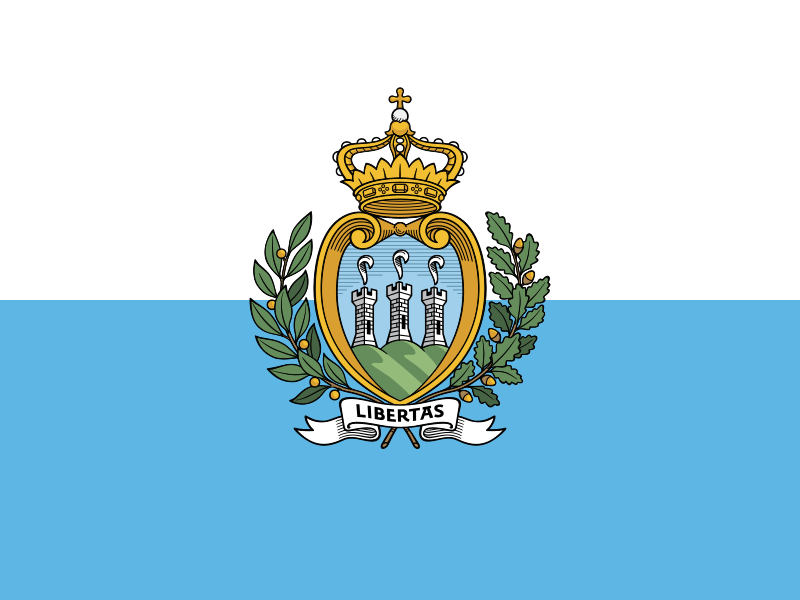
San Marino
Location Info
- Continent: Europe
- Country: San Marino
- Coordinates: 43.9424 , 12.4578
Trust Info
Verified Geographic Information
🌍 Continents



Overview
San Marino, officially the Republic of San Marino, is a landlocked microstate completely surrounded by Italy on the Italian Peninsula. Situated on the northeastern side of the Apennine Mountains, the country covers an area of just over 61 square kilometers. Its most prominent feature is Mount Titano, a limestone crag that hosts the capital city and its iconic medieval fortifications.
Founded in 301 AD by Saint Marinus, it is recognized as the world's oldest constitutional republic. Despite its small size, San Marino maintains a highly developed economy driven by tourism, banking, and manufacturing. The country is not a member of the European Union but uses the Euro as its official currency and maintains an open border with its sole neighbor, Italy.
Truth & Facts
| Total Area | 61.2 sq km |
| Highest Point | Mount Titano (739 m) |
| Total Population | 33,660 |
| Official Language | Italian |
| Government Type | Unitary Parliamentary Republic |
| Captains Regent Term | 6 Months |
| Founding Date | September 3, 301 AD |
| Independence Recognized | 1631 |
| Currency | Euro (€) |
| Major Industries | Tourism, Banking, Ceramics |
| Internet TLD | .sm |
| Literacy Rate | 99% |
| Life Expectancy | 85.4 years |
| Religion | Roman Catholicism |
| Annual Visitors | approx. 2 million |
| Climate Type | Humid Subtropical |
| Paved Roads | 292 km |
| 5G Coverage | National Coverage |
| Crime Rate | Extremely Low |
| Seats in Council | 60 |
| UN Membership | Since 1992 |
| Electricity Source | Imported (Enel Italy) |
| Arable Land | 16.7% |
| Main Broadcaster | San Marino RTV |
| Defense Responsibility | Italy |
📑 Table of Contents
Overview
San Marino is an enclaved microstate in Southern Europe, completely surrounded by Italy. It is situated on the northeastern side of the Apennine Mountains and covers an area of approximately 61 square kilometers. The country is known for its medieval architecture and its survival as an independent republic for over 1,700 years.
- Official Name: Republic of San Marino
- Status: Independent Sovereign State
- Capital City: City of San Marino
- Common Language: Italian
- Key Landmark: Mount Titano
History
According to tradition, San Marino was founded in 301 AD by Saint Marinus, a stonemason who fled religious persecution from the island of Rab. The community established itself on Mount Titano and developed as a city-state. Over centuries, San Marino successfully navigated the complex politics of the Italian Peninsula to maintain its autonomy.
| Period | Event |
|---|---|
| 301 AD | Traditional Foundation |
| 1600 AD | Adoption of Written Statutes |
| 1862 AD | Friendship Treaty with Italy |
Geography
The geography of San Marino is dominated by the Apennine mountain range. The terrain is rugged and lacks any major rivers or lakes. Mount Titano serves as the central focal point of the nation, providing a natural defensive position that historically protected the republic.
- Terrain: Rugged Mountains
- Landlocked: Yes (Enclave)
- Border Length: 39 km (total with Italy)
- Nature Reserves: Limited protected areas
Climate & Weather
San Marino enjoys a Mediterranean climate with continental influences. Summers are generally warm and sunny, while winters can be cool with occasional snowfall on the higher elevations of Mount Titano. Rainfall is moderate and distributed throughout the year.
| Season | Avg Temp | Conditions |
|---|---|---|
| Summer | 24°C - 30°C | Warm, Dry |
| Winter | 0°C - 7°C | Cool, Damp |
Population & Demographics
The demographic profile of San Marino is stable, with a high percentage of ethnic Sammarinese citizens. A significant minority of Italian residents also live in the country. The population density is high due to the small total land area.
- Ethnic Groups: Sammarinese, Italian
- Median Age: 46 years
- Urban Population: ~90%
- Religion: Roman Catholic (97%)
Culture & Lifestyle
The culture is deeply intertwined with Italian heritage but maintains distinct Sammarinese pride. Traditional arts, such as stone carving and pottery, remain valued. The lifestyle is generally quiet and family-oriented, reflecting the community's close-knit nature.
- Arts: Ceramics and Stamps
- Social Structure: Traditional Family Values
- Language: Standard Italian and Romagnol dialect
Festivals & Events
Events in San Marino often have a historical or religious focus. The most significant is the National Day, which commemorates the republic's founding. Medieval festivals featuring crossbow competitions and flag-waving are common in the summer.
- National Day: September 3rd
- Investiture of Captains Regent: April 1st and October 1st
- Medieval Days: Annual Summer Event
Food & Cuisine
The cuisine is very similar to the Romagna region of Italy. Local specialties include pasta, grilled meats, and unique desserts. The country is also known for producing its own wines and honey from the slopes of Mount Titano.
- Signature Cake: Torta Tre Monti
- Pasta: Strozzapreti and Cappelletti
- Local Product: Sammarinese Honey
Economy & Industries
San Marino has a diverse economy that relies on services, tourism, and small-scale manufacturing. It has no national debt and generally maintains a budget surplus. Banking remains a significant sector, although it has undergone major reforms recently.
- Primary Sector: Tourism and Banking
- Exports: Wine, Ceramics, Wood, Stamps
- Income Level: High-income economy
Cost of Living
The cost of living in San Marino is comparable to the surrounding Italian regions like Emilia-Romagna. While taxes are generally lower, prices for consumer goods and services are typical for Southern Europe. Housing remains the largest expense for residents.
| Item | Avg Cost |
|---|---|
| Rent (1BR) | €600 - €900 |
| Meal (Mid-range) | €20 - €40 |
Employment & Business
The labor market is healthy, with low unemployment rates compared to neighboring countries. Most businesses are small to medium-sized enterprises. Many residents work in the public sector or the tourism industry.
- Key Employers: Public Administration, Banks, Retail
- Unemployment: ~5-7%
- Business Environment: Favorable tax regulations
Real Estate & Housing
The real estate market in San Marino is limited by the country's geography. Most housing consists of apartments or traditional stone houses. Property ownership by non-citizens is subject to specific government regulations.
- Housing Type: Apartments and Medieval villas
- Market Trend: Stable demand
- Zoning: Strict environmental protections
Transportation & Connectivity
San Marino lacks an airport or railway system. Access is primarily by road from Rimini, Italy. A famous aerial tramway (Funivia) connects the lower town of Borgo Maggiore to the historical center on Mount Titano.
- Main Access: Highway SS72 (from Italy)
- Public Transport: Local bus network
- Unique Transport: San Marino Cable Car
Infrastructure & Utilities
Infrastructure is highly modernized. The country relies on Italy for most of its electricity and natural gas. Water management is a priority, as the country lacks significant internal aquifers.
- Energy: Primarily imported from Italy
- Digital: 100% Fiber Optic coverage
- Water: Managed by AASS
Education
The education system follows the Italian model closely. It includes primary, secondary, and higher education. The University of the Republic of San Marino offers specialized degrees in design and engineering.
- University: Università degli Studi della Repubblica di San Marino
- Language of Instruction: Italian
- Education Quality: High literacy standards
Healthcare
Healthcare is provided through a state-run system funded by social security contributions. The Ospedale di Stato (State Hospital) is the primary facility. The quality of care is high, contributing to the nation's long life expectancy.
- Main Hospital: State Hospital in Cailungo
- System Type: Universal Public Coverage
- Emergency Services: Integrated with Italian networks
Tourist Attractions
San Marino's attractions are largely historical and architectural. The three towers on Mount Titano are the most recognizable landmarks. The historic center of the capital is a UNESCO World Heritage site.
- Guaita Tower: The oldest and most famous
- Palazzo Pubblico: Seat of government
- Basilica di San Marino: Main religious building
Things to Do
Visitors often spend time exploring the narrow medieval streets and hiking along the ridgeline between the three towers. Duty-free shopping is a popular activity for those looking for luxury goods and unique collectibles like stamps and coins.
- Hiking: The Witches' Path (Passo delle Streghe)
- Shopping: Duty-free perfumes and spirits
- Museums: State Museum and Museum of Curiosities
Best Places to Visit
The capital city is the primary destination, but other 'castelli' (townships) offer local charm. Borgo Maggiore is an important commercial center at the foot of the mountain.
- San Marino City: Historical heart
- Borgo Maggiore: Market square
- Montegiardino: Smallest township
Travel Guide
Travelers usually enter via the Italian city of Rimini. No visa is required for those who can enter Italy. Walking is the best way to see the historical center, which is mostly pedestrianized.
- Entry Requirements: Open border with Italy
- Currency: Euro
- Getting Around: Walking and Cable Car
Nearby Places
Due to its location, several Italian cities and natural parks are within a short drive. The Adriatic coast is less than 20 kilometers away.
- Rimini, Italy: Coastal city (20 km)
- Bologna, Italy: Regional hub (130 km)
- San Leo, Italy: Neighboring historic fortress
Environment & Nature
The natural environment is characterized by limestone cliffs and Mediterranean forests. Small pockets of oak and pine forests provide habitat for local birds and small mammals. Preservation efforts are focused on the Mount Titano area.
- Dominant Flora: Oak, Pine, Olive trees
- Protected Areas: Mount Titano UNESCO site
- Geology: Marine calcarenite deposits
Government & Administration
The administration is divided into nine 'Castelli' (townships). Each has its own local council and 'Captain of the Castle'. The central government is located in the Palazzo Pubblico.
- Executive: Two Captains Regent
- Legislature: Grand and General Council
- Local Governance: Nine Municipalities
Safety & Public Services
San Marino is exceptionally safe with almost no violent crime. Public services are efficient and well-funded. Firefighting and emergency response are handled by specialized local corps.
- Police: Gendarmerie and Civil Police
- Emergency Number: 112 (European standard)
- Safety Level: Very High
Best Time to Visit
Late spring and early autumn offer the most comfortable weather for walking the steep streets of the capital. July and August are the busiest months for tourism, while winter is quiet but can be misty and cold.
- Peak Season: June to September
- Low Season: November to March
- Recommended: May or September
Local Business Directory
The business directory is centered on the tourism and retail sectors. Financial services and craft workshops also play a major role in the local economy. Most shops are located in the historic center or the commercial zones of Dogana.
- Major Zone: Dogana (Industrial/Commercial)
- Retail Sector: Duty-free stores
- Crafts: Ceramics and woodworking
General Information FAQs
Where is San Marino located?
San Marino is a landlocked enclave located in Southern Europe, entirely surrounded by Italy, near the Adriatic coast.
What is San Marino known for?
It is known for being the world's oldest republic, its medieval towers on Mount Titano, and its unique dual-head of state governance.
Why is San Marino famous?
It is famous for its long history of independence, its UNESCO World Heritage status, and for being one of the smallest countries in the world.
What country or region is San Marino part of?
San Marino is an independent sovereign state. It is not part of Italy, although it is surrounded by the Italian region of Emilia-Romagna and Marche.
What is the population of San Marino?
As of recent estimates, the population is approximately 33,660 people.
What languages are spoken in San Marino?
The official language is Italian. The Sammarinese dialect, a variety of Romagnol, is also spoken by locals.
What time zone is San Marino in?
San Marino is in the Central European Time zone (CET), which is UTC+1 (UTC+2 during daylight saving time).
What are the key facts about San Marino?
Key facts include its area of 61 sq km, its founding in 301 AD, its use of the Euro, and its nine administrative municipalities called Castelli.
What makes San Marino unique?
Its unique political system with two Captains Regent elected every six months and its continuous independence since the 4th century make it unique.
How large is San Marino in area?
The country covers an area of approximately 61.2 square kilometers (23.6 square miles).
History FAQs
What is the history of San Marino?
Founded by Saint Marinus in 301 AD, it developed from a monastic community into a free commune and eventually a sovereign republic.
When was San Marino established?
According to legend, it was established on September 3, 301 AD.
What major historical events happened in San Marino?
Key events include the occupation by Cardinal Alberoni in 1739, the recognition by Napoleon in 1797, and its neutrality during both World Wars.
Who were important historical figures from San Marino?
Saint Marinus is the most important. Antonio Onofri is also credited with saving the republic's independence during the Napoleonic era.
How has San Marino developed over time?
It evolved from a mountain refuge into a prosperous modern microstate with a focus on tourism and finance while preserving its medieval core.
Geography & Environment FAQs
What is the geography of San Marino?
The terrain consists of rugged mountains dominated by the limestone crags of Mount Titano.
What natural features surround San Marino?
It is surrounded by the rolling hills of the Italian regions of Romagna and Marche, leading to the nearby Adriatic Sea.
Are there mountains, rivers, or lakes near San Marino?
Mount Titano is the primary mountain. Several small streams like the Ausa and San Marino River flow near or through its borders.
What is the elevation of San Marino?
The elevation ranges from about 55 meters to the peak of Mount Titano at 739 meters.
What ecosystems exist around San Marino?
Ecosystems include Mediterranean scrubland and deciduous forests consisting of oak and chestnut trees.
Climate & Weather FAQs
What is the climate like in San Marino?
It has a Mediterranean climate with warm summers and cool, damp winters.
What is the average temperature in San Marino?
The average annual temperature is approximately 13°C (55°F).
What is the weather like throughout the year in San Marino?
Spring and autumn are mild; summer is warm and dry; winter can see snow and fog on Mount Titano.
Does San Marino experience extreme weather?
Extreme weather is rare, though heavy snowfall can occasionally occur in winter due to its elevation.
What is the best time of year to visit San Marino?
The best time to visit is from April to June or in September and October for pleasant temperatures and clear views.
Population & Society FAQs
What is the population density of San Marino?
The density is high, roughly 550 people per square kilometer.
What ethnic groups live in San Marino?
The vast majority are Sammarinese (~80%), followed by Italians (~19%).
What religions are practiced in San Marino?
Roman Catholicism is the predominant religion, followed by the vast majority of the population.
What is daily life like in San Marino?
Daily life is similar to small-town Italy, with a strong emphasis on community, family, and local traditions.
How diverse is the population of San Marino?
The population is relatively homogeneous, with most residents sharing Italian or Sammarinese ancestry.
Culture & Traditions FAQs
What cultural traditions are important in San Marino?
Traditions include the Crossbowmen’s Federation competitions and the elaborate investiture ceremony for the Captains Regent.
What festivals are celebrated in San Marino?
Major festivals include the Feast of Saint Marinus and National Day on September 3rd.
What cultural landmarks exist in San Marino?
The Three Towers (Guaita, Cesta, Montale) and the Palazzo Pubblico are the primary cultural landmarks.
What traditional clothing or customs are common in San Marino?
Historical costumes are often worn during medieval festivals and ceremonial state occasions.
What arts and crafts are associated with San Marino?
The country is famous for its ceramic pottery, philatelic stamps, and numismatic coins.
Food & Cuisine FAQs
What foods is San Marino known for?
It is known for Torta Tre Monti, fresh pasta, and Titano wine.
What traditional dishes originate from San Marino?
Dishes include Fagioli con le Cotiche (bean and pork rind soup) and Nidi di Rondine (baked pasta rolls).
What are the best restaurants in San Marino?
Most highly-rated restaurants are found in the City of San Marino, offering views over the Italian hills.
What local ingredients are commonly used in San Marino cuisine?
Common ingredients include wheat, olives, honey, and local cheeses.
What food markets or street foods are popular in San Marino?
The Borgo Maggiore market is a traditional hub for fresh local produce and cheeses.
Economy & Business FAQs
What are the main industries in San Marino?
The main industries are tourism, banking, electronics, and ceramics.
What economic activities drive the economy of San Marino?
The economy is driven by services, retail, and manufacturing exports to Italy.
What businesses operate in San Marino?
Many small and medium enterprises operate in manufacturing, alongside large retail chains in the Dogana area.
Is San Marino an important economic center?
It is a significant regional center for banking and duty-free shopping in the Italian peninsula.
What are the major exports or products from San Marino?
Exports include machinery, chemical products, wine, and spirits.
Employment & Jobs FAQs
What job opportunities are available in San Marino?
Most jobs are found in the hospitality, retail, and financial services sectors.
What are the major employers in San Marino?
The public sector is the largest employer, followed by banking institutions and industrial firms in Dogana.
What skills are in demand in San Marino?
Skills in tourism management, financial services, and specialized manufacturing are in demand.
Is San Marino a good place to work?
Yes, it offers high wages, a stable environment, and a strong social safety net.
What is the unemployment rate in San Marino?
The unemployment rate typically stays below 8%.
Cost of Living FAQs
Is San Marino expensive to live in?
It is generally expensive, similar to the costs in Northern Italy.
What is the average cost of living in San Marino?
Estimated at €1,500 - €2,000 per month for a single person including rent.
How much does housing cost in San Marino?
Rental prices range from €600 for a studio to €1,200+ for larger apartments.
What are average food and utility costs in San Marino?
Utility costs are roughly €150-€200 per month, while food prices are typical for the Eurozone.
Is San Marino affordable compared to nearby cities?
It is comparable to Rimini but slightly cheaper in terms of taxes for residents.
Housing & Real Estate FAQs
What types of housing are available in San Marino?
Availability consists mostly of modern apartments and historic stone residences.
What is the average home price in San Marino?
Prices vary greatly, but centrally located historic properties are highly valued.
Is it better to rent or buy property in San Marino?
Buying is often preferred for long-term residents due to the small, stable market.
Which neighborhoods are popular in San Marino?
The City of San Marino and Borgo Maggiore are the most sought-after locations.
How has the property market changed in San Marino?
Prices have remained stable with limited new construction due to land constraints.
Transportation FAQs
How do you get to San Marino?
Most visitors arrive by car or bus from Rimini, Italy.
What is the nearest airport to San Marino?
Federico Fellini International Airport (RMI) in Rimini is the closest.
Does San Marino have railway connections?
No, the railway system was destroyed in WWII and never rebuilt. There is a historic train museum.
How reliable is public transportation in San Marino?
The local bus system and the cable car to the capital are reliable.
What major highways or roads connect to San Marino?
The SS72 dual carriageway connects San Marino directly to the A14 motorway in Italy.
Education FAQs
What schools are located in San Marino?
Each 'Castello' has primary schools, and there are centralized secondary schools.
Are there universities in San Marino?
Yes, the University of the Republic of San Marino (UNIRSM).
What is the literacy rate in San Marino?
The literacy rate is nearly 99%.
What educational opportunities exist in San Marino?
San Marino offers professional training and academic degrees recognized in Italy and the EU.
Is San Marino a good place for students?
It is safe and quiet, though many students go to nearby Italian cities like Bologna for specialized studies.
Healthcare FAQs
What hospitals are available in San Marino?
The San Marino State Hospital (Ospedale di Stato) is the main facility.
Are there emergency medical services in San Marino?
Yes, comprehensive emergency services are available through the 118 or 112 numbers.
What healthcare facilities exist in San Marino?
The country has the state hospital and several health centers distributed in the Castelli.
Is healthcare affordable in San Marino?
It is free or highly subsidized for residents through the ISS (Istituto per la Sicurezza Sociale).
Are specialized medical services available in San Marino?
General and some specialized services are available; very rare cases are referred to Italian hospitals.
Tourism & Travel FAQs
What are the top tourist attractions in San Marino?
The Three Towers, the Basilica, and the Palazzo Pubblico are the top sites.
What are the best things to do in San Marino?
Hiking between towers, visiting the State Museum, and shopping are popular activities.
Is San Marino worth visiting?
Yes, for its unique history, medieval atmosphere, and stunning panoramic views.
What landmarks should visitors see in San Marino?
The First Tower (Guaita) and the Liberty Square (Piazza della Libertà) are essential.
How many days should tourists spend in San Marino?
One full day is enough to see the main sights, but two days allow for a more relaxed experience.
Nearby Places FAQs
What places are near San Marino worth visiting?
San Leo, Rimini, and the Gradara Castle are all nearby.
What cities or towns are close to San Marino?
Rimini, Pesaro, and Urbino are the closest significant cities in Italy.
What natural attractions are near San Marino?
The Monte Carpegna regional park and the Adriatic beaches are close by.
What day trips can be taken from [Location]?
Day trips to the Renaissance city of Urbino or the beaches of Riccione are popular.
What famous destinations are within reach of San Marino?
The city of Florence is approximately 3 hours away by car.
Safety FAQs
Is San Marino safe to live in?
It is considered one of the safest countries in the world.
Is San Marino safe for tourists?
Yes, tourists face very little risk beyond common sense travel precautions.
What is the crime rate in San Marino?
The crime rate is exceptionally low.
What emergency services operate in San Marino?
Police (Gendarmeria), Fire (Vigili del Fuoco), and Ambulance services.
What safety tips should visitors follow in San Marino?
Wear comfortable shoes for steep streets and be mindful of your belongings in crowded tourist spots.
Lifestyle & Living FAQs
Is San Marino a good place to live?
It offers high quality of life, clean air, and high security.
What recreational activities are available in San Marino?
Hiking, cycling, archery, and traditional local sports are popular.
Is San Marino family-friendly?
Extremely family-friendly due to the safety and abundance of parks.
What outdoor activities are popular in San Marino?
Walking the trails of Mount Titano is the most popular activity.
What makes life enjoyable in San Marino?
The blend of modern amenities with a peaceful, historic atmosphere.
Practical Information FAQs
What travel tips should visitors know about San Marino?
Parking is located outside the historic center; use the Funivia for a scenic entry.
What local customs should visitors respect in San Marino?
Dress modestly in churches and avoid loud behavior in the historical residential areas.
How accessible is San Marino for international visitors?
Highly accessible via Italy; no internal border checks exist.
What services are available for tourists in San Marino?
Tourist offices, multi-language guides, and specialized tour operators are available.
What important information should travelers know before visiting San Marino?
The country is not in the EU but in the Schengen Area via Italy; Euro is the currency.