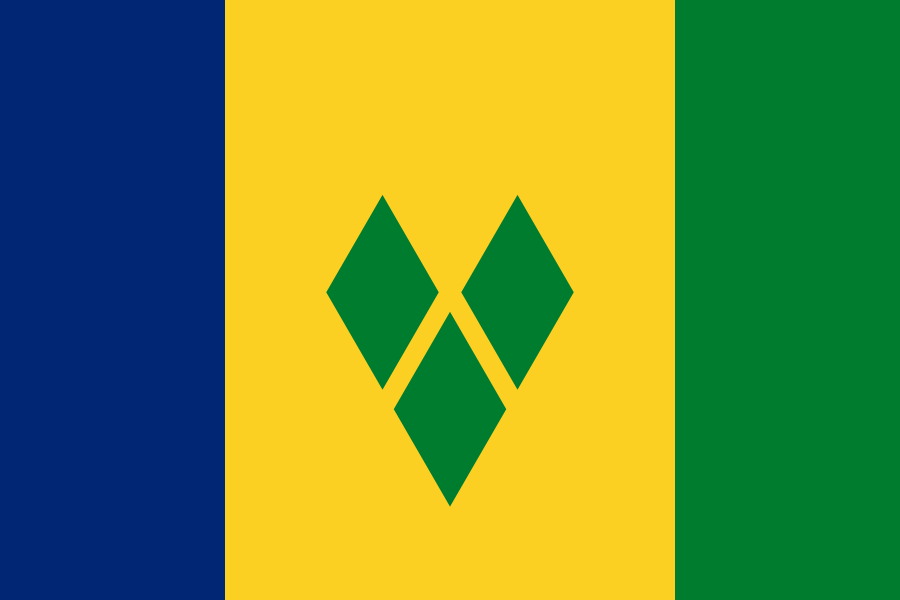
Saint Vincent and the Grenadines
Location Info
- Continent: North America
- Country: Saint Vincent and the Grenadines
- Coordinates: 13.25 , -61.2
Trust Info
Verified Geographic Information
🌍 Continents

Overview
Saint Vincent and the Grenadines is an archipelagic nation located in the Lesser Antilles of the eastern Caribbean Sea. The country comprises the main volcanic island of Saint Vincent and the northern two-thirds of the Grenadines, a chain of 32 smaller islands and cays. Its geography is defined by the rugged, mountainous terrain of Saint Vincent, dominated by the active volcano La Soufrière, which rises to 1,234 meters. The Grenadines, in contrast, are lower-lying islands known for their extensive coral reefs and white-sand beaches.
Historically, the islands were a site of intense resistance by the indigenous Carib people against European colonization. Following periods of alternating French and British rule, the nation became a British colony before gaining full independence in 1979. Today, Saint Vincent and the Grenadines is a parliamentary democracy and a member of the Commonwealth. Its economy transitionally relies on agriculture, specifically banana and arrowroot production, alongside a growing tourism sector centered on yachting and eco-adventures.
Truth & Facts
| Total Area | 389 sq km |
| Highest Point | La Soufrière (1,234 m) |
| Population | 104,332 (2021 est.) |
| Official Language | English |
| Capital | Kingstown |
| Government Type | Parliamentary Democracy |
| Independence | October 27, 1979 |
| Currency | East Caribbean Dollar (XCD) |
| Major Export | Bananas |
| Major Airport | Argyle International Airport |
| Literacy Rate | 96% |
| Main Hospital | Milton Cato Memorial Hospital |
| National Dish | Roasted Breadfruit and Fried Jackfish |
| Top Attraction | Tobago Cays Marine Park |
| Climate Type | Tropical Maritime |
| Inter-island Travel | Ferries and Water Taxis |
| Internet TLD | .vc |
| Police Force | Royal Saint Vincent and the Grenadines Police Force |
| Subdivisions | 6 Parishes |
| Regional Blocks | CARICOM, OECS |
| Power Provider | VINLEC |
| GDP Growth | Approximately 5% (2023) |
| National Bird | St. Vincent Parrot (Amazona guildingii) |
| Final Court of Appeal | Judicial Committee of the Privy Council |
📑 Table of Contents
Overview
Saint Vincent and the Grenadines is an island nation in the Caribbean's Windward Islands. It consists of the main island, Saint Vincent, and a chain of smaller islands known as the Grenadines. The capital, Kingstown, serves as the primary port and commercial center.
- Official Name: Saint Vincent and the Grenadines
- Capital: Kingstown
- Currency: East Caribbean Dollar (XCD)
- Motto: Pax et Justitia (Peace and Justice)
- National Bird: Saint Vincent Parrot
History
The islands were originally inhabited by Ciboney, Arawak, and Carib peoples. During the colonial era, Saint Vincent was one of the last islands to be settled by Europeans due to Carib resistance. African people who escaped slavery or were shipwrecked integrated with the Caribs, forming the Garifuna (Black Carib) population.
| Period | Event |
|---|---|
| 1719 | French settlers begin cultivation |
| 1763 | Ceded to Britain via Treaty of Paris |
| 1795 | Second Carib War |
| 1979 | Full Independence achieved |
Geography
The main island of Saint Vincent is of volcanic origin and very mountainous. It features the active volcano La Soufrière in the north. The Grenadines to the south are coral and limestone formations with beautiful beaches and reefs.
- Main Island: Saint Vincent (344 sq km)
- Total Islands: 32
- Highest Peak: La Soufrière (1,234 m)
- Key Valleys: Mesopotamia Valley
- Coastal Features: Black sand beaches (volcanic) and white sand beaches (coral)
Climate and Weather
The country has a tropical maritime climate with two distinct seasons. The dry season runs from January to May, while the rainy season lasts from June to December. Temperatures are consistently warm throughout the year.
- Average Temperature: 27°C (81°F)
- Rainy Season: June to December
- Hurricane Risk: High (Atlantic Hurricane Season)
- Annual Rainfall: 1,500mm (coastal) to 3,800mm (mountains)
Population and Demographics
The population is predominantly of African descent, reflecting the history of the transatlantic slave trade. Significant minorities include people of mixed, East Indian, European (Portuguese), and indigenous Carib ancestry.
| Group | Percentage (Approx) |
|---|---|
| African Descent | 66% |
| Mixed Heritage | 19% |
| East Indian | 6% |
| European/Carib | 9% |
Culture and Lifestyle
Vincentian culture is a fusion of African, European, and indigenous influences. Music plays a central role in daily life, with Calypso, Soca, and Reggae being the most popular genres. Community ties are strong, and the lifestyle is generally relaxed.
- Official Language: English
- Vernacular: Vincentian Creole
- Main Religion: Christianity (Anglican, Methodist, Catholic)
- National Sport: Cricket
Festivals and Events
The most significant cultural event is Vincy Mas, the annual carnival held in June and July. It features street parades, steel pan music, and colorful costumes. Other unique events include the Nine Mornings Festival before Christmas.
- Vincy Mas: June/July Carnival
- Nine Mornings: Unique pre-Christmas tradition
- Bequia Easter Regatta: Famous sailing event
- Independence Day: October 27
Food and Cuisine
Vincentian cuisine emphasizes fresh seafood and locally grown root crops (ground provisions). The national dish is roasted breadfruit served with fried jackfish. Callaloo soup is another staple popular across the islands.
- Staples: Breadfruit, Dasheen, Yam, Sweet Potato
- Seafood: Conch, Lobster, Jackfish
- Popular Drinks: Rum punch, Hairoun Beer
- Street Food: Bakes and saltfish
Economy and Industries
The economy is primarily driven by agriculture and tourism. Bananas were historically the leading export, but the service sector, particularly high-end tourism in the Grenadines, has grown in importance.
- Main Exports: Bananas, Arrowroot, Root crops
- Key Service: Tourism (Yachting and Luxury Resorts)
- Regional Hub: Kingstown deepwater port
- Growth Area: Medical Marijuana industry (established 2018)
Cost of Living
The cost of living is moderate for the region. Many consumer goods are imported, which can increase prices for electronics and specialty foods. Local produce and public transportation remain relatively affordable.
- Currency: East Caribbean Dollar (fixed at 2.70 to 1 USD)
- Vat Rate: 16% on most goods
- Housing: High variability between Kingstown and luxury islands like Mustique
Employment and Business
The largest employers are the government, the agricultural sector, and the hospitality industry. The country has worked to diversify its economy by attracting foreign investment in infrastructure and tourism.
- Labor Force: Approx. 57,000
- Primary Sectors: Agriculture, Tourism, Construction
- Investment Incentives: Tax holidays for international entities
Real Estate and Housing
Real estate in Saint Vincent ranges from traditional wooden homes to modern concrete structures. The Grenadines (Mustique, Canouan) host some of the most expensive and exclusive private real estate in the world.
- Market Type: Highly stratified
- Foreign Ownership: Requires an Alien Land Holding License
- Kingstown Area: High demand for commercial and rental property
Transportation and Connectivity
International access was significantly improved with the opening of Argyle International Airport. Domestic travel between islands relies heavily on a network of ferries and small aircraft strips on islands like Bequia and Union Island.
- International Airport: Argyle (SVD)
- Ferry Services: Regular routes between Kingstown and the Grenadines
- Roads: Left-hand drive system
- Public Transit: Minibuses (vans) on fixed routes
Infrastructure and Utilities
Infrastructure is well-developed on the main island, though volcanic activity occasionally disrupts services. Electricity is provided by VINLEC, primarily through diesel generators and some hydro-power.
- Electricity: 230V, 50Hz (UK-style plugs)
- Water: Sourced from mountain springs and rain catchment
- Telecoms: Digicel and Flow are the main providers
Education
Education is free and compulsory for children between the ages of 5 and 16. The literacy rate is high, and the government places a strong emphasis on secondary and tertiary vocational training.
- Main Institution: St. Vincent and the Grenadines Community College
- Structure: Primary (7 years), Secondary (5 years), Tertiary
- Medical Schools: Several offshore medical universities are located here
Healthcare
Healthcare is provided through a network of district clinics and the main referral hospital in Kingstown. While basic services are accessible, specialized treatment often requires travel to larger regional islands.
- Main Hospital: Milton Cato Memorial
- System: Publicly funded with private options
- Emergency: 999 or 911 for ambulance
Tourist Attractions
The country offers diverse attractions from volcanic hiking to luxury sailing. The Tobago Cays Marine Park is the crown jewel of the Grenadines, offering pristine waters for snorkeling with sea turtles.
- La Soufrière Volcano: Hiking trail
- Botanical Gardens: Established 1765 (Oldest in Western Hemisphere)
- Fort Charlotte: Historic British fortress overlooking Kingstown
- Dark View Falls: Twin waterfalls
Things to Do
Popular activities center on the natural environment. Sailing is the definitive way to experience the Grenadines, while the main island offers rainforest hikes and bird watching for the endemic parrot.
- Sailing: Island hopping the Grenadines
- Hiking: Vermont Nature Trail
- Snorkeling: Tobago Cays and Bequia
- Diving: Numerous reef and wreck sites
Best Places to Visit
Each island in the chain has a distinct character. Bequia is known for its seafaring tradition, while Mustique is an exclusive retreat for high-profile individuals. The Mesopotamia Valley on Saint Vincent is known as the 'Breadbasket of the Caribbean'.
- Kingstown: History and shopping
- Bequia: Admiralty Bay and Turtle Sanctuary
- Mustique: Private luxury island
- Canouan: Pristine beaches and golf
Travel Guide
Visiting Saint Vincent and the Grenadines requires minimal visa effort for many nationalities. It is best to fly into Argyle International and use ferries for island exploration. Cash (XCD or USD) is widely used outside major hotels.
- Entry: Passport valid for 6 months usually required
- Currency: EC Dollar is best for local markets
- Tipping: 10-15% is customary
Nearby Places
Situated in the heart of the Windward Islands, the nation is close to other major Caribbean destinations. These islands share similar histories and cultures but offer different geographic experiences.
- Saint Lucia: 34 km to the north
- Grenada: 120 km to the south
- Barbados: 160 km to the east
- Trinidad and Tobago: South of the chain
Environment and Nature
The nation is home to lush rainforests and diverse marine life. Conservation efforts focus on the protection of the Saint Vincent Parrot and the preservation of the coral reefs in the Tobago Cays.
- Flora: Hibiscus, Breadfruit, Ferns
- Fauna: Whales, Dolphins, Sea Turtles
- Protected Areas: Tobago Cays Marine Park
- Threats: Volcanic ash and hurricanes
Government and Administration
The administration follows the Westminster model. The Prime Minister is the head of government, and the British Monarch is the head of state, represented by a Governor-General.
- Legislature: House of Assembly (Unicameral)
- Judiciary: Based on English Common Law
- Subdivisions: Saint George, Saint Charlotte, Saint Andrew, Saint David, Saint Patrick, and the Grenadines
Safety and Public Services
Saint Vincent and the Grenadines is generally safe, though standard precautions against petty crime should be taken in crowded areas. Public services like firefighting and policing are centered in major towns.
- Emergency Number: 911 / 999
- Coastal Safety: Coast Guard patrol
- Natural Disasters: NEMO (National Emergency Management Organisation)
Best Time to Visit
The ideal time to visit is during the dry season between February and May. This period offers the most sunshine and the lowest risk of rain. Sailing conditions are also peak during these months.
- High Season: December to April
- Shoulder Season: May to June
- Hurricane Season: July to November
Local Business Directory
Business activity is centered in Kingstown and the larger Grenadine islands. Key commercial entities include banks, hardware stores, and agricultural processing facilities.
- Banking: Republic Bank, Bank of SVG
- Utilities: VINLEC, Central Water and Sewerage Authority
- Supermarkets: Massy Stores SVG
General Information FAQs
Where is Saint Vincent and the Grenadines located?
Saint Vincent and the Grenadines is located in the southeast Windward Islands of the Lesser Antilles in the Caribbean Sea. It lies north of Grenada, south of Saint Lucia, and west of Barbados.
What is Saint Vincent and the Grenadines known for?
The country is known for its volcanic landscapes, the active La Soufrière volcano, lush rainforests, and the world-class sailing waters of the Grenadines, particularly the Tobago Cays Marine Park.
Why is Saint Vincent and the Grenadines famous?
It is famous for its stunning natural beauty, high-end private islands like Mustique, the historic 1765 Botanical Gardens, and its role as a filming location for parts of the 'Pirates of the Caribbean' movie franchise.
What country or region is Saint Vincent and the Grenadines part of?
It is an independent sovereign state in the Caribbean region and a member of the Commonwealth of Nations.
What is the population of Saint Vincent and the Grenadines?
The estimated population is approximately 104,332 based on recent World Bank data.
What languages are spoken in Saint Vincent and the Grenadines?
English is the official language. Vincentian Creole is the most common vernacular spoken in daily life.
What time zone is Saint Vincent and the Grenadines in?
The country is in the Atlantic Standard Time (AST) zone, which is UTC-4. It does not observe Daylight Saving Time.
What are the key facts about Saint Vincent and the Grenadines?
Key facts include: the capital is Kingstown, the currency is the East Caribbean Dollar, and the country consists of 32 islands with Saint Vincent being the largest.
What makes Saint Vincent and the Grenadines unique?
Its unique features include being one of the world's few producers of arrowroot, having a mix of black and white sand beaches, and a history of successful Carib resistance to colonization.
How large is Saint Vincent and the Grenadines in area?
The total land area is approximately 389 square kilometers (150 square miles).
History FAQs
What is the history of Saint Vincent and the Grenadines?
The history involves early settlement by Amerindians, resistance to European colonization, the development of the Garifuna people, British colonial rule, and independence in 1979.
When was Saint Vincent and the Grenadines established?
While inhabited for centuries, it became a British colony in 1763 and gained its independence as a nation on October 27, 1979.
What major historical events happened in Saint Vincent and the Grenadines?
Major events include the Carib Wars (1772 and 1795), the eruption of La Soufrière in 1902 and 2021, and the attainment of independence in 1979.
Who were important historical figures from Saint Vincent and the Grenadines?
Chief Joseph Chatoyer is the national hero, recognized for leading the Garifuna resistance against the British in the late 18th century.
How has Saint Vincent and the Grenadines developed over time?
It has transitioned from a plantation-based colonial economy to a diversified economy focusing on small-scale agriculture, international finance, and high-end tourism.
Geography & Environment FAQs
What is the geography of Saint Vincent and the Grenadines?
The geography is volcanic and rugged on the main island, while the Grenadines are smaller islands of volcanic and coral origin surrounded by reefs.
What natural features surround Saint Vincent and the Grenadines?
It is surrounded by the Caribbean Sea to the west and the Atlantic Ocean to the east, with deep-sea trenches and coral reefs nearby.
Are there mountains, rivers, or lakes near Saint Vincent and the Grenadines?
Saint Vincent is mountainous, featuring the Richmond Peak and La Soufrière. There are numerous short, swift streams and a crater lake within the volcano.
What is the elevation of Saint Vincent and the Grenadines?
The elevation ranges from sea level at the coast to 1,234 meters (4,048 feet) at the summit of La Soufrière.
What ecosystems exist around Saint Vincent and the Grenadines?
Ecosystems include tropical rainforests, mangroves, seagrass beds, and extensive coral reef systems.
Climate & Weather FAQs
What is the climate like in Saint Vincent and the Grenadines?
It has a tropical maritime climate with hot, humid conditions and steady trade winds.
What is the average temperature in Saint Vincent and the Grenadines?
The average daily temperature is roughly 27°C (81°F) year-round.
What is the weather like throughout the year in Saint Vincent and the Grenadines?
It is sunny and drier from January to May, and more humid with frequent tropical showers from June to December.
Does Saint Vincent and the Grenadines experience extreme weather?
Yes, it is vulnerable to hurricanes during the Atlantic season and volcanic eruptions from La Soufrière.
What is the best time of year to visit Saint Vincent and the Grenadines?
The best time to visit is during the dry season, from February to April, when rainfall is at its lowest.
Population & Society FAQs
What is the population density of Saint Vincent and the Grenadines?
The population density is high, approximately 280-300 persons per square kilometer, mostly concentrated on the main island.
What ethnic groups live in Saint Vincent and the Grenadines?
The groups include African descent (66%), Mixed (19%), East Indian (6%), Portuguese/European (4%), and Carib/Amerindian (2%).
What religions are practiced in Saint Vincent and the Grenadines?
Christianity is dominant, with large Anglican, Methodist, Pentecostal, and Catholic communities.
What is daily life like in Saint Vincent and the Grenadines?
Life is centered on agriculture, fishing, and community gatherings, characterized by a slow pace and deep religious and social traditions.
How diverse is the population of Saint Vincent and the Grenadines?
The population is quite diverse for its size, with influences from Africa, Europe, India, and the indigenous Caribbean people.
Culture & Traditions FAQs
What cultural traditions are important in Saint Vincent and the Grenadines?
Important traditions include the Nine Mornings Festival, carnival celebrations, and the seafaring customs of the Grenadine islands.
What festivals are celebrated in Saint Vincent and the Grenadines?
Major festivals include Vincy Mas (Carnival), Fisherman's Day, Independence Day, and the Bequia Regatta.
What cultural landmarks exist in Saint Vincent and the Grenadines?
Landmarks include Fort Charlotte, St. Mary’s Cathedral of the Assumption, and the Botanical Gardens in Kingstown.
What traditional clothing or customs are common in Saint Vincent and the Grenadines?
Modern Western-style clothing is standard, but traditional bright-colored attire is common during festivals and religious ceremonies.
What arts and crafts are associated with Saint Vincent and the Grenadines?
Associations include boat building in Bequia, straw work, pottery, and vibrant steel pan music.
Food & Cuisine FAQs
What foods is Saint Vincent and the Grenadines known for?
It is known for arrowroot starch, breadfruit, bananas, and a wide variety of tropical fruits.
What traditional dishes originate from Saint Vincent and the Grenadines?
Traditional dishes include Roasted Breadfruit and Fried Jackfish, Callaloo soup, and Buljol (salted fish salad).
What are the best restaurants in Saint Vincent and the Grenadines?
Highly-rated spots include Jack's Bar in Bequia, Basil’s Bar in Mustique, and local eateries in Kingstown's market area.
What local ingredients are commonly used in Saint Vincent and the Grenadines cuisine?
Ingredients include dasheen, eddoes, yams, coconuts, hot peppers, and fresh seafood like conch and lobster.
What food markets or street foods are popular in Saint Vincent and the Grenadines?
The Kingstown Central Market is the main hub. Popular street foods include 'bakes', fish cakes, and roasted corn.
Economy & Business FAQs
What are the main industries in Saint Vincent and the Grenadines?
The main industries are agriculture (bananas), tourism, and the offshore financial services sector.
What economic activities drive the economy of Saint Vincent and the Grenadines?
Driving activities include agricultural exports, yachting services, construction, and government services.
What businesses operate in Saint Vincent and the Grenadines?
Businesses range from agricultural cooperatives to international luxury hotel chains and local manufacturing of starch and flour.
Is Saint Vincent and the Grenadines an important economic center?
It is a regional center within the OECS for agricultural production and has a growing niche in luxury Caribbean tourism.
What are the major exports or products from Saint Vincent and the Grenadines?
Major exports include bananas, arrowroot flour, eddoes, dasheen, and packaged flour.
Employment & Jobs FAQs
What job opportunities are available in Saint Vincent and the Grenadines?
Opportunities are primarily in the public sector, agriculture, construction, and the tourism industry.
What are the major employers in Saint Vincent and the Grenadines?
The Government of SVG is the largest employer, followed by major tourism resorts and agricultural companies.
What skills are in demand in Saint Vincent and the Grenadines?
Skills in hospitality, healthcare, construction trades, and agricultural technology are currently in demand.
Is Saint Vincent and the Grenadines a good place to work?
It offers a stable environment and island lifestyle, though professional wages are lower than in high-income nations.
What is the unemployment rate in Saint Vincent and the Grenadines?
Historically, unemployment has fluctuated around 18-20%, with higher rates among the youth population.
Cost of Living FAQs
Is Saint Vincent and the Grenadines expensive to live in?
It is moderately expensive due to the high cost of imported goods, but local food and housing can be affordable compared to other Caribbean islands.
What is the average cost of living in Saint Vincent and the Grenadines?
A single person may spend between $1,200 and $1,500 USD per month for a standard lifestyle, including rent.
How much does housing cost in Saint Vincent and the Grenadines?
Rent for a one-bedroom apartment in Kingstown averages $500-$800 USD, while luxury villas in the Grenadines can cost thousands per month.
What are average food and utility costs in Saint Vincent and the Grenadines?
Electricity and internet are relatively high; groceries for one person cost approximately $300-$400 USD monthly.
Is Saint Vincent and the Grenadines affordable compared to nearby cities?
It is generally more affordable than Barbados or Saint Lucia but more expensive than mainland South American nations.
Housing & Real Estate FAQs
What types of housing are available in Saint Vincent and the Grenadines?
Available types include urban apartments, suburban concrete family homes, and rural wooden cottages.
What is the average home price in Saint Vincent and the Grenadines?
Average prices for a modest home range from $150,000 to $300,000 USD, though Grenadine properties go much higher.
Is it better to rent or buy property in Saint Vincent and the Grenadines?
Renting is better for short-term stays, but buying can be a stable long-term investment for those with an Alien Land Holding License.
Which neighborhoods are popular in Saint Vincent and the Grenadines?
Popular areas include Villa, Arnos Vale, and Ratho Mill on Saint Vincent, and Admiralty Bay on Bequia.
How has the property market changed in Saint Vincent and the Grenadines?
The market has seen increased international interest since the opening of the international airport in 2017.
Transportation FAQs
How do you get to Saint Vincent and the Grenadines?
International visitors usually fly into Argyle International Airport (SVD) or arrive by cruise ship or private yacht.
What is the nearest airport to Saint Vincent and the Grenadines?
Argyle International Airport (SVD) is the primary gateway, located on the main island of Saint Vincent.
Does Saint Vincent and the Grenadines have railway connections?
No, there are no railways in Saint Vincent and the Grenadines.
How reliable is public transportation in Saint Vincent and the Grenadines?
Minibuses are very frequent and reliable on the main island, while ferries between islands are scheduled but less frequent.
What major highways or roads connect to Saint Vincent and the Grenadines?
The Windward and Leeward Highways are the two main roads that circle the island of Saint Vincent.
Education FAQs
What schools are located in Saint Vincent and the Grenadines?
There are over 60 primary schools and 26 secondary schools distributed across the islands.
Are there universities in Saint Vincent and the Grenadines?
The St. Vincent and the Grenadines Community College is the primary local tertiary institution, along with several private medical schools.
What is the literacy rate in Saint Vincent and the Grenadines?
The literacy rate is high, estimated at approximately 96% for the adult population.
What educational opportunities exist in Saint Vincent and the Grenadines?
Opportunities include academic tracks, vocational training in agriculture and tourism, and offshore medical education.
Is Saint Vincent and the Grenadines a good place for students?
It is a safe and focused environment for students, particularly those in the medical field or local vocational studies.
Healthcare FAQs
What hospitals are available in Saint Vincent and the Grenadines?
The main facility is the Milton Cato Memorial Hospital, with smaller hospitals in Georgetown and the Grenadines.
Are there emergency medical services in Saint Vincent and the Grenadines?
Yes, there are ambulance services and a Coast Guard that handles medical evacuations from the Grenadines.
What healthcare facilities exist in Saint Vincent and the Grenadines?
Facilities include district health centers, public hospitals, and several private dental and medical clinics.
Is healthcare affordable in Saint Vincent and the Grenadines?
Public healthcare is heavily subsidized for citizens, while private care and non-residents pay moderate fees.
Are specialized medical services available in Saint Vincent and the Grenadines?
Limited specialized services are available; complex cases often require travel to Barbados, Trinidad, or the US.
Tourism & Travel FAQs
What are the top tourist attractions in Saint Vincent and the Grenadines?
Top sites include the Tobago Cays, La Soufrière Volcano, the Botanical Gardens, and Admiralty Bay in Bequia.
What are the best things to do in Saint Vincent and the Grenadines?
Popular activities include sailing, scuba diving, hiking the Vermont Nature Trail, and exploring historic forts.
Is Saint Vincent and the Grenadines worth visiting?
Yes, it offers an authentic and relatively uncrowded Caribbean experience with diverse landscapes and world-class sailing.
What landmarks should visitors see in Saint Vincent and the Grenadines?
Must-see landmarks include Fort Charlotte, the Dark View Falls, and the 'Pirates of the Caribbean' movie set at Wallilabou Bay.
How many days should tourists spend in Saint Vincent and the Grenadines?
To experience both the main island and the Grenadines, a minimum of 7 to 10 days is recommended.
Nearby Places FAQs
What places are near Saint Vincent and the Grenadines worth visiting?
Nearby destinations include the Pitons of Saint Lucia and the spice markets of Grenada.
What cities or towns are close to Saint Vincent and the Grenadines?
Castries (Saint Lucia) and St. George's (Grenada) are the closest major regional capital cities.
What natural attractions are near Saint Vincent and the Grenadines?
The nearby island of Saint Lucia features the world-famous Pitons and a drive-in volcano.
What day trips can be taken from Saint Vincent and the Grenadines?
Day trips via boat are popular between the islands of Bequia, Mustique, and the Tobago Cays.
What famous destinations are within reach of Saint Vincent and the Grenadines?
Barbados is a short flight away, offering luxury shopping and international flight connections.
Safety FAQs
Is Saint Vincent and the Grenadines safe to live in?
It is generally considered safe, with a close-knit community feel, though standard urban safety measures apply in Kingstown.
Is Saint Vincent and the Grenadines safe for tourists?
Yes, it is safe for tourists, particularly in the resort areas and the smaller Grenadine islands.
What is the crime rate in Saint Vincent and the Grenadines?
The crime rate is low compared to larger Caribbean nations, with most incidents being non-violent petty theft.
What emergency services operate in Saint Vincent and the Grenadines?
Police, Fire, and Health services are the primary emergency responders.
What safety tips should visitors follow in Saint Vincent and the Grenadines?
Visitors should avoid isolated areas at night, lock their accommodations, and be aware of current volcanic monitoring alerts.
Lifestyle & Living FAQs
Is Saint Vincent and the Grenadines a good place to live?
It is ideal for those seeking a quiet, nature-oriented lifestyle in a tropical setting with a friendly local culture.
What recreational activities are available in Saint Vincent and the Grenadines?
Recreation includes cricket, football, sailing, fishing, and community cultural festivals.
Is Saint Vincent and the Grenadines family-friendly?
Yes, the culture is very family-oriented and there are many outdoor activities suitable for children.
What outdoor activities are popular in Saint Vincent and the Grenadines?
Hiking, beach outings, snorkeling, and traditional boat racing are the most popular outdoor activities.
What makes life enjoyable in Saint Vincent and the Grenadines?
The combination of pristine natural beauty, year-round warm weather, and a laid-back, welcoming community makes life enjoyable.
Practical Information FAQs
What travel tips should visitors know about Saint Vincent and the Grenadines?
Know that driving is on the left, camouflage clothing is illegal for civilians, and some islands have no ATMs.
What local customs should visitors respect in Saint Vincent and the Grenadines?
Visitors should dress modestly in towns, always ask before taking photos of locals, and use polite greetings ('Good Morning/Afternoon').
How accessible is Saint Vincent and the Grenadines for international visitors?
It is accessible via direct flights from major hubs like Miami, New York, Toronto, and London into Argyle International.
What services are available for tourists in Saint Vincent and the Grenadines?
Services include yacht chartering, guided eco-tours, scuba schools, and high-end resort hospitality.
What important information should travelers know before visiting?
Travelers should check the status of La Soufrière volcano and ensure they have adequate travel insurance covering natural disasters.