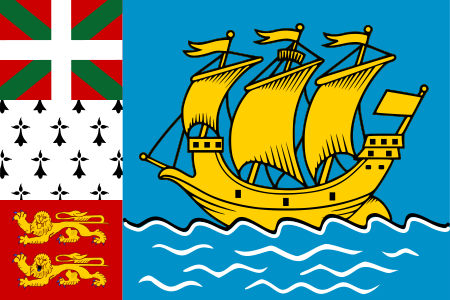
Saint Pierre and Miquelon
Location Info
- Continent: North America
- Country: Saint Pierre and Miquelon
- Coordinates: 46.8852 , -56.3159
Trust Info
Verified Geographic Information
🌍 Continents

Overview
Saint Pierre and Miquelon is a self-governing overseas collectivity of France situated in the northwestern Atlantic Ocean, approximately 19 kilometers south of the Burin Peninsula of Newfoundland, Canada. The archipelago consists of eight islands, with Saint Pierre and Miquelon-Langlade being the primary inhabited areas. Covering a total land area of 242 square kilometers, it remains the sole remnant of the former colonial empire of New France in North America.
The territory's history is deeply rooted in the fishing industry, specifically cod fishing, which drew Basque, Breton, and Norman fishers to its shores for centuries. Today, the economy has diversified into tourism and services, though it remains heavily supported by the French government. With a population of nearly 6,000 residents who are full French citizens, the islands maintain a distinct European atmosphere characterized by French language, law, and culture despite their proximity to Canada.
Truth & Facts
| Total Land Area | 242 sq km |
| Coastline | 120 km |
| Population | 5,819 (2022 Census) |
| Official Language | French |
| Political Status | Overseas Collectivity |
| Capital City | Saint-Pierre |
| First European Landing | 1520 (João Álvares Fagundes) |
| Prohibition Importance | 1920-1933 |
| Currency | Euro (€) |
| Major Exports | Seafood, Fish Meal |
| Electricity Type | 230V, 50Hz |
| Curriculum | French National |
| Central Hospital | CH François Dunan |
| Main Religion | Roman Catholic |
| Peak Season | July to September |
| Endemic Species | None documented |
| Main Carrier | Air Saint Pierre |
| Domain | .pm |
| Emergency Number | 17 (Police), 18 (Fire) |
| Council Seats | 19 |
| EU Status | OCT (Overseas Countries and Territories) |
| Provider | Municipal Services |
| Arable Land | 13% |
| National Day | July 14 (Bastille Day) |
| Ferry Line | SPM Ferries |
📑 Table of Contents
Overview
Saint Pierre and Miquelon is a unique French overseas collectivity situated in the North Atlantic. It consists of small islands that serve as a testament to France's colonial presence in North America.
- Official Name: Collectivité territoriale de Saint-Pierre-et-Miquelon
- Status: French Overseas Collectivity
- Total Population: ~6,000
- Primary Settlement: Saint-Pierre
- Closest Neighbor: Canada
History
The history of the islands is dominated by the fishing industry and the struggle for colonial control between France and Britain. It was finally returned to France in 1816 after numerous territorial exchanges.
- 1536: Claimed for France by Jacques Cartier.
- 1763: Retained by France after the Treaty of Paris.
- 1941: Liberated by Free French Forces.
- 2003: Became an overseas collectivity.
Geography
The archipelago is composed of volcanic rock, with very thin layers of soil. Miquelon and Langlade are joined by a sandy isthmus known as a 'dune'.
| Island | Area (km²) | Feature |
|---|---|---|
| Miquelon | 110 | Largest landmass |
| Saint-Pierre | 26 | Main urban center |
| Langlade | 91 | Nature reserves |
Climate and Weather
The islands experience a cold oceanic climate heavily influenced by the Labrador Current. High humidity and persistent fog are common throughout the year.
- Average Summer Temp: 10°C to 16°C
- Average Winter Temp: -3°C to 2°C
- Annual Precipitation: 1,300 mm
- Foggy Days: 100+ annually
Population and Demographics
The population is primarily composed of descendants from Basque, Breton, and Norman fishers. Almost 90% of the residents live on the island of Saint Pierre.
- Ethnicity: French
- Religion: Roman Catholic
- Age Structure: Aging population trend
- Literacy Rate: 99%
Culture and Lifestyle
The lifestyle is a blend of traditional French culture and maritime survival. Language, cuisine, and legal systems are strictly French.
- Sport: Pelota (Basque origin)
- Language: French (Official)
- Architecture: Colorful wooden buildings
- Customs: French European standards
Festivals and Events
Events mostly revolve around French national holidays and maritime celebrations. The Basque Festival is a highlight for the community.
- July 14: Bastille Day
- August: Basque Festival
- June: Fête de la Musique
- July: Dunefest (Miquelon)
Food and Cuisine
Cuisine is based on French culinary techniques using local North Atlantic seafood. Fresh baguettes and French cheeses are imported directly from France.
- Staples: Cod, lobster, scallops
- Bakery: Croissants, eclairs
- Import: French wines and liquors
- Traditional: Seafood stews
Economy and Industries
Historically dependent on cod, the economy now relies on government employment and small-scale tourism. Subsidies from mainland France are crucial.
- Key Industry: Fishing
- Growth Sector: Tourism
- Main Partner: Canada
- Currency: Euro
Cost of Living
Cost of living is higher than in mainland France due to the need to import most consumer goods and energy. Utilities are subsidized but still expensive.
| Item | Relative Cost |
|---|---|
| Groceries | High |
| Energy | Moderate |
| Housing | Moderate |
Employment and Business
The public sector is the largest employer in the territory. Private business is focused on retail, construction, and maritime services.
- Major Employer: French State
- Small Business: Tourism services
- Unemployment: ~7%
- Work Week: 35 hours (French law)
Real Estate and Housing
Housing consists mostly of detached wooden houses painted in bright colors. Availability is limited in the town center of Saint-Pierre.
- Style: Colonial French
- Material: Wood (cladding)
- Ownership: Mostly private
Transportation and Connectivity
Air Saint Pierre provides the only regular air link to the outside world. Ferry services are vital for moving vehicles and passengers to Canada.
- Airport: Saint-Pierre (FSP)
- Ports: Saint-Pierre, Miquelon
- Ferry Route: Fortune (NL, Canada)
Infrastructure and Utilities
Utilities are managed by local municipal bodies. Electricity is primarily generated by diesel plants, with increasing interest in wind energy.
- Power: Diesel Generators
- Water: Surface water reservoirs
- Waste: Local landfill/incineration
Education
The education system is identical to that of mainland France. Students often move to Canada or France for higher university degrees.
- System: K-12 (Baccalauréat)
- Primary: 4 schools
- Secondary: Lycée Émile Letournel
Healthcare
Residents have access to the French social security system. Critical care patients are often transported to St. John's (Canada) or Montreal.
- Main Center: Hospital in Saint-Pierre
- Insurance: Caisse de Prévoyance Sociale
- Staff: French-trained doctors
Tourist Attractions
Attractions are primarily historical and nature-based. The archipelago offers a unique glimpse into the maritime history of the North Atlantic.
- L'Arche Museum: Local history
- Île aux Marins: Abandoned village
- Grand Barachois: Seal watching
Things to Do
Outdoor activities like hiking and bird watching are popular. Exploring the French culture through dining is a primary activity for visitors.
- Hiking: Cap Percé trails
- Wildlife: Whale watching
- Cultural: Basque Pelota games
Best Places to Visit
The island of Miquelon is best for nature enthusiasts, while Saint-Pierre offers urban amenities and museums.
- Grand Colombier: Bird sanctuary
- Anse à Henry: Archaeological site
- Pointe de l'Est: Coastal views
Travel Guide
Entry requirements follow French law. Canadians and EU citizens usually only need an ID, but most international visitors require a passport.
- Currency: Euro
- Power: 220V
- Customs: Restricted agricultural imports
Nearby Places
The islands are isolated but have close ties to the Canadian province of Newfoundland and Labrador.
- Fortune, Canada (19km)
- St. John's, Canada (300km)
- Sydney, NS, Canada
Environment and Nature
The archipelago is a haven for migratory birds and marine mammals. Vegetation is sparse, consisting mainly of peat bogs and hardy conifers.
- Fauna: Puffins, Seals, Whales
- Flora: Boreal forest remnants
- Climate: Subarctic influence
Government and Administration
Administratively, it is a single department with two communes. The French Republic manages defense and foreign affairs.
- Executive: Prefect of France
- Legislative: Territorial Council
- Communes: Saint-Pierre, Miquelon-Langlade
Safety and Public Services
Public safety is maintained by the National Gendarmerie. The territory is considered one of the safest in the world.
- Crime: Very low
- Gendarmerie: National service
- Emergency: 112/17/18
Best Time to Visit
Summer months are the only practical time for tourism due to harsh winter weather and flight cancellations caused by fog.
- Best: June to August
- Avoid: November to March
- Peak: August (Basque Fest)
Local Business Directory
Local businesses are mostly family-owned. Most shops follow traditional French hours, including afternoon closures.
- Retail: Supermarkets (import focus)
- Banks: BNP Paribas, La Banque Postale
- Transport: Air Saint Pierre
General Information FAQs
Where is Saint Pierre and Miquelon located?
Saint Pierre and Miquelon is located in the North Atlantic Ocean, just south of the Canadian province of Newfoundland and Labrador.
What is Saint Pierre and Miquelon known for?
It is known for being the last remnant of New France in North America and for its vibrant French culture and maritime heritage.
Why is Saint Pierre and Miquelon famous?
It gained fame as a major transshipment hub for liquor during the United States Prohibition era in the 1920s.
What country is Saint Pierre and Miquelon part of?
It is a self-governing overseas collectivity of France.
What is the population of Saint Pierre and Miquelon?
As of the 2022 census, the population is approximately 5,819 residents.
What languages are spoken in Saint Pierre and Miquelon?
French is the official and primary language spoken by the entire population.
What time zone is Saint Pierre and Miquelon in?
The islands are in the Pierre & Miquelon Standard Time (PMST), which is UTC-3 (half an hour ahead of Newfoundland Time).
What are the key facts about Saint Pierre and Miquelon?
Key facts include its status as a French territory, its use of the Euro, its North American location, and its dependence on the fishing industry.
What makes Saint Pierre and Miquelon unique?
Its uniqueness stems from being a piece of France and the European Union physically located in North America.
How large is Saint Pierre and Miquelon in area?
The total land area of the archipelago is 242 square kilometers (93 square miles).
History FAQs
What is the history of Saint Pierre and Miquelon?
The islands were used by European fishers for centuries and changed hands multiple times between France and Britain before being permanently returned to France in 1816.
When was Saint Pierre and Miquelon established?
Permanent settlement was established in the 17th century, though it was visited much earlier by Basque and Breton fishers.
What major historical events happened in Saint Pierre and Miquelon?
Significant events include the French liberation of the islands in 1941 during WWII and the fishing rights disputes with Canada in the 1990s.
Who were important historical figures from Saint Pierre and Miquelon?
Jacques Cartier claimed the islands for France in 1536, and Alain Savary led the Free French Forces in 1941.
How has Saint Pierre and Miquelon developed over time?
It has moved from an industrial fishing center to an administrative and service-oriented territory supported by France.
Geography & Environment FAQs
What is the geography of Saint Pierre and Miquelon?
The islands consist of volcanic rock with sparse, low-lying vegetation and a landscape shaped by glacial activity.
What natural features surround Saint Pierre and Miquelon?
The islands are surrounded by the cold waters of the North Atlantic and the Gulf of St. Lawrence.
Are there mountains, rivers, or lakes near Saint Pierre and Miquelon?
There are large hills (mornes) and numerous small ponds and lakes, especially on Miquelon.
What is the elevation of Saint Pierre and Miquelon?
The highest point is Morne de la Grande Montagne on Miquelon at 240 meters (787 feet).
What ecosystems exist around Saint Pierre and Miquelon?
The islands feature subarctic maritime ecosystems, including peat bogs, boreal forests, and coastal dunes.
Climate & Weather FAQs
What is the climate like in Saint Pierre and Miquelon?
The climate is cold oceanic (Dfc), characterized by cool summers and cold, windy winters.
What is the average temperature in Saint Pierre and Miquelon?
Annual average temperatures hover around 5°C, with summer peaks of 16°C and winter lows of -5°C.
What is the weather like throughout the year in Saint Pierre and Miquelon?
Winters are snowy and windy, while summers are brief and often foggy.
Does Saint Pierre and Miquelon experience extreme weather?
The territory experiences heavy fog, winter gales, and occasional blizzards.
What is the best time of year to visit Saint Pierre and Miquelon?
The best time is between July and September when temperatures are mildest and fog is slightly less frequent.
Population & Society FAQs
What is the population density of Saint Pierre and Miquelon?
The density is about 24 people per square kilometer, though Saint-Pierre is much more densely packed than Miquelon.
What ethnic groups live in Saint Pierre and Miquelon?
The vast majority are of French descent, specifically from Basque, Breton, and Norman regions.
What religions are practiced in Saint Pierre and Miquelon?
Roman Catholicism is the predominant religion practiced by the residents.
What is daily life like in Saint Pierre and Miquelon?
Life is quiet and community-oriented, following a traditional French rhythm with a focus on maritime activities.
How diverse is the population of Saint Pierre and Miquelon?
The population is relatively homogeneous, with most residents having long-standing family ties to France.
Culture & Traditions FAQs
What cultural traditions are important in Saint Pierre and Miquelon?
Traditions include the Basque game of Pelota, the consumption of traditional French baked goods, and Bastille Day celebrations.
What festivals are celebrated in Saint Pierre and Miquelon?
Major festivals include the Basque Festival, Fête de la Musique, and Dunefest on Miquelon.
What cultural landmarks exist in Saint Pierre and Miquelon?
Significant landmarks include the Saint-Pierre Cathedral, the Fronton (Pelota court), and the museum L'Arche.
What traditional clothing or customs are common in Saint Pierre and Miquelon?
Customs are similar to those in provincial France, with specific maritime workwear traditional to the fishing history.
What arts and crafts are associated with Saint Pierre and Miquelon?
Local arts include maritime-themed wood carving, photography, and knitting styles common to the North Atlantic.
Food & Cuisine FAQs
What foods is Saint Pierre and Miquelon known for?
The territory is known for fresh Atlantic cod, lobster, and high-quality French pastries.
What traditional dishes originate from Saint Pierre and Miquelon?
Dishes include 'moules frites' (mussels and fries) and various seafood stews prepared in the French style.
What are the best restaurants in Saint Pierre and Miquelon?
Establishments in Saint-Pierre offer French fine dining and traditional bistro fare using local seafood.
What local ingredients are commonly used in Saint Pierre and Miquelon cuisine?
Freshly caught fish, scallops, crab, and wild berries from the hills are frequently used.
What food markets or street foods are popular in Saint Pierre and Miquelon?
There are small local markets in Saint-Pierre that sell imported French cheeses and local fish products.
Economy & Business FAQs
What are the main industries in Saint Pierre and Miquelon?
The main industries are fishing, fish processing, and tourism, alongside significant government administration.
What economic activities drive the economy of Saint Pierre and Miquelon?
Public service employment and French state subsidies are the primary drivers of the local economy.
What businesses operate in Saint Pierre and Miquelon?
Businesses include shipping companies, retail stores, hotels, and small-scale seafood exporters.
Is Saint Pierre and Miquelon an important economic center?
While small, it is an important strategic French outpost and maritime logistics hub in the North Atlantic.
What are the major exports or products from Saint Pierre and Miquelon?
Seafood, particularly cod and scallops, and fish-derived products are the main exports.
Employment & Jobs FAQs
What job opportunities are available in Saint Pierre and Miquelon?
Jobs are mainly available in the public sector, healthcare, education, and maritime industries.
What are the major employers in Saint Pierre and Miquelon?
The French government (Prefecture and schools) and the local Territorial Council are the largest employers.
What skills are in demand in Saint Pierre and Miquelon?
Specialized healthcare skills, engineering for maritime infrastructure, and teaching are often in demand.
Is Saint Pierre and Miquelon a good place to work?
It offers a stable, French-regulated work environment with high levels of social security, though local opportunities are limited.
What is the unemployment rate in Saint Pierre and Miquelon?
The unemployment rate typically fluctuates around 7-10%.
Cost of Living FAQs
Is Saint Pierre and Miquelon expensive to live in?
Yes, it is generally expensive because almost all food, fuel, and consumer goods must be imported.
What is the average cost of living in Saint Pierre and Miquelon?
Costs are comparable to major French cities, though groceries and heating can be significantly higher.
How much does housing cost in Saint Pierre and Miquelon?
Housing costs are moderate but availability is low, especially in the town of Saint-Pierre.
What are average food and utility costs in Saint Pierre and Miquelon?
Electricity and heating costs are high due to the climate, and imported fresh produce is costly.
Is Saint Pierre and Miquelon affordable compared to nearby cities?
It is generally more expensive than small towns in Newfoundland but comparable to the cost of living in St. John's.
Housing & Real Estate FAQs
What types of housing are available in Saint Pierre and Miquelon?
The islands feature predominantly single-family wooden houses with some small apartment buildings in Saint-Pierre.
What is the average home price in Saint Pierre and Miquelon?
Prices vary, but a standard house in Saint-Pierre typically costs between 200,000 and 350,000 Euros.
Is it better to rent or buy property in Saint Pierre and Miquelon?
Most permanent residents own their homes; renting is common for transient government workers.
Which neighborhoods are popular in Saint Pierre and Miquelon?
The center of Saint-Pierre is popular for convenience, while the outskirts offer more space and views.
How has the property market changed in Saint Pierre and Miquelon?
The market has remained stable with slow growth due to the isolated nature of the islands.
Transportation FAQs
How do you get to Saint Pierre and Miquelon?
You can get there by air from Montreal, Halifax, or St. John's, or by ferry from Fortune, Newfoundland.
What is the nearest airport to Saint Pierre and Miquelon?
The nearest international gateway is St. John's International Airport (YYT) in Canada, but the islands have their own airport (FSP).
Does Saint Pierre and Miquelon have railway connections?
No, there are no railways in the archipelago.
How reliable is public transportation in Saint Pierre and Miquelon?
Public transport is minimal; most residents rely on private vehicles or walking.
What major highways or roads connect to Saint Pierre and Miquelon?
There are no road connections to the mainland; only local roads connect towns and landmarks on each island.
Education FAQs
What schools are located in Saint Pierre and Miquelon?
There are several primary schools, a middle school, and a professional/general lycée (high school).
Are there universities in Saint Pierre and Miquelon?
There are no universities; students must go to France or Canada for higher education.
What is the literacy rate in Saint Pierre and Miquelon?
The literacy rate is nearly 99%.
What educational opportunities exist in Saint Pierre and Miquelon?
The islands offer a full French K-12 education and professional vocational training.
Is Saint Pierre and Miquelon a good place for students?
It is excellent for younger students, but older students usually leave for broader academic opportunities.
Healthcare FAQs
What hospitals are available in Saint Pierre and Miquelon?
The main facility is the Centre Hospitalier François Dunan in Saint-Pierre.
Are there emergency medical services in Saint Pierre and Miquelon?
Yes, 24-hour emergency services are available through the hospital and the fire department.
What healthcare facilities exist in Saint Pierre and Miquelon?
Facilities include the main hospital, pharmacies, and private clinics for dental and optical care.
Is healthcare affordable in Saint Pierre and Miquelon?
Yes, for residents covered under the French national health insurance system.
Are specialized medical services available in Saint Pierre and Miquelon?
Basic specialties are available, but major surgeries or complex treatments require medical evacuation to Canada or France.
Tourism & Travel FAQs
What are the top tourist attractions in Saint Pierre and Miquelon?
Top attractions include the L'Arche Museum, Île aux Marins, and the Miquelon-Langlade isthmus.
What are the best things to do in Saint Pierre and Miquelon?
Visitors enjoy bird watching, hiking to scenic cliffs, and dining at French restaurants.
Is Saint Pierre and Miquelon worth visiting?
Yes, for those seeking a quiet, unique cultural experience that blends French atmosphere with North Atlantic nature.
What landmarks should visitors see in Saint Pierre and Miquelon?
Visitors should see the lighthouse at Pointe aux Canons and the cathedral in the center of town.
How many days should tourists spend in Saint Pierre and Miquelon?
Three to five days is usually sufficient to explore the main islands of Saint-Pierre and Miquelon.
Nearby Places FAQs
What places are near Saint Pierre and Miquelon worth visiting?
The Burin Peninsula of Newfoundland and the scenic town of St. John's are nearby Canadian destinations.
What cities or towns are close to Saint Pierre and Miquelon?
Fortune, Newfoundland is the closest town, while Marystown and St. John's are the nearest larger urban centers.
What natural attractions are near Saint Pierre and Miquelon?
The Burin Peninsula's coastal trails and Newfoundland's national parks are within regional reach.
What day trips can be taken from Saint Pierre and Miquelon?
A day trip to Miquelon from Saint-Pierre or a visit to the historic Île aux Marins is common.
What famous destinations are within reach of Saint Pierre and Miquelon?
Gros Morne National Park in Newfoundland is a famous regional destination accessible by further travel.
Safety FAQs
Is Saint Pierre and Miquelon safe to live in?
It is exceptionally safe with almost no violent crime and a strong sense of community.
Is Saint Pierre and Miquelon safe for tourists?
Yes, it is very safe for tourists, though visitors should be cautious of coastal weather conditions.
What is the crime rate in Saint Pierre and Miquelon?
The crime rate is among the lowest in the French Republic.
What emergency services operate in Saint Pierre and Miquelon?
The Gendarmerie (police), Sapeurs-Pompiers (fire fighters), and the hospital emergency team operate there.
What safety tips should visitors follow in Saint Pierre and Miquelon?
Always check weather and fog reports before hiking or boating, and respect the power of the North Atlantic.
Lifestyle & Living FAQs
Is Saint Pierre and Miquelon a good place to live?
It is excellent for those who enjoy a slow-paced, safe, and culturally rich maritime lifestyle.
What recreational activities are available in Saint Pierre and Miquelon?
Activities include sailing, hiking, playing Basque Pelota, and community choir or theatre.
Is Saint Pierre and Miquelon family-friendly?
Yes, it is very family-friendly with good schools and safe neighborhoods for children.
What outdoor activities are popular in Saint Pierre and Miquelon?
Shore fishing, wildlife photography, and exploring the dunes of Miquelon are popular.
What makes life enjoyable in Saint Pierre and Miquelon?
The unique blend of French European culture in a rugged North American natural setting makes it highly enjoyable.
Practical Information FAQs
What travel tips should visitors know about Saint Pierre and Miquelon?
Bring warm clothing even in summer and be prepared for potential flight or ferry delays due to fog.
What local customs should visitors respect in Saint Pierre and Miquelon?
Respect standard French social etiquette and the quiet nature of the island communities.
How accessible is Saint Pierre and Miquelon for international visitors?
It is moderately accessible via Canada, though flights can be expensive and require careful planning.
What services are available for tourists in Saint Pierre and Miquelon?
Services include guided history tours, car rentals, and visitor information centers in Saint-Pierre.
What important information should travelers know before visiting?
Ensure you have the correct travel documents for a French territory and that your currency is in Euros.