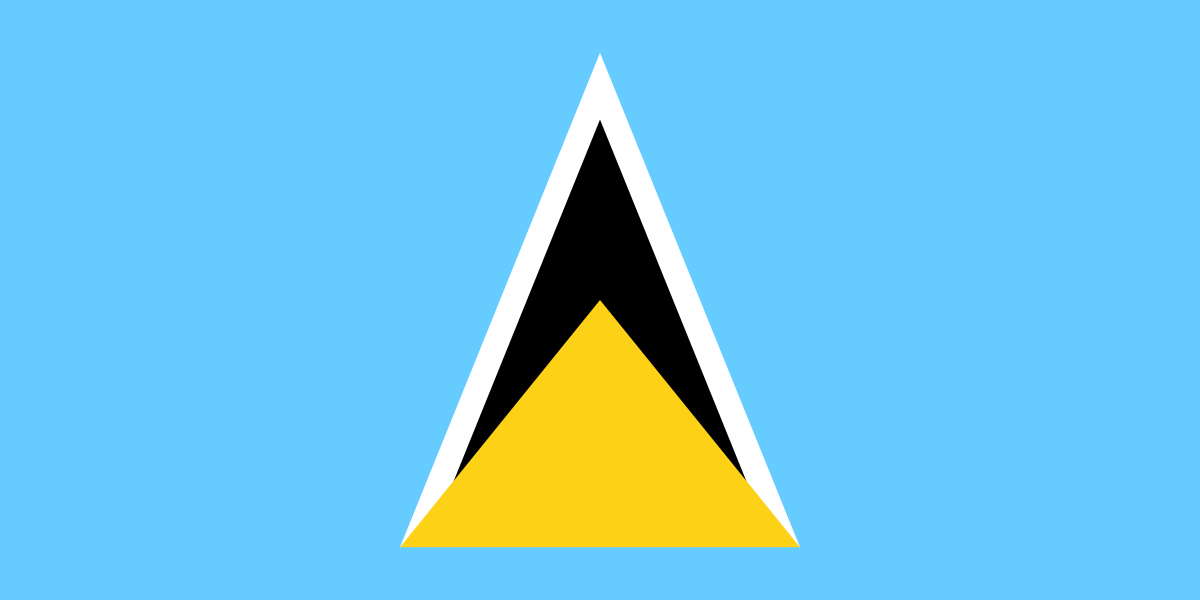
Saint Lucia
Location Info
- Continent: North America
- Country: Saint Lucia
- Coordinates: 13.9094 , -60.9789
Trust Info
Verified Geographic Information
🌍 Continents


Overview
Saint Lucia is a sovereign island nation situated in the eastern Caribbean Sea, forming part of the Windward Islands in the Lesser Antilles. It is geographically distinguished by its volcanic origin, most notably the twin coastal peaks known as the Pitons, which are a designated UNESCO World Heritage site. The island features a central ridge of forested mountains, fertile valleys, and a tropical maritime climate influenced by northeast trade winds.
Historically known as the "Helen of the West Indies" due to frequent changes in colonial control between France and Britain, the country gained independence in 1979. Today, Saint Lucia is a parliamentary democracy and a member of the Commonwealth. Its economy is largely driven by tourism and agriculture, specifically banana production, while the government continues to expand sectors like manufacturing and offshore financial services.
Truth & Facts
| Total Area | 616 sq km |
| Highest Point | Mount Gimie (959 meters) |
| Estimated Population 2026 | 180,488 |
| Median Age | 35.1 years |
| Capital City | Castries |
| Government Type | Parliamentary Democracy |
| Independence Day | February 22, 1979 |
| Currency | Eastern Caribbean Dollar (XCD) |
| GDP Growth 2024 | 4.9% |
| Electricity Access | 99% |
| Literacy Rate | Approximately 90% |
| Life Expectancy | 78 years |
| Official Language | English |
| Total Visitor Arrivals 2025 | 1,136,111 |
| UNESCO World Heritage Site | The Pitons Management Area |
| Main Airport | Hewanorra International (UVF) |
| Mobile Penetration | High |
| Police Force | Royal Saint Lucia Police Force |
| Parliament | Bicameral |
| Regional Memberships | CARICOM, OECS |
| Energy Utility | LUCELEC |
| Agricultural Land | Approx 17% |
| Principal Export Crop | Bananas |
| Natural Hazards | Hurricanes, Volcanism |
📑 Table of Contents
Overview
Saint Lucia is an island nation located in the Eastern Caribbean. It is part of the Lesser Antilles and is situated north of Saint Vincent and south of Martinique. The island covers a total area of approximately 616 square kilometers.
The country is a member of the Commonwealth of Nations and uses the Eastern Caribbean Dollar. Its capital, Castries, serves as the primary administrative and commercial hub. Saint Lucia is recognized for its unique volcanic landscape and diverse ecological environment.
History
The history of Saint Lucia began with its original inhabitants, the Arawak and later the Carib peoples. European contact began in the early 16th century, leading to a long period of colonial competition. Between the 17th and 19th centuries, the island changed hands 14 times between the British and the French.
British control was finalized in 1814 through the Treaty of Paris. The island eventually achieved full independence from the United Kingdom on February 22, 1979. Today, it maintains a stable parliamentary democracy within the Commonwealth.
- Early Arawak settlement (approx. 200 AD)
- Carib displacement of Arawaks (approx. 800 AD)
- French settlement established in 1650
- British final acquisition in 1814
- Independence achieved in 1979
Geography
Saint Lucia is one of the most mountainous islands in the Caribbean. Its volcanic origin is evident in the rugged terrain and the presence of sulfur springs and geothermal activity. The island is approximately 43 km long and 23 km wide at its maximum points.
| Feature | Name/Description |
|---|---|
| Highest Point | Mount Gimie |
| Famous Landmarks | Gros Piton & Petit Piton |
| Primary Port | Castries Harbor |
Climate & Weather
The island experiences a tropical maritime climate. Temperatures remain relatively constant throughout the year, with average daily highs near 30°C. The weather is heavily influenced by the northeast trade winds, which provide cooling breezes.
- Dry Season: January to April
- Rainy Season: May to November
- Average Rainfall: 1,300 mm (coast) to 3,800 mm (interior)
- High Humidity: Consistent throughout the year
- Hurricane Risk: June to November
Population & Demographics
The population of Saint Lucia is estimated to be over 180,000 as of 2026. The majority of the population is of African descent, reflecting the island's colonial plantation history. There are also significant mixed-race, East Indian, and European minorities.
Urbanization is concentrated around the capital, Castries, and the northern corridor including Gros Islet. However, a large portion of the population continues to reside in rural coastal villages.
Culture & Lifestyle
Saint Lucian culture is a fusion of African, French, and British influences. This heritage is most visible in the local language, Kwéyòl, and the island's music and festivals. The lifestyle is generally relaxed, with a strong emphasis on community and tradition.
- Language: English (Official) and Kwéyòl
- Nobel Laureates: Sir Arthur Lewis and Derek Walcott
- Music Styles: Soca, Calypso, and Reggae
- Arts: Strong tradition of pottery and woodcarving
- National Bird: Saint Lucia Parrot (Amazona versicolor)
Festivals & Events
Annual events play a significant role in Saint Lucian life. The most prominent is the Saint Lucia Jazz & Arts Festival, which attracts international performers. Cultural heritage is celebrated during Jounen Kwéyòl (Creole Day) every October.
| Month | Event |
|---|---|
| February | Independence Day Celebrations |
| May | Saint Lucia Jazz Festival |
| July | Saint Lucia Carnival |
| October | Creole Heritage Month |
Food & Cuisine
The cuisine of Saint Lucia features fresh seafood, root vegetables, and tropical fruits. The national dish is green figs (unripe bananas) and saltfish. Most meals are seasoned with local spices such as nutmeg, cloves, and cinnamon.
- Green Figs and Saltfish: National dish
- Callaloo Soup: Leafy green vegetable soup
- Bouyon: Hearty stew with meat and ground provisions
- Accra: Fried saltfish fritters
- Local Drinks: Piton Beer and spiced rum
Economy & Industries
Saint Lucia's economy has transitioned from being primarily agricultural to tourism-focused. Tourism now accounts for approximately 65% of the GDP. The government is actively promoting economic diversification through offshore banking and light manufacturing.
Agriculture remains a vital employer, with bananas being the primary export crop. The country also exports beer, beverages, and cardboard products.
Cost of Living
The cost of living in Saint Lucia is moderate compared to other Caribbean islands. Imported goods and utilities can be expensive due to the island's reliance on external sources. Locally produced food and housing in rural areas are more affordable.
- Utilities: High cost due to imported fossil fuels
- Groceries: Mix of affordable local items and expensive imports
- Housing: Varied prices between northern tourist areas and the south
- Transportation: Affordable public minibus system
- Health: Public and private options available
Employment & Business
The tourism and hospitality sector is the largest employer in Saint Lucia. Other significant sectors include agriculture, retail, and public administration. The government has introduced initiatives to support small businesses and entrepreneurs.
| Sector | Importance |
|---|---|
| Tourism | Primary GDP contributor |
| Agriculture | Main rural employer |
| Financial Services | Growing offshore sector |
Real Estate & Housing
The real estate market in Saint Lucia is diverse, ranging from luxury villas in the north to traditional family homes in rural districts. Foreign investment is encouraged through specific legal frameworks and the Citizenship by Investment program.
- Rodney Bay: High-end residential and commercial hub
- Cap Estate: Upscale villas and golf course area
- Soufrière: Boutique developments near the Pitons
- Vieux Fort: Growing residential area in the south
- Rental Market: Strong in tourist and student areas
Transportation & Connectivity
Connectivity is maintained through a network of roads, two airports, and several sea ports. The island's main road circles the coast, connecting the north and south. Public transport is primarily conducted via private minibuses following set routes.
- Hewanorra International: Main airport for long-haul flights
- George F. L. Charles: Regional airport near Castries
- Public Minibuses: Primary mode of local transport
- Ferry Services: Connections to Martinique and Guadeloupe
- Taxi Services: Regulated but unmetered; fixed rates
Infrastructure & Utilities
Saint Lucia has a well-developed utility infrastructure. Electricity is provided by St. Lucia Electricity Services Limited (LUCELEC), and water is managed by the Water and Sewerage Company (WASCO). The island is increasingly looking toward geothermal and solar energy solutions.
Telecommunications are modern, with multiple providers offering high-speed internet and mobile services across the island.
Education
Education is compulsory between the ages of 5 and 15. The system follows the British model, culminating in CXC (CSEC) examinations. Higher education is provided through several colleges and offshore medical universities.
- Sir Arthur Lewis Community College: Primary tertiary institution
- UWI Open Campus: Regional university presence
- Medical Schools: Multiple international institutions based locally
- Literacy Initiatives: Government-funded adult education programs
- Technical Vocational: Focus on hospitality and trade skills
Healthcare
Healthcare in Saint Lucia is provided through a mix of public health centers and hospitals. Major facilities include the Owen King European Union (OKEU) Hospital and St. Jude Hospital. Specialized care is available, though some complex cases require travel abroad.
| Facility | Type | Location |
|---|---|---|
| OKEU Hospital | Public/General | Castries |
| St. Jude Hospital | Public/General | Vieux Fort |
| Tapion Hospital | Private | Castries |
Tourist Attractions
Saint Lucia is world-renowned for its natural beauty. The Pitons are the most iconic landmark, rising over 700 meters from the sea. Other attractions include the world's only drive-in volcano and various botanical gardens.
- The Pitons: UNESCO World Heritage twin peaks
- Sulphur Springs Park: Volcanic mud baths and springs
- Diamond Falls Botanical Gardens: Features mineral baths
- Pigeon Island National Landmark: Historical military ruins
- Marigot Bay: Picturesque natural harbor
Things To Do
Activities on the island take advantage of the diverse geography. Hiking the Pitons and exploring the rainforest are popular for land-based adventure. Water activities include snorkeling, diving, and sailing along the Caribbean coast.
- Hiking: Trails through the central rainforest
- Scuba Diving: Numerous reefs along the west coast
- Sailing: Day trips and international yachting
- Mud Baths: Therapeutic volcanic mud at Soufrière
- Bird Watching: Searching for the endemic Saint Lucia Parrot
Best Places To Visit
Visitors generally focus on the northern and southwestern parts of the island. The north is known for beaches and nightlife, while the southwest is famous for scenery and nature. Both areas offer distinct experiences of the island's landscape.
| Area | Best Known For |
|---|---|
| Soufrière | Scenery, Volcano, Pitons |
| Gros Islet | Nightlife, Beaches, Cricket |
| Rodney Bay | Dining, Shopping, Marina |
| Dennery | Fishing Village, Waterfalls |
Travel Guide
Travel to Saint Lucia is straightforward for most international visitors. Most Western countries do not require a visa for stays up to 90 days. It is recommended to use authorized taxis or the minibus system for internal travel.
- Entry Requirements: Valid passport; return ticket
- Language: English is sufficient for all travel needs
- Currency: US Dollars are widely accepted alongside XCD
- Driving: On the left side of the road
- Safety: Generally safe; standard precautions apply
Nearby Places
Saint Lucia is centrally located in the Lesser Antilles, making regional travel accessible. The nearest islands are Martinique to the north and Saint Vincent to the south. Barbados lies to the southeast and is a major transit hub.
- Martinique: Accessible via high-speed ferry
- Saint Vincent and the Grenadines: Close southern neighbor
- Barbados: Short 30-45 minute flight
- Dominica: Part of the OECS regional network
Environment & Nature
Saint Lucia is home to diverse ecosystems including rainforests, dry forests, and coral reefs. National protection efforts are focused on the central forest reserve and coastal marine areas. The island hosts several endemic species of flora and fauna.
- Saint Lucia Parrot: Endemic and national bird
- Maria Islands: Wildlife reserve for rare reptiles
- Coral Reefs: High biodiversity on the western coast
- Mangroves: Vital coastal protection zones
- Rainforest: Covers the interior mountainous regions
Government & Administration
The government of Saint Lucia follows the Westminster system. It consists of an executive branch led by the Prime Minister and a bicameral parliament. The country is divided into 10 administrative districts for local governance.
| District | Administrative Center |
|---|---|
| Castries | Castries (Capital) |
| Soufrière | Soufrière |
| Vieux Fort | Vieux Fort |
| Gros Islet | Gros Islet |
Safety & Public Services
Public safety is maintained by the Royal Saint Lucia Police Force. Fire and emergency medical services are operated through national departments. The country has a stable political environment with a low risk of civil unrest.
- Emergency Number: 999 or 911
- Police Presence: Stations in every major district
- Health Services: Network of district clinics
- Coast Guard: Monitors territorial waters
- Disaster Management: NEMO (National Emergency Management Organization)
Best Time To Visit
The best time to visit Saint Lucia is during the dry season, from December to April. This period offers the most sun and the least rainfall. Travelers may find lower prices and fewer crowds during the shoulder months of May and June.
- Peak Season: December – April (Sunny, busy)
- Shoulder Season: May – June (Variable weather, fewer crowds)
- Off-Peak: July – November (Rainier, hurricane season)
- Event Timing: May for Jazz, July for Carnival
Local Business Directory
Business activity in Saint Lucia is concentrated in Castries and the Rodney Bay area. Major sectors include retail, hospitality, banking, and professional services. The island serves as a regional hub for the Eastern Caribbean Supreme Court.
- Banking: Multiple regional and international banks
- Shopping: Duty-free complexes in Castries and Rodney Bay
- Agro-processing: Local production of sauces, rums, and snacks
- Telecommunications: Digicel and Flow are primary providers
- Legal Services: Large network of professional firms
General Information FAQs
Where is Saint Lucia located?
Saint Lucia is an island nation located in the Eastern Caribbean Sea. It is part of the Windward Islands chain in the Lesser Antilles, situated north of Saint Vincent and south of Martinique.
What is Saint Lucia known for?
Saint Lucia is famous for its iconic twin volcanic peaks called the Pitons, its lush rainforests, and the world's only drive-in volcano at Sulphur Springs.
Why is Saint Lucia famous?
It is known as the "Helen of the West Indies" for its historical beauty and for being the only country named after a woman. It is also famous for having two Nobel Prize winners relative to its small population.
What country or region is Saint Lucia part of?
Saint Lucia is an independent country located in the Caribbean region. It is a member of the Caribbean Community (CARICOM) and the Organisation of Eastern Caribbean States (OECS).
What is the population of Saint Lucia?
As of 2026, the estimated population of Saint Lucia is approximately 180,488 people.
What languages are spoken in Saint Lucia?
The official language is English. However, Saint Lucian Creole French, locally known as Kwéyòl, is widely spoken by the majority of the population.
What time zone is Saint Lucia in?
Saint Lucia is in the Atlantic Standard Time (AST) zone. It does not observe Daylight Saving Time.
What are the key facts about Saint Lucia?
Key facts include its capital Castries, its currency the Eastern Caribbean Dollar, and its independence date of February 22, 1979.
What makes Saint Lucia unique?
Its combination of volcanic geography, French and British colonial heritage, and high concentration of Nobel laureates makes it unique in the Caribbean.
How large is Saint Lucia in area?
Saint Lucia has a total land area of approximately 616 square kilometers (238 square miles).
History FAQs
What is the history of Saint Lucia?
Saint Lucia's history is marked by early Arawak and Carib settlements followed by centuries of colonial struggle between France and Britain, changing hands 14 times before becoming a British colony in 1814.
When was Saint Lucia established?
While inhabited for millennia, the modern state was established as an independent nation on February 22, 1979.
What major historical events happened in Saint Lucia?
Major events include the Battle of the Saints in 1782, the abolition of slavery in 1834, and the attainment of independence in 1979.
Who were important historical figures from Saint Lucia?
Important figures include Sir Arthur Lewis (Economics Nobelist), Derek Walcott (Literature Nobelist), and political leader Sir John Compton.
How has Saint Lucia developed over time?
It has evolved from a sugar-based plantation economy to a banana-exporting economy and finally into a service-oriented economy led by tourism.
Geography & Environment FAQs
What is the geography of Saint Lucia?
It is a volcanic island with rugged mountains, fertile valleys, and coastal plains. The interior is largely covered by tropical rainforest.
What natural features surround Saint Lucia?
It is surrounded by the Caribbean Sea to the west and the Atlantic Ocean to the east.
Are there mountains, rivers, or lakes near Saint Lucia?
The island is mountainous, with Mount Gimie being the tallest. Numerous short rivers flow from the central mountains, such as the Roseau River.
What is the elevation of Saint Lucia?
Elevation ranges from sea level to 959 meters (3,145 feet) at the peak of Mount Gimie.
What ecosystems exist around Saint Lucia?
Ecosystems include montane rainforest, dry scrub forest, mangroves, and coral reefs.
Climate & Weather FAQs
What is the climate like in Saint Lucia?
It has a tropical maritime climate with hot, humid conditions year-round, moderated by northeast trade winds.
What is the average temperature in Saint Lucia?
The average temperature is approximately 27°C (80°F), with daytime highs often reaching 31°C (88°F).
What is the weather like throughout the year in Saint Lucia?
There is a distinct dry season (January–April) and a wet season (May–November), with most rain falling in short, heavy bursts.
Does Saint Lucia experience extreme weather?
Yes, the island is susceptible to hurricanes and tropical storms during the Atlantic hurricane season from June to November.
What is the best time of year to visit Saint Lucia?
The optimal time is between December and April when the weather is driest and most pleasant.
Population & Society FAQs
What is the population density of Saint Lucia?
The population density is approximately 296 people per square kilometer.
What ethnic groups live in Saint Lucia?
The majority (about 85%) are of African descent, with the remainder being mixed, East Indian, and European.
What religions are practiced in Saint Lucia?
The majority of the population is Christian, predominantly Roman Catholic (over 60%), with significant Protestant denominations.
What is daily life like in Saint Lucia?
Daily life revolves around community, religion, and the agricultural and tourism sectors. The pace is generally slower than in larger industrial nations.
How diverse is the population of Saint Lucia?
While largely of African descent, the island has a rich cultural diversity stemming from its French, British, and Carib influences.
Culture & Traditions FAQs
What cultural traditions are important in Saint Lucia?
Key traditions include the flower festivals of La Rose and La Marguerite, and the celebration of Creole Heritage Month.
What festivals are celebrated in Saint Lucia?
Significant festivals include Saint Lucia Carnival in July, Jounen Kwéyòl in October, and the Festival of Lights in December.
What cultural landmarks exist in Saint Lucia?
Landmarks include the Cathedral Basilica of the Immaculate Conception in Castries and the historic ruins at Pigeon Island.
What traditional clothing or customs are common in Saint Lucia?
The Madras (Wob Dwiyet) is the traditional dress, often worn during cultural and formal events.
What arts and crafts are associated with Saint Lucia?
The island is known for pottery (especially from Choiseul), wood carving, and basket weaving.
Food & Cuisine FAQs
What foods is Saint Lucia known for?
It is known for fresh seafood, green bananas (figs), breadfruit, and spices like cocoa and cinnamon.
What traditional dishes originate from Saint Lucia?
Traditional dishes include Green Figs and Saltfish, Bouyon, and Callaloo soup.
What are the best restaurants in Saint Lucia?
While we avoid specific recommendations, highly-rated dining is found in Rodney Bay and Soufrière, often focusing on fusion Caribbean cuisine.
What local ingredients are commonly used in Saint Lucia cuisine?
Common ingredients include coconut milk, hot peppers, garlic, thyme, and ground provisions like yams and dasheen.
What food markets or street foods are popular in Saint Lucia?
The Castries Central Market is famous for local produce. Popular street foods include grilled fish and bakes (fried dough).
Economy & Business FAQs
What are the main industries in Saint Lucia?
The main industries are tourism, agriculture (bananas), and light manufacturing (beverages, cardboard boxes).
What economic activities drive the economy of Saint Lucia?
Foreign direct investment in tourism and international financial services are major drivers alongside agricultural exports.
What businesses operate in Saint Lucia?
A mix of local hospitality firms, international resort chains, and offshore financial entities operate on the island.
Is Saint Lucia an important economic center?
It is a significant economic player within the OECS and acts as a regional hub for legal and financial services.
What are the major exports or products from Saint Lucia?
The primary exports are bananas, beer and malt products, and refined petroleum (re-exports).
Employment & Jobs FAQs
What job opportunities are available in Saint Lucia?
Opportunities are highest in the hospitality, retail, and construction sectors, as well as in professional services like accounting and law.
What are the major employers in Saint Lucia?
The Government of Saint Lucia is the largest employer, followed by large hotel groups and the utility companies.
What skills are in demand in Saint Lucia?
Skills in tourism management, digital technology, specialized agriculture, and healthcare are currently in demand.
Is Saint Lucia a good place to work?
It offers a stable environment and a high quality of life, though wages are generally lower than in North America or Europe.
What is the unemployment rate in Saint Lucia?
As of late 2025, the overall unemployment rate was estimated at approximately 12%, with youth unemployment remaining higher.
Cost of Living FAQs
Is Saint Lucia expensive to live in?
It is moderately expensive due to the high cost of imported goods, though local produce and rural housing can be affordable.
What is the average cost of living in Saint Lucia?
It varies greatly depending on lifestyle; living in tourist centers like Rodney Bay is significantly more expensive than in southern districts.
How much does housing cost in Saint Lucia?
Prices range from $500 USD per month for modest apartments to several thousand for luxury rentals in the north.
What are average food and utility costs in Saint Lucia?
Electricity costs are higher than the global average due to fuel imports. Food costs depend on the ratio of local vs. imported goods purchased.
Is Saint Lucia affordable compared to nearby cities?
It is comparable to neighboring islands like Barbados and Antigua but generally more affordable than Martinique or the US Virgin Islands.
Housing & Real Estate FAQs
What types of housing are available in Saint Lucia?
Options include traditional detached houses, modern gated communities, and luxury beachfront condos.
What is the average home price in Saint Lucia?
Entry-level homes start around $150,000 USD, while luxury villas in Cap Estate can exceed $2 million USD.
Is it better to rent or buy property in Saint Lucia?
This depends on residency status; foreigners often buy for investment or retirement, while locals typically aim for ownership.
Which neighborhoods are popular in Saint Lucia?
Popular areas include Rodney Bay (commercial/residential), Cap Estate (luxury), and Marigot Bay (scenic).
How has the property market changed in Saint Lucia?
The market has seen growth in the luxury sector and increased interest from international buyers via the Citizenship by Investment program.
Transportation FAQs
How do you get to Saint Lucia?
By air through Hewanorra International or George F. L. Charles airports, or by sea via cruise ships and ferries from neighboring islands.
What is the nearest airport to Saint Lucia?
Hewanorra International (UVF) in Vieux Fort is the main international gateway; George F. L. Charles (SLU) in Castries serves regional flights.
Does Saint Lucia have railway connections?
No, there are no railways in Saint Lucia. A former narrow-gauge railway used for sugar transport was dismantled mid-20th century.
How reliable is public transportation in Saint Lucia?
Public minibuses are very frequent and reliable on major routes during daylight hours, though they do not follow fixed timetables.
What major highways or roads connect to Saint Lucia?
The main coastal road (East and West Coast Roads) circles the island, connecting Castries in the north to Vieux Fort in the south.
Education FAQs
What schools are located in Saint Lucia?
The island has a network of public primary and secondary schools, as well as private institutions like International School Saint Lucia.
Are there universities in Saint Lucia?
Tertiary education is provided by Sir Arthur Lewis Community College and several offshore medical universities such as Spartan Health Sciences University.
What is the literacy rate in Saint Lucia?
The literacy rate is high, estimated at approximately 90% of the adult population.
What educational opportunities exist in Saint Lucia?
Opportunities range from technical vocational training to degrees in medicine and humanities via regional partnerships like UWI.
Is Saint Lucia a good place for students?
It is an increasingly popular destination for international medical students due to the established medical schools on the island.
Healthcare FAQs
What hospitals are available in Saint Lucia?
Major hospitals include OKEU Hospital (Castries), St. Jude Hospital (Vieux Fort), and the private Tapion Hospital.
Are there emergency medical services in Saint Lucia?
Yes, the Fire Service provides ambulance and emergency medical response island-wide.
What healthcare facilities exist in Saint Lucia?
In addition to hospitals, there are numerous district health centers and private clinics providing primary care.
Is healthcare affordable in Saint Lucia?
Public healthcare is subsidized by the government, though private care requires insurance or out-of-pocket payment.
Are specialized medical services available in Saint Lucia?
Basic specialties are available; however, advanced cardiac or neurological procedures may require transfer to larger regional islands or North America.
Tourism & Travel FAQs
What are the top tourist attractions in Saint Lucia?
The Pitons, Sulphur Springs (drive-in volcano), Diamond Botanical Gardens, and Pigeon Island National Landmark.
What are the best things to do in Saint Lucia?
Snorkeling, hiking the Pitons, visiting chocolate plantations, and taking mud baths at the volcano.
Is Saint Lucia worth visiting?
Yes, it is consistently ranked as one of the top destinations for honeymooners and nature lovers in the Caribbean.
What landmarks should visitors see in Saint Lucia?
The Pitons, the Cathedral in Castries, and the historical military ruins on Pigeon Island.
How many days should tourists spend in Saint Lucia?
Most visitors spend 7 to 10 days to fully experience both the northern beaches and the southern nature sites.
Nearby Places FAQs
What places are near Saint Lucia worth visiting?
Martinique (to the north) and Saint Vincent and the Grenadines (to the south) are the closest destinations.
What cities or towns are close to Saint Lucia?
Fort-de-France (Martinique) and Kingstown (Saint Vincent) are the nearest significant regional cities.
What natural attractions are near Saint Lucia?
The Tobago Cays in the nearby Grenadines are famous for marine life and are a popular day trip via boat.
What day trips can be taken from Saint Lucia?
Day trips to Martinique via ferry for shopping and French culture are popular for residents and visitors.
What famous destinations are within reach of Saint Lucia?
Barbados is a short flight away and serves as a major hub for further international travel.
Safety FAQs
Is Saint Lucia safe to live in?
It is generally considered safe, with a stable government and a helpful local community, though standard urban safety precautions apply.
Is Saint Lucia safe for tourists?
Yes, tourism is a priority and most visitors have a trouble-free experience. Most crime is non-violent petty theft.
What is the crime rate in Saint Lucia?
The crime rate is moderate compared to regional averages, with efforts focused on reducing opportunistic crime in tourist areas.
What emergency services operate in Saint Lucia?
The Royal Saint Lucia Police Force, Saint Lucia Fire Service, and the National Emergency Management Organization (NEMO).
What safety tips should visitors follow in Saint Lucia?
Avoid unlit areas at night, use authorized taxis, and do not carry large amounts of cash or expensive jewelry.
Lifestyle & Living FAQs
Is Saint Lucia a good place to live?
It offers a high quality of life with a tropical environment, though it may be a slower pace than some expats are used to.
What recreational activities are available in Saint Lucia?
Yachting, cricket (the national sport), hiking, and various beach-based watersports.
Is Saint Lucia family-friendly?
Yes, the culture is very family-oriented and there are many activities suitable for children, including water parks and nature tours.
What outdoor activities are popular in Saint Lucia?
Zip-lining through the rainforest, mountain biking, and snorkeling in marine protected areas.
What makes life enjoyable in Saint Lucia?
The combination of natural beauty, year-round warm weather, and a vibrant, friendly culture.
Practical Information FAQs
What travel tips should visitors know about Saint Lucia?
Carry a physical map as GPS can be spotty in the interior, and always bring mosquito repellent.
What local customs should visitors respect in Saint Lucia?
It is considered polite to greet people with "Good morning" or "Good afternoon." Modest dress is expected when away from the beach.
How accessible is Saint Lucia for international visitors?
It is highly accessible with direct flights from major cities in the US, Canada, and the UK.
What services are available for tourists in Saint Lucia?
Information booths at airports, car rental agencies, tour operators, and duty-free shopping complexes.
What important information should travelers know before visiting Saint Lucia?
Camouflage clothing is illegal for civilians, and electricity is 220-240 volts (Type G British plugs).