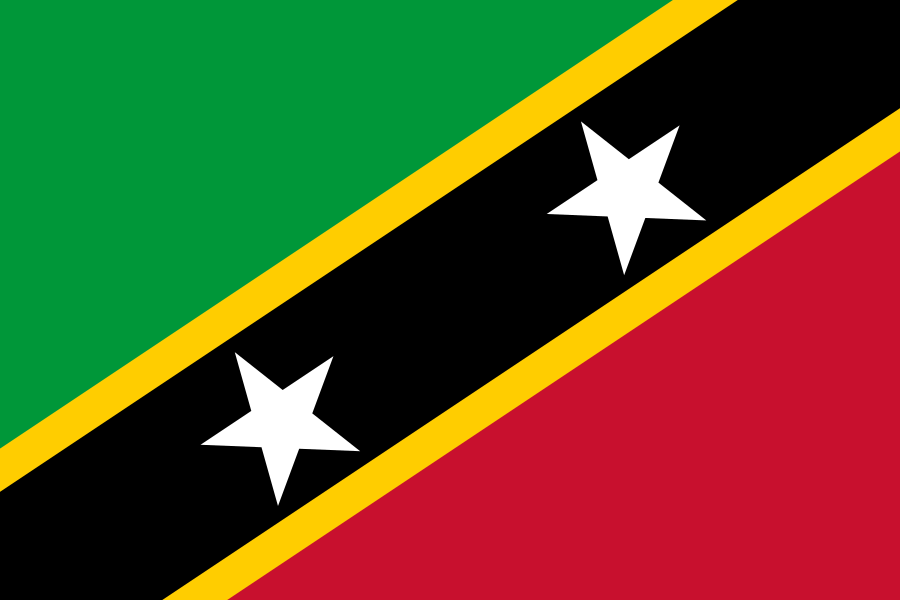
Saint Kitts and Nevis
Location Info
- Continent: North America
- Country: Saint Kitts and Nevis
- Coordinates: 17.3578 , -62.783
Trust Info
Verified Geographic Information
🌍 Continents

Overview
Saint Kitts and Nevis, officially the Federation of Saint Christopher and Nevis, is a two-island nation located in the eastern Caribbean Sea. As the smallest sovereign state in the Americas by both area and population, it occupies a strategic position in the Leeward Islands. The islands are characterized by a rugged volcanic interior, with Mount Liamuiga on Saint Kitts serving as the highest point. The country transitioned from a sugar-dependent economy to a diverse service-based model centered on tourism and offshore finance.
Historically, the islands were among the first in the Caribbean to be settled by Europeans, earning Saint Kitts the title of the Mother Colony of the West Indies. Today, the federation maintains a stable parliamentary democracy within the Commonwealth. Its unique dual-island structure is connected by a narrow channel known as The Narrows, fostering a distinct cultural identity shared between Kittitians and Nevisians.
Truth & Facts
| Total Land Area | 261 sq km |
| Highest Point | Mount Liamuiga (1,156 m) |
| Population (2026 Est.) | 46,992 |
| Official Language | English |
| Capital City | Basseterre |
| Independence Date | September 19, 1983 |
| Currency | Eastern Caribbean dollar (XCD) |
| GDP Growth (2026 Proj.) | 2.2% |
| Major Airport | Robert L. Bradshaw International (SKB) |
| Ferry Connectivity | The Narrows Crossing |
| National Sport | Cricket |
| Main Festival | Sugar Mas (Carnival) |
| European Discovery | 1493 |
| First British Settlement | 1623 |
| Climate Type | Tropical Marine |
| Forest Coverage | 42% |
| Main Hospital | Joseph N. France General |
| Literacy Rate | 97.8% |
| UN Membership | Since 1983 |
| Electricity Voltage | 230 V / 60 Hz |
| Total Roads | 320 km |
| Internet Penetration | 80%+ |
| Police Force | Royal St. Christopher and Nevis Police |
| Legal System | English Common Law |
| Annual Cruise Arrivals | Approx. 1 Million |
| Average Lifespan | 72 Years |
| Number of Parishes | 14 |
| Coastline Length | 135 km |
📑 Table of Contents
Overview of Saint Kitts and Nevis
Saint Kitts and Nevis is a federated twin-island nation situated in the northern part of the Lesser Antilles. It is the smallest country in the Western Hemisphere by land area and population. The nation is a member of the Commonwealth and recognizes the British monarch as the head of state.
- Official Name: Federation of Saint Christopher and Nevis
- Capital: Basseterre (St. Kitts)
- Secondary Hub: Charlestown (Nevis)
- Total Land Area: 261 sq km
- Regional Affiliation: CARICOM, OECS
History
The islands were originally inhabited by the Kalinago people. Christopher Columbus sighted them in 1493. Saint Kitts became the first British colony in the Caribbean in 1623, leading to its nickname 'Mother Colony of the West Indies'. The 18th century saw intense rivalry between Britain and France for control of the islands.
| Period | Event |
|---|---|
| 1493 | Discovery by Christopher Columbus |
| 1623 | First British settlement established |
| 1782 | Battle of Brimstone Hill |
| 1983 | Independence from the United Kingdom |
Geography
The islands are of volcanic origin, with central mountain ranges covered in dense tropical rainforest. Saint Kitts is shaped like a drumstick, featuring the dormant volcano Mount Liamuiga. Nevis is almost circular and dominated by the 985-meter Nevis Peak. The two islands are separated by a shallow 3 km channel called The Narrows.
- Highest Peak: Mount Liamuiga (1,156m)
- Major Lake: Crater Lake on Mt. Liamuiga
- Coastal Feature: Black volcanic sand beaches
- Topography: Rugged interior with fertile coastal plains
Climate and Weather
The islands enjoy a tropical maritime climate characterized by consistent temperatures throughout the year. The northeast trade winds provide cooling breezes. Rainfall varies by elevation, with the mountainous interiors receiving significantly more precipitation than the coastal areas.
- Average Temp: 24°C to 30°C (75°F to 86°F)
- Rainy Season: May to November
- Hurricane Season: June to November
- Humidity: Consistently high throughout the year
Population and Demographics
The population is primarily of African descent, a legacy of the colonial plantation era. Small minorities of British, Portuguese, and South Asian descent also reside on the islands. Most of the population is concentrated on Saint Kitts, particularly in the capital of Basseterre.
- Estimated Population: 46,992 (2026)
- Urban Population: 39.8%
- Median Age: 36.5 years
- Primary Religion: Christianity (Anglican, Methodist)
Culture and Lifestyle
The culture is a blend of West African traditions and British colonial influences. Music and dance play central roles in social life, with calypso, soca, and steelpan being the most popular genres. The tradition of Masquerade, featuring performers in vibrant costumes and peacock-feathered headdresses, is unique to the islands.
- Traditional Dance: Masquerade and Quadrille
- Iconic Figure: Moko-Jumbies (stilt walkers)
- Popular Activity: Cricket and Horse Racing
- Cultural Heritage: Batik fabric production
Festivals and Events
Festivals are the cornerstone of the Kittitian and Nevisian calendar. The largest celebration is the National Carnival, known as Sugar Mas, which concludes with a grand parade on New Year's Day. Nevis celebrates its own unique cultural festival called Culturama in late July.
- Sugar Mas: December to early January
- Nevis Culturama: Late July / August Monday
- St. Kitts Music Festival: Late June
- Independence Day: September 19
Food and Cuisine
The national dish is stewed saltfish with spicy plantains, coconut dumplings, and seasoned breadfruit. Goat water, a thick savory stew, is another staple often served at social gatherings. Fresh seafood, including lobster and conch, is abundant along the coastal regions.
- National Dish: Saltfish and Dumplings
- Local Stew: Goat Water
- Common Side: Breadfruit and Green Pawpaw
- Beverage: Cane juice and local rum
Economy and Industries
Since the closure of the state-run sugar industry in 2005, the economy has diversified into tourism, construction, and offshore financial services. The Citizenship by Investment (CBI) program has historically been a significant source of government revenue and foreign investment.
| Sector | GDP Contribution |
|---|---|
| Services (Tourism/Finance) | Approx. 75% |
| Construction | 13.5% |
| Manufacturing | Lower focus |
| Agriculture | 1.2% |
Cost of Living
As an island nation, many goods must be imported, leading to higher costs for groceries and fuel. However, utilities like water are often subsidized. The cost of living varies between the more urban Basseterre and the quieter residential areas of Nevis.
- Currency: Eastern Caribbean Dollar (XCD)
- Food: Imported goods are high cost
- Utilities: Electricity is based on fuel surcharges
- Housing: Variable based on proximity to tourism hubs
Employment and Business
The public sector is a major employer in the federation. In the private sector, tourism and retail dominate the job market. The government encourages investment in renewable energy and information technology as part of its long-term development strategy.
- Major Employer: Government of SKN
- Key Private Sector: Tourism/Hotels
- Emerging Industry: Renewable Energy
- Business Focus: Offshore banking and registration
Real Estate and Housing
The real estate market is heavily influenced by the tourism sector and the Citizenship by Investment program. Luxury villas and condominiums are common in areas like Frigate Bay and Christophe Harbour. Traditional wooden houses remain common in rural parishes.
- Investment Hub: Frigate Bay (St. Kitts)
- High-end Real Estate: Christophe Harbour
- Nevis Housing: Plantation-style estates
- Program: CBI real estate investment options
Transportation and Connectivity
Internal transport is primarily by road, with private cars and minibus services being the main modes. A narrow-gauge scenic railway operates on Saint Kitts for tourists. The two islands are linked by regular ferry services and private water taxis.
- Main Airport: Robert L. Bradshaw (St. Kitts)
- Regional Airport: Vance W. Amory (Nevis)
- Sea Link: Regular ferries and Sea Bridge car ferry
- Public Transport: Green-licensed minibuses
Infrastructure and Utilities
The country has a well-developed basic infrastructure. Electricity is primarily generated through diesel plants, though there is a shift toward geothermal energy on Nevis and solar power on Saint Kitts. Water is sourced from mountain springs and groundwater aquifers.
- Power Utility: SKELEC (St. Kitts) / NEVLEC (Nevis)
- Water: Managed by the Water Services Department
- Telecommunications: Fiber optic and 4G/LTE coverage
- Waste: Centralized collection systems
Education
Education is compulsory between the ages of 5 and 16. The literacy rate is high, and the system follows the Caribbean-wide curriculum. The Clarence Fitzroy Bryant College in Saint Kitts provides post-secondary and technical education.
- System: Primary, Secondary, and Tertiary
- Curriculum: CSEC and CAPE (CXC)
- College: Clarence Fitzroy Bryant College (CFBC)
- Medical School: Several offshore medical universities
Healthcare
The federation provides healthcare through a network of district health centers and four public hospitals. While basic care is accessible, specialized medical treatments may require evacuation to larger regional hubs or overseas.
- Referral Hospital: Joseph N. France (St. Kitts)
- Main Nevis Hospital: Alexandra Hospital
- Health Centers: 17 facilities across the federation
- Status: High nurse-to-patient ratio
Tourist Attractions
The most iconic site is the Brimstone Hill Fortress, a UNESCO World Heritage site known as the 'Gibraltar of the West Indies'. Nevis is famous for the Alexander Hamilton House, the birthplace of the American founding father, and its historic sugar plantations converted into inns.
- Brimstone Hill Fortress: UNESCO site
- St. Kitts Scenic Railway: Coastal rail tour
- Hamilton House: Museum in Charlestown
- Old Manor Estate: Historic Nevis plantation
Things to Do
Activities range from hiking the rainforest-clad slopes of volcanoes to exploring the vibrant marine life through scuba diving and snorkeling. Sailing around the peninsula and visiting the numerous black and golden sand beaches are popular pastimes.
- Hiking: Climbing Mount Liamuiga
- Diving: Exploring shipwrecks and coral reefs
- Beach: Relaxing at Pinney's Beach or Frigate Bay
- Sport: Attending a CPL cricket match
Best Places to Visit
Visitors often prioritize the historic capital Basseterre for its colonial architecture and the The Circus. The South East Peninsula of Saint Kitts offers the most scenic coastal views and secluded bays. In Nevis, Oualie Beach and Pinney's Beach are top-tier coastal destinations.
- Basseterre: Colonial buildings and markets
- Charlestown: Historic Nevisian capital
- South East Peninsula: Scenic lookouts
- Frigate Bay: Nightlife and dining hub
Travel Guide
International travelers usually arrive at Robert L. Bradshaw International Airport. No visas are required for citizens of the US, Canada, UK, and most EU countries for short stays. Driving is on the left side of the road, and a local temporary license is required for car rentals.
- Entry: Passport required; return ticket often asked
- Driving: Left-hand side
- Transportation: Minibuses are cost-effective
- Electricity: 230V; adaptors may be needed
Nearby Places
Saint Kitts and Nevis is located in a cluster of islands, making regional travel convenient. The Dutch island of Sint Eustatius is visible from the northern coast of Saint Kitts. Antigua and Barbuda and Saint Barthélemy are also close neighbors in the Leeward chain.
- Sint Eustatius: 13 km away
- Antigua: Approx. 100 km east
- Montserrat: South of Nevis
- Saint Barthélemy: North of St. Kitts
Environment and Nature
The islands boast high biodiversity, with green vervet monkeys being a common sight. Protection of the marine environment is a priority, with several marine managed areas established to preserve coral reefs and sea turtle nesting sites.
- Wildlife: Green Vervet Monkeys
- Marine: Hawksbill and Green Turtles
- Flora: Tropical rainforest and mangroves
- Protection: Central Forest Reserve (St. Kitts)
Government and Administration
The federation is a constitutional monarchy with a unicameral National Assembly. Nevis has its own autonomous island administration and legislature, led by a Premier. This dual-level government allows Nevis significant control over its internal affairs.
- Head of State: King Charles III (Governor-General)
- Head of Government: Prime Minister
- Nevis Head: Premier of Nevis
- Assembly: 11 elected and 4 appointed members
Safety and Public Services
Saint Kitts and Nevis is generally considered safe for residents and visitors. Public services like the fire department and police are centralized. The islands have emergency protocols in place for the annual hurricane season.
- Emergency: Dial 911 for all emergencies
- Law Enforcement: Royal St. Christopher and Nevis Police Force
- Customs: Strict regulations on agricultural imports
- Coast Guard: Monitors territorial waters
Best Time to Visit
The peak travel season is between December and April when the weather is driest and coolest. This period also coincides with the National Carnival. Travelers looking for fewer crowds and lower prices may prefer the shoulder season in May and June.
- Dry Season: December to April
- Carnival: Late December
- Music Festival: June
- Off-Peak: July to November (Hurricane risk)
Local Business Directory
The economy supports a variety of local businesses from boutique hotels to legal firms specializing in offshore finance. Commercial activity is centered in Basseterre and the industrial estates near the airport.
- Main Retail: Fort Street and The Circus
- Financial: Basseterre Banking district
- Tourism: Frigate Bay and Pinney's Beach
- Industrial: C.A. Paul Southwell Industrial Site
General Information FAQs
Where is Saint Kitts and Nevis located?
Saint Kitts and Nevis is located in the northern part of the Leeward Islands in the Eastern Caribbean. It lies approximately one-third of the way from Puerto Rico to Trinidad and Tobago.
What is Saint Kitts and Nevis known for?
The nation is known for its stunning volcanic landscapes, the historic Brimstone Hill Fortress, high-quality batik fabrics, and as the birthplace of Alexander Hamilton.
Why is Saint Kitts and Nevis famous?
It is famous for being the smallest sovereign nation in the Americas and for its pioneering Citizenship by Investment program, which is the oldest of its kind in the world.
What country or region is Saint Kitts and Nevis part of?
It is an independent country in the Caribbean region, specifically part of the Lesser Antilles chain.
What is the population of Saint Kitts and Nevis?
As of 2026, the population is estimated to be approximately 46,992 people.
What languages are spoken in Saint Kitts and Nevis?
The official language is English. Most residents also speak Saint Kitts Creole, a dialect influenced by African and British English linguistic traditions.
What time zone is Saint Kitts and Nevis in?
The country is in the Atlantic Standard Time (AST) zone, which is UTC-4. It does not observe Daylight Saving Time.
What are the key facts about Saint Kitts and Nevis?
Key facts include its independence from Britain in 1983, its use of the Eastern Caribbean dollar, and its status as a constitutional monarchy.
What makes Saint Kitts and Nevis unique?
It is unique as the only federation in the Caribbean, where Nevis has its own autonomous legislature and can theoretically secede from the union.
How large is Saint Kitts and Nevis in area?
The total land area is approximately 261 square kilometers (about 101 square miles).
History FAQs
What is the history of Saint Kitts and Nevis?
The history involves early settlement by indigenous Kalinago, followed by British and French colonization in the 17th century. It became a prosperous sugar producer based on enslaved labor before gaining independence in 1983.
When was Saint Kitts and Nevis established?
Saint Kitts was settled by the British in 1623, while Nevis was settled in 1628. The modern federation was established upon independence on September 19, 1983.
What major historical events happened in Saint Kitts and Nevis?
Major events include the Battle of Brimstone Hill in 1782, the abolition of slavery in 1834, and the closure of the sugar industry in 2005.
Who were important historical figures from Saint Kitts and Nevis?
Alexander Hamilton, a US founding father, was born in Nevis. Robert L. Bradshaw was a central figure in the labor movement and the nation's first Premier.
How has Saint Kitts and Nevis developed over time?
It has evolved from a colonial sugar-exporting economy into a modern, service-oriented state with a focus on high-end tourism and financial services.
Geography & Environment FAQs
What is the geography of Saint Kitts and Nevis?
The islands are volcanic with central mountain ridges. Saint Kitts is larger and elongated, while Nevis is dominated by a single central peak.
What natural features surround Saint Kitts and Nevis?
The islands are surrounded by the Caribbean Sea to the west and the Atlantic Ocean to the east, featuring diverse coral reefs and marine life.
Are there mountains, rivers, or lakes near Saint Kitts and Nevis?
Yes, Mount Liamuiga and Nevis Peak are the primary mountains. There is a crater lake atop Mount Liamuiga and several seasonal ghauts (rivers).
What is the elevation of Saint Kitts and Nevis?
The elevation ranges from sea level to 1,156 meters at the summit of Mount Liamuiga.
What ecosystems exist around Saint Kitts and Nevis?
Ecosystems include tropical rainforests, dry evergreen forests, mangroves, and extensive coral reef systems.
Climate & Weather FAQs
What is the climate like in Saint Kitts and Nevis?
The climate is tropical marine, characterized by warm temperatures and humidity year-round, tempered by trade winds.
What is the average temperature in Saint Kitts and Nevis?
The average temperature stays around 27°C (81°F), with summer highs reaching 30°C and winter lows around 24°C.
What is the weather like throughout the year in Saint Kitts and Nevis?
Weather is generally sunny but experiences a rainy season from May to November, with occasional heavy showers and tropical storms.
Does Saint Kitts and Nevis experience extreme weather?
Yes, it is located in the Atlantic hurricane belt and can experience hurricanes and tropical storms between June and November.
What is the best time of year to visit Saint Kitts and Nevis?
The dry season from December to April is considered the best time for visiting due to pleasant weather and numerous festivals.
Population & Society FAQs
What is the population density of Saint Kitts and Nevis?
The density is approximately 181 people per square kilometer (468 per sq mile).
What ethnic groups live in Saint Kitts and Nevis?
The majority are of African descent (approx. 92%), followed by mixed-race, European, and South Asian minorities.
What religions are practiced in Saint Kitts and Nevis?
Christianity is predominant, with Anglican, Methodist, and Roman Catholic denominations being the largest groups.
What is daily life like in Saint Kitts and Nevis?
Life is relatively relaxed, centered around family, religious activities, and community gatherings, often involving sports or local food.
How diverse is the population of Saint Kitts and Nevis?
While largely African-descended, there is growing diversity due to international workers in the tourism and medical education sectors.
Culture & Traditions FAQs
What cultural traditions are important in Saint Kitts and Nevis?
The Masquerade and the Moko-Jumbie stilt dancers are iconic traditions representing a fusion of African and European cultural heritage.
What festivals are celebrated in Saint Kitts and Nevis?
Key festivals include Sugar Mas (Carnival), Nevis Culturama, and the Saint Kitts Music Festival.
What cultural landmarks exist in Saint Kitts and Nevis?
Important landmarks include the Brimstone Hill Fortress, the Berkeley Memorial, and the Hamilton House museum.
What traditional clothing or customs are common in Saint Kitts and Nevis?
Traditional clothing is often seen during festivals, featuring brightly colored batik or elaborate masquerade costumes with peacock feathers.
What arts and crafts are associated with Saint Kitts and Nevis?
The islands are particularly famous for handmade batik fabrics, pottery, and wood carvings.
Food & Cuisine FAQs
What foods is Saint Kitts and Nevis known for?
It is known for goat water stew, saltfish and dumplings, pelau, and various dishes using breadfruit and plantain.
What traditional dishes originate from Saint Kitts and Nevis?
The national dish is stewed saltfish with spicy plantains, seasoned breadfruit, and coconut dumplings.
What are the best restaurants in Saint Kitts and Nevis?
Popular dining spots include the beach shacks on Frigate Bay, the colonial-style plantation inns in Nevis, and seafood restaurants in Basseterre.
What local ingredients are commonly used in Saint Kitts and Nevis cuisine?
Common ingredients include saltfish, goat meat, breadfruit, pigeon peas, green papaya, and various tropical spices.
What food markets or street foods are popular in Saint Kitts and Nevis?
The Basseterre public market is popular for fresh produce, while street food vendors often sell fried fish, conch fritters, and BBQ on weekends.
Economy & Business FAQs
What are the main industries in Saint Kitts and Nevis?
The main industries are tourism, offshore financial services, and construction.
What economic activities drive the economy of Saint Kitts and Nevis?
Foreign direct investment through the CBI program and spending by cruise and stay-over tourists are the primary drivers.
What businesses operate in Saint Kitts and Nevis?
Businesses include international hotel chains, offshore banks, trust companies, and light manufacturing such as electronic assembly.
Is Saint Kitts and Nevis an important economic center?
In the regional context of the Eastern Caribbean, it is an important center for financial services and higher education through its medical schools.
What are the major exports or products from Saint Kitts and Nevis?
Major exports historically included sugar, but now focus on electronic components, alcoholic beverages, and clothing/batik.
Employment & Jobs FAQs
What job opportunities are available in Saint Kitts and Nevis?
Opportunities are mostly in the hospitality, construction, retail, and public administration sectors.
What are the major employers in Saint Kitts and Nevis?
The Federal Government is the largest employer, alongside major resorts like the Marriott and Four Seasons.
What skills are in demand in Saint Kitts and Nevis?
Skills in hospitality management, construction trades, digital services, and healthcare are in constant demand.
Is Saint Kitts and Nevis a good place to work?
It offers a stable environment and high quality of life, though the job market is small due to the size of the population.
What is the unemployment rate in Saint Kitts and Nevis?
The unemployment rate has historically fluctuated around 5-10%, depending on the seasonal nature of the tourism industry.
Cost of Living FAQs
Is Saint Kitts and Nevis expensive to live in?
It can be expensive compared to mainland countries because most consumer goods, including fuel and many foods, must be imported.
What is the average cost of living in Saint Kitts and Nevis?
The average cost for a single person is estimated to be around $1,000–$1,500 USD per month excluding rent, though this varies significantly.
How much does housing cost in Saint Kitts and Nevis?
Rental prices for a one-bedroom apartment range from $600 to $1,500 USD depending on the location and proximity to tourist areas.
What are average food and utility costs in Saint Kitts and Nevis?
Electricity can be high due to fuel costs, while water is relatively affordable. Grocery costs for imported brands are higher than in the US or UK.
Is Saint Kitts and Nevis affordable compared to nearby cities?
It is generally comparable to other high-end Caribbean destinations like Antigua or Saint Lucia, but more expensive than Dominica or Grenada.
Housing & Real Estate FAQs
What types of housing are available in Saint Kitts and Nevis?
Availability includes luxury condominiums, gated communities, historic plantation homes, and standard modern concrete houses.
What is the average home price in Saint Kitts and Nevis?
Prices range from $250,000 USD for smaller homes to multi-million dollar luxury villas on the South East Peninsula.
Is it better to rent or buy property in Saint Kitts and Nevis?
Buying is often preferred for long-term residents or investors seeking citizenship, while renting is common for students and short-term workers.
Which neighborhoods are popular in Saint Kitts and Nevis?
Popular areas include Frigate Bay, Mattingley Heights, and Bird Rock on Saint Kitts, and Fern Hill or Jones Estate on Nevis.
How has the property market changed in Saint Kitts and Nevis?
The market has shifted toward high-end tourism developments and sustainable, eco-friendly housing projects in recent years.
Transportation FAQs
How do you get to Saint Kitts and Nevis?
Access is primarily through direct flights from major cities like New York, London, Miami, and Charlotte to Robert L. Bradshaw International Airport.
What is the nearest airport to Saint Kitts and Nevis?
The main airport is Robert L. Bradshaw (SKB) in Saint Kitts; Nevis is served by Vance W. Amory International Airport (NEV).
Does Saint Kitts and Nevis have railway connections?
It has a historic 30-km narrow-gauge railway used exclusively for scenic tourist tours; there are no commercial passenger trains.
How reliable is public transportation in Saint Kitts and Nevis?
Minibuses are very reliable and run frequently along the main island roads during daylight hours.
What major highways or roads connect to Saint Kitts and Nevis?
A single main road circles the perimeter of each island, connecting all major towns and parishes.
Education FAQs
What schools are located in Saint Kitts and Nevis?
There are numerous public and private primary and secondary schools, such as the Basseterre High School and the Washington Archibald High School.
Are there universities in Saint Kitts and Nevis?
Yes, the Clarence Fitzroy Bryant College and several international medical schools, including Ross University School of Veterinary Medicine.
What is the literacy rate in Saint Kitts and Nevis?
The literacy rate is exceptionally high at approximately 97.8%.
What educational opportunities exist in Saint Kitts and Nevis?
Opportunities include standard K-12 schooling, technical vocational training, and specialized medical education.
Is Saint Kitts and Nevis a good place for students?
It is a safe and peaceful environment for students, particularly those in the medical and veterinary fields.
Healthcare FAQs
What hospitals are available in Saint Kitts and Nevis?
The main hospitals are Joseph N. France General Hospital (St. Kitts) and Alexandra Hospital (Nevis).
Are there emergency medical services in Saint Kitts and Nevis?
Yes, ambulance services are available on both islands by dialing 911.
What healthcare facilities exist in Saint Kitts and Nevis?
In addition to hospitals, there are 17 community health centers providing primary care, maternal health, and dental services.
Is healthcare affordable in Saint Kitts and Nevis?
Public healthcare is subsidized by the government for citizens, though private services require insurance or out-of-pocket payments.
Are specialized medical services available in Saint Kitts and Nevis?
Some specializations are available locally, but major procedures often require travel to Puerto Rico, Miami, or Barbados.
Tourism & Travel FAQs
What are the top tourist attractions in Saint Kitts and Nevis?
Top sites include Brimstone Hill Fortress, the Scenic Railway, Pinney’s Beach, and the historic buildings of Basseterre.
What are the best things to do in Saint Kitts and Nevis?
Popular activities include hiking Mount Liamuiga, catamaran sailing, visiting the Caribelle Batik factory, and exploring Nevis Peak.
Is Saint Kitts and Nevis worth visiting?
Yes, it offers a unique combination of historical depth, uncrowded beaches, and lush tropical nature that differs from more commercialized islands.
What landmarks should visitors see in Saint Kitts and Nevis?
Visitors should see the Black Rocks, the Berkeley Memorial clock tower, and the Fairview Great House.
How many days should tourists spend in Saint Kitts and Nevis?
A typical stay of 5 to 7 days is sufficient to explore the highlights of both islands.
Nearby Places FAQs
What places are near Saint Kitts and Nevis worth visiting?
Sint Eustatius, Saba, and Saint Barthélemy are nearby islands that can be reached by short flights or ferry services.
What cities or towns are close to Saint Kitts and Nevis?
The closest major international cities include San Juan (Puerto Rico) and Saint John's (Antigua).
What natural attractions are near Saint Kitts and Nevis?
The Narrows channel and the coral reefs of the Monkey Shoals are prominent natural attractions between the two islands.
What day trips can be taken from Saint Kitts and Nevis?
A common day trip is taking the ferry between Saint Kitts and Nevis to explore the sibling island's attractions.
What famous destinations are within reach of Saint Kitts and Nevis?
The luxury shopping and dining of St. Barts and the historic naval sites of Antigua are within a short regional flight.
Safety FAQs
Is Saint Kitts and Nevis safe to live in?
Yes, it is generally safe with a low crime rate compared to many larger Caribbean nations.
Is Saint Kitts and Nevis safe for tourists?
Yes, it is considered very safe for tourists, though standard precautions against petty theft in crowded areas should be taken.
What is the crime rate in Saint Kitts and Nevis?
Crime rates are low, with most incidents being non-violent. The government has prioritized security in tourist zones.
What emergency services operate in Saint Kitts and Nevis?
The nation has a coordinated police, fire, and ambulance service accessible through the 911 emergency number.
What safety tips should visitors follow in Saint Kitts and Nevis?
Visitors should avoid isolated areas at night, secure their valuables, and be mindful of local weather advisories during hurricane season.
Lifestyle & Living FAQs
Is Saint Kitts and Nevis a good place to live?
It offers a high quality of life with a beautiful natural environment, political stability, and a friendly community.
What recreational activities are available in Saint Kitts and Nevis?
Residents enjoy sailing, golf, hiking, and participating in various community festivals and sports like football and cricket.
Is Saint Kitts and Nevis family-friendly?
Yes, the islands are very family-oriented with safe neighborhoods and many outdoor activities for children.
What outdoor activities are popular in Saint Kitts and Nevis?
Popular activities include mountain biking, zip-lining through the rainforest, and snorkeling at various reef sites.
What makes life enjoyable in Saint Kitts and Nevis?
The slow pace of life, the clean tropical environment, and the rich cultural heritage contribute to a high sense of well-being.
Practical Information FAQs
What travel tips should visitors know about Saint Kitts and Nevis?
It is important to know that camouflage clothing is illegal for civilians and that the local currency is the Eastern Caribbean dollar, though US dollars are widely accepted.
What local customs should visitors respect in Saint Kitts and Nevis?
Visitors should dress modestly when in towns (away from the beach) and always ask for permission before taking photos of local people.
How accessible is Saint Kitts and Nevis for international visitors?
It is very accessible with direct flights from North America and Europe and modern facilities for cruise passengers.
What services are available for tourists in Saint Kitts and Nevis?
There are comprehensive services including car rentals, guided tours, professional diving instructors, and tourist information centers.
What important information should travelers know before visiting Saint Kitts and Nevis?
Travelers should ensure they have travel insurance that covers medical evacuation and check for any seasonal weather updates before booking.