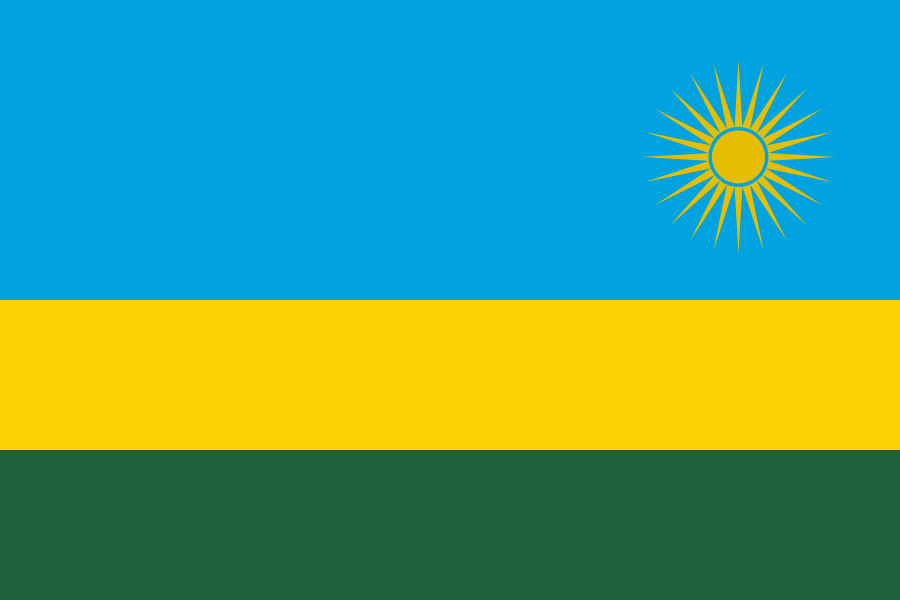
Rwanda
Location Info
- Continent: Africa
- Country: Rwanda
- Coordinates: -1.9403 , 29.8739
Trust Info
Verified Geographic Information
🌍 Continents

Overview
Rwanda is a landlocked country situated in the Great Rift Valley of East Africa, where the African Great Lakes region and Southeast Africa converge. Known as the 'Land of a Thousand Hills,' its geography is defined by mountains in the west and savanna to the east, with numerous lakes scattered throughout the territory.
Historically, Rwanda transitioned from a monarchical system through a colonial period under Germany and Belgium to an independent republic. In recent decades, the nation has seen significant economic transformation and is recognized for its highly organized administrative structure and focus on technological and environmental sustainability.
Truth & Facts
| Total Area | 26,338 sq km |
| Highest Point | Mount Karisimbi (4,507 m) |
| Population | 13.7 million (approx) |
| Median Age | 19 years |
| Capital | Kigali |
| Number of Districts | 30 |
| Independence | July 1, 1962 |
| Currency | Rwandan Franc (RWF) |
| Main Exports | Coffee, Tea, Minerals |
| Electricity Access | 75% (approx) |
| Literacy Rate | 73.2% |
| Insurance Coverage | Over 90% |
| Official Languages | Kinyarwanda, English, French, Swahili |
| Top Attraction | Volcanoes National Park |
| Plastic Ban | Prohibited since 2008 |
| National Carrier | RwandAir |
| Mobile Penetration | 80%+ |
| Police Force | Rwanda National Police |
| Legislature | Bicameral Parliament |
| Regional Bloc | East African Community (EAC) |
| Clean Water Access | 87% (approx) |
| Arable Land | 47% (approx) |
| Most Popular Sport | Football (Soccer) |
| National Broadcaster | Rwanda Broadcasting Agency (RBA) |
📑 Table of Contents
Overview
Rwanda is a sovereign state located in the African Great Lakes region. It is bordered by Uganda, Tanzania, Burundi, and the Democratic Republic of the Congo. The nation is distinguished by its green, mountainous landscape and high elevation.
The capital city, Kigali, serves as the primary political and economic hub. Rwanda is known for its stability and rapid development over the last three decades.
- Official Name: Republic of Rwanda
- Capital: Kigali
- Motto: Unity, Work, Patriotism
- System: Unitary Presidential Republic
- Independence Year: 1962
History
Rwanda's early history involves a centralized monarchy led by a Mwami (King). In the late 19th century, it became part of German East Africa, later passing to Belgian control after World War I.
The 20th century was marked by social tensions which culminated in the 1994 Genocide against the Tutsi. Following this event, the country underwent a period of national reconciliation and reconstruction.
| Period | Major Events |
|---|---|
| Pre-Colonial | Kingdom of Rwanda consolidation |
| 1884–1916 | German Colonial Era |
| 1916–1962 | Belgian Administration |
| 1994 | Genocide and RPF victory |
| Post-1994 | Reconstruction and Vision 2020/2050 |
Geography
Rwanda is located just south of the Equator. Its geography is dominated by the Albertine Rift and several large lakes, including Lake Kivu, which forms much of the western border.
The eastern part of the country consists mainly of rolling hills and savannas. The north is defined by the Virunga volcanic mountain range.
- Area: 26,338 km²
- Neighboring Countries: 4
- Major Lake: Lake Kivu
- Highest Peak: Mt. Karisimbi
- River Systems: Nile and Congo Basins
Climate and Weather
Despite its equatorial location, Rwanda enjoys a temperate tropical highland climate. Temperatures vary little throughout the year due to the high altitude.
The country experiences two rainy seasons and two dry seasons. The long rains typically occur between March and May.
- Average Temp: 12°C to 27°C
- Rainy Season 1: February to May
- Rainy Season 2: September to December
- Dry Season 1: June to August
- Dry Season 2: January to February
Population and Demographics
Rwanda has a population of approximately 13.7 million people. It is the most densely populated country in mainland Africa, with most residents living in rural areas.
The population is young, with over half the residents under the age of 20. Ethnic groups traditionally included Hutu, Tutsi, and Twa, though national identity is prioritized today.
- Density: Approx. 520 people/km²
- Life Expectancy: 67 years
- Urban Population: Approx. 18%
- Growth Rate: 2.3% per annum
Culture and Lifestyle
Rwandan culture is centered around music, dance, and oral tradition. The Intore dance is a famous traditional performance involving rhythmic drumming and energetic movement.
Basket weaving, particularly the 'Agaseke' basket, is a significant traditional craft. Social life often involves community activities like 'Umuganda', a monthly day of mandatory community service.
Festivals and Events
Major events in Rwanda focus on cultural heritage and conservation. Kwita Izina, the gorilla naming ceremony, is an annual highlight attracting international attention.
- Kwita Izina: Gorilla Naming Ceremony
- Umuganura: Harvest Festival
- FESPAD: Pan-African Dance Festival
- Kigali Up: Music Festival
Food and Cuisine
The diet in Rwanda is based on local staples such as bananas, plantains, sweet potatoes, beans, and cassava. Meat is traditionally eaten in smaller quantities compared to vegetables.
Popular dishes include 'Ugali' (maize porridge) and 'Matooke' (steamed green bananas). Tilapia fish is common near the lakeside regions.
Economy and Industries
The economy is primarily agrarian, with coffee and tea as the main cash crops. However, the government is aggressively promoting the service and ICT sectors.
Tourism is the largest foreign exchange earner, driven by eco-tourism and mountain gorilla trekking.
| Sector | Primary Activities |
|---|---|
| Agriculture | Coffee, Tea, Pyrethrum |
| Industry | Mining, Cement, Beverages |
| Services | Tourism, Banking, ICT |
Cost of Living
The cost of living in Rwanda is relatively low compared to Western nations, but it is one of the more stable economies in the region. Kigali is the most expensive city in the country.
- Housing: Varies by district; high in Nyarutarama
- Utilities: Costs are increasing with infrastructure expansion
- Food: Affordable when sourcing local produce
Employment and Business
Most of the workforce is engaged in subsistence farming. The government aims to transition to a knowledge-based economy through the 'Vision 2050' plan.
Rwanda consistently ranks high in Africa for ease of doing business, attracting foreign investment in technology and manufacturing.
Real Estate and Housing
Urban areas, especially Kigali, are seeing a boom in residential and commercial real estate. There is a strong focus on urban planning and green city initiatives.
- Primary Style: Modern villas and apartments in cities
- Rural Housing: Traditional brick and tile houses
- Focus: Affordable housing projects
Transportation and Connectivity
Rwanda has a well-maintained road network connecting major cities. There are no railways, but plans for regional rail links are in development.
Public transport is dominated by minibuses and motorcycle taxis (motos), which are regulated and required to use meters in some areas.
Infrastructure and Utilities
Access to electricity has increased significantly through hydroelectric, solar, and methane gas projects from Lake Kivu. Water supply is managed primarily by WASAC.
- Energy Source: Hydro, Solar, Methane, Peat
- Internet: Extensive fiber optic backbone
- Sanitation: Improving urban sewage systems
Education
The education system follows a 6-3-3 structure. Primary education is free and compulsory. The language of instruction was changed from French to English in 2008.
- University: University of Rwanda
- Focus: STEM and vocational training
- Literacy: High relative to regional peers
Healthcare
Rwanda's healthcare system is lauded for its community-based health insurance (Mutuelle de Santé). It has significantly reduced infant and maternal mortality rates.
- Hospitals: King Faisal Hospital, CHUK
- Health Workers: Extensive community network
- Access: High universal coverage
Tourist Attractions
The main attractions are the three national parks. Volcanoes National Park is the most famous for mountain gorillas.
- Akagera: Savannah and Big Five
- Nyungwe: Chimpanzees and Canopy Walk
- Kigali Genocide Memorial: Historical site
Things to Do
Activities range from wildlife trekking to cultural tours. Hiking in the Virunga Mountains is popular for active travelers.
- Gorilla Trekking
- Canopy Walking in Nyungwe
- Kayaking on Lake Kivu
- Coffee and Tea plantation tours
Best Places to Visit
Top destinations include the capital and the major parks. Rubavu and Karongi are popular lakeside towns.
- Kigali: Urban culture and history
- Musanze: Gateway to the gorillas
- Lake Kivu: Relaxation and water sports
Travel Guide
Rwanda is accessible via Kigali International Airport. Most nationalities can obtain a visa on arrival or apply for an East Africa Tourist Visa.
- Visa: Available on arrival for many
- Currency: RWF (USD widely accepted for tourism)
- Safety: Very high safety rating
Nearby Places
Rwanda's central location makes it a hub for East African travel. It is close to other major African Great Lakes destinations.
- Goma (DRC): Just across the border from Rubavu
- Kabale (Uganda): Near the northern border
- Bujumbura (Burundi): South of Rwanda
Environment and Nature
The environment is protected through strict laws. Large-scale reforestation projects and the ban on plastic bags contribute to the country's cleanliness.
- Conservation: Focus on endangered species
- Cleanliness: Known as one of the cleanest countries in Africa
- Biodiversity: High in the Albertine Rift
Government and Administration
The government is a presidential system with a bicameral parliament. It is known for its high representation of women in the legislature.
- President: Head of State and Government
- Provinces: Kigali, North, South, East, West
- Representation: Over 60% women in parliament
Safety and Public Services
Public safety is maintained by the Rwanda National Police. Fire services and emergency medical response are centered in Kigali and major towns.
- Emergency No: 112 (Police)
- Crime: Very low levels of street crime
- Visibility: High police presence in urban areas
Best Time to Visit
The dry seasons (June to September and December to February) are best for wildlife viewing and trekking. Birdwatching is excellent during the rainy seasons.
Local Business Directory
Businesses are concentrated in Kigali's Special Economic Zone and central business district. Sectors include retail, finance, and telecommunications.
- Telecoms: MTN Rwanda, Airtel
- Banking: Bank of Kigali, I&M Bank
- Aviation: RwandAir
General Information FAQs
Where is Rwanda located?
Rwanda is a landlocked country in East-Central Africa, located just south of the Equator.
What is Rwanda known for?
Rwanda is primarily known for its mountain gorillas, its 'Land of a Thousand Hills' landscape, and its rapid economic recovery.
Why is Rwanda famous?
It is famous for the Volcanoes National Park and for being one of the safest and cleanest countries in Africa.
What country or region is Rwanda part of?
Rwanda is part of the African Great Lakes region and the East African Community.
What is the population of Rwanda?
The population is approximately 13.7 million as of recent estimates.
What languages are spoken in Rwanda?
Kinyarwanda, English, French, and Swahili are the official languages.
What time zone is Rwanda in?
Rwanda is in Central Africa Time (CAT), which is UTC+2.
What are the key facts about Rwanda?
Key facts include its high population density, its status as a landlocked nation, and its leadership in environmental policy.
What makes Rwanda unique?
Its success in plastic bag bans and the mandatory community service 'Umuganda' make it unique.
How large is Rwanda in area?
Rwanda covers an area of approximately 26,338 square kilometers.
History FAQs
What is the history of Rwanda?
Rwanda moved from a pre-colonial monarchy to German and Belgian rule, gained independence in 1962, and has transitioned into a stable republic post-1994.
When was Rwanda established?
The modern Republic of Rwanda gained independence on July 1, 1962.
What major historical events happened in Rwanda?
Key events include the 1959 Revolution, 1962 Independence, and the 1994 Genocide against the Tutsi.
Who were important historical figures from Rwanda?
Significant figures include various Abanyiginya kings (Mwamais) and current President Paul Kagame.
How has Rwanda developed over time?
Rwanda has shifted from an ethnic-based social structure to a unified national identity with a focus on ICT and tourism.
Geography & Environment FAQs
What is the geography of Rwanda?
It is characterized by mountains in the west, savannas in the east, and numerous lakes throughout.
What natural features surround Rwanda?
It is surrounded by the Virunga Mountains, Lake Kivu, and the Akagera River.
Are there mountains, rivers, or lakes near Rwanda?
Yes, major features include the Nyungwe forest, the Kagera River, and the five volcanoes of the Virunga range.
What is the elevation of Rwanda?
The country is mostly above 1,500 meters, with the lowest point being the Rusizi River at 950 meters.
What ecosystems exist around Rwanda?
Ecosystems range from montane rainforests and bamboo forests to savannas and wetlands.
Climate & Weather FAQs
What is the climate like in Rwanda?
Rwanda has a temperate tropical highland climate with lower temperatures than typical equatorial countries.
What is the average temperature in Rwanda?
The daily temperature range is typically between 12°C (night) and 27°C (day).
What is the weather like throughout the year in Rwanda?
It is consistently mild, with significant rainfall during the two wet seasons.
Does Rwanda experience extreme weather?
Severe weather is rare, though heavy rains can cause localized flooding or landslides in mountainous areas.
What is the best time of year to visit Rwanda?
The dry months from June to September are ideal for trekking and outdoors.
Population & Society FAQs
What is the population density of Rwanda?
It is over 500 people per square kilometer, one of the highest in the world.
What ethnic groups live in Rwanda?
The population consists of Hutu, Tutsi, and Twa people, though legal classification by ethnicity is now prohibited.
What religions are practiced in Rwanda?
Christianity (Catholic and Protestant) is the majority religion, followed by Islam and traditional beliefs.
What is daily life like in Rwanda?
Daily life is centered around agriculture in rural areas and rapidly modernizing services in urban centers.
How diverse is the population of Rwanda?
While linguistically unified (Kinyarwanda), it is socially diverse with various traditional cultural practices.
Culture & Traditions FAQs
What cultural traditions are important in Rwanda?
Umuganda (community work), Gacaca (traditional justice), and traditional dance (Intore) are vital.
What festivals are celebrated in Rwanda?
Independence Day, Liberation Day, and Kwita Izina are major national celebrations.
What cultural landmarks exist in Rwanda?
The King's Palace Museum in Nyanza and the Ethnographic Museum in Huye are major landmarks.
What traditional clothing or customs are common in Rwanda?
The Mushanana is the traditional formal dress for women.
What arts and crafts are associated with Rwanda?
Imigongo (cow dung art) and Agaseke (woven baskets) are famous crafts.
Food & Cuisine FAQs
What foods is Rwanda known for?
Rwanda is known for high-quality coffee, tea, and local staples like beans and plantains.
What traditional dishes originate from Rwanda?
Isombe (cassava leaves with peanut sauce) and Ibitoke (stewed bananas) are traditional.
What are the best restaurants in Rwanda?
Most high-end dining is found in Kigali, featuring both local and international cuisine.
What local ingredients are commonly used in Rwanda cuisine?
Cassava, maize, sweet potatoes, beans, and bananas are primary ingredients.
What food markets or street foods are popular in Rwanda?
Brochettes (grilled meat skewers) and 'Akabenz' (roasted pork) are popular street foods.
Economy & Business FAQs
What are the main industries in Rwanda?
Agriculture, tourism, and mining (tin, tantalum, tungsten) are the main industries.
What economic activities drive the economy of Rwanda?
Foreign direct investment, tourism, and agricultural exports drive the economy.
What businesses operate in Rwanda?
Major regional banks, telecom firms, and rising tech startups operate in the country.
Is Rwanda an important economic center?
Yes, it is considered a hub for the East African Community due to its ease of business.
What are the major exports or products from Rwanda?
The major exports are coffee, tea, and various metallic ores.
Employment & Jobs FAQs
What job opportunities are available in Rwanda?
Opportunities are growing in ICT, finance, construction, and hospitality.
What are the major employers in Rwanda?
The Government of Rwanda is a large employer, followed by large agricultural cooperatives and the tourism sector.
What skills are in demand in Rwanda?
Technical skills in software development, engineering, and bilingual management are in demand.
Is Rwanda a good place to work?
It offers a stable environment and efficient administrative processes for professionals.
What is the unemployment rate in Rwanda?
The unemployment rate fluctuates but is actively monitored by the NISR, focusing on youth employment.
Cost of Living FAQs
Is Rwanda expensive to live in?
It is moderately priced; cheaper than many Western cities but more expensive than some neighbors for imported goods.
What is the average cost of living in Rwanda?
A modest lifestyle can be maintained reasonably, but luxury goods are priced high due to import costs.
How much does housing cost in Rwanda?
Housing in Kigali can range from $300 to $2000+ per month depending on the neighborhood and amenities.
What are average food and utility costs in Rwanda?
Local food is very cheap, while electricity and internet are mid-range for the region.
Is Rwanda affordable compared to nearby cities?
It is comparable to Nairobi and Kampala, though certain services in Kigali may carry a premium for quality.
Housing & Real Estate FAQs
What types of housing are available in Rwanda?
Options include detached houses, modern apartment blocks, and traditional rural homesteads.
What is the average home price in Rwanda?
In Kigali, prices for modern homes typically start around $50,000 and go up significantly for prime locations.
Is it better to rent or buy property in Rwanda?
Renting is common for expats and mobile professionals, while the government encourages home ownership for citizens.
Which neighborhoods are popular in Rwanda?
Nyarutarama, Kiyovu, and Kimihurura are the most sought-after areas in Kigali.
How has the property market changed in Rwanda?
It has moved towards organized urban master plans and vertical housing to conserve land.
Transportation FAQs
How do you get to Rwanda?
Most international travelers arrive via Kigali International Airport (KGL).
What is the nearest airport to Rwanda?
Kigali International Airport is the primary gateway; a new airport is under construction at Bugesera.
Does Rwanda have railway connections?
Currently no, though there are planned connections to the Tanzanian and Ugandan rail networks.
How reliable is public transportation in Rwanda?
Public buses are very reliable and operate on fixed routes with electronic payment cards in Kigali.
What major highways or roads connect to Rwanda?
Paved roads connect Kigali to all four borders and major internal towns like Musanze and Huye.
Education FAQs
What schools are located in Rwanda?
Rwanda has various public, private, and international schools (e.g., International School of Kigali).
Are there universities in Rwanda?
Yes, the University of Rwanda is the largest, along with international campuses like Carnegie Mellon University Africa.
What is the literacy rate in Rwanda?
The literacy rate is approximately 73% for adults and significantly higher for youth.
What educational opportunities exist in Rwanda?
There is a strong focus on TVET (Technical and Vocational Education and Training) and digital literacy.
Is Rwanda a good place for students?
It is becoming a regional education hub, particularly for technology and conservation studies.
Healthcare FAQs
What hospitals are available in Rwanda?
King Faisal Hospital and various referral hospitals in provinces provide advanced care.
Are there emergency medical services in Rwanda?
Yes, through the SAMU emergency service and various private ambulance providers.
What healthcare facilities exist in Rwanda?
Facilities include health posts, health centers, and district hospitals.
Is healthcare affordable in Rwanda?
Yes, the Mutuelle de Santé insurance makes healthcare accessible to the majority of the population.
Are specialized medical services available in Rwanda?
Specialized services like heart surgery and oncology are increasingly available in Kigali.
Tourism & Travel FAQs
What are the top tourist attractions in Rwanda?
Volcanoes National Park, Nyungwe Forest, and the Kigali Genocide Memorial.
What are the best things to do in Rwanda?
Gorilla trekking, chimpanzee tracking, and visiting the museums of Kigali.
Is Rwanda worth visiting?
Yes, it offers a unique combination of wildlife, clean urban centers, and deep history.
What landmarks should visitors see in Rwanda?
The King's Palace at Nyanza and the twin lakes Burera and Ruhondo.
How many days should tourists spend in Rwanda?
A typical trip lasts 5 to 10 days to cover the major national parks and Kigali.
Nearby Places FAQs
What places are near Rwanda worth visiting?
Lake Bunyonyi in Uganda and Queen Elizabeth National Park are relatively close.
What cities or towns are close to Rwanda?
Goma in the DRC and Kabale in Uganda are the closest international towns.
What natural attractions are near Rwanda?
The Virunga National Park in DRC and Mgahinga Gorilla National Park in Uganda.
What day trips can be taken from Rwanda?
Trips to the Akagera National Park or various lakes like Lake Muhazi can be done in a day from Kigali.
What famous destinations are within reach of Rwanda?
The Serengeti (Tanzania) and Masai Mara (Kenya) are accessible via short regional flights.
Safety FAQs
Is Rwanda safe to live in?
Yes, it is consistently ranked as one of the safest countries globally.
Is Rwanda safe for tourists?
Extremely safe; solo travelers and foreigners generally experience very low levels of harassment.
What is the crime rate in Rwanda?
Violent crime is very low, though petty theft can occur in crowded areas.
What emergency services operate in Rwanda?
The police (112) and medical emergencies (912) are the primary numbers.
What safety tips should visitors follow in Rwanda?
Respect local laws, avoid walking in dark remote areas alone, and always use official transport.
Lifestyle & Living FAQs
Is Rwanda a good place to live?
It is popular among those seeking order, safety, and a pleasant climate.
What recreational activities are available in Rwanda?
Hiking, cycling, gym culture, and dining out are popular in urban centers.
Is Rwanda family-friendly?
Yes, there are many safe parks, family-oriented restaurants, and quality schools.
What outdoor activities are popular in Rwanda?
Cycling (Rwanda is famous for it), mountain climbing, and birding.
What makes life enjoyable in Rwanda?
The blend of modern efficiency with green, natural surroundings and a high level of security.
Practical Information FAQs
What travel tips should visitors know about Rwanda?
Do not bring plastic bags, carry some local currency, and respect the Umuganda hours if visiting on the last Saturday of the month.
What local customs should visitors respect in Rwanda?
Public displays of excessive emotion are often discouraged; always ask before taking photos of people.
How accessible is Rwanda for international visitors?
Very accessible with a modern airport and straightforward visa processes.
What services are available for tourists in Rwanda?
Tourist information centers, professional guide services, and high-speed internet in most hotels.
What important information should travelers know before visiting Rwanda?
Rwanda is a 'no-plastic' country; the use of non-biodegradable plastic bags is strictly penalized at the airport.