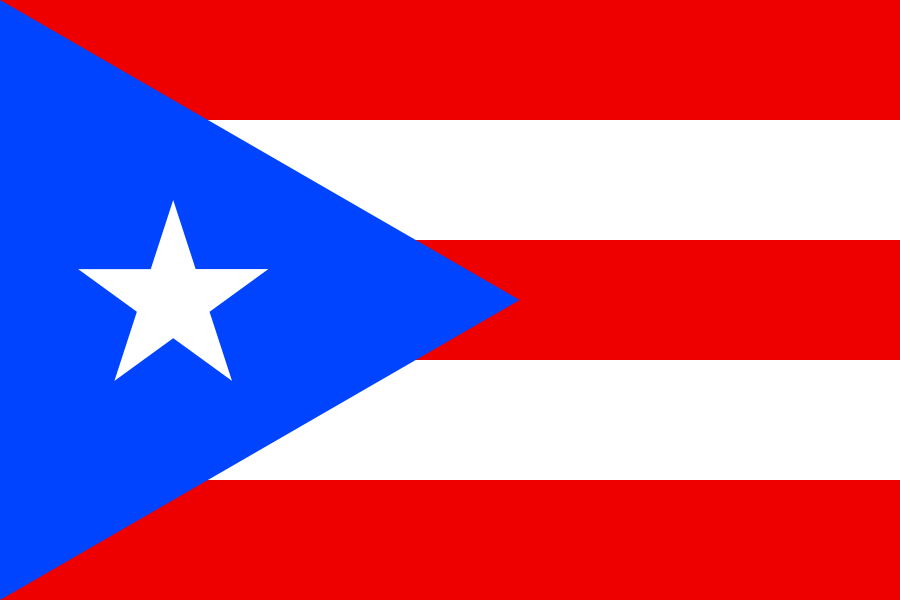
Puerto Rico
Location Info
- Continent: North America
- Country: Puerto Rico
- Coordinates: 18.2208 , -66.5901
Trust Info
Verified Geographic and Historical Data
🌍 Continents


Overview
Puerto Rico is an archipelago located in the northeastern Caribbean Sea, forming part of the Greater Antilles. As a Commonwealth of the United States, it occupies a unique political position, blending Latin American cultural roots with United States legal and economic systems. The main island is characterized by a rugged mountainous interior, most notably the Cordillera Central, surrounded by fertile coastal plains where the majority of the population and industrial activity are concentrated.
Historically, the island served as a vital military outpost for the Spanish Empire for over four centuries before becoming a U.S. territory in 1898. Today, it is a significant industrial hub, particularly in pharmaceutical and medical device manufacturing, while maintaining a vibrant tourism sector driven by its tropical climate, historic colonial architecture in Old San Juan, and natural wonders like El Yunque National Forest.
Truth & Facts
| Total Area | 9,104 sq km |
| Highest Point | Cerro de Punta (1,338 m) |
| Official Name | Commonwealth of Puerto Rico |
| Capital | San Juan |
| Population | 3,222,690 (2026 Est.) |
| Official Languages | Spanish and English |
| Spanish Rule | 1493 - 1898 |
| US Citizenship | 1917 (Jones Act) |
| Main Industry | Pharmaceuticals |
| Currency | United States Dollar (USD) |
| Major Port | Port of San Juan |
| Main Airport | Luis Muñoz Marín International (SJU) |
| National Forest | El Yunque |
| Major University | University of Puerto Rico (UPR) |
| Health Coverage | 94.4% Coverage Rate |
| National Anthem | La Borinqueña |
| Scientific Site | Arecibo Observatory (Site) |
| Executive Head | Governor |
| Nominal GDP | $129.19 Billion (2026 Est.) |
| Annual Visitors | 6.6 Million (2024) |
| Power Provider | LUMA Energy (Distribution) |
| Representation | Resident Commissioner |
| Primary Force | Puerto Rico Police Bureau |
| Avg. Temperature | 27°C (81°F) |
| GDP Contribution | 47.2% |
📑 Table of Contents
Overview
Puerto Rico is a Caribbean archipelago and an unincorporated territory of the United States. It is situated between the Dominican Republic and the Virgin Islands, serving as a gateway between North and South America. The main island is approximately 100 miles long and 35 miles wide, making it the smallest of the Greater Antilles.
- Political Status: U.S. Commonwealth
- Capital: San Juan
- Total Land Area: 3,425 square miles
- Official Languages: Spanish and English
- Currency: U.S. Dollar
History
The history of Puerto Rico began with the Ortoiroid and Taino people, who inhabited the island long before European contact. In 1493, Christopher Columbus arrived during his second voyage, claiming the island for Spain and naming it San Juan Bautista. For over 400 years, Puerto Rico was a Spanish colony, heavily fortified to protect Spanish trade routes in the New World.
- 1508: First settlement established by Ponce de Leon
- 1898: Ceded to the U.S. after the Spanish-American War
- 1917: Jones Act grants U.S. citizenship to residents
- 1952: Establishment of the Commonwealth status
- 2017: Hurricane Maria causes significant impact on infrastructure
Geography
Puerto Rico's landscape is defined by the Cordillera Central mountain range, which runs east-to-west through the center of the island. This range creates a climatic divide between the humid north and the semi-arid south. The island is also known for its extensive karst region in the northwest, featuring unique haystack hills and deep sinkholes.
| Region | Characteristic |
|---|---|
| Mountainous Interior | Covers 60% of land area |
| Coastal Lowlands | Narrow fertile plains |
| Karst Area | Limestone formations and caves |
Climate & Weather
Puerto Rico experiences a tropical marine climate characterized by warm temperatures and high humidity year-round. Average temperatures hover around 27°C (81°F) in coastal areas and are slightly cooler in the interior mountains. The island faces a distinct wet season from May to November, coinciding with the Atlantic hurricane season.
- Dry Season: December to April
- Hurricane Season: June 1 to November 30
- Average Coastal Temperature: 24°C - 30°C
- Annual Rainfall (Mountains): Up to 200 inches
- Prevailing Winds: Northeast trade winds
Population & Demographics
The population of Puerto Rico is approximately 3.2 million, with a high population density concentrated in metropolitan areas like San Juan and Bayamon. The demographic makeup is a fusion of Spanish, African, and Taino ancestry. Recent trends show a population decline driven by economic factors and migration to the U.S. mainland.
- Median Age: 46.2 years
- Ethnic Heritage: Hispanic/Latino (99%)
- Life Expectancy: 82.3 years
- Urban Population: 93% (aggregrated)
- Literacy Rate: 92.4%
Culture & Lifestyle
Puerto Rican culture is a vibrant blend of Taino, Spanish, and African influences, often referred to as 'Boricua' pride. This heritage is evident in the island's music, particularly Salsa and Reggaeton, and its colorful festivals. Daily life often centers around family gatherings and community events held in public plazas.
- National Sport: Baseball
- Key Music Genres: Salsa, Bomba, Plena
- Dominant Religion: Roman Catholicism
- Symbol: The Coquí frog
- Traditional Craft: Mundillo (lace making)
Festivals & Events
The island's calendar is filled with religious and cultural festivals known as 'Fiestas Patronales,' celebrating the patron saints of each municipality. These events feature parades, traditional music, and local delicacies. The San Sebastian Street Festival in Old San Juan is one of the largest annual celebrations.
- San Sebastian Street Festival: January
- Saborea Puerto Rico (Food Fest): April
- Casals Festival: February/March
- Noche de San Juan: June 23
- Three Kings Day: January 6
Food & Cuisine
Puerto Rican cuisine, or 'Cocina Criolla,' is characterized by the use of local ingredients like plantains, yuca, and sofrito (a flavorful herb base). Mofongo, made from fried green plantains mashed with garlic and pork cracklings, is considered a signature dish of the island.
| Dish | Description |
|---|---|
| Mofongo | Mashed plantains with garlic |
| Arroz con Gandules | Rice with pigeon peas |
| Lechón Asado | Slow-roasted whole pig |
| Pasteles | Root vegetable dough steamed in leaves |
Economy & Industries
Puerto Rico has transitioned from an agrarian society to an industrial powerhouse. Manufacturing accounts for nearly half of the island's GDP, driven by high-tech sectors like pharmaceuticals and medical device production. Services, including finance and tourism, also play critical roles in the economy.
- Main Sector: Pharmaceutical Manufacturing
- Secondary Sector: Tourism and Services
- Export Partners: United States (75%)
- Currency: US Dollar
- Economic Growth (2024): 2.1%
Cost of Living
The cost of living in Puerto Rico is generally lower than in major U.S. cities like New York or San Francisco but can be higher than the U.S. national average due to the high cost of imported goods. Electricity and utilities are notably expensive because of the island's reliance on imported fuel.
- Median Household Income: $27,213
- Housing: Generally affordable outside San Juan
- Utilities: High compared to U.S. mainland
- Consumer Goods: Mostly imported and taxed
- Sales Tax: 11.5% (Highest in US jurisdiction)
Employment & Business
Employment in Puerto Rico is concentrated in the service sector, public administration, and retail trade. The island offers several tax incentives, such as Act 60, to attract foreign investment and businesses. However, labor force participation remains lower than the U.S. national average.
- Unemployment Rate: 5.5% (2024)
- Top Employer: Government / Public Admin
- Key Business Hub: San Juan
- Investment Incentives: Act 60 (Export Services)
- Labor Force: ~1.2 Million
Real Estate & Housing
The housing market in Puerto Rico varies significantly between the luxury coastal developments of Condado and Dorado and the more rural mountainous regions. Following Hurricane Maria, there has been a push for more resilient construction and a revitalization of urban centers.
- Total Housing Units: ~1.6 Million
- Urban Centers: High demand for condos
- Rural Areas: Single-family concrete homes
- Property Tax: Managed by CRIM
- Rental Market: Strong in tourist zones
Transportation & Connectivity
Puerto Rico serves as a major transportation hub for the Caribbean. Luis Muñoz Marín International Airport is the busiest in the region, connecting the island to dozens of international destinations. The Port of San Juan is a critical maritime gateway for both cruise ships and cargo vessels.
- Primary Airport: Luis Muñoz Marín (SJU)
- Public Transit: Tren Urbano (Metro in San Juan)
- Main Highway: PR-22 and PR-52
- Cargo: 80% through Port of San Juan
- Ferries: Connections to Vieques and Culebra
Infrastructure & Utilities
Infrastructure development is currently a high priority, with billions in federal funding allocated for the modernization of the electrical grid and water systems. The island's energy sector is shifting toward private management and renewable energy sources to improve reliability.
- Power Grid: Operated by LUMA Energy
- Water Authority: AAA (Acueductos y Alcantarillados)
- Waste Management: Municipal landfills
- Internet: Fiber-optic expansion in cities
- Seaports: Multi-million dollar upgrades in progress
Education
Puerto Rico has a robust education system modeled after the United States. Higher education is highly valued, with the University of Puerto Rico serving as the premier public institution. There are also numerous private universities and technical colleges across the island.
- Public System: Department of Education
- Major University: University of Puerto Rico
- Private Institutions: Interamerican University
- Language of Instruction: Spanish (mostly)
- Bachelor's Degree Rate: 29.7%
Healthcare
Healthcare services in Puerto Rico include a mix of public and private hospitals. The island follows U.S. medical standards and regulations, with most providers accepting Medicare and private health insurance. San Juan is home to several specialized medical centers and teaching hospitals.
- Emergency Services: 9-1-1
- Primary Health: 'Mi Salud' (Government plan)
- Major Facility: Centro Médico (San Juan)
- Standard: US-certified facilities
- Availability: High in urban areas
Tourist Attractions
From historic Spanish fortresses to lush tropical rainforests, Puerto Rico offers diverse attractions. Old San Juan is a UNESCO World Heritage site known for its cobblestone streets and centuries-old forts like El Morro. Natural attractions include bioluminescent bays and the Rio Camuy caves.
- El Morro Fortress: 16th-century defense
- El Yunque: Tropical rainforest
- Old San Juan: Colonial city center
- La Parguera: Phosphorescent bay
- Culebra: Home to Flamenco Beach
Things to Do
Visitors can engage in a variety of activities, from surfing in Rincón to hiking through the rainforest. The island's geography allows for both high-adrenaline sports like ziplining and relaxing beach-oriented leisure. Cultural tours of coffee plantations and rum distilleries are also popular.
- Surfing: Rincón (Winter months)
- Hiking: El Yunque trails
- Snorkeling: Icacos and Culebra
- Rum Tasting: Casa Bacardí
- Caving: Rio Camuy Cave Park
Best Places to Visit
While San Juan is the primary destination, other parts of the island offer unique experiences. Ponce, known as the 'Pearl of the South,' features distinct neoclassical architecture. The islands of Vieques and Culebra are famous for having some of the most pristine beaches in the Caribbean.
| Place | Highlight |
|---|---|
| San Juan | Historic forts and nightlife |
| Vieques | Bioluminescent Bay |
| Rincón | Surfing and sunsets |
| Ponce | Art museums and plaza |
Travel Guide
Traveling to Puerto Rico is straightforward for U.S. citizens as no passport is required for entry. The island uses the U.S. dollar and follows the same postal and banking systems. Most major car rental companies operate at the airport, making it easy to explore the island beyond the capital.
- Entry: No passport for US citizens
- Currency: US Dollar
- Communication: US cell plans work
- Tipping: 15-20% standard
- Driving: Right side of road
Nearby Places
Puerto Rico is a gateway to the rest of the Caribbean. The nearby islands of Vieques and Culebra are technically part of the territory but offer a more secluded atmosphere. Other neighboring nations like the Dominican Republic and the U.S. Virgin Islands are easily accessible by short flights or ferries.
- U.S. Virgin Islands: East of PR
- Dominican Republic: West of PR
- Vieques: 8 miles off east coast
- Culebra: 17 miles off east coast
- BVI: Just past USVI
Environment & Nature
The island's environment is incredibly diverse, ranging from dry tropical forests in the south to wet rainforests in the east. It is home to many endemic species, including the iconic coquí frog and the endangered Puerto Rican parrot. Conservation efforts are active in protecting the island's unique coral reefs and mangroves.
- Endemic Species: Puerto Rican Parrot
- Protected Area: Guánica Dry Forest
- Natural Wonder: Bioluminescent Bays
- Marine Life: Sea turtles and coral reefs
- Cave Systems: Karst limestone caves
Government & Administration
The government of Puerto Rico is a republican form of government with three branches: executive, legislative, and judicial. While it has its own constitution and handles internal affairs, the island remains subject to the ultimate authority of the U.S. Congress under the Territorial Clause.
- Governor: Elected executive
- Legislature: Bicameral (Senate and House)
- Municipalities: 78 independent districts
- Federal Agency: Oversight Board (PROMESA)
- Court System: Independent with US federal appeal
Safety & Public Services
Public safety is managed by the Puerto Rico Police Bureau and municipal police departments. For tourists, the island is generally safe, especially in well-frequented areas like Old San Juan and Condado. Standard safety precautions should be followed in urban centers after dark.
- Emergency: 911
- Police: Puerto Rico Police Bureau
- Fire: Cuerpo de Bomberos
- Tourism Police: Specialized units in San Juan
- Water Safety: Lifeguards at 'Balnearios'
Best Time to Visit
The peak tourist season in Puerto Rico is from mid-December to April, when the weather is driest and most pleasant. For those looking to avoid crowds and high prices, the shoulder months of May and June are ideal, though they mark the beginning of the wetter season.
- Peak Season: December - April
- Shoulder Season: April - June
- Off-Season: August - October (Hurricane risk)
- Best for Surfing: Winter months
- Best for Festivals: January
Local Business Directory
Puerto Rico's business landscape is a mix of global retail chains and local artisanal shops. San Juan features major shopping centers like Plaza Las Américas, the largest in the Caribbean, while towns like Rincón and Luquillo are known for small local businesses and surf shops.
- Malls: Plaza Las Américas (San Juan)
- Distilleries: Bacardí, Serrallés
- Coffee Brands: Alto Grande, Yaucono
- Retail: Walmart, Walgreens (Highly prevalent)
- Local Crafts: Galería Nacional shops
General Information FAQs
Where is Puerto Rico located?
Puerto Rico is located in the northeastern Caribbean Sea, about 1,000 miles southeast of Miami, Florida. It is part of the Greater Antilles island chain.
What is Puerto Rico known for?
Puerto Rico is known for its beautiful beaches, the El Yunque tropical rainforest, historic Spanish forts in Old San Juan, and its rich musical heritage including Salsa and Reggaeton.
Why is Puerto Rico famous?
The island is famous for being a unique cultural bridge between Latin America and the United States, as well as for its bioluminescent bays and high-quality rum production.
What country or region is Puerto Rico part of?
Puerto Rico is an unincorporated territory (Commonwealth) of the United States. It is located in the Caribbean region of North America.
What is the population of Puerto Rico?
As of 2026, the estimated population of Puerto Rico is approximately 3.2 million people.
What languages are spoken in Puerto Rico?
Both Spanish and English are official languages. Spanish is the primary language spoken by the majority of the population.
What time zone is Puerto Rico in?
Puerto Rico is in the Atlantic Standard Time (AST) zone. It does not observe Daylight Saving Time.
What are the key facts about Puerto Rico?
Key facts include its status as a US territory, its capital San Juan, its use of the US dollar, and its status as the fourth-largest island in the Caribbean.
What makes Puerto Rico unique?
Its unique blend of Taino, Spanish, and African cultures, combined with its political status as a US Commonwealth, creates a distinct social and economic environment.
How large is Puerto Rico in area?
The total area of Puerto Rico is approximately 3,515 square miles (9,104 sq km).
History FAQs
What is the history of Puerto Rico?
Puerto Rico's history spans from indigenous Taino settlement to 400 years of Spanish colonial rule, followed by its transition to a US territory after the Spanish-American War in 1898.
When was Puerto Rico established?
The first Spanish settlement, Caparra, was established in 1508 by Juan Ponce de León. The island was 'discovered' by Columbus in 1493.
What major historical events happened in Puerto Rico?
Key events include the Spanish colonization, the 1868 Grito de Lares uprising, the 1898 invasion by US forces, and the 1952 establishment of the Commonwealth.
Who were important historical figures from Puerto Rico?
Important figures include Juan Ponce de León, abolitionist Ramón Emeterio Betances, and political leader Luis Muñoz Marín.
How has Puerto Rico developed over time?
It evolved from a strategic military outpost and agricultural colony (sugar and coffee) into a modern industrial economy focused on manufacturing and services.
Geography & Environment FAQs
What is the geography of Puerto Rico?
The island features a central mountain range (Cordillera Central), northern karst limestone regions, and fertile coastal plains.
What natural features surround Puerto Rico?
It is surrounded by the Atlantic Ocean to the north and the Caribbean Sea to the south, with over 140 smaller islands and cays.
Are there mountains, rivers, or lakes near Puerto Rico?
Yes, the Cordillera Central contains peaks like Cerro de Punta. There are over 50 rivers and several man-made reservoirs (lakes).
What is the elevation of Puerto Rico?
The elevation ranges from sea level at the coast to 4,393 feet (1,339 m) at the summit of Cerro de Punta.
What ecosystems exist around Puerto Rico?
Ecosystems include tropical rainforests, dry forests, mangroves, coral reefs, and limestone cave systems.
Climate & Weather FAQs
What is the climate like in Puerto Rico?
Puerto Rico has a tropical marine climate, which is warm and humid with little seasonal temperature variation.
What is the average temperature in Puerto Rico?
The average temperature is approximately 81°F (27°C) year-round in lower elevations.
What is the weather like throughout the year in Puerto Rico?
Weather is generally sunny with short rain showers. The north is wetter than the south, and the hurricane season runs from June to November.
Does Puerto Rico experience extreme weather?
Yes, the island is prone to tropical storms and hurricanes, as well as occasional seismic activity.
What is the best time of year to visit Puerto Rico?
The best time to visit is from mid-December to April to avoid the rainy and hurricane seasons.
Population & Society FAQs
What is the population density of Puerto Rico?
Puerto Rico is densely populated, with about 941 people per square mile (363 per sq km).
What ethnic groups live in Puerto Rico?
Most residents identify as Hispanic or Latino, with a heritage combining European, African, and Taino ancestry.
What religions are practiced in Puerto Rico?
The majority of the population is Roman Catholic, with a significant and growing Protestant community.
What is daily life like in Puerto Rico?
Daily life is characterized by a mix of Caribbean rhythms and US-style consumer culture, with a strong emphasis on family and community.
How diverse is the population of Puerto Rico?
The population is very diverse in terms of heritage, with a fusion of Taino, Spanish, African, and recent American influences.
Culture & Traditions FAQs
What cultural traditions are important in Puerto Rico?
Important traditions include the celebration of Three Kings Day, Sanse (San Sebastian Street Festival), and the custom of the 'parranda' at Christmas.
What festivals are celebrated in Puerto Rico?
Key festivals include the San Sebastian Street Festival in San Juan and the various Fiestas Patronales in each town.
What cultural landmarks exist in Puerto Rico?
Landmarks include the Castillo San Felipe del Morro, the Cathedral of San Juan Bautista, and the Tibes Indigenous Ceremonial Center.
What traditional clothing or customs are common in Puerto Rico?
Traditional attire includes the 'guayabera' shirt for men. Customs often revolve around music, dance (Salsa), and festive community dining.
What arts and crafts are associated with Puerto Rico?
Famous crafts include hand-carved wooden 'santos' (saints), vejigante masks, and 'mundillo' (bobbin lace).
Food & Cuisine FAQs
What foods is Puerto Rico known for?
Puerto Rico is known for mofongo, lechón asado (roast pig), and arroz con gandules.
What traditional dishes originate from Puerto Rico?
Traditional dishes include pasteles, alcapurrias, and tembleque (a coconut dessert).
What are the best restaurants in Puerto Rico?
Highly-rated venues are often found in Old San Juan and Condado, ranging from fine dining to traditional 'fondas.'
What local ingredients are commonly used in Puerto Rico cuisine?
Common ingredients include plantains, yuca, culantro, pigeon peas, and garlic.
What food markets or street foods are popular in Puerto Rico?
Popular street foods include bacalaítos (codfish fritters) and empanadillas, often found at 'kioskos' in areas like Luquillo.
Economy & Business FAQs
What are the main industries in Puerto Rico?
The main industries are pharmaceuticals, medical devices, electronics, and tourism.
What economic activities drive the economy of Puerto Rico?
The economy is driven by manufacturing exports and the service sector, including finance and hospitality.
What businesses operate in Puerto Rico?
Many Fortune 500 pharmaceutical companies have plants here, alongside major US retail chains and a growing local tech startup scene.
Is Puerto Rico an important economic center?
Yes, it is a leading hub for life sciences and manufacturing in the Caribbean region.
What are the major exports or products from Puerto Rico?
Major exports include prescription drugs, medical equipment, and rum.
Employment & Jobs FAQs
What job opportunities are available in Puerto Rico?
Opportunities are strongest in manufacturing, healthcare, professional services, and the public sector.
What are the major employers in Puerto Rico?
The largest employers are the Government of Puerto Rico and multinational companies like Amgen, Abbott, and Walmart.
What skills are in demand in Puerto Rico?
Skills in engineering, pharmaceutical technology, data science, and bilingual customer service are highly valued.
Is Puerto Rico a good place to work?
It offers a unique lifestyle but has challenges like lower average wages compared to the US mainland and high utility costs.
What is the unemployment rate in Puerto Rico?
The unemployment rate as of late 2024 and early 2025 was approximately 5.5%.
Cost of Living FAQs
Is Puerto Rico expensive to live in?
It can be expensive relative to local salaries, particularly for imported food and electricity, though housing is often cheaper than in US coastal cities.
What is the average cost of living in Puerto Rico?
The cost varies but is generally estimated to be about 5-10% lower than the US national average, except for utilities.
How much does housing cost in Puerto Rico?
Prices range from $150,000 for modest homes to over $1,000,000 for luxury properties in areas like Dorado.
What are average food and utility costs in Puerto Rico?
Electricity costs are among the highest in any US jurisdiction; food costs are similar to the US mainland due to high import reliance.
Is Puerto Rico affordable compared to nearby cities?
It is generally more affordable than Miami or New York but more expensive than some southern US states or neighboring Caribbean nations.
Housing & Real Estate FAQs
What types of housing are available in Puerto Rico?
Options include modern high-rise condos in San Juan, Spanish-style colonial homes, and concrete single-family houses in the mountains.
What is the average home price in Puerto Rico?
The median home price is approximately $200,000, but this fluctuates significantly based on location.
Is it better to rent or buy property in Puerto Rico?
Buying is often better for long-term stays due to rising rents in tourist areas, but renting is preferred for flexibility.
Which neighborhoods are popular in Puerto Rico?
Popular areas include Condado, Isla Verde, Miramar, and the municipality of Dorado.
How has the property market changed in Puerto Rico?
The market has seen increased interest from investors due to tax incentives and a recovery in construction since 2017.
Transportation FAQs
How do you get to Puerto Rico?
Most people arrive by air via Luis Muñoz Marín International Airport (SJU). Cruise ships also arrive at the Port of San Juan.
What is the nearest airport to Puerto Rico?
The main gateway is Luis Muñoz Marín International Airport in Carolina (serving San Juan).
Does Puerto Rico have railway connections?
There are no intercity railways, but San Juan has a metro system called the 'Tren Urbano.'
How reliable is public transportation in Puerto Rico?
Public transit is limited outside of San Juan; most residents and visitors rely on cars or ride-sharing services.
What major highways or roads connect to Puerto Rico?
The PR-1, PR-2, and PR-52 are major highways that connect San Juan with the rest of the island.
Education FAQs
What schools are located in Puerto Rico?
The island has a public school system and many private/bilingual schools like Saint John's and Robinson School.
Are there universities in Puerto Rico?
Yes, including the University of Puerto Rico, Interamerican University, and several medical and law schools.
What is the literacy rate in Puerto Rico?
The literacy rate is high, estimated at approximately 92.4%.
What educational opportunities exist in Puerto Rico?
Opportunities exist in diverse fields, particularly in pharmacy, engineering, and the arts.
Is Puerto Rico a good place for students?
Yes, it offers accredited institutions and a lower cost of living than many US college towns.
Healthcare FAQs
What hospitals are available in Puerto Rico?
Notable hospitals include Auxilio Mutuo, Ashford Presbyterian, and the Cardiovascular Center of Puerto Rico.
Are there emergency medical services in Puerto Rico?
Yes, the island has 9-1-1 services and ambulance transport available in all municipalities.
What healthcare facilities exist in Puerto Rico?
Facilities include general hospitals, specialized clinics, and a network of community health centers (CDTs).
Is healthcare affordable in Puerto Rico?
It is generally comparable to the US mainland; most residents use private insurance or the government's 'Mi Salud' plan.
Are specialized medical services available in Puerto Rico?
Yes, particularly in San Juan, where advanced cardiac, oncological, and pediatric care is available.
Tourism & Travel FAQs
What are the top tourist attractions in Puerto Rico?
Top sites include Old San Juan, El Yunque National Forest, and Flamenco Beach in Culebra.
What are the best things to do in Puerto Rico?
Activities include touring the Bacardí distillery, bioluminescent bay tours, and surfing in Rincón.
Is Puerto Rico worth visiting?
Absolutely, it offers a diverse mix of history, nature, and modern amenities in a tropical setting.
What landmarks should visitors see in Puerto Rico?
Don't miss the Castillo San Felipe del Morro, La Fortaleza, and the Arecibo Observatory site.
How many days should tourists spend in Puerto Rico?
A typical visit of 5 to 7 days allows for a good mix of San Juan and day trips to the rainforest or nearby islands.
Nearby Places FAQs
What places are near Puerto Rico worth visiting?
Nearby destinations include the islands of Vieques and Culebra, and the US Virgin Islands.
What cities or towns are close to Puerto Rico?
Within the archipelago, Ponce, Mayagüez, and Caguas are significant urban centers near San Juan.
What natural attractions are near Puerto Rico?
The Mona Island nature reserve and the various bioluminescent bays are key natural attractions.
What day trips can be taken from Puerto Rico?
Popular day trips from San Juan include El Yunque, the Camuy Caves, and Luquillo Beach.
What famous destinations are within reach of Puerto Rico?
St. Thomas and St. Croix (USVI) are just short flights or ferry rides away.
Safety FAQs
Is Puerto Rico safe to live in?
Most areas are safe for residents, though some urban neighborhoods have higher crime rates, similar to major US cities.
Is Puerto Rico safe for tourists?
Yes, tourism zones are well-patrolled and generally very safe for international and US visitors.
What is the crime rate in Puerto Rico?
The crime rate has seen a general downward trend in recent years, though property crime remains a concern in some areas.
What emergency services operate in Puerto Rico?
Police, fire, and medical services are fully operational and accessible via the 9-1-1 system.
What safety tips should visitors follow in Puerto Rico?
Stay in well-lit areas at night, don't leave valuables in rental cars, and be aware of ocean currents at beaches.
Lifestyle & Living FAQs
Is Puerto Rico a good place to live?
It offers a high quality of life for those who enjoy tropical weather and a rich culture, though economic challenges persist.
What recreational activities are available in Puerto Rico?
Golfing, sailing, hiking, and attending live music events are very popular.
Is Puerto Rico family-friendly?
Yes, children are very welcome in Puerto Rican society, and there are many family-oriented parks and beaches.
What outdoor activities are popular in Puerto Rico?
Popular activities include snorkeling, mountain biking in the interior, and paddleboarding in the lagoons.
What makes life enjoyable in Puerto Rico?
The combination of a relaxed pace of life, year-round warm weather, and a friendly, hospitable population.
Practical Information FAQs
What travel tips should visitors know about Puerto Rico?
Rent a car for flexibility, carry some cash for small vendors, and learn a few basic Spanish phrases.
What local customs should visitors respect in Puerto Rico?
Be polite, dress modestly when entering churches, and respect the natural environment, especially on the islands.
How accessible is Puerto Rico for international visitors?
International visitors must follow the same entry requirements as for the United States mainland (e.g., ESTA or US visa).
What services are available for tourists in Puerto Rico?
There are extensive tourism services, including information kiosks, guided tours, and numerous hotel options.
What important information should travelers know before visiting?
Understand that while English is spoken, Spanish is the soul of the island. Also, be prepared for tropical rain even on sunny days.