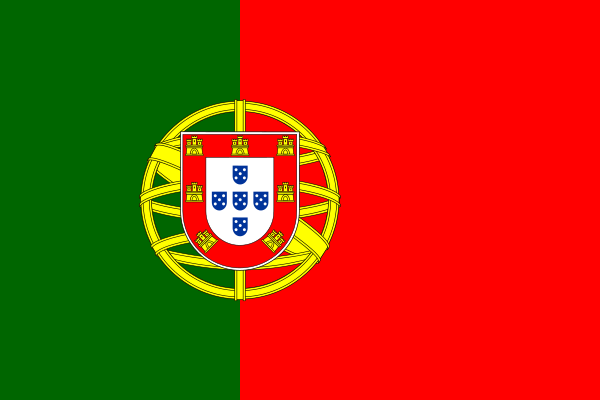
Portugal
Location Info
- Continent: Europe
- Country: Portugal
- Coordinates: 39.3999 , -8.2245
Trust Info
Verified Geographic Information
🌍 Continents


Overview
Portugal, officially the Portuguese Republic, is a sovereign state located on the Iberian Peninsula in Southwestern Europe. It is the westernmost point of continental Europe, bordered by the Atlantic Ocean to the west and south, and by Spain to the north and east. The nation also includes the Atlantic archipelagos of the Azores and Madeira, which are autonomous regions with their own local governments.
As one of the oldest nations in Europe, Portugal has a profound historical legacy, particularly from the Age of Discovery when it established a vast global empire. Today, it is a developed country with a high-income economy and high living standards. It is a member of the United Nations, the European Union, and a founding member of NATO and the CPLP.
Truth & Facts
| Total Area | 92,212 sq km |
| Estimated Population | 10.46 million |
| Capital | Lisbon |
| Independence Recognized | 1143 (Treaty of Zamora) |
| Currency | Euro (€) |
| Renewable Energy Share | Over 60% |
| Literacy Rate | 96.8% |
| Primary Provider | Serviço Nacional de Saúde (SNS) |
| Language | Portuguese |
| International Arrivals | Approx. 22 million |
| Forest Land | 35% |
| Motorway Length | 3,000+ km |
| Internet Users | 85% |
| GPI Rank | Top 10 Globally |
| System | Unitary Semi-Presidential Republic |
| Memberships | EU, UN, NATO, OECD, WTO |
| Safe Water Access | 99.9% |
| GDP (PPP) | $44,000 approx. |
| Style | Manueline |
| Global Rank | 1st |
📑 Table of Contents
Overview
Portugal is situated on the southwestern tip of Europe, occupying a significant portion of the Iberian Peninsula's Atlantic coast. It is defined by its maritime heritage and its historical role as a global pioneer during the Age of Discovery. The country maintains a stable democratic system and a high standard of living.
- Capital: Lisbon
- Official Language: Portuguese
- Government: Semi-presidential republic
- Time Zone: WET (UTC+0)
- Drive on the: Right
History
The history of Portugal dates back to prehistoric times, but its identity as a nation-state began in the 12th century with the Reconquista. King Afonso Henriques established the Kingdom of Portugal, which was formally recognized in 1143. During the 15th and 16th centuries, Portuguese explorers like Vasco da Gama and Ferdinand Magellan charted unknown waters, establishing one of history's longest-lived empires.
| Era | Significance |
|---|---|
| Roman Era | Establishment of Lusitania |
| 1143 | Treaty of Zamora (Independence) |
| 15th-16th Century | Age of Discovery |
| 1974 | Carnation Revolution |
Geography
Portugal's geography is marked by a clear contrast between the mountainous north and the rolling plains of the south. The Tagus River divides the country into two distinct regions. The north is characterized by plateaus and deep valleys, while the south features wide plains and a coastal climate. The Atlantic archipelagos of Madeira and the Azores are volcanic in origin and feature rugged landscapes.
- Highest Point: Mount Pico (Azores)
- Mainland Highest Point: Torre (Serra da Estrela)
- Major Rivers: Tagus, Douro, Guadiana
- Coastline: 1,794 km
Climate & Weather
The climate in Portugal is primarily Mediterranean, characterized by hot, dry summers and mild, rainy winters. The northern part of the country is generally cooler and wetter than the south. Coastal areas benefit from Atlantic breezes that moderate temperatures during the peak of summer.
| Season | Description | Avg Temp |
|---|---|---|
| Summer | Hot and sunny | 25-30°C |
| Winter | Mild and rainy | 8-15°C |
Population & Demographics
Portugal has a population of approximately 10.4 million people. The population is relatively homogeneous, though recent decades have seen increased migration from former colonies and other European nations. The population is concentrated along the coast, particularly in the metropolitan areas of Lisbon and Porto.
- Density: 115 inhabitants/sq km
- Major Ethnic Group: Portuguese
- Religion: Predominantly Roman Catholic
- Urban Population: Approx. 67%
Culture & Lifestyle
Portuguese culture is deeply rooted in maritime traditions and Roman Catholicism. Fado, a melancholic form of singing, is a UNESCO-recognized cultural heritage. Azulejos, the decorative ceramic tiles found on buildings throughout the country, are a hallmark of Portuguese visual art. Lifestyle in Portugal is generally relaxed, with a high emphasis on family and social gatherings.
- Fado music
- Azulejo tilework
- Manueline architecture
- Literature (Camões, Pessoa)
Festivals & Events
Religious and folk festivals, known as 'Festas' and 'Romarias,' are central to Portuguese community life. Each town has a patron saint, and celebrations often involve processions, music, and street food. The Carnival is also a significant event celebrated across the country with parades and costumes.
- Popular Saints (Santos Populares)
- Queima das Fitas (Student celebration)
- Festa de São João in Porto
- Carnival of Torres Vedras
Food & Cuisine
Portuguese cuisine is varied and heavily influenced by the sea. Bacalhau (dried, salted cod) is considered the national dish, with hundreds of ways to prepare it. Olive oil, garlic, and herbs are staple ingredients. Pastry making is also highly developed, with the Pastel de Nata being the most famous export.
- Bacalhau a Bras
- Pastel de Nata
- Caldo Verde soup
- Port and Madeira wines
- Fresh sardines
Economy & Industries
Portugal has a diversified economy that has transitioned from traditional sectors to service-oriented industries. It is a world leader in cork production and a significant producer of renewable energy. Tourism, automotive manufacturing, and textiles are also major contributors to the GDP.
| Industry | Status |
|---|---|
| Tourism | Major Growth Driver |
| Renewables | European Leader |
| Agriculture | Famous for Wine and Oil |
Cost of Living
Compared to Western European neighbors, the cost of living in Portugal is relatively moderate. While prices in Lisbon and Porto have risen due to international demand, smaller cities and rural areas remain affordable. Daily expenses like food, public transport, and utilities are generally reasonable.
- Groceries: Moderate
- Dining Out: Affordable
- Utilities: Average for EU
- Healthcare: Low cost for residents
Employment & Business
The Portuguese labor market has shown resilience, with a focus on tech startups and remote work in recent years. The government offers various incentives for foreign investors and entrepreneurs. Major employment hubs are concentrated in the Lisbon and Porto districts.
- Minimum Wage: Adjusted annually
- Work Week: 40 hours
- Primary Hub: Lisbon
Real Estate & Housing
Real estate in Portugal varies from modern apartments in coastal cities to historic estates (Quintas) in the countryside. The market has seen significant investment from international buyers, particularly in the Algarve and Lisbon. Rental markets are competitive in university cities and major urban centers.
- Urban: High demand
- Algarve: High international interest
- Interior: More affordable
Transportation & Connectivity
Portugal features a modern transportation network including extensive motorways and a national rail system operated by CP (Comboios de Portugal). International connectivity is provided by major airports in Lisbon, Porto, and Faro. Urban centers like Lisbon and Porto have efficient metro and tram systems.
- Airports: LIS, OPO, FAO
- Rail: Alfa Pendular (High speed)
- Bridges: Vasco da Gama, 25 de Abril
Infrastructure & Utilities
The nation has invested heavily in infrastructure over the last three decades. This includes a high-quality road network and advanced digital infrastructure. Utilities such as water and electricity are reliable across the country, with a strong focus on environmental sustainability.
- Electricity: High renewable share
- Water: Safe and modern systems
- Digital: Extensive 5G and Fiber
Education
Education in Portugal is compulsory until the age of 18. The country hosts several historic and prestigious universities, including the University of Coimbra, one of the oldest in the world. The system includes both public and private institutions across primary, secondary, and higher education.
- University of Coimbra
- University of Lisbon
- University of Porto
Healthcare
Healthcare is provided through the National Health Service (SNS), which offers universal coverage. Residents have access to a network of public hospitals and health centers. Private healthcare is also widely available and used by many as a supplement to the public system.
- System: SNS (Public)
- Access: Universal for residents
- Quality: High international standards
Tourist Attractions
Portugal offers a wide range of attractions, from the medieval castles of the north to the beaches of the south. Sintra, a UNESCO World Heritage site, is famous for its romantic architecture and palaces. Lisbon’s Belém district is home to monuments celebrating the Age of Discovery.
- Belem Tower
- Pena Palace
- Douro Valley
- Algarve Cliffs
Things to Do
Activities in Portugal range from surfing the giant waves of Nazaré to exploring the vineyards of the Douro Valley. Hiking is popular in the Peneda-Gerês National Park and along the coastal paths of the Algarve. Cultural experiences include attending Fado performances and visiting historical museums.
- Surfing in Nazaré
- Wine tasting in Douro
- Hiking in Madeira
- Fado nights in Alfama
Best Places to Visit
Portugal's most visited destinations include its historical cities and stunning coastlines. Lisbon, Porto, and the Algarve region are the primary tourist hubs. Other notable locations include the historic city of Évora and the mountainous regions of Serra da Estrela.
| Region | Highlight |
|---|---|
| Lisbon | Alfama District |
| Porto | Ribeira Square |
| Algarve | Benagil Cave |
Travel Guide
Travelers to Portugal should be aware of the country's membership in the Schengen Area. Most visitors arrive via Lisbon Airport. English is widely spoken in tourist areas, though learning basic Portuguese phrases is appreciated. The country uses the Euro and standard European power outlets.
- Currency: Euro
- Outlet: Type C/F
- Entry: Schengen Rules
Nearby Places
Portugal shares its only land border with Spain. Major Spanish cities like Seville, Madrid, and Vigo are accessible by road or rail. The Atlantic location also makes the Azores and Madeira archipelagos key points of interest within Portuguese territory.
- Seville, Spain
- Madrid, Spain
- Santiago de Compostela
Environment & Nature
The Portuguese environment is protected by a series of national parks and reserves. The Laurissilva forest in Madeira is a rare prehistoric forest. Coastal ecosystems include dunes and estuaries, which are vital for migratory birds. Conservation efforts focus on protecting the Iberian Lynx and endemic plant species.
- Peneda-Geres National Park
- Ria Formosa Lagoon
- Iberian Lynx conservation
Government & Administration
Portugal is a semi-presidential republic. The President acts as the head of state, while the Prime Minister leads the government. Administratively, the country is divided into 18 districts on the mainland and two autonomous regions (Azores and Madeira).
- Head of State: President
- Head of Gov: Prime Minister
- Parliament: Assembly of the Republic
Safety & Public Services
Portugal consistently ranks as one of the safest countries in the world. Public services are well-organized, with a responsive emergency system. Police forces include the PSP in urban areas and the GNR in rural and border regions. Firefighting and civil protection are highly trained for forest fire management.
- Emergency Number: 112
- Police: GNR and PSP
- Safety Rank: High
Best Time to Visit
The best time to visit Portugal is generally during the spring (March to May) or autumn (September to October). During these periods, the weather is pleasant, and tourist crowds are thinner than in the summer. Summer is ideal for beach activities, while winter is suitable for city breaks and surfing.
- Spring: Sightseeing
- Summer: Beaches
- Winter: Surfing
Local Business Directory
Portugal's business landscape is dominated by SMEs and a growing tech sector. Major traditional businesses include cork manufacturing, footwear, and wine production. Modern sectors like digital services and renewable energy are increasingly important in the urban centers of Lisbon and Porto.
- Key Sectors: Cork, Wine, Tech
- Business Hubs: Lisbon, Porto, Braga
General Information FAQs
Where is Portugal located?
Portugal is located in Southwestern Europe, on the Iberian Peninsula. It is bordered by the Atlantic Ocean to the west and south, and by Spain to the north and east.
What is Portugal known for?
Portugal is known for its maritime history, Fado music, Port wine, cork production, and beautiful coastlines like the Algarve.
Why is Portugal famous?
It is famous for the Age of Discovery, its global empire, distinctive architecture (Manueline), and world-class football players like Cristiano Ronaldo.
What country or region is Portugal part of?
Portugal is an independent country in the region of Southern Europe and is a member of the European Union.
What is the population of Portugal?
The population of Portugal is approximately 10.46 million people as of recent estimates.
What languages are spoken in Portugal?
Portuguese is the official and most widely spoken language. Mirandese is recognized as a regional language in some areas.
What time zone is Portugal in?
Mainland Portugal and Madeira are in the Western European Time zone (UTC+0), while the Azores are in UTC-1.
What are the key facts about Portugal?
Key facts include its capital Lisbon, its currency the Euro, and its status as one of the oldest nations in Europe.
What makes Portugal unique?
Its unique blend of Atlantic and Mediterranean influences, its specific Manueline art style, and its position as the world's largest cork producer.
How large is Portugal in area?
Portugal covers a total area of approximately 92,212 square kilometers, including its Atlantic archipelagos.
History FAQs
What is the history of Portugal?
Portugal's history involves early Roman and Moorish occupation, followed by the establishment of an independent kingdom in 1143 and a global maritime empire in the 15th century.
When was Portugal established?
Portugal was established as a kingdom in 1139, and its independence was formally recognized by León in 1143 and by the Pope in 1179.
What major historical events happened in Portugal?
Major events include the Age of Discovery, the 1755 Lisbon earthquake, the Peninsular War, and the 1974 Carnation Revolution.
Who were important historical figures from Portugal?
Important figures include Prince Henry the Navigator, Vasco da Gama, King Afonso Henriques, and the poet Luís de Camões.
How has Portugal developed over time?
Portugal evolved from a medieval kingdom to a global empire, later becoming a republic in 1910, enduring a dictatorship until 1974, and then transitioning into a modern democratic EU member.
Geography & Environment FAQs
What is the geography of Portugal?
Portugal's geography is mountainous in the north and features rolling plains in the south, with a rugged Atlantic coastline running the length of the country.
What natural features surround Portugal?
It is surrounded by the Atlantic Ocean on two sides and the mountainous regions of the Iberian Peninsula on the others.
Are there mountains, rivers, or lakes near Portugal?
Yes, major mountains include the Serra da Estrela, and major rivers include the Tagus, Douro, and Guadiana.
What is the elevation of Portugal?
The elevation ranges from sea level to 2,351 meters at Mount Pico in the Azores. On the mainland, the highest point is Torre at 1,993 meters.
What ecosystems exist around Portugal?
Ecosystems include Mediterranean scrubland, cork oak forests, alpine environments in the north, and unique Laurissilva forests in Madeira.
Climate & Weather FAQs
What is the climate like in Portugal?
The climate is mostly Mediterranean, with hot, dry summers and mild, wet winters, influenced heavily by the Atlantic Ocean.
What is the average temperature in Portugal?
Average temperatures range from 8-15°C in winter to 25-30°C in summer, though the interior can be much hotter.
What is the weather like throughout the year in Portugal?
Spring and autumn are mild and pleasant. Summer is consistently sunny and dry, while winter brings most of the annual rainfall.
Does Portugal experience extreme weather?
Extreme weather is rare, though summer heatwaves can occur in the interior and winter storms can affect the Atlantic coast.
What is the best time of year to visit Portugal?
The best times are spring (April-June) and early autumn (September-October) for comfortable weather and fewer crowds.
Population & Society FAQs
What is the population density of Portugal?
The population density is approximately 115 people per square kilometer, with higher concentrations in coastal cities.
What ethnic groups live in Portugal?
The population is predominantly ethnic Portuguese, with growing communities from Brazil, Cape Verde, Angola, and other European countries.
What religions are practiced in Portugal?
Roman Catholicism is the predominant religion, followed by a growing number of people with no religious affiliation and smaller Protestant and Muslim communities.
What is daily life like in Portugal?
Daily life is characterized by a strong emphasis on social connections, family-oriented dining, and a relaxed pace, particularly in smaller towns.
How diverse is the population of Portugal?
The population is becoming increasingly diverse due to immigration from Lusophone countries and northern Europe.
Culture & Traditions FAQs
What cultural traditions are important in Portugal?
Important traditions include Fado music, pilgrimage to Fatima, and the annual celebration of local patron saints.
What festivals are celebrated in Portugal?
Major festivals include the Popular Saints (Lisbon and Porto), Carnival, and various regional wine harvest festivals.
What cultural landmarks exist in Portugal?
Landmarks include the Jerónimos Monastery, the University of Coimbra, and the historical center of Évora.
What traditional clothing or customs are common in Portugal?
Traditional clothing often features intricate embroidery (Minho region), while customs include the evening 'passeio' (stroll) and communal outdoor dining.
What arts and crafts are associated with Portugal?
Portugal is famous for its Azulejo tiles, pottery, filigree jewelry, and cork-based handicrafts.
Food & Cuisine FAQs
What foods is Portugal known for?
It is known for seafood, particularly salted cod (bacalhau), grilled sardines, and the custard tart known as Pastel de Nata.
What traditional dishes originate from Portugal?
Dishes include Caldo Verde, Arroz de Pato, Cozido à Portuguesa, and Francesinha (from Porto).
What are the best restaurants in Portugal?
Portugal has many acclaimed restaurants, from high-end Michelin-starred spots in Lisbon to traditional 'tascas' serving authentic local food.
What local ingredients are commonly used in Portugal cuisine?
Common ingredients include olive oil, garlic, onions, sea salt, coriander, and a wide variety of fresh fish and shellfish.
What food markets or street foods are popular in Portugal?
Popular markets include Mercado da Ribeira in Lisbon and Bolhão in Porto. Popular street foods include Bifana (pork sandwich).
Economy & Business FAQs
What are the main industries in Portugal?
Main industries include tourism, automotive manufacturing, textiles, footwear, and the production of paper and cork.
What economic activities drive the economy of Portugal?
The service sector, particularly tourism, is a major driver, alongside growing sectors in renewable energy and technology.
What businesses operate in Portugal?
A mix of large multinational corporations and a significant number of small and medium-sized enterprises (SMEs).
Is Portugal an important economic center?
Portugal is a significant hub in the Lusophone world and an increasingly important location for European tech startups.
What are the major exports or products from Portugal?
Major exports include machinery, vehicles, base metals, agricultural products, and cork products.
Employment & Jobs FAQs
What job opportunities are available in Portugal?
Opportunities are strongest in tourism, IT, customer service, and renewable energy sectors.
What are the major employers in Portugal?
Major employers include Jerónimo Martins, Galp Energia, EDP, and various international tech companies with hubs in Lisbon.
What skills are in demand in Portugal?
Digital skills, engineering, and proficiency in multiple languages are highly sought after in the current job market.
Is Portugal a good place to work?
Portugal offers a high quality of life and a safe environment, though salaries are generally lower than in northern Europe.
What is the unemployment rate in Portugal?
The unemployment rate has stabilized around 6-7% in recent years, though this can vary by region and age group.
Cost of Living FAQs
Is Portugal expensive to live in?
Portugal is generally more affordable than many Western European countries, though costs in Lisbon and Porto are significantly higher than elsewhere.
What is the average cost of living in Portugal?
A single person may spend between €800 and €1,500 per month depending on their lifestyle and location.
How much does housing cost in Portugal?
Housing costs vary widely; a one-bedroom apartment in Lisbon may cost €1,000+ per month, while in smaller cities it may be €500.
What are average food and utility costs in Portugal?
Monthly groceries average around €200-€300 per person, and utilities for a standard apartment are usually around €100-€150.
Is Portugal affordable compared to nearby cities?
Yes, compared to cities like Madrid or Paris, Portuguese cities generally offer a lower cost for food, transport, and leisure.
Housing & Real Estate FAQs
What types of housing are available in Portugal?
Options range from modern urban apartments and historic townhouses to rural villas and traditional farmhouses.
What is the average home price in Portugal?
Average prices vary from €2,000 to over €5,000 per square meter in prime urban locations.
Is it better to rent or buy property in Portugal?
Renting is common for short-term stays, while buying is popular for long-term residency and investment purposes.
Which neighborhoods are popular in Portugal?
In Lisbon, Alfama and Avenida da Liberdade are popular. In Porto, Foz do Douro and Ribeira are highly sought after.
How has the property market changed in Portugal?
The market has seen a significant rise in prices due to international investment and the popularity of remote work programs.
Transportation FAQs
How do you get to Portugal?
Most international travelers arrive by air, though there are also bus and train connections from Spain.
What is the nearest airport to Portugal?
The main international gateway is Humberto Delgado Airport (LIS) in Lisbon.
Does Portugal have railway connections?
Yes, the national rail network (CP) connects all major cities, including high-speed Alfa Pendular services.
How reliable is public transportation in Portugal?
Public transport is very reliable in cities like Lisbon and Porto. In rural areas, services are less frequent.
What major highways or roads connect to Portugal?
The A1 connects Lisbon and Porto, while the A2 connects Lisbon to the Algarve.
Education FAQs
What schools are located in Portugal?
Portugal has a comprehensive system of public, private, and international schools for students of all ages.
Are there universities in Portugal?
Yes, including world-renowned institutions like the University of Porto and the University of Coimbra.
What is the literacy rate in Portugal?
The literacy rate is high, estimated at approximately 96.8% of the adult population.
What educational opportunities exist in Portugal?
Opportunities range from technical and vocational training to research-focused university programs.
Is Portugal a good place for students?
Yes, with a safe environment, affordable living costs compared to other EU nations, and high-quality universities.
Healthcare FAQs
What hospitals are available in Portugal?
A network of modern public hospitals under the SNS and numerous high-quality private hospitals are available.
Are there emergency medical services in Portugal?
Yes, the national emergency number is 112, and ambulance services are well-equipped.
What healthcare facilities exist in Portugal?
Facilities include local health centers (Centros de Saúde), specialized hospitals, and diagnostic clinics.
Is healthcare affordable in Portugal?
Public healthcare is heavily subsidized and affordable for residents, while private insurance is also available at competitive rates.
Are specialized medical services available in Portugal?
Yes, Portugal has centers of excellence for various specialties, including oncology and cardiology.
Tourism & Travel FAQs
What are the top tourist attractions in Portugal?
Top attractions include the Pena Palace in Sintra, the Douro Valley, and the historical Ribeira district in Porto.
What are the best things to do in Portugal?
Best activities include wine tasting, surfing, historical walking tours, and visiting seaside towns.
Is Portugal worth visiting?
Yes, it is consistently ranked as a top travel destination for its culture, scenery, and affordability.
What landmarks should visitors see in Portugal?
Landmarks include the Belém Tower, Évora’s Roman Temple, and the volcanic landscapes of the Azores.
How many days should tourists spend in Portugal?
A minimum of 7 to 10 days is recommended to see the major highlights like Lisbon, Porto, and a third region like the Algarve or Sintra.
Nearby Places FAQs
What places are near Portugal worth visiting?
Nearby Spanish regions like Andalusia and Galicia offer excellent day-trip or extension options.
What cities or towns are close to Portugal?
Spanish cities such as Vigo, Seville, and Salamanca are located near the Portuguese border.
What natural attractions are near Portugal?
The Doñana National Park in Spain is a major natural attraction near the southern border.
What day trips can be taken from Portugal?
From Lisbon, trips to Sintra, Cascais, and Évora are highly popular.
What famous destinations are within reach of Portugal?
Madrid and Seville are easily reachable via a short flight or longer road trip.
Safety FAQs
Is Portugal safe to live in?
Yes, Portugal is frequently ranked as one of the top 10 safest countries globally by the Global Peace Index.
Is Portugal safe for tourists?
Yes, tourists generally experience a very high level of safety, though standard precautions against petty theft in crowded areas are advised.
What is the crime rate in Portugal?
The crime rate is very low, especially violent crime, making it a stable and secure environment.
What emergency services operate in Portugal?
Emergency services include the police (PSP/GNR), the fire department (Bombeiros), and the medical emergency service (INEM).
What safety tips should visitors follow in Portugal?
Keep belongings secure in busy tourist spots and be aware of ocean conditions when swimming at Atlantic beaches.
Lifestyle & Living FAQs
Is Portugal a good place to live?
Yes, it is highly rated for its work-life balance, climate, safety, and friendly local population.
What recreational activities are available in Portugal?
Recreation includes football, water sports, hiking, golf, and visiting numerous cultural festivals.
Is Portugal family-friendly?
Very family-friendly; children are welcomed in most social settings and there are many parks and activities for all ages.
What outdoor activities are popular in Portugal?
Surfing, hiking, bird watching, and cycling are among the most popular outdoor activities.
What makes life enjoyable in Portugal?
The mild climate, excellent food, proximity to the sea, and the welcoming culture make it very enjoyable.
Practical Information FAQs
What travel tips should visitors know about Portugal?
Wear comfortable shoes for cobblestone streets and remember that shops often close for lunch in smaller towns.
What local customs should visitors respect in Portugal?
Greet people politely with 'Bom dia' and respect the quiet atmosphere in residential areas and churches.
How accessible is Portugal for international visitors?
Highly accessible with major air hubs and good road infrastructure connecting to the rest of Europe.
What services are available for tourists in Portugal?
Turismo de Portugal provides extensive visitor centers, multilingual guides, and a robust tourism infrastructure.
What important information should travelers know before visiting Portugal?
Portugal uses the Euro, the electric voltage is 230V, and it is a part of the Schengen Agreement.