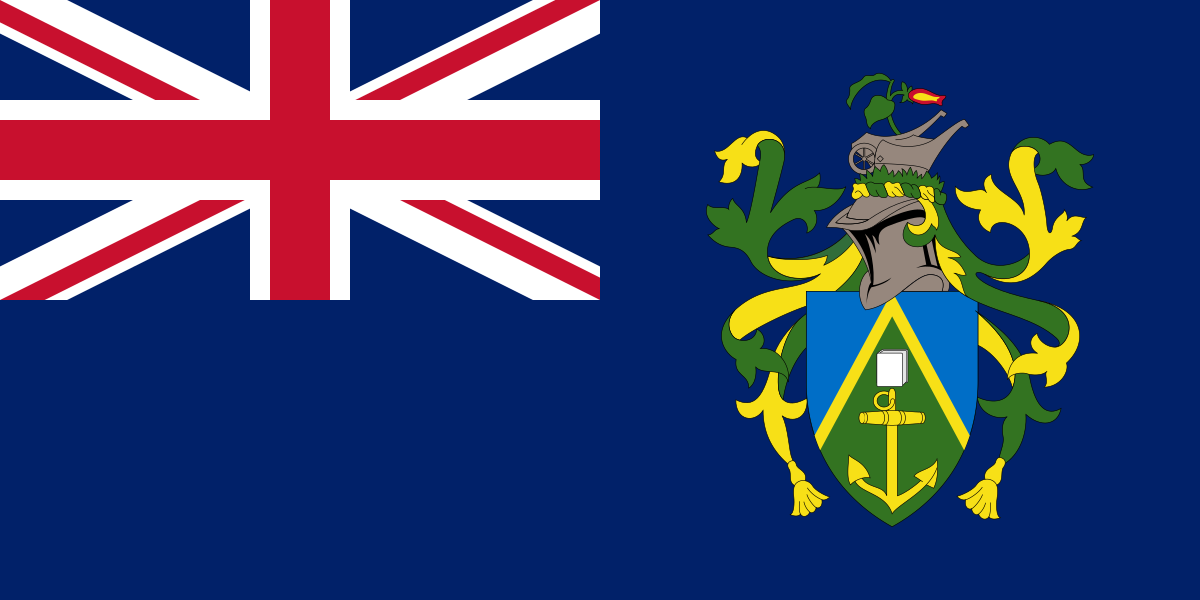
Pitcairn
Location Info
- Continent: Oceania
- Country: Pitcairn
- Coordinates: -25.0667 , -130.1
Trust Info
Verified Geographic Information
🌍 Continents





Overview
The Pitcairn Islands are a remote group of four volcanic islands located in the southern Pacific Ocean. As a British Overseas Territory, it is the last remaining British dependency in the South Pacific. Only the main island, Pitcairn, is inhabited, while the others—Henderson, Ducie, and Oeno—remain largely untouched. The territory is situated approximately 2,170 kilometers east-southeast of Tahiti and is one of the most isolated inhabited places on Earth.
The current population consists of fewer than 50 residents, most of whom are descendants of the HMS Bounty mutineers and their Tahitian companions who settled the island in 1790. The capital and sole settlement is Adamstown. The economy relies heavily on subsistence farming, fishing, and the sale of postage stamps and handicrafts, while the territory remains under the administrative jurisdiction of the British High Commissioner to New Zealand.
Truth & Facts
| Total Land Area | 47 square kilometers |
| Highest Point | 347 meters |
| Population | Approximately 47 |
| Official Languages | English, Pitkern |
| Capital | Adamstown |
| Currency | New Zealand Dollar (NZD) |
| Settlement Date | January 1790 |
| Colonial Status | British Colony since 1838 |
| Main Industries | Postage stamps, Handicrafts, Honey |
| Budget Support | UK Financial Aid |
| Electricity | Diesel generators and Solar |
| Water Source | Rainwater catchment |
| Primary School | Pulau School |
| Facility | Pitcairn Island Health Centre |
| Primary Religion | Seventh-day Adventist |
| Main Access | MV Silver Supporter ship |
| Marine Reserve | Pitcairn Islands Marine Protected Area |
| Primary Vehicle | Quad bikes (ATVs) |
| Internet TLD | .pn |
| Law Enforcement | Island Police Officer |
| Head of Government | Mayor of Pitcairn |
| Primary Relation | United Kingdom |
| Waste Management | On-island processing and shipping |
| Labor Force | Approximately 15-20 |
| UNESCO Site | Henderson Island |
| Main Landing | Bounty Bay |
📑 Table of Contents
Overview
The Pitcairn Islands are a remote volcanic group in the southern Pacific Ocean. It is the only British Overseas Territory in this part of the world, located thousands of miles from the nearest continental landmass. The territory consists of Pitcairn Island, Henderson Island, Ducie Island, and Oeno Island, though only Pitcairn is inhabited.
- Official Name: Pitcairn, Henderson, Ducie and Oeno Islands
- Capital: Adamstown
- Status: British Overseas Territory
- Inhabited Island: Pitcairn
- Time Zone: UTC-8
History
The islands were first inhabited by Polynesians, who left behind petroglyphs and stone tools. European discovery occurred in 1767 by the British ship HMS Swallow. However, the modern history of Pitcairn began in 1790 when mutineers from the HMS Bounty, led by Fletcher Christian, arrived and settled the island with Tahitian companions.
- 1790: Settlement by HMS Bounty mutineers
- 1838: Became a British Colony
- 1856: Temporary evacuation to Norfolk Island
- 1970: Jurisdiction transferred to the Governor in New Zealand
Geography
Pitcairn Island is a rugged volcanic outcrop with steep cliffs and limited flat land. Henderson Island is a large raised coral atoll and a UNESCO World Heritage site. Ducie and Oeno are smaller coral atolls located several hundred kilometers away from the main island.
| Island | Type | Area (sq km) |
|---|---|---|
| Pitcairn | Volcanic | 4.6 |
| Henderson | Coral Atoll | 37.3 |
| Ducie | Coral Atoll | 0.7 |
| Oeno | Coral Atoll | 0.65 |
Climate and Weather
The climate is tropical and humid, with temperatures remaining fairly consistent throughout the year. The islands experience moderate rainfall with no distinct dry season, though winter months (May to October) can be slightly cooler and wetter. High humidity is common, ranging between 60% and 90%.
- Summer Average: 20°C to 30°C
- Winter Average: 17°C to 25°C
- Annual Humidity: 60-90%
- Extreme Weather: Occasional tropical storms
Population and Demographics
Pitcairn has one of the smallest populations of any territory in the world. The residents are of mixed British and Tahitian descent. The population has been in decline for several decades as younger residents often move to New Zealand or Australia for education and work opportunities.
- Current Population: Approx. 47-50
- Ethno-Racial Group: Anglo-Tahitian
- Median Age: Rising due to ageing residents
- Settlement: Adamstown (100% of population)
Culture and Lifestyle
Life on Pitcairn is characterized by its isolation and strong community ties. The local language, Pitkern, is a unique blend of 18th-century English and Tahitian. Most residents are Seventh-day Adventists, which has historically influenced dietary habits and social customs, including the observance of the Sabbath on Saturday.
- Language: English and Pitkern
- Religion: Seventh-day Adventist
- Daily Life: Subsistence farming and community labor
- Cuisine: Fusion of British and Polynesian styles
Festivals and Events
The most significant local event is Bounty Day, which commemorates the burning of the HMS Bounty. This is celebrated with a community dinner and the burning of a model ship. Other observed holidays include British national events and religious milestones.
- Bounty Day: January 23rd
- King's Birthday: Observed annually
- Christmas: Community celebrations and gift exchanges
Food and Cuisine
Pitcairn's cuisine is based on locally grown tropical fruits, vegetables, and fresh seafood. Staple crops include bananas, papayas, pineapples, sweet potatoes (kumara), and breadfruit. Since there is no formal market, residents often share or trade produce among themselves.
- Main Staples: Breadfruit, Bananas, Fish
- Notable Export: Pitcairn Honey
- Typical Cooking: Earth ovens (umu) and traditional baking
Economy and Industries
The economy is small and largely subsidized by the United Kingdom. Traditional revenue sources include the sale of collectible postage stamps and handicrafts to passing cruise ship passengers. Modern efforts have focused on honey production and the sale of '.pn' internet domain names.
| Industry | Description |
|---|---|
| Philately | Sale of unique postage stamps |
| Agriculture | Honey, coffee, and dried fruit exports |
| Tourism | Passenger fees and handicraft sales |
Cost of Living
Living costs can be high due to the territory's extreme remoteness and the need to import most manufactured goods. However, residents do not pay formal income tax. Food is often homegrown, reducing daily expenses for basic nutrition.
- Electricity: Relatively high cost per unit
- Imported Goods: Significant shipping markups
- Taxation: No personal income tax
Employment and Business
There is no formal private sector in the traditional sense. Most working-age residents are employed by the Pitcairn Government in roles related to infrastructure maintenance, health, and administration. Small-scale entrepreneurs produce honey and crafts for the export market.
- Major Employer: Pitcairn Government
- Work Type: Public works and maintenance
- Business: Small-scale handicraft and honey production
Real Estate and Housing
Housing in Pitcairn consists of detached dwellings, primarily located in Adamstown. Most residents own their homes. To encourage migration, the government has occasionally offered free land to potential settlers, though strict entry and residency requirements remain in place.
- Ownership: Most residents own their property
- Building Materials: Mostly imported via supply ship
- Land Policy: Managed by the Island Council
Transportation and Connectivity
Access to Pitcairn is exclusively by sea, as there is no airport. A dedicated passenger and supply ship, the MV Silver Supporter, operates on a regular schedule from Mangareva, French Polynesia. On the island, the primary mode of transportation is the quad bike (ATV).
- International Access: Passenger ship from Mangareva
- Local Transit: Quad bikes (ATVs)
- Harbor: Bounty Bay (small jetty)
Infrastructure and Utilities
The island's infrastructure is limited but functional. Electricity is provided by diesel generators, supplemented by solar energy. Fresh water is collected through rainwater catchment systems. Recent projects have improved the alternate harbor at Tedside to allow safer landings during rough weather.
- Power: Diesel and Solar generators
- Water: Rainwater catchment tanks
- Telecommunications: Satellite internet and VoIP
Education
The Pulau School provides primary education to the few children residing on the island. The teacher is typically a professional seconded from New Zealand. Secondary and tertiary education usually requires students to move to New Zealand or Australia.
- School: Pulau School
- Curriculum: New Zealand standards
- Literacy Rate: Very High
Healthcare
The Pitcairn Island Health Centre provides basic medical services. It is staffed by a general practitioner (GP) and a nurse. Emergency medical cases requiring surgery or specialized care necessitate evacuation to Tahiti or New Zealand, which can take several days by ship.
- Facility: Pitcairn Island Health Centre
- Staff: 1 Doctor, 1 Nurse
- Emergency: Medical evacuation via sea only
Tourist Attractions
The primary attractions are natural and historical. Visitors can see the grave of John Adams (the last surviving mutineer) and the Bounty's anchor at the Public Square. Natural sites like St. Paul's Pool and the Christian's Cave offer scenic views and geological interest.
- John Adams' Grave: Historic site
- Bounty Anchor: Located in Adamstown square
- St. Paul's Pool: Natural tidal swimming pool
- Christian's Cave: Viewpoint and historical cave
Things to Do
Activities on Pitcairn are centered on the outdoors and history. Hiking is popular, though the terrain is very steep. Visitors can participate in local community events, explore the museum, or take guided tours of the historical mutineer sites.
- Hiking: Rugged trails around the island
- Stargazing: Designated International Dark Sky Sanctuary
- Snorkeling: Exploring the pristine marine environment
Best Places to Visit
Top locations include the museum in Adamstown, which houses artifacts from the HMS Bounty. Henderson Island is also highly notable, though it requires specialized permission to visit as a UNESCO World Heritage site and bird sanctuary.
- Pitcairn Island Museum: Historical artifacts
- Henderson Island: Wildlife and coral atoll
- Tedside: Scenic coastal area
Travel Guide
Traveling to Pitcairn requires significant planning. Visitors must fly to Papeete, Tahiti, then take a domestic flight to Mangareva, where they board the supply ship. There are no hotels; instead, visitors stay in homestays with local families.
- Visa: Visitors from many countries need a prior entry permit
- Accommodation: Local homestays
- Booking: Via the Pitcairn Islands Tourism portal
Nearby Places
The islands are extremely isolated. The nearest neighbors are the Gambier Islands of French Polynesia (specifically Mangareva), which serve as the transit point for Pitcairn. Beyond that, the nearest major landmasses are New Zealand and South America.
- Mangareva: Transit hub in French Polynesia
- Ducie Atoll: Uninhabited bird sanctuary
- Oeno Island: Local holiday spot for Pitcairners
Environment and Nature
The islands host unique flora and fauna, including endemic bird species on Henderson Island. The surrounding waters are part of the Pitcairn Islands Marine Protected Area (MPA), which protects a diverse oceanic ecosystem covering 830,000 square kilometers.
- MPA: One of the largest marine reserves
- Wildlife: Pitcairn Reed-warbler (endemic)
- Flora: Native ferns and tropical shrubs
Government and Administration
Pitcairn is governed by the Governor of Pitcairn (who is the British High Commissioner to New Zealand) and the local Island Council. The Council consists of ten members and manages internal affairs, while the Governor handles international relations and defense.
- Governor: Based in Wellington, NZ
- Local Body: Island Council
- Legal System: English Common Law
Safety and Public Services
Crime is rare in this small community, though an official police officer is resident on the island. Fire services are managed by community volunteers. Visitors are advised to be cautious on the rugged terrain as medical help is limited.
- Police: 1 Seconded Officer
- Fire: Volunteer-led
- Emergency Contact: Local radio (VHF)
Best Time to Visit
The best time to visit is during the summer months from November to March when temperatures are warmest. However, shipping schedules and weather conditions for landings at Bounty Bay are the primary factors in determining travel dates.
- Warmest Months: December - February
- Bounty Day: Late January
- Whale Watching: Often possible July - October
Local Business Directory
There are no commercial malls or large businesses. Local enterprises include the General Store (government-run), the Post Office, and individual home-based businesses selling honey, carvings, and curio items to visitors.
- General Store: Government-operated
- Post Office: Central Adamstown
- Treasures of Pitcairn: Local craft collective
General Information FAQs
Where is Pitcairn located?
Pitcairn is located in the South Pacific Ocean, approximately midway between New Zealand and South America. It is a British Overseas Territory in Oceania.
What is Pitcairn known for?
Pitcairn is primarily famous for being the refuge of the mutineers from the HMS Bounty and their Tahitian companions in 1790.
Why is Pitcairn famous?
It is famous for its unique history related to the HMS Bounty mutiny and for being one of the most remote and least populated inhabited places in the world.
What country or region is Pitcairn part of?
It is a British Overseas Territory and is part of the Oceania region in the South Pacific.
What is the population of Pitcairn?
The resident population is currently fewer than 50 people, primarily concentrated in the capital, Adamstown.
What languages are spoken in Pitcairn?
English and Pitkern (a creole language derived from 18th-century English and Tahitian) are the official languages.
What time zone is Pitcairn in?
Pitcairn is in the UTC-8 time zone (Pitcairn Standard Time).
What are the key facts about Pitcairn?
It has no airport, uses the New Zealand Dollar, and its economy is based on subsistence farming, fishing, and honey production.
What makes Pitcairn unique?
Its isolation, its origin story from the Bounty mutiny, and its status as a Dark Sky Sanctuary make it unique.
How large is Pitcairn in area?
The total land area of the four islands is 47 square kilometers, though the inhabited island of Pitcairn is only 4.6 square kilometers.
History FAQs
What is the history of Pitcairn?
After ancient Polynesian settlement, the island was uninhabited until the HMS Bounty mutineers arrived in 1790. It became a British colony in 1838.
When was Pitcairn established?
The modern settlement was established in January 1790 by Fletcher Christian and his party.
What major historical events happened in Pitcairn?
Key events include the 1790 settlement, the discovery of the community by the HMS Topaz in 1808, and the granting of female suffrage in 1838.
Who were important historical figures from Pitcairn?
Important figures include Fletcher Christian, the leader of the mutineers, and John Adams, the last surviving mutineer who became the community's spiritual leader.
How has Pitcairn developed over time?
It evolved from a lawless settlement into a structured British territory. In the 20th century, modern communication and regular shipping were established.
Geography & Environment FAQs
What is the geography of Pitcairn?
Pitcairn is a volcanic island with steep cliffs and rocky shorelines. Henderson is a raised coral atoll, while Ducie and Oeno are low-lying coral atolls.
What natural features surround Pitcairn?
The island is surrounded by the Pacific Ocean. It has very few beaches, with most of the coast consisting of high, sheer cliffs.
Are there mountains, rivers, or lakes near Pitcairn?
There are no rivers or lakes; water is primarily from rain. The island's peak, Pawala Valley Ridge, reaches 347 meters above sea level.
What is the elevation of Pitcairn?
The highest point is approximately 347 meters (1,138 feet) above sea level.
What ecosystems exist around Pitcairn?
The islands feature a tropical forest ecosystem and are part of a vast, protected marine ecosystem with rich biodiversity.
Climate & Weather FAQs
What is the climate like in Pitcairn?
The climate is tropical, hot, and humid throughout the year, with year-round rainfall.
What is the average temperature in Pitcairn?
The average temperature ranges from 17°C in the winter to about 30°C in the summer.
What is the weather like throughout the year in Pitcairn?
Humidity remains high (60-90%). Summer (November-March) is hot and wet, while winter (May-October) is cooler and slightly more pleasant.
Does Pitcairn experience extreme weather?
The islands can occasionally be affected by tropical cyclones or severe storms during the Pacific hurricane season.
What is the best time of year to visit Pitcairn?
The warmest months are from December to March, making it the most popular time for visitors despite the humidity.
Population & Society FAQs
What is the population density of Pitcairn?
The population density is approximately 1.1 people per square kilometer, though everyone lives in a single settlement.
What ethnic groups live in Pitcairn?
The majority of residents are of mixed British and Polynesian (Tahitian) descent.
What religions are practiced in Pitcairn?
The Seventh-day Adventist Church is the primary religious denomination on the island.
What is daily life like in Pitcairn?
Life involves community-based work, gardening, fishing, and managing the needs of the household in an isolated setting.
How diverse is the population of Pitcairn?
The population is very homogeneous, consisting almost entirely of descendants of the original 18th-century settlers.
Culture & Traditions FAQs
What cultural traditions are important in Pitcairn?
The observance of the Sabbath on Saturday and the annual celebration of Bounty Day are central traditions.
What festivals are celebrated in Pitcairn?
Bounty Day is the most important festival, featuring community dinners and the burning of a ship model.
What cultural landmarks exist in Pitcairn?
Key landmarks include John Adams' grave, the Pitcairn Island Museum, and the public square in Adamstown.
What traditional clothing or customs are common in Pitcairn?
While modern western clothing is worn, local customs include sharing harvest produce and specific islander social protocols.
What arts and crafts are associated with [Location]?
Islanders are known for wood carvings (specifically sharks and turtles) and basket weaving using pandanus leaves.
Food & Cuisine FAQs
What foods is Pitcairn known for?
It is known for fresh tropical fruits, especially honey, bananas, and citrus, as well as fresh ocean fish like wahoo and tuna.
What traditional dishes originate from Pitcairn?
Traditional dishes include Pilhi (a fruit or vegetable bake) and fresh fish prepared with coconut milk.
What are the best restaurants in Pitcairn?
There are no formal commercial restaurants. Meals are typically provided in homestays or as part of community dinners.
What local ingredients are commonly used in Pitcairn cuisine?
Ingredients include breadfruit, kumara (sweet potato), taro, coconut, and a variety of freshly caught fish.
What food markets or street foods are popular in Pitcairn?
There are no food markets; fresh produce is shared or sold through a government-run general store.
Economy & Business FAQs
What are the main industries in Pitcairn?
Main industries are stamp sales, handicrafts, honey production, and small-scale tourism.
What economic activities drive the economy of Pitcairn?
Government services, international aid from the UK, and small-scale exports of high-quality honey drive the economy.
What businesses operate in Pitcairn?
Businesses are mostly family-run or government-managed, focused on crafts, produce, and tourism services.
Is Pitcairn an important economic center?
No, it is a tiny, isolated economy that depends on external financial support from the United Kingdom.
What are the major exports or products from Pitcairn?
The main exports are Pitcairn Honey, wood carvings, and postage stamps for collectors.
Employment & Jobs FAQs
What job opportunities are available in Pitcairn?
Most jobs are within the local government and public works. There is very little private commercial employment.
What are the major employers in Pitcairn?
The Pitcairn Island Government is the primary employer on the island.
What skills are in demand in Pitcairn?
Practical skills such as construction, mechanics, healthcare, and engineering are highly valued.
Is Pitcairn a good place to work?
Employment is limited to the local population and specific government-contracted specialists from overseas.
What is the unemployment rate in Pitcairn?
The concept of unemployment is rarely applicable as the entire working population is typically employed in community or government tasks.
Cost of Living FAQs
Is Pitcairn expensive to live in?
Imported goods are expensive due to shipping costs, but basic survival costs can be low if one grows their own food.
What is the average cost of living in Pitcairn?
There is no standard data, but residents rely on government wages and local produce to manage high import prices.
How much does housing cost in Pitcairn?
There is no commercial housing market. Residents typically build their own homes on inherited or government-allocated land.
What are average food and utility costs in Pitcairn?
Electricity and fuel are expensive. Food costs are high for imports but negligible for locally grown fruit and vegetables.
Is Pitcairn affordable compared to nearby cities?
It cannot be easily compared as the nearest cities are thousands of miles away in New Zealand or Tahiti.
Housing & Real Estate FAQs
What types of housing are available in Pitcairn?
Housing consists of standalone, single-family dwellings built to withstand the tropical climate.
What is the average home price in Pitcairn?
There is no traditional real estate market; homes are generally not sold on a commercial basis.
Is it better to rent or buy property in Pitcairn?
Renting is uncommon; visitors stay in homestays, and residents typically own their own built structures.
Which neighborhoods are popular in Pitcairn?
Adamstown is the only settlement, and all housing is located within its vicinity.
How has the property market changed in Pitcairn?
The market remains stagnant due to the declining population and strict residency laws for outsiders.
Transportation FAQs
How do you get to Pitcairn?
You must travel by sea. Most people fly to Mangareva (French Polynesia) and then take a chartered passenger ship for a two-day voyage.
What is the nearest airport to Pitcairn?
The nearest airport is on Mangareva in the Gambier Islands of French Polynesia.
Does Pitcairn have railway connections?
No, Pitcairn has no railways; the only transportation is via road and sea.
How reliable is public transportation in Pitcairn?
There is no public transport system. Residents use private quad bikes to move around the island.
What major highways or roads connect to Pitcairn?
There are no highways. The island has a network of dirt tracks and some paved paths suitable for quad bikes and walking.
Education FAQs
What schools are located in Pitcairn?
Pulau School is the sole primary school on the island.
Are there universities in Pitcairn?
No, there are no higher education institutions. Students go to New Zealand for university.
What is the literacy rate in Pitcairn?
The literacy rate is estimated to be virtually 100%.
What educational opportunities exist in Pitcairn?
Opportunities are limited to primary education and vocational skills learned through community involvement.
Is Pitcairn a good place for students?
Only for young children; older students must leave the island for secondary schooling.
Healthcare FAQs
What hospitals are available in Pitcairn?
There is a basic health clinic, but no hospital. The clinic is equipped for minor treatments only.
Are there emergency medical services in Pitcairn?
Yes, a doctor and nurse are available, but major emergencies require overseas evacuation.
What healthcare facilities exist in Pitcairn?
The island has the Pitcairn Island Health Centre, providing primary healthcare and basic dental services.
Is healthcare affordable in Pitcairn?
Healthcare is provided by the government for residents; visitors must have comprehensive travel insurance.
Are specialized medical services available in Pitcairn?
No, specialized care is not available on the island.
Tourism & Travel FAQs
What are the top tourist attractions in Pitcairn?
Top sites include Bounty Bay, St. Paul's Pool, the Museum, and Henderson Island.
What are the best things to do in Pitcairn?
Visitors enjoy bird watching, stargazing, hiking to Christian's Cave, and learning about the mutiny history.
Is Pitcairn worth visiting?
For history buffs and adventure travelers seeking extreme remoteness, it is a bucket-list destination.
What landmarks should visitors see in Pitcairn?
The Grave of John Adams and the HMS Bounty anchor are essential landmarks.
How many days should tourists spend in Pitcairn?
Most visits are determined by the ship's schedule, typically allowing for 4 to 11 days on the island.
Nearby Places FAQs
What places are near Pitcairn worth visiting?
Henderson Island is a UNESCO site nearby, and the Gambier Islands in French Polynesia are the closest inhabited area.
What cities or towns are close to Pitcairn?
There are no nearby cities. The closest town is Rikitea on Mangareva island, over 500 kilometers away.
What natural attractions are near Pitcairn?
The massive marine reserve and the uninhabited coral atolls of Ducie and Oeno are the main natural attractions nearby.
What day trips can be taken from [Location]?
Day trips are usually limited to boat excursions to the other islands in the Pitcairn group, weather permitting.
What famous destinations are within reach of [Location]?
Tahiti and Easter Island are the most 'local' famous destinations, though they are still thousands of kilometers away.
Safety FAQs
Is Pitcairn safe to live in?
Yes, the community is small and peaceful, and the crime rate is extremely low.
Is Pitcairn safe for tourists?
It is very safe for tourists, though visitors must be physically fit for the steep terrain and slippery paths.
What is the crime rate in Pitcairn?
The crime rate is historically very low, though an officer is stationed on-island to maintain order.
What emergency services operate in Pitcairn?
The medical clinic and a volunteer-based fire service are the primary emergency resources.
What safety tips should visitors follow in Pitcairn?
Stay hydrated, use local guides for rugged hikes, and be extremely careful on the steep cliffs.
Lifestyle & Living FAQs
Is Pitcairn a good place to live?
It suits those who value extreme isolation, a slow pace of life, and a strong sense of community.
What recreational activities are available in Pitcairn?
Activities include fishing, gardening, hiking, and community gatherings at the public square.
Is Pitcairn family-friendly?
The small population and lack of services for youth make it challenging for larger families.
What outdoor activities are popular in Pitcairn?
Swimming at St. Paul's Pool, snorkeling, and quad biking are very popular.
What makes life enjoyable in Pitcairn?
The lack of stress, the clean air, the close community bonds, and the beautiful natural environment.
Practical Information FAQs
What travel tips should visitors know about Pitcairn?
Bring all necessary medications, wear strong walking shoes, and be prepared for potential delays due to sea conditions.
What local customs should visitors respect in Pitcairn?
Respect the Sabbath (Saturday) and the community's history; alcohol use is generally discreet.
How accessible is Pitcairn for international visitors?
It is one of the least accessible places on Earth, requiring multiple flights and a multi-day sea voyage.
What services are available for tourists in Pitcairn?
Tourism services include homestay accommodation, guided tours, and a small museum.
What important information should travelers know before visiting Pitcairn?
Ensure you have a confirmed return ship ticket and comprehensive medical evacuation insurance before departing.