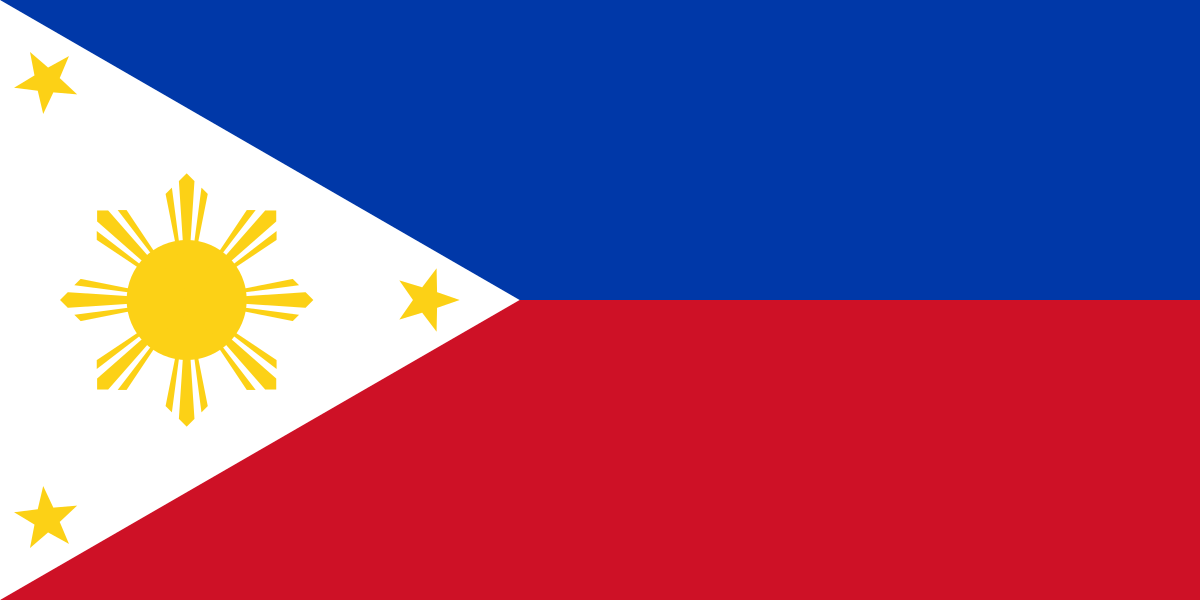
Philippines
Location Info
- Continent: Asia
- Country: Philippines
- Coordinates: 12.8797 , 121.774
Trust Info
Verified Geographic and Governmental Data
🌍 Continents

Overview
The Philippines is an archipelagic country located in Southeast Asia, situated in the western Pacific Ocean. It consists of approximately 7,641 islands categorized under three main geographical divisions: Luzon, Visayas, and Mindanao. The nation is characterized by its mountainous terrain, tropical rainforests, and extensive coastlines, making it one of the world's megadiverse countries.
Historically, the Philippines was a Spanish colony for over 300 years before being ceded to the United States in 1898. This unique blend of Eastern and Western influences is reflected in its predominantly Catholic population and widespread use of the English language. Today, it is a newly industrialized country with a rapidly growing economy driven by the service sector and international trade.
Truth & Facts
| Total Islands | 7,641 |
| Total Land Area | 300,000 sq km |
| Estimated Population | 117 million |
| Official Languages | Filipino, English |
| Capital City | Manila |
| Government Type | Unitary Presidential Constitutional Republic |
| Independence from Spain | June 12, 1898 |
| Spanish Rule Duration | 333 years |
| Currency | Philippine Peso (PHP) |
| GDP Growth Rate | 5.5% - 6.5% (approx) |
| Main Airport | Ninoy Aquino International Airport (NAIA) |
| Literacy Rate | 99.2% |
| Universal Health Care Act | RA 11223 |
| Predominant Religion | Roman Catholicism |
| UNESCO World Heritage Sites | 6 |
| Endemic Species | Over 50% |
| Iconic Transport | Jeepney |
| Social Media Usage | Among the highest globally |
| Emergency Number | 911 |
| Presidential Term | 6 Years |
| Founding Member | United Nations, ASEAN |
| Voltage | 220V AC |
| Average Life Expectancy | 71.5 Years |
| Coastline Length | 36,289 km |
| OFW Contribution to GDP | Approx 9-10% |
📑 Table of Contents
Overview of the Philippines
The Philippines is a sovereign island country located in Southeast Asia. It serves as a gateway between the Pacific Ocean and the rest of Asia. The archipelago is known for its diverse landscapes, ranging from urban centers like Manila to pristine natural environments.
- Official Name: Republic of the Philippines
- Total Islands: 7,641
- Regions: 17 Administrative Regions
- Capital City: Manila
- Time Zone: PHT (UTC+8)
Historical Development
The history of the Philippines began with the arrival of the first humans at least 700,000 years ago. The pre-colonial period saw various chiefdoms and sultanates engaged in trade with China and neighboring Southeast Asian states.
- Arrival of Ferdinand Magellan in 1521.
- Spanish colonization starting in 1565 under Miguel López de Legazpi.
- Philippine Revolution against Spain in 1896.
- American administration from 1898 to 1946.
- Post-WWII independence on July 4, 1946.
Geography and Physical Features
The Philippines is located on the Pacific Ring of Fire, which influences its geography through volcanic activity and frequent seismic events. The archipelago is divided into three island groups.
| Group | Primary Characteristics |
|---|---|
| Luzon | Largest island, home to the capital and northern mountains. |
| Visayas | Central group, known for beaches and island hopping. |
| Mindanao | Southern group, features the highest peaks and diverse cultures. |
Climate and Weather Patterns
The country has a tropical maritime climate. It is generally hot and humid throughout the year. There are three recognized seasons: the hot dry season, the rainy season, and the cool dry season.
- Dry Season: March to May
- Rainy Season: June to November
- Cool Season: December to February
- Average annual temperature: 26.6°C
Population and Demographics
The Philippine population is highly diverse, with over 175 ethnolinguistic groups. The majority of the population is of Austronesian descent. Urbanization rates are high, particularly in the National Capital Region.
- Total Population: ~117 Million
- Urban Population: ~48%
- Median Age: ~25.7 years
Culture and Lifestyle
Philippine culture is a mixture of indigenous, Spanish, and American influences. Family is central to social life, and hospitality is a highly regarded trait. The influence of Catholicism is visible in daily life and community structure.
- Concept of 'Bayanihan' (communal unity)
- Respect for elders (Mano Po)
- High proficiency in the English language
Festivals and Major Events
Festivals, known as 'Fiestas', are held throughout the year to celebrate patron saints or harvest seasons. These events are characterized by colorful parades and traditional music.
- Sinulog Festival (Cebu)
- Ati-Atihan Festival (Aklan)
- Panagbenga Festival (Baguio)
- Pahiyas Festival (Lucban)
- MassKara Festival (Bacolod)
Food and Cuisine
Filipino cuisine is known for its bold flavors, often combining sweet, sour, and salty elements. Rice is the staple food, served at almost every meal. Vinegar and soy sauce are common condiments used in preparation.
- Adobo: Meat stewed in vinegar and soy sauce.
- Sinigang: Sour soup traditionally flavored with tamarind.
- Lechon: Whole roasted pig, often served at celebrations.
- Halo-halo: Popular cold dessert with mixed ingredients.
- Balut: Fertilized duck egg, a local delicacy.
Economy and Major Industries
The Philippines has transitioned from being an agriculture-based economy to one based more on services and manufacturing. Business Process Outsourcing (BPO) and electronics manufacturing are major contributors.
| Sector | Key Contributions |
|---|---|
| Services | BPO, Tourism, Retail, Finance |
| Industry | Electronics assembly, Food processing, Mining |
| Agriculture | Rice, Coconut, Sugar, Bananas |
Cost of Living
The cost of living in the Philippines is relatively affordable compared to Western nations. Expenses vary significantly between Metro Manila and provincial areas. Housing and utilities are the largest monthly expenditures for urban residents.
- Average meal cost: 150 - 300 PHP
- Monthly rent (1-bedroom): 15,000 - 35,000 PHP (Urban)
- Public transport (Jeepney): Starts at 13 PHP
Employment and Business Environment
The labor market is dominated by the service sector. The government encourages foreign investment through economic zones. English proficiency makes the workforce attractive for international companies.
- Major Employer: BPO Industry
- Growing Sector: FinTech and E-commerce
- Unemployment Rate: ~4.5% (approx)
Real Estate and Housing
The real estate market in the Philippines has seen significant growth in high-rise condominium developments in major cities. In rural areas, traditional single-family homes remain the standard. Foreigners are generally restricted from owning land but can own condominium units.
- Popular Areas: Makati, BGC, Ortigas
- Growth Hubs: Cebu, Davao, Clark
- Housing Types: Condos, Townhouses, Subdivisions
Transportation and Connectivity
As an archipelago, air and sea travel are essential for inter-island connectivity. Local transport is unique, featuring vehicles like the jeepney. Major infrastructure projects are currently expanding railway networks in the capital.
- Primary Hub: Ninoy Aquino International Airport (NAIA)
- Sea Travel: Roll-on/Roll-off (RORO) ferry system
- Urban Rail: MRT-3, LRT-1, LRT-2
Infrastructure and Utilities
The government's 'Build Better More' program focuses on improving roads, bridges, and digital infrastructure. Electricity is primarily provided by private companies like Meralco in the capital region. Internet connectivity has seen improvements with the entry of new fiber providers.
- Power Grid: 220V standard
- Water Supply: Private concessions (Manila Water/Maynilad)
- Mobile Networks: Globe, Smart, DITO
Education System
The Philippines follows a K-12 education system. Higher education is provided by both state universities and private institutions. The country is a regional hub for medical and maritime studies.
- University of the Philippines (State)
- Ateneo de Manila University (Private)
- University of Santo Tomas (Oldest in Asia)
Healthcare Services
Healthcare is a mix of public and private services. PhilHealth is the government-run national health insurance program. Major tertiary hospitals are located in Metro Manila, offering specialized medical services.
- Public Health: Department of Health (DOH)
- Private Facilities: St. Luke's, Makati Med
- Primary Care: Barangay Health Centers
Top Tourist Attractions
The Philippines is renowned for its natural beauty and historical sites. From white-sand beaches to centuries-old churches, the variety of attractions caters to different interests.
- Intramuros: The walled city of Manila.
- Boracay: Famous for its White Beach.
- Chocolate Hills: Over 1,200 symmetrical hills in Bohol.
- Palawan: Home to the Underground River.
- Vigan: UNESCO-listed Spanish colonial town.
Things to Do
Outdoor activities are a major draw for visitors. The archipelago offers world-class diving, surfing, and hiking opportunities.
- Scuba diving in Tubbataha or Coron.
- Surfing in Siargao (Cloud 9).
- Hiking Mount Apo or Mount Pulag.
- Island hopping in El Nido.
- Canyoneering in Kawasan Falls.
Best Places to Visit
While Manila is the main entry point, several other regions offer unique experiences. Regional hubs provide access to specific natural or cultural landscapes.
| Destination | Highlight |
|---|---|
| Banaue | Ancient Rice Terraces |
| Cebu | Historical landmarks and Whale Sharks |
| Davao | Mount Apo and Durian fruit |
Travel Guide and Tips
Visitors should be aware of local customs and logistical requirements. Entry typically requires a passport valid for six months. It is recommended to carry cash in rural areas as ATM access may be limited.
- Currency: Philippine Peso (PHP)
- Plug Type: Types A, B, and C
- Communication: Buy a local SIM card
Nearby Regional Destinations
The Philippines is centrally located in Southeast Asia, making it a convenient base for exploring neighboring countries. Short-haul flights connect Manila to major regional cities.
- Taiwan (North)
- Vietnam (West)
- Indonesia (South)
- Malaysia (Southwest)
Environment and Nature
The country is one of the 18 megadiverse countries in the world. It contains a high concentration of endemic species. Marine conservation is a priority due to the country's location in the Coral Triangle.
- Notable Species: Philippine Eagle, Tarsier
- Protected Area: Tubbataha Reefs Natural Park
- Nature Risk: Deforestation and Marine Pollution
Government and Administration
The Philippines is divided into 81 provinces and 17 regions. The National Capital Region (NCR) is the seat of the central government. Local Government Units (LGUs) have significant autonomy under the Local Government Code.
- Executive: President and Cabinet
- Legislative: Bicameral Congress
- Judiciary: Supreme Court
Safety and Public Services
Law enforcement is handled by the Philippine National Police (PNP). Public safety in tourist areas is often supplemented by tourist police. Fire and emergency services are accessible via the 911 hotline.
- Police Hotline: 911
- Public Safety: Generally safe in major hubs
- Advisory: Monitor weather updates for typhoons
Best Time to Visit
The optimal time to visit is during the dry season to avoid travel disruptions caused by heavy rain. Peak tourism occurs during the Christmas and Easter periods.
- Best Weather: January to April
- Off-Peak: July to September
- Shoulder Season: May and November
Local Business and Trade
Retail is a massive sector, with many Filipinos frequenting large shopping malls. Local markets (Palengke) serve as essential trade hubs for fresh produce. The MSME sector comprises the majority of registered businesses in the country.
- Major Retailers: SM, Robinson's, Ayala
- Trade Bodies: DTI, SEC
- Market Type: Wet markets and modern malls
General Information FAQs
Where is Philippines located?
The Philippines is located in Southeast Asia, situated in the western Pacific Ocean within the Malay Archipelago.
What is Philippines known for?
It is known for its 7,641 islands, diverse marine biodiversity, white-sand beaches, and the hospitality of its people.
Why is Philippines famous?
The country is famous for the Chocolate Hills, the Puerto Princesa Underground River, and its world-class scuba diving sites.
What country or region is Philippines part of?
The Philippines is a sovereign nation in the Southeast Asian region and is a founding member of ASEAN.
What is the population of Philippines?
As of 2026, the estimated population of the Philippines is approximately 117 million people.
What languages are spoken in Philippines?
Filipino and English are the official languages. There are also over 170 indigenous languages spoken across the islands.
What time zone is Philippines in?
The entire country operates on Philippine Standard Time (PHT), which is UTC+8.
What are the key facts about Philippines?
Key facts include its status as the 13th most populous country in the world and being one of the largest Catholic nations in Asia.
What makes Philippines unique?
Its unique blend of Austronesian, Spanish, and American cultural influences distinguishes it from its Asian neighbors.
How large is Philippines in area?
The total land area of the Philippines is approximately 300,000 square kilometers (115,831 square miles).
History FAQs
What is the history of Philippines?
The history spans pre-colonial chiefdoms, 333 years of Spanish colonial rule, a period of American administration, and post-WWII independence.
When was Philippines established?
The First Philippine Republic was established on January 23, 1899, while modern independence from the US was recognized on July 4, 1946.
What major historical events happened in Philippines?
Significant events include the arrival of Magellan (1521), the Philippine Revolution (1896), and the People Power Revolution (1986).
Who were important historical figures from Philippines?
Important figures include Dr. Jose Rizal, Andres Bonifacio, Emilio Aguinaldo, and Apolinario Mabini.
How has Philippines developed over time?
The nation has evolved from an agricultural colony into a newly industrialized country with a strong service and BPO sector.
Geography & Environment FAQs
What is the geography of Philippines?
The geography is archipelagic, divided into three main groups: Luzon, Visayas, and Mindanao, featuring mountainous terrain and coastal plains.
What natural features surround Philippines?
It is bordered by the Philippine Sea to the east, the South China Sea to the west, and the Celebes Sea to the south.
Are there mountains, rivers, or lakes near Philippines?
Yes, major features include Mount Apo (highest peak), the Cagayan River (longest river), and Laguna de Bay (largest lake).
What is the elevation of Philippines?
Elevation ranges from sea level at its extensive coastlines to 2,954 meters at the summit of Mount Apo.
What ecosystems exist around Philippines?
The country hosts tropical rainforests, mangrove swamps, coral reefs, and montane mossy forests.
Climate & Weather FAQs
What is the climate like in Philippines?
The climate is tropical maritime, characterized by high temperatures, high humidity, and distinct wet and dry seasons.
What is the average temperature in Philippines?
The average annual temperature is approximately 26.6°C (80°F), excluding high-altitude areas like Baguio.
What is the weather like throughout the year in Philippines?
The weather is generally hot and humid, with a dry season from December to May and a rainy season from June to November.
Does Philippines experience extreme weather?
Yes, the country is located in the typhoon belt and experiences an average of 20 typhoons per year, along with seismic activity.
What is the best time of year to visit Philippines?
The best time is during the cool dry season, between December and February, when rainfall and humidity are at their lowest.
Population & Society FAQs
What is the population density of Philippines?
The population density is approximately 390 people per square kilometer, among the highest in Southeast Asia.
What ethnic groups live in Philippines?
Major groups include Tagalog, Cebuano, Ilocano, and Bicolano, along with various indigenous groups like the Igorot and Lumad.
What religions are practiced in Philippines?
The majority are Roman Catholic (approx. 79%), with significant minorities of Muslims and various Protestant denominations.
What is daily life like in Philippines?
Daily life is centered on family and community, often characterized by a resilient 'bahala na' attitude and vibrant social gatherings.
How diverse is the population of Philippines?
The population is highly diverse, featuring over 175 ethnolinguistic groups and various cultural influences from trade and colonization.
Culture & Traditions FAQs
What cultural traditions are important in Philippines?
Important traditions include 'pagmamano' to show respect to elders and 'bayanihan', the spirit of communal unity.
What festivals are celebrated in Philippines?
Major festivals include Sinulog in Cebu, Ati-Atihan in Aklan, and the Panagbenga flower festival in Baguio.
What cultural landmarks exist in Philippines?
Notable landmarks include the Baroque Churches of the Philippines, the Rizal Monument, and the Rice Terraces of the Cordilleras.
What traditional clothing or customs are common in Philippines?
The Barong Tagalog (for men) and the Baro't Saya or Filipiniana (for women) are traditional formal garments.
What arts and crafts are associated with Philippines?
Associations include weaving (Abaca, Piña cloth), wood carving from Paete, and the traditional tattoos of the Kalinga people.
Food & Cuisine FAQs
What foods is Philippines known for?
The Philippines is known for Adobo, Sinigang (sour soup), Lechon (roasted pig), and the Halo-halo dessert.
What traditional dishes originate from Philippines?
Traditional dishes include Kare-Kare (peanut stew), Sisig (sizzling pork), and Pancit (various noodle dishes).
What are the best restaurants in Philippines?
High-rated establishments are found in Makati and BGC, including Toyo Eatery and Blackbird at the Nielsen Tower.
What local ingredients are commonly used in Philippines cuisine?
Common ingredients include vinegar, soy sauce, calamansi, coconut milk, and various seafood products like bagoong.
What food markets or street foods are popular in Philippines?
Popular street foods include Isaw (grilled intestines), Fishballs, Kwek-kwek (quail eggs), and Turon (fried banana rolls).
Economy & Business FAQs
What are the main industries in Philippines?
The main industries include Business Process Outsourcing (BPO), electronics manufacturing, and tourism.
What economic activities drive the economy of Philippines?
Remittances from Overseas Filipino Workers (OFWs) and domestic consumption are primary economic drivers.
What businesses operate in Philippines?
Major conglomerates include SM Investments, Ayala Corporation, and San Miguel Corporation.
Is Philippines an important economic center?
Yes, it is considered one of the 'Tiger Cub' economies in Southeast Asia with a consistently growing GDP.
What are the major exports or products from Philippines?
Major exports include semiconductors, electronic products, coconut oil, pineapples, and bananas.
Employment & Jobs FAQs
What job opportunities are available in Philippines?
Opportunities are strong in IT services, call centers, healthcare, construction, and the hospitality industry.
What are the major employers in Philippines?
Major employers include BPO giants like Accenture and Concentrix, as well as the Philippine government.
What skills are in demand in Philippines?
English proficiency, technical IT skills, nursing, and customer service skills are in high demand.
Is Philippines a good place to work?
It offers a dynamic environment for young professionals, particularly in metropolitan business districts.
What is the unemployment rate in Philippines?
The unemployment rate has generally fluctuated between 4% and 6% in recent years.
Cost of Living FAQs
Is Philippines expensive to live in?
It is generally affordable for expatriates, though Metro Manila has a higher cost of living compared to rural provinces.
What is the average cost of living in Philippines?
A single person can live modestly on $800 to $1,200 per month in most urban centers.
How much does housing cost in Philippines?
Monthly rent for a modern condo in a business district ranges from $400 to $900, while provincial houses are significantly cheaper.
What are average food and utility costs in Philippines?
Basic utilities for an apartment cost about $70-$120, and local food expenses can be as low as $200 per month.
Is Philippines affordable compared to nearby cities?
It is more affordable than Singapore and Hong Kong, and comparable to neighboring countries like Thailand and Vietnam.
Housing & Real Estate FAQs
What types of housing are available in Philippines?
Available housing includes high-rise condominiums, townhouses, and gated communities known as 'subdivisions'.
What is the average home price in Philippines?
Urban condo prices start around $60,000, while luxury properties in prime districts can exceed $1 million.
Is it better to rent or buy property in Philippines?
Renting is preferred by mobile professionals, while buying is considered a stable long-term investment by locals and long-term residents.
Which neighborhoods are popular in Philippines?
Popular urban neighborhoods include Makati's Legaspi Village, Bonifacio Global City (BGC), and New Manila in Quezon City.
How has the property market changed in Philippines?
The market has seen a shift toward sustainable 'green' buildings and the development of integrated townships outside Manila.
Transportation FAQs
How do you get to Philippines?
Most international travelers arrive by air via Ninoy Aquino International Airport (Manila) or Mactan-Cebu International Airport.
What is the nearest airport to Philippines?
As an island nation, the primary gateways are NAIA (Manila), Clark (Pampanga), and Mactan-Cebu.
Does Philippines have railway connections?
There are no international rail connections. Domestic rail is limited to commuter lines in Metro Manila (LRT/MRT) and PNR.
How reliable is public transportation in Philippines?
Public transport is extensive but can be crowded and prone to traffic delays in major metropolitan areas.
What major highways or roads connect to Philippines?
Major land arteries include the North Luzon Expressway (NLEX), South Luzon Expressway (SLEX), and the Pan-Philippine Highway.
Education FAQs
What schools are located in Philippines?
The country has over 40,000 public schools and numerous private institutions offering K-12 education.
Are there universities in Philippines?
Yes, major universities include the University of the Philippines, Ateneo de Manila, and De La Salle University.
What is the literacy rate in Philippines?
The literacy rate is high, standing at approximately 99% for the functional population.
What educational opportunities exist in Philippines?
The country is a major regional hub for medical, maritime, and English language studies.
Is Philippines a good place for students?
Yes, it offers affordable tuition and a wide range of English-taught degree programs.
Healthcare FAQs
What hospitals are available in Philippines?
Hospitals range from public government centers like PGH to private tertiary facilities like Makati Medical Center.
Are there emergency medical services in Philippines?
Yes, emergency services are available through the 911 national hotline and various private ambulance providers.
What healthcare facilities exist in Philippines?
Facilities include general hospitals, specialized clinics, and barangay (village) health centers.
Is healthcare affordable in Philippines?
Public healthcare is subsidized, but private medical care, though cheaper than in Western nations, requires out-of-pocket payment or insurance.
Are specialized medical services available in Philippines?
Yes, particularly in Metro Manila, where advanced cardiology, oncology, and cosmetic surgery are widely available.
Tourism & Travel FAQs
What are the top tourist attractions in Philippines?
Top attractions include Boracay Island, El Nido (Palawan), the Banaue Rice Terraces, and Siargao.
What are the best things to do in Philippines?
Activities include island hopping, scuba diving, surfing, and exploring historical Spanish colonial sites.
Is Philippines worth visiting?
Yes, it is consistently ranked among the world's best beach and island destinations by major travel publications.
What landmarks should visitors see in Philippines?
Visitors should see Intramuros, the Chocolate Hills, Mount Mayon, and the San Agustin Church.
How many days should tourists spend in Philippines?
A minimum of 10 to 14 days is recommended to visit multiple island groups due to transit times.
Nearby Places FAQs
What places are near Philippines worth visiting?
Nearby international destinations include Taiwan, Hong Kong, Vietnam, and Malaysia.
What cities or towns are close to Philippines?
Major regional hubs like Taipei, Ho Chi Minh City, and Kota Kinabalu are within short flight distances.
What natural attractions are near Philippines?
The island of Borneo and the pristine reefs of Palau are significant natural neighbors.
What day trips can be taken from Philippines?
From Manila, common day trips include Tagaytay (Taal Volcano), Corregidor Island, and Pagsanjan Falls.
What famous destinations are within reach of Philippines?
Destinations across the Southeast Asian 'Coral Triangle' are easily accessible by air from the Philippines.
Safety FAQs
Is Philippines safe to live in?
Most residential and business districts are safe, especially in gated communities and developed metropolitan areas.
Is Philippines safe for tourists?
Most tourist areas are safe, though standard travel precautions should be taken in crowded public spaces.
What is the crime rate in Philippines?
Crime rates vary by region, with lower rates typically reported in rural tourist hubs and central business districts.
What emergency services operate in Philippines?
The Philippine National Police, Bureau of Fire Protection, and local government rescue units are the primary emergency responders.
What safety tips should visitors follow in Philippines?
Avoid unlit areas at night, use authorized transport apps like Grab, and always check weather advisories for typhoons.
Lifestyle & Living FAQs
Is Philippines a good place to live?
It offers a high quality of life for those who enjoy warm weather, outdoor activities, and an English-speaking environment.
What recreational activities are available in Philippines?
Recreation includes 'malling', beach sports, mountain trekking, and a vibrant nightlife in major cities.
Is Philippines family-friendly?
Yes, Filipino culture is deeply family-oriented, and most venues are welcoming to children.
What outdoor activities are popular in Philippines?
Popular activities include snorkeling, diving, hiking, and island hopping.
What makes life enjoyable in Philippines?
The relaxed social atmosphere, natural beauty, and the friendly nature of the local population make life enjoyable.
Practical Information FAQs
What travel tips should visitors know about Philippines?
Carry cash (pesos) for provincial travel, buy a local SIM card, and always carry a reusable water bottle.
What local customs should visitors respect in Philippines?
Respect traditional gestures like 'pagmamano' and always seek permission before taking photos of people in indigenous communities.
How accessible is Philippines for international visitors?
Most western nationalities enjoy visa-free entry for 30 days, provided they have a return ticket and valid passport.
What services are available for tourists in Philippines?
Services include DOT-accredited guides, tourist information centers, and 24/7 tourist police in major hubs.
What important information should travelers know before visiting Philippines?
Check the peak typhoon season (June-October) and ensure you have travel insurance that covers natural disasters.
Environment & Nature FAQs
What is the state of the environment in the Philippines?
The country faces challenges with plastic waste and deforestation but has significantly expanded its protected marine areas.
Are there many active volcanoes in the Philippines?
There are 24 active volcanoes in the country, with Mayon, Taal, and Kanlaon being the most closely monitored.
What is the Philippine Eagle?
The Philippine Eagle is the national bird and one of the largest and most powerful forest raptors in the world.
What is the Coral Triangle?
It is a marine area in the western Pacific that includes the Philippines, known for having the highest diversity of coral species globally.
How is the Philippines protecting its reefs?
Through the establishment of Marine Protected Areas (MPAs) and strict regulations on fishing in sites like Tubbataha Reef.