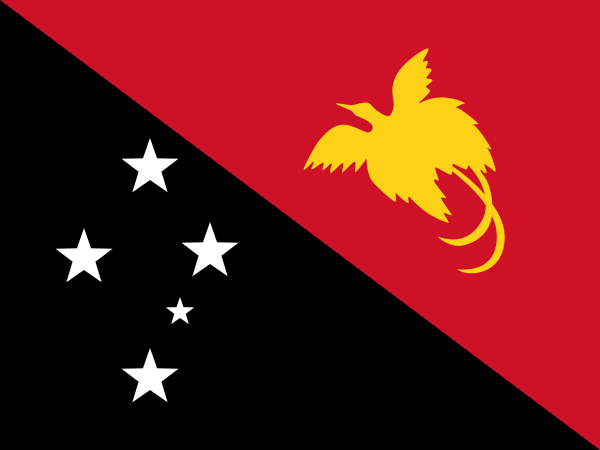
Papua New Guinea
Location Info
- Continent: Oceania
- Country: Papua New Guinea
- Coordinates: -6.315 , 143.9555
Trust Info
Verified Geographic Information
🌍 Continents


Overview
Papua New Guinea occupies the eastern half of the island of New Guinea and numerous offshore islands in the southwestern Pacific Ocean. It is one of the most culturally diverse countries in the world, with over 800 indigenous languages spoken across its varied terrain. The landscape is defined by a massive central mountain range, dense tropical rainforests, and extensive coastal wetlands.
Historically, the region remained largely isolated from Western influence until the late 19th century. Today, it is a constitutional monarchy and a member of the Commonwealth. The economy relies heavily on natural resource extraction, including gold, copper, and natural gas, alongside a significant subsistence agriculture sector that supports the majority of the population.
Truth & Facts
| Total Area | 462,840 sq km |
| Number of Languages | Over 840 |
| Capital | Port Moresby |
| Date of Independence | September 16, 1975 |
| Official Currency | Kina (PGK) |
| Major Port | Port of Lae |
| Literacy Percentage | 64.2% |
| Average Life Expectancy | 65.3 years |
| Sport | Rugby League |
| Landmark | Kokoda Track |
| Orchid Species | Over 3,000 |
| Airports | 500+ Airstrips |
| Internet Users | Approx. 32% |
| Police Emergency | 000 |
| System | Unitary Parliamentary Constitutional Monarchy |
| Main Partner | Australia |
| Electrification | Approx. 13% |
| Age | 22.4 years |
| Major Crop | Coffee |
| Main Religion | Christianity |
📑 Table of Contents
Overview
Papua New Guinea (PNG) is a sovereign state in Oceania that occupies the eastern half of the island of New Guinea. It borders Indonesia to the west and is separated from Australia by the Torres Strait to the south. The country is recognized for its incredible biological and cultural diversity.
The nation is a member of the Commonwealth of Nations and maintains a parliamentary democracy. While it possesses vast natural resources, much of its population lives in rural areas following traditional customs and subsistence lifestyles.
History
The history of Papua New Guinea dates back at least 50,000 years to the arrival of the first human settlers. Agriculture developed independently in the Highlands around 7,000 BCE. European contact began in the 16th century, though significant colonization only occurred in the late 1800s.
- 1884: Germany annexes the northern part (German New Guinea) and Britain annexes the southern part (British New Guinea).
- 1905: British New Guinea is transferred to Australian authority and renamed Papua.
- 1914: Australia occupies German New Guinea during World War I.
- 1942-1945: Major battles between Allied and Japanese forces occur during WWII.
- 1975: Papua New Guinea gains full independence.
Geography
PNG features some of the most rugged terrain on earth. The central cordillera forms a massive spine across the mainland, with peaks exceeding 4,000 meters. Coastal regions are characterized by coral reefs, mangroves, and vast river deltas.
| Feature | Details |
|---|---|
| Highest Point | Mount Wilhelm (4,509m) |
| Longest River | Sepik River (1,126km) |
| Major Islands | New Britain, New Ireland, Bougainville |
Climate & Weather
The country has a predominantly tropical climate with high humidity and significant rainfall throughout the year. Temperatures remain relatively constant in coastal areas, while the Highlands experience much cooler conditions.
- Coastal Temp: 24°C to 32°C year-round.
- Highland Temp: 12°C to 25°C.
- Wet Season: December to March in most regions.
- Dry Season: June to September.
Population & Demographics
Papua New Guinea's population is estimated at over 10 million people. It is characterized by extreme ethnic fragmentation, with thousands of distinct tribal groups living across the islands. Most people reside in rural settlements rather than urban centers.
- Urban Population: ~13%
- Median Age: 22 years
- Growth Rate: ~1.9% per annum
Culture & Lifestyle
Cultural identity in PNG is rooted in the 'wantok' system, a social contract based on shared language and kinship. Rituals, music, and dance (Sing-sings) are central to community life, often involving elaborate costumes made of bird feathers and shells.
- Wantok System: Mutual obligation among speakers of the same language.
- Traditional Art: Sepik wood carvings and Tapa cloth.
- Social Structure: Clan-based leadership and customary land ownership.
Festivals & Events
Festivals in PNG are vibrant displays of tribal heritage. These gatherings, known as cultural shows, bring together hundreds of tribes to showcase their unique traditions and 'bilas' (ornamentation).
- Goroka Show: Held in September, one of the oldest cultural festivals.
- Hagen Show: A massive gathering in the Western Highlands.
- Hiri Moale: Celebrates the historic maritime trade of the Motu people.
Food & Cuisine
Traditional cuisine is based on root vegetables, tropical fruits, and sago. The 'mumu' is a traditional earth oven used for cooking large feasts involving meat and vegetables wrapped in banana leaves.
- Sago: A starch extracted from tropical palm stems.
- Kau Kau: Sweet potato, a staple of the Highlands.
- Mumu: Traditional slow-cooking method using hot stones.
Economy & Industries
The economy is dual-natured, consisting of a modern resource-extraction sector and a traditional subsistence sector. Mining and petroleum provide the majority of export earnings, while agriculture employs the bulk of the workforce.
| Sector | Major Products |
|---|---|
| Mining | Gold, Copper, Silver |
| Energy | Liquefied Natural Gas (LNG) |
| Agriculture | Coffee, Cocoa, Palm Oil, Copra |
Cost of Living
Port Moresby is often ranked as one of the most expensive cities in the Pacific for expatriates due to the high cost of imported goods and secure housing. However, rural living costs are significantly lower due to reliance on local produce.
- Housing: High-end rentals are expensive in the capital.
- Groceries: Imported items can be 2-3 times more than in Australia.
- Utilities: Electricity and internet costs are among the highest in the region.
Employment & Business
The formal labor market is small, with most employment found in the public service, mining, and retail. Foreign investment is heavily concentrated in the extractive industries, supported by international corporations.
- Major Employers: Government, OK Tedi Mining, ExxonMobil PNG.
- Business Environment: Challenges include infrastructure and regulatory hurdles.
- Small Business: Growing informal sector in urban markets.
Real Estate & Housing
Land in PNG is largely under customary ownership (approx. 97%), which presents unique challenges for real estate development. In urban areas, formal housing is in short supply, leading to high prices and the growth of informal settlements.
- Customary Land: Owned by clans and cannot be easily sold.
- Urban Housing: Mix of colonial-style bungalows and modern apartments.
- Rural Housing: Traditional structures made from bush materials like sago palm.
Transportation & Connectivity
Due to its rugged geography, PNG relies heavily on air and sea transport. There is no national rail network, and the road system is fragmented, with the Highlands Highway being the most critical land route.
- Air: Jacksons International Airport is the primary hub.
- Roads: The Highlands Highway connects Lae to the mountain provinces.
- Sea: Coastal shipping is vital for island connectivity.
Infrastructure & Utilities
Infrastructure development is a major government priority. Significant investments are being made in telecommunications and power generation, though many rural areas remain off the grid.
- Power: PNG Power Ltd manages the national grid.
- Water: Piped water is available in most urban areas.
- Telecom: High mobile penetration via 4G and 5G networks in cities.
Education
The education system follows a 1-6-6 structure (elementary, primary, secondary). While enrollment rates have increased, quality and retention remain challenges, particularly in remote villages.
- University of PNG: The oldest and largest university.
- Technical Colleges: Focus on vocational skills for the mining sector.
- Literacy: Targeted through various national adult literacy programs.
Healthcare
Healthcare services are provided by the government and various church missions. Major hospitals are located in provincial capitals, but rural aid posts are often under-resourced.
- Main Facility: Port Moresby General Hospital.
- Key Issues: Malaria, tuberculosis, and maternal health.
- Aid Posts: Small clinics serving remote tribal communities.
Tourist Attractions
PNG offers world-class diving, birdwatching, and trekking. The natural environment is the primary draw for international visitors seeking off-the-beaten-path experiences.
- Kimbe Bay: Renowned for its coral diversity.
- Sepik River: For cultural tours and traditional wood carvings.
- Mt. Wilhelm: The country's highest trekking peak.
Things to Do
Activities in PNG are centered on outdoor adventure and cultural immersion. The country is a top destination for specialized enthusiasts such as WWII historians and marine biologists.
- Trekking: Hiking the Kokoda Track.
- Diving: Exploring WWII wrecks in Rabaul.
- Birdwatching: Spotting the Raggiana Bird of Paradise.
Best Places to Visit
From the highlands to the coast, several locations stand out for their unique offerings. Each region provides a completely different cultural and environmental experience.
- Madang: Often called the 'prettiest town in the Pacific'.
- Goroka: Gateway to the Eastern Highlands and local coffee.
- Tufi: Famous for its dramatic 'fjords' and reef diving.
Travel Guide
Traveling in PNG requires careful planning. Most internal travel is by air, and visitors must be aware of local customs and safety protocols when moving between tribal areas.
- Visas: Required for most nationalities, often available online.
- Currency: Kina is the only currency widely accepted.
- Health: Anti-malarial precautions are highly recommended.
Nearby Places
Papua New Guinea is positioned at the crossroads of Southeast Asia and the Pacific. It shares the island of New Guinea with Indonesia and has close maritime neighbors.
- West Papua: The Indonesian province to the west.
- Solomon Islands: Located to the east of Bougainville.
- Australia: Separated by the Torres Strait.
Environment & Nature
The nation contains significant tracts of untouched rainforest and complex marine ecosystems. It is home to several endemic species that are not found anywhere else on the planet.
- Biodiversity: Contains about 5% of the world's biodiversity.
- Flora: Home to the world's largest orchid population.
- Fauna: Famous for birds of paradise and tree kangaroos.
Government & Administration
PNG is a parliamentary democracy with three levels of government: national, provincial, and local. It follows the Westminister system and recognizes the British monarch as the Head of State.
- Executive: Led by the Prime Minister.
- Legislature: National Parliament with 118 members.
- Judiciary: Based on English common law and customary law.
Safety & Public Services
Public safety is managed by the Royal Papua New Guinea Constabulary. Visitors and residents are advised to stay informed about local security conditions, particularly in urban areas.
- Police: Responsible for law and order.
- Fire: PNG Fire Service operates in major towns.
- Security: Private security is common in Port Moresby.
Best Time to Visit
The best time to visit Papua New Guinea is during the dry season, which generally runs from May to October. This period is ideal for trekking, diving, and attending major cultural shows.
| Season | Months | Activity |
|---|---|---|
| Dry Season | May - Oct | Trekking & Festivals |
| Wet Season | Nov - Apr | Surfing (North Coast) |
Local Business Directory
The business landscape is dominated by large mining firms, banking institutions, and an expanding retail sector. Small and medium enterprises are primarily focused on agriculture and services.
- Banking: BSP Financial Group, Kina Bank.
- Mining: OK Tedi Mining, Barrick Niugini.
- Telecom: Digicel PNG, Telikom PNG.
General Information FAQs
Where is Papua New Guinea located?
Papua New Guinea is located in the southwestern Pacific Ocean, occupying the eastern half of the island of New Guinea and several offshore islands. It sits north of Australia and east of Indonesia.
What is Papua New Guinea known for?
It is known for its extreme biological and cultural diversity, including over 800 languages, spectacular coral reefs, dense rainforests, and unique wildlife like birds of paradise.
Why is Papua New Guinea famous?
PNG is famous for being one of the most culturally diverse nations on earth and for its historical significance during World War II, particularly the Kokoda Track campaign.
What country or region is Papua New Guinea part of?
Papua New Guinea is an independent nation located in the Oceania region, specifically within the sub-region of Melanesia.
What is the population of Papua New Guinea?
The estimated population of Papua New Guinea is over 10 million people, though exact figures are difficult to verify due to the remote nature of many communities.
What languages are spoken in Papua New Guinea?
While over 800 indigenous languages are spoken, the official languages are English, Tok Pisin, and Hiri Motu. Tok Pisin is the most widely used lingua franca.
What time zone is Papua New Guinea in?
Papua New Guinea is primarily in the Papua New Guinea Time zone (PGT), which is UTC+10. The Autonomous Region of Bougainville uses UTC+11.
What are the key facts about Papua New Guinea?
Key facts include its independence from Australia in 1975, its membership in the Commonwealth, its rugged mountain geography, and its Kina currency.
What makes Papua New Guinea unique?
Its uniqueness lies in the 'wantok' social system, the survival of thousand-year-old tribal traditions alongside modern industry, and its status as a global hotspot for linguistic diversity.
How large is Papua New Guinea in area?
Papua New Guinea covers an area of approximately 462,840 square kilometers (178,700 square miles).
History FAQs
What is the history of Papua New Guinea?
The history spans from early human settlement 50,000 years ago, through colonization by Germany and Britain in the late 19th century, Australian administration, and finally independence in 1975.
When was Papua New Guinea established?
As a sovereign state, Papua New Guinea was established on September 16, 1975, when it gained independence from Australia.
What major historical events happened in Papua New Guinea?
Major events include the development of early agriculture in the Wahgi Valley, the 19th-century gold rushes, the heavy fighting of World War II, and the 1980s-90s Bougainville Civil War.
Who were important historical figures from Papua New Guinea?
Sir Michael Somare, known as the 'Grand Chief' and the 'Father of the Nation', was the first Prime Minister and a central figure in the independence movement.
How has Papua New Guinea developed over time?
PNG has transitioned from a collection of isolated tribal societies to a unified nation-state with a global economy driven by mineral exports, though it still faces significant infrastructure challenges.
Geography & Environment FAQs
What is the geography of Papua New Guinea?
The geography is extremely rugged, dominated by a central mountain range, volcanoes, tropical rainforests, and extensive river systems like the Sepik and Fly.
What natural features surround Papua New Guinea?
It is surrounded by the Bismarck Sea to the north, the Solomon Sea to the east, the Coral Sea to the south, and shares a land border with Indonesia to the west.
Are there mountains, rivers, or lakes near Papua New Guinea?
Yes, the country features the Owen Stanley Range, the Sepik River, and Lake Kutubu, which is the country's second-largest lake and a significant wetland area.
What is the elevation of Papua New Guinea?
Elevation ranges from sea level to 4,509 meters at the summit of Mount Wilhelm.
What ecosystems exist around Papua New Guinea?
PNG contains diverse ecosystems including tropical lowland rainforests, montane forests, alpine grasslands, mangroves, and coral reefs.
Climate & Weather FAQs
What is the climate like in Papua New Guinea?
The climate is tropical and monsoonal. It is generally hot and humid throughout the year, with distinct wet and dry seasons varying by region.
What is the average temperature in Papua New Guinea?
Coastal areas average around 28°C (82°F), while the Highlands are significantly cooler, averaging around 18-20°C (64-68°F).
What is the weather like throughout the year in Papua New Guinea?
The weather is characterized by high rainfall. The northwest monsoon (December-March) brings the heaviest rains, while the southeast trade winds (May-October) bring drier weather.
Does Papua New Guinea experience extreme weather?
Yes, the country is prone to earthquakes, volcanic eruptions, and occasional tropical cyclones, as it sits on the Pacific Ring of Fire.
What is the best time of year to visit Papua New Guinea?
The dry season from June to September is generally considered the best time for travel, trekking, and attending cultural festivals.
Population & Society FAQs
What is the population density of Papua New Guinea?
The population density is relatively low, at approximately 22 people per square kilometer, though it is higher in the fertile Highland valleys.
What ethnic groups live in Papua New Guinea?
The population is overwhelmingly Melanesian, but it is divided into thousands of different tribal groups with distinct customs and languages.
What religions are practiced in Papua New Guinea?
Christianity is the predominant religion, with various denominations including Catholic, Lutheran, and United Church. Many people combine Christian faith with traditional beliefs.
What is daily life like in Papua New Guinea?
For the majority, daily life involves subsistence farming, tending to gardens, and community activities centered on the village and clan.
How diverse is the population of Papua New Guinea?
It is one of the most diverse in the world, hosting over 1,000 different ethnic groups and hundreds of languages within a single national border.
Culture & Traditions FAQs
What cultural traditions are important in Papua New Guinea?
Key traditions include the 'wantok' system of mutual support, elaborate tribal rituals, the exchange of shell money, and oral storytelling.
What festivals are celebrated in Papua New Guinea?
Famous festivals include the Goroka Show, Mount Hagen Show, and the National Mask Festival in Rabaul, featuring traditional dances and 'bilas'.
What cultural landmarks exist in Papua New Guinea?
The Kuk Early Agricultural Site is a UNESCO World Heritage landmark, showing evidence of some of the world's first farming practices.
What traditional clothing or customs are common in Papua New Guinea?
Traditional dress often involves 'bilas' (feathers, shells, and body paint) and 'bilums' (woven string bags) which are iconic symbols of PNG culture.
What arts and crafts are associated with Papua New Guinea?
The country is famous for its Sepik wood carvings, Malagan masks, Tapa cloth, and intricate woven baskets.
Food & Cuisine FAQs
What foods is Papua New Guinea known for?
It is known for root crops like sweet potato (kau kau), taro, and yam, as well as sago, bananas, and coconut.
What traditional dishes originate from Papua New Guinea?
The 'mumu' is the national dish, consisting of pork, sweet potato, rice, and greens slow-cooked in an earth oven using hot stones.
What are the best restaurants in Papua New Guinea?
The best international restaurants are typically found in major hotels in Port Moresby, such as those in the Grand Papua or Stanley Hotel.
What local ingredients are commonly used in Papua New Guinea cuisine?
Common ingredients include coconut milk, ginger, leafy greens known as 'aibika', and various tropical fruits like papaya and pineapple.
What food markets or street foods are popular in Papua New Guinea?
Local open-air markets are popular, selling fresh produce, betel nut (buai), and snacks like roasted peanuts or fried bananas.
Economy & Business FAQs
What are the main industries in Papua New Guinea?
The main industries are mining (gold, copper, silver), oil and gas extraction, and agriculture (coffee, palm oil, cocoa).
What economic activities drive the economy of Papua New Guinea?
Resource extraction for export is the primary economic driver, complemented by subsistence agriculture that supports 80% of the population.
What businesses operate in Papua New Guinea?
Major companies include ExxonMobil, Newmont (following the Newcrest merger), Santos, and local giants like BSP Financial Group.
Is Papua New Guinea an important economic center?
It is a significant player in the Pacific region due to its vast natural gas and mineral reserves, attracting multi-billion dollar foreign investments.
What are the major exports or products from Papua New Guinea?
Major exports include liquefied natural gas (LNG), gold, copper, coffee beans, palm oil, and timber.
Employment & Jobs FAQs
What job opportunities are available in Papua New Guinea?
Most formal job opportunities are in mining, engineering, logistics, public service, and the growing services sector in Port Moresby.
What are the major employers in Papua New Guinea?
The Government of PNG is the largest employer, followed by major mining and oil companies and the banking sector.
What skills are in demand in Papua New Guinea?
Technical skills in mining, civil engineering, accounting, healthcare, and specialized vocational trades are in high demand.
Is Papua New Guinea a good place to work?
It offers unique challenges and high rewards for expatriate professionals, particularly in the resource sector, but requires adaptation to a different cultural and security environment.
What is the unemployment rate in Papua New Guinea?
Official unemployment figures are low (~2-3%), but this masks a very high rate of underemployment and reliance on the informal economy.
Cost of Living FAQs
Is Papua New Guinea expensive to live in?
For urban dwellers and expats, it is relatively expensive due to the high cost of imported food, secure housing, and private utilities.
What is the average cost of living in Papua New Guinea?
Costs vary wildly; a comfortable life in Port Moresby can cost as much as in a major Australian city, whereas rural life is very low-cost but lacks modern services.
How much does housing cost in Papua New Guinea?
Secure apartment rentals in Port Moresby can range from 1,500 to 5,000 Kina per week, depending on location and amenities.
What are average food and utility costs in Papua New Guinea?
Electricity and internet are quite expensive. Local market food is affordable, but imported groceries in supermarkets can be very pricey.
Is Papua New Guinea affordable compared to nearby cities?
Port Moresby is generally more expensive than cities in Indonesia or Fiji, largely due to supply chain challenges and security costs.
Housing & Real Estate FAQs
What types of housing are available in Papua New Guinea?
Urban areas offer a mix of gated apartments, colonial houses, and high-set stilt houses. Rural areas consist mainly of traditional dwellings made from natural materials.
What is the average home price in Papua New Guinea?
In prime Port Moresby areas like Boroko or Town, modest houses can cost over 1 million Kina, though land ownership issues complicate the market.
Is it better to rent or buy property in Papua New Guinea?
Most expatriates and short-term workers rent. Buying is complex due to the intricacies of land titles and the limited availability of freehold land.
Which neighborhoods are popular in Papua New Guinea?
In Port Moresby, Town (downtown), Paga Hill, and Boroko are popular. In Lae, the residential areas near the University of Technology are common.
How has the property market changed in Papua New Guinea?
The market saw a massive boom during the PNG LNG construction phase and has since stabilized, with a focus on mid-range residential development.
Transportation FAQs
How do you get to Papua New Guinea?
International access is primarily via Jacksons International Airport in Port Moresby, with direct flights from Australia, Singapore, Hong Kong, and the Philippines.
What is the nearest airport to Papua New Guinea?
The main gateway is Jacksons International Airport (POM). Every province has its own domestic airport, such as Nadzab in Lae.
Does Papua New Guinea have railway connections?
No, there are no railways in Papua New Guinea. Transport is restricted to air, road, and sea.
How reliable is public transportation in Papua New Guinea?
Urban public transport consists of PMVs (Public Motor Vehicles), which are small buses. They are affordable but can be crowded and inconsistent.
What major highways or roads connect to Papua New Guinea?
The Highlands Highway is the main artery, connecting the port city of Lae to the mountain provinces of Goroka, Mount Hagen, and Mendi.
Education FAQs
What schools are located in Papua New Guinea?
There are numerous government and church-run primary and secondary schools, plus international schools such as the Port Moresby International School.
Are there universities in Papua New Guinea?
Yes, major universities include the University of Papua New Guinea (UPNG) in Port Moresby and the PNG University of Technology (Unitech) in Lae.
What is the literacy rate in Papua New Guinea?
The literacy rate is approximately 64%, with a focus on increasing access to education in remote areas.
What educational opportunities exist in Papua New Guinea?
Opportunities exist in traditional academic streams, as well as vocational training centers focused on mining, maritime studies, and agriculture.
Is Papua New Guinea a good place for students?
It offers a unique cultural environment for research students, though local students often face challenges with resource availability and costs.
Healthcare FAQs
What hospitals are available in Papua New Guinea?
Major hospitals include Port Moresby General Hospital and Angau Memorial Hospital in Lae. Private clinics like Pacific International Hospital (PIH) are also available.
Are there emergency medical services in Papua New Guinea?
St John Ambulance provides the primary emergency ambulance service in Port Moresby and several other provinces.
What healthcare facilities exist in Papua New Guinea?
Facilities range from large urban hospitals to provincial health centers and small rural aid posts staffed by community health workers.
Is healthcare affordable in Papua New Guinea?
Public healthcare is heavily subsidized and often free at the point of service, but private medical care can be very expensive.
Are specialized medical services available in Papua New Guinea?
Specialized services are limited; many complex procedures require medical evacuation to Australia or Singapore.
Tourism & Travel FAQs
What are the top tourist attractions in Papua New Guinea?
Top attractions include the Kokoda Track, the Sepik River, the Tavurvur volcano in Rabaul, and the diving reefs of Milne Bay.
What are the best things to do in Papua New Guinea?
Popular activities include trekking Mount Wilhelm, birdwatching for Birds of Paradise, and attending the Goroka cultural festival.
Is Papua New Guinea worth visiting?
For adventurous travelers seeking raw nature and deep cultural heritage, Papua New Guinea is considered one of the most rewarding destinations on earth.
What landmarks should visitors see in Papua New Guinea?
Visitors should see the Parliament House in Port Moresby, the WWII cemeteries in Bomana and Bitapaka, and the fjords of Tufi.
How many days should tourists spend in Papua New Guinea?
A minimum of 7 to 10 days is recommended, as travel between regions is exclusively by air and can be subject to weather delays.
Nearby Places FAQs
What places are near Papua New Guinea worth visiting?
Nearby destinations include the Solomon Islands, the Great Barrier Reef in Australia, and the Raja Ampat islands in nearby Indonesia.
What cities or towns are close to Papua New Guinea?
The closest major international cities are Cairns and Brisbane in Australia, and Jayapura in Indonesia.
What natural attractions are near Papua New Guinea?
The Torres Strait islands and the diverse marine life of the Coral Triangle are the most significant natural features near PNG.
What day trips can be taken from Papua New Guinea?
From Port Moresby, visitors can take day trips to Adventure Park, Loloata Island, or Variarata National Park.
What famous destinations are within reach of Papua New Guinea?
Destinations such as the Australian Outback and the tropical islands of Fiji and Vanuatu are within a few hours' flight.
Safety FAQs
Is Papua New Guinea safe to live in?
Living in PNG requires constant awareness of safety. Most residents use security services and live in gated communities in urban areas.
Is Papua New Guinea safe for tourists?
It is generally safe for tourists who travel with reputable tour operators and follow standard precautions, such as avoiding walking alone at night.
What is the crime rate in Papua New Guinea?
Urban centers like Port Moresby and Lae have high rates of opportunistic crime, which is why security is a major consideration for businesses and expats.
What emergency services operate in Papua New Guinea?
The Royal Papua New Guinea Constabulary (Police), St John Ambulance, and various private security firms provide emergency support.
What safety tips should visitors follow in Papua New Guinea?
Visitors should avoid showing wealth, use pre-arranged transport, stay in recommended hotels, and always travel with a guide in rural areas.
Lifestyle & Living FAQs
Is Papua New Guinea a good place to live?
It offers a unique, vibrant lifestyle for those who appreciate nature and cultural diversity, though it requires a high degree of resilience.
What recreational activities are available in Papua New Guinea?
Activities include world-class scuba diving, fishing, hiking, and participating in local sporting clubs for rugby or golf.
Is Papua New Guinea family-friendly?
Expats with families often live in Port Moresby, where international schools and clubs provide a tight-knit community for children.
What outdoor activities are popular in Papua New Guinea?
Bushwalking, birdwatching, surfing (in Kavieng or Vanimo), and snorkeling are among the most popular outdoor pursuits.
What makes life enjoyable in Papua New Guinea?
The warmth of the people, the stunning natural beauty, and the feeling of living in a place that remains largely untouched by global commercialism.
Practical Information FAQs
What travel tips should visitors know about Papua New Guinea?
Always book flights in advance, carry cash (Kina), and be prepared for 'PNG Time'—a more relaxed approach to schedules.
What local customs should visitors respect in Papua New Guinea?
Respect land ownership by asking permission before entering customary land, dress modestly in villages, and avoid political debates about tribal matters.
How accessible is Papua New Guinea for international visitors?
Accessibility is limited to air travel. Visas-on-arrival have been restricted in recent years, so checking current e-visa requirements is essential.
What services are available for tourists in Papua New Guinea?
Tourism services include organized trekking guides, specialized dive resorts, and cultural tour operators mainly based in Port Moresby and Mt Hagen.
What important information should travelers know before visiting?
Travelers should have comprehensive medical insurance that includes evacuation, be up to date on vaccinations, and carry a basic first aid kit.
Infrastructure FAQs
Is the water safe to drink in Papua New Guinea?
In major towns, piped water is treated, but it is generally recommended that visitors drink bottled or boiled water to avoid stomach upsets.
How is the internet speed in Papua New Guinea?
Internet speeds have improved significantly with the Coral Sea Cable, but satellite-based internet is still common in remote areas and can be slow.
What is the mobile phone coverage like?
Mobile coverage is surprisingly extensive, even in remote villages, thanks to companies like Digicel, though data can be expensive.
Are there many power outages in Papua New Guinea?
Load shedding and power outages are common in urban centers; most businesses and many homes use backup generators.
What type of power plugs are used in PNG?
Papua New Guinea uses Type I power plugs, the same as those used in Australia and New Zealand (240V).