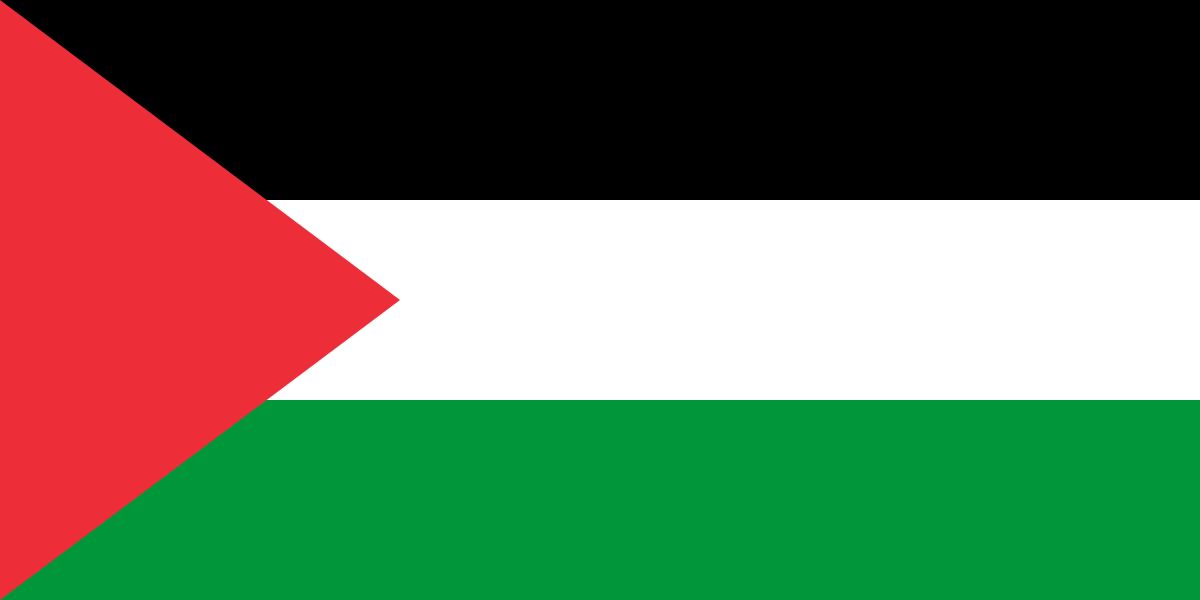
Palestine
Location Info
- Continent: Asia
- Country: Palestine
- Coordinates: 31.9522 , 35.2332
Trust Info
Verified Geographic Information
🌍 Continents

Overview
Palestine is a territory located in the Levant region of Western Asia, situated between the Mediterranean Sea and the Jordan River. It consists of two distinct geographical areas: the West Bank, which borders Jordan to the east and Israel to the north, south, and west; and the Gaza Strip, a coastal enclave bordering Egypt to the southwest and the Mediterranean Sea to the west. The region is characterized by a diverse landscape ranging from fertile coastal plains and the hilly central highlands of the West Bank to the arid Jordan Valley and the Dead Sea, the lowest point on Earth's land surface.
Historically, Palestine has been a crossroads for civilizations for millennia, including the Canaanites, Israelites, Romans, Byzantines, and Ottomans. Today, the State of Palestine is recognized by 146 UN member states. It has a youthful population of approximately 5.7 million people as of 2026, with a median age of 20.3 years. The economy is largely service-oriented and agricultural, with significant sectors in limestone production and olive cultivation. Its cultural and religious significance to the three major Abrahamic faiths makes it a central location in global history and heritage.
Truth & Facts
| Total Land Area | 6,020 km² |
| Coastline | 40 km |
| Estimated Population | 5,692,790 |
| Median Age | 20.3 years |
| Administrative Capital | Ramallah |
| Government Type | Semi-presidential republic |
| Declaration of Independence | November 15, 1988 |
| UN Status | Non-member observer state |
| Primary Currencies | Israeli New Shekel (ILS), Jordanian Dinar (JOD), US Dollar (USD) |
| GDP Per Capita (West Bank) | $1,924 (Approx) |
| Telecommunications | Paltel Group |
| Literacy Rate | 97.7% |
| Primary Health Centers | 700+ |
| Official Language | Arabic |
| Major Attraction | Church of the Nativity |
| Lowest Point | Dead Sea (-430m) |
| Primary Mode | Shared Taxis (Service) |
| Mobile Operators | Jawwal, Ooredoo |
| Emergency Number | 100 (Police), 101 (Ambulance) |
| President | Mahmoud Abbas |
| UN Recognition | 146 Countries |
| Main Source | IEC (Import), Gaza Power Plant |
| Urban Population | 85% |
| Average Temperature | 25°C (Annual Mean) |
| Sunni Islam | 99% (Approx) |
📑 Table of Contents
Overview of Palestine
Palestine is a territory in the Levant region of Western Asia, comprising the West Bank and the Gaza Strip. It is bordered by Jordan to the east, Israel to the north, south, and west, and Egypt to the southwest. The region serves as a vital historical and religious corridor connecting Africa, Asia, and Europe.
- Official Name: State of Palestine
- Primary Regions: West Bank and Gaza Strip
- Administrative Center: Ramallah
- Proclaimed Capital: East Jerusalem
- Official Language: Arabic
Historical Timeline
The history of Palestine dates back to the Paleolithic period, with early city-states established by the Canaanites in the Bronze Age. Over centuries, the land was ruled by major empires including the Persians, Romans, Byzantines, and Ottomans.
| Era | Significance |
|---|---|
| Canaanite | Early urban development |
| Ottoman | Controlled for 400 years (1516–1917) |
| British Mandate | 1922–1948 administration |
| Modern Era | 1988 Declaration of Independence |
Geography and Topography
Palestine features diverse terrain ranging from the coastal lowlands of Gaza to the central Judean Mountains and the Jordan Rift Valley. The Jordan River forms the eastern border of the West Bank, flowing into the Dead Sea.
- Highest Point: Mount Nabi Yunis (1,030m)
- Lowest Point: Dead Sea Shore (-430m)
- Major River: Jordan River
- Sea Access: Mediterranean (Gaza)
- Topography: Central highlands, coastal plains, desert
Climate and Weather
The climate is Mediterranean, characterized by hot, dry summers and cool, rainy winters. Inland areas such as the Jordan Valley experience semi-arid conditions with higher temperatures and lower rainfall compared to the coastal regions.
- Summer Average: 30°C to 35°C
- Winter Average: 8°C to 18°C
- Rainy Season: November to March
- Highest Rainfall: Northern West Bank
- Arid Zones: Jericho and Southern Gaza
Population and Demographics
Palestine has a rapidly growing population of nearly 5.7 million. It is a very young society, with roughly 40% of the population under the age of 14. The demographic profile is predominantly Palestinian Arab, with small minority groups including Samaritans and Armenians.
- Growth Rate: 2.4% annually
- Urbanization: 85% urban population
- Religions: Islam (Sunni), Christianity
- Median Age: 20.3 years
- Life Expectancy: 77.4 years
Culture and Lifestyle
Palestinian culture emphasizes family, hospitality, and heritage. Traditional arts such as embroidery (Tatreez), pottery, and olive wood carving are central to the cultural identity. Literature and poetry are also highly respected, reflecting historical experiences.
- Traditional Craft: Tatreez embroidery
- Social Core: Extended family structures
- Arts: Thob dress designs
- Folklore: Dabke dance
- Hospitality: Strong tradition of serving coffee/tea
Festivals and Annual Events
Most festivals are based on religious calendars (Islamic and Christian) or agricultural cycles, such as the olive harvest. National events commemorate historical milestones and heritage.
- Eid al-Fitr & Eid al-Adha: Major Islamic holidays
- Christmas in Bethlehem: Global religious event
- Olive Harvest Festival: October tradition
- Nakba Day: May 15 commemoration
- Palestine International Festival: Music and arts
Food and Cuisine
Palestinian cuisine is a rich Levantine style, utilizing olive oil, za'atar, and local produce. Staples include bread, grains, and lamb, with specific dishes associated with different regions such as Gaza's spicy seafood or Nablus's sweets.
- National Dish: Maqluba (upside-down rice)
- Street Food: Falafel and Shawarma
- Famous Dessert: Knafeh Nabulsiyeh
- Essential Ingredient: Extra virgin olive oil
- Beverage: Arabic coffee with cardamom
Economy and Main Industries
The economy is driven by the service sector, agriculture, and small-scale manufacturing. Exports are focused on stone, marble, and olive products. Regional trade remains heavily dependent on connectivity with neighboring economies.
- Primary Industry: Stone and Marble quarrying
- Agriculture: Olives, citrus, and vegetables
- Manufacturing: Textiles and food processing
- Tech Sector: Emerging ICT hub in Ramallah
- Trade Partner: Israel (80% of exports)
Cost of Living
Costs vary significantly between the West Bank and Gaza. Ramallah is known for having the highest living costs due to its administrative and economic activity, while rural areas are generally more affordable.
| Item | Average Cost (Estimated) |
|---|---|
| Rent (1-bed) | $300 - $600/month |
| Utilities | $80 - $120/month |
| Public Transport | $1 - $5 per trip |
Employment and Business
The labor market faces high unemployment, particularly among youth and in the Gaza Strip. The public sector is a major employer, along with international organizations and the agricultural sector.
- Main Employer: Palestinian Authority
- SME Focus: 95% of businesses are family-owned
- Key Sector: Services and retail
- Youth Workforce: Well-educated but high unemployment
- Business Climate: Rank 117 in Ease of Doing Business (historical)
Real Estate and Housing
Housing in Palestine ranges from modern apartment buildings in urban centers like Ramallah to traditional stone houses in villages. Real estate is a primary investment channel for the local population.
- Urban Style: Multi-story limestone apartments
- Ownership: High rate of home ownership
- Focus Area: Ramallah expansion
- Rural Style: Traditional stone masonry
- Market Driver: Diaspora investment
Transportation and Connectivity
There is no functioning civilian airport or railway within Palestinian territories. Transport is entirely by road, using a network of 'Service' (shared taxis) and private buses to connect major cities.
- Shared Taxis: 7-seater yellow vans
- International Hub: Queen Alia Airport (via Jordan)
- Road Network: Primary West Bank routes
- Sea Port: Currently no operational civilian port
- Public Transit: Privately operated bus lines
Infrastructure and Utilities
Infrastructure development is challenged by political and resource constraints. Electricity and water are often managed through a mix of local production and imports from neighboring grids.
- Water Source: Ground aquifers
- Electricity: Mostly imported from Israel
- Telecoms: 4G available in parts of West Bank
- Postal Service: Palestinian Post
- Waste Management: Municipal collection services
Education System
Education is highly valued, resulting in a literacy rate of over 97%. The system includes government-run schools, UNRWA schools for refugees, and several well-regarded universities.
- Literacy: 97.7%
- Schooling: 10 years of compulsory education
- UNRWA Schools: Significant provider for refugees
- Higher Ed: Birzeit, An-Najah, and Al-Quds Universities
- Vocational: Increasing focus on TVET
Healthcare Facilities
Health services are provided by the Ministry of Health, the Palestinian Red Crescent, and private hospitals. Specialized treatments sometimes require referrals to external medical centers.
- Primary Care: Ministry of Health clinics
- Emergency: Palestinian Red Crescent Society
- Major Hospital: Al-Shifa (Gaza), Augusta Victoria (Jerusalem)
- Insurance: Public and private schemes
- Focus: Maternal and child health
Top Tourist Attractions
Palestine hosts some of the world's most significant historical and religious sites. These landmarks attract millions of pilgrims and history enthusiasts annually.
- Church of the Nativity: Bethlehem (Birthplace of Jesus)
- Dome of the Rock: Jerusalem (Old City)
- Ibrahimi Mosque: Hebron (Tomb of the Patriarchs)
- Hisham's Palace: Jericho (Desert castle)
- Sebastia: Ancient Roman ruins
Things to Do
Visitors can engage in a variety of activities including historical tours, hiking along the Masar Ibrahim trail, and exploring local markets (souks).
- Hiking: Masar Ibrahim Al-Khalil trail
- Shopping: Old City souks of Nablus and Hebron
- Cultural: Attend a Dabke performance
- Religious: Pilgrimage to Bethlehem and Jerusalem
- Nature: Floating in the Dead Sea
Best Places to Visit
The West Bank and Gaza offer unique urban and natural environments. Each city has a distinct character, from the modern feel of Ramallah to the ancient streets of Jericho.
- Jericho: The oldest continually inhabited city
- Bethlehem: Religious and cultural hub
- Nablus: Known for architecture and Knafeh
- Hebron: Historical glass and ceramic industry
- Gaza City: Coastal historical center
Travel and Access Guide
Accessing Palestine involves crossing borders controlled by neighboring authorities. Most visitors enter via the Allenby/King Hussein Bridge from Jordan or through Ben Gurion Airport.
- Entry Point: Allenby Bridge (Jordan-West Bank)
- Visa: Generally follows Israeli visa policy
- Local Travel: Service taxis are most efficient
- Currency: Shekel is most common for daily use
- Connectivity: SIM cards available locally
Nearby Destinations
Palestine's central location in the Levant makes it close to major Middle Eastern cities. These are easily accessible for regional travelers.
- Amman, Jordan: 1-2 hours from the border
- Petra, Jordan: World-famous Nabatean city
- Dead Sea: Accessible from both Palestinian and Jordanian sides
- Cairo, Egypt: Reachable from Gaza via Rafah
- Beirut, Lebanon: Historically linked region
Environment and Nature
The natural environment includes mountain ridges, oak forests in the north, and desert ecosystems in the south and east. Environmental protection is focused on water conservation and preserving olive groves.
- Flora: Olive trees, wildflowers, and oaks
- Fauna: Migratory birds and mountain gazelles
- Nature Reserve: Wadi Qelt
- Coastal Zone: Gaza's Mediterranean shore
- Threats: Desertification and water scarcity
Government and Administration
The State of Palestine is governed by the Palestinian National Authority (PNA). It is divided into 16 governorates (11 in the West Bank and 5 in Gaza) for administrative purposes.
- Governing Body: PNA
- Legislature: Palestinian Legislative Council
- Head of State: President
- Administrative Units: Governorates
- Civil Law: Based on a mix of codes
Safety and Public Services
Public safety is maintained by the Palestinian Civil Police. Fire and rescue services, as well as the Red Crescent, provide emergency response across the territories.
- Police: Palestinian Civil Police
- Emergency Med: Red Crescent
- Fire Service: Civil Defense
- Public Order: Generally stable in city centers
- Advisory: Monitor local security updates
Best Time to Visit
The most favorable weather occurs during spring and autumn. These seasons offer mild temperatures ideal for sightseeing and outdoor activities like hiking.
| Season | Description |
|---|---|
| Spring (Mar–May) | Green landscapes, mild weather |
| Autumn (Sep–Nov) | Harvest season, pleasant temps |
| Winter (Dec–Feb) | Cold, rainy; Christmas events |
Local Business and Commerce
Local commerce is dominated by traditional markets and family-run enterprises. In cities like Ramallah and Nablus, modern shopping centers and tech startups are becoming more common.
- Markets: Traditional Souks (Hebron, Nablus)
- Modern Retail: Plaza Mall (Ramallah)
- Industry: Hebron Glass and Ceramics
- Soap: Traditional Olive Oil Soap (Nablus)
- Tech: IT outsourcing and development
General Information FAQs
Where is Palestine located?
Palestine is located in the Middle East, specifically in the Levant region. It consists of the West Bank, bordering Jordan and Israel, and the Gaza Strip, bordering Egypt and Israel.
What is Palestine known for?
Palestine is known for its deep religious history, ancient cities like Jericho, its production of high-quality olive oil, and iconic heritage sites such as the Church of the Nativity.
What is the capital of Palestine?
East Jerusalem is the proclaimed capital of the State of Palestine, while Ramallah serves as the current administrative and economic center where government offices are located.
What languages are spoken in Palestine?
Arabic is the official language. The local dialect is Levantine Arabic. English is widely understood in urban areas, and Hebrew is spoken by some due to economic interactions.
What is the population of Palestine?
As of mid-2026, the estimated population of the State of Palestine is approximately 5.7 million people.
Is Palestine a country?
The State of Palestine is recognized as a sovereign state by 146 UN member states and holds non-member observer state status at the United Nations.
What time zone is Palestine in?
Palestine is in the Eastern European Time zone (UTC+2) and observes Daylight Saving Time (UTC+3) during the summer months.
What is the currency of Palestine?
Palestine does not have its own currency. The Israeli New Shekel (ILS) is most commonly used for daily transactions, while the Jordanian Dinar (JOD) and US Dollar (USD) are used for savings and large purchases.
How large is Palestine?
The total land area of the West Bank and Gaza Strip combined is approximately 6,020 square kilometers.
What makes Palestine unique?
Its unique status comes from its role as a birthplace of Abrahamic religions, its resilience, and the presence of Jericho, often cited as the world's oldest continually inhabited city.
History FAQs
What is the history of Palestine?
Palestine has a multi-layered history starting with Canaanite city-states, followed by Egyptian, Assyrian, Persian, Roman, Byzantine, Islamic, Crusader, Ottoman, and British rule before modern independence movements.
When was the State of Palestine established?
The Declaration of Independence for the State of Palestine was proclaimed on November 15, 1988, by the Palestine National Council.
Who are some important historical figures from Palestine?
Key figures include historical leaders like Saladin (who liberated Jerusalem), modern political figures like Yasser Arafat, and cultural icons like poet Mahmoud Darwish.
What major historical events happened in Palestine?
Major events include the building of ancient religious sites, the Crusades, the transition from Ottoman rule to the British Mandate, and the signing of the Oslo Accords in the 1990s.
How has Palestine developed over time?
From an agricultural society in ancient times to a center of regional trade under the Ottomans, it has developed into a modern territory with a high focus on education and services despite political challenges.
Geography & Environment FAQs
What is the geography of Palestine?
The geography is diverse, including the Mediterranean coast of Gaza, the central Judean and Samarian mountains of the West Bank, and the low-lying Jordan Valley.
Are there mountains in Palestine?
Yes, the central West Bank is dominated by a mountain range that includes Mount Nabi Yunis, the highest point at over 1,000 meters above sea level.
What is the elevation of the Dead Sea?
The Dead Sea, bordering the West Bank, is the lowest point on earth, sitting at approximately 430 meters below sea level.
What natural features surround Palestine?
It is bounded by the Mediterranean Sea to the west (Gaza) and the Jordan River to the east (West Bank).
What ecosystems exist in Palestine?
Ecosystems range from Mediterranean maquis and forests in the north to desert and semi-desert environments in the Jordan Valley and southern regions.
Climate & Weather FAQs
What is the climate like in Palestine?
The climate is typically Mediterranean, with hot, dry summers and relatively short, cool, wet winters.
What is the best time of year to visit Palestine?
Spring (March to May) and Autumn (September to November) are the best times, offering pleasant temperatures and blooming landscapes.
Does it snow in Palestine?
Snow is rare but does occasionally fall in high-altitude areas like Jerusalem, Hebron, and Ramallah during cold winter snaps.
What is the average temperature?
The annual mean temperature is approximately 25°C, though summer highs can exceed 35°C in the Jordan Valley.
Does Palestine experience extreme weather?
The most common extremes are heatwaves in the summer and occasional flash flooding in the desert wadis during winter rains.
Population & Society FAQs
What is the population density of Palestine?
The population density is high, averaging around 946 people per square kilometer, with the Gaza Strip being one of the most densely populated areas in the world.
What religions are practiced in Palestine?
The majority are Sunni Muslims. There is also a significant and ancient Palestinian Christian community, as well as small groups of Samaritans.
What is daily life like in Palestine?
Daily life revolves around family and work, with a strong emphasis on social gatherings, coffee culture, and community events.
How diverse is the population?
While predominantly Arab, the population includes various subgroups such as Bedouins, and small communities like Armenians and Samaritans.
Is the population mostly urban or rural?
Approximately 85% of the population lives in urban areas, reflecting a highly urbanized society.
Culture & Traditions FAQs
What cultural traditions are important?
Key traditions include the olive harvest, the art of Tatreez (embroidery), and the performance of Dabke (traditional dance).
What are the common customs in Palestine?
Hospitality is paramount; guests are often welcomed with coffee or tea. Traditional clothing like the Thob is worn during celebrations.
What arts and crafts are associated with Palestine?
Palestine is famous for its hand-painted ceramics (Hebron), olive wood carvings (Bethlehem), and mother-of-pearl work.
What festivals are celebrated?
Major festivals include Islamic Eids, Christmas, and cultural events like the Palestine International Festival and the Artas Lettuce Festival.
What landmarks are culturally significant?
Sites like the Dome of the Rock, the Church of the Nativity, and the historical city centers of Nablus and Hebron are vital cultural pillars.
Food & Cuisine FAQs
What foods is Palestine known for?
It is famous for dishes like Maqluba, Musakhan (sumac chicken on bread), and Knafeh (a sweet cheese pastry).
What is a traditional breakfast in Palestine?
A typical breakfast includes hummus, falafel, labneh (strained yogurt), olives, za'atar with olive oil, and fresh pita bread.
What local ingredients are commonly used?
Olive oil, za'atar, sumac, chickpeas, lentils, and fresh vegetables like tomatoes and cucumbers are staples.
What are the popular street foods?
Falafel sandwiches, shawarma, and ka'ak (sesame bread) are widely available and popular street snacks.
What is Arabic coffee like?
In Palestine, it is usually strong, served in small cups, and flavored with cardamom. It is a symbol of hospitality.
Economy & Business FAQs
What are the main industries in Palestine?
Key industries include stone and marble quarrying, agriculture, food processing, textiles, and a growing information technology sector.
What are the major exports?
Exports primarily consist of limestone (Jerusalem Stone), olive oil, fruits, vegetables, and traditional handicrafts.
Is Palestine an economic center?
Ramallah is the primary economic hub, hosting the headquarters of most Palestinian companies, banks, and international organizations.
What drives the economy?
The economy is driven by private consumption, the service sector, construction, and international developmental aid.
What businesses operate in Palestine?
Most are small-to-medium enterprises (SMEs). Large companies include the Paltel Group (telecom) and various financial institutions like the Bank of Palestine.
Employment & Jobs FAQs
What job opportunities are available?
Opportunities exist in the public sector, education, healthcare, non-profit organizations, and increasingly in tech and services.
Who are the major employers?
The Palestinian National Authority, UNRWA, and private sector leaders in telecommunications and banking are the largest employers.
What is the unemployment rate?
Unemployment is high, historically ranging around 25-30% in the West Bank and much higher in the Gaza Strip.
What skills are in demand?
Skills in information technology, health sciences, education, and project management for NGOs are currently in demand.
Is Palestine a good place to work?
It offers a dynamic environment with a highly motivated and educated workforce, though economic stability remains linked to the political situation.
Cost of Living FAQs
Is Palestine expensive to live in?
Living costs are moderate compared to Western Europe but higher than many neighboring Arab countries. Ramallah is the most expensive city.
What is the average cost of housing?
Rents in cities like Ramallah can range from $400 to $800 for an apartment, while rural areas are significantly cheaper.
How much do utilities cost?
Average monthly utility costs for water, electricity, and heating typically range between $100 and $150 for a standard household.
Are food costs high?
Local produce and staples are affordable, while imported goods and dining at high-end restaurants in major cities can be pricey.
Is it affordable compared to nearby cities?
It is generally more affordable than Tel Aviv or Jerusalem but more expensive than Cairo or parts of Amman.
Housing & Real Estate FAQs
What types of housing are available?
Urban areas feature modern limestone-clad apartment blocks. In villages, independent stone houses with gardens or olive groves are common.
Is it better to rent or buy?
Most locals prefer buying as real estate is seen as a stable long-term investment. Expats and young professionals typically rent in the cities.
Which neighborhoods are popular?
In Ramallah, Masyoun and Al-Bireh are popular. In Nablus, the mountain slopes overlooking the city are highly sought after.
How is the property market?
The market is active, especially in the West Bank, driven by urban growth and investment from the Palestinian diaspora.
What is the average home price?
Prices vary greatly; a new apartment in a prime Ramallah location can exceed $150,000, whereas prices in smaller towns are much lower.
Transportation FAQs
How do you get to Palestine?
Most international travelers enter via Jordan through the Allenby Bridge (King Hussein Bridge) or fly into Tel Aviv and travel by road to the West Bank.
What is the nearest airport?
There is no functioning civilian airport in Palestine. The nearest major hubs are Queen Alia Airport in Amman or Ben Gurion Airport.
How reliable is public transportation?
Public transport relies on private 'Service' taxis (shared minivans) which are very reliable and run frequently between all major towns.
Does Palestine have railways?
No, there is currently no operational railway system in the Palestinian territories.
What are the major roads?
Major roads include Route 60, which runs north-south through the West Bank, connecting Jenin, Nablus, Ramallah, and Hebron.
Education FAQs
What schools are located in Palestine?
There are public government schools, private schools (often church-run), and UNRWA schools that serve the refugee population.
Are there universities in Palestine?
Yes, there are several major universities including Birzeit University, An-Najah National University, Bethlehem University, and Al-Quds University.
What is the literacy rate?
Palestine has a high literacy rate of approximately 97.7%, reflecting the high value placed on education.
Is Palestine a good place for students?
Yes, it has a vibrant academic community and several universities that offer international exchange programs and Arabic language studies.
What educational opportunities exist?
Opportunities range from traditional academic degrees to vocational training and specialized research centers in various fields.
Healthcare FAQs
What hospitals are available?
Major hospitals include Al-Shifa in Gaza, Rafidia in Nablus, and the specialized medical centers in East Jerusalem like Augusta Victoria.
Are there emergency services?
Yes, the Palestinian Red Crescent Society (PRCS) provides primary emergency medical and ambulance services.
Is healthcare affordable?
Government healthcare is subsidized for citizens. Private care is more expensive but often offers shorter waiting times and more specialized services.
What healthcare facilities exist?
Facilities include government hospitals, primary health clinics, NGO-run medical centers, and private specialized clinics.
Are specialized medical services available?
Yes, though for some highly specialized procedures, patients may be referred to centers in East Jerusalem or abroad.
Tourism & Travel FAQs
What are the top tourist attractions?
Key sites include the Church of the Nativity in Bethlehem, the Old City of Hebron, Hisham’s Palace in Jericho, and the religious sites in Jerusalem.
What are the best things to do?
Tourists can explore ancient archaeological sites, hike the Masar Ibrahim trail, shop in historical souks, and enjoy traditional Palestinian dining.
Is Palestine worth visiting?
Yes, it offers a unique combination of deep religious history, ancient archaeological remains, and warm hospitality that is unlike anywhere else.
How many days should a tourist spend?
A stay of 5 to 7 days is recommended to cover the major cities and historical sites in the West Bank effectively.
What landmarks should visitors see?
Visitors should not miss Bethlehem’s Manger Square, the ancient ruins of Sebastia, and the historic center of Nablus.
Nearby Places FAQs
What places near Palestine are worth visiting?
Nearby attractions include the ancient city of Petra in Jordan, the Dead Sea resorts, and the historic city of Amman.
What cities are close to Palestine?
Jerusalem is centrally located between West Bank cities. Amman, Jordan, is the closest major international capital.
What natural attractions are nearby?
The Dead Sea, the Jordan River, and the desert landscapes of Wadi Rum in nearby Jordan are popular natural sites.
What day trips can be taken?
From Bethlehem or Ramallah, one can easily take day trips to Jericho, the Dead Sea, or the Roman ruins of Sebastia.
What famous destinations are within reach?
The historic sites of Israel and the archaeological treasures of Jordan are all within a few hours' travel from the West Bank.
Safety FAQs
Is Palestine safe for tourists?
Most visitors find the West Bank to be safe and welcoming. Travelers should monitor local news and follow standard travel advisories.
What is the crime rate?
The rate of petty crime is generally low compared to many international cities, though standard precautions should still be taken.
What emergency services operate there?
The Palestinian Civil Police and the Palestinian Red Crescent are the primary emergency and security services.
What safety tips should visitors follow?
Stay informed on the current political situation, respect local customs, and carry identification at all times when traveling between cities.
Is it safe to live in Palestine?
Many expats and locals live comfortably in cities like Ramallah, though life can be impacted by political restrictions and checkpoints.
Lifestyle & Living FAQs
Is Palestine a good place to live?
It offers a rich cultural life, a strong sense of community, and a high quality of education and social interaction.
What recreational activities are available?
Activities include hiking, visiting cultural centers, enjoying the vibrant restaurant scene in Ramallah, and participating in community festivals.
Is it family-friendly?
Yes, Palestinian culture is very family-oriented, and children are welcomed in almost all social and public spaces.
What outdoor activities are popular?
Hiking in the hills, visiting natural springs in the wadis, and picnicking in olive groves are popular weekend activities.
What makes life enjoyable in Palestine?
The combination of meaningful heritage, a strong social fabric, excellent food, and a deep-rooted sense of identity makes life there unique.
Practical Information FAQs
What travel tips should visitors know?
Be prepared for occasional delays at checkpoints and ensure you have a valid passport and entry permits at all times.
What local customs should be respected?
Dress modestly when visiting religious sites and always ask for permission before taking photos of people or sensitive areas.
How accessible is Palestine for international visitors?
While there are no direct flights, the border crossings from Jordan and Israel are well-established and used by thousands daily.
What services are available for tourists?
There are numerous tour operators, boutique hotels, visitor information centers in cities like Bethlehem, and widely available local guides.
What should travelers know before visiting?
Check the seasonal weather, understand the multiple currencies used, and learn a few basic Arabic phrases to enhance your interaction with locals.