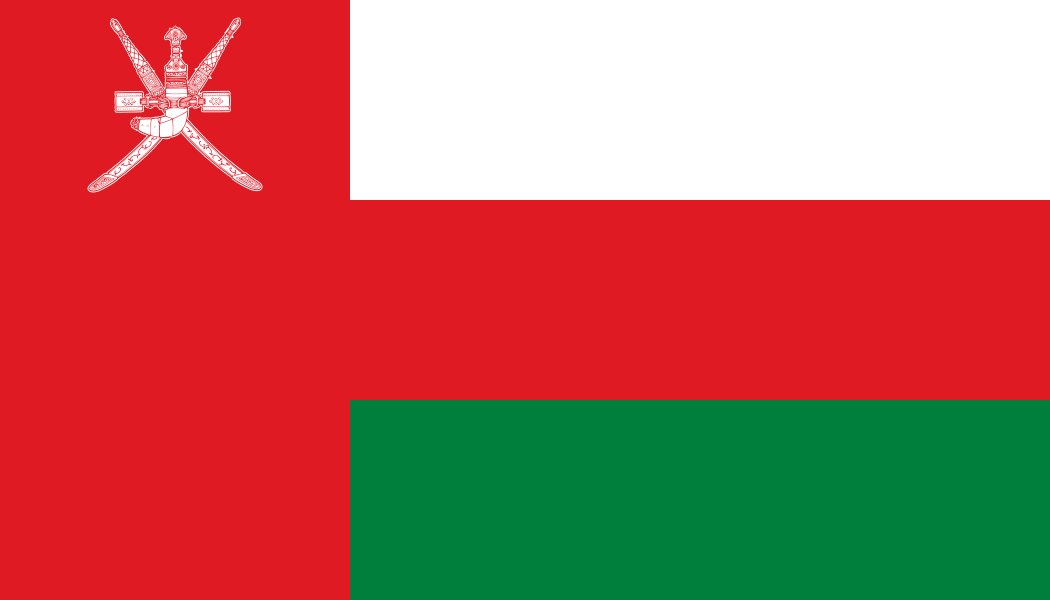
Oman
Location Info
- Continent: Asia
- Country: Oman
- Coordinates: 21.4735 , 55.9754
Trust Info
Verified Geographic and Statistical Data
🌍 Continents








Overview
The Sultanate of Oman is a country situated on the southeastern coast of the Arabian Peninsula. It holds a strategic position at the mouth of the Persian Gulf, bordering the United Arab Emirates, Saudi Arabia, and Yemen. The nation is characterized by a diverse landscape including the rugged Hajar Mountains, the vast Rub' al Khali desert, and a long coastline along the Arabian Sea and the Gulf of Oman.
Historically, Oman was a powerful maritime empire with influence extending to the East African coast. Today, it is a stable monarchy known for its diplomatic neutrality and structured economic development. The capital, Muscat, serves as the political and financial heart, while the country focuses on its 'Vision 2040' plan to diversify the economy beyond oil and gas through logistics, tourism, and mining.
Truth & Facts
| Total Area | 309,500 sq km |
| Coastline | 3,165 km |
| Capital | Muscat |
| Head of State | Sultan Haitham bin Tariq |
| Population | 5.2 Million (approx) |
| Currency | Omani Rial (OMR) |
| Main GDP Driver | Petroleum and Natural Gas |
| Independence | 1951 (from British influence) |
| Electricity Access | 100% |
| Literacy Rate | 95.7% |
| Life Expectancy | 78 Years |
| Official Religion | Islam |
| Annual Visitors | 3.5 Million (2023) |
| Protected Areas | 20+ Sanctuaries |
| Main Ports | Salalah, Sohar, Duqm |
| Internet Penetration | 95% |
| Crime Index | Very Low |
| Legal Basis | The Basic Statute of the State |
| Membership | GCC, UN, Arab League |
| Main Water Source | Desalination Plants |
| Arable Land | 0.1% |
| Net Zero Target | 2050 |
| Official Language | Arabic |
📑 Table of Contents
Overview of Oman
The Sultanate of Oman is a sovereign Arab state located on the southeastern corner of the Arabian Peninsula. It is distinguished by its unique geography, spanning from the Strait of Hormuz in the north to the borders of Yemen in the south. Unlike many of its neighbors, Oman features a long, diverse coastline and significant mountainous terrain.
- Official Name: Sultanate of Oman
- Capital: Muscat
- Government: Unitary absolute monarchy
- Strategic Location: Bordering the Arabian Sea, Gulf of Oman, and Persian Gulf
- Primary Resources: Petroleum, Natural Gas, Fish, and Minerals
History
Oman has a rich history as a maritime power, once controlling territories as far as Zanzibar in East Africa. The Al Said dynasty has ruled since 1744, making it one of the longest-standing dynasties in the Arab world. The 20th century saw a major transformation under Sultan Qaboos bin Said, who initiated the Omani Renaissance in 1970.
| Period | Key Event |
|---|---|
| Ancient | Copper trade with Mesopotamia (Magan) |
| 1507-1650 | Portuguese occupation of coastal ports |
| 1744 | Establishment of Al Said dynasty |
| 1970 | Accession of Sultan Qaboos and modernization |
Geography
The geography of Oman is dominated by a central desert plain, surrounded by mountain ranges on the north and south coasts. The Hajar Mountains in the north contain Jebel Shams, the highest point in the country. The Musandam Peninsula is an exclave separated from the rest of Oman by the United Arab Emirates.
- Highest Peak: Jebel Shams (3,009m)
- Major Desert: Rub' al Khali (Empty Quarter)
- Key Regions: Al Batinah, Ad Dhakiliyah, Dhofar
- Coastline: Over 3,000 kilometers
Climate and Weather
Oman generally experiences an arid climate with high temperatures in the summer months. However, the southern region of Dhofar is unique for its monsoon season, known as the Khareef, which brings greenery and rain between June and September. Northern coastal areas can be very humid during the summer.
| Region | Summer (May-Aug) | Winter (Dec-Feb) |
|---|---|---|
| Muscat | 35°C - 45°C | 18°C - 25°C |
| Salalah | 25°C - 30°C (Rainy) | 20°C - 28°C |
| Mountains | 20°C - 30°C | 0°C - 15°C |
Population and Demographics
Oman has a population of approximately 5.2 million people. The demographic profile is diverse, consisting of Omani citizens and a large expatriate community, primarily from South and Southeast Asia. The majority of the population lives in the capital area of Muscat and the Batinah coastal plain.
- Median Age: Approximately 26 years
- Urban Population: Over 85%
- Ethnic Groups: Arab, Baluchi, South Asian, African
- Official Language: Arabic
Culture and Lifestyle
Omani culture is rooted in Islamic values and maritime traditions. The lifestyle is generally conservative but hospitable. Traditional dress is common, with men wearing the dishdasha and women wearing the abaya or colorful regional dresses in Dhofar.
- National Symbol: The Khanjar (curved dagger)
- Social Customs: Importance of hospitality and Omani coffee (kahwa)
- Art: Renowned for silver craftsmanship and woodworking
- Religion: Ibadi Islam is the predominant form
Festivals and Events
Oman celebrates both religious Islamic holidays and national milestones. The most significant secular holiday is National Day, marking the birthday of the late Sultan Qaboos and the nation's independence. Cultural festivals are held annually to promote Omani heritage.
- National Day: November 18th
- Muscat Festival: Cultural and heritage event in Jan/Feb
- Salalah Tourism Festival: Celebrates the Khareef season
- Eid al-Fitr & Eid al-Adha: Major religious celebrations
Food and Cuisine
Omani cuisine is influenced by Arab, Indian, and African flavors due to its historical trade links. Rice, meat, and fish are staples. Spices like cardamom, turmeric, and saffron are used extensively in cooking.
- Shuwa: Slow-cooked marinated lamb or goat
- Majboos: Spiced rice dish with meat or seafood
- Omani Halwa: A traditional gelatinous sweet made from sugar and nuts
- Mashuai: Roasted kingfish served with lemon rice
Economy and Industries
The economy is heavily dependent on the oil and gas sector, which accounts for the majority of government revenue. Under Vision 2040, the government is aggressively diversifying into other sectors to reduce vulnerability to oil price fluctuations.
- Primary Industry: Crude oil production and refining
- Growing Sector: Logistics and maritime transport
- Emerging Industry: Green Hydrogen and renewable energy
- Agriculture: Dates, limes, and fisheries
Cost of Living
The cost of living in Oman is generally lower than in neighboring Dubai or Doha, but remains high compared to many other parts of the world. Housing and private education are the most significant expenses for expatriate families.
| Item | Average Cost (OMR) |
|---|---|
| 1L Milk | 0.600 |
| Monthly Rent (1BR) | 200 - 350 |
| Petrol (1L) | 0.230 |
| Utilities (Small Apt) | 30 - 50 |
Employment and Business
The labor market is governed by 'Omanization' policies, which aim to increase the percentage of Omani citizens in the private sector workforce. Foreign investment is encouraged through various Free Zones which offer tax exemptions and 100% ownership.
- Major Free Zones: Sohar, Salalah, Duqm
- Regulating Body: Ministry of Commerce, Industry and Investment Promotion
- Work Week: Sunday to Thursday
- Key Job Sectors: Energy, Construction, Education, Healthcare
Real Estate and Housing
Oman's real estate market has expanded with the introduction of Integrated Tourism Complexes (ITCs), where foreigners can own freehold property. In other areas, property ownership is generally restricted to Omani or GCC nationals.
- ITC Examples: Al Mouj Muscat, Muscat Hills
- Typical Housing: Villas and low-rise apartment buildings
- Rental Market: Predominantly annual contracts paid in multiple checks
Transportation and Connectivity
Oman has a well-developed road network connecting all major cities. Public transport is primarily served by Mwasalat (buses) and privately operated taxis. There is currently no passenger rail system, though plans for a regional GCC rail link are discussed.
- Main Airport: Muscat International (MCT)
- Secondary Airport: Salalah (SLL)
- Public Bus: Mwasalat operates urban and inter-city routes
- Maritime: High-speed ferries connect Muscat, Sohar, and Khasab
Infrastructure and Utilities
The nation has invested heavily in modernizing its infrastructure. Telecommunications are robust, with 5G coverage available in major urban areas. Water is primarily sourced from sophisticated desalination plants along the coast.
- Internet Providers: Omantel, Ooredoo, Vodafone
- Water Supply: Managed by Nama Water Services
- Power: Primarily gas-fired power plants
Education
Education is provided for free to Omani citizens through the public school system. A wide range of international schools caters to the expatriate community. Higher education has grown significantly with both public and private universities.
- Leading Institution: Sultan Qaboos University (SQU)
- Curricula: British, American, Indian, and IB options available
- Literacy: High priority in government development plans
Healthcare
Oman offers a high standard of medical care. The government provides free healthcare to citizens, while expatriates are required to have private health insurance. Numerous specialized hospitals operate in Muscat.
- Royal Hospital: A leading tertiary care facility
- Khoula Hospital: Specialized in trauma and orthopedics
- Private Sector: Growing number of international clinic chains
Tourist Attractions
Oman is known for its heritage sites and natural wonders. Unlike some neighbors, it focuses on cultural and nature-based tourism rather than mega-malls or skyscrapers.
- Sultan Qaboos Grand Mosque: Iconic Islamic architecture
- Nizwa Fort: 17th-century fortification
- Mutrah Souq: Traditional market in Muscat
- Wahiba Sands: Vast desert dunes
Things to Do
Outdoor activities are popular due to the country's diverse landscape. Visitors and residents engage in water sports, mountain trekking, and desert camping.
- Diving: Daymaniyat Islands offers world-class coral reefs
- Hiking: Wadis (valleys) provide trails and swimming holes
- Turtle Watching: Ras al Jinz Reserve
- Mountain Climbing: Jebel Akhdar area
Best Places to Visit
Different regions of Oman offer distinct experiences. From the lush south to the fjords of the north, the variety is significant.
| Place | Highlight |
|---|---|
| Musandam | Fjord-like bays and dolphins |
| Jebel Akhdar | Rose gardens and cool climate |
| Salalah | Tropical greenery during Khareef |
| Sur | Traditional dhow building yards |
Travel Guide
Entry into Oman usually requires a visa, though many nationalities can obtain an e-visa or visa-on-arrival. Self-driving is the best way to explore the country as public transport to remote areas is limited.
- Visa: Apply through the Royal Oman Police portal
- Driving: Right-hand side; international license required
- Safety: Very high safety rating for solo travelers
Nearby Places
Oman's location makes it a gateway to other Gulf nations. Cross-border travel is common, especially to the UAE.
- Dubai, UAE: Roughly 4-5 hours drive from Muscat
- Abu Dhabi, UAE: Accessible via the Al Ain border
- Saudi Arabia: Connected via the Empty Quarter road
Environment and Nature
Oman is home to several rare species and strictly protected nature reserves. The government emphasizes sustainable development to preserve its unique ecosystems.
- Arabian Oryx: Successfully reintroduced into the wild
- Sea Turtles: Nesting sites at Ras al Hadd
- Flora: Boswellia sacra (Frankincense trees) in Dhofar
Government and Administration
Oman is divided into 11 governorates (muhafazah). Each governorate is further divided into districts known as wilayats. The Sultan holds all legislative, executive, and judicial power.
- Legislature: bicameral Council of Oman
- Judiciary: Independent court system based on the Basic Statute
- Administrative Hub: Muscat Governorate
Safety and Public Services
Oman is consistently ranked as one of the safest countries in the world. The Royal Oman Police (ROP) is highly efficient and responsible for traffic, immigration, and civil defense.
- Emergency Number: 9999
- Crime: Extremely low violent crime rate
- Public Health: Strict food safety and sanitation regulations
Best Time to Visit
The ideal time to visit northern Oman is during the winter months when the weather is mild. For the southern region, the summer monsoon period is the peak attraction.
- Northern Oman: October to April
- Southern Oman (Salalah): July to September
- Off-peak: May to June (Very hot)
Local Business Directory
Economic activity is concentrated in Muscat and the industrial port cities. Major corporate entities are often family-owned conglomerates with interests in multiple sectors.
- Energy: Petroleum Development Oman (PDO), OQ
- Banking: Bank Muscat, National Bank of Oman
- Telecommunications: Omantel, Ooredoo
General Information FAQs
Where is Oman located?
Oman is located on the southeastern coast of the Arabian Peninsula in Southwest Asia. It borders the United Arab Emirates to the northwest, Saudi Arabia to the west, and Yemen to the southwest.
What is Oman known for?
Oman is known for its diverse geography including mountains and deserts, its historical maritime heritage, the production of frankincense, and its traditional architecture such as forts and mosques.
Why is Oman famous?
The country is famous for its peaceful foreign policy, its historic role in the ancient spice and silk trades, and unique natural sites like the Musandam fjords and the green mountains of Dhofar.
What country or region is Oman part of?
Oman is an independent nation in the Middle East region and is a founding member of the Gulf Cooperation Council (GCC).
What is the population of Oman?
As of recent estimates, the population of Oman is approximately 5.2 million people, including a significant percentage of foreign residents.
What languages are spoken in Oman?
Arabic is the official language. English is widely spoken and used as a second language in business and tourism. Baluchi, Urdu, and various Indian dialects are also common among expatriates.
What time zone is Oman in?
Oman is in the Gulf Standard Time zone (GST), which is UTC+4. It does not observe daylight saving time.
What are the key facts about Oman?
Key facts include its status as a Sultanate, its capital Muscat, its currency the Omani Rial, and its reliance on oil and gas exports for its economy.
What makes Oman unique?
Oman is unique for its preservation of traditional heritage over modern high-rise development, its Ibadi Muslim majority, and its varied climate that includes a tropical monsoon in the south.
How large is Oman in area?
Oman has a total land area of approximately 309,500 square kilometers, making it the third-largest country on the Arabian Peninsula.
History FAQs
What is the history of Oman?
Oman has been inhabited for millennia, known as 'Magan' in ancient times. It was a leader in Indian Ocean trade and established a maritime empire in the 19th century before modernizing in the late 20th century.
When was Oman established?
While ancient, the current ruling Al Said dynasty was established in 1744. The modern state as it exists today was formed through the unification and modernization efforts starting in 1970.
What major historical events happened in Oman?
Major events include the expulsion of the Portuguese in 1650, the expansion of the Omani Empire to Zanzibar, and the Omani Renaissance beginning in 1970 under Sultan Qaboos.
Who were important historical figures from Oman?
Sultan Qaboos bin Said is the most prominent figure of the modern era. Ahmed bin Said was the founder of the Al Said dynasty, and Imam Nasir bin Murshid led the resistance against the Portuguese.
How has Oman developed over time?
Oman transitioned from an isolated, agrarian society with almost no infrastructure in 1970 to a modern state with advanced roads, hospitals, and schools within a few decades.
Geography & Environment FAQs
What is the geography of Oman?
The geography includes a central gravel desert plain, the Hajar mountain range in the north, and the Qara mountains in the south, flanked by a long coastline.
What natural features surround Oman?
Oman is surrounded by the Arabian Sea to the south, the Gulf of Oman to the east, and the Persian Gulf (via Musandam) to the north.
Are there mountains, rivers, or lakes near Oman?
Oman has significant mountains (Jebel Shams). It has no permanent rivers or lakes; instead, it has 'wadis' which are dry riverbeds that fill during rain.
What is the elevation of Oman?
Elevation ranges from sea level along the coast to 3,009 meters at the peak of Jebel Shams in the Hajar Mountains.
What ecosystems exist around Oman?
Ecosystems include coastal mangroves, coral reefs, arid deserts, alpine mountain shrublands, and seasonal tropical forests in the south.
Climate & Weather FAQs
What is the climate like in Oman?
Most of Oman is hot and arid. The north has hot summers and mild winters, while the south has a tropical climate affected by the Indian Ocean monsoon.
What is the average temperature in Oman?
Summer temperatures can exceed 40°C. Winter temperatures are pleasant, averaging between 18°C and 25°C in coastal cities.
What is the weather like throughout the year in Oman?
Winter (November-March) is mild and sunny. Summer (April-October) is very hot. In Salalah, July and August are misty and cool due to the Khareef.
Does Oman experience extreme weather?
Oman occasionally experiences tropical cyclones coming from the Arabian Sea, which can cause heavy flooding in coastal and mountainous regions.
What is the best time of year to visit Oman?
The best time is from October to April for the north, and July to September for Salalah in the south.
Population & Society FAQs
What is the population density of Oman?
The population density is low, approximately 16 people per square kilometer, with most people living in urban areas along the coast.
What ethnic groups live in Oman?
The majority are Arab, but there are significant populations of Baluchi, South Asians (Indians, Pakistanis, Bangladeshis), and Zanzibari Omanis.
What religions are practiced in Oman?
Islam is the official religion. While Ibadi Islam is the largest denomination, there are also Sunni and Shia Muslims, as well as Hindu and Christian expatriate communities.
What is daily life like in Oman?
Daily life is centered around family and religious traditions. In cities, it involves modern retail and office work, while rural life remains tied to farming and fishing.
How diverse is the population of Oman?
The population is very diverse due to Oman's history as a global trading hub, leading to a mix of Middle Eastern, African, and Asian influences.
Culture & Traditions FAQs
What cultural traditions are important in Oman?
Important traditions include the art of hospitality, the wearing of the national dress (dishdasha and khanjar), and the communal sharing of meals.
What festivals are celebrated in Oman?
Key festivals include Eid al-Fitr, Eid al-Adha, the Prophet's Birthday, National Day (Nov 18), and the Muscat and Salalah festivals.
What cultural landmarks exist in Oman?
Major landmarks include the Sultan Qaboos Grand Mosque, Bahla Fort (UNESCO site), the Royal Opera House Muscat, and the ancient city of Qalhat.
What traditional clothing or customs are common in Oman?
Men wear the dishdasha with a muzzar (turban). Women wear abayas or regional dresses. The use of frankincense and the serving of dates and coffee are ubiquitous customs.
What arts and crafts are associated with Oman?
Oman is famous for silver jewelry making (specifically the khanjar), pottery from Bahla, and the weaving of traditional textiles and palm fronds.
Food & Cuisine FAQs
What foods is Oman known for?
Oman is known for dates, seafood, frankincense-flavored water, and Halwa (a sweet starch-based treat).
What traditional dishes originate from Oman?
Traditional dishes include Shuwa (meat slow-cooked in an underground oven), Harees (wheat and meat porridge), and Majboos (spiced rice).
What are the best restaurants in Oman?
Highly regarded restaurants include Bait Al Luban for traditional cuisine, and various high-end dining options within international hotels in Muscat.
What local ingredients are commonly used in Oman cuisine?
Common ingredients include dried limes (loomi), saffron, cardamom, fresh fish, camel meat, and dates.
What food markets or street foods are popular in Oman?
Mishkak (grilled meat skewers) is a popular street food. The Mutrah and Nizwa souqs are famous for selling local spices, dates, and honey.
Economy & Business FAQs
What are the main industries in Oman?
The main industries are petroleum and natural gas, followed by construction, cement, copper, and steel manufacturing.
What economic activities drive the economy of Oman?
Energy exports are the primary driver. Secondary drivers include logistics through major ports and the growing tourism and fisheries sectors.
What businesses operate in Oman?
Major businesses include state-owned entities like PDO and OQ, along with private conglomerates like the Khimji Ramdas and Suhail Bahwan groups.
Is Oman an important economic center?
Yes, particularly in the logistics sector due to its location outside the Strait of Hormuz, providing easier access to Indian Ocean shipping lanes.
What are the major exports or products from Oman?
Major exports include crude oil, liquefied natural gas (LNG), refined petroleum products, aluminum, fish, and dates.
Employment & Jobs FAQs
What job opportunities are available in Oman?
Opportunities exist in the energy sector, engineering, healthcare, education (especially ESL teaching), and the growing hospitality industry.
What are the major employers in Oman?
The public sector is a major employer for Omanis. Other large employers include Petroleum Development Oman (PDO) and various international construction firms.
What skills are in demand in Oman?
Technical skills in renewable energy, digital technology, specialized medical fields, and vocational training are currently in high demand.
Is Oman a good place to work?
Oman is considered a good place to work for those seeking a stable environment, tax-free income, and a high quality of life, though the job market is competitive due to Omanization.
What is the unemployment rate in Oman?
The rate fluctuates, with a focus on addressing youth unemployment through government training programs and private sector mandates.
Cost of Living FAQs
Is Oman expensive to live in?
It is moderately expensive. While cheaper than Dubai or major Western cities, costs for imported goods and private services can be high.
What is the average cost of living in Oman?
A single person might spend between 300-500 OMR per month excluding rent, while a family would need significantly more depending on school fees.
How much does housing cost in Oman?
Monthly rent for a 1-bedroom apartment in Muscat ranges from 200 to 350 OMR, while large villas can exceed 800 OMR.
What are average food and utility costs in Oman?
Utilities average 30-60 OMR depending on AC usage. Monthly groceries for one person typically cost around 50-80 OMR.
Is Oman affordable compared to nearby cities?
Yes, it is generally more affordable than Dubai, Abu Dhabi, or Doha in terms of rent and daily expenses.
Housing & Real Estate FAQs
What types of housing are available in Oman?
Options include modern apartments, traditional villas, and gated communities within Integrated Tourism Complexes (ITCs).
What is the average home price in Oman?
Prices vary wildly; apartments in freehold areas start around 45,000 OMR, while luxury villas can cost several hundred thousand Omani Rials.
Is it better to rent or buy property in Oman?
Most expatriates rent. Buying is only possible for non-GCC nationals in specific ITC zones, making renting the more flexible and common choice.
Which neighborhoods are popular in Oman?
In Muscat, popular areas include Madinat Al Sultan Qaboos, Al Qurum, Al Mouj, and Al Ghubrah.
How has the property market changed in Oman?
The market has shifted toward more supply in the apartment sector and increased regulation to protect both landlords and tenants.
Transportation FAQs
How do you get to Oman?
Most international visitors arrive via Muscat International Airport. There are also land border crossings from the UAE and ferry services.
What is the nearest airport to Oman?
The main gateway is Muscat International (MCT). Salalah (SLL) serves the south, and Sohar (OHS) serves the north.
Does Oman have railway connections?
Currently, there is no operational railway in Oman, though a project to connect Sohar to the UAE via rail is in the planning and construction stages.
How reliable is public transportation in Oman?
Public buses (Mwasalat) are clean and reliable in Muscat. Taxis are plentiful but often require negotiation or the use of apps like Otaxi.
What major highways or roads connect to Oman?
The Route 1 (Batinah Expressway) connects Muscat to the UAE border, and the Adam-Thumrait road connects the north to the south.
Education FAQs
What schools are located in Oman?
Oman has numerous public schools for citizens and international schools such as ABA Oman International School and British School Muscat for expatriates.
Are there universities in Oman?
Yes, Sultan Qaboos University is the premier public university. Private options include the University of Nizwa and various colleges affiliated with international universities.
What is the literacy rate in Oman?
The literacy rate is approximately 95.7%, a significant achievement from the levels recorded in 1970.
What educational opportunities exist in Oman?
Opportunities include undergraduate and postgraduate degrees in energy, business, medicine, and arts, along with technical vocational training.
Is Oman a good place for students?
It offers a safe and focused environment for study, though many students go abroad for highly specialized postgraduate research.
Healthcare FAQs
What hospitals are available in Oman?
Major public hospitals include Royal Hospital and Khoula Hospital. Private hospitals include Muscat Private Hospital and Aster Hospital.
Are there emergency medical services in Oman?
Yes, the government provides comprehensive emergency services through a national ambulance system reachable via 9999.
What healthcare facilities exist in Oman?
Facilities range from primary health centers in every wilayat to specialized tertiary care hospitals and private specialist clinics.
Is healthcare affordable in Oman?
It is free for citizens. For expatriates, it can be costly, which is why mandatory employer-provided health insurance is the law.
Are specialized medical services available in Oman?
Yes, Oman has advanced services in cardiology, oncology, and orthopedics, particularly in the major hospitals of the capital.
Tourism & Travel FAQs
What are the top tourist attractions in Oman?
Top sites include the Sultan Qaboos Grand Mosque, Nizwa Fort, Jabal Akhdar, Wahiba Sands, and the fjords of Musandam.
What are the best things to do in Oman?
Popular activities include wadi trekking, desert camping, dolphin watching, visiting traditional souqs, and exploring historical forts.
Is Oman worth visiting?
Yes, it is highly regarded by travelers who prefer authentic culture, natural landscapes, and historical depth over modern commercialism.
What landmarks should visitors see in Oman?
Key landmarks include the Royal Opera House Muscat, the Bimmah Sinkhole, and the UNESCO-listed ancient city of Qalhat.
How many days should tourists spend in Oman?
A minimum of 7 to 10 days is recommended to see Muscat, the interior (Nizwa/Mountains), and a bit of the coast or desert.
Nearby Places FAQs
What places are near Oman worth visiting?
Nearby destinations include Dubai and Abu Dhabi in the UAE, and the historical sites of Al Ain.
What cities or towns are close to Oman?
Dubai (UAE) is the closest major international city to northern Oman. Salalah is relatively close to the Yemen border.
What natural attractions are near Oman?
The Rub' al Khali desert spans the borders of Oman, Saudi Arabia, and the UAE. The Gulf of Oman shares marine ecosystems with Iran.
What day trips can be taken from Oman?
From Muscat, one can take day trips to Nizwa, Wadi Shab, or the Daymaniyat Islands.
What famous destinations are within reach of Oman?
The UAE's major cities are within driving distance, and the Indian subcontinent is a short flight across the Arabian Sea.
Safety FAQs
Is Oman safe to live in?
Oman is exceptionally safe to live in, with very low crime rates and a respectful, law-abiding society.
Is Oman safe for tourists?
Yes, it is one of the safest destinations for international tourists, including solo female travelers.
What is the crime rate in Oman?
The crime rate is very low, especially for violent crimes. Petty theft exists but is uncommon.
What emergency services operate in Oman?
The Royal Oman Police (ROP) provides police, ambulance, and fire services nationwide.
What safety tips should visitors follow in Oman?
Visitors should follow local laws, dress modestly in public, avoid driving in the desert without a guide, and stay hydrated in the heat.
Lifestyle & Living FAQs
Is Oman a good place to live?
Many find it an excellent place to live due to the slow pace of life, high safety standards, and natural beauty.
What recreational activities are available in Oman?
Activities include sailing, hiking, off-roading, bird watching, and visiting the many parks and beaches.
Is Oman family-friendly?
Very much so. The culture is family-oriented, and there are many parks, safe beaches, and family-centered events.
What outdoor activities are popular in Oman?
Wadi bashing (off-roading in valleys), mountain biking, and snorkeling are among the most popular outdoor pursuits.
What makes life enjoyable in Oman?
The combination of modern amenities with a deep connection to nature and a welcoming local community makes life in Oman enjoyable for many.
Practical Information FAQs
What travel tips should visitors know about Oman?
Dress modestly, respect prayer times, always carry water, and try to learn a few basic Arabic greetings.
What local customs should visitors respect in Oman?
Remove shoes when entering homes, avoid public displays of affection, and do not eat or drink in public during daylight hours in Ramadan.
How accessible is Oman for international visitors?
Very accessible. The new Muscat airport is a world-class hub, and the e-visa system has simplified the entry process.
What services are available for tourists in Oman?
There are numerous tour operators, luxury hotels, car rental agencies, and information centers in major tourist spots.
What important information should travelers know before visiting Oman?
The weekend is Sunday-Thursday (Friday and Saturday are the off days), and the currency is quite strong, so plan budgets accordingly.