North Macedonia
Location Info
- Continent: Europe
- Country: North Macedonia
- Coordinates: 41.6086 , 21.7453
Trust Info
Verified Geographic Information
🌍 Continents
Overview
North Macedonia is a landlocked country located in the central part of the Balkan Peninsula in Southeastern Europe. It borders Serbia to the north, Kosovo to the northwest, Bulgaria to the east, Greece to the south, and Albania to the west. The nation's landscape is defined by rugged mountains, deep valleys, and three significant tectonic lakes, with the Vardar River serving as its primary waterway. The capital, Skopje, is the country's largest urban center and a major hub for political and economic activity.
The region has a rich history spanning ancient civilizations, including the Kingdom of Paeonia and the Roman and Byzantine Empires, followed by centuries of Ottoman rule. After being a constituent republic of Yugoslavia, North Macedonia gained independence peacefully in 1991. Today, it is an upper-middle-income country and a member of NATO, actively pursuing integration into the European Union while preserving its diverse cultural heritage and unique natural environments.
Truth & Facts
| Total Area | 25,713 sq km |
| Highest Point | Mount Korab (2,764 m) |
| Current Population | Approximately 1.8 million |
| Largest Ethnic Group | Macedonians (approx. 58-64%) |
| Capital City | Skopje |
| Official Language | Macedonian |
| Independence Day | September 8, 1991 |
| UN Membership | 1993 |
| Currency | Macedonian Denar (MKD) |
| Major Industries | Textiles, Automotive Parts, Food Processing |
| Major Airports | Skopje International, Ohrid St. Paul the Apostle |
| Literacy Rate | 98.5% |
| Life Expectancy | 75.3 years |
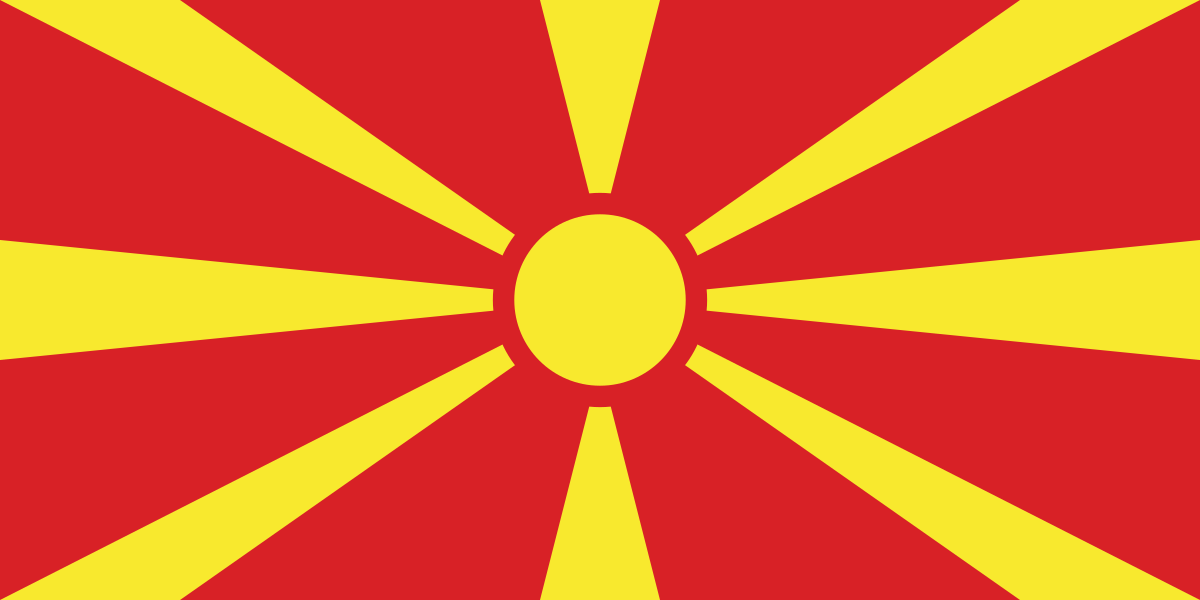
| National Symbols | Yellow sun on a red field |
| UNESCO Sites | Natural and Cultural Heritage of the Ohrid region |
| National Parks | Mavrovo, Galicica, Pelister, Shar Mountain |
| Pan-European Corridor | Corridor X |
| Broadband Milestone | First wireless broadband country (2006) |
| Crime Index | Low |
| Name of Parliament | Assembly of the Republic of North Macedonia |
| NATO Accession | March 27, 2020 |
| Primary Energy Source | Thermal Power (Lignite) |
| GDP (Nominal) | $16.95 Billion |
| Major Crops | Tobacco, Fruits, Vegetables, Grapes |
| Average Annual Temperature | 11.5 °C |
📑 Table of Contents
Overview
North Macedonia is a landlocked nation located in Southeastern Europe on the Balkan Peninsula. It is known for its rugged mountainous landscape, the historical significance of its ancient cities, and its role as a strategic crossroads between Europe and Asia. The country occupies the northern part of the larger geographical region of Macedonia.
- Capital: Skopje
- Official Language: Macedonian
- Currency: Macedonian Denar (MKD)
- Government: Parliamentary Republic
- Area: 25,713 sq km
History
The history of North Macedonia dates back to ancient times, beginning with the Kingdom of Paeonia and the rise of the Macedonian Empire. Over the centuries, the territory was ruled by the Romans, Byzantines, and the Ottoman Empire, each leaving a profound cultural mark. In the 20th century, it became a constituent state of Yugoslavia.
- Ancient Period: Rule of Philip II and Alexander the Great.
- Roman Era: Incorporation into the Province of Macedonia.
- Ottoman Rule: Lasted for over five centuries until 1912.
- Yugoslav Era: Part of the Socialist Federal Republic from 1945.
- Independence: Peacefully achieved on September 8, 1991.
Geography
North Macedonia's geography is defined by high mountains and deep fertile valleys. The country is landlocked but features significant hydrological resources, including the Vardar River which flows through the center of the nation toward the Aegean Sea. Three major tectonic lakes sit along the southern borders.
| Feature | Name | Size/Elevation |
|---|---|---|
| Highest Peak | Mount Korab | 2,764 m |
| Longest River | Vardar | 388 km (total) |
| Largest Lake | Lake Ohrid | 348 sq km |
Climate and Weather
The climate is a mix of Mediterranean and continental influences. Southern regions tend to be warmer with Mediterranean traits, while the mountainous interior and northern areas experience colder winters and more precipitation. The 'Vardarec' wind is a notable local phenomenon bringing warm air up the Vardar valley.
- Summer: Hot and dry, often exceeding 40°C in the plains.
- Winter: Cold with frequent snowfall, especially in high altitudes.
- Average Temp: January (0.3°C) to July (22.2°C).
Population and Demographics
The population of North Macedonia is approximately 1.8 million people. It is an ethnically diverse nation with a majority of Macedonians, followed by a large Albanian minority and smaller groups of Turks, Roma, and Serbs. Urbanization is high, with over a quarter of the population living in the capital city.
- Macedonians: ~58.4%
- Albanians: ~24.3%
- Other groups: Turks, Roma, Serbs, Bosniaks.
- Median Age: 41 years.
Culture and Lifestyle
Macedonian culture is a vibrant mosaic of Slavic, Mediterranean, and Ottoman heritage. This is reflected in the traditional music, dance, and architecture found throughout the country. Religious diversity is evident in the numerous Orthodox churches and Ottoman-era mosques that coexist in many towns.
- Music: Traditional folk music features complex irregular rhythms.
- Religion: Predominantly Orthodox Christian with a significant Muslim minority.
- Hospitality: Known for a welcoming and socially centered lifestyle.
Festivals and Events
The country hosts several international festivals that showcase its commitment to the arts. The Ohrid Summer Festival is the most prestigious event, featuring classical music and theater in ancient venues. The Struga Poetry Evenings is one of the oldest poetry gatherings in the world.
- Ohrid Summer Festival: July and August.
- Struga Poetry Evenings: Annual international gathering.
- Galicnik Wedding: Traditional folk event in July.
Food and Cuisine
Macedonian cuisine is known for its fresh ingredients and rich, savory dishes. It draws heavily from Balkan and Mediterranean traditions. Staples include locally grown vegetables, dairy products, and grilled meats. Tavce Gravce (baked beans) is considered the national dish.
| Dish | Type | Key Ingredients |
|---|---|---|
| Tavce Gravce | Main Dish | White beans, onions, peppers |
| Ajvar | Relish | Roasted red peppers, eggplant |
| Sopska Salad | Salad | Tomatoes, cucumbers, white cheese |
Economy and Industries
The economy is driven by the industrial and service sectors. North Macedonia has undergone structural reforms to attract foreign investment, particularly in the automotive components industry. Agriculture remains a vital part of the economy, particularly in the production of high-quality tobacco and wine.
- Key Exports: Automotive parts, iron, steel, and textiles.
- Agricultural Leads: Tobacco, apples, grapes, and vegetables.
- Trade Partners: Germany, Greece, Serbia, and Bulgaria.
Cost of Living
The cost of living in North Macedonia is generally lower than in Western Europe and many of its regional neighbors. This makes it an affordable location for both residents and expatriates. Housing and local food products are particularly cost-effective compared to European averages.
- Housing: Rent is relatively low outside the center of Skopje.
- Utilities: Moderate costs for electricity, water, and heating.
- Dining: Local restaurants offer high value for money.
Employment and Business
The labor market has seen significant changes as the country transitions toward more tech-based and manufacturing industries. While unemployment has historically been a challenge, it has steadily decreased due to foreign direct investment in Special Economic Zones.
- Major Sectors: Manufacturing, retail, and IT.
- Investment Zones: Free Economic Zones offer tax incentives.
- Workforce: Skilled in engineering and textiles.
Real Estate and Housing
Housing in North Macedonia varies from modern apartment blocks in Skopje to traditional stone houses in historic towns like Ohrid and Kratovo. The real estate market is accessible, with a steady demand for new residential units in the capital city.
- Skopje Market: High concentration of new developments.
- Rural Areas: Availability of traditional properties at lower prices.
- Ownership: High rate of private home ownership.
Transportation and Connectivity
North Macedonia is a central transport hub in the Balkans. It is crossed by two major Pan-European corridors, Corridor X and Corridor VIII. Public transportation within cities primarily relies on buses, and the railway network connects major towns and links to international routes.
- Corridor X: Main north-south axis connecting to Greece.
- Airports: International hubs in Skopje and Ohrid.
- Railways: State-owned Macedonian Railways (MZ).
Infrastructure and Utilities
The infrastructure has seen modernization projects recently, specifically in road networks and energy production. The country relies heavily on domestic coal for power but is increasingly investing in renewable energy sources like wind and solar.
- Energy: Primarily sourced from thermal power plants (Bitola).
- Telecommunications: High penetration of mobile and broadband internet.
- Roads: Continuous expansion of the motorway network.
Education
Education is compulsory for children between the ages of 6 and 15. The system includes primary, secondary, and higher education. The Ss. Cyril and Methodius University in Skopje is the oldest and largest university in the country.
- Literacy: Very high, exceeding 98%.
- Universities: Several public and private institutions.
- Status: Free primary and secondary education for citizens.
Healthcare
North Macedonia provides a universal healthcare system funded through a compulsory health insurance scheme. While public facilities are widespread, the private healthcare sector has grown significantly, offering high-standard specialized medical services.
- System: Managed by the Health Insurance Fund.
- Facilities: Public clinics and large private hospitals in Skopje.
- Access: Emergency services are available nationwide.
Tourist Attractions
Tourism is centered on the country's unique natural beauty and archaeological heritage. Lake Ohrid, a UNESCO World Heritage site, is the most visited destination. The capital city Skopje offers a mix of historic Ottoman architecture and modern neoclassical monuments.
- Ohrid: Known as the 'Jerusalem of the Balkans'.
- Matka Canyon: Popular for kayaking and caves.
- Kokino: A 4,000-year-old ancient observatory.
Things To Do
Visitors can engage in a variety of activities ranging from outdoor adventures to cultural exploration. The mountainous terrain is ideal for hiking, skiing, and mountain biking. Lake-based activities like sailing and scuba diving are popular in the southern regions.
- Hiking: Extensive trails in Mavrovo and Pelister.
- Skiing: Popular resorts at Popova Shapka and Mavrovo.
- Culture: Exploring the Old Bazaar in Skopje.
Best Places To Visit
Key destinations offer diverse experiences for travelers. From the coastal-like atmosphere of the lakes to the high mountain peaks, North Macedonia has something for every type of traveler.
| Location | Type | Key Highlight |
|---|---|---|
| Skopje | Capital | Old Bazaar and Stone Bridge |
| Ohrid | Lakeside | Ancient churches and UNESCO lake |
| Mavrovo | Nature | National Park and skiing |
Travel Guide
Traveling to North Macedonia is straightforward, with most international visitors arriving via Skopje. The country is safe and friendly, and while Macedonian is the official language, English is widely spoken in tourist areas and among the younger population.
- Arrival: Main entry through Skopje International Airport.
- Local Transport: Inter-city buses are the most reliable option.
- Connectivity: Local SIM cards are easily available.
Nearby Places
Due to its central location, North Macedonia is an excellent base for exploring the wider Balkan region. Major cities in neighboring countries are within a few hours' drive from the capital.
- Thessaloniki, Greece: ~3 hours from Skopje.
- Prishtina, Kosovo: ~1.5 hours from Skopje.
- Sofia, Bulgaria: ~3.5 hours from Skopje.
Environment and Nature
North Macedonia is home to a high degree of biodiversity. The country's four national parks protect a wide range of flora and fauna, including the endangered Balkan lynx. Efforts are ongoing to preserve the unique ecosystems of its ancient tectonic lakes.
- Flora: Over 3,700 species of plants.
- Fauna: Bears, wolves, and the rare Balkan lynx.
- Lakes: Lake Ohrid contains over 200 endemic species.
Government and Administration
The political system is a parliamentary democracy where the Prime Minister holds the executive power. The President serves as the head of state with primarily ceremonial duties. The country is divided into 80 municipalities for local administration.
- Executive: Led by the Prime Minister.
- Legislature: Unicameral Assembly (Sobranie).
- Administrative Units: 80 municipalities and the City of Skopje.
Safety and Public Services
The country is generally safe for residents and tourists alike. Violent crime is rare, and common public services like police, fire, and medical assistance are reliable and accessible through standard emergency numbers.
- Police: Maintains public order and safety.
- Emergency: Single European emergency number (112) is being implemented.
- Stability: Low rates of crime compared to regional averages.
Best Time To Visit
The ideal time to visit depends on the planned activities. Summer is best for enjoying the lakes and mountain hiking, while winter is suited for skiing at the country's various mountain resorts.
- Spring/Autumn: Ideal for sightseeing and mild weather.
- Summer: Peak season for Ohrid and outdoor festivals.
- Winter: Best for Popova Shapka and Mavrovo ski centers.
Local Business Directory
The business landscape is dominated by small and medium-sized enterprises (SMEs) alongside large-scale industrial producers. Many local businesses focus on agriculture, textile production, and tourism-related services.
- Agriculture: Tikves (Winery), Vitaminka (Food processing).
- Industry: Makstil (Steel), Alkaloid (Pharmaceuticals).
- Services: Telekom (Telecommunications), various local banks.
General Information FAQs
Where is North Macedonia located?
North Macedonia is located in Southeastern Europe on the Balkan Peninsula. It is a landlocked country sharing borders with Kosovo, Serbia, Bulgaria, Greece, and Albania.
What is North Macedonia known for?
The country is famous for Lake Ohrid (a UNESCO site), its rugged mountainous geography, the birthplace of Mother Teresa in Skopje, and its rich historical heritage from ancient Macedon and the Ottoman Empire.
Why is North Macedonia famous?
It is famous for being one of the oldest inhabited regions in Europe, its unique South Slavic culture, the Millennium Cross in Skopje, and for being the only nation to gain independence from Yugoslavia without conflict.
What country or region is North Macedonia part of?
North Macedonia is an independent country located in the Balkan region of Southeastern Europe.
What is the population of North Macedonia?
Based on 2026 estimates, the population is approximately 1.8 million people.
What languages are spoken in North Macedonia?
The official language is Macedonian. Albanian is also an official language. Other languages spoken include Turkish, Romani, Serbian, and Bosnian.
What time zone is North Macedonia in?
It is in the Central European Time zone (CET), which is UTC+1. It observes Daylight Saving Time (CEST, UTC+2) during summer.
What are the key facts about North Macedonia?
Key facts include its landlocked status, its capital city Skopje, the use of the Macedonian Denar as currency, and its status as a NATO member state.
What makes North Macedonia unique?
Its uniqueness lies in its blend of Eastern and Western cultural influences, its status as a highlander nation with over 30 peaks above 2,000 meters, and its ancient tectonic lakes which are among the oldest in the world.
How large is North Macedonia in area?
The country covers a total area of approximately 25,713 square kilometers.
History FAQs
What is the history of North Macedonia?
The territory has a history dating back to the Neolithic period. It was part of the ancient Kingdom of Paeonia, the Macedonian Empire, the Roman and Byzantine Empires, and the Ottoman Empire before becoming part of Yugoslavia in the 20th century.
When was North Macedonia established?
The modern state of the Republic of North Macedonia was established following its declaration of independence on September 8, 1991.
What major historical events happened in North Macedonia?
Major events include the Roman conquest in the 2nd century BC, the 1903 Ilinden Uprising against Ottoman rule, the Balkan Wars of 1912-1913, the 1963 Skopje earthquake, and the 2018 Prespa Agreement.
Who were important historical figures from North Macedonia?
Important figures include Mother Teresa, Alexander the Great (historical links), Tsar Samuel, and modern revolutionary leaders like Goce Delcev.
How has North Macedonia developed over time?
The country has transitioned from an agricultural region under Ottoman and early Yugoslav rule to an industrializing republic within Yugoslavia, and finally to a market-oriented independent democracy seeking EU accession.
Geography & Environment FAQs
What is the geography of North Macedonia?
The geography is predominantly mountainous with several high ranges. A central valley is formed by the Vardar River. The country contains three large natural lakes on its southern borders.
What natural features surround North Macedonia?
It is surrounded by several mountain massifs including the Sar Mountains in the northwest, the Korab range in the west, and the Osogovo mountains in the east.
Are there mountains, rivers, or lakes near North Macedonia?
Yes, major features include the Vardar River, Lake Ohrid, Lake Prespa, and the highest peak, Mount Korab.
What is the elevation of North Macedonia?
The average elevation is 741 meters above sea level, with high points exceeding 2,700 meters.
What ecosystems exist around North Macedonia?
Ecosystems include Alpine meadows, dense deciduous and coniferous forests, and unique lacustrine environments in the tectonic lakes.
Climate & Weather FAQs
What is the climate like in North Macedonia?
It is a transitional climate between Mediterranean and Continental. Summers are generally hot and dry, while winters can be cold with significant snow in mountainous areas.
What is the average temperature in North Macedonia?
The average annual temperature is about 11.5°C. July averages around 22-25°C, while January averages around 0°C.
What is the weather like throughout the year in North Macedonia?
Spring and autumn are mild and pleasant. Summers are frequently very hot (up to 40°C), and winters bring cold air from the north, resulting in frost and snow.
Does North Macedonia experience extreme weather?
The country can experience summer heatwaves and severe winter cold. It is also a seismically active region prone to earthquakes.
What is the best time of year to visit North Macedonia?
The best time is from May to September for warm weather and outdoor activities, or January to March for skiing.
Population & Society FAQs
What is the population density of North Macedonia?
The population density is approximately 72 people per square kilometer.
What ethnic groups live in North Macedonia?
The main groups are Macedonians (approx. 58%), Albanians (approx. 24%), Turks, Roma, Serbs, and Bosniaks.
What religions are practiced in North Macedonia?
The majority are Orthodox Christian. There is a significant Muslim population, as well as smaller numbers of Catholics and other denominations.
What is daily life like in North Macedonia?
Life is often socially centered, with a strong culture of coffee-drinking and evening strolls (known as the 'korzo'). Family ties remain very important.
How diverse is the population of North Macedonia?
It is highly diverse, with multiple ethnic and religious groups that have lived together for centuries, contributing to a rich multicultural society.
Culture & Traditions FAQs
What cultural traditions are important in North Macedonia?
Important traditions include folk music (Calgija), traditional dances (Oro), and craft making like filigree and wood carving.
What festivals are celebrated in North Macedonia?
Celebrations include Independence Day (Sept 8), Orthodox Christmas and Easter, and international events like the Ohrid Summer Festival.
What cultural landmarks exist in North Macedonia?
Landmarks include the Stone Bridge in Skopje, St. John the Baptist monastery at Bigorski, and the ancient theater in Ohrid.
What traditional clothing or customs are common in North Macedonia?
Traditional clothing often features elaborate embroidery. Customs like 'Kumstvo' (godparenting) are highly respected.
What arts and crafts are associated with North Macedonia?
The country is known for Ohrid pearls, silver filigree work, and traditional pottery.
Food & Cuisine FAQs
What foods is North Macedonia known for?
It is known for Tavce Gravce (baked beans), Ajvar (pepper relish), and various grilled meats like Cevapi.
What traditional dishes originate from North Macedonia?
Dishes include Selsko Meso (village meat), Pastrmajlija (meat pie), and Turli Tava (vegetable stew).
What are the best restaurants in North Macedonia?
While names vary, the best traditional food is often found in the Old Bazaars of Skopje and Bitola, and lakeside restaurants in Ohrid.
What local ingredients are commonly used in North Macedonia cuisine?
Key ingredients include peppers, tomatoes, beans, white cheese (sirenje), and high-quality lamb.
What food markets or street foods are popular in North Macedonia?
Green markets ('Pazar') are popular for fresh produce. Street foods include Burek (pastry) and grilled corn.
Economy & Business FAQs
What are the main industries in North Macedonia?
Main industries include manufacturing (textiles and automotive parts), services, and agriculture.
What economic activities drive the economy of North Macedonia?
Export-oriented manufacturing, trade, and the agricultural production of tobacco and wine are primary drivers.
What businesses operate in North Macedonia?
The market includes international automotive firms (like Kromberg & Schubert), domestic pharmaceutical giants (Alkaloid), and large-scale wineries (Tikves).
Is North Macedonia an important economic center?
It is a developing regional hub due to its strategic location on Pan-European transport corridors.
What are the major exports or products from North Macedonia?
Automotive ignition wiring sets, ferro-alloys, iron, steel, and high-grade tobacco are major exports.
Employment & Jobs FAQs
What job opportunities are available in North Macedonia?
Opportunities exist in the manufacturing sector, IT services, and the growing tourism industry.
What are the major employers in North Macedonia?
Large employers include the state administration, manufacturing plants in free zones, and the retail and banking sectors.
What skills are in demand in North Macedonia?
Skills in engineering, software development, and languages (specifically German and English) are in high demand.
Is North Macedonia a good place to work?
It offers a lower cost of living and growing opportunities in specialized technical sectors, though wages are generally lower than in Western Europe.
What is the unemployment rate in North Macedonia?
As of 2025, the unemployment rate is around 12-13%, showing a long-term downward trend.
Cost of Living FAQs
Is North Macedonia expensive to live in?
No, it is considered one of the most affordable countries in Europe for living costs.
What is the average cost of living in North Macedonia?
Living costs for a single person are significantly lower than the EU average, with low food and housing prices.
How much does housing cost in North Macedonia?
Housing is affordable, with rents in Skopje center being higher than the rest of the country but still low by European standards.
What are average food and utility costs in North Macedonia?
A typical meal at an inexpensive restaurant is very affordable. Utilities (electricity/water) are moderate but rising.
Is North Macedonia affordable compared to nearby cities?
Yes, it is generally more affordable than cities like Belgrade, Sofia, or Thessaloniki.
Housing & Real Estate FAQs
What types of housing are available in North Macedonia?
Options include multi-story apartments, detached family houses, and traditional historic stone residences.
What is the average home price in North Macedonia?
Prices vary by location; Skopje real estate is the most expensive, while rural and smaller town properties are very low-cost.
Is it better to rent or buy property in North Macedonia?
Home ownership is a cultural norm and very high (over 85-90%). Renting is common for students and expatriates in Skopje.
Which neighborhoods are popular in North Macedonia?
In Skopje, Centar, Debar Maalo, and Aerodrom are popular. Lakeside Ohrid and the Old Town of Bitola are also sought after.
How has the property market changed in North Macedonia?
The market has seen a surge in new apartment construction in the capital, with prices increasing steadily over the last decade.
Transportation FAQs
How do you get to North Macedonia?
Most travelers arrive by plane via Skopje International Airport or by road from neighboring Balkan countries.
What is the nearest airport to North Macedonia?
Skopje International Airport (SKP) is the main gateway. Ohrid (OHD) serves as a secondary seasonal airport.
Does North Macedonia have railway connections?
Yes, though the network is limited. There are connections to Belgrade and Pristina, though schedules are subject to change.
How reliable is public transportation in North Macedonia?
Inter-city buses are the most reliable and frequent way to travel. Skopje has a comprehensive city bus network.
What major highways or roads connect to North Macedonia?
The A1 motorway (part of Corridor X) connects the country from north to south (Serbia to Greece).
Education FAQs
What schools are located in North Macedonia?
The country has a network of state-funded primary and secondary schools, as well as private and international schools in the capital.
Are there universities in North Macedonia?
Yes, including the University of Ss. Cyril and Methodius, Goce Delcev University, and the South East European University.
What is the literacy rate in North Macedonia?
The literacy rate is high, approximately 98.5%.
What educational opportunities exist in North Macedonia?
A wide range of technical and academic programs are available, with increasing focus on IT and engineering.
Is North Macedonia a good place for students?
Yes, due to the affordable cost of living and the presence of several established higher education institutions.
Healthcare FAQs
What hospitals are available in North Macedonia?
Major public hospitals include the Mother Teresa Clinical Center. Private hospitals like Acibadem Sistina and Zan Mitrev are also available.
Are there emergency medical services in North Macedonia?
Yes, emergency medical services (194) are available in all major urban and rural areas.
What healthcare facilities exist in North Macedonia?
The network includes health centers (Polyclinics), general hospitals, and specialized clinics.
Is healthcare affordable in North Macedonia?
Public healthcare is covered by insurance. Private healthcare is affordable compared to Western European standards.
Are specialized medical services available in North Macedonia?
Yes, particularly in Skopje, which offers advanced cardiology, fertility, and ophthalmology services.
Tourism & Travel FAQs
What are the top tourist attractions in North Macedonia?
Top sites include the Ohrid Old Town, Matka Canyon, the Stone Bridge, and the Old Bazaar in Skopje.
What are the best things to do in North Macedonia?
Activities include hiking in Mavrovo, wine tasting in Tikves, and exploring the ancient ruins of Stobi.
Is North Macedonia worth visiting?
Yes, it offers a unique combination of natural beauty, ancient history, and low prices for travelers.
What landmarks should visitors see in North Macedonia?
Key landmarks include Saint Naum Monastery, the Millennium Cross, and the Memorial House of Mother Teresa.
How many days should tourists spend in North Macedonia?
A minimum of 5-7 days is recommended to see the major highlights like Skopje, Ohrid, and one national park.
Nearby Places FAQs
What places are near North Macedonia worth visiting?
Nearby highlights include Thessaloniki in Greece, the Shar Mountains in Kosovo, and Lake Prespa shared with Albania.
What cities or towns are close to North Macedonia?
Major nearby cities include Sofia (Bulgaria), Thessaloniki (Greece), and Tirana (Albania).
What natural attractions are near North Macedonia?
The Rila Mountains in Bulgaria and the Olympus National Park in Greece are within driving distance.
What day trips can be taken from North Macedonia?
Popular day trips include visiting Matka Canyon from Skopje or Saint Naum from Ohrid city center.
What famous destinations are within reach of North Macedonia?
The Meteora monasteries in Greece and the beaches of the Chalkidiki peninsula are easily accessible by road.
Safety FAQs
Is North Macedonia safe to live in?
Yes, the country has a relatively low crime rate and is generally peaceful for residents.
Is North Macedonia safe for tourists?
Yes, it is considered very safe for international travelers, with low rates of petty theft compared to other European capitals.
What is the crime rate in North Macedonia?
The crime rate is low to moderate, with most incidents involving minor property crimes in urban centers.
What emergency services operate in North Macedonia?
Police (192), Fire (193), and Ambulance (194) are the primary emergency services.
What safety tips should visitors follow in North Macedonia?
Standard precautions apply: watch your belongings in crowded areas and follow local laws and customs.
Lifestyle & Living FAQs
Is North Macedonia a good place to live?
It offers a high quality of life in terms of climate, nature, and social connections at a low cost.
What recreational activities are available in North Macedonia?
Options include mountain climbing, paragliding, swimming in natural lakes, and visiting thermal spas.
Is North Macedonia family-friendly?
Yes, the culture is very family-oriented, with many parks and child-friendly restaurants.
What outdoor activities are popular in North Macedonia?
Hiking, mountain biking, and fishing in the rivers and lakes are very popular.
What makes life enjoyable in North Macedonia?
The slow pace of life, strong community bonds, and accessibility to beautiful natural landscapes.
Practical Information FAQs
What travel tips should visitors know about North Macedonia?
Always carry some cash (Denars), as not all small shops accept cards. Taxis are very cheap but should use a meter.
What local customs should visitors respect in North Macedonia?
Dress modestly when visiting religious sites. Tipping is appreciated but not mandatory.
How accessible is North Macedonia for international visitors?
It is increasingly accessible with many budget airlines flying into Skopje. Citizens of many countries do not require a visa.
What services are available for tourists in North Macedonia?
Information centers, tour guides, car rental services, and widespread mobile 4G/5G coverage.
What important information should travelers know before visiting North Macedonia?
Electricity is 230V (Type C/F plugs). The tap water is generally safe to drink in Skopje and major towns.