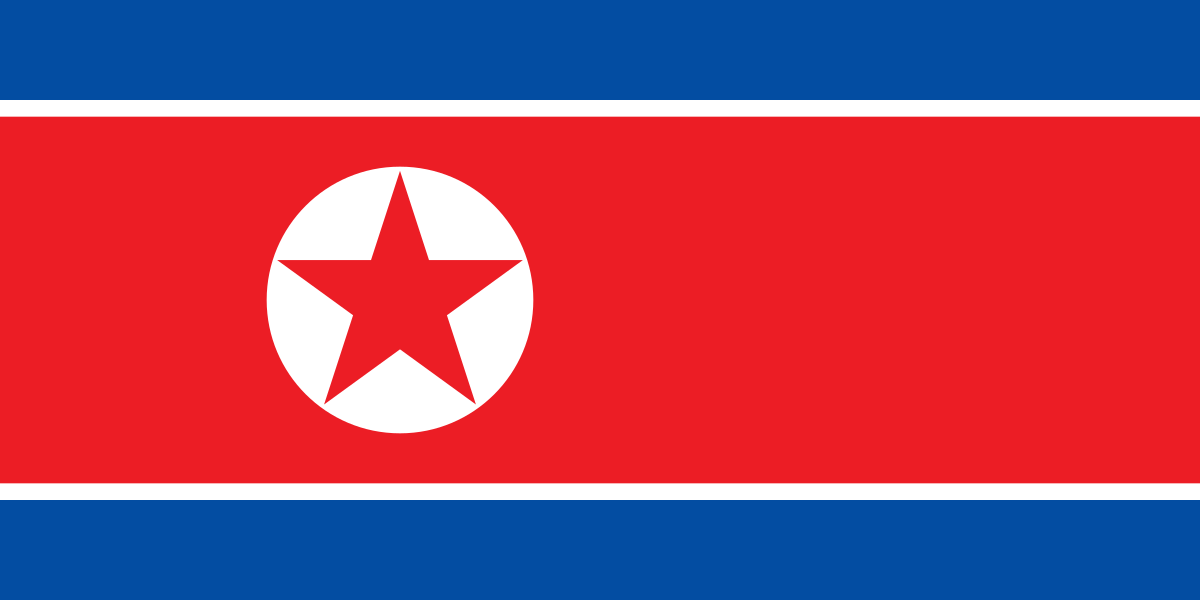
North Korea
Location Info
- Continent: Asia
- Country: North Korea
- Coordinates: 40.3399 , 127.5101
Trust Info
Verified Geographic Research
🌍 Continents
Overview
North Korea, officially the Democratic People's Republic of Korea (DPRK), is a country situated in East Asia on the northern half of the Korean Peninsula. It borders China and Russia to the north and South Korea to the south along the Demilitarized Zone (DMZ). The nation's landscape is predominantly mountainous, with approximately 80% of its territory consisting of uplands and ranges, including the highest peak, Mount Paektu. Its capital and largest city is Pyongyang, a major political and cultural center located on the Taedong River.
The country was established in 1948 following the division of the peninsula after World War II and the subsequent Korean War. It operates as a highly centralized socialist state guided by the state ideology of Juche, or self-reliance. Historically, North Korea has focused on heavy industry and military development while maintaining a largely isolated diplomatic and economic stance. Its population is notably homogeneous, and the official language is Korean.
Truth & Facts
| Total Area | 120,540 sq km |
| Coastline | 2,495 km |
| Total Population | 26.6 million (2026 est.) |
| Ethnic Composition | 99.8% Korean |
| Government Type | Unitary socialist republic |
| Capital City | Pyongyang |
| Currency | North Korean Won (KPW) |
| Major Exports | Minerals, metallurgical products, munitions |
| Establishment Date | September 9, 1948 |
| Primary Power Source | Coal and Hydroelectric |
| Literacy Rate | Approx. 100% |
| Healthcare Model | State-funded district doctor system |
| Railway Length | Over 6,000 km |
| Official Language | Korean |
| Primary Port of Entry | Pyongyang Sunan International Airport |
| Forest Cover | Approx. 40% |
| Intranet Name | Kwangmyong |
| Crime Rate | Reported low |
| Supreme Leader | Kim Jong Un |
| UN Member Since | 1991 |
| Water Access | Variable by region |
| Time Zone | Pyongyang Time (UTC+9) |
| Arable Land | Approx. 14% |
| Active Personnel | Approx. 1.2 million |
📑 Table of Contents
Overview of North Korea
North Korea, known officially as the Democratic People's Republic of Korea (DPRK), occupies the northern portion of the Korean Peninsula in East Asia. The country is bordered by China to the north, Russia to the northeast, and South Korea to the south. It is characterized by its high degree of political and economic centralization and its official state ideology of Juche.
- Official Name: Democratic People's Republic of Korea
- Capital: Pyongyang
- Official Language: Korean
- Ideology: Juche (Self-reliance)
- Primary Border: 38th Parallel / DMZ
Historical Development
The history of North Korea is rooted in ancient Korean dynasties such as Gojoseon and Goryeo. Modern history began with the Japanese occupation from 1910 to 1945, followed by the division of the peninsula. The DPRK was formally established on September 9, 1948, under the leadership of Kim Il Sung.
| Era | Significant Events |
|---|---|
| 1945 | Division of Korea at the 38th parallel |
| 1950-1953 | The Korean War |
| 1994 | Death of Kim Il Sung and transition to Kim Jong Il |
| 2011 | Accession of Kim Jong Un |
Geography and Physical Features
North Korea is a rugged land with about 80% of its territory covered by mountain ranges and hills. These are separated by deep, narrow valleys. The major mountain ranges include the Hamgyong and Rangrim mountains in the north and east.
- Highest Point: Mount Paektu (2,744 meters)
- Longest River: Yalu River (Amnok River)
- Coastal Plains: Primarily located on the west coast
- Islands: Numerous small islands in the West Sea
Climate and Weather Patterns
The country experiences a humid continental climate with four distinct seasons. Winters are generally long, cold, and dry, influenced by Siberian air masses. Summers are short, hot, and humid, characterized by the East Asian monsoon which brings the majority of annual rainfall.
- Winter Average: -3°C to -13°C
- Summer Average: 20°C to 29°C
- Precipitation: Concentrated between June and August
- Extreme Events: Occasional typhoons and spring droughts
Population and Demographics
North Korea has one of the world's most ethnically homogeneous populations. There are virtually no significant ethnic minorities, with only small communities of Chinese and Japanese residents. The population is concentrated in the coastal plains and the capital region.
- Total Population: ~26.6 million
- Median Age: 35 years
- Urbanization: 62% urban population
- Life Expectancy: ~72 years
Culture and Lifestyle
Cultural life in North Korea is state-coordinated and revolves around the promotion of national identity and the Juche ideology. Traditional Korean customs, such as filial piety and communal activities, remain influential in daily life. Most cultural expressions in art, music, and literature serve to reinforce state narratives.
National Festivals and Events
Public holidays in North Korea are often tied to political history or the birthdays of national leaders. These events are celebrated with mass games, parades, and synchronized performances at venues like the May Day Stadium.
- Day of the Sun: April 15 (Birthday of Kim Il Sung)
- Day of the Shining Star: February 16 (Birthday of Kim Jong Il)
- Victory Day: July 27 (Armistice Day)
- National Foundation Day: September 9
Food and Cuisine
North Korean cuisine is characterized by its use of simple, local ingredients and subtle flavors. Staples include rice, corn, and various fermented vegetables. Cold noodles (Naengmyeon) from Pyongyang are particularly famous throughout the peninsula.
- Kimchi: Fermented cabbage with radish
- Pyongyang Naengmyeon: Buckwheat noodles in cold broth
- Injo Gogi Bap: Rice with artificial meat (soybean)
- Soju: Traditional distilled alcoholic beverage
Economy and Industries
The economy is centrally planned and state-controlled. It relies heavily on heavy industry, military production, and the extraction of mineral resources. The country possesses vast reserves of coal, iron ore, and rare earth metals.
| Sector | Primary Activities |
|---|---|
| Mining | Coal, Magnesite, Iron Ore |
| Manufacturing | Steel, Chemicals, Textiles |
| Agriculture | Rice, Maize, Cereal crops |
Cost of Living
The cost of living in North Korea is difficult to measure using international standards due to the state-subsidized nature of housing, healthcare, and basic rations. However, informal markets (Jangmadang) play a significant role in determining the price of consumer goods and supplemental food items.
Employment and Business
Most citizens are employed by state enterprises or collective farms. Private business is officially restricted, though small-scale informal trading has become a vital part of the economy since the 1990s. Military service is also a major source of employment for a significant portion of the adult population.
Real Estate and Housing
In North Korea, the state owns all land and residential property. Citizens are assigned housing based on their work unit, social status, and family size. Pyongyang features many high-rise apartment complexes, while rural areas consist mostly of single-story traditional homes or modest flats.
Transportation and Connectivity
The transport network is dominated by rail, which handles the majority of freight and passenger movement. Public transport, including trolleybuses and the Pyongyang Metro, is the primary mode of transit in urban areas. Private car ownership is rare.
- Railways: 6,000+ km network
- Airports: Sunan International is the primary hub
- Subway: Pyongyang Metro (two lines)
- Highways: Connects major cities like Pyongyang and Nampo
Infrastructure and Utilities
Infrastructure in North Korea is aging and faces significant challenges due to energy shortages. While major cities have access to electricity and water systems, supply is often intermittent. The country has focused on building large-scale hydroelectric dams to boost power generation.
Education System
Education is universal and state-funded. The system consists of one year of preschool, five years of primary school, and six years of secondary school. Emphasis is placed on mathematics, science, and political education.
- Literacy Rate: Nearly 100%
- Higher Ed: Kim Il Sung University is the premier institution
- Specialization: Science and Technology are high priorities
Healthcare and Public Health
The healthcare system is built on a district doctor model where physicians are assigned to specific residential blocks. While treatment was historically free, economic conditions have led to a system where patients often pay for medication and specialized equipment.
Major Tourist Attractions
Tourism in North Korea is highly regulated and usually organized through state-approved tours. Most attractions are located in the capital, Pyongyang, and focus on the country's history and political ideology.
- Juche Tower: 170-meter stone monument
- May Day Stadium: World's largest stadium by capacity
- Mansudae Grand Monument: Bronze statues of leaders
- Arch of Triumph: Commemorating resistance to Japan
Activities for Visitors
Visitors typically engage in guided sightseeing tours that include visits to revolutionary sites, cultural museums, and state-run schools. Recreational activities are limited to sanctioned areas such as the Masikryong Ski Resort or the Myohyangsan mountain trails.
Key Cities and Regions
Beyond Pyongyang, there are several regions of geographic and historical significance that are accessible to international visitors under supervision.
- Kaesong: Historic city near the DMZ
- Wonsan: Port city and beach resort area
- Mount Paektu: Sacred volcanic mountain
- Mount Myohyang: Famous for scenic views and the Friendship Exhibition
Travel and Entry Requirements
Travel to North Korea requires a visa, which is usually processed through a licensed travel agency. Most travelers enter via train or flight from Beijing, China. Visitors must be accompanied by state-appointed guides at all times during their stay.
Bordering Locations
North Korea occupies a strategic position in Northeast Asia, sharing land borders with three nations and water borders with two seas.
- South Korea: Separated by the 250km long DMZ
- China: Across the Yalu and Tumen Rivers
- Russia: Short border along the Tumen River
Environment and Wildlife
The mountainous terrain provides habitats for various wildlife species, though habitat loss is a concern. The government has designated several nature reserves to protect endangered species and biodiversity.
- Flora: Oak, maple, and pine forests
- Fauna: Rare sightings of Siberian tigers and Amur leopards
- Conservation: Biosphere reserves at Mount Paektu and Mount Myohyang
Government and Administration
The political system is led by the Workers' Party of Korea. The Supreme People's Assembly is the highest organ of state power, while the State Affairs Commission handles executive functions. Administratively, the country is divided into 9 provinces and special cities.
Safety and Public Services
Public safety is maintained by the Ministry of Social Security. Violent crime is reported to be very low, largely due to strict social controls. Emergency services, such as fire and medical response, are centralized but may vary in equipment quality across regions.
Optimal Visiting Times
The best times for travel are during the spring (April to June) and autumn (September to October). During these periods, temperatures are mild and the landscape is either in bloom or displaying fall colors. Winters are extremely harsh and may limit travel to northern regions.
State Corporations and Commerce
Commerce is dominated by large state-owned enterprises (SOEs). These include the Korea Foreign Trade Bank, Air Koryo, and various industrial combines. Consumer activity is increasingly centered around state-run department stores and legalized local markets.
General Information FAQs
Where is North Korea located?
North Korea is located in East Asia on the northern half of the Korean Peninsula. It is bordered by China to the north, Russia to the northeast, and South Korea to the south.
What is North Korea known for?
North Korea is known for its highly centralized socialist government, the Juche ideology of self-reliance, its historical division from South Korea, and its unique architecture and monuments in Pyongyang.
Why is North Korea famous?
It is famous for its isolation from much of the international community, its military-first policy, and large-scale public performances like the Mass Games.
What country or region is North Korea part of?
North Korea is a sovereign state in East Asia. It occupies roughly 55% of the land area of the Korean Peninsula.
What is the population of North Korea?
As of early 2026, the population is estimated to be approximately 26.6 million people.
What languages are spoken in North Korea?
Korean is the official language. The dialect spoken in the north is known as Munhwao, which differs slightly in vocabulary and pronunciation from the Seoul dialect.
What time zone is North Korea in?
North Korea follows Pyongyang Time, which is UTC+9.
What are the key facts about North Korea?
Key facts include its capital Pyongyang, its primary leader Kim Jong Un, its total area of 120,540 sq km, and its status as a single-party socialist republic.
What makes North Korea unique?
Its adherence to the Juche ideology, its status as one of the few remaining centrally planned economies, and its extremely homogeneous population make it unique.
How large is North Korea in area?
The country covers approximately 120,540 square kilometers, making it slightly larger than the U.S. state of Pennsylvania.
History FAQs
What is the history of North Korea?
North Korea's modern history began with the division of Korea in 1945. The Democratic People's Republic of Korea was established in 1948, followed by the Korean War (1950-1953) which resulted in a ceasefire and the creation of the DMZ.
When was North Korea established?
The DPRK was officially established on September 9, 1948.
What major historical events happened in North Korea?
Major events include the Korean War, the post-war industrialization period, the famine of the late 1990s (the Arduous March), and the development of the nation's strategic defense capabilities.
Who were important historical figures from North Korea?
The most significant figures are the nation's leaders: Kim Il Sung (the Eternal President), Kim Jong Il, and the current leader, Kim Jong Un.
How has North Korea developed over time?
From a post-war agrarian society, it developed into an industrial state with heavy emphasis on steel and chemical production, and more recently, advanced technology and defense systems.
Geography & Environment FAQs
What is the geography of North Korea?
The geography is dominated by mountains and hills. Extensive mountain ranges run through the center and east, with plains located mostly along the western coast.
What natural features surround North Korea?
It is surrounded by the Yalu and Tumen Rivers to the north, the Yellow Sea to the west, and the Sea of Japan (East Sea) to the east.
Are there mountains, rivers, or lakes near North Korea?
Yes, major features include the Hamgyong Mountains, the Yalu River, and Lake Heaven (Chonji) located at the summit of Mount Paektu.
What is the elevation of North Korea?
Average elevation is significant as 80% of the land is mountainous. The highest point is Mount Paektu at 2,744 meters.
What ecosystems exist around North Korea?
Ecosystems include temperate broadleaf and mixed forests, alpine tundra in the high mountains, and coastal wetlands.
Climate & Weather FAQs
What is the climate like in North Korea?
It has a humid continental climate with four distinct seasons: cold, dry winters and warm, humid, rainy summers.
What is the average temperature in North Korea?
In Pyongyang, summer temperatures average 25°C, while winter averages drop to around -7°C.
What is the weather like throughout the year in North Korea?
Spring and autumn are mild and clear. Winter brings heavy snow and freezing temperatures, while summer is dominated by the monsoon rains.
Does North Korea experience extreme weather?
Yes, the country is prone to flooding during the summer monsoon and occasional droughts in the spring.
What is the best time of year to visit North Korea?
Spring (April–June) and Autumn (September–October) are generally the most comfortable times to visit due to mild weather.
Population & Society FAQs
What is the population density of North Korea?
The population density is approximately 212 people per square kilometer, with high concentrations in urban centers like Pyongyang.
What ethnic groups live in North Korea?
The population is almost entirely ethnically Korean, with a very small number of Chinese and Japanese residents.
What religions are practiced in North Korea?
North Korea is officially an atheist state. Traditional practices like Buddhism and Chondogyo exist in a limited, state-sanctioned capacity.
What is daily life like in North Korea?
Daily life is structured and centered around work, community activities, and state-organized education and political study.
How diverse is the population of North Korea?
It is one of the least diverse populations in the world, being nearly 100% Korean.
Culture & Traditions FAQs
What cultural traditions are important in North Korea?
Traditional Korean customs like Seollal (Lunar New Year) and Chuseok (Harvest Festival) are observed, often alongside modern state celebrations.
What festivals are celebrated in North Korea?
Major festivals include the Day of the Sun, Foundation Day, and the Arirang Mass Games performances.
What cultural landmarks exist in North Korea?
Landmarks include the Tomb of King Tongmyong, the Koryo Museum in Kaesong, and the various monuments in Pyongyang.
What traditional clothing or customs are common in North Korea?
The Hanbok (called Choson-ot in the North) is worn on formal occasions and during traditional holidays.
What arts and crafts are associated with North Korea?
North Korea is known for its intricate embroidery, ceramics, and large-scale socialist realist paintings.
Food & Cuisine FAQs
What foods is North Korea known for?
It is famous for Pyongyang cold noodles, various types of Kimchi, and corn-based dishes.
What traditional dishes originate from North Korea?
Key dishes include Mul-naengmyeon (cold noodle soup) and Kaesong-style Yakbap (sweet rice).
What are the best restaurants in North Korea?
The Okryu-gwan and Chongryu-gwan in Pyongyang are world-renowned for their traditional Korean cuisine.
What local ingredients are commonly used in North Korea cuisine?
Common ingredients include buckwheat, potatoes, corn, cabbage, and seafood from the surrounding coasts.
What food markets or street foods are popular in North Korea?
Kimbap, Tteokbokki (spicy rice cakes), and Injo gogi bap (soy meat with rice) are common street foods found in urban areas.
Economy & Business FAQs
What are the main industries in North Korea?
Main industries include military products, machine building, electric power, chemicals, mining, metallurgy, and textiles.
What economic activities drive the economy of North Korea?
Extraction of minerals like coal and iron ore, along with manufacturing and state-directed agriculture, are the primary drivers.
What businesses operate in North Korea?
Most businesses are state-owned enterprises. There are some joint ventures with foreign firms, particularly in special economic zones like Rason.
Is North Korea an important economic center?
It is a significant regional source of minerals and labor, though international sanctions limit its global economic integration.
What are the major exports or products from North Korea?
Major exports include anthracite coal, iron ore, lead, zinc, and increasingly, processed textiles and seafood.
Employment & Jobs FAQs
What job opportunities are available in North Korea?
Jobs are primarily in heavy industry, state administration, the military, and collective farming.
What are the major employers in North Korea?
The largest employers are state agencies, the Korean People's Army, and the various industrial combines (Suryong).
What skills are in demand in North Korea?
Skills in engineering, military science, agriculture, and information technology are highly prioritized by the state.
Is North Korea a good place to work?
Employment provides stability through state rations and housing, though salaries are generally low by international standards.
What is the unemployment rate in North Korea?
Official unemployment is practically zero, as the state assigns every citizen a work unit.
Cost of Living FAQs
Is North Korea expensive to live in?
For citizens, basic needs like housing and healthcare are state-subsidized. However, consumer goods on the informal market can be expensive relative to state wages.
What is the average cost of living in North Korea?
Estimates vary, but life for most citizens revolves around state rations supplemented by items purchased in local markets.
How much does housing cost in North Korea?
Housing is provided by the state to citizens at little to no direct cost, though maintenance fees may apply.
What are average food and utility costs in North Korea?
Basic rations are subsidized, but electricity and water are provided by the state with costs integrated into work-unit accounts.
Is North Korea affordable compared to nearby cities?
Direct comparison is difficult due to the different economic systems, but the standard of living is lower than in Seoul or Beijing.
Housing & Real Estate FAQs
What types of housing are available in North Korea?
Urban areas feature high-rise apartments, while rural regions have traditional tile-roofed or thatched-roof houses (though many have been modernized).
What is the average home price in North Korea?
There is no official private real estate market; however, housing 'usage rights' are reportedly traded informally in large cities.
Is it better to rent or buy property in North Korea?
Property cannot be 'bought' or 'rented' in the Western sense; citizens apply for housing through their state work units.
Which neighborhoods are popular in North Korea?
In Pyongyang, central districts like Mansudae and the Mirae Scientists Street are highly prestigious.
How has the property market changed in North Korea?
Since the 1990s, an informal market for housing rights has emerged, leading to more residential mobility in cities.
Transportation FAQs
How do you get to North Korea?
International visitors usually arrive via train from Beijing or Dandong, or via flight on Air Koryo from Beijing or Vladivostok.
What is the nearest airport to North Korea?
Pyongyang Sunan International Airport is the primary gateway for international air travel.
Does North Korea have railway connections?
Yes, it has extensive rail links with China and a connection with Russia at Khasan-Tumangang.
How reliable is public transportation in North Korea?
Public transport like the Pyongyang Metro is highly reliable, though rural bus services can be limited by fuel availability.
What major highways or roads connect to North Korea?
Major expressways connect Pyongyang to Wonsan, Nampo, and Kaesong.
Education FAQs
What schools are located in North Korea?
There is a network of primary, secondary, and specialized senior middle schools throughout all provinces.
Are there universities in North Korea?
Yes, notable universities include Kim Il Sung University, Kim Chaek University of Technology, and Pyongyang University of Foreign Studies.
What is the literacy rate in North Korea?
The literacy rate is reported by UNESCO to be nearly 100% due to the mandatory education system.
What educational opportunities exist in North Korea?
Citizens have access to vocational training, specialized scientific institutes, and higher education for high-performing students.
Is North Korea a good place for students?
Students benefit from a competitive and rigorous environment, particularly in STEM fields and performing arts.
Healthcare FAQs
What hospitals are available in North Korea?
Major facilities include the Pyongyang Maternity Hospital, Kim Man Yu Hospital, and the Pyongyang General Hospital.
Are there emergency medical services in North Korea?
Yes, state-run ambulance services operate in major cities, though equipment levels vary.
What healthcare facilities exist in North Korea?
There are provincial hospitals, county-level clinics, and neighborhood clinics as part of the district doctor system.
Is healthcare affordable in North Korea?
Medical consultations are officially free, but patients must often pay for medications and specialized care.
Are specialized medical services available in North Korea?
Specialized services in cardiology, oncology, and traditional Koryo medicine are available in the capital.
Tourism & Travel FAQs
What are the top tourist attractions in North Korea?
Top sites include the Mansudae Grand Monument, the DMZ at Panmunjom, the Juche Tower, and Mount Myohyang.
What are the best things to do in North Korea?
Visitors can tour historical museums, attend synchronized artistic performances, and visit the Victorious Fatherland Liberation War Museum.
Is North Korea worth visiting?
For travelers interested in political history, unique architecture, and preserved traditional culture, it offers a distinct experience.
What landmarks should visitors see in North Korea?
Must-see landmarks include the Arch of Triumph, the Workers' Party Foundation Monument, and the Ryugyong Hotel.
How many days should tourists spend in North Korea?
Most standard tours last between 4 to 7 days, covering Pyongyang and one or two other regions like Kaesong or Wonsan.
Nearby Places FAQs
What places are near North Korea worth visiting?
The Chinese border city of Dandong and the Russian city of Vladivostok are common transit points for visitors.
What cities or towns are close to North Korea?
Dandong (China), Hunchun (China), and Seoul (South Korea, across the DMZ) are the closest major urban centers.
What natural attractions are near North Korea?
The Changbai Mountain region in China (the Chinese side of Mount Paektu) is a major nearby natural attraction.
What day trips can be taken from North Korea?
Day trips from Pyongyang often include Kaesong/DMZ, Nampo's West Sea Barrage, or the Sariwon Folk Village.
What famous destinations are within reach of North Korea?
The Diamond Mountains (Kumgangsan) on the east coast are among the most famous scenic destinations in the region.
Safety FAQs
Is North Korea safe to live in?
For citizens, societal safety is high due to strict regulations, though economic challenges impact the standard of living.
Is North Korea safe for tourists?
North Korea is considered very safe for tourists who follow the local laws and the guidance of their state-appointed guides.
What is the crime rate in North Korea?
The reported crime rate is extremely low, particularly regarding street crime and theft against tourists.
What emergency services operate in North Korea?
Police, fire, and medical emergency services are all state-operated and centralized.
What safety tips should visitors follow in North Korea?
Always stay with your guides, ask for permission before taking photos, and follow all instructions regarding local customs.
Lifestyle & Living FAQs
Is North Korea a good place to live?
It offers a stable, communal lifestyle with state-provided housing, though personal freedoms and consumer choices are limited.
What recreational activities are available in North Korea?
Activities include going to parks, visiting the Munsu Water Park, bowling, and attending state cinemas or theaters.
Is North Korea family-friendly?
Yes, society is very family-oriented with strong communal support for child-rearing and education.
What outdoor activities are popular in North Korea?
Hiking in scenic mountains like Myohyang and Kumgang is very popular among locals.
What makes life enjoyable in North Korea?
Strong community ties, national pride, and traditional Korean cultural activities are central to life enjoyment.
Practical Information FAQs
What travel tips should visitors know about North Korea?
Pack any necessary medications, bring cash (EUR, USD, or CNY) as international cards do not work, and carry a small gift for your guides.
What local customs should visitors respect in North Korea?
Show respect at national monuments and statues of leaders, and be mindful of local etiquette regarding social hierarchy.
How accessible is North Korea for international visitors?
Accessibility is limited to sanctioned group tours or specifically approved private tours.
What services are available for tourists in North Korea?
Tourists have access to specialized hotels, restaurants, and shops that accept foreign currency.
What important information should travelers know before visiting North Korea?
You will not have access to the global internet or roaming services; your guides will manage all logistics and communications.