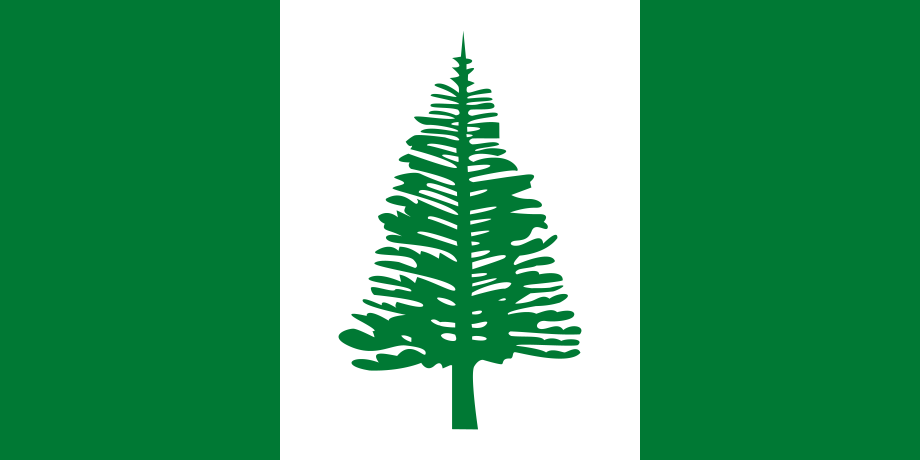
Norfolk Island
Location Info
- Continent: Oceania
- Country: Norfolk Island
- Coordinates: -29.0408 , 167.9547
Trust Info
Verified Geographic Information
🌍 Continents

Overview
Norfolk Island is an external territory of Australia located in the South Pacific Ocean, approximately 1,412 kilometers east of the Australian mainland. The island is characterized by its rugged volcanic coastline, rolling green hills, and the iconic Norfolk Island Pine. It serves as a significant historical site, home to the UNESCO World Heritage-listed Kingston and Arthurs Vale Historic Area.
The island's history is defined by two distinct British penal settlements and the subsequent 1856 resettlement of the descendants of the HMS Bounty mutineers from Pitcairn Island. Today, the territory maintains a unique cultural identity, blending British and Tahitian influences, with a small, close-knit population centered around the administrative capital of Kingston and the commercial hub of Burnt Pine.
Truth & Facts
| Land Area | 34.6 square km |
| Resident Population | 2,188 |
| Capital | Kingston |
| European Discovery | 1774 |
| Legal Currency | Australian Dollar (AUD) |
| Electricity | 230V, 50Hz |
| Main School | Norfolk Island Central School |
| Hospital | Norfolk Island Health and Residential Aged Care Service |
| Languages | English, Norf'k |
| Average Tourists | 25,000 - 30,000 |
| Iconic Species | Norfolk Island Pine |
| Airport | Norfolk Island International Airport (NLK) |
| Network | 3G/4G Mobile |
| Police Force | Australian Federal Police (AFP) |
| Status | External Territory of Australia |
| Entry Visa | Australian Visa Rules Apply |
| Primary Source | Rainwater Harvesting |
| Total Roads | Approx. 80 km |
| Bounty Day | June 8th |
| Peak | Mount Bates (319m) |
📑 Table of Contents
Overview
Norfolk Island is a remote volcanic island located in the South Pacific, serving as an external territory of Australia. It is positioned between New Zealand and New Caledonia, known for its distinctive limestone cliffs and verdant interior. The capital, Kingston, is the second oldest British settlement in Australia and holds immense cultural value.
- Official Name: Territory of Norfolk Island
- Status: Australian External Territory
- Main Settlements: Kingston and Burnt Pine
- Time Zone: UTC+11
- Drive Side: Left
History
The history of Norfolk Island is divided into distinct eras, starting with early Polynesian settlement between 1200 and 1600 AD. Captain James Cook was the first European to document the island in 1774, naming it after the Duchess of Norfolk. British colonization began in 1788, primarily to establish a penal colony and utilize the local timber for ship masts.
| Period | Event |
|---|---|
| 1788-1814 | First British Penal Settlement |
| 1825-1855 | Second British Penal Settlement |
| 1856 | Resettlement of Pitcairn Islanders |
| 1914 | Transferred to Commonwealth of Australia |
Geography
The island is of volcanic origin, featuring a rugged coastline with steep cliffs. The interior consists of a plateau with fertile volcanic soil, rising to its highest points at Mount Bates and Mount Pitt. Neighboring Phillip Island and Nepean Island are part of the territory, though both are uninhabited and serve as wildlife sanctuaries.
- Main Peak: Mount Bates (319m)
- Coastal Feature: Basalt cliffs up to 90m high
- Nearby Islands: Phillip and Nepean
- Soil Type: Rich volcanic lateritic soil
- Vegetation: Subtropical rainforest remnants
Climate & Weather
Norfolk Island enjoys a maritime-influenced humid subtropical climate. Temperatures are mild and stable throughout the year, rarely dropping below 10°C or rising above 28°C. Rainfall is consistent, with a slight peak during the winter months of June and August.
| Season | Avg. Low | Avg. High |
|---|---|---|
| Summer (Dec-Feb) | 19°C | 25°C |
| Winter (Jun-Aug) | 13°C | 19°C |
Population & Demographics
The population of Norfolk Island is approximately 2,188 people. It is a diverse community consisting of descendants of the Bounty mutineers and more recent settlers from Australia and New Zealand. A significant portion of the residents identify as being of Pitcairn descent, maintaining a unique cultural link to their Tahitian and British ancestors.
- Total Population: 2,188 (2021)
- Major Ethnic Groups: European and Polynesian (Pitcairn)
- Religions: Primarily Anglican, Catholic, and Uniting Church
- Median Age: Approx. 49 years
Culture & Lifestyle
Island culture is a blend of British colonial traditions and Polynesian influences from the Pitcairn Islanders. Life is generally slow-paced, with a focus on community and family. The 'Norfolk Wave'—a friendly hand signal between passing drivers—is a notable local custom that reflects the island's welcoming nature.
- Local Language: Norf'k (Creole blend)
- Traditional Crafts: Weaving and wood carving
- Social Customs: Community dinners and the Norfolk Wave
- National Anthem: Advance Australia Fair (Official)
- Cultural Symbols: The Norfolk Island Pine
Festivals & Events
The island's calendar is marked by unique cultural celebrations. The most significant is Bounty Day, which commemorates the arrival of the Pitcairners in 1856. Other events include Agricultural Shows and traditional religious holidays like Thanksgiving, which is celebrated in the American tradition due to the influence of 19th-century whalers.
- Bounty Day: June 8th
- Thanksgiving Day: Last Thursday in November
- Foundation Day: March 6th
- Norfolk Island Agricultural Show: October
Food & Cuisine
Local cuisine emphasizes fresh, seasonal ingredients grown on the island. Due to strict biosecurity, many fruits and vegetables are produced locally. Traditional dishes are often Polynesian-inspired, using staples like sweet potato, banana, and fresh fish caught from the surrounding waters.
- Hihi: A traditional periwinkle dish
- Pila: Savory mashed sweet potato or pumpkin
- Muddah: Boiled green banana in coconut milk
- Trumpeter: Local sweetlip emperor fish
Economy & Industries
The economy of Norfolk Island is heavily reliant on tourism, which serves as the primary source of income and employment. Secondary industries include the sale of Kentia palm seeds and postage stamps, as well as emerging medical cannabis exports. High levels of food and fuel must be imported from the Australian mainland.
- Primary Sector: Tourism and Hospitality
- Export Products: Kentia palm seeds, Stamps
- Labor Force: Highly seasonal based on tourist arrivals
- Taxation: Integrated into the Australian tax system since 2016
Cost of Living
Living costs on the island are generally higher than on the Australian mainland due to the extreme isolation and the necessity of importing most goods by sea or air. Utilities and fresh groceries not grown locally can be particularly expensive, although some local produce is affordable during peak seasons.
| Item | Relative Cost |
|---|---|
| Housing | Moderate |
| Groceries (Imported) | High |
| Electricity | Very High |
| Fuel | High |
Employment & Business
The majority of the workforce is employed in the public sector or the hospitality industry. Small businesses dominate the retail landscape in Burnt Pine. Employment opportunities are often tied to the tourism cycles, with demand for workers peaking during the summer months and festival periods.
- Major Employer: Norfolk Island Regional Council
- Business Hub: Burnt Pine
- Industry Focus: Retail, Tourism, Agriculture
- Regulations: Governed by Australian Fair Work standards
Real Estate & Housing
The housing market on Norfolk Island is small and relatively stable. Most residents live in free-standing homesteads on large rural lots. There are strict planning regulations to preserve the island's historical character and natural environment, particularly around the Kingston area.
- Housing Style: Widely separated homesteads
- Rental Market: Limited and often caters to short-term workers
- Zoning: Protected heritage and agricultural zones
- Property Rights: Managed under Australian property laws
Transportation & Connectivity
Access to the island is primarily by air, with Norfolk Island International Airport receiving regular flights from Sydney and Brisbane. On the island, there is no public transport system, and most residents and visitors rely on private vehicles or rental cars to navigate the 80 kilometers of paved roads.
- Airport Code: NLK
- Main Shipping Bay: Cascade Bay
- Primary Port: No deep-water port exists
- Local Transport: Rental cars are the standard for visitors
Infrastructure & Utilities
Utility services are managed locally. Electricity is generated by a combination of diesel fuel and solar power. Since there is no central water supply, residents rely heavily on rainwater tanks and some groundwater bores. Waste management focuses on reduction and export of certain recyclables to Australia.
- Power Source: Diesel/Solar hybrid
- Water Source: Rainwater tanks
- Sewage: Septic systems and limited central treatment
- Internet: 3G/4G Mobile and Satellite services
Education
Education is provided by the Norfolk Island Central School, which caters to students from Kindergarten through Year 12. The school follows the New South Wales curriculum. For tertiary education, many students move to Australia or New Zealand or utilize distance learning programs.
- School Type: K-12 Central School
- Curriculum: New South Wales (NSW)
- Literacy Rate: Over 99%
- Higher Education: Distance education or mainland study
Healthcare
The Norfolk Island Health and Residential Aged Care Service (NIHRACS) provides essential medical care, including emergency services, a GP clinic, and aged care. For serious medical conditions or complex surgeries, patients are typically medevaced to the Australian mainland.
- Facility: NIHRACS
- Emergency: Medevac services available
- Pharmacy: One local pharmacy in Burnt Pine
- Medicare: Australian Medicare system applies
Tourist Attractions
Attractions are primarily focused on the island's natural beauty and convict history. The Kingston and Arthurs Vale Historic Area (KAVHA) is a major draw, featuring restored Georgian buildings from the penal era. The National Park offers hiking trails and panoramic views from Mount Bates.
- KAVHA: UNESCO World Heritage convict site
- Emily Bay: Protected swimming lagoon
- St Barnabas Chapel: Historic Melanesian Mission site
- The Pier: Historic landing spot in Kingston
Things to Do
Outdoor activities are the mainstay for visitors. Snorkeling in the reef-protected waters of Emily Bay is popular, as is bird watching in the National Park. Visitors can also engage in deep-sea fishing, play golf on the seaside course, or take historical tours of the convict ruins.
- Snorkeling: Emily Bay and Slaughter Bay
- Hiking: Mount Pitt and Mount Bates trails
- Fishing: Deep-sea charters for Yellowtail Kingfish
- Golf: Norfolk Island Golf Club (World Heritage site)
Best Places to Visit
Several locations are essential for understanding the island's character. Burnt Pine is the commercial center, while Kingston offers a deep dive into history. The rugged northern cliffs provide dramatic landscapes, and the botanical gardens showcase endemic flora.
- Burnt Pine: Shopping and dining hub
- Kingston: Historical and administrative center
- Puppy's Point: Popular sunset viewing spot
- Anson Bay: Secluded, high-cliff beach
Travel Guide
Traveling to Norfolk Island requires planning for its remote nature. There are no mobile roaming agreements with Australian carriers, so local SIMs are necessary. Credit cards are widely accepted, but having some cash is useful for weekend markets. Driving is on the left, and cows have the right of way on all roads.
- Visa: Standard Australian entry rules
- Mobile: Purchase a local SIM upon arrival
- Driving: Speed limit 50 km/h (40 km/h in town)
- Safety: Very low crime rate; livestock on roads
Nearby Places
While Norfolk Island is isolated, it has two uninhabited neighbors within the territory. Phillip Island is located 6km south and is known for its vibrant red soil and bird colonies. Nepean Island is a small uninhabited limestone island closer to the main coast, used mostly by sea birds.
- Phillip Island: 6 km south (volcanic)
- Nepean Island: 800 meters south (limestone)
- Lord Howe Island: Approx. 900 km west
- New Caledonia: Approx. 700 km north
Environment & Nature
The island is home to several endemic species, most notably the Norfolk Island Pine and the Norfolk Island Green Parrot. The National Park covers approximately 10% of the island, protecting original subtropical rainforest and providing a habitat for diverse sea birds and land snails.
- Endemic Species: Norfolk Island Green Parrot
- Forest Type: Subtropical rainforest
- Conservation: Active weed and pest control programs
- National Park Area: Approx. 460 hectares
Government & Administration
Norfolk Island is an external territory of Australia. Since 2016, the local self-government was replaced by a Regional Council and more direct oversight from the Commonwealth. An Administrator is appointed by the Governor-General of Australia to represent the Australian government on the island.
- Head of State: King Charles III
- Administrator: Appointed by Australia
- Local Body: Norfolk Island Regional Council (NIRC)
- Law: Australian Commonwealth and local ordinances
Safety & Public Services
Public safety is maintained by the Australian Federal Police. The island is considered very safe with minimal crime. Fire and emergency services are mostly volunteer-based, and the community is highly resilient due to its isolation and experience with extreme weather patterns.
- Emergency Number: 000 (standard Australian)
- Police: AFP Station in Burnt Pine
- Fire Service: Volunteer Fire Brigade
- Public Order: Generally very high safety levels
Best Time to Visit
The peak travel season is during the summer months from December to March, when the weather is warmest for swimming. However, June is popular for those interested in history due to the Bounty Day celebrations. Spring and Autumn offer mild weather ideal for hiking and bird watching.
- Warmest Months: January and February
- Bounty Day: Early June (Cultural significance)
- Lowest Rainfall: Late Spring (October/November)
- Winter: Best for historical and cultural focus
Local Business Directory
Burnt Pine serves as the central hub for local commerce. Businesses include supermarkets, duty-free shops, tour operators, and various cafes. Most businesses are family-owned and have operated for generations. Many shops close on Wednesday and Saturday afternoons.
- Supermarkets: P&R Groceries, Foodland
- Banks: Commonwealth Bank (Branch and ATM)
- Tour Operators: Pinetree Tours, Baunti Tours
- Post: Australia Post (Located in Burnt Pine)
General Information FAQs
Where is Norfolk Island located?
Norfolk Island is located in the South Pacific Ocean, approximately 1,412 km east of Australia, 1,000 km north of Auckland, New Zealand, and 700 km south of New Caledonia.
What is Norfolk Island known for?
The island is famous for its unique history as a British penal colony, the resettlement of Pitcairn Islanders, the iconic Norfolk Island Pine, and its UNESCO World Heritage historic sites.
Why is Norfolk Island famous?
It is famous primarily for being the home of the descendants of the HMS Bounty mutineers and for its well-preserved Georgian-era convict ruins in Kingston.
What country or region is Norfolk Island part of?
Norfolk Island is an external territory of the Commonwealth of Australia, located in the Oceania region.
What is the population of Norfolk Island?
As of the 2021 census, the population was approximately 2,188 permanent residents.
What languages are spoken in Norfolk Island?
English is the official language. However, the local community also speaks Norf'k, a unique language blending 18th-century English and Tahitian.
What time zone is Norfolk Island in?
Norfolk Island operates on Norfolk Island Time (NFT), which is UTC+11:00. It does not consistently observe Daylight Saving Time unless otherwise legislated.
What are the key facts about Norfolk Island?
Key facts include its 34.6 sq km area, its volcanic origin, its use of the Australian dollar, and its status as a top bird-watching destination in the Pacific.
What makes Norfolk Island unique?
Its combination of a dark convict past and the colorful heritage of the Bounty mutineers, along with its isolation and endemic biodiversity, makes it a one-of-a-kind destination.
How large is Norfolk Island in area?
The main island has a total land area of approximately 34.6 square kilometers (roughly 13.4 square miles).
History FAQs
What is the history of Norfolk Island?
The history includes ancient Polynesian voyages, European discovery in 1774, two periods as a brutal British penal settlement, and the 1856 arrival of the Pitcairn Islanders.
When was Norfolk Island established?
The first British settlement was established on March 6, 1788, just weeks after the First Fleet arrived in Sydney Cove.
What major historical events happened in Norfolk Island?
Major events include the founding of Kingston in 1788, the closure of the penal colonies in 1855, and the landing of the Morayshire carrying Pitcairn Islanders on June 8, 1856.
Who were important historical figures from Norfolk Island?
Captain James Cook discovered it; Philip Gidley King founded the first settlement; and Fletcher Christian's descendants are key to the island's modern heritage.
How has Norfolk Island developed over time?
It evolved from an uninhabited island to a feared prison, then to a self-governing community of farmers and whalers, and finally to a tourism-focused Australian territory.
Geography & Environment FAQs
What is the geography of Norfolk Island?
It is a volcanic plateau with steep cliffs, rolling hills, and fertile soil. The coastline is mostly inaccessible except for a few bays like Emily and Cascade.
What natural features surround Norfolk Island?
The island is surrounded by the Pacific Ocean and features a small coral reef at Emily Bay, basalt rock formations, and the nearby Phillip and Nepean Islands.
Are there mountains, rivers, or lakes near Norfolk Island?
There are no permanent large rivers or lakes. The highest points are Mount Bates and Mount Pitt. Watermill Creek is the island's most notable small stream.
What is the elevation of Norfolk Island?
The average elevation is about 110 meters, with the peak at Mount Bates reaching 319 meters above sea level.
What ecosystems exist around Norfolk Island?
Ecosystems include subtropical rainforests, coastal heathlands, and marine environments featuring coral reefs and diverse fish species.
Climate & Weather FAQs
What is the climate like in Norfolk Island?
It has a mild subtropical climate with high humidity and moderate rainfall throughout the year.
What is the average temperature in Norfolk Island?
Daily temperatures average between 18°C and 25°C in summer and 13°C and 19°C in winter.
What is the weather like throughout the year in Norfolk Island?
Weather is generally pleasant. Winter (June-August) is wetter and cooler, while summer (December-March) is warmer and more humid.
Does Norfolk Island experience extreme weather?
It can experience gale-force winds and heavy rain associated with passing tropical depressions or cyclones, though direct hits are uncommon.
What is the best time of year to visit Norfolk Island?
The best time is between October and March for beach activities, or June if you want to experience the Bounty Day celebrations.
Population & Society FAQs
What is the population density of Norfolk Island?
The population density is approximately 63 people per square kilometer.
What ethnic groups live in Norfolk Island?
The majority are of European or mixed European-Polynesian (Pitcairner) descent, primarily from Australia and New Zealand.
What religions are practiced in Norfolk Island?
Christianity is the primary religion, with Anglican, Uniting Church, Roman Catholic, and Seventh-day Adventist denominations present.
What is daily life like in Norfolk Island?
Daily life is quiet and rural. Most social activities revolve around the church, sports clubs, community markets, and fishing.
How diverse is the population of Norfolk Island?
While small, the population is diverse in its heritage, blending traditional Pitcairn customs with modern Australian and Kiwi lifestyles.
Culture & Traditions FAQs
What cultural traditions are important in Norfolk Island?
Traditional island singing, weaving with flax, and the preservation of the Norf'k language are central to the island's cultural identity.
What festivals are celebrated in Norfolk Island?
The most important is Bounty Day (June 8). Other celebrations include the Royal Agricultural Show and Thanksgiving.
What cultural landmarks exist in Norfolk Island?
Landmarks include the Kingston ruins, Government House, St Barnabas Chapel, and the Pitcairn Settlers Village.
What traditional clothing or customs are common in Norfolk Island?
For Bounty Day, many residents wear 18th-century period costumes. The 'Norfolk Wave' is the most famous daily social custom.
What arts and crafts are associated with Norfolk Island?
Traditional crafts include weaving baskets from palm fronds and creating intricate wood carvings from Norfolk Island Pine.
Food & Cuisine FAQs
What foods is Norfolk Island known for?
It is known for fresh Trumpeter fish, local avocados, and traditional Pitcairn dishes like Pila and Muddah.
What traditional dishes originate from Norfolk Island?
Traditional dishes include green banana dumplings, sweet potato bread, and various coconut-based desserts.
What are the best restaurants in Norfolk Island?
Popular dining spots are located in Burnt Pine and Kingston, often focusing on 'paddock to plate' fresh local ingredients.
What local ingredients are commonly used in Norfolk Island cuisine?
Bananas, sweet potatoes (kumera), Kentia palm hearts, and locally caught seafood are staples.
What food markets or street foods are popular in Norfolk Island?
The Saturday morning Farmer's Market in Burnt Pine is the main place to find fresh local produce and homemade treats.
Economy & Business FAQs
What are the main industries in Norfolk Island?
Tourism is the main industry, followed by small-scale agriculture, export of palm seeds, and medical cannabis.
What economic activities drive the economy of Norfolk Island?
Visitor spending on tours, accommodation, and retail drives the majority of the island's financial activity.
What businesses operate in Norfolk Island?
Most are small family-run retail shops, cafes, tour agencies, and car hire companies located in Burnt Pine.
Is Norfolk Island an important economic center?
It is not a regional economic hub; its economy is small, isolated, and focused on internal sustainability and tourism.
What are the major exports or products from Norfolk Island?
The primary exports are Kentia palm seeds, specialized postage stamps for collectors, and recently, medicinal cannabis.
Employment & Jobs FAQs
What job opportunities are available in Norfolk Island?
Jobs are mainly in the tourism, retail, and public service sectors, including teaching, nursing, and council administration.
What are the major employers in Norfolk Island?
The Norfolk Island Regional Council and the Australian Federal Government are the largest employers on the island.
What skills are in demand in Norfolk Island?
Trade skills (plumbing, electrical), healthcare professional skills, and hospitality management are frequently in demand.
Is Norfolk Island a good place to work?
It offers a unique, low-stress lifestyle, though wages may be lower than mainland Australia and job variety is limited.
What is the unemployment rate in Norfolk Island?
The unemployment rate is generally low, but many workers are employed in seasonal or part-time roles linked to tourism.
Cost of Living FAQs
Is Norfolk Island expensive to live in?
Yes, the cost of living is high due to the need to import fuel, electricity, and many food items from overseas.
What is the average cost of living in Norfolk Island?
It is generally 20-30% higher than in major Australian cities for basic consumer goods and utilities.
How much does housing cost in Norfolk Island?
Property prices are moderate compared to Sydney but high relative to the local earning capacity; rental stock is quite limited.
What are average food and utility costs in Norfolk Island?
Electricity is significantly more expensive than the mainland. Fresh food prices fluctuate based on seasonal availability and shipping.
Is Norfolk Island affordable compared to nearby cities?
It is less affordable than regional Australia for daily goods, though land and property taxes are structured differently.
Housing & Real Estate FAQs
What types of housing are available in Norfolk Island?
Most housing consists of single-story timber or brick homesteads on large rural or residential blocks.
What is the average home price in Norfolk Island?
Average prices for a 3-bedroom home typically range from $400,000 to $700,000 AUD depending on views and land size.
Is it better to rent or buy property in Norfolk Island?
Buying is more common for permanent residents. Renting is often difficult due to the low number of available long-term properties.
Which neighborhoods are popular in Norfolk Island?
Areas around Burnt Pine are popular for convenience, while homes with views over Quality Row or the northern cliffs are highly sought after.
How has the property market changed in Norfolk Island?
The market has seen increased interest from mainland Australians seeking a remote lifestyle change since 2020.
Transportation FAQs
How do you get to Norfolk Island?
Entry is almost exclusively via commercial flights from Sydney or Brisbane, Australia.
What is the nearest airport to Norfolk Island?
The only airport is Norfolk Island International Airport (NLK), located on the western side of the island.
Does Norfolk Island have railway connections?
No, there are no railways or tram systems on the island.
How reliable is public transportation in Norfolk Island?
There is no public bus or train service. Visitors must rely on hire cars, taxis, or bicycle rentals.
What major highways or roads connect to Norfolk Island?
There are no connecting highways to other regions. Major local roads include Taylors Road and New Cascade Road.
Education FAQs
What schools are located in Norfolk Island?
The Norfolk Island Central School (NICS) provides all primary and secondary education for the island.
Are there universities in Norfolk Island?
No. Students pursuing university degrees typically use online portals or relocate to Australia or New Zealand.
What is the literacy rate in Norfolk Island?
The literacy rate is nearly 100%.
What educational opportunities exist in Norfolk Island?
NICS offers a full curriculum up to Year 12, including vocational training through TAFE partnerships.
Is Norfolk Island a good place for students?
It offers a safe, focused environment for younger students, though older students often seek broader social and academic options elsewhere.
Healthcare FAQs
What hospitals are available in Norfolk Island?
The island is served by the Norfolk Island Health and Residential Aged Care Service (NIHRACS).
Are there emergency medical services in Norfolk Island?
Yes, there are local ambulance services and an emergency department at the hospital.
What healthcare facilities exist in Norfolk Island?
Facilities include a general medical clinic, a small dental clinic, and an aged care wing.
Is healthcare affordable in Norfolk Island?
Yes, since 2016 it has been covered under the Australian Medicare system for eligible residents and visitors.
Are specialized medical services available in Norfolk Island?
Specialized services are limited. Visiting specialists arrive periodically, but most major procedures require travel to Australia.
Tourism & Travel FAQs
What are the top tourist attractions in Norfolk Island?
Key attractions include the Kingston penal ruins, Emily Bay, the Botanical Gardens, and the Mount Pitt lookout.
What are the best things to do in Norfolk Island?
Activities include historical tours, glass-bottom boat trips, coastal hiking, and visiting the local cottage industries.
Is Norfolk Island worth visiting?
Yes, especially for those interested in history, nature, bird watching, and a peaceful, remote atmosphere.
What landmarks should visitors see in Norfolk Island?
The Old Military Barracks, the Gallows Gate, and the massive Norfolk Island Pines at the National Park are essential landmarks.
How many days should tourists spend in Norfolk Island?
A typical stay is 7 days, which allows enough time to explore the major historical sites and enjoy the natural scenery at a relaxed pace.
Nearby Places FAQs
What places are near Norfolk Island worth visiting?
Phillip Island is the most popular nearby destination for guided ecological tours.
What cities or towns are close to Norfolk Island?
There are no close cities. The nearest significant landmasses are Lord Howe Island and the northern tip of New Zealand.
What natural attractions are near Norfolk Island?
The marine park surrounding the island and the bird-nesting sites on Phillip Island are the primary natural attractions nearby.
What day trips can be taken from [Location]?
Visitors can take guided boat trips to Phillip Island or around the main island's dramatic sea caves.
What famous destinations are within reach of Norfolk Island?
Sydney and Brisbane are the primary 'reachable' destinations, though they are several hours away by flight.
Safety FAQs
Is Norfolk Island safe to live in?
It is one of the safest places in the world, with almost zero violent crime and a strong sense of community oversight.
Is Norfolk Island safe for tourists?
Yes, it is exceptionally safe. The main hazards are narrow roads, free-roaming livestock, and rough sea conditions in certain areas.
What is the crime rate in Norfolk Island?
The crime rate is very low, mostly consisting of minor traffic offenses or administrative issues.
What emergency services operate in Norfolk Island?
The AFP (police), a volunteer fire brigade, and a hospital-based ambulance service operate on the island.
What safety tips should visitors follow in [Location]?
Drive slowly, respect the right-of-way for cows, and always check sea conditions before swimming at unpatrolled beaches.
Lifestyle & Living FAQs
Is Norfolk Island a good place to live?
It is ideal for those seeking peace, isolation, and a slow pace of life, though it can feel restrictive for those who crave urban amenities.
What recreational activities are available in Norfolk Island?
Lawn bowls, golf, tennis, swimming, and hiking are the most common recreational activities.
Is Norfolk Island family-friendly?
Yes, it is very safe for children, with a small school and many outdoor activities, though teenagers may find it limited.
What outdoor activities are popular in Norfolk Island?
Bushwalking, bird watching, snorkeling, and shore-based fishing are extremely popular among residents and visitors.
What makes life enjoyable in Norfolk Island?
The clean air, lack of traffic, deep connection to history, and the friendly, community-focused social life.
Practical Information FAQs
What travel tips should visitors know about Norfolk Island?
Book car hire in advance, be prepared for limited mobile data, and know that most shops close early on certain weekdays.
What local customs should visitors respect in Norfolk Island?
Always wave to passing drivers (the Norfolk Wave) and be respectful when visiting the cemetery and historic ruins.
How accessible is Norfolk Island for international visitors?
It requires an Australian visa (if applicable to your nationality) and usually involves transit through a major Australian airport.
What services are available for tourists in Norfolk Island?
A Visitor Information Centre in Burnt Pine provides maps, tour bookings, and general assistance.
What important information should travelers know before visiting?
Strict biosecurity rules prohibit bringing fresh food to the island. Also, ensure you have travel insurance that covers medical evacuation.