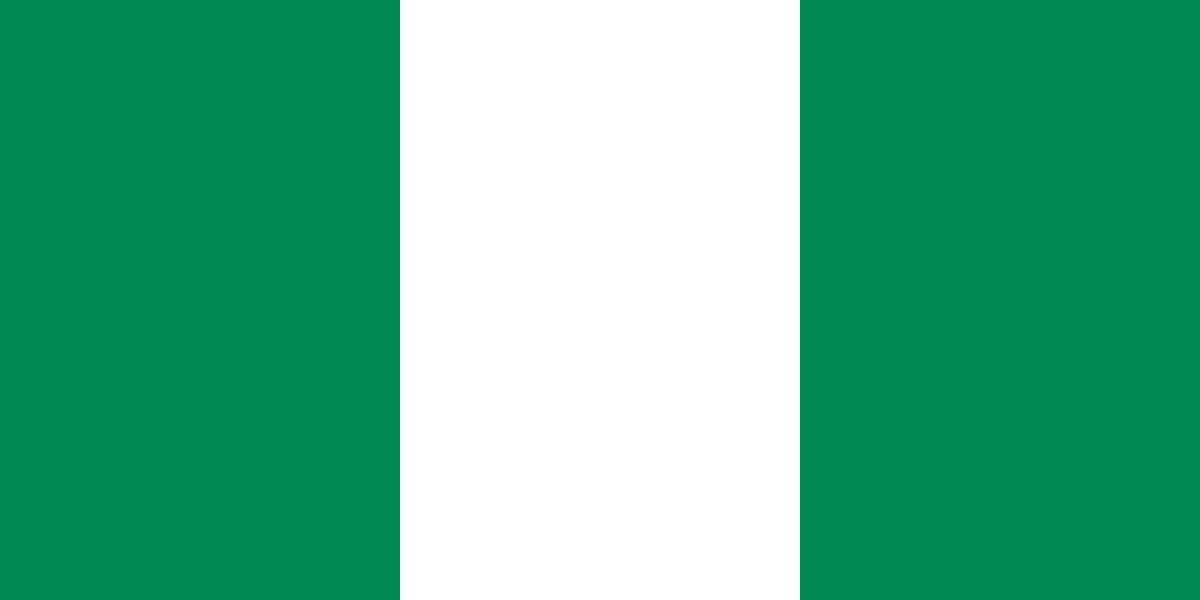
Nigeria
Location Info
- Continent: Africa
- Country: Nigeria
- Coordinates: 9.082 , 8.6753
Trust Info
Verified Geographic Data
🌍 Continents

Overview
Nigeria, officially the Federal Republic of Nigeria, is a sovereign country located in West Africa. It borders Niger to the north, Chad and Cameroon to the east, and Benin to the west, with its southern coast lying on the Gulf of Guinea in the Atlantic Ocean. Known as the 'Giant of Africa,' it is the most populous country on the continent and the sixth most populous in the world.
The nation's geography is characterized by the Niger and Benue Rivers, which merge at Lokoja and flow into the expansive Niger Delta. Nigeria possesses a diverse landscape ranging from southern rainforests to northern savannas. Historically, the region was home to several ancient kingdoms before becoming a British protectorate in the late 19th century. Today, it is a leading African economy driven by significant oil reserves and a burgeoning telecommunications and creative sector.
Truth & Facts
| Total Area | 923,769 sq km |
| Coastline | 853 km |
| Estimated Population | 230,000,000+ |
| Official Language | English |
| Capital | Abuja |
| Number of States | 36 States and 1 Federal Capital Territory |
| Independence Date | October 1, 1960 |
| Republic Status | October 1, 1963 |
| Currency | Naira (NGN) |
| Major Export | Crude Petroleum |
| Main Port | Lagos Port Complex (Apapa) |
| Standard Gauge Rail | Lagos-Ibadan and Abuja-Kaduna Lines |
| Film Industry | Nollywood |
| Oldest National Park | Kainji Lake National Park |
| First University | University of Ibadan |
| Life Expectancy | 55.4 Years |
| Internet Penetration | Approx. 55% |
| Emergency Number | 112 |
| Government Type | Federal Presidential Republic |
| OPEC Member Since | 1971 |
| Electricity Voltage | 230V / 50Hz |
| GDP Growth | Approx. 3.0% |
| UNESCO Sites | 2 |
| Climate Type | Tropical |
| Busiest Airport | Murtala Muhammed International Airport (LOS) |
📑 Table of Contents
Overview of Nigeria
Nigeria is a West African nation renowned for its cultural diversity and economic potential. It serves as a central hub for commerce and politics in the African continent.
- Official Name: Federal Republic of Nigeria
- Capital City: Abuja
- Most Populous City: Lagos
- Regional Hub: West Africa
- Primary Language: English
History of Nigeria
The history of Nigeria spans from ancient civilizations such as the Nok culture to the powerful pre-colonial empires of Benin and Oyo. British influence began in the 19th century, leading to the amalgamation of Northern and Southern Protectorates in 1914.
- Nok Civilization (1500 BC - 200 AD)
- Kingdom of Nri (10th Century)
- British Colonization (1800s - 1960)
- Independence (October 1, 1960)
- Civil War (1967 - 1970)
Geography and Landscape
Nigeria features a varied landscape including coastal mangroves, central plateaus, and northern plains. The country is split into north and south by the Niger and Benue Rivers.
| Region | Landform |
|---|---|
| South | Mangrove Swamps & Rainforest |
| Central | Jos Plateau |
| North | Sudan & Sahel Savanna |
Climate and Weather
The climate is predominantly tropical with distinct wet and dry seasons. The southern regions experience high humidity and heavy rainfall, while the north is drier with more extreme temperature shifts.
- Rainy Season: April to October
- Dry Season: November to March
- Harmattan: Dust-laden winds in winter months
- South Average Temp: 26-28°C
- North Average Temp: 20-35°C
Population and Demographics
Nigeria is the most populous nation in Africa. It is characterized by a youthful population and over 250 distinct ethnic groups, with the Hausa, Yoruba, and Igbo being the largest.
- Total Population: ~230 Million
- Median Age: 18.1 years
- Ethnic Groups: Hausa-Fulani (30%), Yoruba (21%), Igbo (18%)
- Urbanization Rate: ~53%
Culture and Lifestyle
Nigerian culture is a rich tapestry of music, art, and tradition. The country has a globally recognized film industry and is a major contributor to international literary and musical movements.
- Music Genres: Afrobeats, Highlife, Juju
- Film Industry: Nollywood
- Literary Icons: Wole Soyinka, Chinua Achebe
- Textiles: Adire and Ankara
Festivals and Events
Festivals in Nigeria are vibrant celebrations of heritage and religion. Major events attract thousands of participants and showcase traditional costumes and dance.
- Argungu Fishing Festival (Kebbi)
- Eyo Festival (Lagos)
- Durbar Festival (Kano/Katsina)
- Calabar Carnival (Cross River)
- Osun-Osogbo Festival (Osun)
Food and Cuisine
Nigerian cuisine is known for its bold flavors and use of spices. Staple foods are often based on tubers like yam and cassava, as well as grains like rice and maize.
- Jollof Rice: A beloved spiced rice dish
- Pounded Yam and Egusi Soup
- Suya: Spicy grilled meat skewers
- Moin Moin: Steamed bean pudding
Economy and Industries
Nigeria has one of the largest economies in Africa. While heavily reliant on oil and gas, the service sector and telecommunications are rapidly expanding.
| Industry | Status |
|---|---|
| Petroleum | Primary Export |
| Agriculture | Largest Employer |
| Telecommunications | Rapid Growth |
| Creative Industry | Global Influence |
Cost of Living
The cost of living varies significantly between urban centers like Lagos and Abuja compared to rural areas. Inflation and currency fluctuations impact prices for consumer goods.
- Housing: High in city centers
- Transport: Local buses (Danfo) are affordable
- Food: Markets are cheaper than supermarkets
Employment and Business
The Nigerian labor market is diverse, with significant opportunities in tech, banking, and retail. Entrepreneurship is a key driver of the local economy.
- Key Business Hubs: Lagos, Kano, Port Harcourt
- Major Sectors: Fintech, Retail, Oil Services
- Work Week: Monday to Friday (Standard)
Real Estate and Housing
Nigeria's real estate market is expanding to meet the needs of a growing urban population. High-end developments are prevalent in districts like Victoria Island and Ikoyi.
- Luxury Hubs: Ikoyi and Maitama
- Standard Housing: Apartment blocks and flats
- Trends: Rise in gated communities
Transportation and Connectivity
Transportation involves a mix of air, road, and rail networks. Significant investments are being made to modernize the railway system connecting major cities.
- Main Airports: Lagos, Abuja, Kano
- Rail: Lagos-Ibadan, Abuja-Kaduna lines
- Water: Ferry services in Lagos coastal areas
Infrastructure and Utilities
The nation is focused on improving power generation and water supply systems. Privatization of the power sector is an ongoing process to enhance efficiency.
- Energy: Hydro and Thermal power stations
- Water: Managed by state water boards
- Internet: Wide coverage by private ISPs
Education
The education system includes public and private institutions. Nigeria has a high concentration of universities and research centers compared to its regional neighbors.
- System: 6-3-3-4 curriculum
- Tertiary: 170+ Universities
- Literacy Rate: ~62%
Healthcare
Healthcare services are provided through federal teaching hospitals and private clinics. The country is working toward achieving universal health coverage through insurance schemes.
- Primary Care: Health centers in LGAs
- Specialized: National Hospital Abuja
- Pharmacies: Widely available in cities
Tourist Attractions
Nigeria offers various historical and natural sites. These range from ancient sacred groves to modern cityscapes and national parks.
- Zuma Rock (Niger State)
- Osun-Osogbo Sacred Grove
- Nike Art Gallery (Lagos)
- Yankari National Park
Things to Do
Visitors can engage in various activities such as exploring local markets, attending live music events, and visiting wildlife reserves.
- Market Shopping: Balogun and Lekki markets
- Beach Visits: Tarkwa Bay and Elegushi
- Wildlife Viewing: Gashaka Gumti
Best Places to Visit
Top destinations in Nigeria offer a mix of culture and scenery. Major cities provide a fast-paced urban experience, while the plateaus offer cooler climates.
- Lagos: For nightlife and arts
- Abuja: For architecture and parks
- Obudu: For mountain scenery
- Kano: For history and crafts
Travel Guide
International travelers require a visa and proof of yellow fever vaccination. It is advisable to use registered transport services and carry identification.
- Entry: Valid Passport and Visa
- Currency Exchange: Banks and BDCs
- Connectivity: Local SIM cards easily obtainable
Nearby Places
Nigeria shares borders with several West African neighbors, providing opportunities for regional travel to coastal and Sahelian regions.
- Benin (West)
- Niger (North)
- Cameroon (East)
- Chad (Northeast)
Environment and Nature
The country is home to diverse ecosystems supporting unique wildlife. Protection efforts are centered around its seven national parks.
- Forests: Southern rainforest belt
- Wildlife: Cross River Gorillas, Chimpanzees
- Conservation: Nigeria Conservation Foundation
Government and Administration
Nigeria operates a federal system with three arms of government: Executive, Legislative, and Judicial. It is divided into 774 Local Government Areas (LGAs).
- President: Head of State and Government
- Legislature: National Assembly (Senate and House)
- States: 36 autonomous units
Safety and Public Services
Safety is maintained by the Nigeria Police Force and other paramilitary agencies. Emergency services are available through a national toll-free number.
- Police: Federal oversight
- Fire Service: State and Federal units
- Response: NEMA for disasters
Best Time to Visit
The best time to visit is during the dry season when travel is less affected by rainfall. December is a particularly popular month for cultural events.
- Peak: November to February
- Festivals: December 'Detty December' events
- Off-Peak: May to August (Heavy rain)
Local Business Directory
Nigeria's business landscape is dominated by SMEs and large conglomerates in banking, oil, and FMCG sectors.
- Banking: Access, Zenith, UBA
- FMCG: Dangote, Unilever, Nestlé
- E-commerce: Jumia, Konga
General Information FAQs
Where is Nigeria located?
Nigeria is located in West Africa, bordering the Gulf of Guinea to the south, Benin to the west, Niger to the north, and Chad and Cameroon to the east.
What is Nigeria known for?
Nigeria is known for being Africa's most populous nation, its large petroleum reserves, the Nollywood film industry, and its vibrant music scene including Afrobeats.
Why is Nigeria famous?
It is famous for its cultural diversity, economic size in Africa, historical kingdoms, and prominent figures in literature and sports.
What country or region is Nigeria part of?
Nigeria is a country in the West African sub-region of the African continent.
What is the population of Nigeria?
As of 2026 estimates, Nigeria has a population of over 230 million people.
What languages are spoken in Nigeria?
English is the official language. Major indigenous languages include Hausa, Yoruba, Igbo, Fulfulde, Kanuri, and Ibibio.
What time zone is Nigeria in?
Nigeria is in West Africa Time (WAT), which is UTC+1.
What are the key facts about Nigeria?
Key facts include its 36 states, the capital Abuja, currency Naira, and its status as a leading oil producer.
What makes Nigeria unique?
Its extreme ethnic and linguistic diversity combined with its status as the 'Giant of Africa' makes it unique.
How large is Nigeria in area?
Nigeria covers an area of approximately 923,769 square kilometers.
History FAQs
What is the history of Nigeria?
Nigeria's history includes ancient civilizations (Nok, Ife, Benin), the trans-Saharan trade, British colonial rule from the late 19th century, and independence in 1960.
When was Nigeria established?
The modern borders were established by the British in 1914, and it became an independent nation on October 1, 1960.
What major historical events happened in Nigeria?
Events include the 1914 Amalgamation, the 1960 Independence, the 1967-1970 Civil War, and the 1999 return to democracy.
Who were important historical figures from Nigeria?
Important figures include Nnamdi Azikiwe, Obafemi Awolowo, Ahmadu Bello, and Funmilayo Ransome-Kuti.
How has Nigeria developed over time?
Nigeria has evolved from an agrarian colonial territory to a major global oil exporter and a regional leader in technology and entertainment.
Geography & Environment FAQs
What is the geography of Nigeria?
Nigeria consists of coastal wetlands, central plateaus, and northern savannas, divided by the Niger and Benue Rivers.
What natural features surround Nigeria?
To the south is the Atlantic Ocean. Inland features include the Jos Plateau, Adamawa Highlands, and the Niger Delta.
Are there mountains, rivers, or lakes near Nigeria?
Major rivers are the Niger and Benue. The highest point is Chappal Waddi. Lake Chad lies on the northeastern border.
What is the elevation of Nigeria?
Elevation varies from sea level at the coast to over 2,400 meters at Chappal Waddi.
What ecosystems exist around Nigeria?
Ecosystems include mangroves, rainforests, guinea savanna, sudan savanna, and sahel.
Climate & Weather FAQs
What is the climate like in Nigeria?
Nigeria has a tropical climate with a wet season (April-October) and a dry season (November-March).
What is the average temperature in Nigeria?
Average temperatures range from 25°C to 32°C, though the north can reach over 40°C in the hot season.
What is the weather like throughout the year in Nigeria?
The south is warm and humid year-round; the north has greater temperature variation and a more pronounced dry season.
Does Nigeria experience extreme weather?
Nigeria can experience flooding during heavy rains and dust storms (Harmattan) during the dry season.
What is the best time of year to visit Nigeria?
The dry season, from November to February, is generally considered the best time to visit.
Population & Society FAQs
What is the population density of Nigeria?
The population density is approximately 250 people per square kilometer, with high concentrations in the southwest and southeast.
What ethnic groups live in Nigeria?
There are over 250 groups, including the Hausa, Yoruba, Igbo, Ijaw, Kanuri, and Tiv.
What religions are practiced in Nigeria?
Nigeria is predominantly Christian and Muslim, with a smaller percentage practicing traditional African religions.
What is daily life like in Nigeria?
Daily life is characterized by strong family ties, community engagement, and a bustling informal economic sector.
How diverse is the population of Nigeria?
Nigeria is one of the most ethnically diverse countries in the world, with hundreds of languages and distinct cultural practices.
Culture & Traditions FAQs
What cultural traditions are important in Nigeria?
Respect for elders, traditional weddings, naming ceremonies, and communal festivals are deeply ingrained.
What festivals are celebrated in Nigeria?
Major festivals include the Durbar, Eyo, New Yam Festival, and Argungu Fishing Festival.
What cultural landmarks exist in Nigeria?
Landmarks include the Osun-Osogbo Sacred Grove, Kano City Walls, and the Benin Moat.
What traditional clothing or customs are common in Nigeria?
Clothing includes the Agbada, Buba, Iro, and Isiagu. Customs often involve elaborate greetings and social ceremonies.
What arts and crafts are associated with Nigeria?
Nigeria is famous for Benin bronzes, terracotta sculptures, Adire textiles, and intricate wood carving.
Food & Cuisine FAQs
What foods is Nigeria known for?
Known for Jollof rice, Pounded yam, Suya, and various flavorful soups like Egusi and Ogbono.
What traditional dishes originate from Nigeria?
Dishes like Tuwo Shinkafa (North), Amala (West), and Akpu (East) are traditional staples.
What are the best restaurants in Nigeria?
Major cities like Lagos and Abuja feature top-rated restaurants offering both local and international cuisines.
What local ingredients are commonly used in Nigeria cuisine?
Palm oil, yam, cassava, chili peppers, locust beans, and various indigenous vegetables.
What food markets or street foods are popular in Nigeria?
Suya (grilled meat), Akara (bean cakes), and roasted corn are popular street foods found in open-air markets.
Economy & Business FAQs
What are the main industries in Nigeria?
Oil and gas, agriculture, telecommunications, banking, and manufacturing.
What economic activities drive the economy of Nigeria?
Crude oil exports and domestic trade in agricultural and consumer goods.
What businesses operate in Nigeria?
Multinationals like Shell and MTN, alongside large local firms like Dangote Group and Globacom.
Is Nigeria an important economic center?
Yes, it is one of the top two economies in Africa and a major hub for West African trade.
What are the major exports or products from Nigeria?
Crude oil, natural gas, cocoa, cashew nuts, and sesame seeds.
Employment & Jobs FAQs
What job opportunities are available in Nigeria?
Opportunities exist in the tech sector (fintech), banking, agriculture, and oil services.
What are the major employers in Nigeria?
The Civil Service, NNPC, major banks, and telecommunication companies.
What skills are in demand in Nigeria?
Software development, data analysis, project management, and specialized technical skills in energy.
Is Nigeria a good place to work?
For professionals in key sectors like tech and finance, Nigeria offers a dynamic and high-growth environment.
What is the unemployment rate in Nigeria?
The rate fluctuates; as of 2025/2026, it remains a significant challenge for the government to address.
Cost of Living FAQs
Is Nigeria expensive to live in?
Lagos and Abuja are expensive, but other cities and rural areas offer a much lower cost of living.
What is the average cost of living in Nigeria?
It varies widely based on lifestyle, with significant costs going toward housing and private utilities.
How much does housing cost in Nigeria?
Rents in prime areas of Lagos can be several thousand dollars per year, while suburban flats are more affordable.
What are average food and utility costs in Nigeria?
Food is relatively affordable if bought at local markets; utility costs often include expenses for private power generation.
Is Nigeria affordable compared to nearby cities?
Nigeria's major cities are generally more expensive than those in neighboring Benin or Niger due to high demand.
Housing & Real Estate FAQs
What types of housing are available in Nigeria?
Types include detached houses, semi-detached duplexes, flats (apartments), and traditional bungalows.
What is the average home price in Nigeria?
Prices range from affordable housing in the millions of Naira to luxury properties in the billions.
Is it better to rent or buy property in Nigeria?
Buying is considered a good long-term investment, but high upfront costs mean many people rent.
Which neighborhoods are popular in Nigeria?
Lekki, Ikoyi, and Victoria Island in Lagos; Maitama and Asokoro in Abuja.
How has the property market changed in Nigeria?
The market has seen a surge in luxury high-rise developments and gated estates in urban centers.
Transportation FAQs
How do you get to Nigeria?
Most international travelers arrive via major airports in Lagos (LOS) or Abuja (ABV).
What is the nearest airport to Nigeria?
Murtala Muhammed International in Lagos and Nnamdi Azikiwe International in Abuja are the primary hubs.
Does Nigeria have railway connections?
Yes, there are modern standard gauge lines connecting Lagos to Ibadan and Abuja to Kaduna.
How reliable is public transportation in Nigeria?
Informal public transport (buses) is widely available but can be inconsistent; rail and ride-hailing apps are more predictable.
What major highways or roads connect to Nigeria?
The Lagos-Badagry Expressway connects to Benin, and various northern routes connect to Niger and Cameroon.
Education FAQs
What schools are located in Nigeria?
Nigeria has a mix of government-run public schools and numerous private primary and secondary institutions.
Are there universities in Nigeria?
Yes, Nigeria has over 170 universities, including federal, state, and private institutions.
What is the literacy rate in Nigeria?
The literacy rate is approximately 62%, with higher rates in urban areas and among younger populations.
What educational opportunities exist in Nigeria?
Opportunities range from traditional academic degrees to vocational training and burgeoning tech bootcamps.
Is Nigeria a good place for students?
Nigeria offers a rich academic environment, particularly in law, medicine, and the social sciences at its top universities.
Healthcare FAQs
What hospitals are available in Nigeria?
Facilities include Federal Teaching Hospitals, State General Hospitals, and high-end private medical centers.
Are there emergency medical services in Nigeria?
Emergency services are provided by agencies like FRSC for road accidents and various private ambulance services.
What healthcare facilities exist in Nigeria?
Facilities range from primary health centers in rural areas to specialized diagnostic centers in cities.
Is healthcare affordable in Nigeria?
Public healthcare is subsidized, but private care can be costly; health insurance is becoming more common.
Are specialized medical services available in Nigeria?
Yes, specialized services in cardiology, oncology, and fertility are available in major urban private hospitals.
Tourism & Travel FAQs
What are the top tourist attractions in Nigeria?
Top sites include Olumo Rock, Yankari Game Reserve, Obudu Cattle Ranch, and the Lekki Conservation Centre.
What are the best things to do in Nigeria?
Things to do include exploring the arts scene in Lagos, hiking in the Jos Plateau, and attending cultural festivals.
Is Nigeria worth visiting?
For travelers interested in culture, history, and vibrant urban life, Nigeria offers an unparalleled African experience.
What landmarks should visitors see in Nigeria?
Visitors should see Zuma Rock, the National Arts Theatre, and the Osun-Osogbo Sacred Grove.
How many days should tourists spend in Nigeria?
A typical visit ranges from 7 to 14 days to see major highlights in at least two different regions.
Nearby Places FAQs
What places are near Nigeria worth visiting?
Cotonou in Benin and the coastal resorts of Cameroon are popular nearby regional destinations.
What cities or towns are close to Nigeria?
Cotonou (Benin), Maradi (Niger), and Garoua (Cameroon) are close to the borders.
What natural attractions are near Nigeria?
The W National Park (Niger/Benin border) and the Korup National Park (Cameroon) are nearby natural sites.
What day trips can be taken from Nigeria?
From Lagos, a day trip to Porto-Novo in Benin is possible. Within Nigeria, many cities have nearby rural retreats.
What famous destinations are within reach of Nigeria?
Regional hubs like Accra (Ghana) are easily reached by short flights from Lagos or Abuja.
Safety FAQs
Is Nigeria safe to live in?
Many areas, especially in the south and the capital Abuja, are common for residential living, though standard safety precautions apply.
Is Nigeria safe for tourists?
Tourists are advised to stay in secure accommodations and use trusted transportation services.
What is the crime rate in Nigeria?
Crime rates vary by region; urban centers experience typical city-related crimes, while some northern areas have security challenges.
What emergency services operate in Nigeria?
The Nigeria Police, Federal Road Safety Corps (FRSC), and various State Emergency Management Agencies.
What safety tips should visitors follow in Nigeria?
Avoid night travel between cities, stay alert in crowded markets, and follow official travel advisories for specific regions.
Lifestyle & Living FAQs
Is Nigeria a good place to live?
Nigeria offers a lively social scene, strong sense of community, and significant business opportunities.
What recreational activities are available in Nigeria?
Activities include football, clubbing, visiting beaches, and attending live musical and theatrical performances.
Is Nigeria family-friendly?
Yes, family is central to Nigerian culture, and there are many family-oriented social and religious events.
What outdoor activities are popular in Nigeria?
Football is the most popular, along with tennis and weekend beach outings in coastal cities.
What makes life enjoyable in Nigeria?
The resilience of the people, the rich food, the music, and the infectious energy of its urban centers.
Practical Information FAQs
What travel tips should visitors know about Nigeria?
Always carry cash in local currency, get a local SIM card, and be prepared for 'African time' in social settings.
What local customs should visitors respect in Nigeria?
Greeting elders respectfully, dressing modestly in religious or rural areas, and understanding the importance of social titles.
How accessible is Nigeria for international visitors?
Major cities are well-connected by air, but internal travel requires careful planning and use of reputable services.
What services are available for tourists in Nigeria?
Tour operators, car hire services with drivers, and a wide range of hotel accommodations from budget to luxury.
What important information should travelers know before visiting Nigeria?
Ensure you have a valid visa, necessary vaccinations (Yellow Fever), and travel insurance that covers the regions you plan to visit.