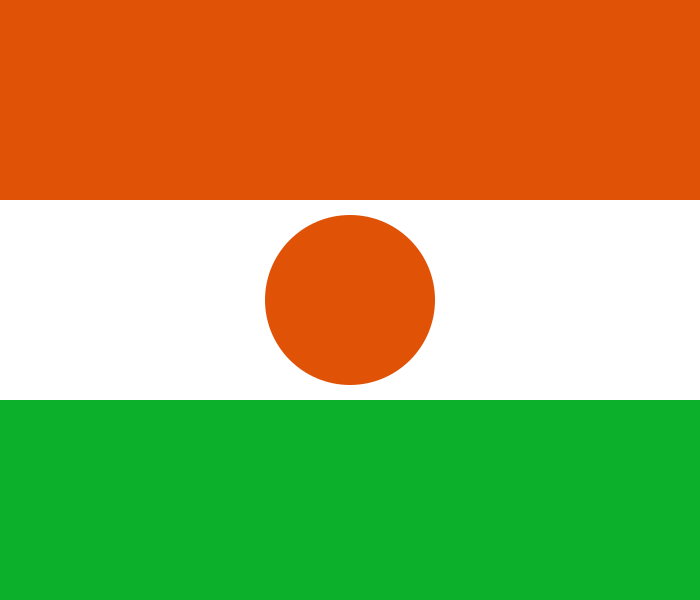
Niger
Location Info
- Continent: Africa
- Country: Niger
- Coordinates: 17.6078 , 8.0817
Trust Info
Verified Geographic and Statistical Data
🌍 Continents

Overview
Niger is a landlocked nation situated in the heart of West Africa, named after the Niger River that flows through its southwestern territory. Over 80% of its land area is covered by the Sahara Desert, while the southern fringe consists of the semi-arid Sahelian grasslands. The country serves as a vital geographic bridge between North Africa and Sub-Saharan Africa, characterized by its vast desert landscapes and the rugged Air Mountains.
The Republic of Niger gained independence from France in 1960 and has since navigated a complex political history. Its economy is largely driven by subsistence agriculture and livestock, alongside significant mineral wealth, particularly uranium. Despite environmental challenges like frequent droughts, Niger maintains a rich cultural tapestry shaped by diverse ethnic groups such as the Hausa, Zarma, and Tuareg.
Truth & Facts
| Total Area | 1,267,000 square kilometers |
| Highest Point | Mount Idoukal-n-Taghès (2,022 m) |
| Total Population | Approx. 27.2 million |
| Official Language | French |
| Capital | Niamey |
| Regions | 7 Regions plus 1 Capital District |
| Independence Date | August 3, 1960 |
| Currency | West African CFA franc (XOF) |
| Main Export | Uranium Ore |
| Electricity Access | Approx. 19% |
| Literacy Rate | 37.3% |
| Life Expectancy | 63 years |
| Religion | Islam (99%) |
| UNESCO Sites | 3 |
| Climate Type | Desert and Semi-arid |
| Main Airport | Diori Hamani International Airport |
| Mobile Penetration | Approx. 50% |
| Security Forces | Nigerien Armed Forces (FAN) |
| Parliament | National Assembly |
| Regional Bloc | African Union, ECOWAS |
| Safe Water Access | 56% |
| GDP Growth Rate | Approx. 6.9% |
| Primary Crop | Pearl Millet |
| Oil Production | Approx. 20,000 bpd |
📑 Table of Contents
Overview of Niger
Niger is a landlocked sovereign state in West Africa. It is named after the Niger River, which provides a critical water source for the southwestern part of the country. The nation is bordered by Libya to the northeast, Chad to the east, Nigeria and Benin to the south, Burkina Faso and Mali to the west, and Algeria to the northwest.
The country covers an area of almost 1.27 million square kilometers, making it the largest in West Africa. A vast majority of the population lives in the south, where rainfall supports agriculture. The northern regions are predominantly desert or semi-desert.
- Official Name: Republic of Niger
- Capital: Niamey
- Total Area: 1,267,000 km²
- Independence: 1960
- Currency: West African CFA Franc
Historical Background
Niger's history is deeply connected to the Trans-Saharan trade routes. Historically, the region was part of several influential empires, including the Songhai Empire and the Kanem-Bornu Empire. The town of Agadez was a major hub for salt and gold caravans for centuries.
French colonial rule began in the late 19th century, with Niger becoming a territory within French West Africa. Since gaining independence in 1960, the country has experienced several periods of military rule and democratic transitions.
| Period | Major Event |
|---|---|
| 15th Century | Agadez Sultanate established |
| 1904 | Military Territory of Niger created |
| 1960 | Independence from France |
| 2011 | Restoration of democratic rule |
Geography and Landscape
Niger is defined by its desert geography. The northern and central parts of the country are dominated by the Sahara Desert and the Aïr Mountains. The southern part of the country belongs to the Sahel, a transition zone between the desert and the savanna.
The Niger River is the only major permanent river, flowing for about 550 kilometers through the southwestern corner. The river valley is the most fertile and densely populated area in the country.
- Major Desert: Sahara
- Mountain Range: Aïr Mountains
- River: Niger River
- Lowest Point: Niger River (200 m)
- Highest Point: Mont Idoukal-n-Taghès
Climate and Weather Conditions
Niger has one of the hottest climates in the world. Much of the country is arid, receiving very little rainfall. The southern regions experience a short rainy season from June to September, which is crucial for millet and sorghum farming.
The dry season is characterized by the Harmattan, a dusty wind that blows from the Sahara. Temperatures can exceed 45°C during the hottest months of April and May.
| Season | Months | Conditions |
|---|---|---|
| Hot Dry | March - May | Extremely high temperatures |
| Rainy | June - September | Humid, variable rainfall |
| Cool Dry | October - February | Dusty winds, cooler nights |
Population and Demographics
Niger has a rapidly growing population with a high birth rate. The median age is approximately 15 years, making it one of the youngest populations globally. Ethnic diversity is a hallmark of the country, with groups distributed according to historical and geographic lines.
The Hausa people are the largest ethnic group, primarily residing in the south. Other major groups include the Zarma-Songhai, who live along the Niger River, and the nomadic Tuareg and Fulani in the north and central regions.
- Largest Ethnic Group: Hausa (over 50%)
- Second Largest: Zarma-Songhai
- Nomadic Groups: Tuareg, Fulani
- Median Age: ~15 years
- Urban Population: ~17%
Culture and Lifestyle
The culture of Niger is a blend of various ethnic traditions, predominantly influenced by Islamic values. Traditional music and dance play a central role in social gatherings. The Tuareg people are famous for their unique blue clothing and nomadic heritage.
Traditional wrestling is the national sport and is highly popular across the country. Artisans in Niger are known for their leatherwork, silver jewelry, and hand-woven blankets.
- National Sport: Traditional Wrestling (Lutte Traditionnelle)
- Dominant Religion: Islam
- Common Crafts: Leatherwork, Silver filigree
- Traditional Homes: Clay huts (south), Tents (north)
- Social Customs: Emphasis on hospitality (Teranga)
Festivals and Annual Events
Festivals in Niger often mark the end of seasonal migrations or religious milestones. One of the most famous is the Cure Salée in Ingall, where Tuareg and Fulani herders gather to celebrate the end of the rainy season.
The Gerewol, a male beauty pageant held by the Wodaabe people, is another culturally significant event. National holidays celebrate independence and the establishment of the republic.
- Cure Salée: Salt healing festival in Ingall
- Gerewol: Wodaabe courtship festival
- Eid al-Fitr: End of Ramadan
- National Day: December 18
- Independence Day: August 3
Food and Cuisine
Nigerien cuisine relies heavily on staples such as millet, rice, and sorghum. Meat, particularly goat and beef, is commonly grilled or served in stews. Many dishes are seasoned with ginger, nutmeg, and chili peppers.
Kilishi is a popular spicy dried meat snack often sold in markets. Another staple is Djerma stew, which typically includes meat, vegetables, and a peanut-based sauce.
- Kilishi: Spicy beef jerky
- Masa: Fermented rice pancakes
- Tuwo: Thick millet or corn porridge
- Djerma Stew: Peanut-based sauce
- Beverage: Mint tea
Economy and Major Industries
The economy of Niger is based largely on internal markets and the export of raw materials. Uranium is the country's most significant export, with mines located near Arlit. Recently, oil production has become an increasingly important sector.
Despite mineral wealth, agriculture and livestock herding employ more than 80% of the population. Niger is a member of the West African Economic and Monetary Union (UEMOA).
- Key Export: Uranium
- Emerging Sector: Petroleum
- Main Employer: Agriculture
- Trade Partners: France, Nigeria, China
- Regional Bloc: ECOWAS
Cost of Living
The cost of living in Niger varies significantly between the capital, Niamey, and rural areas. Imported goods and fuel are relatively expensive due to the country's landlocked status. Local food products like millet and seasonal vegetables are generally affordable.
Housing in modern districts of Niamey can be high for expatriates, while traditional housing remains low-cost. Utilities like electricity and water are major expenses for urban households.
| Category | Relative Cost |
|---|---|
| Local Food | Low |
| Imported Goods | High |
| Utilities | High |
| Transportation | Moderate |
Employment and Business Environment
Employment in Niger is dominated by the informal sector and subsistence farming. The government is the primary employer in the formal sector, along with international NGOs and the mining industry.
The business environment faces challenges related to infrastructure and landlocked logistics. However, there are ongoing efforts to diversify the economy through telecommunications and renewable energy projects.
- Primary Employment: Subsistence farming
- Formal Sector: Mining, Civil service
- Key Challenges: Connectivity, Infrastructure
- Growing Fields: Telecommunications
- Major Companies: Orano (Uranium)
Real Estate and Housing
Urban housing in Niger is characterized by a mix of traditional banco (mud brick) structures and modern concrete buildings. In Niamey, there is a growing demand for modern residential units for government officials and international staff.
In rural areas, housing is almost entirely traditional and built by residents themselves. Land ownership is governed by a combination of traditional customs and formal legal titles.
- Urban Style: Concrete and Banco
- Rural Style: Straw and Mud-brick
- Key Market: Niamey
- Property Rights: Mixed traditional/legal
- Availability: Increasing in urban centers
Transportation and Connectivity
Niger relies heavily on its road network for transport, though many roads are unpaved. The country has no rail system in operation, making trucking essential for the delivery of goods from ports in neighboring Benin and Nigeria.
River transport on the Niger River is used seasonally for small-scale trade and movement. Niamey's airport serves as the primary international gateway.
- Primary Mode: Road Transport
- International Hub: Diori Hamani Airport
- Water Transport: Seasonal (Niger River)
- Rail: Non-existent
- Main Road: Route Nationale 1 (East-West)
Infrastructure and Utilities
Infrastructure development in Niger is a government priority, particularly in the energy and water sectors. Much of the country's electricity has historically been imported from Nigeria, though local solar and hydroelectric projects are under construction.
Access to clean water has improved in urban centers through the expansion of piping networks. Rural areas still depend largely on boreholes and community wells.
- Power Source: Import (Nigeria) and Thermal
- Water Access: Improving (urban)
- Telecommunications: Widespread mobile signal
- Major Project: Kandadji Dam
- Waste Management: Organized in Niamey
Education System
The education system in Niger follows the French model, with primary, secondary, and tertiary levels. Schooling is compulsory for children between the ages of 7 and 15, although enrollment rates remain a challenge in rural areas.
The Abdou Moumouni University in Niamey is the country's leading institution of higher learning. Efforts are being made to increase female enrollment and vocational training.
- University: Abdou Moumouni University
- Model: French
- Primary Language: French
- Compulsory Age: 7-15
- Focus: Improving literacy and technical skills
Healthcare Facilities
Healthcare in Niger is provided through a network of national hospitals, regional centers, and local clinics. The National Hospital of Niamey is the primary facility for specialized care and surgery.
Public health initiatives focus on reducing infant mortality and combating infectious diseases like malaria and meningitis. NGOs play a significant role in providing health services in remote regions.
- Major Hospital: Niamey National Hospital
- Health Focus: Maternal and Child health
- Common Issues: Malaria, Water-borne diseases
- Provider: Public health system and NGOs
- Access: Limited in desert regions
Top Tourist Attractions
Niger offers unique attractions centered on its desert landscapes and cultural history. The historic center of Agadez is a UNESCO World Heritage site known for its distinctive mud-brick architecture and the Agadez Mosque.
The Aïr and Ténéré Natural Reserves provide stunning desert vistas, sand dunes, and volcanic mountains. The W National Park in the south is a haven for West African wildlife.
- Agadez: Historic mud-brick city
- W National Park: Wildlife reserve
- Air Mountains: Volcanic peaks
- Tenere Desert: Vast sand dunes
- Zinder: Traditional Sultan's palace
Things to Do
Visitors to Niger can engage in desert expeditions and cultural tours. Exploring the markets of Niamey or Zinder provides insight into local trade and crafts. Boat trips on the Niger River are common for viewing the riverine landscape.
Birdwatching is popular in the southern parks, while the northern regions are ideal for trekking in the mountains with local guides.
- Desert Trekking: Guided camel tours
- Market Tours: Niamey Grand Market
- River Tours: Piropgue rides on the Niger
- Wildlife Viewing: Giraffes at Koure
- Cultural Immersion: Attending traditional wrestling
Best Places to Visit
Niamey, the capital, is the starting point for most visitors, offering museums and river views. Agadez serves as the gateway to the Sahara and is a center for Tuareg culture.
The Koure giraffe reserve, located a short distance from Niamey, is home to the last herd of West African giraffes. Zinder is notable for its historical architecture and Sultanate heritage.
- Niamey: Capital and museums
- Agadez: Sahara hub
- Koure: Giraffe sanctuary
- Zinder: Historical architecture
- Dosso: Cultural center
Travel and Practical Guide
Travel in Niger requires careful planning due to the vast distances and desert climate. Visas are required for most international travelers, and vaccinations for yellow fever are mandatory. French is the primary language for administration and travel services.
It is important to respect local customs, particularly regarding dress and religious practices. Travelers should carry sufficient cash as credit card acceptance is limited outside major hotels.
- Visa: Required for most
- Vaccinations: Yellow Fever mandatory
- Language: French
- Currency: CFA Franc (Cash preferred)
- Power: Type C, E, F (220V)
Nearby Regions and Countries
Niger is centrally located and borders seven countries. Nigeria to the south is the most significant economic neighbor, with Zinder and Maradi serving as major trade links. To the west, Burkina Faso and Mali share similar Sahelian landscapes.
Lake Chad, located on the southeastern border with Chad and Nigeria, is a critical natural resource shared by the region.
- Nigeria: Major southern neighbor
- Benin: Gateway to the sea
- Chad: Eastern neighbor
- Mali/Burkina Faso: Western borders
- Lake Chad: Shared water resource
Environment and Nature
Niger's environment is marked by extreme aridity in the north and fertile plains in the south. Desertification is a significant challenge, which the government addresses through the Great Green Wall initiative. The country hosts several rare species adapted to arid conditions.
The Koure Giraffe Reserve is unique as it allows humans and giraffes to coexist in the same farmland. The Termit Massif is another key area for biodiversity, hosting the rare Addax antelope.
- Environmental Challenge: Desertification
- Conservation Project: Great Green Wall
- Rare Species: Addax Antelope
- Unique Habitat: Sahelian grassland
- Protected Area: Termit & Tin Toumma
Government and Administration
The Republic of Niger is divided into seven regions and one capital district. Each region is headed by a governor appointed by the central government. The legal system is based on French civil law and customary law.
Traditional leaders, such as the Sultan of Agadez and the Sultan of Zinder, still hold significant social and moral authority within their respective communities.
- System: Unitary Republic
- Administrative Units: 7 Regions
- Legal System: Civil Law
- Traditional Authority: Sultans
- Capital: Niamey
Safety and Public Services
Public safety is maintained by the National Police and the Gendarmerie. In rural and border areas, the Nigerien Armed Forces provide security. Emergency services are primarily available in Niamey and major regional capitals.
Travelers are advised to monitor official government advisories regarding safety in border regions. Public services like telecommunications are reliable in urban centers but sparse in the deep desert.
- Emergency Number: 17 (Police)
- Service Hub: Niamey
- Police Force: National Police
- Security Area: Armed Forces (Border regions)
- Communication: 3G/4G in cities
Best Time to Visit
The best time to visit Niger is during the cool dry season from November to February. During this time, temperatures are manageable, and the air is clearer before the heavy Harmattan winds arrive. This is also the best period for wildlife viewing.
The rainy season (June-September) makes some rural roads impassable but brings green landscapes to the southern Sahel.
| Month | Condition | Recommendation |
|---|---|---|
| Nov - Feb | Cool Dry | Best for travel |
| Mar - May | Very Hot | Avoid if possible |
| Jun - Sep | Rainy | Green landscapes |
Local Business and Commerce
Commerce in Niger is centered on traditional markets and small-scale retail. The Grand Market of Niamey is the commercial heart of the city, offering everything from food to textiles. Most businesses are family-owned or informal.
The formal corporate sector includes mining companies, telecommunications providers like Moov and Airtel, and banking institutions like Orabank and BOA.
- Main Market: Grand Marché (Niamey)
- Banking: Bank of Africa (BOA)
- Telecoms: Airtel, Moov, Zamani
- Key Industry: Mining (Orano)
- Retail: Small boutiques and markets
General Information FAQs
Where is Niger located?
Niger is located in West Africa. It is a landlocked country situated between the Sahara Desert to the north and the Sahel to the south.
What is Niger known for?
Niger is known for being a major producer of uranium, its diverse nomadic cultures like the Tuareg and Fulani, and its vast Saharan landscapes.
Why is Niger famous?
Niger is famous for the historic city of Agadez, the Gerewol beauty festival, and the last remaining herd of West African giraffes in Koure.
What country or region is Niger part of?
Niger is part of the West African region and is a member of the Economic Community of West African States (ECOWAS).
What is the population of Niger?
The population of Niger is estimated to be approximately 27.2 million as of 2026.
What languages are spoken in Niger?
French is the official language. National languages include Hausa, Zarma, Songhai, Tamasheq, Fulfulde, Kanuri, and Arabic.
What time zone is Niger in?
Niger is in the West Africa Time (WAT) zone, which is UTC+1.
What are the key facts about Niger?
Key facts include its capital Niamey, its status as the largest country in West Africa, and its reliance on uranium and agriculture for its economy.
What makes Niger unique?
Niger is unique for its architectural heritage in Agadez and Zinder, and its role as a crossroads between North and Sub-Saharan Africa.
How large is Niger in area?
Niger has a total land area of approximately 1,267,000 square kilometers.
History FAQs
What is the history of Niger?
Niger's history involves ancient Saharan trade, the rise of the Songhai and Bornu empires, French colonization in the 1900s, and independence in 1960.
When was Niger established?
The Republic of Niger was established as an independent nation on August 3, 1960.
What major historical events happened in Niger?
Major events include the founding of the Agadez Sultanate, the French military occupation, the 1960 independence, and various constitutional changes.
Who were important historical figures from Niger?
Hamani Diori was the first president. Other figures include historical leaders like the Sultan of Agadez and various political reformists.
How has Niger developed over time?
Niger has developed from a group of traditional sultanates and empires into a modern republic, significantly expanding its mining and oil sectors recently.
Geography & Environment FAQs
What is the geography of Niger?
The geography is largely desert (Sahara) in the north and semi-arid savanna (Sahel) in the south.
What natural features surround Niger?
It is surrounded by the Air Mountains, the Tenere Desert, and the Niger River basin.
Are there mountains, rivers, or lakes near Niger?
Yes, the Aïr Mountains are in the center, the Niger River is in the southwest, and Lake Chad is on the southeastern border.
What is the elevation of Niger?
The average elevation is between 200 and 500 meters, though peaks in the Aïr Mountains exceed 2,000 meters.
What ecosystems exist around Niger?
Ecosystems range from hyper-arid desert and volcanic mountains to tropical savannas and riverine wetlands.
Climate & Weather FAQs
What is the climate like in Niger?
Niger has a hot, dry climate with very little rainfall in the north and a seasonal tropical climate in the south.
What is the average temperature in Niger?
Daily highs often range from 30°C to 45°C depending on the season and location.
What is the weather like throughout the year in Niger?
The year is divided into a hot season (March-May), a rainy season (June-Sept), and a cool dry season (Oct-Feb).
Does Niger experience extreme weather?
Yes, Niger faces extreme heat, severe droughts, and occasional heavy flooding during the rainy season.
What is the best time of year to visit Niger?
The best time is between November and February when the weather is cooler and drier.
Population & Society FAQs
What is the population density of Niger?
Population density is low overall (about 20 people per km²) but high in the southern agricultural belt.
What ethnic groups live in Niger?
Major groups include the Hausa, Zarma-Songhai, Tuareg, Fulani (Peul), and Kanuri.
What religions are practiced in Niger?
Approximately 99% of the population practices Islam, with small Christian and traditional animist minorities.
What is daily life like in Niger?
Daily life for many revolves around farming, livestock herding, and local commerce, with deep emphasis on family and community.
How diverse is the population of Niger?
Niger is very diverse, with a mix of sedentary farmers in the south and nomadic pastoralists in the north.
Culture & Traditions FAQs
What cultural traditions are important in Niger?
Important traditions include tea ceremonies, nomadic migration rituals, and the 'Lutte Traditionnelle' (wrestling).
What festivals are celebrated in Niger?
The Cure Salée and Gerewol are the most prominent cultural festivals.
What cultural landmarks exist in Niger?
Key landmarks include the Agadez Mosque and the Sultan's Palace in Zinder.
What traditional clothing or customs are common in Niger?
The Tuareg blue veil (Tagelmust) and the colorful embroidered robes of the Hausa are common.
What arts and crafts are associated with Niger?
Niger is known for Tuareg silver crosses, leather saddles, and hand-dyed fabrics.
Food & Cuisine FAQs
What foods is Niger known for?
Niger is known for millet-based dishes, grilled meats, and spicy snacks like Kilishi.
What traditional dishes originate from Niger?
Dishes include Djerma stew and various forms of Tuwo (millet porridge).
What are the best restaurants in Niger?
Most high-quality restaurants are found in Niamey, serving both local and French-inspired cuisine.
What local ingredients are commonly used in Niger cuisine?
Common ingredients are millet, sorghum, peanuts, beans, and goat meat.
What food markets or street foods are popular in Niger?
Masa (rice cakes) and grilled skewers (brochettes) are popular street foods in markets like the Grand Marché.
Economy & Business FAQs
What are the main industries in Niger?
The main industries are uranium mining, oil production, and subsistence agriculture.
What economic activities drive the economy of Niger?
Economic activity is driven by mineral exports and livestock trade with neighboring Nigeria.
What businesses operate in Niger?
Businesses include international mining firms, telecommunications companies, and local transport enterprises.
Is Niger an important economic center?
It is a critical regional supplier of uranium and livestock to West Africa and the global market.
What are the major exports or products from Niger?
Major exports include uranium, gold, oil, onions, and livestock.
Employment & Jobs FAQs
What job opportunities are available in Niger?
Most opportunities are in agriculture, mining, and the public sector.
What are the major employers in Niger?
The government of Niger, the mining company Orano, and various international NGOs are major employers.
What skills are in demand in Niger?
Skills in engineering, medicine, education, and agronomy are highly sought after.
Is Niger a good place to work?
For specialists in the mining and development sectors, it offers unique professional challenges and opportunities.
What is the unemployment rate in Niger?
Official unemployment is low, but underemployment in the informal and agricultural sectors is high.
Cost of Living FAQs
Is Niger expensive to live in?
For locals, basic staples are affordable; however, for expatriates, modern housing and imported goods are expensive.
What is the average cost of living in Niger?
It varies widely; Niamey is significantly more expensive than regional towns like Maradi or Dosso.
How much does housing cost in Niger?
Modern urban rentals can cost several hundred dollars a month, while traditional homes are very low-cost.
What are average food and utility costs in Niger?
Utilities like electricity are among the most expensive in the region, while local produce is cheap.
Is Niger affordable compared to nearby cities?
Niamey is generally comparable in cost to other Sahelian capitals like Bamako or Ouagadougou.
Housing & Real Estate FAQs
What types of housing are available in Niger?
Options range from traditional banco houses to modern concrete villas and apartments in Niamey.
What is the average home price in Niger?
Prices vary by neighborhood and materials; land in Niamey has seen a significant price increase recently.
Is it better to rent or buy property in Niger?
Most residents build their own homes over time; expatriates almost exclusively rent.
Which neighborhoods are popular in Niger?
In Niamey, Plateau and Kouara Kano are popular residential areas.
How has the property market changed in Niger?
The market has expanded in the capital due to urbanization and the influx of international personnel.
Transportation FAQs
How do you get to Niger?
Most international travelers arrive by air at Niamey or by road from neighboring countries like Benin or Nigeria.
What is the nearest airport to Niger?
Diori Hamani International Airport in Niamey is the primary gateway.
Does Niger have railway connections?
No, Niger does not currently have an operational railway system.
How reliable is public transportation in Niger?
Inter-city buses (coaches) are relatively reliable; city transport relies on bush taxis and motorcycles.
What major highways or roads connect to Niger?
Route Nationale 1 connects Niamey to the eastern part of the country.
Education FAQs
What schools are located in Niger?
Niger has a network of public schools, though many children in rural areas attend traditional Quranic schools.
Are there universities in Niger?
Yes, Abdou Moumouni University in Niamey and the Islamic University of Niger in Say are the most prominent.
What is the literacy rate in Niger?
The adult literacy rate is approximately 37%, with efforts underway to increase it among the youth.
What educational opportunities exist in Niger?
Opportunities include academic degrees and vocational training in fields like agriculture and mechanics.
Is Niger a good place for students?
Niamey offers several cultural and academic institutions, though resources can be limited compared to larger African capitals.
Healthcare FAQs
What hospitals are available in Niger?
Major facilities include the Niamey National Hospital and various regional hospitals in Agadez and Zinder.
Are there emergency medical services in Niger?
Basic emergency services are available in large cities, but specialized trauma care is limited.
What healthcare facilities exist in Niger?
Facilities include public hospitals, maternal health centers (CSI), and private clinics in urban areas.
Is healthcare affordable in Niger?
The government provides subsidized care, but many residents pay out-of-pocket for medications and specialized services.
Are specialized medical services available in Niger?
Specialized services are mostly concentrated in the capital, Niamey.
Tourism & Travel FAQs
What are the top tourist attractions in Niger?
The top attractions are the Agadez Mosque, the W National Park, and the Giraffe Reserve in Koure.
What are the best things to do in Niger?
Popular activities include desert trekking, visiting the traditional Sultanates, and viewing the last West African giraffes.
Is Niger worth visiting?
For travelers interested in Saharan culture, unique architecture, and rare wildlife, it is a profoundly rewarding destination.
What landmarks should visitors see in Niger?
The mud-brick minaret of Agadez and the red-walled palace of the Sultan of Zinder are must-sees.
How many days should tourists spend in Niger?
A typical visit lasts 7 to 10 days to cover the capital and at least one major regional site like Agadez or Koure.
Nearby Places FAQs
What places are near Niger worth visiting?
Nearby highlights include Northern Nigeria's historic cities and the Pendjari National Park in Benin.
What cities or towns are close to Niger?
Kano in Nigeria and Gao in Mali are major historical cities located near the borders.
What natural attractions are near Niger?
The shared Lake Chad basin and the Arly-Pendjari wildlife complex are significant nearby natural features.
What day trips can be taken from Niger?
From Niamey, a common day trip is to the Koure Giraffe Reserve or the town of Say.
What famous destinations are within reach of Niger?
Destinations like the Sahara Desert and the Niger River loop are accessible within the region.
Safety FAQs
Is Niger safe to live in?
Safety depends on the region; Niamey is generally stable, while border regions require caution due to security concerns.
Is Niger safe for tourists?
Tourists should check official travel advisories and stay within recommended areas like Niamey and Agadez with proper guides.
What is the crime rate in Niger?
Petty crime occurs in urban areas, but violent crime against foreigners is statistically low in secured districts.
What emergency services operate in Niger?
The Gendarmerie and National Police are the primary responders for security emergencies.
What safety tips should visitors follow in Niger?
Always travel with an authorized guide in the desert, avoid night travel, and keep copies of identification.
Lifestyle & Living FAQs
Is Niger a good place to live?
It offers a peaceful lifestyle for those who appreciate community-focused cultures and a slower pace of life.
What recreational activities are available in Niger?
Recreation includes river sports, attending wrestling matches, and participating in traditional celebrations.
Is Niger family-friendly?
Yes, the culture is deeply family-oriented, though amenities for children like parks are limited.
What outdoor activities are popular in Niger?
Popular activities include camel riding, trekking in the Air Mountains, and sandboarding.
What makes life enjoyable in Niger?
The hospitality (Teranga), the beautiful desert sunsets, and the strong sense of social connection make life enjoyable.
Practical Information FAQs
What travel tips should visitors know about Niger?
Carry a dust mask for the Harmattan season and always ask permission before taking photos of people.
What local customs should visitors respect in Niger?
Dress modestly, remove shoes when entering homes or mosques, and greet people before asking questions.
How accessible is Niger for international visitors?
Accessibility is moderate; international flights are available, but internal transport takes time and planning.
What services are available for tourists in Niger?
Services include tour operators in Niamey and Agadez, car rentals with drivers, and guided wildlife tours.
What important information should travelers know before visiting Niger?
Ensure you have all necessary permits for desert travel and carry a sufficient supply of essential medications.