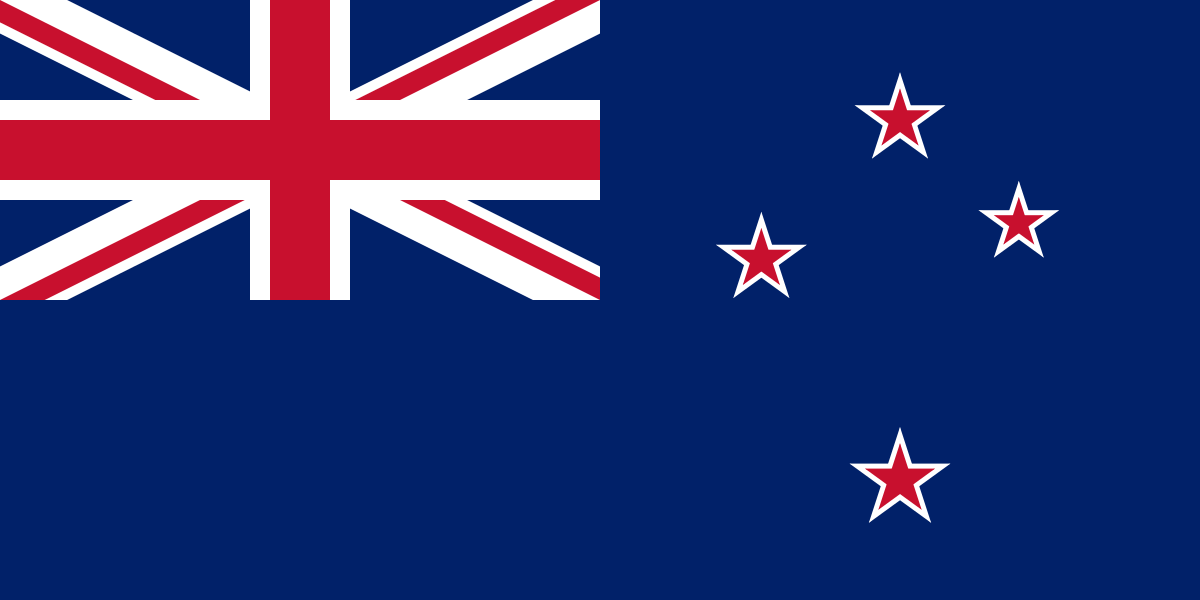
New Zealand
Location Info
- Continent: Oceania
- Country: New Zealand
- Coordinates: -40.9006 , 174.886
Trust Info
Verified Geographic and Statistical Information
🌍 Continents

Overview
New Zealand, known as Aotearoa in Māori, is an island nation located in the southwestern Pacific Ocean within Oceania. It consists of two main landmasses—the North Island and the South Island—along with over 600 smaller islands. The country is characterized by its varied topography, ranging from the volcanic plateaus and geothermal springs of the North to the dramatic Southern Alps and glacial fjords of the South.
Historically, the nation was first settled by East Polynesians between 1250 and 1300 CE, developing a distinct Māori culture. Following European contact and the 1840 Treaty of Waitangi, it became a British colony and later an independent dominion. Today, New Zealand is a highly developed country with a prosperous economy driven by agriculture, tourism, and international trade, maintaining a strong global reputation for its social policies and environmental conservation efforts.
Truth & Facts
| Total Area | 268,021 sq km |
| Coastline Length | 15,134 km |
| Total Population | 5,300,000 (est.) |
| Ethnic Composition | 70% European, 16.5% Māori, 15% Asian |
| Capital City | Wellington |
| Official Languages | English, Māori, NZ Sign Language |
| First Settlement | c. 1250–1300 CE |
| Treaty of Waitangi | February 6, 1840 |
| Currency | New Zealand Dollar (NZD) |
| Main Exports | Dairy, Meat, Wood, Fruit |
| Renewable Energy | 80-85% of total generation |
| Literacy Rate | 99% |
| System Type | Tax-funded public system |
| National Sport | Rugby Union |
| Annual Visitors | 3.3 Million (2025) |
| Endemic Species | Kiwi, Tuatara, Kea |
| Main Airline | Air New Zealand |
| Internet Penetration | 95% |
| Crime Index | Low |
| Voting System | Mixed Member Proportional |
| Key Allies | Australia, USA, UK, Canada |
| Water Supply | Managed by Local Councils |
| Unemployment Rate | 4.5% (2026 Q1) |
| National Parks | 13 |
| 5G Coverage | Major Urban Centers |
📑 Table of Contents
Overview
New Zealand is a sovereign island country in the southwestern Pacific Ocean. It is geographically isolated, located approximately 1,500 kilometers east of Australia across the Tasman Sea. The nation comprises two main landmasses, the North and South Islands, and numerous smaller islands including Stewart Island and the Chatham Islands.
Known for its stunning natural beauty and high quality of life, New Zealand is a founding member of the United Nations and a part of the Commonwealth. It has a high-income economy and ranks highly in international comparisons of national performance, such as health, education, and economic freedom.
- Official Name: New Zealand / Aotearoa
- Capital: Wellington
- Largest City: Auckland
- Government: Parliamentary Democracy
- Monarch: King Charles III
History of New Zealand
The history of New Zealand began with the arrival of Polynesian settlers in the late 13th century. These settlers developed a unique culture known as Māori. The first European known to reach New Zealand was Dutch explorer Abel Tasman in 1642. However, it was British explorer James Cook who mapped the coastline in 1769, leading to increased European contact.
The Treaty of Waitangi was signed in 1840 between representatives of the British Crown and various Māori chiefs, establishing British law and giving Māori the rights of British subjects. Conflict over land led to the New Zealand Wars in the mid-19th century. In 1893, New Zealand became the first country to grant women the right to vote in national elections.
| Year | Event |
|---|---|
| 1250-1300 | Māori arrival from Hawaiki |
| 1642 | Abel Tasman's discovery |
| 1840 | Signing of the Treaty of Waitangi |
| 1893 | Women's Suffrage granted |
| 1947 | Full independence from Britain |
Geography and Landscape
New Zealand's geography is defined by its position on the boundary of the Pacific and Indo-Australian tectonic plates. This results in significant volcanic and geothermal activity on the North Island and the formation of the Southern Alps on the South Island. Mount Cook (Aoraki) is the highest peak at 3,724 meters.
The country features diverse landscapes including fertile plains, rolling hills, rugged mountains, and deep glacial fjords. The North Island is known for its volcanic plateau, while the South Island is characterized by its alpine scenery and large glaciers like the Tasman Glacier.
- Highest Point: Aoraki / Mount Cook
- Largest Lake: Lake Taupo
- Longest River: Waikato River
- Major Islands: North, South, Stewart
- Regional Features: Fiordland, Canterbury Plains
Climate and Weather
New Zealand has a temperate maritime climate with fairly mild temperatures and moderate rainfall. However, conditions vary significantly across the regions, from subtropical in the far north to subantarctic in the south. The mountain ranges of the South Island create a distinct rain shadow effect, with the West Coast receiving high rainfall and the Canterbury Plains being much drier.
The seasons are reversed compared to the Northern Hemisphere. Summer occurs from December to February, while winter lasts from June to August. Coastal areas rarely experience extreme temperatures, but inland alpine areas can drop well below freezing.
| Season | Months | Average High (°C) |
|---|---|---|
| Summer | Dec - Feb | 20 - 30 |
| Autumn | Mar - May | 15 - 25 |
| Winter | Jun - Aug | 10 - 15 |
| Spring | Sep - Nov | 15 - 22 |
Population and Demographics
As of 2026, the population of New Zealand is approximately 5.3 million people. The population is highly urbanized, with over 75% of residents living on the North Island and roughly one-third in the Auckland metropolitan area. The demographic profile is increasingly diverse due to immigration from Asia and the Pacific Islands.
Māori make up the largest minority group, followed by people of Asian and Pasifika descent. The Māori language and culture play a significant role in public life and national identity, with Te Reo Māori being an official language alongside English.
- Median Age: 39 years
- Population Growth: ~0.7% annually
- Urban Population: 86%
- Fertility Rate: 1.6 births per woman
- Net Migration: Key driver of growth
Culture and Lifestyle
New Zealand culture is a fusion of Māori and European (Pākehā) traditions, with influences from across the Pacific. The Māori concept of 'Manaakitanga' (hospitality) and 'Kaitiakitanga' (guardianship of the land) are fundamental values. Kiwis are known for being relaxed, outdoors-oriented, and having a strong DIY ethos.
Rugby is the most popular sport and is deeply embedded in the national psyche, exemplified by the All Blacks and their performance of the Haka. The arts scene is vibrant, with world-class film production, music, and contemporary Māori art gaining international recognition.
- Key Symbol: Silver Fern
- National Icon: Kiwi Bird
- Cultural Performance: Haka
- Traditional Craft: Whakairo (carving)
- Lifestyle Priority: Work-life balance
Festivals and Events
New Zealand hosts a variety of cultural and sporting events throughout the year. Waitangi Day (February 6) is the national day, commemorating the signing of the Treaty of Waitangi with celebrations nationwide. Matariki, the Māori New Year, is a public holiday observed in June or July with traditional feasts and storytelling.
The Pasifika Festival in Auckland is the world's largest Pacific Island cultural festival, while the World of Wearable Art (WOW) in Wellington is a major international design event. Sporting events like the Auckland Arts Festival and various international rugby fixtures draw large crowds.
- Waitangi Day: February 6
- Matariki: Māori New Year
- ANZAC Day: April 25
- Pasifika Festival: March
- Rhythm and Vines: New Year Music Festival
Food and Cuisine
New Zealand cuisine is defined by fresh, local ingredients and a mix of British and Māori influences. Seafood, or 'kaimoana', is a staple, including green-lipped mussels, snapper, and crayfish. The traditional Māori Hangi—meat and vegetables slow-cooked in an earth oven—is a significant cultural culinary experience.
The country is world-famous for its dairy products, lamb, and kiwifruit. New Zealand also has a thriving wine industry, particularly known for its Marlborough Sauvignon Blanc and Central Otago Pinot Noir. The 'flat white' coffee is a national favorite found in cafes across the country.
- Traditional Meal: Hāngī
- Popular Dessert: Pavlova
- Signature Fruit: Kiwifruit
- Street Food: Fish and Chips
- Beverage: L&P (Lemon & Paeroa)
Economy and Industries
New Zealand has a market-driven economy that relies heavily on international trade. Agriculture is the largest sector, with dairy being the top export earner. New Zealand is the world's largest exporter of whole milk powder. Other significant primary industries include meat, forestry, and horticulture.
The service sector is the largest contributor to GDP, encompassing finance, real estate, and professional services. Tourism is another critical industry, though it is subject to global economic cycles. The country maintains a strong reputation for business transparency and ease of doing business.
| Sector | Contribution to GDP | Main Products |
|---|---|---|
| Services | 65% | Finance, Tourism, Tech |
| Agriculture | 7% | Dairy, Meat, Wool |
| Manufacturing | 10% | Food processing, Metals |
| Construction | 7% | Infrastructure, Housing |
Cost of Living
The cost of living in New Zealand is relatively high compared to many other developed nations, particularly in major cities like Auckland and Wellington. Housing is the most significant expense, with high rental prices and property values. Basic utilities and groceries are also subject to the costs associated with importing goods and a small domestic market.
However, wages are generally competitive, and the public provision of healthcare and education offsets some personal costs. Rural areas offer a more affordable lifestyle but often come with fewer employment opportunities in specialized sectors.
- Expensive Cities: Auckland, Queenstown
- Main Expense: Housing / Rent
- GST Rate: 15% (included in prices)
- Grocery Cost: High due to import needs
- Health Costs: Low (publicly funded)
Employment and Business
New Zealand’s labor market is characterized by high participation rates and a demand for skilled labor in sectors such as healthcare, engineering, and information technology. The government maintains a 'Green List' of roles that provide a fast track to residency for international workers. Small and medium enterprises (SMEs) make up the majority of businesses in the country.
The business environment is highly regulated but efficient, consistently ranking in the top five globally for ease of doing business. Employment laws provide strong protections for workers, including four weeks of paid annual leave and a robust minimum wage system.
- Major Employers: Govt, Air NZ, Fonterra
- Work Week: 40 hours typical
- Job Search Sites: Seek, Trade Me
- Business Hub: Auckland
- Key Sectors: IT, Agri-tech, Construction
Real Estate and Housing
The New Zealand housing market has experienced significant growth over the last decade, leading to affordability challenges. Most New Zealanders live in detached single-family homes, although there is an increasing trend toward medium-density housing in urban areas. Auckland remains the most expensive market in the country.
The government has implemented policies to curb property speculation, including a ban on most non-resident foreigners buying existing homes. Rental properties are regulated by the Residential Tenancies Act, which sets standards for insulation and heating.
- Average House Price (Auckland): >$1,000,000
- Common Type: Detached Bungalow
- Rental Market: High demand in cities
- Construction: Timber frame predominant
- Ownership Rate: ~64%
Transportation and Connectivity
New Zealand’s transport infrastructure is centered on road networks due to the country's rugged geography. State Highway 1 runs the length of both islands, connected by a roll-on roll-off ferry service across the Cook Strait. Rail travel is primarily used for freight, with limited long-distance passenger services like the TranzAlpine.
Public transport in cities consists mainly of bus networks, with Auckland and Wellington also operating suburban rail lines. Domestic air travel is frequent and essential for connecting regional centers. Connectivity is high, with near-universal broadband access and a focus on expanding 5G networks.
- Primary Airport: Auckland Airport (AKL)
- Inter-island Link: Interislander Ferry
- Driving Side: Left
- Key Rail Route: TranzAlpine
- Digital Infrastructure: Ultra-Fast Broadband (UFB)
Infrastructure and Utilities
New Zealand has a modern and reliable infrastructure system. Over 80% of electricity is generated from renewable sources, with hydroelectricity being the largest contributor. The national grid is managed by Transpower. Water services are managed by local councils, and there is an ongoing national reform to modernize water infrastructure.
Waste management focuses on recycling and landfill reduction. Telecommunications are highly advanced, with a national fiber-to-the-premises rollout nearly complete in urban areas, ensuring high-speed internet access for businesses and households.
- Power Source: Hydro, Geothermal, Wind
- Water Quality: High (potable)
- Gas Supply: Limited to North Island
- Broadband: Fiber-optic (UFB)
- Waste: Council-managed collection
Education System
Education in New Zealand is compulsory between the ages of 6 and 16 and is generally publicly funded. The system is divided into primary, secondary, and tertiary levels. The curriculum emphasizes critical thinking and practical skills. There are eight universities, all of which are government-funded and perform well in global rankings.
A unique feature of the system is the presence of Kura Kaupapa Māori, schools that teach in the Māori language and immerse students in Māori culture. Vocational training is provided by Te Pūkenga, a national polytechnic and workplace training provider.
- Higher Education: 8 Universities
- Literacy Rate: 99%
- Compulsory Age: 6 to 16
- School Year: Feb to Dec
- Tertiary Hubs: Auckland, Dunedin, Christchurch
Healthcare Services
New Zealand provides a publicly funded universal healthcare system for its citizens and permanent residents. Most hospital services are free at the point of use. Primary care, such as visiting a General Practitioner (GP), usually involves a subsidized co-payment. Emergency services are provided through the Accident Compensation Corporation (ACC), a unique no-fault insurance scheme.
The country faces challenges typical of developed nations, including an aging population and workforce shortages in rural areas. Specialized medical services are concentrated in the main centers of Auckland, Wellington, and Christchurch.
- Universal Access: Yes
- ACC: No-fault accident cover
- GP Visits: Subsidized for residents
- Public Hospitals: Free emergency care
- Private Sector: Used for elective surgeries
Tourist Attractions
New Zealand's attractions are largely based on its natural landscape and unique culture. Milford Sound in Fiordland National Park is often cited as the country's most famous destination, known for its sheer cliffs and waterfalls. The geothermal wonders of Rotorua offer insights into volcanic activity and Māori heritage.
For film fans, Hobbiton in Matamata is a major draw, featuring the set from The Lord of the Rings. Adventure seekers head to Queenstown, the 'Adventure Capital of the World,' while the Bay of Islands offers world-class sailing and historical sites like the Waitangi Treaty Grounds.
- Natural Wonder: Milford Sound
- Cultural Center: Rotorua
- Film Set: Hobbiton
- Hiking: Tongariro Alpine Crossing
- Cave System: Waitomo Glowworm Caves
Things to Do
Outdoor activities dominate the list of things to do in New Zealand. Hiking, or 'tramping,' is a national pastime, with thousands of kilometers of managed trails including the ten 'Great Walks.' Water sports such as surfing, sailing, and kayaking are popular along the extensive coastline.
Winter offers skiing and snowboarding in the Southern Alps and on Mt Ruapehu. Adventure tourism activities like bungee jumping, skydiving, and jet boating are synonymous with the New Zealand experience. For a slower pace, wine tours in Marlborough or visiting the museums in Wellington are common pursuits.
- Adventure: Bungee Jumping (Queenstown)
- Hiking: Milford Track
- Wildlife: Whale Watching (Kaikoura)
- Water Sport: Sailing in the Bay of Islands
- Skiing: Remarkables / Coronet Peak
Best Places to Visit
New Zealand offers a range of urban and natural destinations. Auckland, the 'City of Sails,' is the main entry point and offers a cosmopolitan experience. Wellington, the capital, is known for its arts scene and the national museum, Te Papa. Christchurch is the gateway to the South Island and is characterized by its English heritage and modern rebuild.
Natural highlights include the Coromandel Peninsula for its beaches, Wanaka for its alpine lake, and Stewart Island for untouched nature and birdwatching. Each region offers a distinct experience, from the subtropical north to the rugged, glacial south.
| Place | Region | Key Appeal |
|---|---|---|
| Auckland | Auckland | Shopping, Harbor, Volcanoes |
| Queenstown | Otago | Adventure, Alps, Scenery |
| Rotorua | Bay of Plenty | Geothermal, Māori Culture |
| Milford Sound | Southland | Fjords, Waterfalls |
| Wellington | Wellington | Culture, Museums, Gov |
Travel Guide
International visitors typically enter New Zealand through Auckland, Christchurch, or Wellington airports. Citizens of many countries can enter under a visa waiver program but must apply for an NZeTA (Electronic Travel Authority) before arrival. The currency is the New Zealand Dollar (NZD), and credit cards are widely accepted everywhere.
Safety is high, but travelers should be prepared for rapidly changing weather conditions, especially when hiking. Biosecurity is strictly enforced to protect the local environment, so all food and organic matter must be declared upon arrival.
- Visa: NZeTA required for waiver countries
- Currency: NZD ($)
- Driving: Left-hand side
- Tipping: Not expected
- Emergency Number: 111
Nearby Places
Due to its isolated location, New Zealand’s closest neighbors are other Pacific island nations. Australia is the nearest major landmass, with Sydney and Brisbane being roughly a 3-hour flight away. The islands of Fiji, Tonga, and Samoa are popular regional travel destinations from New Zealand.
Within the country, short flights or ferry rides connect different regions. Stewart Island is accessible via ferry from Bluff, and the Chatham Islands are reached by regional flights from the main centers. These outlying areas offer a quieter, more remote experience of New Zealand life.
- Closest Country: Australia (1,500km)
- Regional Islands: Fiji, Cook Islands, Niue
- Internal Link: North to South Island (Ferry)
- Remote Island: Stewart Island (Rakiura)
- Eastern Territory: Chatham Islands
Environment and Nature
New Zealand is renowned for its commitment to environmental protection. Approximately 30% of the land area is under public protection, managed by the Department of Conservation (DOC). The country is home to unique species that evolved in isolation, such as the flightless kiwi bird and the tuatara, a 'living fossil' reptile.
Invasive pests like rats and stoats pose a threat to native birds, leading to the ambitious 'Predator Free 2050' initiative. The landscape is dominated by evergreen forests, with the massive Kauri trees in the north being of significant cultural and ecological importance.
- National Park Area: ~30,000 sq km
- Unique Reptile: Tuatara
- Invasive Pests: Stoats, Rats, Possums
- Conservation Lead: Dept of Conservation
- Forest Type: Temperate Rainforest
Government and Administration
New Zealand is a constitutional monarchy with a parliamentary system of government. King Charles III is the head of state, represented by a Governor-General. Executive power is exercised by a Cabinet led by the Prime Minister. The legislature is a unicameral Parliament elected using the Mixed Member Proportional (MMP) system.
Local government is divided into regional and territorial authorities (councils), which manage local services like roads, water, and waste. The country is known for its low levels of corruption and high public trust in government institutions.
- Head of State: King Charles III
- Head of Gov: Prime Minister
- Voting System: MMP
- Legislature: House of Representatives
- Local Gov: Regional & City Councils
Safety and Public Services
New Zealand is consistently ranked as one of the safest countries in the world. Violent crime is rare, though property theft can occur in tourist areas. The New Zealand Police are generally unarmed and maintain high levels of community engagement. Fire and Emergency NZ and various ambulance services provide rapid response to incidents.
Public safety is also managed through strict building codes and disaster preparedness, given the risk of earthquakes. Civil Defence provides information and warnings regarding natural disasters like tsunamis or volcanic activity.
- Emergency Number: 111
- Police Style: Unarmed/Community based
- Safety Rank: High (Global Peace Index)
- Disaster Watch: Civil Defence (NEMA)
- Coastguard: Volunteer-based
Best Time to Visit
The best time to visit New Zealand depends on the desired activities. Summer (December to February) is the peak season, offering the best weather for beaches and hiking, though it is the most crowded. Autumn (March to May) features pleasant temperatures and vibrant foliage, especially in the South Island.
Winter (June to August) is ideal for skiing and snowboarding in the Southern Alps. Spring (September to November) is a great time for viewing wildlife and blooming flowers, though it is often the windiest season. For fewer crowds and lower prices, the shoulder seasons of spring and autumn are recommended.
| Activity | Recommended Months |
|---|---|
| Hiking / Beaches | December - March |
| Skiing | July - September |
| Wine Tours | March - May |
| Wildlife Watching | September - November |
Local Business Directory
New Zealand's business landscape is dominated by service providers and small-to-medium enterprises. Major corporate headquarters are primarily located in Auckland’s Central Business District. Regional economies are often anchored by agricultural cooperatives like Fonterra or forestry and tourism operators.
Local directories and platforms like Trade Me and Yellow Pages are commonly used to find services. Most towns have a 'main street' with essential services including banks, post offices (NZ Post), and local retailers.
- Corporate Hub: Auckland CBD
- Main Retailers: The Warehouse, Countdown
- Postal Service: NZ Post
- Telecoms: Spark, One NZ, 2degrees
- Banking: ANZ, BNZ, ASB, Westpac
General Information FAQs
Where is New Zealand located?
New Zealand is located in the southwestern Pacific Ocean. It lies about 1,500 kilometers (900 miles) east of Australia and approximately 1,000 kilometers south of the Pacific island nations of New Caledonia, Fiji, and Tonga.
What is New Zealand known for?
New Zealand is internationally recognized for its dramatic natural landscapes, including mountains, fjords, and volcanic plateaus. It is also famous for Māori culture, its national rugby team (the All Blacks), and as the filming location for The Lord of the Rings film trilogy.
Why is New Zealand famous?
The country is famous for being a top destination for adventure tourism, its unique wildlife like the kiwi bird, and its reputation as a safe, peaceful, and socially progressive nation.
What country or region is New Zealand part of?
New Zealand is an independent sovereign state located in the geographic region of Oceania, specifically within the subregion of Polynesia.
What is the population of New Zealand?
As of 2026, the estimated population of New Zealand is approximately 5.3 million people.
What languages are spoken in New Zealand?
English is the most widely spoken language. Māori and New Zealand Sign Language are also official languages. Other common languages include Samoan, Hindi, and Mandarin.
What time zone is New Zealand in?
New Zealand Standard Time (NZST) is UTC+12. During the summer months, the country observes Daylight Saving Time (NZDT), which is UTC+13.
What are the key facts about New Zealand?
Key facts include: its capital is Wellington; its largest city is Auckland; it was the first nation to grant women the vote; and it has a high-income economy based on exports and tourism.
What makes New Zealand unique?
Its extreme geographic isolation led to the evolution of unique flora and fauna. Additionally, the legal and cultural partnership between the indigenous Māori and the Crown, established by the Treaty of Waitangi, is a unique feature of its national identity.
How large is New Zealand in area?
New Zealand has a total land area of approximately 268,021 square kilometers, making it similar in size to the United Kingdom or the state of Colorado in the U.S.
History FAQs
What is the history of New Zealand?
New Zealand's history involves early settlement by Polynesians (Māori), followed by European discovery by Abel Tasman and Captain James Cook. It became a British colony in 1840 via the Treaty of Waitangi and gradually transitioned to a fully independent nation in the 20th century.
When was New Zealand established?
While Māori settled the land around 1250–1300, modern New Zealand as a political entity is often dated to the signing of the Treaty of Waitangi on February 6, 1840.
What major historical events happened in New Zealand?
Significant events include the signing of the Treaty of Waitangi (1840), the New Zealand Wars (1845–1872), the granting of women's suffrage (1893), and the adoption of the Statute of Westminster (1947), which granted full legal independence from Britain.
Who were important historical figures from New Zealand?
Key figures include Sir Edmund Hillary (first to summit Mt Everest), Kate Sheppard (suffragette leader), Lord Rutherford (father of nuclear physics), and various Māori leaders like Te Rauparaha and Dame Whina Cooper.
How has New Zealand developed over time?
The nation evolved from an agrarian British colony into a diverse, multicultural society with a sophisticated market economy and a leadership role in the South Pacific region.
Geography & Environment FAQs
What is the geography of New Zealand?
The geography consists of two main mountainous islands. The North Island features a volcanic plateau and active geothermal areas, while the South Island is dominated by the Southern Alps and glacial fjords.
What natural features surround New Zealand?
The country is surrounded by the Pacific Ocean to the north, south, and east, and the Tasman Sea to the west.
Are there mountains, rivers, or lakes near New Zealand?
Yes, major features include the Southern Alps, the Waikato River (longest), and Lake Taupo (largest by surface area), which is a volcanic caldera.
What is the elevation of New Zealand?
Elevation ranges from sea level to 3,724 meters at the summit of Aoraki / Mount Cook.
What ecosystems exist around New Zealand?
Ecosystems include temperate rainforests, subalpine tussock lands, volcanic scrublands, and diverse marine environments ranging from subtropical coral reefs in the north to subantarctic waters in the south.
Climate & Weather FAQs
What is the climate like in New Zealand?
New Zealand has a temperate maritime climate. It generally has mild temperatures, moderate rainfall, and many hours of sunshine.
What is the average temperature in New Zealand?
Average temperatures range from 10°C in the south to 16°C in the north. Summer highs are typically between 20°C and 30°C, while winter lows in inland areas can reach -10°C.
What is the weather like throughout the year in New Zealand?
Weather is highly variable and can change rapidly. Summers are warm and relatively dry; autumns are cool and colorful; winters bring snow to the mountains; and springs are fresh and often windy.
Does New Zealand experience extreme weather?
While generally temperate, the country can experience heavy rainfall leading to floods, occasional tropical cyclones in the north, and heavy snowstorms in the southern mountains.
What is the best time of year to visit New Zealand?
The best time for outdoor activities is summer (December to February). For skiing, winter (July to September) is best. The shoulder seasons (March-May and September-November) offer good weather with fewer crowds.
Population & Society FAQs
What is the population density of New Zealand?
The population density is low, at approximately 20 people per square kilometer.
What ethnic groups live in New Zealand?
The population is composed of European (Pākehā), Māori, Asian, and Pasifika (Pacific Islander) ethnicities, along with smaller groups from the Middle East, Latin America, and Africa.
What religions are practiced in New Zealand?
New Zealand is a secular society. While many people identify as Christian (Catholic, Anglican, Presbyterian), a significant and growing portion of the population (nearly 50%) identifies as having 'no religion'. Hinduism, Buddhism, and Islam are also represented.
What is daily life like in New Zealand?
Life is generally relaxed with a strong emphasis on the outdoors. A typical day often involves a balance of work and recreation, with many people engaging in sports, gardening, or visiting the coast.
How diverse is the population of New Zealand?
It is highly diverse, particularly in major cities like Auckland, where over 40% of the population was born overseas.
Culture & Traditions FAQs
What cultural traditions are important in New Zealand?
Māori traditions such as the Haka (war dance), Tā Moko (tattooing), and the Pōwhiri (formal welcome) are central to the national culture.
What festivals are celebrated in New Zealand?
Major festivals include Waitangi Day, Matariki, Pasifika, the Auckland Lantern Festival, and Diwalli celebrations in the main cities.
What cultural landmarks exist in New Zealand?
Important landmarks include the Waitangi Treaty Grounds, Te Papa Tongarewa (National Museum), and various historical Marae (Māori meeting grounds).
What traditional clothing or customs are common in New Zealand?
Māori traditional dress (Kapa Haka costume) is worn during ceremonies. A common custom is the 'Hongi', a traditional greeting where people press noses and foreheads together.
What arts and crafts are associated with New Zealand?
Associate crafts include Māori wood carving (Whakairo), greenstone (Pounamu) jewelry making, and weaving (Raranga).
Food & Cuisine FAQs
What foods is New Zealand known for?
New Zealand is known for its lamb, dairy products, kiwifruit, and seafood like green-lipped mussels and pavlova (a meringue dessert).
What traditional dishes originate from New Zealand?
The Hāngī is the most traditional Māori cooking method. Modern dishes like 'colonial goose' (stuffed leg of lamb) and the 'kiwi burger' (with beetroot and egg) are also distinctive.
What are the best restaurants in New Zealand?
Auckland and Wellington have vibrant dining scenes with award-winning restaurants like Sid at The French Cafe and Logan Brown. Fine dining is often focused on seasonal, locally sourced produce.
What local ingredients are commonly used in New Zealand cuisine?
Common ingredients include kumara (sweet potato), manuka honey, various types of seafood, and venison.
What food markets or street foods are popular in New Zealand?
Night markets in Auckland, farmers' markets in regional towns, and 'fish and chips' shops are staples of the local food culture.
Economy & Business FAQs
What are the main industries in New Zealand?
The main industries are agriculture (especially dairy and sheep farming), tourism, manufacturing, and construction.
What economic activities drive the economy of New Zealand?
Exporting primary products (dairy, meat, wood, fruit), international tourism, and a growing technology sector are the primary drivers.
What businesses operate in New Zealand?
Major businesses include Fonterra (dairy cooperative), Air New Zealand, Mainfreight (logistics), and a variety of retail and banking institutions.
Is New Zealand an important economic center?
In the South Pacific, New Zealand is a major economic hub. Globally, it is a significant player in the international dairy and soft commodity markets.
What are the major exports or products from New Zealand?
Dairy products (milk powder, butter, cheese), meat (lamb, beef), wood, fruit (kiwifruit, apples), and wine.
Employment & Jobs FAQs
What job opportunities are available in New Zealand?
There is high demand for skilled workers in healthcare (nurses, doctors), engineering, information technology, and the construction trades.
What are the major employers in New Zealand?
The government (including health and education boards) is the largest employer. Private sector giants include Fonterra, Fletcher Building, and large retail chains like Woolworths NZ.
What skills are in demand in New Zealand?
Skills in software development, civil engineering, specialized nursing, and quantity surveying are currently in very high demand.
Is New Zealand a good place to work?
Yes, it offers high labor standards, a focus on work-life balance, and a transparent, professional work culture.
What is the unemployment rate in New Zealand?
As of early 2026, the unemployment rate sits at approximately 4.5%.
Cost of Living FAQs
Is New Zealand expensive to live in?
Compared to the global average, yes. It has a high cost of living, particularly in terms of housing and imported consumer goods.
What is the average cost of living in New Zealand?
A single person typically needs around $3,500 - $4,500 NZD per month to cover basic expenses including rent in a major city.
How much does housing cost in New Zealand?
Average national house prices are around $800,000 NZD, though this is much higher in Auckland (over $1 million NZD).
What are average food and utility costs in New Zealand?
Electricity for a small home averages $150-$250 per month. Weekly groceries for a couple typically cost between $200 and $300 NZD.
Is New Zealand affordable compared to nearby cities?
It is generally similar in cost to major Australian cities like Sydney or Melbourne, though housing can sometimes be more expensive relative to local income.
Housing & Real Estate FAQs
What types of housing are available in New Zealand?
Detached single-story houses are most common, but there is an increasing number of apartments and townhouses in city centers.
What is the average home price in New Zealand?
The median home price nationwide is approximately $800,000 NZD as of 2026.
Is it better to rent or buy property in New Zealand?
Buying is generally preferred for long-term stability, but high prices and interest rates mean many people rent for significant periods.
Which neighborhoods are popular in New Zealand?
In Auckland, Ponsonby and Remuera are popular; in Wellington, Oriental Bay and Thorndon; in Christchurch, Merivale and Fendalton.
How has the property market changed in New Zealand?
The market saw extreme growth during 2020-2021, followed by a correction and stabilization as interest rates rose in 2024-2025.
Transportation FAQs
How do you get to New Zealand?
Most international travelers arrive by air via Auckland, Christchurch, or Wellington airports. There are no land connections to other countries.
What is the nearest airport to New Zealand?
Auckland Airport (AKL) is the primary international gateway, followed by Christchurch (CHC) and Wellington (WLG).
Does New Zealand have railway connections?
There are no international rail connections. Domestically, there is a freight network and three main scenic passenger trains.
How reliable is public transportation in New Zealand?
In major cities, buses and trains are generally reliable. In rural areas, public transport is very limited, making cars essential.
What major highways or roads connect to New Zealand?
State Highway 1 is the primary road connecting the north and south ends of the country (via ferry).
Education FAQs
What schools are located in New Zealand?
The country has a mix of state (public), state-integrated (usually religious), and private schools.
Are there universities in New Zealand?
Yes, there are eight state-funded universities: Auckland, AUT, Waikato, Massey, Victoria University of Wellington, Canterbury, Lincoln, and Otago.
What is the literacy rate in New Zealand?
The literacy rate is exceptionally high at approximately 99%.
What educational opportunities exist in New Zealand?
New Zealand offers a wide range of opportunities from academic research at universities to trade training at polytechnics (Te Pūkenga).
Is New Zealand a good place for students?
Yes, it is highly regarded for its safe environment, high educational standards, and supportive international student policies.
Healthcare FAQs
What hospitals are available in New Zealand?
Every major city has at least one large public hospital. There are also private hospitals that specialize in elective surgeries.
Are there emergency medical services in New Zealand?
Yes, emergency medical services are available nationwide, primarily operated by St John or Wellington Free Ambulance.
What healthcare facilities exist in New Zealand?
Facilities include public and private hospitals, community clinics, dental practices, and specialized maternity centers.
Is healthcare affordable in New Zealand?
Public hospital care is free for residents. GP visits and prescriptions are subsidized but usually require a small payment.
Are specialized medical services available in New Zealand?
Yes, specialized care in fields like oncology, cardiology, and orthopedics is available, mostly in the main city hospitals.
Tourism & Travel FAQs
What are the top tourist attractions in New Zealand?
Top attractions include Milford Sound, Hobbiton, Rotorua’s geysers, the Waitomo Glowworm Caves, and the Tongariro Alpine Crossing.
What are the best things to do in New Zealand?
Hiking, bungee jumping in Queenstown, whale watching in Kaikoura, and exploring Māori culture in Rotorua are among the most popular activities.
Is New Zealand worth visiting?
Yes, it is widely considered one of the most beautiful and unique travel destinations in the world.
What landmarks should visitors see in New Zealand?
Visitors should see the Sky Tower in Auckland, the Beehive in Wellington, and the Church of the Good Shepherd at Lake Tekapo.
How many days should tourists spend in New Zealand?
A minimum of 14 days is recommended to see the highlights of both islands, though 3 to 4 weeks allows for a more comprehensive experience.
Nearby Places FAQs
What places are near New Zealand worth visiting?
Nearby Pacific islands like Fiji, the Cook Islands, and Vanuatu are worth visiting for a tropical experience.
What cities or towns are close to New Zealand?
Sydney and Melbourne in Australia are the closest major international cities, roughly 3 hours away by flight.
What natural attractions are near New Zealand?
The Great Barrier Reef in Australia and the lagoons of the Cook Islands are major natural attractions in the wider region.
What day trips can be taken from [Location]?
From Auckland, one can visit Waiheke Island; from Christchurch, Akaroa; and from Queenstown, Glenorchy or Arrowtown.
What famous destinations are within reach of New Zealand?
Australia, Fiji, and French Polynesia are all within reach of New Zealand by air.
Safety FAQs
Is New Zealand safe to live in?
Yes, it is consistently ranked as one of the safest countries in the world for residents.
Is New Zealand safe for tourists?
Yes, it is very safe for tourists, though standard precautions should be taken with belongings in crowded areas.
What is the crime rate in New Zealand?
The crime rate is low, especially regarding violent crimes. Petty theft in tourist hotspots is the most common issue.
What emergency services operate in New Zealand?
Police, Fire and Emergency NZ, and Ambulance services are the main emergency providers, reachable via the number 111.
What safety tips should visitors follow in New Zealand?
Visitors should always check weather forecasts before hiking, wear sun protection due to high UV levels, and drive carefully on narrow, winding roads.
Lifestyle & Living FAQs
Is New Zealand a good place to live?
Yes, it offers a high quality of life, clean environment, and strong social safety nets.
What recreational activities are available in New Zealand?
Activities include hiking, surfing, mountain biking, gardening, and community sports like rugby and netball.
Is New Zealand family-friendly?
Yes, it is considered an excellent place to raise children due to the safe environment and quality education system.
What outdoor activities are popular in New Zealand?
'Tramping' (hiking), fishing, and beach activities are among the most popular outdoor pursuits.
What makes life enjoyable in New Zealand?
The proximity to nature, the friendly and laid-back community, and the general sense of safety and freedom make life enjoyable.
Practical Information FAQs
What travel tips should visitors know about New Zealand?
Pack layers of clothing, be prepared for 'four seasons in one day', and book accommodation and popular tours in advance during the summer.
What local customs should visitors respect in New Zealand?
Respect Māori protocols (Tikanga) when visiting a Marae, such as removing shoes, and always ask permission before taking photos of people.
How accessible is New Zealand for international visitors?
It is very accessible by air, though it requires a long flight from Europe or the Americas. The tourism infrastructure for English speakers is excellent.
What services are available for tourists in New Zealand?
Services include 'i-SITE' visitor information centers, extensive car and campervan rental options, and a wide variety of guided tours.
What important information should travelers know before visiting New Zealand?
Be aware of strict biosecurity laws, ensure you have an NZeTA if required, and remember that driving is on the left side of the road.