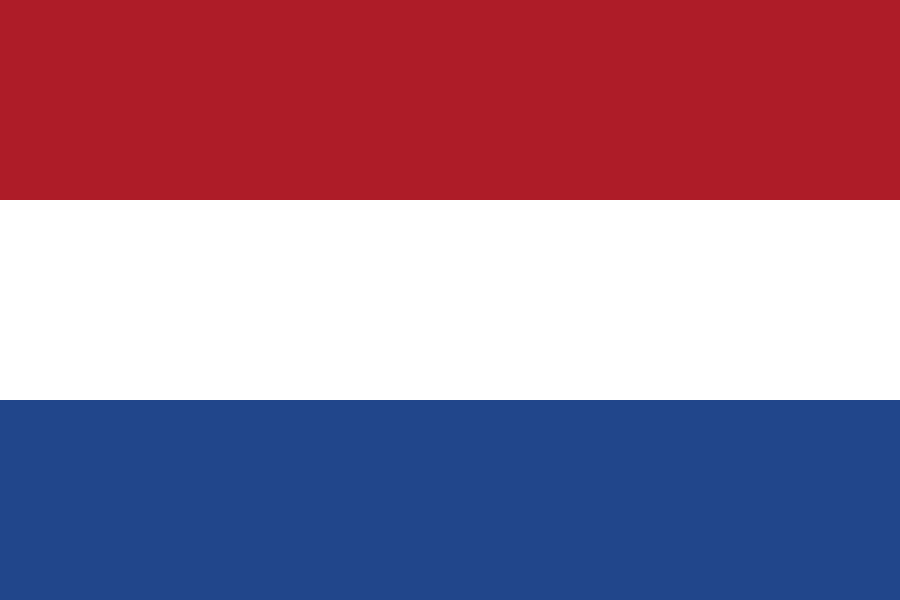
Netherlands
Location Info
- Continent: Europe
- Country: Netherlands
- Coordinates: 52.1326 , 5.2913
Trust Info
Verified Geographic Research
🌍 Continents
Overview
The Netherlands is a densely populated country located in Northwestern Europe, bordering Germany to the east, Belgium to the south, and the North Sea to the north and west. Known as one of the 'Low Countries,' approximately one-third of its land lies below sea level, protected by an extensive system of dikes, dunes, and canals. The nation is a constitutional monarchy and a founding member of the European Union, NATO, and the OECD.
The Netherlands remains a global economic powerhouse, home to the Port of Rotterdam, Europe's largest seaport, and Amsterdam Airport Schiphol. The country is characterized by its highly urbanized Randstad region, a rich artistic heritage from the Dutch Golden Age, and a pioneering approach to water management and sustainable technology. With a population of over 18 million, it maintains a high standard of living and a significant role in international diplomacy.
Truth & Facts
| Total Area | 41,850 sq km |
| Highest Point | Vaalserberg (322.4 m) |
| Total Population | 18,448,775 |
| Urban Population | 88.9% |
| Capital City | Amsterdam |
| Provinces | 12 |
| Independence | 1581 (from Spain) |
| Golden Age | 17th Century |
| GDP Growth (2026) | 1.2% - 1.3% |
| Currency | Euro (€) |
| Major Seaport | Port of Rotterdam |
| Major Airport | Schiphol (AMS) |
| Literacy Rate | 99% |
| Top University | University of Amsterdam |
| System Type | Universal Statutory Insurance |
| Life Expectancy | 84.3 years |
| Official Languages | Dutch, Frisian |
| National Day | Koningsdag (April 27) |
| Most Visited City | Amsterdam |
| UNESCO Sites | 13 |
| Climate Type | Temperate Maritime |
| Land Reclamation | ~17% of total land |
| Cycling Paths | 35,000 km |
| Railway Length | ~7,000 km |
| Digital Connection | 99% Household Access |
| Tech Hub | Eindhoven (Brainport) |
| Global Peace Index | High Ranking |
| Emergency Number | 112 |
| Head of State | King Willem-Alexander |
| Legislature | States General |
| International Court | ICJ (The Hague) |
| EU Founding Member | Yes (1957) |
| Water Supply | 99.9% Safe Tap Water |
| Renewable Energy | Increasing Share |
| Inflation (2026) | 2.5% - 3.1% |
| Unemployment (2026) | 4.1% |
| Internet Exchange | AMS-IX |
| Broadband Coverage | 98% |
| No Religion | 58% |
| Christianity | 24% - 28% |
📑 Table of Contents
Overview of the Netherlands
The Netherlands is a highly developed country in Northwestern Europe, known for its flat geography, extensive water management systems, and progressive social values. As of 2026, it maintains a population of approximately 18.4 million people. The nation serves as a critical logistics gateway for the European continent, housing one of the world's most efficient transport networks.
- Capital: Amsterdam
- Government Seat: The Hague
- Official Language: Dutch
- Currency: Euro (€)
- Population Density: 547 per sq km
History of the Netherlands
The history of the Netherlands is marked by a struggle against water and a successful pursuit of maritime dominance. Following independence from Spain in the late 16th century, the country entered the 'Dutch Golden Age,' becoming a global leader in trade, science, and art. The 20th century saw the nation recover from the devastation of World War II to become a core architect of European integration.
| Era | Key Event |
|---|---|
| 1568–1648 | Eighty Years' War for Independence |
| 17th Century | Dutch Golden Age (Trade & Art) |
| 1815 | Founding of the Kingdom |
| 1945 | Post-WWII Reconstruction |
| 1957 | Formation of the EEC (EU) |
Geography and Landscape
The Dutch landscape is distinctively flat and low-lying, with much of the land being reclaimed from the sea through poldering. The country is dominated by three major rivers—the Rhine, Meuse, and Scheldt—which form a vast delta. To the north and west, the North Sea coast features protective dunes and the UNESCO-listed Wadden Sea.
- Below Sea Level: ~26% of land
- Major Delta: Rhine-Meuse-Scheldt
- Reclaimed Province: Flevoland
- Highest Point: Vaalserberg (322m)
Climate and Weather
The Netherlands has a temperate maritime climate, characterized by mild winters and cool summers. Rainfall is distributed fairly evenly throughout the year, often accompanied by breezy conditions from the North Sea. In 2026, average daytime temperatures range from 6°C in winter to 22°C in the peak of summer.
| Month | Avg. High (°C) | Avg. Low (°C) |
|---|---|---|
| January | 6 | 1 |
| April | 13 | 4 |
| July | 22 | 13 |
| October | 15 | 7 |
Population and Demographics
With over 18.4 million residents in 2026, the Netherlands is one of Europe's most densely populated nations. The population is aging, with a median age of 41.5 years. It is a diverse society, with significant minorities of Turkish, Moroccan, Surinamese, and Indonesian descent contributing to its multicultural fabric.
- Median Age: 41.5 years
- Population Growth: ~0.56% annually
- Urbanization: 88.9%
- Life Expectancy: 84.3 years
Culture and Lifestyle
Dutch culture is rooted in a tradition of pragmatism, tolerance, and openness known as 'gedogen.' This is reflected in the nation's progressive social policies. Bicycles are the primary mode of daily transport for many, and the 'polder model' defines a unique consensus-based approach to decision-making in both politics and business.
- Primary Mode of Transport: Bicycles
- Artistic Legacy: Rembrandt, Van Gogh
- Social Value: Directness and egalitarianism
- Water Culture: Historical canals and houseboats
Festivals and Events
The Netherlands hosts a wide array of cultural and musical events throughout the year. King’s Day (Koningsdag) in April is the most famous national celebration, turning the country orange. In 2026, major music festivals like Pinkpop and the North Sea Jazz Festival continue to draw international crowds, alongside numerous food truck festivals.
- Koningsdag (April 27): National celebration
- Liberation Day (May 5): Celebrating freedom
- Pinkpop: Long-running rock festival
- North Sea Jazz: World-renowned jazz event
Food and Cuisine
Traditional Dutch cuisine is known for its hearty and simple ingredients, often centered around potatoes, vegetables, and meat. However, the modern Dutch food scene is highly international, influenced by its colonial history. Cheese remains a national staple, with regions like Gouda and Edam famous worldwide for their production.
- National Staple: Cheese (Gouda, Edam)
- Street Food: Raw herring with onions
- Sweet Treats: Stroopwafels and Poffertjes
- Traditional Dinner: Stamppot
Economy and Major Industries
The Dutch economy is the sixth-largest in the Eurozone and is highly focused on international trade. Key sectors include chemicals, machinery, electronics, and highly efficient greenhouse-based agriculture. In 2026, the economy continues to focus on high-tech innovation and renewable energy solutions to maintain global competitiveness.
- Key Tech Leader: ASML (Semiconductors)
- Global Trade Hub: Port of Rotterdam
- Agri-Export: World's 2nd largest exporter of food
- Finance Hub: Amsterdam (ING, Rabobank)
Cost of Living
The cost of living in the Netherlands is relatively high compared to the European average, particularly in the Randstad cities like Amsterdam and Utrecht. Housing is the most significant expense, with a persistent shortage of affordable rentals and high property prices. Basic utilities and groceries are generally affordable but reflect 2026 inflation trends.
| Item | Avg. Monthly Cost |
|---|---|
| One-bedroom Apartment | €1,200 - €1,800 |
| Utilities (Basic) | €150 - €250 |
| Public Transport Pass | €80 - €120 |
| Monthly Groceries | €300 - €450 |
Employment and Business
The Dutch labor market is characterized by a high rate of part-time work and a strong emphasis on work-life balance. In 2026, the unemployment rate is projected at 4.1%, with high demand for skilled workers in technology, engineering, and healthcare. The country is known for its 'Polder Model' of cooperation between employers and unions.
- Major Employers: Shell, Philips, Unilever
- Demand Sectors: Tech, Green Energy, Healthcare
- Unemployment Rate (2026): ~4.1%
- Work Culture: Flat hierarchies and direct communication
Real Estate and Housing
Housing in the Netherlands remains a critical issue in 2026, with a significant supply shortage driving up both rental and purchase prices. The government has implemented various measures to increase house building and protect tenants. Apartments in historic city centers are highly sought after, while suburbs offer more modern family housing.
- Housing Market: High demand, low supply
- Popular Regions: Amsterdam, Utrecht, Haarlem
- Social Housing: Significant portion of the market
- Housing Goal: 1 million new homes by 2030
Transportation and Connectivity
The Netherlands boasts some of the world's most efficient transportation infrastructure. The railway network operated by NS (Nederlandse Spoorwegen) connects all major cities with high-frequency services. Public transport is integrated through the OV-chipkaart system, allowing seamless travel between trains, buses, trams, and metros.
- Major Rail Hub: Utrecht Centraal
- Air Hub: Amsterdam Airport Schiphol
- Inland Waterways: 6,273 km of navigable canals
- Public Transport Card: OV-chipkaart (and OVpay)
Infrastructure and Utilities
Infrastructure in the Netherlands is top-tier, ranging from its world-class flood defenses (Delta Works) to its superfast digital networks. The country has one of the highest internet penetration rates in the world and is a leader in implementing smart city technologies. Utilities like water and electricity are highly reliable and increasingly sourced from renewables.
- Flood Protection: Delta Works (Zeeland)
- Digital: 98% broadband coverage
- Water: High-quality tap water without chlorine
- Energy: Shift toward offshore wind and solar
Education System
Education in the Netherlands is mandatory for children aged 5 to 16. The system is divided into vocational (MBO) and research-oriented (HBO/WO) paths at the tertiary level. Dutch universities are consistently ranked high in global indexes and offer a large number of English-taught programs, attracting thousands of international students.
- Schooling: Compulsory until age 16
- Top Research Uni: University of Amsterdam (UvA)
- Language: High availability of English programs
- Focus: Innovation and practical application
Healthcare Services
The Dutch healthcare system consistently ranks among the best in Europe. It is based on a universal insurance model where all residents are required to buy a basic health insurance package from private providers. Primary care is managed through general practitioners (GPs), who act as 'gatekeepers' for specialist services.
- Annual Deductible (2026): ~€385
- System Oversight: Ministry of Health
- Wait Times: Generally low, but specialty-dependent
- Coverage: Basic package is legally mandated
Tourist Attractions
The Netherlands offers a diverse range of attractions from world-class museums in Amsterdam to historic windmills in the countryside. The Anne Frank House, Rijksmuseum, and Van Gogh Museum are top cultural stops. Seasonal highlights include the Keukenhof tulip gardens, which showcase millions of bulbs each spring.
- Rijksmuseum: National museum of art
- Kinderdijk: Historic windmill network
- Anne Frank House: Historical monument
- Keukenhof: Largest flower garden in the world
Things to Do
Biking through the countryside and exploring city canals by boat are essential Dutch experiences. Visitors often visit local cheese markets in Alkmaar or Gouda, or explore the modern architecture of Rotterdam. For nature lovers, the Hoge Veluwe National Park offers forests and sand dunes accessible by free-to-use white bicycles.
- Canal Cruises: Exploring Amsterdam/Utrecht
- Cycling: Through tulip fields or dunes
- Cheese Markets: Traditional Alkmaar auction
- Modernism: Exploring Rotterdam's Cube Houses
Best Places to Visit
While Amsterdam is the most popular destination, the Netherlands has many other distinct cities. Utrecht offers a more local canal-side experience, Rotterdam is a hub for modern design and maritime history, and The Hague serves as a regal center for international justice. Maastricht in the south provides a unique, hilly, and historic atmosphere.
| City | Known For |
|---|---|
| Amsterdam | Canals and Museums |
| Rotterdam | Modern Architecture & Port |
| The Hague | Government & Peace Palace |
| Utrecht | Medieval Center & Dom Tower |
Travel Guide
Traveling to and within the Netherlands is straightforward thanks to Schiphol Airport and a comprehensive rail network. Most Dutch people speak excellent English, making navigation easy for international visitors. It is a cashless-friendly society where debit and credit cards (MasterCard/Visa) are widely accepted, often through contactless payments.
- Visa: Schengen Area member
- Language: English widely understood
- Payments: Heavily cashless (Debit preferred)
- Electricity: Type C and F plugs (230V)
Nearby Places
The Netherlands' central location makes it an ideal base for exploring Western Europe. High-speed trains like the Eurostar and Thalys connect Amsterdam to major neighboring capitals in just a few hours. Regional travel to Belgium and Germany is also highly frequent and convenient for day trips.
- Brussels, Belgium: 2 hours by train
- Paris, France: 3.5 hours by train
- Cologne, Germany: 2.5 hours by train
- London, UK: 4 hours by train
Environment and Nature
Despite its high urbanization, the Netherlands protects significant natural areas. The Hoge Veluwe is the largest national park, while the Wadden Sea is a unique intertidal zone and UNESCO World Heritage site. The country is also a pioneer in 'building with nature,' using natural processes to enhance coastal protection and biodiversity.
- Wadden Sea: UNESCO World Heritage site
- National Parks: 21 across the country
- Fauna: Red deer, wild boar, and sea seals
- Focus: Nitrogen reduction and circular economy
Government and Administration
The Netherlands is a constitutional monarchy with a parliamentary system. The King has a largely ceremonial role, while the Prime Minister leads the executive branch. Governance is decentralized across 12 provinces and hundreds of municipalities, with water boards (waterschappen) being the oldest democratic institutions in the country.
- Head of State: King Willem-Alexander
- Head of Government: Prime Minister
- Legislative: Bicameral States General
- Administrative: 12 Provinces
Safety and Public Services
The Netherlands is one of the safest countries in the world, characterized by political stability and low crime rates. Public services are efficient and transparent. Travelers and residents alike can rely on professional police, fire, and ambulance services, all accessible via the universal 112 emergency number.
- Emergency Number: 112
- Crime Rate: Generally very low
- Public Security: Visible but non-intrusive police
- Safety for Tourists: Very high safety standard
Best Time to Visit
The best time to visit the Netherlands is from mid-April to mid-October. Spring (late April/early May) is ideal for seeing the tulip fields in bloom. Summer offers the best weather for festivals and outdoor terrace dining, while winter is charming for its festive markets and potential for canal skating, though weather can be damp.
- Peak Tulip Season: Mid-April to early May
- Best Weather: June to August
- Cultural Peak: King's Day (April 27)
- Quiet Season: November to February
Local Business and Directory
The Netherlands is a global center for business, with a heavy presence of multinational corporations and a thriving SME sector. Amsterdam is a major European financial and tech hub, while Rotterdam dominates logistics. The country’s Chamber of Commerce (KvK) provides a comprehensive registry of all active businesses and entrepreneurs.
- Financial Center: Zuidas, Amsterdam
- Tech Hub: Brainport, Eindhoven
- Port Services: Port of Rotterdam District
- Legal Registry: Kamer van Koophandel (KvK)
General Information FAQs
Where is the Netherlands located?
The Netherlands is located in Northwestern Europe, bordering Germany to the east, Belgium to the south, and the North Sea to the north and west.
What is the Netherlands known for?
The Netherlands is globally recognized for its flat landscape, extensive canal systems, historic windmills, tulip production, and world-class museums featuring Dutch masters like Rembrandt and Van Gogh.
Why is the Netherlands famous?
It is famous for its pioneering water management, the Port of Rotterdam (Europe's largest), its bicycle-friendly culture, and progressive social policies.
What country or region is the Netherlands part of?
It is a sovereign country in Europe and a founding member of the European Union. It also forms part of the Kingdom of the Netherlands, which includes several Caribbean island territories.
What is the population of the Netherlands?
As of early 2026, the population is estimated to be approximately 18.4 million people.
What languages are spoken in the Netherlands?
Dutch is the official language. Frisian is also official in the province of Friesland. English is very widely spoken as a second language.
What time zone is the Netherlands in?
The Netherlands is in the Central European Time zone (CET, UTC+1). It observes Central European Summer Time (CEST, UTC+2) during the summer months.
What are the key facts about the Netherlands?
Key facts include: its capital is Amsterdam, it is one of the world's most densely populated countries, about 26% of its land is below sea level, and it uses the Euro as its currency.
What makes the Netherlands unique?
Its 'Polder' landscape, created by pumping water out of marshes and lakes, and its massive flood defense system known as the Delta Works, make it geographically and engineering-wise unique.
How large is the Netherlands in area?
The total area of the Netherlands is approximately 41,850 square kilometers, which includes internal water bodies.
History FAQs
What is the history of the Netherlands?
The country's history is defined by its 16th-century struggle for independence from Spain, its 17th-century Golden Age of global trade and art, and its role as a stable European power after WWII.
When was the Netherlands established?
The Republic of the Seven United Netherlands was established in 1581. The modern Kingdom of the Netherlands was founded in 1815.
What major historical events happened in the Netherlands?
Key events include the Eighty Years' War (1568-1648), the rise of the Dutch East India Company (VOC), the occupation during WWII, and the 1953 North Sea flood which led to the Delta Works.
Who were important historical figures from the Netherlands?
Important figures include William of Orange (founding father), painters Rembrandt and Van Gogh, and Anne Frank, whose diary documented life during the Nazi occupation.
How has the Netherlands developed over time?
It has evolved from a maritime trade republic into a highly industrialized and socially progressive modern monarchy and a key player in the European Union.
Geography & Environment FAQs
What is the geography of the Netherlands?
The geography is remarkably flat. Over a quarter of the country lies below sea level, and half is less than one meter above it.
What natural features surround the Netherlands?
It is bordered by the North Sea to the north and west, with major river systems like the Rhine and Meuse flowing through its territory.
Are there mountains, rivers, or lakes near the Netherlands?
There are no mountains, only small hills in the south. Major rivers include the Rhine, Meuse, and Waal. The IJsselmeer is the country's largest lake, created by a dam.
What is the elevation of the Netherlands?
Most of the country is at or below sea level. The highest point is the Vaalserberg at 322.4 meters, located at the southernmost tip.
What ecosystems exist around the Netherlands?
Ecosystems include coastal dunes, intertidal mudflats (Wadden Sea), peat bogs, and managed forests like those in the Veluwe region.
Climate & Weather FAQs
What is the climate like in the Netherlands?
The Netherlands has a temperate maritime climate. This means summers are generally cool and winters are mild, with rainfall possible throughout the year.
What is the average temperature in the Netherlands?
Average temperatures range from 2°C to 6°C in January to 17°C to 22°C in July.
What is the weather like throughout the year in the Netherlands?
The weather is unpredictable and can change quickly. Spring is often sunny but cool, summer is pleasant with occasional rain, autumn is windy, and winter is damp and chilly.
Does the Netherlands experience extreme weather?
Extreme heatwaves are becoming more common in summer. Severe windstorms and heavy rain occur occasionally, but extreme cold or snow is relatively rare.
What is the best time of year to visit the Netherlands?
The best time is from mid-April to mid-October. Late April is peak season for tulips, while July and August offer the warmest weather for sightseeing.
Population & Society FAQs
What is the population density of the Netherlands?
It is one of the most densely populated countries in the world, with roughly 547 people per square kilometer in 2026.
What ethnic groups live in the Netherlands?
The majority are Dutch. Significant minority groups include those of Turkish, Moroccan, Surinamese, Indonesian, and Caribbean descent.
What religions are practiced in the Netherlands?
The majority of the population (over 50%) is non-religious. Christianity (Catholic and Protestant) and Islam are the largest religious groups.
What is daily life like in the Netherlands?
Daily life is characterized by efficiency and a strong work-life balance. Cycling to work or school is a standard part of the Dutch lifestyle.
How diverse is the population of the Netherlands?
The population is highly diverse, especially in the major cities of the Randstad (Amsterdam, Rotterdam, The Hague, Utrecht) where over 180 nationalities reside.
Culture & Traditions FAQs
What cultural traditions are important in the Netherlands?
Important traditions include celebrating King's Day, the arrival of Sinterklaas in November, and the 'polder model' of reaching consensus through discussion.
What festivals are celebrated in the Netherlands?
Major festivals include Koningsdag (April 27), Liberation Day (May 5), and various world-famous music and film festivals like the International Film Festival Rotterdam.
What cultural landmarks exist in the Netherlands?
Key landmarks include the canal rings of Amsterdam, the windmills at Kinderdijk, the Peace Palace in The Hague, and the Delta Works in Zeeland.
What traditional clothing or customs are common in the Netherlands?
While modern clothing is standard, traditional costumes (including wooden clogs) are still seen in villages like Volendam or Marken for cultural events.
What arts and crafts are associated with the Netherlands?
The Netherlands is famous for Delft Blue pottery, Dutch master paintings, and contemporary Dutch design which focuses on innovation and minimalism.
Food & Cuisine FAQs
What foods is the Netherlands known for?
The Netherlands is famous for its cheese (Gouda, Edam), raw herring, stroopwafels, and licorice (drop).
What traditional dishes originate from the Netherlands?
Traditional dishes include Stamppot (mashed potatoes with vegetables and sausage), Erwtensoep (thick pea soup), and Bitterballen (fried meat snacks).
What are the best restaurants in the Netherlands?
The country has a high concentration of Michelin-starred restaurants, particularly in Amsterdam and the south. De Librije in Zwolle is historically one of the most famous.
What local ingredients are commonly used in Dutch cuisine?
Potatoes, dairy products (milk and cheese), seasonal vegetables like kale and white asparagus, and seafood from the North Sea are staple ingredients.
What food markets or street foods are popular in the Netherlands?
Weekly open-air markets are found in almost every town. Popular street foods include raw herring from a stall, stroopwafels made fresh, and 'friet' (fries) with mayonnaise.
Economy & Business FAQs
What are the main industries in the Netherlands?
Main industries include chemicals, petroleum refining, electrical machinery, food processing, and highly advanced high-tech systems like semiconductors.
What economic activities drive the economy of the Netherlands?
The economy is driven by international trade, transport and logistics (via Rotterdam and Schiphol), and intensive agriculture.
What businesses operate in the Netherlands?
Many global giants are headquartered or have major operations here, including ASML, Philips, Heineken, Unilever, and ING Group.
Is the Netherlands an important economic center?
Yes, it is the 17th largest economy in the world and serves as the primary distribution hub for goods entering the European market.
What are the major exports or products from the Netherlands?
Major exports include machinery and equipment, chemicals, fuels, food products (dairy, meat, flowers), and pharmaceutical products.
Employment & Jobs FAQs
What job opportunities are available in the Netherlands?
There are significant opportunities in IT, high-tech engineering, renewable energy, and healthcare, especially for international professionals in the Randstad area.
What are the major employers in the Netherlands?
Major employers include the government, the healthcare sector, and multinational corporations like ASML, Rabobank, and KLM.
What skills are in demand in the Netherlands?
Skills in software development, data science, specialized nursing, and green technology engineering are currently in high demand.
Is the Netherlands a good place to work?
Yes, it is known for high wages, excellent labor protections, and a strong culture of work-life balance and flexible working hours.
What is the unemployment rate in the Netherlands?
As of 2026, the unemployment rate is relatively low, projected at around 4.1%.
Cost of Living FAQs
Is the Netherlands expensive to live in?
Yes, the cost of living is high, particularly in terms of housing and taxes, though it is comparable to other Western European nations like Germany or the UK.
What is the average cost of living in the Netherlands?
A single person typically needs between €1,800 and €2,500 per month (including rent) to live comfortably in a major city.
How much does housing cost in the Netherlands?
Rent for a one-bedroom apartment in a city center ranges from €1,200 to €1,800. Purchasing a home is also expensive due to high demand and limited supply.
What are average food and utility costs in the Netherlands?
Monthly groceries for one person cost about €300-€400, while basic utilities for a standard apartment average around €200 per month.
Is the Netherlands affordable compared to nearby cities?
It is generally more expensive than Belgium but similar to the major metropolitan areas of Germany and slightly cheaper than London or Paris.
Housing & Real Estate FAQs
What types of housing are available in the Netherlands?
Housing ranges from historic canal houses and modern city apartments to terraced houses (rijtjeshuizen) in suburban and rural areas.
What is the average home price in the Netherlands?
In 2026, the average home price continues to be high, often exceeding €400,000 nationally, and much higher in Amsterdam.
Is it better to rent or buy property in the Netherlands?
Buying is often seen as a good long-term investment due to rising prices, but high initial costs and limited availability make renting the only option for many.
Which neighborhoods are popular in the Netherlands?
Popular areas include Amsterdam's Jordaan, Utrecht's city center, and 'Expats' favorites like Amstelveen or The Hague's Archipelbuurt.
How has the property market changed in the Netherlands?
The market has seen a steady increase in prices over the last decade due to a severe housing shortage, though government intervention aims to stabilize this.
Transportation FAQs
How do you get to the Netherlands?
Most international travelers arrive via Amsterdam Airport Schiphol or by high-speed trains (Thalys/Eurostar) from neighboring countries.
What is the nearest airport to the Netherlands?
Amsterdam Airport Schiphol is the main international hub. Regional airports include Eindhoven, Rotterdam The Hague, and Groningen Eelde.
Does the Netherlands have railway connections?
Yes, it has one of the densest and most reliable railway networks in the world, connecting virtually all towns and cities.
How reliable is public transportation in the Netherlands?
Public transport is highly reliable, frequent, and synchronized across different modes like trains, buses, and trams.
What major highways or roads connect to the Netherlands?
Major European motorways like the A1, A2, and A12 connect the Netherlands directly to Germany and Belgium.
Education FAQs
What schools are located in the Netherlands?
The country has thousands of public, private, and international schools, with primary and secondary education being free or highly subsidized.
Are there universities in the Netherlands?
Yes, there are 13 world-class research universities and numerous universities of applied sciences throughout the country.
What is the literacy rate in the Netherlands?
The literacy rate is nearly 100%, reflecting a universal and high-quality education system.
What educational opportunities exist in the Netherlands?
There are extensive opportunities for vocational training, research-based degrees, and adult education, with many programs taught in English.
Is the Netherlands a good place for students?
Yes, it is highly popular due to its international environment, high-quality education, and vibrant student cities like Leiden, Groningen, and Utrecht.
Healthcare FAQs
What hospitals are available in the Netherlands?
The Netherlands has a mix of general hospitals and world-renowned university medical centers (UMCs) in all major cities.
Are there emergency medical services in the Netherlands?
Yes, highly advanced emergency services (ambulances and air ambulances) are available 24/7 across the entire country.
What healthcare facilities exist in the Netherlands?
Facilities include local GP clinics, specialized treatment centers, diagnostic labs, and mental health institutions.
Is healthcare affordable in the Netherlands?
Healthcare is funded by mandatory insurance. While monthly premiums and deductibles exist, the cost of treatments is generally covered by insurance.
Are specialized medical services available in the Netherlands?
Yes, the Netherlands is a leader in cancer research, cardiovascular medicine, and genetics, offering world-class specialized care.
Tourism & Travel FAQs
What are the top tourist attractions in the Netherlands?
Top attractions include the Rijksmuseum, Anne Frank House, Keukenhof Gardens, the canals of Amsterdam, and the Kinderdijk windmills.
What are the best things to do in the Netherlands?
Essential activities include cycling through the countryside, taking a canal boat tour, visiting historic cheese markets, and exploring the North Sea beaches.
Is the Netherlands worth visiting?
Yes, it offers a unique combination of historical charm, world-class art, modern engineering marvels, and a vibrant, tolerant atmosphere.
What landmarks should visitors see in the Netherlands?
Visitors should see the Royal Palace in Amsterdam, the Cube Houses in Rotterdam, the Delta Works in Zeeland, and the Dom Tower in Utrecht.
How many days should tourists spend in the Netherlands?
A typical first-time visitor should spend 5 to 7 days to see Amsterdam and take a few day trips to other major cities or the countryside.
Nearby Places FAQs
What places are near the Netherlands worth visiting?
Antwerp and Bruges in Belgium, and Cologne or Düsseldorf in Germany are all within easy reach for short trips.
What cities or towns are close to the Netherlands?
Brussels, Antwerp, and Ghent in Belgium, and the Ruhr area cities in Germany are very close to the Dutch border.
What natural attractions are near the Netherlands?
The Belgian Ardennes and the Eifel region in Germany offer hilly and forested landscapes not found in the Netherlands.
What day trips can be taken from the Netherlands?
Antwerp is a popular day trip from the south, while Brussels and Paris are easily accessible by high-speed rail for a full day out.
What famous destinations are within reach of the Netherlands?
Paris, London, and Berlin are all within 3 to 6 hours by train or a short flight, making them very accessible from Dutch hubs.
Safety FAQs
Is the Netherlands safe to live in?
Yes, it is consistently ranked as one of the safest countries in the world with low levels of violent crime and high social stability.
Is the Netherlands safe for tourists?
Very safe. Like any major destination, visitors should be aware of pickpockets in crowded tourist areas of Amsterdam, but overall safety is high.
What is the crime rate in the Netherlands?
The crime rate is low and has been declining in many categories over the last decade.
What emergency services operate in the Netherlands?
Professional police (Politie), fire (Brandweer), and ambulance services are integrated and highly responsive.
What safety tips should visitors follow in the Netherlands?
Always lock your bicycle with two locks, watch for trams and silent cyclists when crossing the street, and stick to well-lit areas at night.
Lifestyle & Living FAQs
Is the Netherlands a good place to live?
Yes, it offers a high quality of life, excellent infrastructure, safe environment, and a culture that values personal freedom and equality.
What recreational activities are available in the Netherlands?
Popular activities include cycling, sailing on the lakes, visiting museums, and enjoying the many public parks and nature reserves.
Is the Netherlands family-friendly?
Extremely. The country has many parks, world-class zoos, interactive museums for children, and safe, cycle-friendly neighborhoods.
What outdoor activities are popular in the Netherlands?
Cycling, walking/hiking in the dunes, and water sports like kite-surfing and sailing are very popular.
What makes life enjoyable in the Netherlands?
The combination of efficient public services, a relaxed social atmosphere (gezelligheid), and the ease of getting around by bike or train.
Practical Information FAQs
What travel tips should visitors know about the Netherlands?
Carry a debit card (Maestro/V-Pay) as some smaller shops don't take credit cards, and always check the weather forecast before heading out.
What local customs should visitors respect in the Netherlands?
Punctuality is highly valued, and the Dutch appreciate direct communication. Avoid walking on dedicated cycle paths.
How accessible is the Netherlands for international visitors?
It is one of the most accessible countries in the world, with English spoken nearly everywhere and excellent physical accessibility in public spaces.
What services are available for tourists in the Netherlands?
Tourist information centers (VVV) are found in most towns, and there are extensive networks of bike rentals and tour operators.
What important information should travelers know before visiting?
The emergency number is 112, tap water is safe to drink, and you should always tap in and out with your transport ticket or card.