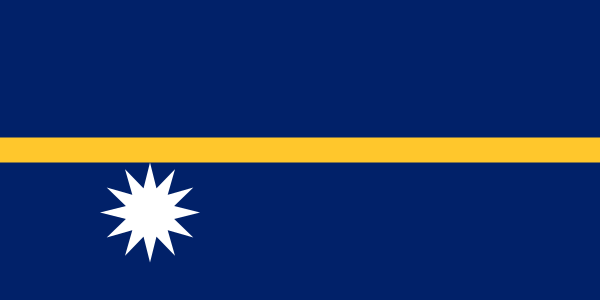
Nauru
Location Info
- Continent: Oceania
- Country: Nauru
- Coordinates: -0.5228 , 166.9315
Trust Info
Verified Geographic Research 2026
🌍 Continents


Overview
Nauru is an island nation located in the Micronesian subregion of the Central Pacific. It is the world's smallest independent republic, covering a land area of approximately 21 square kilometers. The island is a raised coral limestone plateau surrounded by a coral reef, with a central area known as 'Topside' that was extensively mined for phosphate throughout the 20th century.
The nation gained independence in 1968 and operates as a parliamentary republic. With a population of roughly 12,000 residents, Nauru faces unique economic and environmental challenges. Today, the country focuses on land rehabilitation, sustainable fisheries, and regional partnerships to ensure long-term stability in the face of climate change.
Truth & Facts
| Land Area | 21 sq km |
| Coastline | 30 km |
| Total Population | 12,850 (est.) |
| Median Age | 22.5 years |
| System | Parliamentary Republic |
| Districts | 14 |
| Independence | January 31, 1968 |
| Currency | Australian Dollar (AUD) |
| Water Supply | Desalination |
| Literacy Rate | 99% |
| Public Health Care | Universal (Citizens) |
| Descent System | Matrilineal |
| Annual Tourists | < 1,000 |
| Mined Land | 80% of surface |
| Main Airport | Nauru International (INU) |
| Mobile Network | 4G/LTE |
| National Police | Nauru Police Force |
| Parliament Seats | 19 |
| UN Membership | Joined Sept 1999 |
| Renewable Target | 50% by 2026 |
| Life Expectancy | 64 years |
| Primary Risk | Sea Level Rise |
| Language | Nauruan and English |
📑 Table of Contents
Overview
Nauru is an island nation located in the central Pacific Ocean, approximately 42 km south of the Equator. It is recognized as the smallest island nation and the smallest independent republic in the world. The country consists of a single raised coral island with a land area of 21 square kilometers.
- Smallest republic globally
- Member of the Commonwealth
- Micronesian subregion
History
The history of Nauru is marked by early Micronesian settlement, colonial annexations, and significant mineral wealth. After the discovery of phosphate in 1900, the island became a major site for extractive industry, significantly impacting its social and physical landscape.
- 1888: German annexation
- 1942: Japanese occupation
- 1968: Independence from Australia
Geography
Nauru's geography is defined by its raised coral structure and central plateau. A sandy beach encircles the island, leading to a narrow coastal plain where most inhabitants live. The interior, once fertile, now features limestone pinnacles resulting from mining.
| Feature | Detail |
|---|---|
| Terrain | Raised coral plateau |
| Highest Point | Command Ridge (71m) |
Climate and Weather
The climate is tropical with high temperatures and humidity throughout the year. Rainfall is seasonal and can be highly variable due to the influence of El Niño and La Niña cycles.
- Temp range: 24°C to 34°C
- Rainy season: Nov to Feb
Population and Demographics
Nauru has a population of approximately 12,000 people. The majority are ethnically Nauruan, with minority groups including other Pacific Islanders, Chinese, and Europeans.
- Nauruan: 94%
- Urbanization: 100%
Culture and Lifestyle
Modern Nauruan culture is a blend of traditional Micronesian customs and Western influences. Family and community are central to Nauruan life, with strong emphasis on church and sports.
- Matrilineal clans
- Strong religious ties
Festivals and Events
National holidays often celebrate the resilience of the nation. Angam Day is a unique cultural event marking the recovery of the Nauruan population after historical tragedies.
- Angam Day: Oct 26
- Independence Day: Jan 31
Food and Cuisine
Traditional Nauruan food relies on coconut, fish, and root vegetables. However, imported foods have become staple parts of the modern diet due to limited agricultural land.
- Key staples: Fish and rice
- Local fruits: Coconut and Pandanus
Economy and Industries
The economy transitioned from extreme wealth based on phosphate exports to a more diversified service-based model. Fisheries licensing and foreign aid are now critical components of the national budget.
| Sector | Main Activity |
|---|---|
| Mining | Phosphate processing |
| Fisheries | Ocean licensing |
Cost of Living
Cost of living is relatively high as most goods are imported from Australia. Transportation costs significantly affect the price of groceries and fuel.
- Currency: AUD
- Import reliance: High
Employment and Business
The government remains the largest employer on the island. Private sector growth is primarily seen in the retail and service sectors serving the local community.
- Largest employer: Government
- Growing sector: Local retail
Real Estate and Housing
Land ownership is private and hereditary. Most Nauruans live in single-story homes along the coast. Land is rarely sold to non-Nauruans, with leasehold being the standard for foreigners.
- Ownership: Clan-based
- Housing: Mostly coastal
Transportation and Connectivity
Nauru has a 19-kilometer ring road that circles the island. Public transport is limited, and most residents utilize motorcycles or private cars for travel between districts.
- Main mode: Private vehicles
- International: Nauru Airlines
Infrastructure and Utilities
Utilities are managed by state-owned enterprises. Electricity is largely generated by diesel, though solar energy adoption is increasing rapidly on the central plateau.
- Water: Desalinated
- Power: Solar/Diesel mix
Education
Education is free and compulsory for children. Nauru has a strong partnership with regional universities, particularly the University of the South Pacific.
- USP Nauru Campus
- Compulsory to age 16
Healthcare
Medical services are provided via a government-run hospital system. Complex cases often require medical evacuation to specialized facilities in Australia.
- Main facility: Republic of Nauru Hospital
- Universal care: Yes
Tourist Attractions
Attractions are centered on Nauru's natural reef and its historical significance during World War II. Anibare Bay is a popular location for its scenic views and white sand.
- Command Ridge
- Anibare Bay
Things to Do
Outdoor activities like deep-sea fishing and exploring the jagged limestone landscapes are common. Community events, especially Australian rules football, are major weekend highlights.
- Fishing excursions
- AFL matches
Best Places to Visit
The Yaren district houses the government and airport, while Buada Lagoon offers a rare glimpse of lush inland vegetation. The 'topside' plateau is unique for its lunar-like landscape.
- Buada Lagoon
- Yaren administrative area
Travel Guide
Visitors to Nauru need a visa and must arrange flights through Brisbane or other Pacific hubs. It is a cash-heavy society where the Australian Dollar is the sole currency.
- Visa: Mandatory
- Currency: AUD only
Nearby Places
Due to its extreme isolation, nearby landmasses are several hundred kilometers away. Banaba Island in Kiribati is the closest neighbor.
- Banaba (Kiribati)
- Tarawa (Kiribati)
Environment and Nature
The ecosystem has been significantly altered by mining, but some endemic plants and migratory birds remain. Marine biodiversity around the reef is a primary conservation focus.
- Native birds: Frigate birds
- Vegetation: Pandanus/Coconut
Government and Administration
Nauru is a democratic republic with no formal political parties. Candidates run as independents, and the Parliament elects the President from among its members.
- Unicameral legislature
- Independent candidates
Safety and Public Services
Nauru is generally very safe with a small, community-based police force. Emergency services are limited but functional for basic island needs.
- Crime rate: Very low
- Police: NPF
Best Time to Visit
The dry season from May to October is generally considered the best time to visit Nauru to avoid heavy monsoon rains and high humidity.
- Optimal: May to October
- Peak rain: Jan to Feb
Local Business Directory
Local businesses include small retail stores, the national telecom provider, and hospitality services located primarily in the western districts.
- Retail: Capelle & Partner
- Telecom: Digicel
General Information FAQs
Where is Nauru located?
Nauru is in the Central Pacific, south of the Equator and part of Micronesia.
What is Nauru known for?
It is known for phosphate mining and being the world's smallest republic.
Why is Nauru famous?
It was once the wealthiest nation per capita due to phosphate exports.
What country is Nauru part of?
Nauru is a sovereign independent nation and not part of any other country.
What is the population of Nauru?
The population is approximately 12,000 residents as of 2026.
What languages are spoken in Nauru?
Nauruan is the national language; English is the official language for business.
What time zone is Nauru in?
Nauru operates on UTC+12.
What are the key facts about Nauru?
It is 21 sq km, uses the AUD, and has 14 administrative districts.
What makes Nauru unique?
It has no official capital and no military force.
How large is Nauru in area?
The total land area is 21 square kilometers.
History FAQs
What is the history of Nauru?
It transitioned from clan rule to colonial administration to an independent republic.
When was Nauru established?
Nauru gained its independence on January 31, 1968.
What major historical events happened in Nauru?
Key events include the 1900 phosphate discovery and 1942 Japanese occupation.
Who were important historical figures from Nauru?
Hammer DeRoburt was the nation's founding father and first president.
How has Nauru developed over time?
It moved from a phosphate-based economy to a service and aid-reliant model.
Geography & Environment FAQs
What is the geography of Nauru?
A raised coral island with a central plateau and coastal reef.
What natural features surround Nauru?
It is surrounded by a coral reef and the deep Pacific Ocean.
Are there mountains, rivers, or lakes near Nauru?
There are no rivers; Buada Lagoon is the only inland lake.
What is the elevation of Nauru?
The highest point is Command Ridge at 71 meters.
What ecosystems exist around Nauru?
Marine coral reefs and tropical limestone scrubland.
Climate & Weather FAQs
What is the climate like in Nauru?
Tropical, hot, and humid year-round.
What is the average temperature in Nauru?
Average daily temperatures are around 28-32°C.
What is the weather like throughout the year?
Stable temperatures with a monsoon season from Nov to Feb.
Does Nauru experience extreme weather?
Yes, it is prone to periodic severe droughts.
What is the best time of year to visit?
The dry season, from May to October.
Population & Society FAQs
What is the population density of Nauru?
Approximately 580 people per square kilometer.
What ethnic groups live in Nauru?
Predominantly Nauruan, with Chinese and other Pacific Islanders.
What religions are practiced in Nauru?
Mostly Christian (Congregationalist and Catholic).
What is daily life like in Nauru?
Community-centric, focused on church, family, and sports.
How diverse is the population of Nauru?
Primarily homogenous Nauruan with small expatriate communities.
Culture & Traditions FAQs
What cultural traditions are important?
The clan system and traditional fishing methods.
What festivals are celebrated?
Independence Day (Jan 31) and Angam Day (Oct 26).
What cultural landmarks exist?
The Naoero Museum and various clan meeting places.
What traditional clothing is common?
Modest Western clothing is standard today.
What arts and crafts are associated with Nauru?
Pandanus weaving and shell jewelry.
Food & Cuisine FAQs
What foods is Nauru known for?
Coconut-crusted fish and imported rice dishes.
What traditional dishes originate from Nauru?
Fish soup and smoked noddy birds.
What are the best restaurants?
Small cafes in the Meneng and Aiwo districts.
What local ingredients are commonly used?
Coconut, fresh tuna, and pandanus fruit.
What food markets are popular?
The local marketplace in Aiwo for fresh fish.
Economy & Business FAQs
What are the main industries in Nauru?
Phosphate mining, fisheries, and financial services.
What economic activities drive the economy?
Foreign aid, fisheries licensing, and government spending.
What businesses operate in Nauru?
Digicel, Capelle & Partner, and Eigigu Holdings.
Is Nauru an important economic center?
It is a regional center for the central Pacific region.
What are the major exports?
Phosphate and skipjack tuna.
Employment & Jobs FAQs
What job opportunities are available?
Principally in the government and public utilities.
Who are the major employers?
The Republic of Nauru government and RONPHOS.
What skills are in demand?
Healthcare, education, and technical engineering.
Is Nauru a good place to work?
It offers a unique Pacific experience for expatriates.
What is the unemployment rate?
Estimates vary, but public sector employment is dominant.
Cost of Living FAQs
Is Nauru expensive to live in?
Yes, due to the high cost of imported goods.
What is the average cost of living?
It is high relative to neighboring Pacific islands.
How much does housing cost?
Housing is mostly government-provided or clan-owned.
What are average food costs?
High, as 90% of food is imported from Australia.
Is Nauru affordable compared to others?
It is more expensive than Fiji but similar to remote Australia.
Housing & Real Estate FAQs
What types of housing are available?
Single-family detached houses and government apartments.
What is the average home price?
There is no open market for land sales.
Is it better to rent or buy?
Foreigners can only rent or lease land.
Which neighborhoods are popular?
Yaren and Denigomodu are most active.
How has the market changed?
New construction is focused on climate resilience.
Transportation FAQs
How do you get to Nauru?
Flights via Nauru Airlines from Brisbane or Fiji.
What is the nearest airport?
Nauru International Airport (INU).
Does Nauru have railway connections?
No functional railways exist today.
How reliable is public transport?
There is no formal public bus system.
What major roads connect to Nauru?
The Island Ring Road is the primary thoroughfare.
Education FAQs
What schools are located in Nauru?
Nauru Primary, Nauru Secondary, and Kayser College.
Are there universities in Nauru?
There is a regional campus of the University of the South Pacific.
What is the literacy rate?
It is nearly 99%.
What educational opportunities exist?
Vocational training and regional university degrees.
Is Nauru good for students?
Yes, for foundational and regional studies.
Healthcare FAQs
What hospitals are available?
The RON Hospital and Republic of Nauru Hospital.
Are there emergency services?
Yes, 24-hour emergency care is available at the main hospital.
What healthcare facilities exist?
Public hospitals and district health clinics.
Is healthcare affordable?
Yes, it is subsidized by the government for locals.
Are specialized services available?
Limited; critical care often requires evacuation.
Tourism & Travel FAQs
What are the top attractions?
Anibare Bay and the phosphate pinnacles.
What are the best things to do?
Explore WWII bunkers and go deep-sea fishing.
Is Nauru worth visiting?
For travelers seeking rare, isolated destinations, yes.
What landmarks should I see?
The Parliament building and Command Ridge.
How many days should I stay?
3 to 5 days is usually sufficient.
Nearby Places FAQs
What places are near Nauru?
Kiribati (Banaba) is the closest inhabited land.
What cities are close?
Brisbane (Australia) is the main gateway city.
What natural attractions are near?
Pelagic fishing grounds in the open Pacific.
What day trips can be taken?
No external day trips are possible due to distance.
What famous destinations are in reach?
Fiji and Australia via Nauru Airlines.
Safety FAQs
Is Nauru safe to live in?
Very safe with minimal violent crime.
Is Nauru safe for tourists?
Yes, though normal safety awareness applies.
What is the crime rate?
It is exceptionally low.
What emergency services operate?
Police, Fire, and Ambulance are available.
What safety tips should I follow?
Stay hydrated and respect private clan lands.
Lifestyle & Living FAQs
Is Nauru a good place to live?
It is quiet and peaceful for those who like isolation.
What recreational activities exist?
AFL football, weightlifting, and swimming.
Is Nauru family-friendly?
Yes, it is a very safe environment for children.
What outdoor activities are popular?
Fishing and walking the island ring road.
What makes life enjoyable?
The strong sense of community and Pacific culture.
Practical Information FAQs
What travel tips should I know?
Bring cash, as credit card use is limited.
What local customs should I respect?
Respect traditional clan borders and Sunday church days.
How accessible is Nauru?
Accessible only by a few flights per week from Australia or Fiji.
What services exist for tourists?
Basic hotel lodging and car rentals.
What info should I know before visiting?
Confirm your visa status and flight schedule carefully.
Additional Facts FAQs
Does Nauru have any rivers?
No, there are no rivers or streams on the island.
What is the highest point?
Command Ridge at 71 meters elevation.
Is there a train in Nauru?
There is a defunct narrow-gauge railway once used for mining.
How do Nauruans get water?
Primarily through desalination and rainfall collection.
What is the national sport?
Australian Rules Football (AFL).