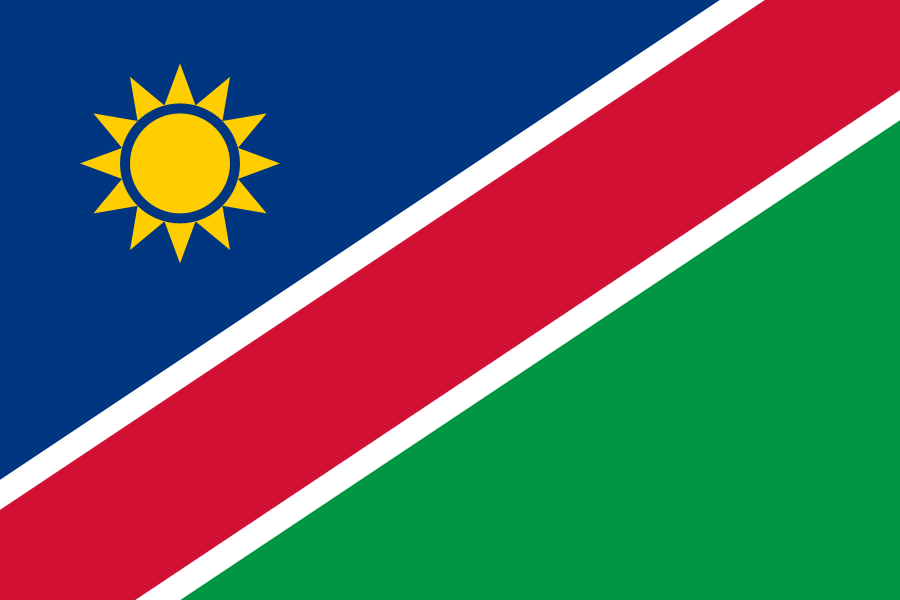
Namibia
Location Info
- Continent: Africa
- Country: Namibia
- Coordinates: -22.5609 , 17.0658
Trust Info
Verified Geographic and Statistical Information
🌍 Continents
Overview
Namibia is a sovereign state located in Southern Africa, bordered by the Atlantic Ocean to the west and neighboring South Africa, Botswana, Angola, and Zambia. It is characterized by its vast, arid landscapes, including the Namib Desert—considered the oldest desert in the world—and the Kalahari Desert in the east. Historically a German colony and later administered by South Africa, Namibia gained its independence in 1990 and has since established itself as a stable multi-party democracy with a capital at Windhoek.
The nation's economy is heavily reliant on its rich natural resources, particularly mining for diamonds, uranium, and gold. Despite its large land area, Namibia is one of the most sparsely populated countries globally due to its hyper-arid environment. Key geographic features such as the Skeleton Coast and the Fish River Canyon define its unique topography, while the country serves as a vital logistics hub for landlocked neighbors through the port of Walvis Bay.
Truth & Facts
| Total Area | 824,292 sq km |
| Coastline | 1,572 km |
| Population (2026) | 3.11 million |
| Population Density | 3.7 people per sq km |
| GDP (Current Prices) | US$ 16.1 Billion |
| Main Exports | Diamonds, Uranium, Gold, Fish |
| Road Network | 48,875 km |
| Major Port | Walvis Bay |
| Capital | Windhoek |
| Administrative Regions | 14 Regions |
| Independence Date | March 21, 1990 |
| Literacy Rate | 91.5% |
| Life Expectancy | 66.5 years |
| Official Language | English |
| Main International Airport | Hosea Kutako International Airport |
| Protected Areas | Approx. 40% of land |
| Mobile Penetration | >100% |
| Judiciary | Independent |
| Memberships | UN, AU, SADC, Commonwealth |
| Energy Source | Hydroelectric & Imports |
| Urban Population | 51% |
| Emergency Number | 10111 |
| Currency Name | Namibian Dollar (NAD) |
| Main Carrier | MTC Namibia |
| Highest Point | Königstein (2,573m) |
📑 Table of Contents
Overview
Namibia is a sovereign nation in Southern Africa, distinguished by its unique landscape dominated by the Namib and Kalahari deserts. It covers a land area of over 800,000 square kilometers and is bordered by the Atlantic Ocean to the west. Windhoek serves as the administrative and economic capital.
- Official Name: Republic of Namibia
- Capital: Windhoek
- Official Language: English
- Currency: Namibian Dollar (NAD)
- Land Area: 824,292 sq km
History
The history of Namibia is marked by colonial struggles and the eventual triumph of its independence movement. Originally inhabited by San, Damara, and Nama people, the territory became a German protectorate in 1884. Following World War I, it was administered by South Africa under a League of Nations mandate.
Resistance to South African rule led to a long liberation war spearheaded by SWAPO. The country finally achieved independence on March 21, 1990, after a UN-supervised transition.
| Era | Duration | Key Event |
|---|---|---|
| Pre-Colonial | Ancient–1884 | Inhabitation by indigenous groups |
| German Rule | 1884–1915 | Colonial administration established |
| South African Rule | 1915–1990 | Apartheid-era administration |
| Independence | 1990–Present | Sovereign democratic rule |
Geography
Namibia's geography is defined by four main regions: the Great Escarpment, the Central Plateau, the Namib Desert, and the Kalahari Basin. The Namib Desert stretches along the entire Atlantic coast, while the Central Plateau contains the country's highest peaks, such as the Brandberg.
- Highest Peak: Königstein (2,573m)
- Major River: Orange River (border)
- Coastal Feature: Skeleton Coast
- Northern Border: Kunene and Okavango Rivers
- Eastern Region: Kalahari Desert sands
Climate and Weather
The climate is predominantly arid to semi-arid, with high sunshine hours throughout the year. Coastal areas are moderated by the cold Benguela Current, which often creates dense fog. Inland temperatures can vary significantly between day and night, particularly in winter.
- Summer: October to March (hottest months)
- Winter: June to August (dry and cold nights)
- Average Rainfall: Ranges from <50mm (coast) to >600mm (Zambezi)
- Fog Duration: Up to 180 days per year on the coast
Population and Demographics
Namibia has a population of approximately 3.11 million people as of 2026. The population is diverse, consisting of various ethnic groups including the Ovambo, Kavango, Herero, Damara, and Nama. The Ovambo people make up the largest percentage, primarily residing in the northern regions.
- Total Population: 3.11 Million (2026 est.)
- Largest Group: Ovambo (approx. 50%)
- Urban Population: 51%
- Median Age: 22.5 years
Culture and Lifestyle
Namibian culture is a blend of traditional indigenous customs and European influences from the colonial era. Traditional music, dance, and oral storytelling remain vital, especially in rural areas. Modern lifestyle in cities like Windhoek and Swakopmund reflects a cosmopolitan mix of African and Western habits.
- Architecture: German colonial styles in Swakopmund
- Clothing: Traditional Herero dresses
- Social Habits: Braai (barbecue) culture
- Languages: Oshiwambo, Afrikaans, German, and Khoekhoegowab
Festivals and Events
National holidays and cultural festivals celebrate Namibia's identity and history. Independence Day is the most significant national event, marked by parades and speeches. Cultural events like the Windhoek Karneval and various ethnic harvest festivals highlight the country's diversity.
- Independence Day: March 21
- Cassinga Day: May 4
- Heroes' Day: August 26
- Windhoek Karneval (WIKA): Usually April
Food and Cuisine
The cuisine of Namibia is diverse, featuring game meat such as oryx and springbok, as well as seafood from the Atlantic. Traditional staples include 'pap' (maize porridge) and 'mahangu' (pearl millet). German influences are evident in the availability of sausages, schnitzels, and world-class beer brewed according to the Reinheitsgebot.
- Staple Food: Mahangu (millet)
- Local Specialty: Kapana (grilled street meat)
- Traditional Beverage: Oshikundu
- Seafood: Rock lobster and oysters
Economy and Industries
Namibia's economy is primarily based on mining, agriculture, and tourism. It is one of the world's largest producers of uranium and high-quality gem diamonds. The fishing industry is also a major contributor to GDP and employment, particularly in Walvis Bay.
- Mining: Diamonds, Uranium, Gold, Copper
- Fishing: Hake, Horse Mackerel, Monkfish
- Agriculture: Livestock farming (beef and mutton)
- Emerging Sector: Green Hydrogen energy
Cost of Living
The cost of living in Namibia is moderate compared to Western nations but varies by region. Windhoek is the most expensive city, particularly regarding housing. Most manufactured goods are imported from South Africa, influencing local prices through transport costs and the exchange rate of the Namibia Dollar.
| Item | Relative Cost |
|---|---|
| Basic Groceries | Moderate |
| Fuel | High (Imported) |
| Utilities | High |
| Dining Out | Low to Moderate |
Employment and Business
The labor market is characterized by a significant divide between the formal and informal sectors. Major employers include the government, mining companies, and the fishing sector. Unemployment remains a challenge, particularly among the youth, though new energy projects offer growth potential.
- Unemployment Rate: High (approx. 20-30% range)
- Key Employers: Namdeb, Rossing Uranium, Government
- Business Center: Khomas Region (Windhoek)
Real Estate and Housing
Housing in urban areas ranges from modern apartments to sprawling suburban estates. In rural areas, traditional homesteads are more common. There is a persistent shortage of affordable housing in cities, leading to high property prices in desirable neighborhoods of Windhoek.
- Primary Market: Windhoek, Swakopmund
- Housing Type: Detached houses are preferred
- Property Value: High in central Khomas and Erongo
Transportation and Connectivity
Namibia possesses an excellent road infrastructure, ranked among the best in Africa. The Trans-Kalahari and Trans-Caprivi highways are crucial for regional trade. Rail services are primarily focused on freight, managed by TransNamib, connecting major mining centers to ports.
- Road Network: Over 48,000 km
- Rail Length: Approx. 2,687 km
- Ports: Walvis Bay and Luderitz
- Aviation: Hosea Kutako International
Infrastructure and Utilities
Utilities are managed by state-owned enterprises such as NamPower for electricity and NamWater for water. Given the arid climate, water management is a critical priority, involving sophisticated desalination and recycling systems. Electricity is generated through hydro and thermal plants, supplemented by imports.
- Water Source: Boreholes, dams, and desalination
- Electricity: Dominated by NamPower
- Telecom: High fiber and 4G/5G coverage in cities
Education
Education is a government priority, receiving a significant portion of the national budget. The system consists of primary, secondary, and tertiary levels. Major institutions include the University of Namibia (UNAM) and the Namibia University of Science and Technology (NUST).
- Literacy Rate: Over 91%
- University: University of Namibia (UNAM)
- Vocational: Various VTCs nationwide
Healthcare
Healthcare services are provided through both public and private sectors. The public system is extensive, with hospitals in all major towns, though specialized care is often centralized in Windhoek. Private facilities offer high standards of medical care for those with insurance.
- Main Hospital: Katutura and Windhoek Central
- Medical Quality: High in private urban clinics
- Public Focus: Maternal health and infectious disease
Tourist Attractions
Namibia is world-famous for its natural beauty and wildlife. Etosha National Park offers premier game viewing, while Sossusvlei features towering red sand dunes. The Fish River Canyon is the second largest canyon in the world, attracting hikers from across the globe.
- Sossusvlei: Iconic sand dunes in the Namib
- Etosha: Massive salt pan and wildlife
- Fish River Canyon: Scenic geological wonder
- Skeleton Coast: Shipwrecks and desert landscapes
Things to Do
Outdoor and adventure activities dominate the Namibian experience. Visitors often engage in desert trekking, wildlife safaris, and photography. The coastal town of Swakopmund is a hub for skydiving, sandboarding, and dolphin cruises.
- Wildlife Viewing: Safaris in Etosha or Damaraland
- Hiking: Naukluft Mountains or Fish River
- Adventure: Sandboarding in the Namib
- Stargazing: Dark sky reserves in the south
Best Places to Visit
Beyond the primary parks, Namibia offers several unique destinations. Twyfelfontein is a UNESCO World Heritage site known for ancient rock engravings. The Caprivi Strip (Zambezi Region) provides a lush, riverine contrast to the country's southern deserts.
- Swakopmund: Coastal German-influenced town
- Luderitz: Historic port with diamond history
- Twyfelfontein: Ancient rock art site
- Zambezi Region: Lush wetlands and rivers
Travel Guide
Travelers to Namibia should be prepared for long distances and remote environments. Self-driving is popular due to the good road network, but 4x4 vehicles are recommended for many secondary routes. Respecting the environment and local customs is essential.
- Visa: Not required for many nations (check current rules)
- Driving: Left-hand side
- Connectivity: Local SIM cards widely available
- Safety: Generally safe, but exercise caution in cities
Nearby Places
Namibia's location makes it a gateway to other Southern African destinations. It shares borders with several countries that offer complementary travel experiences, such as the Okavango Delta in Botswana or Victoria Falls on the Zambia/Zimbabwe border.
- Botswana: Kalahari and Delta regions
- South Africa: Cape Town and Northern Cape
- Zambia/Zimbabwe: Victoria Falls accessible from Caprivi
Environment and Nature
Namibia was the first African country to incorporate environmental protection into its constitution. Its community-based conservancy model is a global standard for balancing wildlife protection with human development. The country hosts the world's largest free-roaming cheetah population.
- Endemic Species: Welwitschia mirabilis
- Conservation: 40% of land under protection
- Wildlife: Desert elephants and black rhinos
Government and Administration
Namibia is divided into 14 administrative regions, each with a governor and regional council. The central government is based in Windhoek, consisting of an executive president and a bicameral parliament. The legal system is based on Roman-Dutch law and the 1990 Constitution.
- Executive: President (Head of State)
- Legislature: National Assembly and National Council
- Regions: Erongo, Khomas, Kunene, etc.
Safety and Public Services
Safety is managed by the Namibian Police (NAMPOL) and municipal police forces. While the country is generally stable, petty crime exists in urban centers. Public services such as fire departments and ambulance services are available in all major municipalities.
- Emergency Police: 10111
- Public Safety: High compared to regional neighbors
- Services: Reliable in urban areas
Best Time to Visit
The dry winter season (May to October) is widely considered the best time for wildlife viewing as animals congregate at waterholes. For those interested in birdwatching and lush landscapes, the wet summer months (December to March) offer a different experience.
- Peak Season: July to October
- Low Season: January to April
- Climate Factor: Coastal fog is common in summer
Local Business Directory
The business landscape includes major multinationals in the mining sector and a thriving SME community in Windhoek. Retail is dominated by South African chains, while local businesses excel in tourism, crafts, and professional services.
- Mining: Namdeb, Rossing, Swakop Uranium
- Retail: Shoprite, Pick n Pay, Woermann Brock
- Services: Standard Bank Namibia, First National Bank
General Information FAQs
Where is Namibia located?
Namibia is located in Southwestern Africa. It shares borders with Angola and Zambia to the north, Botswana to the east, and South Africa to the south and east. Its western coast is entirely along the Atlantic Ocean.
What is Namibia known for?
Namibia is widely known for the Namib Desert, the world's highest sand dunes at Sossusvlei, the Skeleton Coast, and its abundance of uranium and diamonds. It is also famous for its vast, untouched wilderness and diverse wildlife.
Why is Namibia famous?
The country is famous for its unique desert-adapted wildlife, such as elephants and lions, as well as the Fish River Canyon and Etosha National Park. It is also recognized for its stable democratic government and conservation efforts.
What country or region is Namibia part of?
Namibia is an independent nation located in the Southern African region. It is a member of the Southern African Development Community (SADC) and the African Union.
What is the population of Namibia?
As of 2026, the estimated population of Namibia is approximately 3.11 million people. It remains one of the most sparsely populated nations in the world.
What languages are spoken in Namibia?
English is the official language. However, many people speak Oshiwambo, Afrikaans, German, and indigenous languages such as Nama/Damara, Herero, and various San dialects.
What time zone is Namibia in?
Namibia is in the Central Africa Time (CAT) zone, which is UTC+2. The country no longer practices daylight savings time changes.
What are the key facts about Namibia?
Key facts include its capital Windhoek, its independence in 1990, its currency (the Namibian Dollar), and its reliance on mining and tourism as primary economic drivers.
What makes Namibia unique?
Its uniqueness lies in its extreme aridity combined with a high degree of biodiversity. It contains the oldest desert in the world and has the largest free-roaming population of cheetahs on Earth.
How large is Namibia in area?
Namibia covers a total area of approximately 824,292 square kilometers, making it the 34th largest country in the world by land area.
History FAQs
What is the history of Namibia?
Namibia's history includes centuries of indigenous settlement, followed by German colonization in the late 19th century and South African administration after WWI. A long independence struggle led to sovereignty in 1990.
When was Namibia established?
As a sovereign modern state, Namibia was established on March 21, 1990, following the implementation of UN Resolution 435 which ended South African rule.
What major historical events happened in Namibia?
Major events include the Herero and Namaqua genocide (1904-1908), the start of the Border War in 1966, and the first democratic elections held in 1989.
Who were important historical figures from Namibia?
Key figures include Sam Nujoma, the founding president; Hosea Kutako, a nationalist leader; and Hendrik Witbooi, a famous chief who resisted colonial rule.
How has Namibia developed over time?
Since independence, Namibia has focused on infrastructure development, education, and mineral extraction. It has transitioned from a colony to a middle-income country with a stable democratic system.
Geography & Environment FAQs
What is the geography of Namibia?
The geography consists of five main areas: the Central Plateau, the Namib Desert, the Great Escarpment, the Bushveld, and the Kalahari Desert.
What natural features surround Namibia?
It is surrounded by the Atlantic Ocean to the west and the Orange River to the south. The north is marked by the Kunene, Okavango, and Zambezi rivers.
Are there mountains, rivers, or lakes near Namibia?
Yes, the Brandberg mountains are prominent. Permanent rivers include the Orange, Kunene, and Okavango. Most internal rivers are ephemeral, flowing only during heavy rains.
What is the elevation of Namibia?
The Central Plateau has an average elevation between 1,000 and 2,000 meters. The highest peak, Königstein, reaches 2,573 meters.
What ecosystems exist around Namibia?
Ecosystems range from hyper-arid desert and coastal mist belts to semi-arid savannas and subtropical wetlands in the Zambezi region.
Climate & Weather FAQs
What is the climate like in Namibia?
The climate is very dry. It is mostly desert-like with low rainfall and high evaporation rates, resulting in plenty of sunshine year-round.
What is the average temperature in Namibia?
Inland summer temperatures can exceed 30°C, while winter nights can drop below 0°C. The coast is cooler, averaging around 15°C to 25°C.
What is the weather like throughout the year in Namibia?
Summer (Oct-Mar) is hot and is the rainy season. Winter (May-Aug) is dry with sunny days and very cold nights.
Does Namibia experience extreme weather?
The most common extremes are prolonged droughts and occasional flash flooding during the rainy season. The coast experience significant sandstorms.
What is the best time of year to visit Namibia?
The winter months from May to October are best for wildlife viewing. September and October are especially popular as animals gather at waterholes.
Population & Society FAQs
What is the population density of Namibia?
The density is approximately 3.7 people per square kilometer, making it one of the least densely populated countries on Earth.
What ethnic groups live in Namibia?
Ethnic groups include the Ovambo, Kavango, Herero, Damara, Nama, Caprivian, San, Basters, and White Namibians (mostly of German and Afrikaner descent).
What religions are practiced in Namibia?
Christianity is practiced by over 90% of the population. Indigenous beliefs are also present, often alongside Christian practices.
What is daily life like in Namibia?
Urban life in Windhoek is modern and fast-paced, while rural life often centers on subsistence farming, livestock, and traditional community structures.
How diverse is the population of Namibia?
Namibia is highly diverse with 11 major ethnic groups and numerous languages, coexisting in a stable multi-cultural society.
Culture & Traditions FAQs
What cultural traditions are important in Namibia?
Important traditions include ancestral worship in some groups, traditional weddings, and the passing down of oral histories and folklore.
What festivals are celebrated in Namibia?
Key festivals include the Windhoek Karneval (WIKA), the Maherero Day in Okahandja, and various regional agricultural shows.
What cultural landmarks exist in Namibia?
Landmarks include the Christuskirche in Windhoek, the Alte Feste (Old Fortress), and the ancient rock art sites at Twyfelfontein.
What traditional clothing or customs are common in Namibia?
The Victorian-style dresses of the Herero women are iconic. Customs vary, such as the unique clicking sounds in Khoisan languages.
What arts and crafts are associated with Namibia?
Associated crafts include wood carvings from the north, Karakul wool carpets, and intricate jewelry made from ostrich eggshells.
Food & Cuisine FAQs
What foods is Namibia known for?
It is known for game meat, biltong (dried meat), and fresh Atlantic seafood like rock lobster and oysters.
What traditional dishes originate from Namibia?
Dishes include Oshifima (millet porridge) and Potjiekos (a slow-cooked meat stew). Kapana is a popular urban street food.
What are the best restaurants in Namibia?
Joe's Beerhouse in Windhoek is internationally famous. Swakopmund also offers excellent seafood restaurants along the jetty.
What local ingredients are commonly used in Namibia cuisine?
Ingredients include pearl millet (mahangu), melons, squash, and various types of game and livestock meat.
What food markets or street foods are popular in Namibia?
Open-air markets in Katutura (Windhoek) are famous for Kapana, where vendors grill beef over open fires for customers.
Economy & Business FAQs
What are the main industries in Namibia?
The main industries are mining (diamonds and uranium), fishing, tourism, and livestock agriculture.
What economic activities drive the economy of Namibia?
Mineral extraction is the primary driver, providing the most export revenue. Tourism is a growing contributor to service sector growth.
What businesses operate in Namibia?
Large corporations like Namdeb and Rio Tinto operate in mining. Many South African retail and banking chains also have a significant presence.
Is Namibia an important economic center?
It is an important regional center for logistics and minerals in Southern Africa, especially through its deep-water port at Walvis Bay.
What are the major exports or products from Namibia?
Major exports include rough diamonds, uranium ore, gold, refined copper, and processed fish products.
Employment & Jobs FAQs
What job opportunities are available in Namibia?
Opportunities exist in mining engineering, environmental management, tourism hospitality, and the burgeoning green energy sector.
What are the major employers in Namibia?
The Government of Namibia is the largest employer, followed by large-scale mining operations and the agricultural sector.
What skills are in demand in Namibia?
Skills in information technology, specialized medical fields, renewable energy engineering, and technical trades are highly sought after.
Is Namibia a good place to work?
For skilled professionals, it offers a high quality of life and a stable environment, though the cost of some goods can be high.
What is the unemployment rate in Namibia?
Official estimates often place the unemployment rate between 20% and 30%, with higher rates among the youth and in rural areas.
Cost of Living FAQs
Is Namibia expensive to live in?
Compared to neighboring South Africa, it can be slightly more expensive as many goods are imported. However, it is generally cheaper than Europe or North America.
What is the average cost of living in Namibia?
A single person may need between 10,000 and 15,000 NAD per month for a moderate lifestyle, excluding high-end housing costs.
How much does housing cost in Namibia?
In Windhoek, rent for a standard house can range from 8,000 to 20,000 NAD depending on the neighborhood and amenities.
What are average food and utility costs in Namibia?
Utilities like electricity and water are relatively expensive due to scarcity and import costs. Food costs are comparable to South Africa.
Is Namibia affordable compared to nearby cities?
It is generally more expensive than Gaborone (Botswana) but often comparable to larger South African cities like Cape Town or Johannesburg.
Housing & Real Estate FAQs
What types of housing are available in Namibia?
Urban areas offer apartments, townhouses, and detached houses. Rural areas consist of family homesteads and farmhouses.
What is the average home price in Namibia?
A mid-range three-bedroom home in a decent Windhoek suburb can cost between 1.5 million and 3 million NAD.
Is it better to rent or buy property in Namibia?
Buying is often seen as a good long-term investment in stable urban markets, but renting is more flexible for those on short-term contracts.
Which neighborhoods are popular in Namibia?
In Windhoek, Klein Windhoek and Ludwigsdorf are popular. In Swakopmund, the areas near the beachfront are highly desirable.
How has the property market changed in Namibia?
Property prices saw rapid growth in the early 2010s but have stabilized in recent years due to broader economic shifts.
Transportation FAQs
How do you get to Namibia?
Most international visitors arrive via air at Hosea Kutako International Airport or by road from South Africa or Botswana.
What is the nearest airport to Namibia?
Hosea Kutako International Airport (WDH) is the main gateway, located about 45 km from Windhoek.
Does Namibia have railway connections?
There is a rail connection with South Africa, but it is primarily used for freight. Passenger rail services are limited.
How reliable is public transportation in Namibia?
Public transport is limited to shared taxis and private bus services. Most residents and visitors rely on private vehicles.
What major highways or roads connect to Namibia?
The B1 highway runs north-south through the center, while the B6 and B2 form part of the Trans-Kalahari corridor.
Education FAQs
What schools are located in Namibia?
Namibia has a mix of government schools and private international schools like St. Paul's and the Windhoek International School.
Are there universities in Namibia?
Yes, the University of Namibia (UNAM) and the Namibia University of Science and Technology (NUST) are the primary institutions.
What is the literacy rate in Namibia?
The literacy rate is high, estimated at approximately 91.5% for the adult population.
What educational opportunities exist in Namibia?
Opportunities include academic degrees in various fields and a growing network of vocational training centers for technical skills.
Is Namibia a good place for students?
It offers a peaceful environment for study, though resources can be concentrated in the capital city.
Healthcare FAQs
What hospitals are available in Namibia?
Major hospitals include the Windhoek Central Hospital and private clinics such as Mediclinic and Lady Pohamba Private Hospital.
Are there emergency medical services in Namibia?
Yes, services like E-Med Rescue and the Red Cross operate in the country, providing ground and air ambulance support.
What healthcare facilities exist in Namibia?
Facilities include state hospitals, primary health clinics in rural areas, and modern private specialized centers in the cities.
Is healthcare affordable in Namibia?
State healthcare is very affordable for citizens, while private healthcare requires medical insurance due to higher costs.
Are specialized medical services available in Namibia?
Specialized services like oncology and cardiology are available in Windhoek, though some complex cases may be referred to South Africa.
Tourism & Travel FAQs
What are the top tourist attractions in Namibia?
The top attractions are Sossusvlei, Etosha National Park, the Fish River Canyon, and the sand dunes of the Namib Desert.
What are the best things to do in Namibia?
Popular activities include wildlife safaris, hot air ballooning over the desert, and visiting the ghost town of Kolmanskop.
Is Namibia worth visiting?
Yes, it is considered one of the most visually stunning and unique travel destinations in Africa due to its landscapes and tranquility.
What landmarks should visitors see in Namibia?
Visitors should see the Spitzkoppe mountains, the Twyfelfontein rock art, and the Cape Cross seal colony.
How many days should tourists spend in Namibia?
A minimum of 10 to 14 days is recommended to cover the vast distances between major attractions.
Nearby Places FAQs
What places are near Namibia worth visiting?
Victoria Falls (Zambia/Zimbabwe) and the Okavango Delta (Botswana) are both easily accessible from northern Namibia.
What cities or towns are close to Namibia?
Upington in South Africa is the closest major city south of the border. Kasane in Botswana is near the northeastern Caprivi Strip.
What natural attractions are near Namibia?
The Kgalagadi Transfrontier Park shared with South Africa and Botswana is a major nearby natural attraction.
What day trips can be taken from Namibia?
From Windhoek, day trips to Daan Viljoen Game Reserve or nearby guest farms are common. From Swakopmund, trips to Cape Cross are popular.
What famous destinations are within reach of Namibia?
Cape Town is a two-hour flight from Windhoek, and Chobe National Park is reachable by road from the Zambezi region.
Safety FAQs
Is Namibia safe to live in?
Yes, Namibia is one of the safer and more stable countries in Africa, with a relatively low level of violent crime.
Is Namibia safe for tourists?
It is generally very safe for tourists. Most issues are related to petty theft in cities or driving accidents on gravel roads.
What is the crime rate in Namibia?
The crime rate is moderate. Petty crime like pickpocketing is the most common concern for visitors in urban areas.
What emergency services operate in Namibia?
Emergency services include NAMPOL (police), municipal fire brigades, and several private medical emergency companies.
What safety tips should visitors follow in Namibia?
Visitors should avoid driving at night due to wildlife on roads and should not leave valuables visible in parked cars.
Lifestyle & Living FAQs
Is Namibia a good place to live?
It is excellent for those who appreciate space, nature, and a quiet, stable lifestyle. The infrastructure is good and the climate is pleasant.
What recreational activities are available in Namibia?
Activities include mountain biking, hiking, photography, and joining local sports clubs like rugby or football.
Is Namibia family-friendly?
Yes, it is considered very family-friendly with safe neighborhoods and many outdoor activities for children.
What outdoor activities are popular in Namibia?
Popular activities include birdwatching, camping in the desert, and coastal fishing.
What makes life enjoyable in Namibia?
The wide-open spaces, lack of pollution, friendly people, and spectacular sunsets contribute to a high quality of life.
Practical Information FAQs
What travel tips should visitors know about Namibia?
Always carry extra water and fuel when traveling remotely. Ensure you have a spare tire and know how to change it.
What local customs should visitors respect in Namibia?
Greeting people politely is important. Ask for permission before taking photos of individuals, especially in traditional communities.
How accessible is Namibia for international visitors?
It is very accessible with regular flights from Europe and South Africa and well-maintained border posts for road travelers.
What services are available for tourists in Namibia?
Services include professional tour operators, car rental agencies, and information centers in all major towns.
What important information should travelers know before visiting Namibia?
Check the latest visa requirements, carry some local currency (NAD) although SAR is accepted, and ensure your health insurance covers medical evacuation.