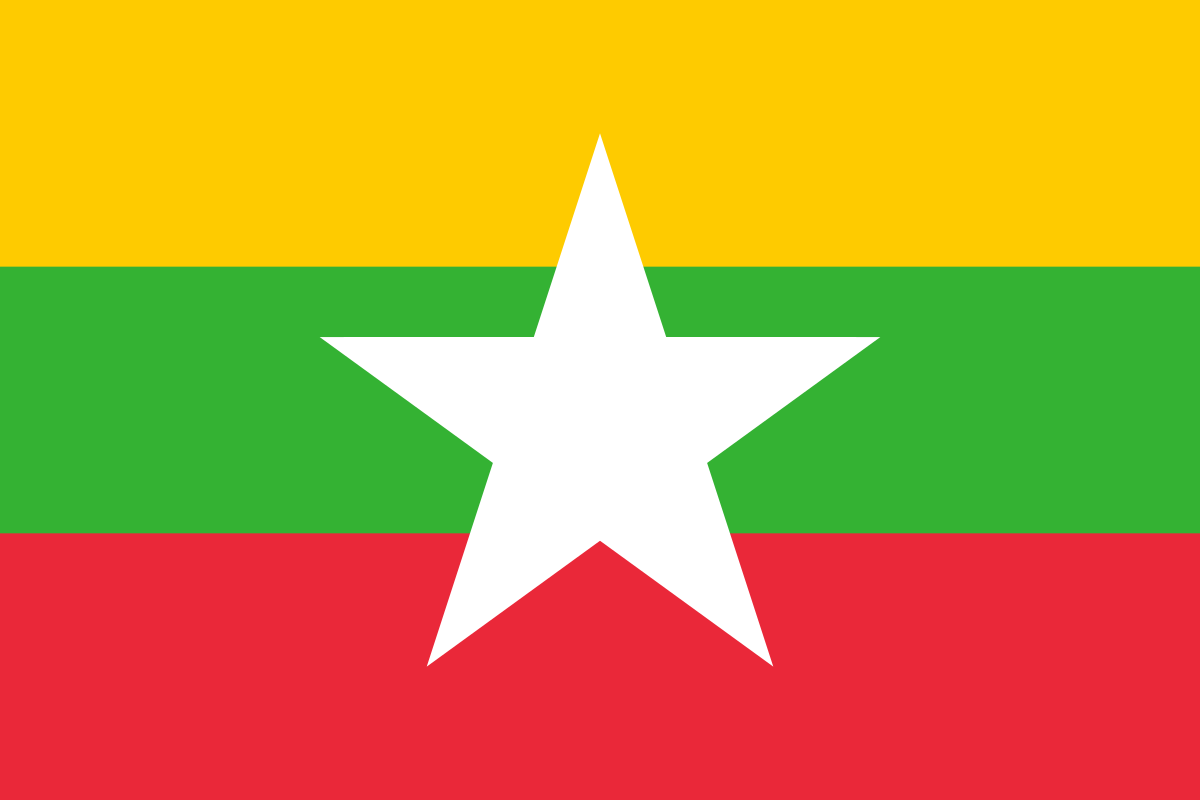
Myanmar
Location Info
- Continent: Asia
- Country: Myanmar
- Coordinates: 19.7633 , 96.0785
Trust Info
Verified Geographic Research 2026
🌍 Continents


Overview
Myanmar, historically known as Burma, is the largest country in mainland Southeast Asia, bordered by China, India, Thailand, Laos, and Bangladesh. Its landscape is defined by the central Irrawaddy River basin, northern Himalayan peaks, and a long coastline along the Bay of Bengal. The nation is a cultural crossroads with a history spanning ancient powerful empires and colonial rule.
As of 2026, Myanmar remains a significant regional exporter of natural resources, including natural gas, jade, and teak. With over 135 ethnic groups and a predominantly Buddhist population, the country maintains a unique social fabric. The administrative capital is Naypyidaw, while Yangon continues to serve as the primary commercial and economic gateway for the country.
Truth & Facts
| Total Area | 676,578 sq km |
| Population | 55.1 Million |
| Capital | Naypyidaw |
| Independence Day | January 4, 1948 |
| National Currency | Myanmar Kyat (MMK) |
| Deep Sea Port | Port of Yangon |
| Adult Literacy Rate | 89.1% |
| Central Hospital | Yangon General Hospital |
| Theravada Buddhism | 87.9% |
| UNESCO Sites | Bagan, Pyu Cities |
| Peak | Hkakabo Razi (5,881m) |
| Railway Network | 5,031 km |
| TLD | .mm |
| Police Contact | 199 |
| States & Regions | 7 States, 7 Regions |
| ASEAN Membership | Joined 1997 |
| Primary Power | Hydropower (60%) |
| National Animal | Green Peafowl / Tiger |
| Main Export | Natural Gas |
| Country Code | +95 |
📑 Table of Contents
Overview
Myanmar is the largest country in mainland Southeast Asia. It serves as a bridge between South Asia and East Asia.
- Official Name: Republic of the Union of Myanmar
- Capital: Naypyidaw
- Largest City: Yangon
- Population: ~55 Million
- Religion: Buddhism
History
Myanmar's history is defined by ancient kingdoms like Pagan and Konbaung. It was a British colony until 1948.
| Era | Duration |
|---|---|
| Pagan Kingdom | 1044–1287 |
| Colonial Rule | 1824–1948 |
| Modern Era | 1948–Present |
Geography
The country features three mountain ranges and the central Irrawaddy River valley. It borders five nations.
- North: Himalayas
- Central: Dry Zone
- South: Delta & Coast
- West: Rakhine Coast
Climate & Weather
Myanmar has a tropical monsoon climate. It has three distinct seasons: Cool, Hot, and Rainy.
Population & Demographics
The population is diverse, with 135 ethnic groups. Bamar is the largest group at 68%.
Culture & Lifestyle
Culture is rooted in Buddhism. Traditional practices like wearing the longyi and thanaka remain common.
Festivals & Events
Thingyan (Water Festival) is the most famous event. It marks the Burmese New Year in April.
Food & Cuisine
Burmese food is known for Mohinga and pickled tea leaf salad (Lahpet Thoke).
Economy & Industries
Natural gas, gemstones, and agriculture drive the economy. China and Thailand are key trade partners.
Cost of Living
Living costs are low compared to the West. However, urban inflation in Yangon has risen in 2026.
Employment & Business
Agriculture employs 70% of the force. Business hubs are located in Yangon and Mandalay.
Real Estate & Housing
Housing ranges from modern condos in Yangon to traditional stilted wooden houses in villages.
Transportation & Connectivity
Domestic travel is primarily via bus and air. The railway connects north and south.
Infrastructure & Utilities
Electricity access is expanding. Major cities rely on a mix of hydro and gas power.
Education
The education system is K-12. Literacy is high due to historical monastic education.
Healthcare
Public and private sectors exist. The best medical facilities are in Yangon and Mandalay.
Tourist Attractions
Major sites include the Shwedagon Pagoda, Bagan, and the Golden Rock.
Things to Do
Trekking in Shan State and boating on Inle Lake are popular activities for visitors.
Best Places to Visit
Bagan, Inle Lake, Mandalay, and Ngapali Beach are the primary destinations.
Travel Guide
Visas are required. E-visas are common. Cash is still the primary mode of payment.
Nearby Places
Myanmar borders Thailand, Laos, China, India, and Bangladesh.
Environment & Nature
The country has diverse wildlife, including elephants and rare river dolphins.
Government & Administration
Myanmar is divided into states, regions, and a union territory (Naypyidaw).
Safety & Public Services
Safety varies by region. Major cities are generally safe for residents and visitors.
Best Time to Visit
November to February is the best time due to cool and dry weather.
Local Business Directory
Major businesses focus on trade, telecommunications, and natural resources.
General Information FAQs
Where is Myanmar located?
Myanmar is located in Southeast Asia, bordering the Bay of Bengal and Andaman Sea.
What is Myanmar known for?
It is known for its Buddhist temples, jade, teak, and cultural heritage.
Why is Myanmar famous?
Famous for the Shwedagon Pagoda and the thousands of temples in Bagan.
What country or region is Myanmar part of?
Myanmar is a sovereign nation in the Southeast Asian region.
What is the population of Myanmar?
The 2026 estimate is approximately 55.1 million people.
What languages are spoken in Myanmar?
Burmese is the official language. Ethnic languages like Shan and Karen are also common.
What time zone is Myanmar in?
Myanmar is in the UTC+6:30 time zone.
What are the key facts about Myanmar?
Key facts: Capital is Naypyidaw, currency is Kyat, and it is a member of ASEAN.
What makes Myanmar unique?
Unique for its half-hour time zone and the widespread use of thanaka cosmetic.
How large is Myanmar in area?
The area is 676,578 square kilometers.
History FAQs
What is the history of Myanmar?
History includes the Pagan Empire, British colonization, and independence in 1948.
When was Myanmar established?
Modern independence was established on January 4, 1948.
What major historical events happened in Myanmar?
Events include the Anglo-Burmese Wars and the move of the capital in 2005.
Who were important historical figures from Myanmar?
Figures include General Aung San and UN Secretary-General U Thant.
How has Myanmar developed over time?
Developed from monarchies to a colonial state, then to an independent republic.
Is Burma the same as Myanmar?
Yes, the name was officially changed from Burma to Myanmar in 1989.
Who was the last king of Myanmar?
King Thibaw was the last monarch of the Konbaung dynasty.
What was the first empire of Myanmar?
The Pagan (Bagan) Empire was the first major unified state.
When did the British leave Myanmar?
The British left in 1948 after granting independence.
Was Myanmar involved in WWII?
Yes, it was a major theater of war between Allied and Japanese forces.
Geography & Environment FAQs
What is the geography of Myanmar?
Includes central plains, northern mountains, and southern coastal deltas.
What natural features surround Myanmar?
The Himalayas, Andaman Sea, and various mountain ranges on borders.
Are there mountains, rivers, or lakes near Myanmar?
Yes, the Irrawaddy River and Inle Lake are major features.
What is the elevation of Myanmar?
Ranges from 0m at the coast to 5,881m at Hkakabo Razi.
What ecosystems exist around Myanmar?
Tropical jungles, alpine forests, and coastal mangroves.
What is the longest river in Myanmar?
The Irrawaddy (Ayeyarwady) River is the longest.
Does Myanmar have a desert?
No, but the central Dry Zone receives very low rainfall.
Are there active volcanoes in Myanmar?
Mount Popa is an extinct volcano, though some geothermal activity exists.
What is the highest mountain in Myanmar?
Hkakabo Razi in Kachin State.
Which sea is located south of Myanmar?
The Andaman Sea and the Bay of Bengal.
Climate & Weather FAQs
What is the climate like in Myanmar?
Tropical monsoon with hot, cool, and rainy seasons.
What is the average temperature in Myanmar?
Averages between 21°C and 32°C depending on the season.
What is the weather like throughout the year?
Sunny and dry from Nov-May; rainy from Jun-Oct.
Does Myanmar experience extreme weather?
Cyclones can affect coastal areas during the monsoon transition.
What is the best time of year to visit Myanmar?
November to February offers the most pleasant weather.
When is the rainy season in Myanmar?
The rainy season typically starts in late May and ends in October.
How hot does it get in Myanmar?
In the Dry Zone, temperatures can reach 40-45°C in April.
Does it snow in Myanmar?
Snow occurs only in the high northern mountains of Kachin State.
Is it humid in Myanmar?
Yes, particularly during the rainy season and in coastal regions.
What is the weather in Yangon like?
Tropical and humid, with heavy rain in the monsoon months.
Population & Society FAQs
What is the population density of Myanmar?
Approx 85 people per square kilometer.
What ethnic groups live in Myanmar?
Bamar, Shan, Karen, Rakhine, Mon, Kachin, Chin, and Kayah.
What religions are practiced in Myanmar?
Primarily Buddhism, with Christian, Muslim, and Hindu minorities.
What is daily life like in Myanmar?
Community-focused, with a blend of traditional values and urban growth.
How diverse is the population of Myanmar?
Highly diverse, recognizing 135 distinct ethnic groups.
What is the main religion in Myanmar?
Theravada Buddhism is practiced by the vast majority.
What is the percentage of Bamar people?
Approximately 68% of the total population.
Do many people live in cities?
About 31% of the population is urbanized.
What is the life expectancy in Myanmar?
Estimated at around 67 to 69 years in 2026.
What is the literacy rate in Myanmar?
It is nearly 90% for adults.
Culture & Traditions FAQs
What cultural traditions are important in Myanmar?
Monastic education, respect for elders, and merit-making.
What festivals are celebrated in Myanmar?
Thingyan, Thadingyut, Tazaungdaing, and Kasone.
What cultural landmarks exist in Myanmar?
Shwedagon Pagoda, Bagan temples, and the Royal Palace in Mandalay.
What traditional clothing is common?
The longyi is worn by both men and women.
What arts and crafts are associated with Myanmar?
Lacquerware, wood carving, and tapestry (Kalaga).
What is Thanaka?
A yellow-white cosmetic paste made from ground bark.
How do people greet each other in Myanmar?
A polite verbal greeting or a slight bow is common.
What is the significance of the Pagoda?
They serve as religious hubs and community gathering points.
Is music important in Myanmar culture?
Yes, traditional ensembles (Saung-gauk) are used in ceremonies.
What is a Pwe?
A traditional Burmese performance or festival celebration.
Food & Cuisine FAQs
What foods is Myanmar known for?
Known for Mohinga, tea leaf salad, and Shan noodles.
What traditional dishes originate from Myanmar?
Mohinga (fish noodle soup) and Lahpet Thoke.
What are the best restaurants in Myanmar?
Found in Yangon and Mandalay, ranging from street food to tea houses.
What local ingredients are common?
Fermented fish paste (ngapi), peanuts, and garlic.
What food markets are popular?
Bogyoke Market and various night markets in Yangon.
Is Burmese food spicy?
It is more savory and oily than Thai food, but can be spicy.
What do people drink in Myanmar?
Tea is the most popular beverage, often served with condensed milk.
What is Mohinga?
A rice noodle and fish soup, often eaten for breakfast.
What is Lahpet Thoke?
A salad made from fermented tea leaves, nuts, and beans.
Are there many vegetarians in Myanmar?
Yes, many Buddhist traditions support vegetarian diets.
Economy & Business FAQs
What are the main industries in Myanmar?
Agriculture, natural gas extraction, and gemstone mining.
What economic activities drive the economy?
Exports of gas, jade, and agricultural products like rice.
What businesses operate in Myanmar?
Logistics, telecommunications, and garment manufacturing.
Is Myanmar an economic center?
It is an emerging market with significant natural resources.
What are the major exports?
Natural gas, jade, garments, pulses, and rice.
Who is Myanmar's biggest trade partner?
China is the largest trading partner.
What is the main source of income for rural people?
Small-scale farming and livestock.
Does Myanmar produce oil?
Yes, it has significant offshore natural gas and some onshore oil.
What are the main agricultural products?
Rice, beans, pulses, sesame, and corn.
Is tourism a big part of the economy?
It was growing significantly before recent regional challenges.
Transportation FAQs
How do you get to Myanmar?
Primarily by flying into Yangon International Airport.
What is the nearest airport to Myanmar?
Yangon (RGN) is the primary international gateway.
Does Myanmar have railway connections?
Yes, connecting major cities, but none for international travel.
How reliable is public transportation?
Buses are reliable for intercity travel; trains are slower.
What major highways connect to Myanmar?
The Yangon-Mandalay Expressway is the most modern road.
Can foreigners drive in Myanmar?
It is generally restricted; hiring a driver is common.
How do people move in cities?
Taxis and city buses (like YBS) are common.
Are there domestic flights?
Yes, connecting Yangon, Mandalay, Bagan, and Inle Lake.
Is there river transport?
Yes, the Irrawaddy is a major artery for freight and passengers.
Is there a subway in Myanmar?
No, there is currently no subway system.
Practical Information FAQs
What travel tips should visitors know?
Always remove shoes in temples and carry cash (Kyat).
What local customs should visitors respect?
Dress modestly at pagodas; do not touch people on the head.
How accessible is Myanmar for visitors?
E-visas make entry straightforward for many nationalities.
What services are available for tourists?
Guided tours, hotels, and tourist police in major areas.
What should travelers know before visiting?
Check current travel advisories and bring crisp USD for exchange.
Can I use credit cards in Myanmar?
Only in major hotels and some large malls; cash is king.
Is the internet fast in Myanmar?
It is available in cities but can be inconsistent in rural areas.
What is the emergency number?
199 for Police, 191 for Fire.
Is tap water safe to drink?
No, bottled water is recommended everywhere.
What is the electrical plug type?
Types C, D, F, and G are all used.