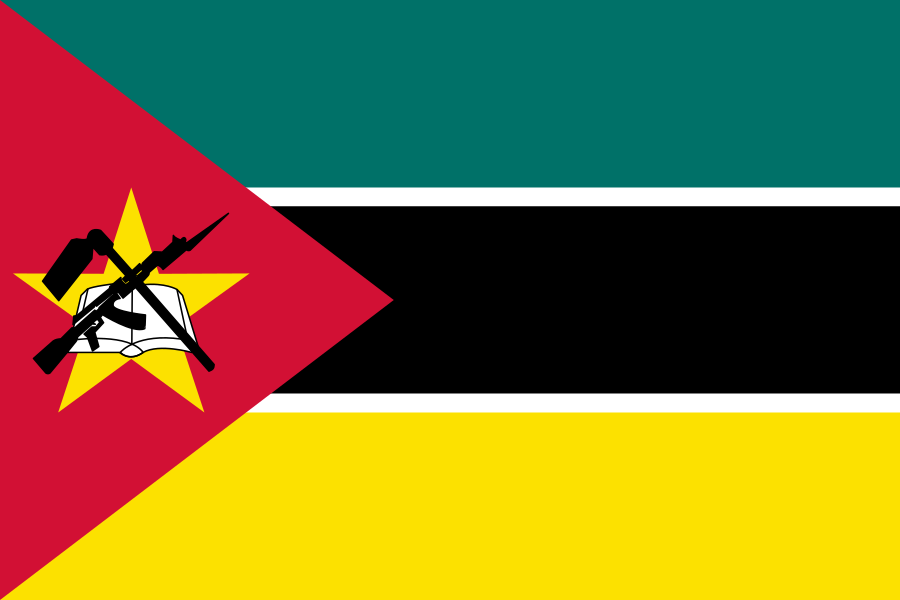
Mozambique
Location Info
- Continent: Africa
- Country: Mozambique
- Coordinates: -18.6657 , 35.5296
Trust Info
Verified Geographic Information
🌍 Continents
Overview
Mozambique is a sovereign state located in Southeast Africa, bordered by the Indian Ocean to the east. It shares land borders with South Africa, Eswatini, Zimbabwe, Zambia, Malawi, and Tanzania. The nation is characterized by a vast coastline stretching over 2,470 kilometers, featuring diverse ecosystems ranging from tropical coral reefs to inland high-altitude plateaus and the massive Zambezi River delta.
Formerly a Portuguese colony known as Portuguese East Africa, Mozambique gained independence in 1975. After a period of civil conflict that ended in 1992, the country has focused on economic rebuilding. Today, it is recognized for its significant natural resources, including coal and natural gas, and its growing importance as a maritime gateway for landlocked Southern African neighbors through its strategic deep-water ports.
Truth & Facts
| Total Area | 801,590 sq km |
| Coastline | 2,470 km |
| Total Population | 33.8 Million (Estimated) |
| Capital City | Maputo |
| Official Language | Portuguese |
| Independence Date | June 25, 1975 |
| Currency | Mozambican Metical (MZN) |
| Major Dam | Cahora Bassa |
| Adult Literacy Rate | 60.7% |
| Life Expectancy | 62.1 Years |
| Major Religion | Christianity (59.2%) |
| UNESCO Sites | Island of Mozambique |
| Protected Areas | 26% of land |
| Major Ports | Maputo, Beira, Nacala |
| Mobile Penetration | 52% |
| Emergency Number | 112 / 119 |
| Legislature | Assembly of the Republic |
| Regional Block | SADC |
| Electricity Access | 40% |
| GDP Growth Rate | 4.8% (2025) |
| Main Export Crop | Cashew nuts |
| National Broadcaster | TVM |
📑 Table of Contents
Overview
Mozambique is located on the southeastern coast of Africa. It is known for its extensive Indian Ocean coastline and its strategic position as a transit hub for Southern Africa. The capital, Maputo, serves as the primary economic and political center.
- Official Name: Republic of Mozambique
- Total Area: 801,590 sq km
- Capital: Maputo
- Official Language: Portuguese
- Currency: Metical
History
The history of Mozambique spans from early Bantu migrations to Arab trading posts and eventual Portuguese colonization in the early 16th century. It remained a Portuguese overseas province until 1975.
Post-independence, the country endured a 15-year civil war between FRELIMO and RENAMO. A peace accord in 1992 paved the way for multi-party elections and economic stability.
| Year | Event |
|---|---|
| 1498 | Vasco da Gama reaches Mozambique |
| 1975 | Independence from Portugal |
| 1992 | Rome General Peace Accords |
Geography
The terrain is divided into low-lying coastal plains in the south and highlands in the north and west. The Zambezi River bisects the country, creating a fertile delta and a massive drainage basin.
- Highest Point: Monte Binga (2,436m)
- Major River: Zambezi
- Major Lake: Lake Niassa (Malawi)
- Island Groups: Bazaruto and Quirimbas
Climate and Weather
Mozambique has a tropical climate with two distinct seasons. The wet season occurs from October to March, while the dry season lasts from April to September. The northern regions generally receive more rainfall than the south.
| Month | Avg High (°C) | Status |
|---|---|---|
| January | 31 | Wet/Hot |
| July | 24 | Dry/Cool |
Population and Demographics
The population is ethnically diverse, consisting primarily of Bantu groups. The Makua are the largest ethnic group, predominantly in the north, while the Tsonga are influential in the south.
- Total Population: ~33 Million
- Median Age: 17.6 years
- Urban Population: 38%
- Ethnic Groups: Makua, Sena, Lomwe, Tsonga
Culture and Lifestyle
Cultural life in Mozambique is a fusion of African traditions and Portuguese influences. This is evident in the music, particularly Marrabenta, and the country's renowned wood carving traditions, specifically from the Makonde people.
- Primary Music: Marrabenta
- Traditional Art: Makonde wood carvings
- National Sport: Football (Soccer)
Festivals and Events
National holidays often revolve around the history of the liberation struggle and cultural expressions. The STRRIT Art Festival in Maputo and the Festival d'Ibo are significant cultural gatherings.
- Independence Day: June 25
- Victory Day: September 7
- Mozambican Heroes Day: February 3
Food and Cuisine
Mozambican cuisine is famous for its use of spices, coconut, and seafood. Piri-piri (hot chili) is a staple ingredient in many dishes, reflecting both local and Portuguese culinary heritage.
- Galinha à Zambeziana (Zambezian Chicken)
- Matapa (Cassava leaves with peanuts)
- Prawns with Piri-Piri
- Bolo Polana (Potato and cashew cake)
Economy and Industries
The economy is shifting from traditional agriculture toward mining and energy. The discovery of large offshore natural gas reserves in the Rovuma Basin is expected to transform the national GDP over the coming decades.
| Sector | Contribution |
|---|---|
| Agriculture | ~25% |
| Industry/Mining | ~23% |
| Services | ~52% |
Cost of Living
Living costs vary significantly between urban centers like Maputo and rural areas. Imported goods and fuel are relatively expensive, while local produce and basic services remain affordable for most residents.
- Housing: High in central Maputo
- Food: Affordable local markets
- Utilities: Increasing electricity tariffs
Employment and Business
The majority of the labor force is engaged in subsistence agriculture. However, formal employment is growing in the logistics, construction, and extractives sectors, particularly in Tete and Cabo Delgado provinces.
- Major Employer: Government/Public Sector
- Growth Sector: Natural Gas and Logistics
- Unemployment Rate: ~18%
Real Estate and Housing
In major cities, the real estate market is dominated by luxury apartments and corporate offices. In peri-urban and rural areas, traditional housing styles remain common, often constructed with local materials.
- Land Tenure: State-owned (DUAT system)
- Urban Trend: Vertical expansion in Maputo
Transportation and Connectivity
Transportation is organized around three main corridors: Maputo, Beira, and Nacala. Road travel via the EN1 is the primary method of movement, though air travel is essential for long-distance domestic trips.
- Main Airline: LAM (Linhas Aéreas de Moçambique)
- Key Ports: Maputo, Beira, Nacala
- Rail: Links to South Africa and Zimbabwe
Infrastructure and Utilities
Mozambique is a major regional exporter of electricity due to the Cahora Bassa dam. Water infrastructure is currently being modernized in urban areas to increase reliability and sanitation standards.
- Power Source: Hydroelectric (90%+)
- Internet: Fiber optic in cities; Starlink available
Education
The education system follows a 7-3-2 model. Tertiary education has expanded since the 1990s, with Eduardo Mondlane University in Maputo being the oldest and largest institution in the country.
- Literacy: ~60%
- Language of Instruction: Portuguese
- Major University: UEM
Healthcare
Healthcare is provided through a national network of health centers and provincial hospitals. Malaria remains a significant public health challenge, receiving substantial government and international attention.
- Central Hospital: Maputo Central Hospital
- Major Challenges: Malaria, HIV/AIDS
Tourist Attractions
Tourism is primarily coastal, focusing on diving and marine biodiversity. Historical sites also draw visitors, particularly the architecture on the Island of Mozambique.
- Island of Mozambique (Ilha de Moçambique)
- Bazaruto Archipelago
- Gorongosa National Park
- Tofo Beach
Things to Do
Visitors engage in a variety of outdoor activities, ranging from high-end marine safaris to cultural tours of historic colonial towns.
- Scuba diving with whale sharks
- Traditional Dhow sailing
- Wildlife viewing in Gorongosa
- Deep-sea fishing
Best Places to Visit
Top destinations combine natural beauty with historical significance. The Quirimbas Islands offer a secluded experience, while Maputo provides a vibrant urban cultural scene.
| Place | Highlight |
|---|---|
| Vilankulo | Gateway to Bazaruto |
| Inhambane | Colonial Architecture |
| Ponta do Ouro | Dolphin encounters |
Travel Guide
Most international travelers enter through Maputo International Airport. Visa requirements have recently been relaxed for several nationalities to encourage tourism growth.
- Currency: Metical (MZN)
- Plug Type: C, F, M
- Entry: Visa-on-arrival or e-Visa
Nearby Places
Mozambique is well-connected to South Africa's Kruger National Park via the Lebombo border. Regional flights also connect Maputo to Johannesburg and Addis Ababa.
- Kruger National Park (South Africa)
- Victoria Falls (Zimbabwe/Zambia)
- Malawi (Lake Niassa region)
Environment and Nature
The country hosts a vast array of flora and fauna. Conservation efforts are centered on the restoration of national parks that were affected during the civil war era.
- Marine Reserves: 3 major parks
- Inland Protection: Gorongosa restoration project
Government and Administration
Mozambique is divided into ten provinces and one capital city with provincial status. The President serves as the head of state and is elected by popular vote.
- Head of State: President
- Administrative Divisions: 11 Provinces
Safety and Public Services
Public safety is maintained by the Polícia da República de Moçambique (PRM). While cities are generally safe, visitors are advised to be cautious in isolated areas and check for travel advisories regarding the northern provinces.
- Police Number: 112
- Fire Dept: 198
Best Time to Visit
The winter months (May to September) are ideal for visiting, as the weather is dry and temperatures are mild, making it perfect for both beach and wildlife activities.
- Diving: April to July
- Wildlife: August to October
- Whale Watching: July to September
Local Business Directory
Mozambique's business sector is centered in Maputo and Matola. Key areas of growth include port services, telecommunications, and retail banking.
- Commercial Banks: Millennium BIM, BCI, Standard Bank
- Telecoms: Tmcel, Vodacom, Movitel
General Information FAQs
Where is Mozambique located?
Mozambique is located in Southeast Africa, bordering the Indian Ocean to the east, Tanzania to the north, Malawi and Zambia to the northwest, Zimbabwe to the west, and Eswatini and South Africa to the southwest.
What is Mozambique known for?
Mozambique is known for its 2,470 km coastline, world-class scuba diving, piri-piri cuisine, Portuguese colonial architecture, and the historical Island of Mozambique.
Why is Mozambique famous?
It is famous for the Bazaruto and Quirimbas archipelagos, the restoration of Gorongosa National Park, and its significant role as a maritime gateway for Southern Africa.
What country or region is Mozambique part of?
Mozambique is an independent country located in the Southern Africa region.
What is the population of Mozambique?
As of 2025, the population is estimated to be approximately 33.8 million people.
What languages are spoken in Mozambique?
Portuguese is the official language. Numerous Bantu languages are spoken, including Makua, Tsonga, Sena, and Lomwe.
What time zone is Mozambique in?
Mozambique operates on Central Africa Time (CAT), which is UTC+2.
What are the key facts about Mozambique?
Key facts include its capital Maputo, its independence from Portugal in 1975, its use of the Metical currency, and its status as a member of the Commonwealth and CPLP.
What makes Mozambique unique?
Its unique blend of African, Arab, and Portuguese cultures, along with its massive river systems like the Zambezi, sets it apart in the region.
How large is Mozambique in area?
The total land and water area is approximately 801,590 square kilometers.
History FAQs
What is the history of Mozambique?
The history involves early Bantu settlement, followed by Swahili-Arab trade dominance, four centuries of Portuguese colonial rule, and a post-independence civil war that ended in 1992.
When was Mozambique established?
The modern state of Mozambique was established on June 25, 1975, upon gaining independence from Portugal.
What major historical events happened in Mozambique?
Major events include the arrival of Vasco da Gama in 1498, the founding of Lourenço Marques, the Mozambican War of Independence (1964–1974), and the 1992 Peace Accords.
Who were important historical figures from Mozambique?
Key figures include Samora Machel (first President), Eduardo Mondlane (FRELIMO founder), and Joaquim Chissano (former President).
How has Mozambique developed over time?
Since the end of the civil war in 1992, the country has transitioned from a centrally planned economy to a market economy, seeing significant foreign investment in mining and gas.
Geography & Environment FAQs
What is the geography of Mozambique?
It features a broad coastal plain in the south, rising to mountains and plateaus in the north. It is divided by the Zambezi River.
What natural features surround Mozambique?
It is surrounded by the Indian Ocean to the east and the Great Escarpment and various mountain ranges to the west.
Are there mountains, rivers, or lakes near Mozambique?
Yes, major features include the Zambezi and Limpopo Rivers, Monte Binga, and Lake Niassa (Lake Malawi).
What is the elevation of Mozambique?
Elevation ranges from sea level along the coast to 2,436 meters at the summit of Monte Binga.
What ecosystems exist around Mozambique?
Ecosystems include mangrove swamps, coral reefs, tropical savannas, and montane forests.
Climate & Weather FAQs
What is the climate like in Mozambique?
The climate is tropical to subtropical, with a rainy season from October to March and a dry season from April to September.
What is the average temperature in Mozambique?
Coastal temperatures average between 24°C and 31°C, while inland temperatures vary more with altitude.
What is the weather like throughout the year in Mozambique?
The wet season is hot and humid, while the dry season offers clear skies and cooler evenings.
Does Mozambique experience extreme weather?
Yes, the country is susceptible to tropical cyclones and occasional droughts, particularly in the southern regions.
What is the best time of year to visit Mozambique?
The best time is during the dry season, from May to November, when the weather is most stable.
Population & Society FAQs
What is the population density of Mozambique?
The density is approximately 40 people per square kilometer, with higher concentrations in coastal cities and the southern provinces.
What ethnic groups live in Mozambique?
Major groups include the Makua, Sena, Lomwe, Tsonga, and Makonde.
What religions are practiced in Mozambique?
Roman Catholicism, Protestantism, Zion Christianity, and Islam are the primary religions.
What is daily life like in Mozambique?
In rural areas, life revolves around subsistence farming. In urban areas, it is influenced by a blend of Portuguese and local African lifestyles.
How diverse is the population of Mozambique?
The population is very diverse, with over 60 distinct ethnic groups and a variety of local languages and customs.
Culture & Traditions FAQs
What cultural traditions are important in Mozambique?
Oral storytelling, traditional dance (like Mapiko), and the production of intricate Makonde wood carvings are central traditions.
What festivals are celebrated in Mozambique?
Key festivals include Independence Day (June 25) and the Maputo International Trade Fair (FACIM).
What cultural landmarks exist in Mozambique?
The Island of Mozambique, the Maputo Fortress, and the Natural History Museum are significant landmarks.
What traditional clothing or customs are common in Mozambique?
The 'capulana' (colorful wrap-around fabric) is widely worn by women and used for various cultural purposes.
What arts and crafts are associated with Mozambique?
Makonde wood carving, basket weaving, and pottery are the most prominent crafts.
Food & Cuisine FAQs
What foods is Mozambique known for?
It is known for seafood (prawns, lobster), piri-piri chicken, and matapa (cassava leaf stew).
What traditional dishes originate from Mozambique?
Galinha à Zambeziana and Matapa are iconic national dishes.
What are the best restaurants in Mozambique?
Top dining is found in Maputo, with famous spots like Costa do Sol known for seafood.
What local ingredients are commonly used in Mozambique cuisine?
Cassava, coconut, peanuts, and various fresh seafood are the base of most meals.
What food markets or street foods are popular in Mozambique?
Mercado Central in Maputo is famous. Popular street foods include 'Badjia' (bean fritters) and roasted cashews.
Economy & Business FAQs
What are the main industries in Mozambique?
Main industries include aluminum smelting, coal mining, natural gas extraction, and agriculture.
What economic activities drive the economy of Mozambique?
The economy is driven by foreign direct investment in the extractives sector and export-led agriculture.
What businesses operate in Mozambique?
Major operators include Eni, TotalEnergies, Vale (formerly), and Mozal.
Is Mozambique an important economic center?
Yes, specifically as a logistics and transit hub for landlocked countries like Zimbabwe and Malawi.
What are the major exports or products from Mozambique?
Major exports include aluminum, coal, natural gas, cashews, and sugar.
Employment & Jobs FAQs
What job opportunities are available in Mozambique?
Opportunities exist in mining, petroleum engineering, logistics, and international development.
What are the major employers in Mozambique?
The government, Mozal, and international NGOs are the largest formal employers.
What skills are in demand in Mozambique?
Technical skills in gas extraction, project management, and Portuguese-English bilingualism are highly valued.
Is Mozambique a good place to work?
It offers significant opportunities for expatriates in specific industries, though the cost of living in Maputo can be high.
What is the unemployment rate in Mozambique?
The official unemployment rate hovers around 18%, though underemployment in the informal sector is much higher.
Cost of Living FAQs
Is Mozambique expensive to live in?
Maputo is relatively expensive for housing and imported goods, while rural life is much cheaper but lacks infrastructure.
What is the average cost of living in Mozambique?
For an expat in Maputo, costs can exceed $1,500/month, whereas locals in rural areas live on significantly less.
How much does housing cost in Mozambique?
Rents for modern apartments in Maputo range from $800 to $2,500 per month.
What are average food and utility costs in Mozambique?
Utilities for a standard apartment average $100-$150, and local food is affordable, but imported items are priced at a premium.
Is Mozambique affordable compared to nearby cities?
It is generally more expensive than Harare or Lilongwe, but comparable to Luanda for certain expat services.
Housing & Real Estate FAQs
What types of housing are available in Mozambique?
In cities, multi-story apartments and villas; in rural areas, traditional huts and basic concrete houses.
What is the average home price in Mozambique?
Modern villas in prime Maputo neighborhoods can cost between $300,000 and $1,000,000.
Is it better to rent or buy property in Mozambique?
Most expatriates and businesses rent due to complex land ownership laws (DUAT system).
Which neighborhoods are popular in Mozambique?
In Maputo, Sommerschield, Polana, and Polana Caniço are the most popular and upscale areas.
How has the property market changed in Mozambique?
The market saw a boom following the gas discoveries, leading to significant vertical development in Maputo.
Transportation FAQs
How do you get to Mozambique?
Most travelers arrive by air via Maputo International Airport (MPM) or by road from South Africa.
What is the nearest airport to Mozambique?
Maputo International is the primary gateway, followed by Beira and Nacala for regional flights.
Does Mozambique have railway connections?
Yes, there are rail lines connecting the ports of Maputo, Beira, and Nacala to the interior, but they primarily carry freight.
How reliable is public transportation in Mozambique?
Urban transit relies on 'Chapas' (minibuses), which are frequent but can be crowded and erratic.
What major highways or roads connect to Mozambique?
The EN1 runs the length of the country. The Maputo-Kosi Bay road connects to South Africa.
Education FAQs
What schools are located in Mozambique?
There is a mix of government schools and private international schools like Maputo International School.
Are there universities in Mozambique?
Yes, Eduardo Mondlane University and several private institutions like ISCTEM are located in the capital.
What is the literacy rate in Mozambique?
The adult literacy rate is approximately 60.7%.
What educational opportunities exist in Mozambique?
Opportunities are increasing in vocational training for the mining and energy sectors.
Is Mozambique a good place for students?
Maputo offers a decent student life, but resources in public universities can be limited.
Healthcare FAQs
What hospitals are available in Mozambique?
Maputo Central Hospital is the largest. Private clinics like Hospital Privado provide higher-standard care.
Are there emergency medical services in Mozambique?
Limited public emergency services exist; most expats rely on private ambulance and evacuation services.
What healthcare facilities exist in Mozambique?
Most districts have a health post, but specialized care is only available in Maputo or Beira.
Is healthcare affordable in Mozambique?
Public healthcare is heavily subsidized but often lacks supplies. Private healthcare is expensive.
Are specialized medical services available in Mozambique?
Specialized services are very limited; major surgeries often require medical evacuation to South Africa.
Tourism & Travel FAQs
What are the top tourist attractions in Mozambique?
Top attractions include the Bazaruto Archipelago, the Island of Mozambique, and Gorongosa National Park.
What are the best things to do in Mozambique?
Diving with whale sharks, exploring colonial ruins, and enjoying fresh seafood on the beach.
Is Mozambique worth visiting?
Yes, for travelers seeking pristine beaches, vibrant culture, and off-the-beaten-path adventures.
What landmarks should visitors see in Mozambique?
The Iron House in Maputo, the Fort of São Sebastião, and the Maputo Railway Station.
How many days should tourists spend in Mozambique?
A minimum of 7 to 10 days is recommended to explore both the capital and at least one coastal region.
Nearby Places FAQs
What places are near Mozambique worth visiting?
Kruger National Park in South Africa and the highlands of eastern Zimbabwe are nearby.
What cities or towns are close to Mozambique?
Nelspruit (South Africa) and Mutare (Zimbabwe) are the closest major foreign cities to the borders.
What natural attractions are near Mozambique?
Lake Malawi and the Chimanimani Mountains share borders with Mozambique.
What day trips can be taken from [Location]?
From Maputo, one can take a day trip to Inhaca Island or the Maputo Special Reserve.
What famous destinations are within reach of Mozambique?
Johannesburg is a short 1-hour flight from Maputo.
Safety FAQs
Is Mozambique safe to live in?
Yes, most residents live safely, though petty crime is a factor in urban centers.
Is Mozambique safe for tourists?
Yes, coastal tourism hubs are generally safe, but travelers should avoid the northernmost areas of Cabo Delgado due to security issues.
What is the crime rate in Mozambique?
Moderate; petty theft and pickpocketing are common in crowded markets in Maputo.
What emergency services operate in Mozambique?
The police (PRM) and a national fire service, though response times can be slow.
What safety tips should visitors follow in Mozambique?
Avoid walking at night in cities, keep valuables out of sight, and stay informed on local security updates.
Lifestyle & Living FAQs
Is Mozambique a good place to live?
It offers a relaxed coastal lifestyle and a warm climate, which many find appealing despite infrastructure challenges.
What recreational activities are available in Mozambique?
Sailing, fishing, football, and exploring the vibrant live music scene in Maputo.
Is Mozambique family-friendly?
Yes, especially within the expat community which has access to private clubs and international schools.
What outdoor activities are popular in Mozambique?
Beach volleyball, surfing, and weekend trips to nature reserves.
What makes life enjoyable in Mozambique?
The friendly population, the fresh seafood, and the stunning natural scenery are major highlights.
Practical Information FAQs
What travel tips should visitors know about Mozambique?
Carry a copy of your passport at all times and ensure you have malaria prophylaxis.
What local customs should visitors respect in Mozambique?
Dress modestly in rural areas and always ask for permission before taking photos of people.
How accessible is Mozambique for international visitors?
Major coastal towns are accessible by flight, but interior road travel can be difficult during the rainy season.
What services are available for tourists in Mozambique?
Tour operators provide diving, safari, and city tour packages, primarily in English and Portuguese.
What important information should travelers know before visiting Mozambique?
The currency is the Metical, South African Rand is often accepted in the south, and Portuguese is the main language of communication.