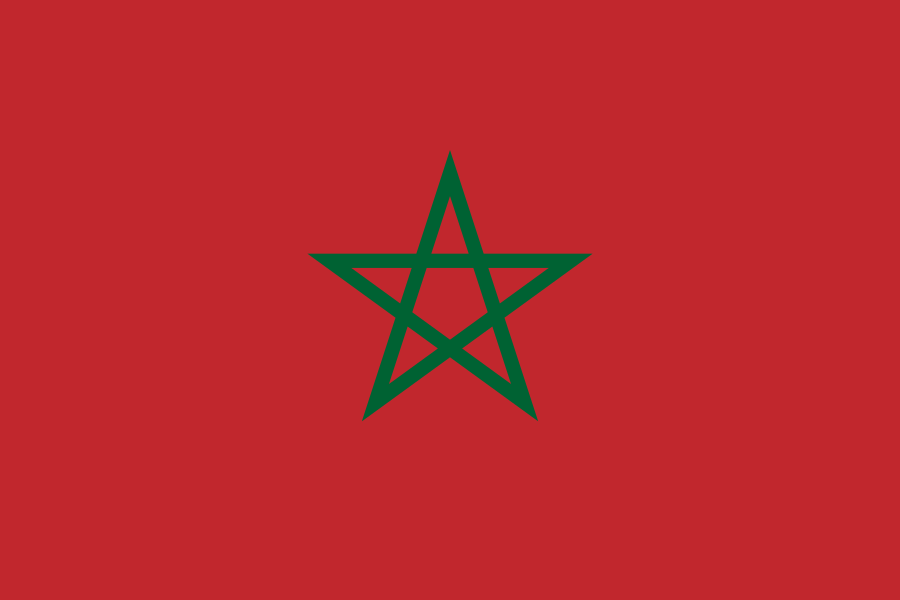
Morocco
Location Info
- Continent: Africa
- Country: Morocco
- Coordinates: 31.7917 , -7.0926
Trust Info
Verified Geographic Information
🌍 Continents
Overview
Morocco is a sovereign state located in the Maghreb region of North Africa. It is characterized by a rugged mountainous interior, large tracts of desert, and a lengthy coastline along both the Atlantic Ocean and the Mediterranean Sea. The country has a population of over 37 million people and its capital is Rabat, while its largest city is Casablanca.
Historically, Morocco has remained a distinct cultural crossroads, influenced by Berber, Arab, and European traditions. As a constitutional monarchy, it serves as a significant economic hub in Africa, leading in sectors like phosphate production, agriculture, and renewable energy. Its strategic location near the Strait of Gibraltar makes it a vital link between Africa and Europe.
Truth & Facts
| Total Area | 446,550 km² |
| Coastline | 1,835 km |
| Population | 37.45 million |
| Official Languages | Arabic, Berber |
| Capital | Rabat |
| Monarch | King Mohammed VI |
| Independence | March 2, 1956 |
| Currency | Moroccan Dirham (MAD) |
| Major Export | Phosphates and derivatives |
| Major Port | Tanger-Med |
| Oldest University | University of al-Qarawiyyin |
| Life Expectancy | 76.8 years |
| Religion | Islam (Sunni) |
| Annual Visitors | 14.5 million |
| National Parks | 11 Parks |
| High-Speed Rail | Al Boraq |
| Internet Penetration | 84.1% |
| Emergency Number | 19 (Police), 15 (Ambulance) |
| Legislature | Bicameral Parliament |
| UN Member Since | 1956 |
| Renewable Energy Goal | 52% by 2030 |
| Agricultural Labor | Approx. 30% |
| Noor Ouarzazate | 580 MW |
| Main Trade Partner | Spain, France |
📑 Table of Contents
Overview of Morocco
Morocco is a North African nation with a diverse geography and a rich cultural tapestry. It is situated at the northwestern tip of Africa, bordered by the Atlantic Ocean and the Mediterranean Sea. The country is known for its blend of ancient traditions and modern development.
- Capital: Rabat
- Largest City: Casablanca
- Official Language: Arabic and Berber
- Religion: Islam (State Religion)
- Government: Unitary semi-constitutional monarchy
History
Morocco's history is marked by the rise of various Islamic dynasties, beginning with the Idrisids in the 8th century. It remained independent for much of its history, resisting Ottoman rule. In the early 20th century, it became a protectorate of France and Spain.
- Pre-Islamic Era: Berber kingdoms and Roman influence
- Islamic Conquest: Arrival of Idris I in 788 AD
- Dynastic Eras: Almoravids, Almohads, and Marinids
- Protectorate Period: 1912–1956
- Independence: Restored in 1956 under King Mohammed V
Geography
The geography of Morocco is varied, featuring high mountains, vast deserts, and fertile plains. The Atlas Mountains run through the center of the country, separating the coastal regions from the Sahara Desert.
| Region | Characteristic |
|---|---|
| Rif Mountains | Northern coastal range |
| Atlas Mountains | Central and Southern ranges |
| Sahara Desert | South and East arid zones |
| Coastal Plains | Fertile land for agriculture |
Climate and Weather
Morocco experiences a Mediterranean climate in the north and along the coasts, while the interior is more extreme. The southern regions are hot and arid due to the Sahara's influence.
- Coastal areas: Mild winters and warm summers
- Interior: Hot summers and cold winters
- Mountain regions: Significant snowfall in winter
- Desert regions: Extreme daily temperature fluctuations
Population and Demographics
The population of Morocco is primarily of Arab-Berber descent. Most people live west of the Atlas Mountains, with significant urbanization occurring in coastal cities like Casablanca and Rabat.
- Total Population: ~37 million
- Median Age: ~29 years
- Urban Population: ~64%
- Ethnic Groups: Arab-Berber (~99%)
Culture and Lifestyle
Moroccan culture is a vibrant mix of Berber, Arab, African, and European influences. This is reflected in its architecture, music, and traditional crafts like carpet weaving and pottery.
- Architecture: Known for intricate tilework (Zellige) and riads
- Music: Styles include Gnaoua, Chaabi, and Andalusian classical
- Social Customs: Hospitality is central to Moroccan life
- Handicrafts: Famous for leather goods and metalwork
Festivals and Events
Religious and cultural festivals are integral to Moroccan society. Islamic holidays like Eid al-Fitr and Eid al-Adha are observed nationally, alongside cultural events.
- Gnaoua World Music Festival: Held in Essaouira
- Fes Festival of World Sacred Music: Held in Fes
- International Film Festival of Marrakesh: A major cinematic event
- Imilchil Marriage Festival: A Berber tradition in the Atlas
Food and Cuisine
Moroccan cuisine is globally renowned for its use of spices, dried fruits, and herbs. Couscous and Tagine are the national staples.
- Tagine: Slow-cooked stew named after the clay pot
- Couscous: Steamed semolina served with meat and vegetables
- Harira: A traditional tomato and lentil soup
- Pastilla: A savory-sweet meat pie
- Mint Tea: The most popular beverage, symbolizing hospitality
Economy and Industries
Morocco has a diverse economy with significant growth in manufacturing and services. It is the world's leading exporter of phosphates.
| Sector | Major Products |
|---|---|
| Mining | Phosphates, Silver, Zinc |
| Agriculture | Citrus, Olives, Wheat |
| Industry | Automotive, Aerospace, Textiles |
| Energy | Solar, Wind, Hydro |
Cost of Living
The cost of living in Morocco is generally lower than in Western Europe or North America. Prices vary significantly between urban centers and rural areas.
- Housing: Affordable in most cities, expensive in Casablanca
- Food: Local produce is very inexpensive
- Utilities: Moderate costs for electricity and water
- Public Transport: Very affordable
Employment and Business
The labor market is evolving toward industrial and service sectors. The government encourages foreign investment through 'Free Zones' and infrastructure projects.
- Major Employers: Government, OCP Group, Automotive plants
- Key Hubs: Casablanca Finance City, Tanger-Med
- Startup Scene: Growing in Casablanca and Marrakesh
Real Estate and Housing
Moroccan real estate includes traditional riads, modern apartments, and large villas. Urban expansion is rapid in the Casablanca-Settat and Rabat-Salé regions.
- Riads: Traditional houses with interior courtyards
- Apartments: Common in new urban developments
- Social Housing: Government programs aim to reduce slums
Transportation and Connectivity
Morocco has some of the best infrastructure in Africa, including a high-speed rail network and a comprehensive motorway system.
- Rail: Al Boraq connects Tangier to Casablanca
- Air: Mohammed V International Airport is a major hub
- Roads: Extensive network of tolled motorways
- Ports: Tanger-Med is a global logistics gateway
Infrastructure and Utilities
The country is investing heavily in renewable energy and water desalination to ensure long-term sustainability.
- Energy: Focus on the Noor Solar Complex
- Water: New desalination plants in Agadir and Casablanca
- Telecoms: Strong 4G and 5G coverage in cities
Education
Education is compulsory until age 15. The system includes both public and private institutions, with a focus on improving quality and vocational training.
- Higher Ed: University of Mohammed V, Al-Qarawiyyin
- Languages: Instruction in Arabic and French
- Literacy: Significant progress in adult literacy rates
Healthcare
Morocco is undergoing a health reform to provide universal health coverage. Healthcare facilities are most advanced in major cities.
- Public Health: Managed by the Ministry of Health
- Private Sector: Growing number of clinics and specialized centers
- Reform: Implementation of AMO (Mandatory Health Insurance)
Tourist Attractions
Morocco offers a variety of attractions from ancient Roman ruins to vibrant medieval medinas and natural landscapes.
- Jemaa el-Fnaa: Famous square in Marrakesh
- Hassan II Mosque: Massive mosque in Casablanca
- Volubilis: Well-preserved Roman ruins near Meknes
- Blue City: Chefchaouen's iconic blue-washed streets
Things to Do
Activities in Morocco range from cultural exploration to outdoor adventures in the mountains and desert.
- Desert Trekking: Camel tours in Merzouga and Zagora
- Mountain Hiking: Climbing Mount Toubkal
- Surfing: Popular in Taghazout and Essaouira
- Shopping: Navigating the souks of Fes and Marrakesh
Best Places to Visit
Multiple cities in Morocco are listed as UNESCO World Heritage sites, each offering unique historical insights.
| City | Highlight |
|---|---|
| Marrakesh | Palaces and Souks |
| Fes | Medieval Medina |
| Chefchaouen | Blue Architecture |
| Merzouga | Sahara Dunes |
Travel Guide
Travelers to Morocco should be aware of local customs, visa requirements, and the best ways to navigate the country.
- Visas: Many nationalities enjoy visa-free entry
- Transport: Use trains for city-to-city travel
- Etiquette: Dress modestly in rural and religious areas
Nearby Places
Morocco's proximity to Europe and other North African countries makes it a hub for regional travel.
- Spain: Just 14km across the Strait of Gibraltar
- Algeria: To the east (land border currently closed)
- Mauritania: To the south
Environment and Nature
Morocco is committed to environmental preservation, particularly through reforestation and solar energy initiatives.
- Flora: Cedar forests in the Middle Atlas
- Fauna: Barbary macaque and various migratory birds
- Protection: Growing number of marine protected areas
Government and Administration
Morocco is divided into 12 administrative regions. The King holds significant executive and religious authority.
- Executive: King and Prime Minister
- Judiciary: Independent courts based on civil and Sharia law
- Regions: Casablanca-Settat is the economic powerhouse
Safety and Public Services
Morocco is generally considered safe for residents and visitors, with a strong security presence in major cities.
- Police: DGSN (Urban) and Gendarmerie (Rural)
- Public Safety: Low rates of violent crime
- Precautions: Be cautious of scams in tourist areas
Best Time to Visit
The ideal time to visit depends on the region. Spring and autumn are generally the most comfortable seasons for the whole country.
- Spring (March-May): Best for greenery and hiking
- Autumn (Sept-Nov): Best for mild weather
- Summer: Hot in the interior, pleasant on the coast
Local Business Directory
The business landscape is dominated by large conglomerates and a vast network of small traditional enterprises.
- Major Corps: OCP, Attijariwafa Bank, Maroc Telecom
- SMEs: Active in tourism, textiles, and food processing
General Information FAQs
Where is Morocco located?
Morocco is located in the far northwest of Africa. It borders the Atlantic Ocean to the west, the Mediterranean Sea to the north, Algeria to the east, and Western Sahara/Mauritania to the south.
What is Morocco known for?
Morocco is known for its diverse geography (Sahara desert and Atlas Mountains), its unique Arab-Berber culture, intricate architecture, vibrant souks, and its cuisine, particularly tagines and couscous.
Why is Morocco famous?
It is famous for being a gateway between Africa and Europe, its ancient imperial cities (Marrakesh, Fes, Meknes, Rabat), and for holding the world's largest reserves of phosphate.
What country or region is Morocco part of?
Morocco is part of the Maghreb region of North Africa.
What is the population of Morocco?
As of 2024, the population is estimated to be approximately 37.5 million people.
What languages are spoken in Morocco?
The official languages are Arabic and Berber (Tamazight). French is widely used in administration, business, and education. Spanish is spoken by some in the northern regions.
What time zone is Morocco in?
Morocco is in Western European Time (GMT+1).
What are the key facts about Morocco?
Key facts include its status as a monarchy, its capital in Rabat, its largest city in Casablanca, and its leading role in global phosphate production.
What makes Morocco unique?
Its uniqueness lies in its blend of African, Arab, and European influences, its stable monarchy in a volatile region, and its geographical variety ranging from snow-capped peaks to desert dunes.
How large is Morocco in area?
Morocco has an area of approximately 446,550 square kilometers, excluding the disputed Western Sahara territory.
History FAQs
What is the history of Morocco?
Morocco's history involves indigenous Berber populations, followed by Roman colonization, the arrival of Islam, several powerful dynasties, a period of French and Spanish colonial rule, and independence in 1956.
When was Morocco established?
The first unified Moroccan state was established by the Idrisid dynasty in 788 AD. The modern state gained independence on March 2, 1956.
What major historical events happened in Morocco?
Key events include the founding of Fes, the Battle of the Three Kings, the Treaty of Fes (1912) which established the protectorate, and the Green March in 1975.
Who were important historical figures from Morocco?
Important figures include Idris I, the founder of the first dynasty; Ibn Battuta, the famous traveler; and Kings Mohammed V, Hassan II, and Mohammed VI.
How has Morocco developed over time?
It has moved from a traditional dynastic empire to a modernizing constitutional monarchy with a significant focus on infrastructure and industrialization.
Geography & Environment FAQs
What is the geography of Morocco?
Morocco features coastal plains, the Rif Mountains in the north, the Atlas Mountains in the center, and the Sahara Desert in the south and east.
What natural features surround Morocco?
It is surrounded by the Atlantic Ocean, the Mediterranean Sea, and the vast desert landscapes of the Sahara.
Are there mountains, rivers, or lakes near Morocco?
Yes, the Atlas Mountains are a major feature. Significant rivers include the Moulouya, Sebou, and Draa. Lakes like Bin el Ouidane are used for irrigation and power.
What is the elevation of Morocco?
Elevation varies from sea level to 4,167 meters at Jbel Toubkal, the highest peak in North Africa.
What ecosystems exist around Morocco?
Ecosystems include Mediterranean forests, alpine tundra in the mountains, and arid desert landscapes.
Climate & Weather FAQs
What is the climate like in Morocco?
The climate is Mediterranean in the north, becoming more continental in the interior and Saharan in the south.
What is the average temperature in Morocco?
Coastal averages are around 18-25°C. In the interior, summer temperatures can exceed 40°C, while winter temperatures in the mountains can drop below freezing.
What is the weather like throughout the year in Morocco?
Spring and autumn are mild and pleasant. Winter is the rainy season in the north, while summer is very dry and hot in most of the country.
Does Morocco experience extreme weather?
Heatwaves are common in the summer. Some regions experience periodic droughts, while the mountains see heavy snow.
What is the best time of year to visit Morocco?
The best times are spring (April-May) and autumn (September-October) when the weather is mild throughout the country.
Population & Society FAQs
What is the population density of Morocco?
The density is approximately 84 people per square kilometer, with most people concentrated in the northwestern half of the country.
What ethnic groups live in Morocco?
The population is almost entirely Arab-Berber. There are also small minorities of Europeans and Sub-Saharan Africans.
What religions are practiced in Morocco?
Islam is the state religion, practiced by 99% of the population. Small Christian and Jewish communities also exist.
What is daily life like in Morocco?
Daily life is a blend of modern work schedules and traditional social customs, often centered around family and community prayer times.
How diverse is the population of Morocco?
While ethnically homogeneous as Arab-Berber, there is great linguistic and cultural diversity between mountain, desert, and coastal communities.
Culture & Traditions FAQs
What cultural traditions are important in Morocco?
Key traditions include the tea ceremony, communal dining, and the celebration of religious milestones.
What festivals are celebrated in Morocco?
Major festivals include the Moussem of Tan-Tan, the Rose Festival in El Kelaa M'Gouna, and the Cherry Festival in Sefrou.
What cultural landmarks exist in Morocco?
Landmarks include the medinas of Fes and Marrakesh, the Koutoubia Mosque, and the Kasbah of the Udayas.
What traditional clothing or customs are common in Morocco?
The Djellaba (a long, loose robe) and Kaftan are common traditional garments. Removing shoes when entering homes is a standard custom.
What arts and crafts are associated with Morocco?
Morocco is famous for its hand-woven carpets, intricate brass lamps, leather slippers (babouche), and Zellige tilework.
Food & Cuisine FAQs
What foods is Morocco known for?
Morocco is famous for Tagines, Couscous, Harira soup, and Pastilla.
What traditional dishes originate from Morocco?
Dishes like 'Tanjia' from Marrakesh and 'Rfissa' (chicken and lentils with shredded bread) are uniquely Moroccan.
What are the best restaurants in Morocco?
Top-rated traditional dining is often found in Riads in Marrakesh and Fes, such as Al Fassia or La Maison Arabe.
What local ingredients are commonly used in Morocco cuisine?
Common ingredients include argan oil, preserved lemons, olives, saffron, and Ras el Hanout spice blend.
What food markets or street foods are popular in Morocco?
The souks in every medina offer street food like snail soup, grilled meats (brochettes), and fresh orange juice.
Economy & Business FAQs
What are the main industries in Morocco?
The main industries are phosphate mining, agriculture, automotive manufacturing, aerospace, and tourism.
What economic activities drive the economy of Morocco?
Exporting raw materials (phosphates), manufacturing (cars), and service sectors like banking and telecommunications.
What businesses operate in Morocco?
Large firms include Renault-Nissan, OCP Group, and Attijariwafa Bank, alongside many international call centers.
Is Morocco an important economic center?
Yes, it is considered a major gateway for investment into Africa and holds 'Advanced Status' with the European Union.
What are the major exports or products from Morocco?
Major exports include phosphoric acid, fertilizers, passenger cars, insulated wiring, and citrus fruits.
Employment & Jobs FAQs
What job opportunities are available in Morocco?
Opportunities are growing in the IT, automotive, renewable energy, and tourism sectors.
What are the major employers in Morocco?
The public sector is a major employer, along with OCP, Maroc Telecom, and the Royal Air Maroc.
What skills are in demand in Morocco?
Engineers, IT specialists, and professionals with multilingual skills (French/English/Arabic) are in high demand.
Is Morocco a good place to work?
It offers a dynamic environment for those in industrial and tech sectors, though the local labor market can be competitive.
What is the unemployment rate in Morocco?
The unemployment rate typically fluctuates around 11-13%, with higher rates among the youth in urban areas.
Cost of Living FAQs
Is Morocco expensive to live in?
No, it is generally considered affordable, especially for those earning foreign currencies, though luxury goods can be expensive.
What is the average cost of living in Morocco?
A single person can live comfortably in a city like Rabat for approximately $600-$900 per month including rent.
How much does housing cost in Morocco?
Rent for a modern 2-bedroom apartment in a city center ranges from $400 to $800, while rural prices are much lower.
What are average food and utility costs in Morocco?
Local market food is very cheap; utilities for a standard apartment average around $50-$80 per month.
Is Morocco affordable compared to nearby cities?
Yes, it is significantly cheaper than cities in Spain or France, though more expensive than some neighboring sub-Saharan countries.
Housing & Real Estate FAQs
What types of housing are available in Morocco?
Options include Riads (traditional courtyard houses), villas, and modern apartment blocks.
What is the average home price in Morocco?
Prices vary wildly; a modern apartment in Casablanca might cost $100,000+, while rural homes are much less.
Is it better to rent or buy property in Morocco?
Renting is common for expats, while buying is a popular investment for locals and those looking for long-term residences.
Which neighborhoods are popular in Morocco?
Gauthier in Casablanca, Hay Riad in Rabat, and the Hivernage area in Marrakesh are popular high-end areas.
How has the property market changed in Morocco?
There has been a surge in high-end developments and coastal resorts over the last decade.
Transportation FAQs
How do you get to Morocco?
Most international visitors arrive via Mohammed V Airport in Casablanca or by ferry from Spain (Algeciras to Tangier).
What is the nearest airport to Morocco?
Morocco has several international airports, including Casablanca (CMN), Marrakesh (RAK), and Tangier (TNG).
Does Morocco have railway connections?
Yes, Morocco has an extensive rail network operated by ONCF, including the 'Al Boraq' high-speed line.
How reliable is public transportation in Morocco?
Trains are very reliable; intercity buses (CTM) are also high-quality. Within cities, 'Petits Taxis' are common.
What major highways or roads connect to Morocco?
The A1 motorway connects major coastal cities from Tangier down to Agadir.
Education FAQs
What schools are located in Morocco?
There is a mix of public schools, private Moroccan schools, and international schools (French, American, Spanish).
Are there universities in Morocco?
Yes, including Mohammed V University (Rabat), Al Akhawayn University (Ifrane), and Hassan II University (Casablanca).
What is the literacy rate in Morocco?
The literacy rate is approximately 75%, with higher rates among the younger generation.
What educational opportunities exist in Morocco?
Opportunities exist in higher education and vocational training centers (OFPPT) focusing on industrial skills.
Is Morocco a good place for students?
It is popular for those studying Arabic, history, or international relations, and has a low cost of living for students.
Healthcare FAQs
What hospitals are available in Morocco?
Major cities have University Hospital Centers (CHU) and high-quality private clinics.
Are there emergency medical services in Morocco?
Yes, dialing 15 connects to ambulance services and firefighters (Protection Civile).
What healthcare facilities exist in Morocco?
Facilities range from neighborhood dispensaries to specialized cancer and cardiac centers.
Is healthcare affordable in Morocco?
Public healthcare is heavily subsidized; private care is more expensive but still cheaper than in the US or Europe.
Are specialized medical services available in Morocco?
Yes, Casablanca and Rabat host advanced facilities for cardiology, oncology, and cosmetic surgery.
Tourism & Travel FAQs
What are the top tourist attractions in Morocco?
Top sites include the Fes Medina, Marrakesh's Jemaa el-Fnaa, the Sahara dunes of Merzouga, and the blue streets of Chefchaouen.
What are the best things to do in Morocco?
Shopping in souks, desert camping, visiting historic madrasas, and enjoying a traditional hammam (steam bath).
Is Morocco worth visiting?
Yes, it is one of Africa's most visited countries due to its safety, rich history, and unique cultural experiences.
What landmarks should visitors see in Morocco?
Ait Benhaddou, the Hassan II Mosque, the Roman ruins of Volubilis, and the Bahia Palace.
How many days should tourists spend in Morocco?
A minimum of 7-10 days is recommended to cover the major imperial cities and the desert.
Nearby Places FAQs
What places are near Morocco worth visiting?
The Canary Islands (Spain) are nearby, as is Gibraltar. Within the region, the Sahara provides unique travel routes.
What cities or towns are close to Morocco?
Tarifa and Algeciras in Spain are just across the water. Oran in Algeria is geographically close but borders are closed.
What natural attractions are near Morocco?
The Strait of Gibraltar for whale watching and the vast Sahara desert bordering the east and south.
What day trips can be taken from Morocco?
From Marrakesh, trips to the Ourika Valley or Ouzoud Waterfalls are popular. From Tangier, a ferry to Gibraltar is possible.
What famous destinations are within reach of Morocco?
Southern Spain (Andalusia) is very accessible, sharing much historical architecture with Morocco.
Safety FAQs
Is Morocco safe to live in?
Yes, Morocco is generally stable and has a low violent crime rate, though petty theft exists in crowded urban areas.
Is Morocco safe for tourists?
Yes, tourism is highly valued and protected. Visitors should take standard precautions against pickpocketing.
What is the crime rate in Morocco?
Violent crime is rare. Petty crime (theft, scams) is the most common issue in tourist-heavy zones.
What emergency services operate in Morocco?
The Police (19), Royal Gendarmerie (177), and Ambulance/Fire (15).
What safety tips should visitors follow in Morocco?
Avoid unlit areas at night, dress respectfully, and agree on taxi prices before starting a journey.
Lifestyle & Living FAQs
Is Morocco a good place to live?
It offers a high quality of life with a low cost of living, though one must adapt to local social and administrative norms.
What recreational activities are available in Morocco?
Football is the national sport. Other activities include surfing, golf, and traditional hammam visits.
Is Morocco family-friendly?
Yes, Moroccan culture is very child-oriented and family-centered.
What outdoor activities are popular in Morocco?
Hiking in the High Atlas, kitesurfing in Dakhla, and camel trekking in the Sahara.
What makes life enjoyable in Morocco?
The warm weather, the emphasis on social connections, and the diverse culinary scene.
Practical Information FAQs
What travel tips should visitors know about Morocco?
Always carry cash (Dirhams), learn basic French or Arabic phrases, and be prepared to haggle in souks.
What local customs should visitors respect in Morocco?
Avoid public displays of affection, ask before taking photos of people, and dress modestly when visiting religious sites.
How accessible is Morocco for international visitors?
Very accessible via numerous direct flights from Europe, North America, and the Middle East.
What services are available for tourists in Morocco?
There are many licensed guides, tourist police, and information centers in major cities.
What important information should travelers know before visiting Morocco?
Morocco is an Islamic country; during Ramadan, daily routines change, and many restaurants close during daylight hours.