Montserrat
Location Info
- Continent: North America
- Country: Montserrat
- Coordinates: 16.7425 , -62.1873
Trust Info
Verified Geographic Information
🌍 Continents

Overview
Montserrat is a British Overseas Territory located in the Leeward Islands, part of the Lesser Antilles chain in the Caribbean Sea. Often referred to as the "Emerald Isle of the Caribbean" due to its lush greenery and historical Irish connections, the island is approximately 16 kilometers long and 11 kilometers wide. Its geography is dramatically defined by the Soufrière Hills volcano, which became active in 1995, leading to the abandonment of the former capital, Plymouth, and the creation of an exclusion zone in the southern half of the island.
Today, the population is concentrated in the northern third of the island, where new administrative centers like Brades and Little Bay have been developed. The island's culture is a vibrant blend of African and Irish influences, most notably celebrated during its unique St. Patrick's Festival. Despite the challenges posed by volcanic activity, Montserrat maintains a peaceful atmosphere with a focus on sustainable tourism, geothermal energy research, and preserving its unique biodiversity.
Truth & Facts
| Total Area | 102 sq km |
| Coastline | 40 km |
| Current Population | 4,390 (2026 estimate) |
| Median Age | 41.86 years |
| Political Status | British Overseas Territory |
| De Facto Capital | Brades |
| European Discovery | 1493 |
| Irish Settlement | 1632 |
| Currency | East Caribbean Dollar (XCD) |
| GDP Growth Rate | 3.75% (2023) |
| Primary Energy Source | Diesel Fuel |
| Primary Schooling | Government and Private |
| Main Hospital | Glendon Hospital |
| National Dish | Goat Water |
| Annual Arrivals | 14,845 (2024) |
| Endemic Bird | Montserrat Oriole |
| Primary Airport | John A. Osborne Airport |
| Internet Users | Approximately 1,200 |
| Crime Rate | Very Low |
| Head of Government | Premier |
| Regional Blocks | CARICOM, OECS |
| Utility Provider | Montserrat Utilities Limited (MUL) |
| Unemployment Rate | 7.2% (2023) |
| Reef Presence | Northern Coast |
| Hurricane Hugo | 1989 |
📑 Table of Contents
Overview
Montserrat is an island and British Overseas Territory situated in the Caribbean Sea. It is part of the Leeward Islands chain and is located approximately 43 kilometers southwest of Antigua and 56 kilometers northeast of Guadeloupe. The island covers a total area of 102 square kilometers and is characterized by its rugged volcanic terrain and lush tropical vegetation.
Due to significant volcanic activity that began in 1995, the southern half of the island is currently an exclusion zone. The population, now estimated at around 4,400 people, resides primarily in the northern safe zone. Brades serves as the temporary administrative center, while a new capital is being developed at Little Bay.
- Official Name: Montserrat
- Status: British Overseas Territory
- De Jure Capital: Plymouth (Abandoned)
- Interim Government Center: Brades
- Language: English
History
The island's earliest inhabitants were the Arawak and Carib peoples, who called it Alliouagana. Christopher Columbus sighted the island in 1493 and named it after the Santa Maria de Montserrat monastery in Spain. Permanent European settlement began in 1632 when Irish Catholics, fleeing religious persecution on nearby St. Kitts, established a colony.
The island transitioned into a sugar-based plantation economy in the 17th and 18th centuries, relying heavily on the labor of enslaved Africans. A significant slave rebellion occurred on St. Patrick's Day in 1768, which is now a cornerstone of the island's cultural identity. In the late 20th century, the island was devastated by Hurricane Hugo in 1989 and subsequently by the Soufrière Hills volcanic eruptions starting in 1995.
| Year | Significant Historical Event |
|---|---|
| 1493 | Sighted and named by Christopher Columbus |
| 1632 | First European settlement by Irish colonists |
| 1768 | Unsuccessful slave uprising on St. Patrick's Day |
| 1834 | Abolition of slavery in Montserrat |
| 1995 | First major eruption of Soufrière Hills Volcano |
Geography
Montserrat is a pear-shaped volcanic island with a mountainous interior. It is divided into three main mountain ranges: the Silver Hills in the north, the Centre Hills, and the Soufrière Hills in the south. The Soufrière Hills range contains the island's highest point, reaching approximately 915 meters, though this height fluctuates due to volcanic dome growth.
The coastline features gray and black volcanic sand beaches, with the notable exception of Rendezvous Bay, which has white sand. Deep narrow valleys known as 'ghauts' facilitate water drainage from the mountains to the sea. Approximately one-fifth of the island remains forested, particularly in the Centre Hills region.
- Terrain: Rugged volcanic mountains
- Highest Point: Soufrière Hills (approx. 915m)
- Coastal Features: Volcanic beaches and coral reefs
- Hydrology: Seasonal rivers and ghauts
Climate & Weather
The island enjoys a tropical maritime climate with minimal seasonal variation in temperature. Average daytime temperatures typically range from 24°C to 30°C throughout the year. Constant trade winds help to moderate the heat and humidity, making the weather generally pleasant for residents and visitors.
Rainfall is seasonal, with the wettest period occurring between June and November, coinciding with the Atlantic hurricane season. The island can experience tropical storms and hurricanes, which have historically caused significant damage to infrastructure and vegetation.
| Season | Period | Weather Characteristics |
|---|---|---|
| Dry Season | December - April | Cooler, sunny, and lower humidity |
| Wet Season | May - November | Warmer, higher rainfall, hurricane risk |
Population & Demographics
As of 2026, Montserrat's population is estimated to be approximately 4,390. This reflects a period of stabilization following the mass emigration of the late 1990s. The majority of the population is of African descent, with a small percentage of European and mixed heritage. The official language is English, often spoken with a distinctive Caribbean accent that retains some Irish phonetic influences.
The population density is roughly 43 persons per square kilometer, though this figure is misleading as the population is exclusively located in the northern half of the island. Christianity is the predominant religion, with significant Anglican, Methodist, and Roman Catholic congregations.
- Total Population: ~4,390
- Main Ethnic Groups: Black African, Mixed, White
- Primary Religion: Christianity
- Literacy Rate: Over 90%
Culture & Lifestyle
Montserrat's culture is a unique fusion of Irish and African traditions. This heritage is evident in the island's music, dance, and folklore. The residents are known for their hospitality and a close-knit community spirit, largely influenced by the shared experience of volcanic recovery. Traditional lifestyles centered on family, church, and small-scale agriculture remain prevalent among older residents.
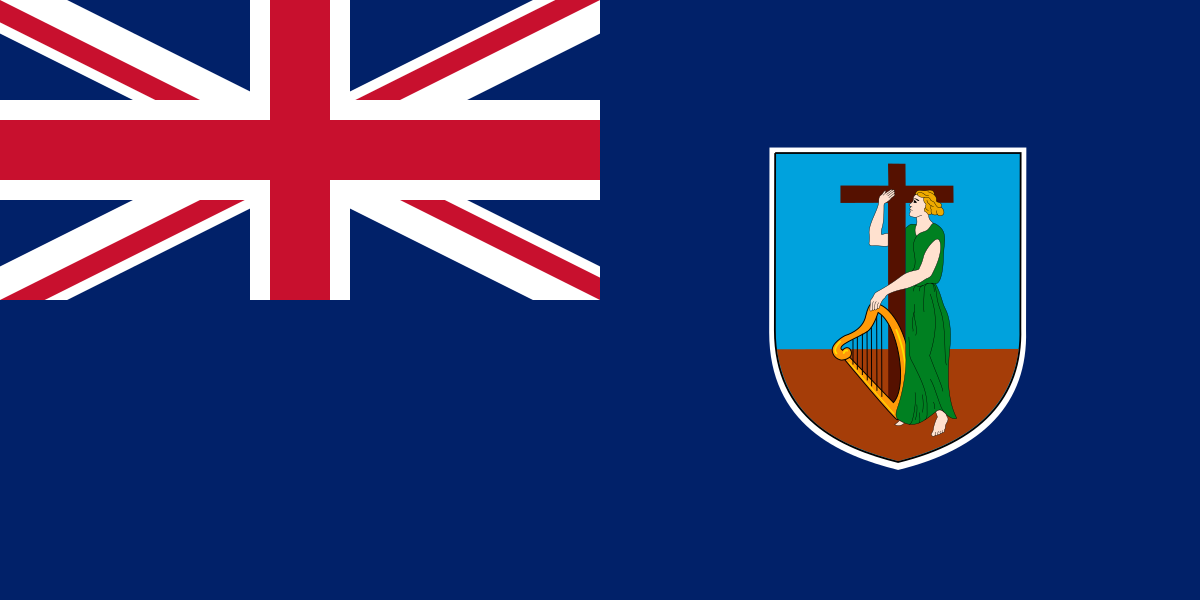
The island's identity is encapsulated in the nickname "The Emerald Isle," reflected in its flag which features a woman in green holding a harp and a cross. Traditional art forms include wood carving, weaving, and the performance of masquerade dances during festivals.
- Cultural Heritage: Afro-Irish fusion
- Official Symbols: Shamrock on passports, Emerald Isle nickname
- Traditional Dance: Masquerades
- Common Values: Resilience, hospitality, community
Festivals & Events
The St. Patrick's Festival in March is the most significant event on Montserrat's calendar. Spanning ten days, it commemorates the 1768 slave uprising while celebrating the island's Irish connections. Activities include street parades, food fairs, and cultural performances. Montserrat is the only place outside of Ireland where St. Patrick's Day is a public holiday.
Another major celebration is the Year-End Carnival, which takes place from mid-December through New Year's Day. This festival features calypso competitions, colorful costumes, and street dancing known as 'jumping up.' The Cudjoe Head Festival in late July also highlights local heritage and community pride.
- St. Patrick's Festival: March (10 days)
- Montserrat Carnival: December - January
- Cudjoe Head Festival: July/August
- Calypso Competitions: Part of Carnival celebrations
Food & Cuisine
Montserrat's cuisine is characterized by the use of fresh local ingredients such as root vegetables, seafood, and tropical fruits. The national dish is 'Goat Water,' a hearty, clove-scented stew made with goat meat, breadfruit, and spices. It is typically served at social gatherings and festivals and is a source of national pride.
Other popular dishes include saltfish and bakes, mountain chicken (a local frog species, now strictly protected), and 'duckna' (a sweet potato and coconut dumpling wrapped in banana leaves). Seafood is abundant, with lobster, red snapper, and kingfish commonly featured on local menus.
| Dish Name | Type | Key Ingredients |
|---|---|---|
| Goat Water | Stew | Goat meat, cloves, breadfruit |
| Duckna | Side/Dessert | Sweet potato, coconut, spices |
| Saltfish | Breakfast/Entrée | Salted cod, peppers, onions |
Economy & Industries
The economy of Montserrat is small and currently heavily reliant on financial assistance from the United Kingdom. Prior to the volcanic eruptions, tourism and agriculture were the primary economic drivers. Today, the public sector is the largest employer, followed by the construction industry, which is focused on rebuilding infrastructure in the north.
Efforts are underway to diversify the economy through sustainable tourism, geothermal energy development, and the promotion of Montserrat as a hub for remote workers. The island also exports some agricultural products and electronic components on a small scale.
- Primary Employer: Public Sector (Government)
- Growth Sectors: Construction, Geothermal Energy
- Key Organizations: CARICOM, OECS
- Currency: Eastern Caribbean Dollar (Pegged to USD)
Cost of Living
The cost of living in Montserrat is generally moderate compared to other Caribbean islands. Most consumer goods, including food, fuel, and machinery, must be imported, which can lead to higher prices for certain items. Local produce and seafood are typically affordable and widely available at markets.
Electricity costs have historically been high due to a dependency on imported diesel, although geothermal projects aim to reduce these costs in the future. Housing costs vary depending on the location and type of property, with more affordable options available for long-term residents in the northern districts.
| Expense Category | Estimated Cost (Monthly) |
|---|---|
| Average Salary | ~2,586 XCD |
| Basic Utilities | Moderate to High (Fuel dependent) |
| Local Food Market | Affordable |
Employment & Business
Employment opportunities on the island are primarily concentrated in government services, healthcare, and education. The construction sector also provides significant employment as the island continues to develop its new capital at Little Bay. Small businesses, particularly in the retail and hospitality sectors, are common and supported by government incentives for local entrepreneurs.
The government actively encourages foreign investment in specific sectors such as tourism, manufacturing, and technology. Non-citizens wishing to work or start a business in Montserrat must obtain the necessary work permits and licenses through the Ministry of Labour and the Attorney General’s Chambers.
- Main Employers: Government of Montserrat, Construction firms
- Business Environment: Investor-friendly with tax incentives
- Remote Work: Growing focus on 'Digital Nomad' attraction
- Labor Laws: Governed by the Montserrat Labour Code
Real Estate & Housing
The real estate market in Montserrat is focused entirely in the northern half of the island. Since the 1995 eruption, new residential areas have been developed in districts such as St. Peter's, Woodlands, and Olveston. Housing styles range from traditional Caribbean wooden cottages to modern concrete villas with views of the Caribbean Sea.
Non-Montserratians are required to obtain a Landholding License to purchase property on the island. The government has also implemented housing initiatives to provide affordable options for residents who were displaced from the southern exclusion zone.
- Popular Areas: Woodlands, Olveston, St. Peter's
- Purchase Requirements: Non-Citizen Landholding License
- Property Types: Villas, cottages, apartments
- Market Trend: Stable with focus on sustainable development
Transportation & Connectivity
International access to Montserrat is primarily via Antigua. The John A. Osborne Airport in Gerald's accommodates small aircraft, with daily flights connecting to V.C. Bird International Airport in Antigua. Additionally, a regular ferry service operates between Little Bay in Montserrat and Heritage Quay in Antigua, typically taking about 90 minutes.
On the island, the road network is well-maintained but limited to the northern safe zone. Public transportation consists of a network of privately owned minibuses that run along the main roads. Car rentals are also available and are a popular choice for visitors who wish to explore the island at their own pace.
- Air Link: Fly Montserrat and SVG Air (from Antigua)
- Sea Link: Montserrat Ferry Service (from Antigua)
- Local Transport: Minibuses, Taxis, Car Rentals
- Driving Side: Left-hand side
Infrastructure & Utilities
Infrastructure development is a top priority for the Government of Montserrat as it establishes a permanent urban center in the north. The Little Bay Port development project aims to improve maritime access for cruise ships and cargo vessels. Modern telecommunications, including high-speed internet and mobile services, are widely available across the populated areas.
Electricity and water services are managed by Montserrat Utilities Limited (MUL). The island is currently investing in geothermal energy to transition away from expensive diesel-generated power, leveraging the volcanic nature of the island for sustainable utility provision.
- Water Source: Natural springs and groundwater
- Electricity: Diesel generators (Geothermal in development)
- Telecommunications: Fiber optic and mobile networks
- Major Project: New Capital City development at Little Bay
Education
Education in Montserrat is modeled on the British system and is compulsory for children between the ages of 5 and 16. The island has several primary schools and one government-funded secondary school, the Montserrat Secondary School. Post-secondary education is provided by the Montserrat Community College, which offers vocational and academic courses.
The island is also home to the University of the West Indies (UWI) Open Campus, providing access to higher education through distance learning. The literacy rate on the island remains high, and there is a strong cultural emphasis on the importance of academic achievement.
- Primary Schools: St. John's, Lookout, Brades
- Secondary School: Montserrat Secondary School
- Higher Ed: Montserrat Community College, UWI Open Campus
- System: British-based curriculum
Healthcare
The Ministry of Health and Social Services is responsible for public health on the island. Glendon Hospital in St. John's is the primary medical facility, providing secondary healthcare services including emergency care, surgery, and maternity services. Primary healthcare is delivered through several community health clinics located throughout the northern districts.
While the island can handle most routine medical issues, critical cases or specialized surgeries often require medical evacuation to Antigua, Guadeloupe, or more distant locations. The government has recently implemented a new healthcare fee structure to improve service sustainability.
- Primary Hospital: Glendon Hospital
- Clinics: Brades, St. Peter's, Lookout, Cudjoe Head
- Specialized Care: Often requires off-island referral
- Emergency: 911/999 services available
Tourist Attractions
Montserrat offers unique attractions centered on its volcanic history and natural beauty. The Montserrat Volcano Observatory (MVO) provides visitors with insights into the Soufrière Hills volcano's activity through exhibits and viewing decks. Plymouth, the 'buried city,' can be viewed from safe vantage points, offering a sobering look at the power of nature.
Nature enthusiasts can explore the Centre Hills, which features several well-maintained hiking trails through tropical rainforests. Rendezvous Bay, the island's only white-sand beach, is a popular destination for swimming and snorkeling, reachable by boat or a scenic hike.
- Montserrat Volcano Observatory: Scientific and educational exhibits
- Plymouth: The 'Modern Day Pompeii' (Exclusion zone)
- Rendezvous Bay: Secluded white sand beach
- Air Studios (Ruins): Historic music recording site
Things To Do
Outdoor activities are a major draw for visitors to Montserrat. Hiking is particularly popular, with trails such as the Oriole Walk offers chances to see the national bird. Diving and snorkeling in the clear Caribbean waters reveal vibrant coral reefs and diverse marine life, especially along the northern and western coasts.
For a more relaxed experience, visitors can enjoy the quiet beaches of Lime Kiln Bay or Woodlands Beach, which often have black or gray volcanic sand. Boat tours around the southern end of the island provide a safe and dramatic view of the volcano and the abandoned capital.
- Hiking: Oriole Walk, Cot Trail, Blackwood Allen Trail
- Water Sports: Diving, snorkeling, kayaking
- Island Tours: Boat tours of the exclusion zone
- Birdwatching: Spotting the endemic Montserrat Oriole
Best Places To Visit
The northern part of Montserrat contains the primary points of interest. Jack Boy Hill viewing facility offers one of the best panoramic views of the volcano and the old W.H. Bramble Airport ruins. Garibaldi Hill is another excellent vantage point for viewing both the exclusion zone and the developing port at Little Bay.
The village of Salem is a central hub for social activity and local dining. For a secluded experience, a visit to the Silver Hills in the far north provides a different landscape with drier vegetation and dramatic coastal cliffs.
| Location | Primary Interest |
|---|---|
| Jack Boy Hill | Volcano views & picnics |
| Little Bay | Beaches & dining |
| Salem | Cultural heart & festivals |
| Woodlands Beach | Sunset views & black sand |
Travel Guide
Visiting Montserrat requires a bit more planning than other Caribbean destinations. Most travelers arrive via a 20-minute flight or a 90-minute ferry from Antigua. It is recommended to book transportation in advance, especially during the busy St. Patrick's Festival in March. The island uses the Eastern Caribbean dollar, but US dollars are widely accepted.
Visitors should be aware of the Exclusion Zone boundaries and follow all safety instructions from the Volcano Observatory. A local driving permit is required for those renting cars, which can be easily obtained at the police station or through rental agencies with a valid domestic license.
- Entry Requirements: Valid passport; Visas for certain nationalities
- Currency: XCD (Eastern Caribbean Dollar)
- Local Permit: Needed for driving
- Health: No specific vaccinations usually required
Nearby Places
Montserrat is situated close to several other Caribbean islands, making regional travel possible. Antigua is the closest major neighbor and serves as the primary gateway. To the northwest lies Nevis and St. Kitts, while Guadeloupe is located to the southeast. Each of these neighbors offers a different Caribbean experience, from the high-end resorts of Nevis to the French-influenced culture of Guadeloupe.
While day trips to these islands from Montserrat are not common due to transportation schedules, they are easily accessible as part of a multi-island itinerary. Most regional travel is coordinated through Antigua's V.C. Bird International Airport.
- Antigua: 43km (Gateway island)
- Nevis: 50km (Historic and quiet)
- Guadeloupe: 56km (French department)
- St. Kitts: 60km (Sister island to Nevis)
Environment & Nature
Montserrat is noted for its high level of biodiversity and successful conservation efforts. The Centre Hills are a protected forest area that serves as the last remaining habitat for the Montserrat Oriole and the critically endangered 'Mountain Chicken' frog. The island's volcanic soil is extremely fertile, supporting a wide range of tropical plant species.
Marine conservation is also active, with efforts to protect the coral reefs that surround the northern coast. The environmental impact of the volcano continues to be a subject of scientific study, particularly regarding the regeneration of flora in ash-covered areas.
- National Bird: Montserrat Oriole (Endemic)
- National Tree: Calabash
- National Flower: Heliconia
- Protected Areas: Centre Hills Forest Reserve
Government & Administration
As a British Overseas Territory, Montserrat is internally self-governing while the United Kingdom is responsible for defense and foreign affairs. The British Monarch is the Head of State, represented locally by an appointed Governor. Internal administration is led by the Premier and a Cabinet of Ministers.
The Legislative Assembly consists of nine elected members. Since the abandonment of Plymouth, government offices have been distributed across the northern districts, with a significant concentration in Brades. A new permanent government headquarters is planned for the Little Bay development zone.
- Head of State: King Charles III
- Local Representative: Governor of Montserrat
- Head of Government: Premier
- Legal System: Based on English Common Law
Safety & Public Services
Montserrat is considered one of the safest destinations in the Caribbean, with a very low rate of violent crime. Public services including the Royal Montserrat Police Force, the Fire Service, and emergency medical services are efficient and responsive. The island's safety is also managed through the Disaster Management Coordination Agency (DMCA).
The primary safety concern for residents and visitors is volcanic activity, which is monitored 24/7 by the Montserrat Volcano Observatory. The island is divided into zones, and entry into the high-risk Exclusion Zone is strictly prohibited without official authorization.
- Emergency Number: 911 or 999
- Volcano Monitoring: Montserrat Volcano Observatory (MVO)
- Disaster Agency: DMCA
- Police Force: Royal Montserrat Police Force
Best Time To Visit
The best time to visit Montserrat is during the dry season, which runs from December to April. During these months, the humidity is lower, and the weather is ideal for hiking and outdoor exploration. March is particularly popular due to the St. Patrick's Festival, offering the most vibrant cultural experience.
For those looking for a quieter experience or lower prices, the shoulder months of May and November are options, though they carry a higher chance of rainfall. The peak of the hurricane season, from August to October, is generally avoided by travelers due to the increased risk of storms.
| Month | Travel Suitability | Key Reason |
|---|---|---|
| December - April | Excellent | Dry weather, festivals |
| March | Peak | St. Patrick's Festival |
| June - November | Caution | Hurricane season, higher rain |
Local Business Directory
The local business community in Montserrat is primarily composed of small to medium-sized enterprises. Most commercial activity is centered in Salem, Brades, and the Little Bay area. Key sectors include tourism services, retail, construction, and professional services such as banking and insurance.
The Bank of Montserrat is the primary local financial institution. Several locally-owned guesthouses, restaurants, and car rental agencies provide essential services for visitors. The government's 'Invest Montserrat' department provides resources and guidance for those looking to start or expand businesses on the island.
- Banking: Bank of Montserrat
- Utility: Montserrat Utilities Limited (MUL)
- Tourism: Montserrat Tourism Authority
- Investment: Invest Montserrat
General Information FAQs
Where is Montserrat located?
Montserrat is located in the Eastern Caribbean Sea. It is part of the Leeward Islands in the Lesser Antilles, situated southwest of Antigua and north of Guadeloupe.
What is Montserrat known for?
The island is famous for the Soufrière Hills volcano, its lush green landscape which earned it the name 'Emerald Isle of the Caribbean,' and its unique Irish-African heritage.
Why is Montserrat famous?
It gained international attention due to the catastrophic volcanic eruptions in the mid-1990s that buried its capital city, Plymouth, and forced a large portion of the population to relocate.
What country or region is Montserrat part of?
Montserrat is a British Overseas Territory. While it is self-governing in local matters, it is part of the United Kingdom's jurisdiction and the Caribbean region.
What is the population of Montserrat?
As of 2026, the population is estimated to be approximately 4,390 people, most of whom live in the northern half of the island.
What languages are spoken in Montserrat?
English is the official and primary language spoken by the entire population.
What time zone is Montserrat in?
Montserrat is in the Atlantic Standard Time (AST) zone, which is 4 hours behind Greenwich Mean Time (GMT-4). It does not observe daylight savings time.
What are the key facts about Montserrat?
Key facts include its status as a volcanic island, its Irish heritage, the use of the Eastern Caribbean dollar, and its resilience in rebuilding after natural disasters.
What makes Montserrat unique?
It is the only place outside of Ireland where St. Patrick's Day is a public holiday, and it features a 'modern-day Pompeii' in its abandoned capital, Plymouth.
How large is Montserrat in area?
The island covers approximately 102 square kilometers (39 square miles).
History FAQs
What is the history of Montserrat?
Its history involves indigenous Arawak and Carib settlement, European colonization by the Irish and British, a period of plantation slavery, and modern challenges with volcanic activity.
When was Montserrat established?
Permanent European settlement was established in 1632 by Irish colonists from St. Kitts.
What major historical events happened in Montserrat?
Major events include the 1768 slave rebellion, the abolition of slavery in 1834, the devastation of Hurricane Hugo in 1989, and the 1995 volcanic eruptions.
Who were important historical figures from Montserrat?
Important figures include early Irish settlers, the leaders of the 1768 rebellion, and George Martin, who established the famous AIR Studios on the island.
How has Montserrat developed over time?
It evolved from a colonial sugar producer to a quiet tourism destination, and since 1995, it has been focused on rebuilding a new urban center in the north.
Geography & Environment FAQs
What is the geography of Montserrat?
The island is volcanic and mountainous, with rugged terrain, coastal cliffs, and both black and white sand beaches.
What natural features surround Montserrat?
It is surrounded by the Caribbean Sea, with coral reefs on the northern side and deep ocean waters elsewhere.
Are there mountains, rivers, or lakes near Montserrat?
The island has three mountain ranges. It has seasonal rivers called ghauts but no significant natural lakes.
What is the elevation of Montserrat?
The highest point is in the Soufrière Hills, reaching approximately 915 meters (3,000 feet) above sea level.
What ecosystems exist around Montserrat?
Ecosystems include tropical rainforests in the mountains, dry scrubland in the north, and coral reef systems in the coastal waters.
Climate & Weather FAQs
What is the climate like in Montserrat?
The climate is tropical maritime, characterized by warm temperatures year-round and moderate humidity, cooled by trade winds.
What is the average temperature in Montserrat?
Average temperatures range from 24°C (76°F) to 30°C (86°F).
What is the weather like throughout the year in Montserrat?
The weather is consistently warm. December to April is generally dry, while May to November is wetter and warmer.
Does Montserrat experience extreme weather?
Yes, the island is susceptible to hurricanes and tropical storms during the Atlantic hurricane season (June-November).
What is the best time of year to visit Montserrat?
The best time to visit is during the dry season, specifically from mid-December to mid-April.
Population & Society FAQs
What is the population density of Montserrat?
The population density is approximately 43 people per square kilometer, though residents only live in the northern safe zone.
What ethnic groups live in Montserrat?
The population is primarily of African descent, with small minorities of European (White) and mixed heritage.
What religions are practiced in Montserrat?
Christianity is predominant, including Anglicanism, Methodism, Roman Catholicism, and Pentecostalism.
What is daily life like in Montserrat?
Life is generally peaceful and at a slower pace, centered on community, family, and religious activities.
How diverse is the population of Montserrat?
While largely Afro-Caribbean, the island has significant Irish cultural roots and a small expatriate community from various countries.
Culture & Traditions FAQs
What cultural traditions are important in Montserrat?
Important traditions include masquerade dancing, the celebration of St. Patrick's Day, and various music forms like calypso and soca.
What festivals are celebrated in Montserrat?
Key festivals include the St. Patrick's Festival, the Year-End Carnival, and the Cudjoe Head Festival.
What cultural landmarks exist in Montserrat?
Landmarks include the ruins of Plymouth, the AIR Studios site, and the various churches across the island.
What traditional clothing or customs are common in Montserrat?
Traditional clothing made of 'madras' fabric is worn during cultural festivals; custom practices include community 'maroons' for shared labor.
What arts and crafts are associated with Montserrat?
Associations include pottery, hand-woven baskets, and sea-island cotton products.
Food & Cuisine FAQs
What foods is Montserrat known for?
Montserrat is known for 'goat water' (a stew), tropical fruits, and fresh seafood like lobster and snapper.
What traditional dishes originate from Montserrat?
Traditional dishes include goat water, duckna, and various preparations of saltfish and breadfruit.
What are the best restaurants in Montserrat?
Popular local dining spots are located in the Salem and Little Bay areas, offering both local and international cuisine.
What local ingredients are commonly used in Montserrat cuisine?
Common ingredients include dasheen, sweet potatoes, breadfruit, cloves, and hot peppers.
What food markets or street foods are popular in Montserrat?
Weekly markets in Little Bay and Brades offer fresh produce, while street vendors often sell fried fish, bakes, and barbecue.
Economy & Business FAQs
What are the main industries in Montserrat?
The main industries are public services, construction, tourism, and small-scale agriculture.
What economic activities drive the economy of Montserrat?
External aid, government spending, and construction projects are the current primary drivers.
What businesses operate in Montserrat?
Businesses include retail shops, construction firms, tourism operators, and professional service providers like banks.
Is Montserrat an important economic center?
It is not a major global center, but it is an active participant in regional Caribbean trade organizations like CARICOM.
What are the major exports or products from Montserrat?
Exports include electronic components, plastic products, and small amounts of agricultural goods like hot peppers.
Employment & Jobs FAQs
What job opportunities are available in Montserrat?
Jobs are mostly available in the civil service, healthcare, teaching, and construction sectors.
What are the major employers in Montserrat?
The Government of Montserrat is the largest employer on the island.
What skills are in demand in Montserrat?
Skills in construction, medical services, engineering, and digital technology are currently in demand.
Is Montserrat a good place to work?
It offers a stable and safe work environment, particularly for those in the public sector or specialized technical fields.
What is the unemployment rate in Montserrat?
The unemployment rate was approximately 7.2% as of late 2023.
Cost of Living FAQs
Is Montserrat expensive to live in?
It is moderately expensive due to the need to import many goods, but local food and housing can be affordable.
What is the average cost of living in Montserrat?
The cost is similar to other Leeward Islands, with utilities being one of the higher expenses.
How much does housing cost in Montserrat?
Prices vary, but rental units and homes in the north are generally stable and cheaper than in major global cities.
What are average food and utility costs in Montserrat?
Utility costs are high due to diesel-based power; imported food is expensive while local markets are affordable.
Is Montserrat affordable compared to nearby cities?
It is generally more affordable than major hubs like Antigua or St. Barts but more expensive than rural areas in larger Caribbean nations.
Housing & Real Estate FAQs
What types of housing are available in Montserrat?
Available housing includes concrete villas, traditional wooden cottages, and modern apartment units.
What is the average home price in Montserrat?
Prices range significantly from modest local homes to high-end villas overlooking the sea.
Is it better to rent or buy property in Montserrat?
Renting is common for newcomers, while buying is favored by those seeking long-term residency or retirement.
Which neighborhoods are popular in Montserrat?
Woodlands, Olveston, and St. Peter's are among the most popular residential neighborhoods.
How has the property market changed in Montserrat?
Since the eruption, the market has completely shifted to the northern third of the island, where new development is focused.
Transportation FAQs
How do you get to Montserrat?
By taking a small plane or a ferry from the neighboring island of Antigua.
What is the nearest airport to Montserrat?
The nearest major international airport is V.C. Bird International in Antigua. Montserrat itself has the John A. Osborne Airport.
Does Montserrat have railway connections?
No, there are no railways in Montserrat.
How reliable is public transportation in Montserrat?
The minibus system is generally reliable for travel between major villages during daylight hours.
What major highways or roads connect to Montserrat?
As an island, it has no land connections. Internally, a primary north-south road links all populated villages.
Education FAQs
What schools are located in Montserrat?
There are several government primary schools, one secondary school, and one community college.
Are there universities in Montserrat?
There are no full university campuses, but the University of the West Indies has an Open Campus facility.
What is the literacy rate in Montserrat?
The literacy rate is estimated to be over 90%.
What educational opportunities exist in Montserrat?
Opportunities include primary and secondary education, as well as vocational training at the Community College.
Is Montserrat a good place for students?
It provides a safe and quiet environment for primary and secondary students, though many go abroad for university.
Healthcare FAQs
What hospitals are available in Montserrat?
Glendon Hospital is the primary hospital providing healthcare services to the island.
Are there emergency medical services in Montserrat?
Yes, ambulance and emergency services are available through the hospital and the police network.
What healthcare facilities exist in Montserrat?
Facilities include the main hospital and several community health clinics in the northern districts.
Is healthcare affordable in Montserrat?
Public healthcare is subsidized by the government, though fees apply for various services.
Are specialized medical services available in Montserrat?
Specialized services are limited; patients often travel to nearby islands for advanced care.
Tourism & Travel FAQs
What are the top tourist attractions in Montserrat?
Attractions include the Montserrat Volcano Observatory, the ruins of Plymouth, and Rendezvous Bay.
What are the best things to do in Montserrat?
Things to do include hiking the Centre Hills, diving/snorkeling, and visiting the volcanic viewing sites.
Is Montserrat worth visiting?
Yes, for travelers interested in nature, science, and a peaceful, uncrowded Caribbean experience.
What landmarks should visitors see in Montserrat?
Visitors should see the volcano, the Jack Boy Hill viewing area, and the ruins of the Old AIR Studios.
How many days should tourists spend in Montserrat?
A 3 to 5-day trip is usually sufficient to see the main attractions and enjoy the natural scenery.
Nearby Places FAQs
What places are near Montserrat worth visiting?
Antigua, Nevis, and Guadeloupe are all nearby and worth visiting as part of a regional tour.
What cities or towns are close to Montserrat?
St. John's in Antigua is the closest major city.
What natural attractions are near Montserrat?
Nearby attractions include the beaches of Antigua and the volcanic peaks of Nevis.
What day trips can be taken from Montserrat?
Most 'day trips' involve boating tours around the island's own coastline or to secluded beaches like Rendezvous Bay.
What famous destinations are within reach of Montserrat?
The luxury resorts of Nevis and the yachting hubs of Antigua are within a short flight or ferry ride.
Safety FAQs
Is Montserrat safe to live in?
Yes, it is extremely safe with low crime rates and a stable social environment.
Is Montserrat safe for tourists?
Yes, it is very safe for tourists. Visitors should simply follow volcano exclusion zone rules.
What is the crime rate in Montserrat?
The crime rate is very low, making it one of the safest islands in the Caribbean.
What emergency services operate in Montserrat?
Police, fire, and ambulance services operate across the populated northern safe zone.
What safety tips should visitors follow in Montserrat?
Stay within permitted zones, hire official guides for volcanic tours, and take standard tropical sun protection.
Lifestyle & Living FAQs
Is Montserrat a good place to live?
It is excellent for those seeking a quiet, safe, and community-oriented lifestyle in a natural setting.
What recreational activities are available in Montserrat?
Activities include hiking, swimming, birdwatching, and community festivals.
Is Montserrat family-friendly?
Yes, the island's safe and close-knit environment is very suitable for families.
What outdoor activities are popular in Montserrat?
Hiking, diving, snorkeling, and cricket are all popular activities.
What makes life enjoyable in Montserrat?
The combination of natural beauty, friendly neighbors, and a lack of modern urban stress.
Practical Information FAQs
What travel tips should visitors know about Montserrat?
Book flights from Antigua early, bring comfortable hiking shoes, and check the ferry schedule before arrival.
What local customs should visitors respect in Montserrat?
Polite greetings are expected when meeting locals; modest dress is preferred when not at the beach.
How accessible is Montserrat for international visitors?
It is moderately accessible via Antigua, which has major international flight connections.
What services are available for tourists in Montserrat?
Services include guided tours, car rentals, guesthouses, and a visitor information center at the Montserrat Tourism Authority.
What important information should travelers know before visiting Montserrat?
The southern half of the island is an exclusion zone, and there is no direct international flight from outside the Caribbean.