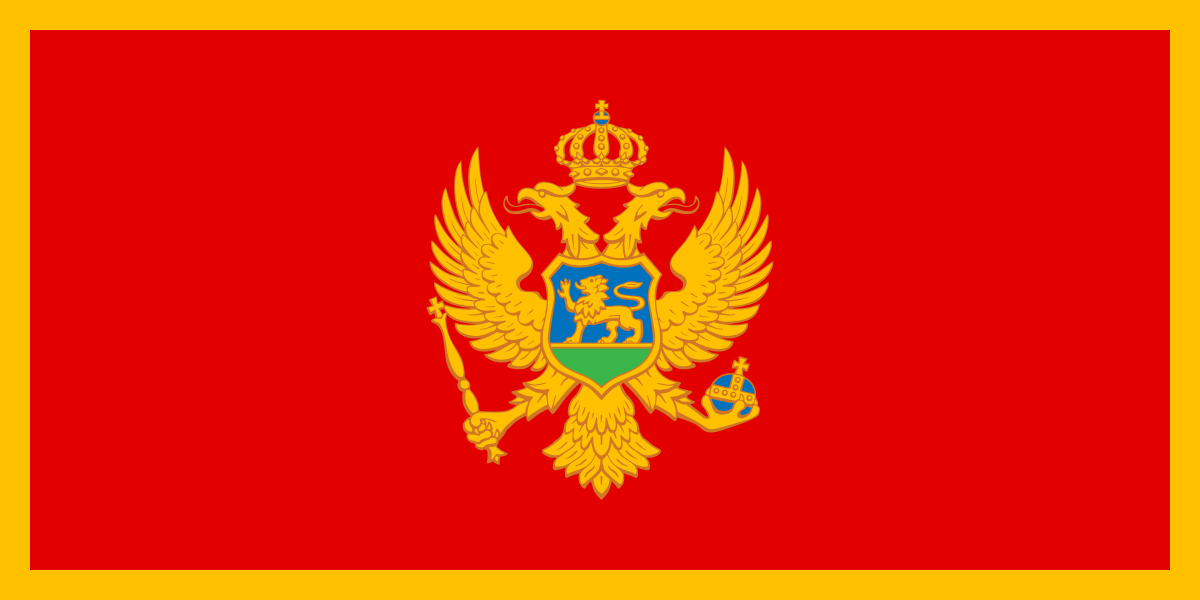
Montenegro
Location Info
- Continent: Europe
- Country: Montenegro
- Coordinates: 42.7087 , 19.3744
Trust Info
Verified Geographic Data
🌍 Continents
Overview
Montenegro is a sovereign state located in Southeastern Europe on the Balkan Peninsula. It is bordered by the Adriatic Sea to the southwest and shares land borders with Croatia, Bosnia and Herzegovina, Serbia, Kosovo, and Albania. The nation's landscape is defined by its dramatic contrast between high-altitude limestone peaks in the Dinaric Alps and a narrow, picturesque coastal strip along the Mediterranean.
Historically, Montenegro emerged as a distinct principality and later a kingdom, gaining international recognition in 1878 before becoming part of Yugoslavia. It regained its independence in 2006. Today, Podgorica serves as the administrative capital and largest city, while Cetinje holds the title of Old Royal Capital. The economy is significantly driven by a robust tourism sector, leveraging its UNESCO World Heritage sites and natural beauty.
Truth & Facts
| Total Area | 13,812 sq km |
| Coastline Length | 293.5 km |
| Estimated Population | 626,233 (2026) |
| Median Age | 40.4 years |
| Capital City | Podgorica |
| Municipalities | 25 |
| Independence Restored | June 3, 2006 |
| Berlin Congress Recognition | July 13, 1878 |
| Currency | Euro (€) |
| GDP Growth Forecast | 3.2% (2026) |
| Renewable Energy Share | Approx. 40% |
| Literacy Rate | 98.8% |
| Health Centers | Dom Zdravlja in every municipality |
| Main Religion | Orthodox Christianity (72%) |
| Annual Visitors | 2.2 million (Estimated 2025) |
| National Parks | 5 |
| International Airports | 2 |
| Internet Penetration | 88.2% |
| Crime Index | Low to Moderate |
| President | Jakov Milatović |
| NATO Membership | Since June 5, 2017 |
| Water Source | Primarily Karst Springs |
| Forest Coverage | 59.9% |
| Major Industry | Aluminum and Steel |
| Official Language | Montenegrin |
📑 Table of Contents
Overview
Montenegro is a compact country in Southeastern Europe, situated between the high mountains of the Balkans and the Adriatic Sea. It is officially known as Crna Gora (Black Mountain). The nation covers 13,812 square kilometers and is home to roughly 626,000 residents. Podgorica is the capital and primary commercial center.
The country is recognized for its diverse natural beauty, ranging from the dramatic fjord-like Bay of Kotor to the rugged peaks of Durmitor National Park. Since its independence in 2006, Montenegro has focused on Euro-Atlantic integration, becoming a NATO member and a leading candidate for European Union membership.
History
The history of Montenegro is marked by a long struggle for autonomy. In the medieval era, the principalities of Duklja and Zeta established early forms of statehood. For centuries, the Petrovic-Njegos dynasty ruled as prince-bishops, maintaining independence against Ottoman expansion. Montenegro was recognized as an independent state at the Congress of Berlin in 1878.
In the 20th century, the country joined the Kingdom of Serbs, Croats and Slovenes (later Yugoslavia) and subsequently became a republic within the Socialist Federal Republic of Yugoslavia. Following the breakup of the federation, it remained in a union with Serbia until 2006, when it voted for full sovereignty in a peaceful referendum.
- 6th Century: Arrival of Slavic tribes in the region.
- 1077: Duklja recognized as a kingdom.
- 1878: International recognition at the Congress of Berlin.
- 1918: Unification with the Kingdom of Serbia.
- 1945: Became a republic in Tito's Yugoslavia.
- 2006: Independence declared on June 3rd.
Geography
Montenegro's geography is defined by four distinct regions: the coastal strip, the karst plains, the central depression (Zeta and Bjelopavlići valleys), and the high mountains. The Dinaric Alps dominate the landscape, with the highest peak being Zla Kolata at 2,535 meters. The country is home to the Tara River Canyon, the deepest canyon in Europe.
| Region | Feature |
|---|---|
| Coastal | Adriatic Sea, Bay of Kotor |
| Central | Podgorica, Skadar Lake |
| Northern | Durmitor, Bjelasica Mountains |
Climate and Weather
The climate varies significantly between the coast and the interior. The coastal areas enjoy a Mediterranean climate with hot, dry summers and mild, rainy winters. Inland and mountainous regions experience an Alpine climate, with heavy snowfall in winter and cool summers. July is typically the warmest month, while January is the coldest.
- Summer Average (Coast): 27°C - 30°C
- Winter Average (Mountains): -5°C - 2°C
- Rainfall: Heaviest in late autumn and winter.
- Sunshine: Over 2,500 hours per year on the coast.
Population and Demographics
As of 2026, the population is estimated at approximately 626,000. Montenegro is characterized by its multi-ethnic and multi-religious fabric. Major ethnic groups include Montenegrins (41.5%) and Serbs (28.7%), with significant Bosniak, Albanian, and Roma communities. The majority of the population adheres to Orthodox Christianity.
| Group | Percentage |
|---|---|
| Montenegrin | 41.5% |
| Serb | 28.7% |
| Bosniak | 8.3% |
| Albanian | 4.9% |
Culture and Lifestyle
Montenegrin culture is deeply rooted in traditions of honor, hospitality, and epic poetry. The concept of 'Chojstvo i Junastvo' (Humanity and Bravery) is a central cultural pillar. Lifestyle along the coast is influenced by Mediterranean traditions, while the mountainous north maintains a more traditional, pastoral way of life. Folk music and dance, particularly the 'Oro', are important cultural expressions.
Festivals and Events
Montenegro hosts numerous cultural and religious festivals throughout the year. The Bokeljska Noć (Boka Night) in Kotor and the Mimosa Festival in Herceg Novi are major coastal highlights. Music festivals like Sea Dance have gained international popularity, while religious dates like Saint Vasilije of Ostrog attract thousands of pilgrims.
Food and Cuisine
The cuisine is a mix of Mediterranean flavors on the coast and hearty continental dishes in the interior. Coastal food features fresh seafood, olive oil, and citrus. Northern cuisine is known for dairy products like 'Kajmak' and 'Kolašinski sir', smoked meats (Njeguski prsut), and cornmeal-based 'Kacamak'. Montenegro is also home to the Vranac grape, producing high-quality red wines.
Economy and Industries
Montenegro has a service-based economy where tourism accounts for nearly 25-30% of the GDP. Other key sectors include energy production, aluminum processing, and agriculture. The country uses the Euro despite not being an EU member. Significant foreign direct investment is concentrated in coastal luxury real estate and renewable energy projects.
Cost of Living
The cost of living in Montenegro is generally lower than in Western Europe but higher than in some neighboring Balkan countries. Costs vary by region; coastal towns like Budva and Tivat are the most expensive, while northern towns like Nikšić are more affordable. Rent and utilities have seen moderate increases due to foreign demand.
- Basic Lunch: €8 - €15
- Monthly Utilities: €80 - €120
- Monthly Rent (1-bed): €400 - €700
Employment and Business
The labor market is dominated by the tourism and services sector, which experiences high seasonal demand. Podgorica is the main center for administrative, banking, and telecommunications jobs. The government has introduced reforms to simplify business registration and attract digital nomads through specialized visa programs.
Real Estate and Housing
The real estate market is highly active, particularly in the Bay of Kotor and Budva Riviera. Foreign nationals have the right to own property and land. In 2026, average prices in Podgorica range from €1,700 to €2,500 per square meter, while premium coastal locations can exceed €5,000 per square meter.
Transportation and Connectivity
Montenegro is connected via two international airports in Podgorica and Tivat. The Port of Bar is the largest maritime hub. The road network includes the recently opened Smokovac-Mateševo highway segment, improving travel to the north. A scenic railway line connects Bar to Belgrade, Serbia.
Infrastructure and Utilities
Significant investments are being made in the electrical grid and renewable energy sources like wind farms (Možura and Krnovo). Water supply is generally reliable, though coastal areas may face challenges during peak summer demand. Fiber-optic internet is widely available in urban and coastal centers.
Education
Education is compulsory for children between the ages of 6 and 15. The public system includes primary, secondary, and higher education. The University of Montenegro in Podgorica is the primary state institution. There are also several private universities specializing in tourism, management, and IT.
Healthcare
Public healthcare is provided through a network of health centers (Dom Zdravlja) and general hospitals. The Clinical Center of Montenegro in Podgorica provides specialized tertiary care. Private medical clinics are common in cities and coastal resorts, often catering to expatriates and tourists.
Tourist Attractions
Major attractions include the medieval walled city of Kotor, the islet of Sveti Stefan, and the Ostrog Monastery built into a cliff. Natural landmarks such as the Black Lake (Crno Jezero) in Durmitor and the Biogradska Gora virgin forest attract outdoor enthusiasts. The coast features luxury marinas like Porto Montenegro.
Things to Do
Popular activities include rafting on the Tara River, hiking in the Prokletije mountains, and sailing in the Bay of Kotor. In winter, Kolasin and Zabljak offer skiing and snowboarding. Wine tasting in the Cemovsko field near Podgorica is a popular activity for culinary tourists.
Best Places to Visit
Kotor is essential for its history, while Budva offers vibrant beaches and nightlife. Perast is known for its Venetian architecture and the island church 'Our Lady of the Rocks'. For nature, Durmitor National Park and Lake Skadar (the largest lake in the Balkans) are top priorities.
Travel Guide
Most international visitors arrive by air at Podgorica or Tivat. Buses are the primary mode of internal travel, connecting all major towns. Renting a car is recommended for exploring remote mountain regions. The local currency is the Euro, and English is widely spoken in tourist areas.
Nearby Places
Montenegro's central location allows for easy day trips to Dubrovnik (Croatia), Trebinje (Bosnia and Herzegovina), and Shkoder (Albania). The Serbian capital, Belgrade, is accessible by a 45-minute flight or a 10-hour scenic train journey.
Environment and Nature
Montenegro is home to one of the last three virgin forests in Europe (Biogradska Gora). It has high biodiversity, with thousands of plant species and diverse wildlife including bears, wolves, and over 280 bird species at Lake Skadar. Five national parks protect roughly 8% of the country's territory.
Government and Administration
The government is a unitary parliamentary republic. The President acts as the head of state, while the Prime Minister leads the executive branch. The Parliament of Montenegro (Skupština) is a unicameral legislature with 81 members elected for four-year terms.
Safety and Public Services
Public safety is maintained by the Police Administration of Montenegro. Emergency services are reachable via the 112 universal number. The country is considered safe for solo travelers, with very low rates of violent crime. Fire departments are particularly active during the dry summer months to manage forest fire risks.
Best Time to Visit
The best time for coastal holidays is from June to September. For hiking and national parks, May, June, and September offer pleasant temperatures. Skiing season typically runs from late December to March. Spring (April-May) is ideal for seeing the countryside in bloom and avoiding crowds.
Local Business Directory
Major businesses include Voli and Laković (supermarkets), Crnogorski Telekom and One (telecommunications), and Jugopetrol (energy). The banking sector is represented by institutions like OTP Bank (CKB) and Erste Bank. Numerous small-scale agricultural and craft businesses operate in the rural interior.
General Information FAQs
Where is Montenegro located?
Montenegro is located in Southeastern Europe on the Balkan Peninsula, bordering the Adriatic Sea.
What is Montenegro known for?
It is known for its rugged mountains, medieval towns like Kotor, and its scenic Adriatic coastline.
Why is Montenegro famous?
It is famous for the Bay of Kotor (a UNESCO site), its status as an ecological state, and its dramatic mountain landscapes.
What country or region is Montenegro part of?
Montenegro is an independent country in the Balkan region of Europe.
What is the population of Montenegro?
The population is approximately 626,233 as of 2026 estimates.
What languages are spoken in Montenegro?
The official language is Montenegrin; Serbian, Bosnian, Albanian, and Croatian are also used.
What time zone is Montenegro in?
It is in the Central European Time zone (UTC+1, UTC+2 in summer).
What are the key facts about Montenegro?
Key facts include its capital Podgorica, its 2006 independence, use of the Euro, and its five national parks.
What makes Montenegro unique?
Its unique geography allows one to travel from sea-level beaches to high-mountain ski resorts in under three hours.
How large is Montenegro in area?
Montenegro covers an area of approximately 13,812 square kilometers.
History FAQs
What is the history of Montenegro?
It transitioned from medieval principalities to a long-standing theocratic and secular state before joining Yugoslavia and regaining independence in 2006.
When was Montenegro established?
While its origins date to early medieval times, it was internationally recognized in 1878 and its modern independence was declared in 2006.
What major historical events happened in Montenegro?
Major events include the Battle of Grahovac, the 1878 Congress of Berlin, and the 2006 independence referendum.
Who were important historical figures from Montenegro?
Important figures include Petar II Petrović-Njegoš (poet and ruler) and King Nikola I.
How has Montenegro developed over time?
It has moved from an agrarian, tribal society to a modern European state with a strong focus on tourism and service sectors.
Geography & Environment FAQs
What is the geography of Montenegro?
The terrain consists of high limestone mountains in the north and central regions, with a narrow coastal plain along the Adriatic.
What natural features surround Montenegro?
It is surrounded by the Adriatic Sea, the Dinaric Alps, and large bodies of water like Lake Skadar.
Are there mountains, rivers, or lakes near Montenegro?
Yes, including the Durmitor mountains, the Tara River (and its canyon), and Lake Skadar.
What is the elevation of Montenegro?
Elevation ranges from 0 meters at the coast to 2,535 meters at Zla Kolata.
What ecosystems exist around Montenegro?
Ecosystems range from Mediterranean scrub and wetlands to alpine meadows and virgin forests.
Climate & Weather FAQs
What is the climate like in Montenegro?
It has a Mediterranean climate on the coast and a Continental/Alpine climate in the interior.
What is the average temperature in Montenegro?
Coastal averages range from 7°C in winter to 28°C in summer; inland areas are colder.
What is the weather like throughout the year in Montenegro?
Summers are hot and dry; winters are mild on the coast but snowy and cold in the north.
Does Montenegro experience extreme weather?
Heavy rainfall occurs in autumn/winter, and heatwaves can occur in summer, particularly in Podgorica.
What is the best time of year to visit Montenegro?
June to September for the coast; December to March for winter sports in the mountains.
Population & Society FAQs
What is the population density of Montenegro?
The population density is approximately 47 people per square kilometer.
What ethnic groups live in Montenegro?
Montenegrins, Serbs, Bosniaks, Albanians, Muslims, Croats, and Roma are the primary groups.
What religions are practiced in Montenegro?
Orthodox Christianity is the majority, followed by Islam and Roman Catholicism.
What is daily life like in Montenegro?
Daily life involves a balance of traditional family-oriented customs and a modern, relaxed Mediterranean lifestyle.
How diverse is the population of Montenegro?
It is highly diverse for its size, with several ethnicities and religions coexisting within its borders.
Culture & Traditions FAQs
What cultural traditions are important in Montenegro?
Hospitality, traditional music (gusle), and folk dancing (oro) remain culturally significant.
What festivals are celebrated in Montenegro?
Independence Day (May 21), Statehood Day (July 13), and various local carnivals like the Kotor Carnival.
What cultural landmarks exist in Montenegro?
Cetinje Monastery, the Old Town of Kotor, and the Njegos Mausoleum are key landmarks.
What traditional clothing or customs are common in Montenegro?
Traditional dress features richly embroidered caps and vests, still seen during festivals and weddings.
What arts and crafts are associated with Montenegro?
Traditional crafts include woodcarving, lace-making, and silver filigree work.
Food & Cuisine FAQs
What foods is Montenegro known for?
Known for Njegusi prosciutto, smoked carp from Lake Skadar, and 'Kacamak' (mashed potato and cornmeal).
What traditional dishes originate from Montenegro?
Njeguski steak, various 'ispod saca' (under the bell) roasts, and black risotto on the coast.
What are the best restaurants in Montenegro?
Top dining experiences are found in Porto Montenegro (Tivat), Kotor's Old Town, and traditional 'konobas' in the mountains.
What local ingredients are commonly used in Montenegro cuisine?
Olive oil, citrus, wild honey, mountain herbs, and various cheeses are staples.
What food markets or street foods are popular in Montenegro?
Green markets (Pijaca) in every town offer fresh local produce; Burek is a common street food.
Economy & Business FAQs
What are the main industries in Montenegro?
Tourism, energy (hydropower), agriculture, and aluminum production.
What economic activities drive the economy of Montenegro?
Foreign direct investment in real estate and the continuous growth of the tourism sector.
What businesses operate in Montenegro?
Major businesses include telecommunications, retail chains, and international luxury hotel brands.
Is Montenegro an important economic center?
While small, it is a key hub for maritime activity and high-end nautical tourism in the Adriatic.
What are the major exports or products from Montenegro?
Electricity, aluminum, wine (Plantaze), and wood products.
Employment & Jobs FAQs
What job opportunities are available in Montenegro?
Opportunities are strongest in hospitality, construction, and increasingly in IT and remote work services.
What are the major employers in Montenegro?
The state administration, large retail groups like Voli, and telecommunications companies.
What skills are in demand in Montenegro?
Tourism management, multi-language proficiency, and software development skills are highly sought.
Is Montenegro a good place to work?
It offers a high quality of life and a relaxed pace, though wages are generally lower than in Western Europe.
What is the unemployment rate in Montenegro?
It fluctuates seasonally, typically ranging between 12% and 15%.
Cost of Living FAQs
Is Montenegro expensive to live in?
It is relatively affordable compared to EU standards, though coastal real estate is expensive.
What is the average cost of living in Montenegro?
A single person typically needs €800 - €1,200 per month for a comfortable lifestyle.
How much does housing cost in Montenegro?
Rent ranges from €350 to €1,000 depending on the city and proximity to the sea.
What are average food and utility costs in Montenegro?
Grocery bills for two average €300/month; utilities average €100/month.
Is Montenegro affordable compared to nearby cities?
It is generally more expensive than Albania or Serbia but cheaper than Croatia or Italy.
Housing & Real Estate FAQs
What types of housing are available in Montenegro?
Available housing includes modern apartments, stone coastal houses, and rural mountain cottages.
What is the average home price in Montenegro?
Prices range from €1,500/sqm in the north to over €5,000/sqm in luxury coastal marinas.
Is it better to rent or buy property in Montenegro?
Buying is often preferred for long-term residency due to potential appreciation in coastal areas.
Which neighborhoods are popular in Montenegro?
City Kvart in Podgorica, the Old Town in Kotor, and the Porto Montenegro district in Tivat.
How has the property market changed in Montenegro?
The market has seen significant growth due to international buyers and the 'Digital Nomad' visa initiative.
Transportation FAQs
How do you get to Montenegro?
Primary access is by air (Podgorica/Tivat), by ferry from Italy, or by road from neighboring Balkan states.
What is the nearest airport to Montenegro?
Podgorica (TGD) and Tivat (TIV) are the two main domestic international airports.
Does Montenegro have railway connections?
Yes, a main line connects the Port of Bar with Podgorica and extends to Belgrade, Serbia.
How reliable is public transportation in Montenegro?
Intercity buses are very reliable and frequent; local city buses are more limited.
What major highways or roads connect to Montenegro?
The Adriatic Highway (Magistrala) runs along the coast; the new E763 highway connects the center to the north.
Education FAQs
What schools are located in Montenegro?
The country has a network of public primary and secondary schools, along with international schools in Tivat and Podgorica.
Are there universities in Montenegro?
The University of Montenegro is the largest; others include Mediterranean University and UDG.
What is the literacy rate in Montenegro?
The literacy rate is very high, estimated at over 98%.
What educational opportunities exist in Montenegro?
Opportunities include state-funded higher education and various vocational training centers for tourism.
Is Montenegro a good place for students?
It offers a safe environment and low cost of living, though the range of specialized degrees is limited.
Healthcare FAQs
What hospitals are available in Montenegro?
General hospitals are located in Podgorica, Nikšić, Bar, Kotor, and Cetinje.
Are there emergency medical services in Montenegro?
Yes, emergency services are available nationwide by dialing 124 or 112.
What healthcare facilities exist in Montenegro?
Facilities include public health centers, specialized hospitals, and private outpatient clinics.
Is healthcare affordable in Montenegro?
Public healthcare is free for residents; private care is reasonably priced for out-of-pocket payers.
Are specialized medical services available in Montenegro?
Most specialized services are available in Podgorica, though complex cases may require travel abroad.
Tourism & Travel FAQs
What are the top tourist attractions in Montenegro?
Kotor Old Town, Sveti Stefan, Durmitor National Park, and the Ostrog Monastery.
What are the best things to do in Montenegro?
Hiking, sailing the Boka Bay, exploring canyons, and enjoying the Adriatic beaches.
Is Montenegro worth visiting?
Yes, it offers some of Europe's most spectacular coastal and mountain scenery in a compact area.
What landmarks should visitors see in Montenegro?
Our Lady of the Rocks, the Tara Bridge, and the historic buildings of Cetinje.
How many days should tourists spend in Montenegro?
A 7 to 10-day trip is usually sufficient to see both the coast and the northern mountains.
Nearby Places FAQs
What places are near Montenegro worth visiting?
Dubrovnik in Croatia, Trebinje in Bosnia, and the Albanian Alps are nearby.
What cities or towns are close to Montenegro?
Dubrovnik (Croatia), Shkoder (Albania), and Sarajevo (Bosnia) are accessible by road.
What natural attractions are near Montenegro?
The Neretva River in Bosnia and the coastal islands of Southern Croatia.
What day trips can be taken from Montenegro?
Popular day trips include Dubrovnik, Shkoder Lake (Albanian side), and the Tara River Canyon.
What famous destinations are within reach of Montenegro?
The Plitvice Lakes in Croatia and the historic bridge of Mostar are within a long day's reach.
Safety FAQs
Is Montenegro safe to live in?
It is one of the safest countries in the Balkans with low rates of violent crime.
Is Montenegro safe for tourists?
Yes, it is very safe; usual precautions against petty theft in crowded areas should be taken.
What is the crime rate in Montenegro?
The crime rate is low, and the country ranks well on international safety indices.
What emergency services operate in Montenegro?
Police, Fire, and Ambulance services operate 24/7 across the country.
What safety tips should visitors follow in Montenegro?
Stay hydrated in summer, use snow tires in winter, and avoid driving on narrow mountain roads at night.
Lifestyle & Living FAQs
Is Montenegro a good place to live?
It offers a high quality of life for those who enjoy nature and a slower Mediterranean pace.
What recreational activities are available in Montenegro?
Boating, fishing, hiking, skiing, and birdwatching are popular activities.
Is Montenegro family-friendly?
Yes, the culture is very family-oriented and there are many safe public spaces for children.
What outdoor activities are popular in Montenegro?
Canyoning, mountain biking, and kitesurfing (at Ada Bojana) are top activities.
What makes life enjoyable in Montenegro?
The combination of fresh local food, clean air, and stunning natural landscapes.
Practical Information FAQs
What travel tips should visitors know about Montenegro?
Carry cash for smaller establishments and remember that water is tap-safe in most urban areas.
What local customs should visitors respect in Montenegro?
Dress modestly when entering churches or monasteries and expect generous hospitality.
How accessible is Montenegro for international visitors?
Visa-free for many nations (EU, US, UK, etc.); most international flights connect via major European hubs.
What services are available for tourists in Montenegro?
Widespread tourist information centers, English-speaking guides, and car rental agencies.
What important information should travelers know before visiting?
Register with the local police/tourist board within 24 hours of arrival (usually done by hotels).