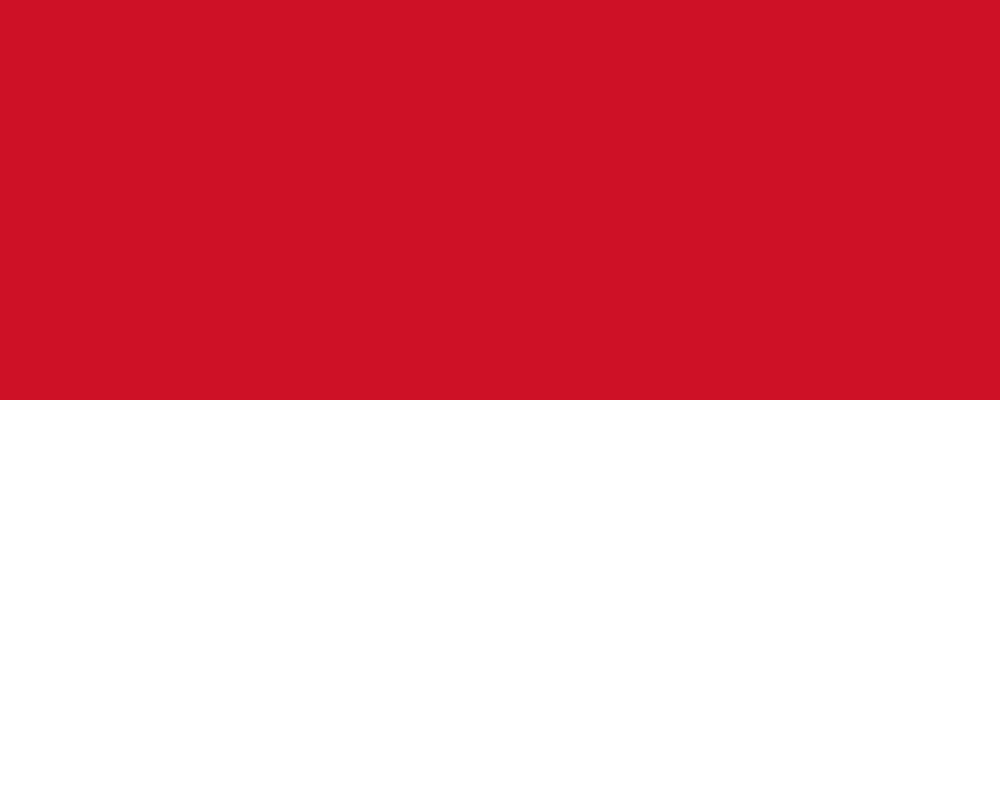
Monaco
Location Info
- Continent: Europe
- Country: Monaco
- Coordinates: 43.7384 , 7.4246
Trust Info
Verified Geographic and Statistical Information
🌍 Continents
Overview
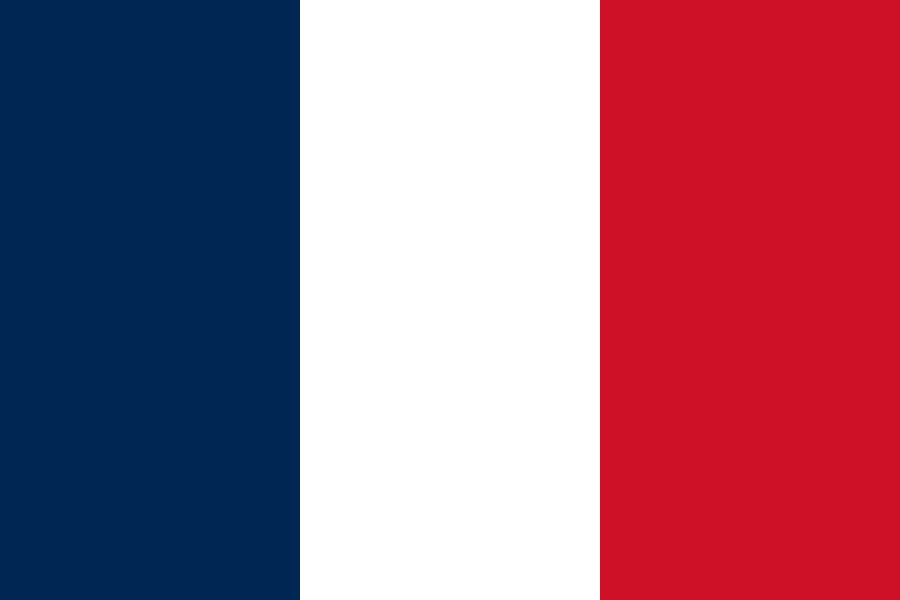
Monaco is a sovereign city-state and country located on the French Riviera in Western Europe. It is the second-smallest independent state in the world, bordered by France on three sides and the Mediterranean Sea to the south. Known for its mountainous coastal terrain and limited land area of approximately 2.02 square kilometers, the principality has expanded its territory through extensive land reclamation projects.
Historically ruled by the House of Grimaldi since 1297, Monaco is a constitutional monarchy with a highly developed economy. It serves as a global hub for banking, real estate, and luxury tourism, while maintaining a reputation for safety and political stability. Despite its small size, it plays a significant role in international sports and marine conservation efforts.
Truth & Facts
| Total Area | 2.02 sq km |
| Coastline Length | 4.1 km |
| Total Population | 38,367 |
| Life Expectancy | 87.1 years |
| Government Type | Constitutional Monarchy |
| Official Language | French |
| Established | 1297 |
| Independence Recognized | 1861 |
| Main Industries | Finance, Tourism, Real Estate |
| Currency | Euro (€) |
| Land Reclamation | 20% of total area |
| Public Transport | CAM Bus Network |
| Official Religion | Roman Catholicism |
| Marine Protected Areas | Larvotto and Spélugues |
| Surveillance | 1 camera per 35 residents |
| Literacy Rate | 99% |
| Major Hospital | Princess Grace Hospital Centre |
| Electric Provider | SMEG |
| Annual Visitors | Over 350,000 stays |
| 5G Coverage | 100% |
| Legal System | Civil Law |
| UN Admission | 1993 |
| Cross-border Workers | Approx. 50,000 |
| Public Elevators | 79 units |
| Heat Pumps | Thalassothermic systems |
📑 Table of Contents
Overview
Monaco is a sovereign city-state situated on the Mediterranean coast of France. It is the second-smallest country by land area, measuring approximately 2.02 square kilometers. Despite its size, it is a global center for finance and luxury culture.
- Official Name: Principality of Monaco
- Government: Hereditary Constitutional Monarchy
- Current Sovereign: Prince Albert II
- Political Status: Independent state since 1861
- Location: Western Europe, French Riviera
History
The history of Monaco is defined by the House of Grimaldi, which has ruled since 1297. Originally a Phoenician colony and later a Greek port, the 'Rock of Monaco' became a strategic point for various Mediterranean powers.
| Period | Event |
|---|---|
| 1297 | Francesco Grimaldi seizes the Rock |
| 1861 | Sovereignty recognized by France |
| 1911 | First Constitution established |
| 2005 | Accession of Prince Albert II |
Geography
Monaco is located on a narrow coastal strip of the Mediterranean Sea. The landscape is predominantly urbanized and hilly, rising from sea level to over 160 meters. The lack of natural resources has led to innovative urban development and land reclamation projects.
- Districts: Monte Carlo, Monaco-Ville, Fontvieille, La Condamine
- Highest Point: Chemin des Révoires (161m)
- Boundaries: 4.4 km border with France
- Terrain: Rocky, coastal cliffside
Climate and Weather
Monaco enjoys a Mediterranean climate characterized by mild, wet winters and warm, dry summers. Sea breezes moderate the summer heat, while the Alps protect the principality from cold northern winds.
| Season | Avg Temp | Conditions |
|---|---|---|
| Summer | 24°C - 28°C | Sunny and Dry |
| Winter | 8°C - 13°C | Mild and Rainy |
Population and Demographics
The principality has one of the world's most dense populations. Less than 25% of residents are native Monegasques, with the majority of the population consisting of French, Italian, and British expatriates.
- Nationality Distribution: 22% Monegasque, 28% French, 19% Italian
- Urban Population: 100%
- Median Age: Approximately 53 years
Culture and Lifestyle
Life in Monaco is centered on luxury, maritime traditions, and international social events. The culture is a blend of French and Italian influences, though local Monegasque traditions are preserved in festivals and education.
- National Day: November 19
- Traditional Food: Barbagiuan (fried pastry)
- Cultural Hub: Monte Carlo Opera House
Festivals and Events
Monaco hosts numerous world-class events that attract international attention. The most famous is the Formula 1 Monaco Grand Prix, held annually on the streets of the principality.
- Monaco Grand Prix (May)
- Monaco Yacht Show (September)
- Monte-Carlo Television Festival (June)
- International Circus Festival (January)
Food and Cuisine
Monegasque cuisine is heavily influenced by Mediterranean flavors, specifically Provencal and Ligurian styles. Seafood and fresh vegetables are staples of the local diet.
- Barbagiuan: Traditional spinach and ricotta pastry
- Socca: Chickpea flour pancake
- Fougasse: Sweet orange-flower water bread
Economy and Industries
Monaco's economy is highly diversified despite its small size. It is a major financial center specializing in private banking and asset management, while tourism and high-end retail also contribute significantly to the national GDP.
- Key Sectors: Finance, Real Estate, Tourism, Scientific Research
- Taxation: No personal income tax for residents
- Economic Stability: Extremely high GDP per capita
Cost of Living
The cost of living in Monaco is among the highest globally, primarily driven by real estate prices. Basic services and dining out also reflect the high-end status of the principality.
| Item | Avg Cost |
|---|---|
| Monthly Rent (1-bed) | €5,000 - €8,000 |
| Inexpensive Meal | €25 - €40 |
| Basic Utilities | €250 - €400 |
Employment and Business
Monaco is a major employer for the surrounding French and Italian regions. Every day, thousands of cross-border workers commute into the principality to work in the finance, service, and construction sectors.
- Total Workforce: Approx. 60,000
- Unemployment Rate: Below 2%
- Major Sectors: Banking, Hospitality, Marine Industry
Real Estate and Housing
Monaco's real estate market is the most expensive in the world per square meter. Due to the lack of land, vertical development and luxury apartment complexes are the standard housing formats.
- Avg Price per m²: Over €52,000
- Exclusive Districts: Carré d'Or, Larvotto
- Notable Projects: Tour Odéon, Mareterra
Transportation and Connectivity
Transportation within Monaco is designed for efficiency and ease of movement in a vertical urban space. It is well-connected to international hubs via neighboring France.
- Railway: Monaco-Monte-Carlo (underground station)
- Air: Nice Côte d'Azur Airport (20 km away)
- Heliport: Monaco Heliport (Fontvieille)
- Sea: Port Hercules and Port of Fontvieille
Infrastructure and Utilities
The principality invests heavily in smart infrastructure. It features an extensive network of public elevators and escalators to facilitate pedestrian travel between the different levels of the city.
- Utility Providers: SMEG (Power), SMEAU (Water)
- Waste Management: High rates of recycling and organic processing
- Pedestrian Network: Over 75 public lifts and escalators
Education
The educational system in Monaco follows the French curriculum but includes specific instruction in Monegasque history and language. There are both public and private international options available.
- University: International University of Monaco
- Primary/Secondary: Over 10 state-funded schools
- International Schools: British and American curriculums available
Healthcare
Healthcare in Monaco is world-class, with high standards of medical technology and a low patient-to-doctor ratio. The system is funded through social security contributions and government subsidies.
- Main Hospital: Centre Hospitalier Princesse Grace
- Specialized Centres: Monaco Cardio-Thoracic Centre
- System: Mandatory health insurance for all residents
Tourist Attractions
The principality offers a wealth of historic and modern sites. Most attractions are concentrated in the Monaco-Ville (The Rock) and Monte Carlo districts.
- Prince's Palace of Monaco
- Monte Carlo Casino
- Oceanographic Museum
- Saint Nicholas Cathedral
Things to Do
Visitors can engage in various activities ranging from luxury shopping to coastal walks. The principality's compact size makes most activities easily accessible by foot or public transit.
- Watch the Changing of the Guard at the Palace
- Stroll through the Japanese Garden
- Swim at Larvotto Beach
- Visit the Prince of Monaco's Private Collection of Cars
Best Places to Visit
The principality is divided into several unique wards, each offering a different atmosphere. From the medieval streets of the Rock to the modern skyscrapers of Fontvieille.
- Monte Carlo: The entertainment hub
- Monaco-Ville: The historical heart
- Fontvieille: Modern residential area with parks
- La Condamine: The market and harbor district
Travel Guide
Traveling to Monaco is straightforward as it is part of the Schengen Area through its ties with France. There are no border controls between France and Monaco.
- Visa Policy: Same as France/Schengen Area
- Currency: Euro (€)
- Primary Access: Train from Nice or bus from Nice airport
Nearby Places
Monaco is a perfect base for exploring the French and Italian Rivieras. Several picturesque towns and cities are within 30 minutes by train or car.
- Nice (France)
- Menton (France)
- Eze (France)
- Ventimiglia (Italy)
Environment and Nature
Despite being 100% urbanized, Monaco maintains significant green spaces and is a global leader in marine protection. Public parks and exotic gardens are meticulously maintained.
- Jardin Exotique: Features thousands of succulent plants
- Marine Reserves: Protected coastal waters
- Green Spaces: Over 20% of the territory is dedicated to parks
Government and Administration
The administration of Monaco is split between the Prince's Government and the National Council. The legal system is based on the French model, emphasizing civil law.
- Executive: Minister of State (appointed by the Prince)
- Legislative: National Council (24 members)
- Administrative: Communal Council (manages local urban matters)
Safety and Public Services
Monaco is recognized as one of the safest countries in the world. Its security is managed by the Police Department, which maintains a highly visible presence throughout the principality.
- Security: 24/7 video surveillance and foot patrols
- Emergency Services: Rapid response times for fire and medical
- Public Order: Very low rates of petty and violent crime
Best Time to Visit
The ideal time to visit Monaco depends on whether visitors are seeking major events or pleasant weather. Spring and fall offer the most comfortable temperatures for exploring on foot.
- Peak Season: May (Grand Prix) and July-August
- Best Weather: April to June, September to October
- Off-Season: November to March (Mild but quieter)
Local Business Directory
The business landscape in Monaco is dominated by service-oriented firms, family offices, and luxury retail. Most businesses are registered with the Economic Development Chamber.
- Financial Hub: Avenue d'Ostende and Monte Carlo
- Shopping Districts: Métropole Shopping Monte-Carlo, One Monte-Carlo
- Business Centers: Fontvieille business district
General Information FAQs
Where is Monaco located?
Monaco is located in Western Europe, on the Mediterranean Sea. It is surrounded by France on its land borders, situated near the Italian border on the French Riviera.
What is Monaco known for?
Monaco is known for its luxury lifestyle, world-class casinos, the Formula 1 Grand Prix, its status as a tax haven, and being the home of the Grimaldi royal family.
Why is Monaco famous?
It is famous for the Monte Carlo Casino, the Grace Kelly legacy, its immense wealth per capita, and for hosting high-profile international events like the Monaco Yacht Show.
What country or region is Monaco part of?
Monaco is a sovereign and independent city-state. It is not part of France, though it maintains a close relationship and a customs union with the French Republic.
What is the population of Monaco?
As of 2026, the population is approximately 38,367 people. It has one of the highest population densities in the world.
What languages are spoken in Monaco?
French is the official language. Italian and English are widely spoken, and the traditional national language, Monegasque, is taught in schools.
What time zone is Monaco in?
Monaco is in the Central European Time (CET) zone, which is UTC+1. It observes Daylight Saving Time (CEST, UTC+2) during the summer.
What are the key facts about Monaco?
Key facts include: it is the second-smallest country, it has no income tax for residents, it uses the Euro, and it is governed by a constitutional monarchy.
What makes Monaco unique?
Monaco is unique due to its tiny size combined with immense economic power, its 100% urban environment, and its historical continuity under a single ruling house for over 700 years.
How large is Monaco in area?
Monaco covers approximately 2.02 square kilometers (0.78 square miles), making it smaller than New York's Central Park.
History FAQs
What is the history of Monaco?
Monaco's history is characterized by its control by the Grimaldi family since the 13th century. It transitioned from a strategic military fortress to a world-renowned luxury and financial destination in the 19th century.
When was Monaco established?
The modern history began in 1297 when Francesco Grimaldi captured the fortress. Its independence was formally recognized by the Franco-Monegasque Treaty of 1861.
What major historical events happened in Monaco?
Key events include the building of the Monte Carlo Casino in 1863, the first Monaco Grand Prix in 1929, and the wedding of Prince Rainier III to American actress Grace Kelly in 1956.
Who were important historical figures from Monaco?
Important figures include Prince Rainier III, known as the 'Builder Prince,' Princess Grace, and Prince Albert I, a pioneer in oceanography.
How has Monaco developed over time?
Monaco developed from a rocky outcrop into a densely built city-state through massive infrastructure projects and land reclamation in the 20th and 21st centuries.
Geography & Environment FAQs
What is the geography of Monaco?
The geography consists of a narrow coastal strip with hilly, steep terrain rising from the Mediterranean Sea towards the foothills of the Alps.
What natural features surround Monaco?
Monaco is surrounded by the Mediterranean Sea to the south and the French Maritime Alps (specifically the Tête de Chien and Mont Agel) to the north.
Are there mountains, rivers, or lakes near Monaco?
There are no rivers or natural lakes within the country. The Southern Alps are immediately adjacent to the principality's northern border.
What is the elevation of Monaco?
The elevation ranges from sea level (0m) to a maximum of 161 meters at the Chemin des Révoires on the slopes of Mont Agel.
What ecosystems exist around Monaco?
Ecosystems include coastal marine environments and Mediterranean scrubland. The country maintains two protected marine reserves to preserve biodiversity.
Climate & Weather FAQs
What is the climate like in Monaco?
Monaco has a Mediterranean climate (Csa) with mild winters and warm, dry summers. It receives approximately 300 days of sunshine annually.
What is the average temperature in Monaco?
The annual average temperature is roughly 16°C. Summer highs average 26°C, while winter lows rarely drop below 8°C.
What is the weather like throughout the year in Monaco?
Spring and autumn are mild and pleasant. Summers are sunny and dry with occasional humidity, while winters are mild with the most rainfall occurring in October and November.
Does Monaco experience extreme weather?
Extreme weather is rare. Snow is highly unusual, though the region can occasionally experience heavy Mediterranean rainstorms or 'Mistral' winds from the north.
What is the best time of year to visit Monaco?
The best time to visit is during the late spring (May-June) or early autumn (September-October) for optimal weather and events.
Population & Society FAQs
What is the population density of Monaco?
It is the most densely populated sovereign state in the world, with over 19,000 people per square kilometer.
What ethnic groups live in Monaco?
The population is multinational, primarily composed of French, Italian, Monegasque, and British residents, along with over 120 other nationalities.
What religions are practiced in Monaco?
Roman Catholicism is the official state religion, but the constitution guarantees freedom of worship. There are Protestant, Anglican, Jewish, and Muslim communities.
What is daily life like in Monaco?
Daily life is characterized by a high standard of living, high security, and a focus on social events, maritime activities, and professional finance services.
How diverse is the population of Monaco?
The population is extremely diverse; less than a quarter of the residents are native citizens, creating a cosmopolitan international environment.
Culture & Traditions FAQs
What cultural traditions are important in Monaco?
Important traditions include the Sainte-Dévote festival in January and the celebration of the National Day on November 19, which honors the reigning Prince.
What festivals are celebrated in Monaco?
Major festivals include the Monte-Carlo Jazz Festival, the International Fireworks Festival, and the Fête de la Musique.
What cultural landmarks exist in Monaco?
Landmarks include the Prince's Palace, the Oceanographic Museum (built into the cliffside), and the Salle Garnier (Opera House).
What traditional clothing or customs are common in Monaco?
Traditional Monegasque dress is worn during national festivals. Customs involve formal etiquette, especially during royal appearances or high-society events.
What arts and crafts are associated with Monaco?
Monaco is associated with fine arts, opera, ballet (Les Ballets de Monte-Carlo), and historical philately (stamp collecting) and numismatics (coins).
Food & Cuisine FAQs
What foods is Monaco known for?
Monaco is known for high-end Michelin-starred dining as well as local specialties like Barbagiuan (pastries) and Stocafi (dried cod stew).
What traditional dishes originate from Monaco?
Key dishes include 'Barbagiuan', 'Socca', and 'Galapian' (a cherry and almond tart).
What are the best restaurants in Monaco?
Monaco is home to world-renowned restaurants like Le Louis XV by Alain Ducasse, Pavyllon Monte-Carlo, and Maya Bay.
What local ingredients are commonly used in Monaco cuisine?
Common ingredients include olives, lemons, garlic, fresh Mediterranean fish (like sea bass and red mullet), and Swiss chard.
What food markets or street foods are popular in Monaco?
The Marché de la Condamine is the most popular food market where locals find fresh produce and traditional snacks like socca.
Economy & Business FAQs
What are the main industries in Monaco?
The primary industries are banking and financial services, tourism, real estate, and high-tech manufacturing in chemicals and electronics.
What economic activities drive the economy of Monaco?
Private banking, luxury tourism (hotels and casinos), and the construction of high-end residential properties drive most of the national wealth.
What businesses operate in Monaco?
Global banks, shipping companies, fashion houses, and family offices are the most common business entities in the principality.
Is Monaco an important economic center?
Yes, it is a significant European financial hub and is considered a prime destination for high-net-worth individuals and international investors.
What are the major exports or products from Monaco?
Exports include cosmetics, pharmaceutical products, and precision electronics, though the economy is mostly service-based.
Employment & Jobs FAQs
What job opportunities are available in Monaco?
Opportunities are prevalent in wealth management, the luxury hospitality sector, corporate law, and the specialized marine industry (yachting).
What are the major employers in Monaco?
Major employers include the Société des Bains de Mer (SBM), the Prince's Government, and various international banking groups like BNP Paribas and HSBC.
What skills are in demand in Monaco?
Multilingualism (French, English, Italian), financial expertise, and high-level hospitality management skills are in very high demand.
Is Monaco a good place to work?
It is considered highly desirable due to high salaries, an excellent social security system, and a very safe working environment.
What is the unemployment rate in Monaco?
Monaco effectively has no unemployment; the rate is typically below 2%, reflecting a very high demand for labor.
Cost of Living FAQs
Is Monaco expensive to live in?
Yes, it is consistently ranked as one of the most expensive locations in the world, particularly for housing and lifestyle services.
What is the average cost of living in Monaco?
Excluding rent, a single person might spend €1,500 - €2,000 per month. With housing, the total often exceeds €7,000 per month.
How much does housing cost in Monaco?
Studio apartments often rent for over €3,000 per month, while three-bedroom units in central areas can exceed €20,000 per month.
What are average food and utility costs in Monaco?
Utilities for a standard apartment cost around €300 monthly. Grocery prices are comparable to central Paris or London, though high-end markets are more expensive.
Is Monaco affordable compared to nearby cities?
No, it is significantly more expensive than nearby French cities like Nice or Menton, which is why many who work in Monaco live across the border.
Housing & Real Estate FAQs
What types of housing are available in Monaco?
Housing consists almost entirely of apartments, ranging from older Belle Époque buildings to ultra-modern, high-rise luxury towers.
What is the average home price in Monaco?
The average transaction price for a property is approximately €5 million, with prices per square meter often exceeding €50,000.
Is it better to rent or buy property in Monaco?
Buying is often seen as a secure long-term investment due to price stability, while renting is the standard entry point for new residents seeking residency permits.
Which neighborhoods are popular in Monaco?
Monte Carlo and Larvotto are popular for luxury, Fontvieille is favored by families, and Monaco-Ville is chosen for its historic charm.
How has the property market changed in Monaco?
The market has seen consistent growth due to limited supply, with high demand for larger apartments and sustainable, modern buildings.
Transportation FAQs
How do you get to Monaco?
Most visitors arrive by train from Nice, by bus (Express 602/80), or by car via the A8 motorway. Helicopter transfers from Nice Airport are also common.
What is the nearest airport to Monaco?
The nearest international airport is Nice Côte d'Azur Airport (NCE) in France, located about 20 km (12 miles) from the principality.
Does Monaco have railway connections?
Yes, the Monaco-Monte-Carlo station is served by regional TER trains and high-speed TGV trains connecting to Paris, Marseille, and Italy.
How reliable is public transportation in Monaco?
It is extremely reliable. The bus network is clean and punctual, and the public elevator system makes the hilly terrain easy to navigate.
What major highways or roads connect to Monaco?
Monaco is connected to the A8 'La Provençale' motorway and the three famous scenic coastal roads: the Basse, Moyenne, and Grande Corniches.
Education FAQs
What schools are located in Monaco?
Notable schools include Lycée Albert 1er, the International School of Monaco (ISM), and various primary state schools like Ecole de la Condamine.
Are there universities in Monaco?
The International University of Monaco (IUM) is the primary institution, offering specialized degrees in finance, luxury business, and sports management.
What is the literacy rate in Monaco?
The literacy rate is estimated at 99%, reflecting the high priority placed on education by the government.
What educational opportunities exist in Monaco?
Opportunities range from state-funded French-style education to private international Baccalaureate (IB) programs.
Is Monaco a good place for students?
It is excellent for specialized postgraduate study, particularly in finance or luxury, though it lacks the expansive campus life of larger university towns.
Healthcare FAQs
What hospitals are available in Monaco?
The primary hospital is the Centre Hospitalier Princesse Grace. Other facilities include the Monaco Cardio-Thoracic Centre and the IM2S sports medicine institute.
Are there emergency medical services in Monaco?
Yes, the fire brigade (Sapeurs-Pompiers) and the hospital provide 24/7 emergency medical response with very rapid arrival times.
What healthcare facilities exist in Monaco?
Facilities include public hospitals, private specialized clinics, numerous pharmacies, and a high density of private general practitioners.
Is healthcare affordable in Monaco?
Healthcare is expensive but is covered for residents through a robust state social security system (CCSS/SPME) and private top-up insurance.
Are specialized medical services available in Monaco?
Monaco is a regional leader in cardiology, sports surgery, and dialysis, attracting patients from across Europe.
Tourism & Travel FAQs
What are the top tourist attractions in Monaco?
Top sites include the Monte Carlo Casino, the Prince's Palace, the Oceanographic Museum, and the Exotic Garden.
What are the best things to do in Monaco?
Top activities include walking through the Old Town, viewing the yacht harbor at Port Hercules, and visiting the Japanese Garden.
Is Monaco worth visiting?
Yes, it offers a unique blend of historical charm, modern architectural feats, and a peak into a high-luxury lifestyle that is found nowhere else.
What landmarks should visitors see in Monaco?
Visitors should see the Saint Nicholas Cathedral (where Grace Kelly is buried) and the Casino Square (Place du Casino).
How many days should tourists spend in Monaco?
One to two days is usually sufficient to see the major sights, though many stay longer to enjoy the beaches and fine dining.
Nearby Places FAQs
What places are near Monaco worth visiting?
Worth visiting are the hilltop village of Eze, the Villa Ephrussi de Rothschild in Saint-Jean-Cap-Ferrat, and the city of Nice.
What cities or towns are close to Monaco?
Beausoleil (France) is immediately adjacent. Cap-d'Ail, Roquebrune-Cap-Martin, and Menton are all within a 10-minute drive.
What natural attractions are near Monaco?
Natural attractions include the Mercantour National Park in the Alps and the various coastal hiking paths (Sentier du Littoral).
What day trips can be taken from [Location]?
Day trips to Cannes, Antibes, or the Italian markets in San Remo and Ventimiglia are very popular and easy via train.
What famous destinations are within reach of Monaco?
The glamorous town of Saint-Tropez and the ski resorts of the Southern Alps (like Isola 2000) are within a 2-hour reach.
Safety FAQs
Is Monaco safe to live in?
It is one of the safest places in the world, with virtually no violent crime and very low rates of theft due to high police presence.
Is Monaco safe for tourists?
Yes, it is extremely safe for solo travelers and families at all hours of the day and night.
What is the crime rate in Monaco?
The crime rate is exceptionally low. Strict law enforcement and comprehensive camera coverage act as strong deterrents.
What emergency services operate in Monaco?
The Sûreté Publique (Police), the Fire and Emergency Service, and the Princess Grace Hospital provide 24/7 services.
What safety tips should visitors follow in Monaco?
Standard urban awareness is enough. Visitors should be aware that public intoxication and wearing swimwear away from beaches are discouraged and may lead to fines.
Lifestyle & Living FAQs
Is Monaco a good place to live?
For those who can afford it, it offers an unparalleled combination of security, favorable climate, tax efficiency, and luxury amenities.
What recreational activities are available in Monaco?
Activities include sailing, tennis (Monte-Carlo Country Club), swimming at Larvotto, and attending high-quality cultural performances.
Is Monaco family-friendly?
Yes, it is very family-friendly due to its safety, excellent parks, and high-quality international schools.
What outdoor activities are popular in Monaco?
Popular activities include jogging along the sea walls, paddle-boarding, and hiking the nearby trails in France.
What makes life enjoyable in Monaco?
The cosmopolitan atmosphere, the proximity to both sea and mountains, and the year-round schedule of social and cultural events.
Practical Information FAQs
What travel tips should visitors know about Monaco?
Wear comfortable walking shoes due to the hills, use the public elevators to save energy, and remember that dress codes in the Casino are strictly enforced.
What local customs should visitors respect in Monaco?
Monegasques are proud of their sovereignty; visitors should show respect for the royal family and follow formal social etiquette in public places.
How accessible is Monaco for international visitors?
It is very accessible; though it has no airport, the proximity to Nice and the frequent train services make it easy to reach from anywhere in the world.
What services are available for tourists in Monaco?
The Monaco Government Tourist Office provides maps, guides, and booking assistance. Most residents in the service sector are fluent in English.
What important information should travelers know before visiting Monaco?
While Monaco uses the Euro, it is not in the EU. Roaming charges for mobile phones can be very high if your plan doesn't specifically include Monaco.