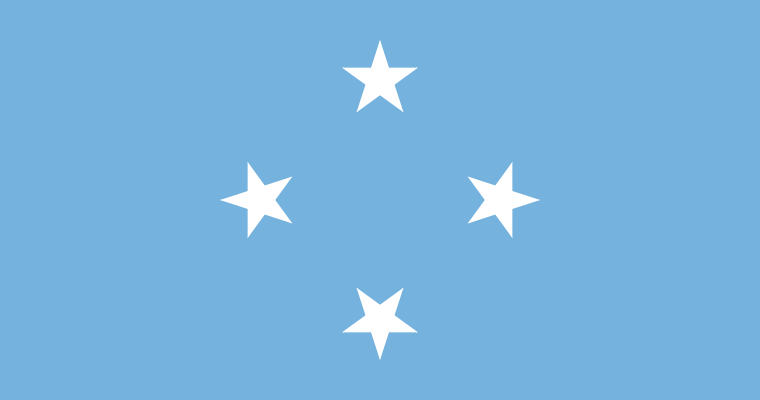
Micronesia
Location Info
- Continent: Oceania
- Country: Micronesia
- Coordinates: 6.9172 , 158.1589
Trust Info
Verified Geographic Information
🌍 Continents

Overview
The Federated States of Micronesia (FSM) is an archipelagic nation located in the western Pacific Ocean, within the Caroline Islands chain. It consists of four distinct states: Yap, Chuuk, Pohnpei, and Kosrae, spread across approximately 2,900 kilometers of ocean. While the land area is relatively small, the nation oversees an expansive exclusive economic zone rich in marine resources.
Historically, the islands have been influenced by successive colonial administrations, including Spain, Germany, and Japan, before becoming a UN Trust Territory under United States administration. Today, Micronesia is an independent sovereign state in a Compact of Free Association with the U.S. Its economy is largely driven by fishing rights, subsistence farming, and external financial assistance.
Truth & Facts
| Number of Islands | 607 |
| Total Land Area | 702 sq km |
| Capital City | Palikir |
| Political Status | Independent State in Free Association with the USA |
| Independence Date | November 3, 1986 |
| Total Population | 113,815 (Approx.) |
| Official Language | English |
| Currency | United States Dollar (USD) |
| Main Export | Frozen Fish |
| Internet TLD | .fm |
| International Airports | 4 |
| Notable Landmark | Nan Madol |
| Natural Risks | Typhoons |
| Main University | College of Micronesia-FSM |
| Hospital Count | 4 State Hospitals |
| National Congress | 14 Members |
| UN Membership | Since 1991 |
| EEZ Size | Approx. 2.6 million sq km |
| Power Supply | State Utilities Corporations |
| Police Force | State and National Police |
| Fiber Optic Link | HANTRU-1 Cable |
| Annual Visitors | Approx. 15,000 |
| Staple Foods | Taro, Yam, Breadfruit |
| Dominant Religion | Christianity (95%+) |
📑 Table of Contents
Overview
The Federated States of Micronesia is an island nation in the Western Pacific Ocean. It consists of four states: Pohnpei, Kosrae, Chuuk, and Yap. The country is known for its vast ocean territory and unique cultural heritage.
- Capital: Palikir
- Total Islands: 607
- Currency: US Dollar
- Official Language: English
- States: 4
History
Micronesia's history dates back thousands of years to the arrival of Austronesian settlers. During the colonial era, the islands were controlled by Spain, Germany, and later Japan under a League of Nations mandate.
- Saudeleur Dynasty: Ruled Pohnpei for centuries
- Spanish Era: Claimed the islands in the late 1800s
- German Purchase: Sold to Germany in 1899
- Japanese Mandate: Controlled after WWI
- US Trust Territory: Administered after WWII
Geography
The geography of Micronesia is defined by high volcanic islands and low-lying coral atolls. Pohnpei and Kosrae are mountainous with lush rainforests, while Chuuk and Yap feature complex lagoon systems.
- Region: Micronesia, Western Pacific
- Highest Point: Mount Nanlaud (782m)
- Coastline: 6,112 km
- Terrain: Volcanic peaks and coral reefs
- Water Area: Over 2.5 million sq km EEZ
Climate & Weather
The climate is maritime tropical, characterized by consistent warmth and high humidity. Rainfall is abundant throughout the year, with some variation between states.
- Average Temperature: 27°C (80°F)
- Wettest Island: Pohnpei
- Typhoon Season: June to December
- Trade Winds: Northeast winds November to May
- Humidity: Typically 80% or higher
Population & Demographics
The population is primarily composed of various Micronesian ethnic groups. There is a significant diaspora living in the United States and Guam due to the Compact of Free Association.
| State | Major Ethnic Group |
|---|---|
| Chuuk | Chuukese |
| Pohnpei | Pohnpeian |
| Yap | Yapese |
| Kosrae | Kosraean |
Culture & Lifestyle
Micronesian culture is deeply rooted in clan systems and matrilineal descent. Traditional skills like celestial navigation and weaving remain respected parts of identity.
- Clan System: Determines land rights
- Navigation: Traditional outrigger canoe skills
- Dress: Mumus for women; traditional loincloths in Yap
- Social Respect: Strong emphasis on elders
- Dance: Primary method of oral history
Festivals & Events
Public holidays and festivals often celebrate the nation's political milestones or cultural heritage. Traditional festivals feature elaborate dances and feasts.
- Constitution Day: May 10
- Independence Day: November 3
- Yap Day: Traditional cultural celebration in March
- United Nations Day: October 24
- Christmas: Major religious holiday
Food & Cuisine
Cuisine centers on local crops and seafood. Modern diets include imports like rice and canned goods, but traditional earth-oven cooking is still practiced.
- Staples: Taro, Breadfruit, Yam
- Seafood: Tuna, Crab, Shellfish
- Drink: Sakau (Pohnpei)
- Cooking: Barbecuing and earth ovens
- Fruit: Banana, Coconut, Betel Nut
Economy & Industries
The economy is driven by the sale of fishing licenses and US financial assistance. Subsistence activities support a large portion of the population.
- Fishing: Tuna is the primary resource
- Agriculture: Mostly for local consumption
- Services: Government is the largest employer
- Foreign Aid: Compact of Free Association funds
- Tourism: Niche diving and historical sector
Cost of Living
The cost of living is relatively high for imported goods due to transport costs. Locally produced food is more affordable but varies by island availability.
- Currency: USD
- Import reliance: High for fuel and food
- Housing: Mostly family-owned land
- Utilities: Expensive in urban centers
- Transport: Domestic flights are costly
Employment & Business
The public sector provides the majority of formal jobs. Private enterprise is focused on retail, construction, and hospitality.
- Top Employer: National and State Governments
- Sectors: Fisheries, Construction, Retail
- Unemployment: High among youth
- Skill Demand: Healthcare and education
- Investment: Fishing rights and infrastructure
Real Estate & Housing
Land ownership in Micronesia is traditionally clan-based and rarely sold. Non-citizens face strict restrictions on acquiring land.
- Land Rights: Often matrilineal
- Rental Market: Limited to urban centers like Weno or Kolonia
- Construction: Moving toward concrete from timber
- Foreign Ownership: Generally prohibited or long-term lease only
- Residences: Often extended family compounds
Transportation & Connectivity
Inter-island travel is essential but can be difficult. Each state has an international airport, but outer islands rely on irregular sea transport.
- Aviation: United Airlines Island Hopper route
- Sea: Inter-island cargo and passenger ships
- Roads: Paved in main towns, coral/dirt elsewhere
- Public Transport: Limited; taxis available in towns
- Port Hubs: Dekehtik (Pohnpei), Weno (Chuuk)
Infrastructure & Utilities
Utilities are managed by state-level corporations. Significant investment is ongoing to modernize power and water systems.
- Electricity: Diesel-generated; expanding solar
- Water: Rainwater catchment and groundwater
- Telecommunications: FSMTC is the main provider
- Internet: Improved by submarine fiber cables
- Solid Waste: Landfill management challenges
Education
Education is compulsory for children, but quality and access vary. Higher education is provided locally by the national college.
- College of Micronesia-FSM: National institution
- Literacy Rate: Approx. 89%
- System: Modeled after US curriculum
- Challenges: Brain drain and remote access
- Vocational: Training in fisheries and agriculture
Healthcare
Each state has a central hospital and several rural dispensaries. Serious medical cases often require evacuation to Guam, Hawaii, or the Philippines.
- State Hospitals: 4 (one per state)
- Health Issues: High rates of NCDs (Diabetes, Obesity)
- Insurance: MiCare national program
- Support: US HHS and WHO programs
- Outer Islands: Staffed by health assistants
Tourist Attractions
Micronesia offers world-class diving and unique archaeological sites. Tourism remains low-volume and high-impact.
- Nan Madol: UNESCO World Heritage ruins
- Chuuk Lagoon: WWII wreck diving
- Yap: Manta ray diving and Stone Money
- Kosrae: Pristine reefs and ruins
- Pohnpei: Waterfalls and Kepirohi Falls
Things to Do
Activities are largely centered on the natural environment and historical exploration.
- Scuba Diving: World-renowned wreck and reef sites
- Hiking: Rainforest treks in Pohnpei
- Cultural Tours: Visiting traditional Yapese villages
- Surfing: Palikir Pass (P-Pass)
- Fishing: Deep-sea sport fishing
Best Places to Visit
Each state offers a unique experience for visitors, from history to nature.
- Kolonia: Main town of Pohnpei
- Weno: Hub for Chuuk Lagoon diving
- Colonia: Capital of Yap state
- Lelu: Ancient stone city in Kosrae
- Palikir: The federal capital's modern buildings
Travel Guide
Travelers to Micronesia must plan for long flight times and limited availability of some services.
- Visa: Free for US and many other citizens
- Airlines: United, Caroline Islands Air
- Connectivity: Buy local SIM in town
- Etiquette: Modest dress required outside hotels
- Safety: Carry insect repellent for mosquitoes
Nearby Places
Micronesia is part of the broader Pacific region, with neighboring nations accessible by air.
- Guam: Major regional hub and transit point
- Palau: To the west, famous for Rock Islands
- Marshall Islands: To the east
- Papua New Guinea: To the southwest
- Hawaii: Primary link to the United States
Environment & Nature
The nation is home to unique island ecosystems and high marine biodiversity. Climate change remains a critical threat to atolls.
- Forests: Upland rainforests and mangroves
- Marine Life: Shark sanctuaries and coral reefs
- Conservation: Protected marine areas
- Endangered Species: Fruit bats and local birds
- Threats: Rising sea levels and ocean acidification
Government & Administration
The federal government manages national affairs, while state governments have significant autonomy over local laws and services.
- President: Both head of state and government
- Congress: Unicameral National Congress
- State Governors: Elected in each state
- Legal System: Based on US and local customary law
- Relations: Compact of Free Association with USA
Safety & Public Services
Safety levels are generally high, though standard precautions apply for water safety and environmental hazards.
- Crime: Mostly petty; violent crime is rare
- Rescue: Limited search and rescue capability
- Fire Services: Present in main urban centers
- Weather Alerts: Managed by National Weather Service
- Water Safety: Dangerous currents and reefs
Best Time to Visit
The drier months provide the most stable weather for outdoor activities, though rain is possible any time.
- Drier Season: January to April
- Diving: Year-round; best visibility Dec–April
- Manta Rays: Yap (Year-round)
- Avoiding Typhoons: Early year is safer
- Festivals: March for Yap Day
Local Business Directory
Businesses are concentrated in state capitals and provide essential goods and tourism services.
- Retail: General stores and markets
- Hospitality: Resorts and guesthouses
- Aviation: United Airlines agent offices
- Telecommunications: FSMTC outlets
- Banking: Bank of Guam, Bank of FSM
General Information FAQs
Where is Micronesia located?
Micronesia is located in the Western Pacific Ocean, about three-quarters of the way from Hawaii to Indonesia. It is north of the equator and part of the Caroline Islands archipelago.
What is Micronesia known for?
It is famous for the ancient stone ruins of Nan Madol, the stone money of Yap, world-class WWII shipwreck diving in Chuuk Lagoon, and its unique maritime culture.
Why is Micronesia famous?
It is notable for its 'Compact of Free Association' with the United States and its historical role as a battleground during World War II, particularly in the Chuuk Lagoon.
What country or region is Micronesia part of?
The Federated States of Micronesia is an independent sovereign nation. Geographically, it is part of the Micronesian region of Oceania.
What is the population of Micronesia?
As of recent estimates in 2026, the population is approximately 113,000 people, though migration to the US frequently impacts these figures.
What languages are spoken in Micronesia?
English is the official language. Indigenous languages include Chuukese, Pohnpeian, Yapese, Kosraean, Ulithian, and Woleaian.
What time zone is Micronesia in?
Micronesia spans two time zones: Chuuk and Yap are in UTC+10, while Pohnpei and Kosrae are in UTC+11.
What are the key facts about Micronesia?
It has 607 islands, uses the US dollar, is a federal republic, and was a former US-administered Trust Territory.
What makes Micronesia unique?
Its combination of massive basalt prehistoric architecture (Nan Madol) and the continuing use of traditional stone money disks in Yap makes it culturally distinct.
How large is Micronesia in area?
It has a land area of about 702 square kilometers but an Exclusive Economic Zone (EEZ) covering over 2.6 million square kilometers of ocean.
History FAQs
What is the history of Micronesia?
The islands were settled over 3,000 years ago. They were colonized by Spain, Germany, and Japan before becoming a UN Trust Territory under US administration after WWII. Independence was achieved in 1986.
When was Micronesia established?
The Federated States of Micronesia adopted its constitution in 1979 and became an independent state in 1986.
What major historical events happened in Micronesia?
Significant events include the rise of the Saudeleur Dynasty, the 1944 'Operation Hailstone' attack on Chuuk Lagoon, and the signing of the Compact of Free Association.
Who were important historical figures from Micronesia?
Notable figures include Tosiwo Nakayama, the first president, and various chiefs of the Saudeleur and Nahnmwarki lineages on Pohnpei.
How has Micronesia developed over time?
It has transitioned from traditional chiefdoms to a modern federal democracy while maintaining deep ties to the US for defense and financial support.
Geography & Environment FAQs
What is the geography of Micronesia?
It consists of high volcanic islands with rugged interiors and low-lying coral atolls surrounded by expansive lagoons.
What natural features surround Micronesia?
The nation is entirely surrounded by the Pacific Ocean, with deep oceanic trenches and extensive coral reef systems.
Are there mountains, rivers, or lakes near Micronesia?
Pohnpei and Kosrae have volcanic mountains and numerous freshwater streams and waterfalls. Atolls lack these features.
What is the elevation of Micronesia?
The highest point is Mount Nanlaud on Pohnpei at 782 meters. Many atolls are only a few meters above sea level.
What ecosystems exist around Micronesia?
Ecosystems include upland tropical rainforests, mangrove swamps, seagrass beds, and diverse coral reefs.
Climate & Weather FAQs
What is the climate like in Micronesia?
The climate is maritime tropical—hot, humid, and rainy year-round with very little seasonal temperature change.
What is the average temperature in Micronesia?
The average temperature is about 27°C (80°F), rarely dropping below 24°C (75°F) or rising above 31°C (88°F).
What is the weather like throughout the year in Micronesia?
It is generally sunny with frequent short, heavy tropical showers. Pohnpei is among the wettest places on earth.
Does Micronesia experience extreme weather?
Yes, it is prone to typhoons, particularly in the states of Chuuk and Yap between June and December.
What is the best time of year to visit Micronesia?
The months of January through April are generally drier and offer the best conditions for travel and diving.
Population & Society FAQs
What is the population density of Micronesia?
The density is roughly 150-160 people per square kilometer of land area, with most people living in coastal urban centers.
What ethnic groups live in Micronesia?
The main groups are Chuukese, Pohnpeian, Yapese, and Kosraean, with small populations of Polynesians and expatriates.
What religions are practiced in Micronesia?
The majority are Christians, split primarily between Roman Catholic and various Protestant denominations.
What is daily life like in Micronesia?
Life is a mix of modern employment (mostly government) and traditional activities like fishing and gardening. Family and church are central.
How diverse is the population of Micronesia?
While largely Micronesian, there is significant cultural and linguistic diversity between the four different states.
Culture & Traditions FAQs
What cultural traditions are important in Micronesia?
Respect for elders, matrilineal land inheritance, traditional dancing, and communal feasting are core traditions.
What festivals are celebrated in Micronesia?
Yap Day in March is a major cultural event. Independence Day and various state-specific constitution days are also celebrated.
What cultural landmarks exist in Micronesia?
The most famous is Nan Madol in Pohnpei, followed by the Stone Money banks in Yap and Lelu ruins in Kosrae.
What traditional clothing or customs are common in Micronesia?
In Yap, grass skirts and loincloths are still seen. In other states, modest western-style clothing like mumus is preferred.
What arts and crafts are associated with Micronesia?
Weaving (mats and baskets), wood carving (storyboards and canoes), and shell jewelry are traditional crafts.
Food & Cuisine FAQs
What foods is Micronesia known for?
It is known for tropical staples like taro, breadfruit, yam, and fresh seafood, particularly tuna and crab.
What traditional dishes originate from Micronesia?
Dishes like Kelaguen (marinated meat/fish) and Micronesian BBQ are popular. Sakau is a traditional ceremonial drink on Pohnpei.
What are the best restaurants in Micronesia?
Most quality dining is found within hotels and resorts in the state capitals like Palikir and Weno.
What local ingredients are commonly used in Micronesia cuisine?
Coconut milk, lime juice, hot peppers, and root vegetables (taro/yam) are ubiquitous in local cooking.
What food markets or street foods are popular in Micronesia?
Roadside stands selling fresh fish, betel nut, and locally grown fruits like bananas and citrus are common.
Economy & Business FAQs
What are the main industries in Micronesia?
The primary industries are fishing (tuna licensing), agriculture, tourism, and government services.
What economic activities drive the economy of Micronesia?
Revenue from foreign fishing fleets and financial grants from the US under the Compact of Free Association are the main drivers.
What businesses operate in Micronesia?
Most businesses are small-scale retail, construction firms, and tourism operators. Larger entities are often government-linked.
Is Micronesia an important economic center?
It is not a global economic hub, but it is a critical maritime territory due to its massive Exclusive Economic Zone.
What are the major exports or products from Micronesia?
The largest export is fish (mostly tuna). Other exports include small amounts of copra, betel nut, and handicrafts.
Employment & Jobs FAQs
What job opportunities are available in Micronesia?
Most formal employment is in the public sector, including education, healthcare, and administration.
What are the major employers in Micronesia?
The Federated States of Micronesia national government and the four state governments are the largest employers.
What skills are in demand in Micronesia?
Specialized roles in healthcare, civil engineering, and high-level educational administration are frequently in demand.
Is Micronesia a good place to work?
It offers a unique Pacific lifestyle but has a small job market and limited high-level corporate opportunities.
What is the unemployment rate in Micronesia?
The formal unemployment rate has historically been high, often estimated between 15% and 20% in the cash economy.
Cost of Living FAQs
Is Micronesia expensive to live in?
For expats and those relying on imported goods, it is expensive. Utilities and fuel prices are among the highest in the region.
What is the average cost of living in Micronesia?
It varies widely; living traditionally is low-cost, but a western lifestyle requires significant spending on imports and electricity.
How much does housing cost in Micronesia?
Traditional land cannot be easily bought. Rental housing for foreigners in urban centers can range from $500 to $1,500 per month.
What are average food and utility costs in Micronesia?
Electricity is expensive due to reliance on imported diesel. Food prices for imports (canned goods, rice) are higher than in the US.
Is Micronesia affordable compared to nearby cities?
It is more expensive than many Southeast Asian locations but generally comparable to other remote Pacific island nations.
Housing & Real Estate FAQs
What types of housing are available in Micronesia?
Housing ranges from traditional wood-and-thatch structures in rural areas to modern concrete houses in state capitals.
What is the average home price in Micronesia?
There is no standard real estate market for buying homes, as land is typically held by clans and inherited.
Is it better to rent or buy property in Micronesia?
Foreigners are generally unable to buy land and must rely on long-term leases, making renting the only practical option.
Which neighborhoods are popular in Micronesia?
Popular areas for residents include Kolonia in Pohnpei, Weno in Chuuk, and Colonia in Yap.
How has the property market changed in Micronesia?
There has been a gradual shift toward concrete construction to better withstand typhoons, though land tenure remains traditional.
Transportation FAQs
How do you get to Micronesia?
Primary access is by air via United Airlines, which operates the 'Island Hopper' service from Honolulu and Guam.
What is the nearest airport to Micronesia?
Each state has its own: Pohnpei (PNI), Chuuk (TKK), Yap (YAP), and Kosrae (KSA). Guam is the nearest major hub.
Does Micronesia have railway connections?
No, there are no railways in the Federated States of Micronesia.
How reliable is public transportation in Micronesia?
Public transportation is very limited. Taxis are common in town centers, while inter-island travel depends on ships and small planes.
What major highways or roads connect to Micronesia?
There are no international highways. Main islands have coastal perimeter roads, many of which are paved but narrow.
Education FAQs
What schools are located in Micronesia?
Each state has public primary and secondary schools. There are also several religious private schools.
Are there universities in Micronesia?
The College of Micronesia-FSM provides associate degrees and vocational training across campuses in all four states.
What is the literacy rate in Micronesia?
The literacy rate is approximately 89%, which is high for the region but lower than in US territories.
What educational opportunities exist in Micronesia?
Opportunities include basic K-12 schooling, vocational training in maritime and agriculture, and early college programs.
Is Micronesia a good place for students?
It provides a focused environment for local study, but many students seek higher education in the US or Guam.
Healthcare FAQs
What hospitals are available in Micronesia?
There are four state-run hospitals: Pohnpei State Hospital, Chuuk State Hospital, Yap State Hospital, and Kosrae State Hospital.
Are there emergency medical services in Micronesia?
Basic emergency services exist at the state hospitals. Remote areas have limited access to immediate emergency care.
What healthcare facilities exist in Micronesia?
Facilities include the four state hospitals and a network of roughly 90 rural dispensaries for basic care.
Is healthcare affordable in Micronesia?
Public healthcare is subsidized, but residents often pay for referrals to off-island facilities for complex treatments.
Are specialized medical services available in Micronesia?
Specialized services are very limited; most advanced diagnostics and surgeries require travel to Guam or beyond.
Tourism & Travel FAQs
What are the top tourist attractions in Micronesia?
Top sites include the Nan Madol ruins, the WWII shipwrecks in Chuuk Lagoon, and the Stone Money of Yap.
What are the best things to do in Micronesia?
Scuba diving, snorkeling, hiking to waterfalls, and visiting traditional villages for cultural performances.
Is Micronesia worth visiting?
Yes, especially for travelers interested in history, indigenous cultures, and pristine marine environments.
What landmarks should visitors see in Micronesia?
The ancient city of Nan Madol, the Spanish Wall in Pohnpei, and the Lelu stone ruins in Kosrae.
How many days should tourists spend in Micronesia?
Due to travel times, a stay of 7 to 14 days is recommended to visit multiple states or explore one in depth.
Nearby Places FAQs
What places are near Micronesia worth visiting?
Palau and the Marshall Islands are the most logical nearby destinations in the Micronesian region.
What cities or towns are close to Micronesia?
Hagatna (Guam) is the nearest major city hub. Other regional centers include Majuro and Koror.
What natural attractions are near Micronesia?
The Mariana Trench lies to the west, and numerous uninhabited Pacific atolls surround the main islands.
What day trips can be taken from Micronesia?
Day trips are limited to boat excursions to neighboring uninhabited atolls within a single state.
What famous destinations are within reach of Micronesia?
Guam and the Rock Islands of Palau are within reach via regional flights.
Safety FAQs
Is Micronesia safe to live in?
Yes, it is generally very safe with low rates of violent crime and a strong sense of community.
Is Micronesia safe for tourists?
Yes, tourists are generally well-received. Standard safety practices for water activities and walking at night should be followed.
What is the crime rate in Micronesia?
The crime rate is low, consisting mostly of petty theft and alcohol-related incidents in urban areas.
What emergency services operate in Micronesia?
State police and hospital emergency departments operate in the main islands.
What safety tips should visitors follow in Micronesia?
Drink bottled water, use high-SPF sunscreen, wear life jackets on small boats, and respect local dress codes.
Lifestyle & Living FAQs
Is Micronesia a good place to live?
It is ideal for those who enjoy a slow pace of life, outdoor activities, and close-knit communal culture.
What recreational activities are available in Micronesia?
Water sports (diving, fishing, surfing) and community-based cultural events are the primary forms of recreation.
Is Micronesia family-friendly?
Yes, the culture is extremely child-centered and family-oriented.
What outdoor activities are popular in Micronesia?
Paddling outrigger canoes, snorkeling, jungle hiking, and lagoon swimming.
What makes life enjoyable in Micronesia?
The pristine natural environment, lack of urban stress, and strong traditional heritage make it unique.
Practical Information FAQs
What travel tips should visitors know about Micronesia?
Plan for flight delays, bring cash (especially in smaller islands), and always ask for permission before entering private land.
What local customs should visitors respect in Micronesia?
Dress modestly, respect the authority of traditional chiefs, and avoid loud behavior in villages.
How accessible is Micronesia for international visitors?
Accessibility is moderate; it requires flying through hubs like Guam or Honolulu, but visas are easy to obtain for most.
What services are available for tourists in Micronesia?
Services include dive centers, car rentals in main towns, and guided historical tours.
What important information should travelers know before visiting Micronesia?
Medical facilities are basic, internet can be slow, and Sundays are very quiet as it is a deeply religious nation.