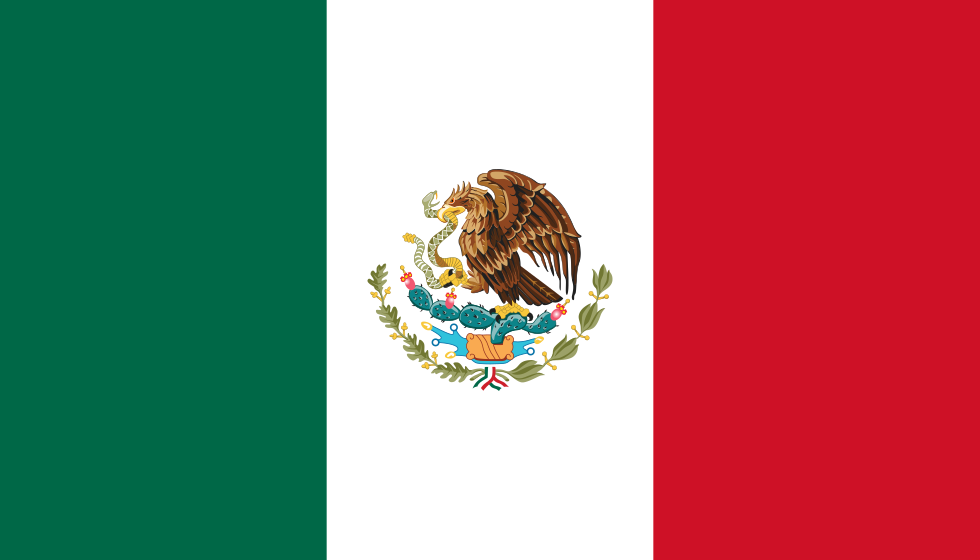
Mexico
Location Info
- Continent: North America
- Country: Mexico
- Coordinates: 23.6345 , -102.5528
Trust Info
Verified Geographic Data
🌍 Continents

Overview
Mexico, officially the United Mexican States, is a large country located in the southern portion of North America. It is bordered by the United States to the north and by Guatemala and Belize to the southeast. The country's landscape is defined by its rugged mountains, such as the Sierra Madre ranges, and its expansive central plateau. Mexico is home to a diverse range of ecosystems, including northern deserts, central temperate highlands, and southern tropical rainforests.
Historically, Mexico was the seat of advanced ancient civilizations like the Maya and Aztecs before becoming a Spanish colony for three centuries. Today, it is a federal republic with a population exceeding 130 million people. Mexico has one of the world's largest economies, driven by manufacturing, petroleum, and a thriving tourism sector. It remains a global cultural hub, recognized for its unique culinary traditions and UNESCO World Heritage sites.
Truth & Facts
| Total Area | 1,964,375 sq km |
| Estimated Population | 133 million |
| Capital | Mexico City |
| Independence Declared | September 16, 1810 |
| Currency | Mexican Peso (MXN) |
| Total Airports | 77 |
| Adult Literacy | 95.2% |
| Life Expectancy | 75.6 years |
| Total UNESCO Sites | 35 |
| International Visitors (2024) | 42 million |
| Plant Species | 30,000+ |
| Total Road Length | 366,095 km |
| Internet Users | 78.6% |
| Emergency Number | 911 |
| Total Federal Deputies | 500 |
| Primary Trade Partner | United States |
| Coverage Rate | 99.4% |
| Median Age | 30 years |
| Global Market Share | 30%+ |
| Founded | 2010 |
📑 Table of Contents
Overview of Mexico
Mexico is a diverse North American nation characterized by its central role in the Americas. It serves as a bridge between the northern and southern regions of the continent, featuring varied topography that includes towering mountain ranges and extensive coastlines. The nation operates as a federal republic with a strong presidential system.
The country is widely recognized for its cultural depth, stemming from a blend of indigenous civilizations and Spanish colonial heritage. As of 2026, it remains a key player in global trade and a leading destination for international travelers.
- Official Name: United Mexican States (Estados Unidos Mexicanos)
- Capital: Mexico City
- Official Language: Spanish (with 68 recognized indigenous languages)
- Government: Federal Presidential Republic
- Regional Position: North America
History and Origins
Mexico's history spans thousands of years, beginning with the rise of Mesoamerican civilizations like the Olmecs, Maya, and Aztecs. These societies developed complex mathematical systems, calendars, and urban centers before the arrival of Europeans in the early 16th century.
Following the Spanish conquest in 1521, Mexico became the Viceroyalty of New Spain for 300 years. The nation gained independence in the early 19th century and underwent a major social revolution in 1910 that established the current constitutional framework.
| Period | Key Event | Significance |
|---|---|---|
| Pre-Hispanic | Rise of Tenochtitlan | Establishment of the Aztec Empire |
| 1521 | Spanish Conquest | Start of 300 years of colonial rule |
| 1810 | Grito de Dolores | Initiation of the War of Independence |
| 1910-1920 | Mexican Revolution | Social reform and a new Constitution |
Geography and Physical Landscape
The geography of Mexico is rugged and diverse, dominated by two major mountain ranges: the Sierra Madre Occidental in the west and the Sierra Madre Oriental in the east. Between these ranges lies the high Mexican Plateau, where much of the population resides. The Trans-Mexican Volcanic Belt crosses the center of the country, featuring some of North America's highest peaks.
Mexico features extensive coastlines along the Pacific Ocean to the west and the Gulf of Mexico and Caribbean Sea to the east. The Yucatan Peninsula is a low-lying limestone plain, while the north is characterized by the Sonoran and Chihuahuan deserts.
- Highest Peak: Citlaltepetl (Pico de Orizaba) at 5,636 meters
- Major Rivers: Rio Bravo (Rio Grande), Lerma-Santiago, and Balsas
- Coastline Length: Approximately 9,330 kilometers
- Major Peninsulas: Baja California and Yucatan
- Tectonic Activity: High, located on the Pacific Ring of Fire
Climate and Weather
Mexico is divided by the Tropic of Cancer into temperate and tropical zones. The northern half experiences more arid conditions with hot summers and cool winters, while the southern half is tropical with consistent temperatures year-round. Elevation plays a critical role in local weather, with highlands being significantly cooler than coastal plains.
The rainy season typically occurs from May to October, with hurricane activity possible on both the Pacific and Atlantic coasts during late summer and autumn.
- Arid North: Characterized by desert climates and extreme temperature shifts
- Central Highlands: Often described as having a 'perpetual spring'
- Coastal Areas: Generally hot and humid
- Southern Rainforests: High precipitation levels and tropical humidity
Population and Demographics
Mexico has a population of approximately 133 million people in 2026, making it the 10th most populous nation in the world. The majority of the population is urban, with significant concentrations in the Valley of Mexico and the industrial corridors of the north and center. The demographic profile is primarily Mestizo, reflecting a mix of indigenous and European ancestry.
While Spanish is the national language, the government recognizes 68 indigenous languages as national languages, with Nahuatl and Maya being the most widely spoken among them.
| City | Estimated Population (2025/26) | Region |
|---|---|---|
| Mexico City | 22+ million (Metro) | Central |
| Guadalajara | 5.4 million (Metro) | West |
| Monterrey | 5.1 million (Metro) | North |
| Puebla | 3.3 million (Metro) | Central |
Culture and Lifestyle
Mexican culture is a rich tapestry of indigenous traditions and Spanish influences. It is expressed through vibrant arts, music, and social customs that emphasize family and community. Traditional music genres like Mariachi, Banda, and Norteño are celebrated both locally and internationally.
Daily life in Mexico often revolves around social gatherings and religious observances. The country has a prolific literary and artistic history, featuring icons such as Frida Kahlo, Diego Rivera, and Octavio Paz.
- Religion: Predominantly Roman Catholic
- National Identity: Strongly tied to historical symbols and folk art
- Craftsmanship: Famous for Talavera pottery, Alebrijes, and silver work
- Social Life: Strong emphasis on family units and public plazas
Festivals and Annual Events
Festivals in Mexico are colorful, loud, and deeply rooted in historical or religious significance. The most famous internationally is the Day of the Dead (Día de Muertos), where families honor deceased loved ones with altars and offerings. Independence Day on September 16 is marked by 'El Grito' across all municipal squares.
Regional festivals, such as the Guelaguetza in Oaxaca and the Cervantino Festival in Guanajuato, showcase the nation's diverse artistic and ethnic heritage.
- Día de Muertos: Observed on November 1st and 2nd
- Independence Day: Celebrated nationwide on September 16th
- Our Lady of Guadalupe: Major pilgrimage on December 12th
- Guelaguetza: Traditional indigenous dance festival in Oaxaca
- Carnaval: Celebrated in Veracruz and Mazatlán in late winter
Food and Cuisine
Traditional Mexican cuisine was the first to be inscribed on UNESCO's Representative List of the Intangible Cultural Heritage of Humanity. It is based on three staples: corn, beans, and chili peppers. Each region offers distinct specialties, such as the mole of Oaxaca and Puebla or the seafood of the coastal states.
Street food culture is a defining element of the Mexican culinary experience, with tacos, tamales, and elotes available in virtually every community.
- Staples: Corn tortillas, beans, chilies, and squash
- Beverages: Tequila, Mezcal, Horchata, and Mexican coffee
- Iconic Dishes: Tacos al pastor, Chiles en nogada, Enchiladas, and Pozole
- Ingredients: Avocado, tomato, chocolate, and vanilla (all native to Mexico)
Economy and Major Industries
Mexico has a highly diversified economy with strong links to global supply chains, particularly in North America. It is a major manufacturing hub for the automotive and electronics sectors. The country is also a significant producer of minerals, including silver and copper, and maintains a large petroleum industry managed by the state-owned Pemex.
In 2026, the 'nearshoring' trend—companies relocating production closer to the U.S. market—has driven increased investment in industrial parks in northern and central Mexico.
- Key Sectors: Manufacturing, Oil & Gas, Agriculture, and Tourism
- Automotive: One of the world's largest vehicle producers
- Exports: Computers, vehicles, crude oil, and agricultural products
- Trade Agreement: USMCA (with USA and Canada)
Cost of Living
The cost of living in Mexico varies significantly between major urban centers, tourist hotspots, and rural areas. While generally more affordable than in the United States or Western Europe, prices for housing and services have seen upward trends in cities like Mexico City, Monterrey, and Cancun due to inflation and demand.
Locally produced goods and services, such as public transport and fresh food markets, remain relatively inexpensive for the average resident.
| Category | Relative Cost | Notes |
|---|---|---|
| Housing | Moderate | Higher in CDMX and industrial hubs |
| Groceries | Low to Moderate | Cheaper in local 'tianguis' (markets) |
| Transportation | Low | Extensive public transport networks |
| Dining Out | Low to High | Ranges from street food to luxury dining |
Employment and Business Environment
The Mexican labor market is characterized by a large formal sector in manufacturing and services, alongside a significant informal economy. In 2026, demand for skilled labor is high in states like Nuevo León, Querétaro, and Baja California due to industrial expansion. The government has implemented several reforms to improve labor conditions and formalize employment.
Mexico is an attractive destination for foreign direct investment (FDI) due to its strategic location and network of free trade agreements.
- Top Employers: Walmart de México, Pemex, América Móvil, and Femsa
- Key Growth Areas: Logistics, Renewable Energy, and FinTech
- Business Language: Spanish (English common in international business)
- Working Week: Standard 48-hour legal limit (often transitioning to 40)
Real Estate and Housing
Mexico's real estate market offers a wide range of options, from modern high-rise apartments in financial districts to colonial-style homes in historic centers. Foreign ownership is permitted, though restricted in certain 'restricted zones' near borders and coasts unless acquired through a bank trust (fideicomiso).
Urban development is currently focused on vertical housing in major cities to accommodate growing populations and reduce commute times.
- Hotspots: Riviera Maya, Riviera Nayarit, CDMX, and San Miguel de Allende
- Housing Types: 'Fraccionamientos' (gated communities), condos, and colonial houses
- Property Taxes: Generally lower compared to northern neighbors
- Mortgage Market: Dominated by commercial banks and INFONAVIT
Transportation and Connectivity
Mexico possesses a vast transportation network that includes over 360,000 kilometers of roads and 77 airports. Aviation is the primary method for long-distance domestic travel, with low-cost carriers providing extensive coverage. The country is also investing in passenger rail projects, such as the Tren Maya in the southeast.
Maritime transport is critical for international trade, with major ports on both the Pacific and Gulf coasts handling millions of containers annually.
- Main Airports: AICM (Mexico City), Cancun, Guadalajara, and Monterrey
- Passenger Rail: Tren Maya and the Interoceanic Railway
- Bus Travel: A highly developed system of luxury long-distance buses
- Ports: Veracruz, Manzanillo, and Lazaro Cardenas
Infrastructure and Utilities
The nation's infrastructure is undergoing significant modernization, particularly in energy and water management. The Federal Electricity Commission (CFE) manages the national grid, which provides power to nearly all households. Telecommunications have become highly competitive, with 5G networks expanding in major cities as of 2026.
Water scarcity remains a challenge in northern and central regions, leading to increased investment in desalination and wastewater treatment plants.
- Power Generation: Mix of hydroelectric, thermal, and growing solar/wind
- Water Supply: Managed at municipal or state levels
- Internet: Broad availability of fiber optics in urban zones
- Mobile: High penetration of 4G and 5G services
Education System
Education in Mexico is compulsory from preschool through high school. The system is divided into public and private sectors, with the National Autonomous University of Mexico (UNAM) being one of the largest and most prestigious universities in Latin America. Recent reforms focus on digital literacy and vocational training to meet industrial needs.
The country hosts several world-class research institutions and business schools that attract students from across the region.
- Higher Education: UNAM, IPN, and ITESM (Tec de Monterrey)
- Literacy: High national average with regional variations
- Structure: Primary (6 years), Secondary (3 years), Preparatory (3 years)
- Language: Primary instruction in Spanish; bilingual options in private schools
Healthcare and Medical Services
Healthcare in Mexico is provided through a multi-tiered system. Public employees are covered by IMSS, while government workers use ISSSTE. There is also a universal health program for those without formal employment. Private healthcare is highly regarded and frequently used by international visitors and expatriates for its high quality and lower costs.
Major cities like Monterrey and Mexico City are recognized as hubs for medical excellence, particularly in cardiology and bariatric surgery.
- Public Providers: IMSS, ISSSTE, and Secretariat of Health
- Private Hospitals: High concentration in urban areas (e.g., ABC, Angeles)
- Medical Tourism: Popular for dental, cosmetic, and elective procedures
- Pharmacies: Widely available, often with on-site medical consultations
Major Tourist Attractions
Mexico is a global leader in tourism, offering a mix of archaeological wonders, colonial architecture, and natural beauty. Chichen Itza, one of the New Seven Wonders of the World, and the ancient pyramids of Teotihuacan are among the most visited sites. The nation also boasts over 30 UNESCO World Heritage sites.
Natural attractions include the vast Copper Canyon in Chihuahua and the Mesoamerican Barrier Reef off the coast of the Yucatan Peninsula.
- Archeology: Teotihuacan, Chichen Itza, Palenque, and Tulum
- Landmarks: Basilica of Guadalupe and the Metropolitan Cathedral (CDMX)
- Natural Sites: Copper Canyon, Sumidero Canyon, and Monarch Butterfly Reserve
- Colonial Cities: Guanajuato, San Miguel de Allende, and Zacatecas
Activities and Experiences
Visitors to Mexico can engage in a vast array of activities ranging from extreme sports to cultural immersion. Diving and snorkeling are world-class in Cozumel and the Sea of Cortez, the latter being famously described as the 'aquarium of the world' by Jacques Cousteau.
Cultural experiences include attending a Lucha Libre match, exploring traditional markets, or taking a culinary workshop in Oaxaca.
- Water Sports: Surfing in Puerto Escondido, diving in Cozumel
- Adventure: Hiking the volcanoes or zip-lining in Riviera Maya
- Culture: Museum hopping in CDMX (home to over 150 museums)
- Relaxation: Thermal baths in Hidalgo or beach resorts in Los Cabos
Primary Destinations
While Cancun remains the most recognized destination for sun and sand, Mexico offers diverse regions worth exploring. Mexico City provides a cosmopolitan experience with deep historical roots. The colonial heartland (Bajío) offers picturesque towns and a temperate climate, while the Pacific coast is known for its rugged beauty and sunsets.
The southern states of Oaxaca and Chiapas are preferred by those seeking indigenous culture and jungle landscapes.
| Region | Key Destinations | Known For |
|---|---|---|
| Caribbean | Cancun, Tulum, Playa del Carmen | Beaches and Ruins |
| Central | Mexico City, Puebla | History and Food |
| West | Guadalajara, Puerto Vallarta | Tequila and Culture |
| North | Monterrey, Los Cabos | Business and Luxury |
Regional Travel Guide
Traveling through Mexico requires an understanding of its vast scale. The country is well-connected by domestic flights and a premium bus network. While Spanish is the primary language, English is widely spoken in major tourist zones and business hubs.
International visitors typically enter through the airports in Mexico City or Cancun. Connectivity within the country is supported by a growing infrastructure of modern highways.
- Entry Requirements: Many nationalities enter visa-free for tourism
- Currency: Mexican Pesos are used; cards widely accepted in cities
- Connectivity: 5G available in cities; extensive domestic flight network
- Safety: Travelers are advised to stick to main toll roads (cuotas)
Neighboring Countries and Regions
Mexico is the northernmost country in Latin America and shares extensive borders with the United States to the north. To the southeast, it borders Guatemala and Belize, serving as a gateway to Central America. Its maritime borders include the United States, Cuba, and Honduras.
The close proximity to the Caribbean islands and the rest of North America makes it a strategic hub for regional travel and commerce.
- North: United States (Border length: 3,145 km)
- Southeast: Guatemala and Belize
- East: Caribbean Sea and Gulf of Mexico
- West: Pacific Ocean
Environment and Nature
Mexico is one of the most biodiverse countries on Earth, hosting about 10% of the world's species. Its ecosystems range from the desert of Altar to the Lacandon Jungle. The government has established numerous Protected Natural Areas, including biosphere reserves and national parks, to safeguard this heritage.
Significant environmental phenomena include the annual migration of the Monarch butterfly and the whale breeding grounds in Baja California Sur.
- Ecosystems: Deserts, mangroves, cloud forests, and coral reefs
- Wildlife: Jaguars, Howler monkeys, Axolotls, and Vaquita porpoises
- Conservation: Over 180 federal protected areas
- Challenges: Deforestation and water management in arid zones
Government and Administration
The United Mexican States is a federal presidential republic. The President serves a single six-year term (sexenio) and acts as both head of state and head of government. The federal government is divided into executive, legislative, and judicial branches. Each of the 31 states is sovereign in its internal administration, headed by an elected governor.
The administrative structure also includes over 2,400 municipalities, which are the basic level of local government.
- Executive: President of the Republic
- Legislative: Bicameral Congress of the Union
- Judicial: Supreme Court of Justice and lower federal courts
- Political Divisions: 31 States and Mexico City
Safety and Public Services
Public safety in Mexico is managed by federal, state, and municipal police forces, alongside the National Guard. While certain areas face security challenges, most tourist and business districts maintain a visible security presence. Public services like electricity, telecommunications, and waste management are generally reliable in urban centers.
The nation also has a robust 'Civil Protection' system designed to respond to natural events such as earthquakes or hurricanes.
- Emergency Services: 911 for all types of emergencies
- Security Forces: National Guard and State Police
- Utilities: CFE (Electric) and various municipal water boards
- Civil Defense: Strong focus on earthquake preparedness
Best Time to Visit
The ideal time to visit Mexico depends on the destination. For the beaches and the central highlands, the dry season between November and April is generally preferred due to pleasant temperatures and minimal rain. The summer months (June to August) are popular but can be very hot and humid in coastal areas.
Special events like Day of the Dead (late October/early November) offer unique cultural insights despite being peak travel periods.
- Peak Season: December to Easter (Semana Santa)
- Shoulder Season: May, June, September, and October
- Whale Watching: January to March (Baja California)
- Cultural Festivals: October and November
Economic and Business Directory
Mexico's business landscape is dominated by large conglomerates and a rapidly growing tech sector. Major industrial hubs are located in the north (Monterrey, Tijuana), the center (Queretaro, San Luis Potosi), and the west (Guadalajara). The country is a leading global exporter of manufactured goods and agricultural products.
Chambers of commerce and industry associations play a significant role in facilitating trade and investment between Mexico and international partners.
- Stock Exchange: Bolsa Mexicana de Valores (BMV)
- Central Bank: Banco de México (Banxico)
- Major Business Hubs: CDMX, Monterrey, Guadalajara, and Queretaro
- Trade Focus: Automotive, aerospace, and digital services
General Information FAQs
Where is Mexico located?
Mexico is located in the southern part of North America. It is bordered by the United States to the north, the Pacific Ocean to the west, the Gulf of Mexico and the Caribbean Sea to the east, and Guatemala and Belize to the southeast.
What is Mexico known for?
Mexico is known for its rich history involving the Aztec and Mayan civilizations, its world-famous cuisine (UNESCO heritage), vibrant festivals like the Day of the Dead, and its diverse geography ranging from tropical beaches to high mountain ranges.
Why is Mexico famous?
Mexico is famous for its cultural contributions such as Mariachi music and murals, its ancient archaeological sites like Chichen Itza, its status as a top global tourism destination, and its significant role as a manufacturing and trade powerhouse in the Americas.
What country or region is Mexico part of?
Mexico is part of the North American continent and is geographically and economically integrated with the United States and Canada through the USMCA trade agreement. It is also culturally considered part of Latin America.
What is the population of Mexico?
As of 2026, the population of Mexico is estimated to be approximately 133 million people, making it the most populous Spanish-speaking country in the world.
What languages are spoken in Mexico?
Spanish is the de facto national language spoken by the vast majority. However, the government recognizes 68 indigenous languages, including Nahuatl, Maya, and Zapotec, as national languages with the same validity as Spanish.
What time zone is Mexico in?
Mexico covers four main time zones: Southeast (Quintana Roo), Central, Mountain, and Pacific. Most of the country, including Mexico City, follows Central Time.
What are the key facts about Mexico?
Key facts include: its official name is the United Mexican States; it consists of 31 states and Mexico City; it is home to one of the world's largest cities; and it has the world's 15th largest economy by nominal GDP.
What makes Mexico unique?
Mexico is unique due to its 'megadiversity' in nature, its seamless blend of Mesoamerican and European cultural roots, and its position as both a developing industrial giant and a center for ancient historical preservation.
How large is Mexico in area?
Mexico has a total land area of approximately 1,964,375 square kilometers, which makes it the 13th largest country in the world by area.
History FAQs
What is the history of Mexico?
Mexico's history involves millennia of indigenous civilizations, followed by three centuries of Spanish colonial rule (1521-1821). The 19th century was marked by independence and conflict, while the 20th century began with a major social revolution that shaped the modern state.
When was Mexico established?
While ancient civilizations existed for thousands of years, the modern state of Mexico declared independence from Spain on September 16, 1810, and achieved full recognition as a sovereign nation in 1821.
What major historical events happened in Mexico?
Significant events include the Spanish Conquest (1521), the War of Independence (1810-1821), the Mexican-American War (1846-1848), the French Intervention (1860s), and the Mexican Revolution (1910-1920).
Who were important historical figures from Mexico?
Important figures include Miguel Hidalgo (independence leader), Benito Juárez (president and reformer), Porfirio Díaz (long-term leader), and revolutionary icons Emiliano Zapata and Pancho Villa.
How has Mexico developed over time?
Mexico transitioned from an agrarian colonial society to an independent republic, then to a rapidly industrializing nation in the mid-20th century. Today, it is a global manufacturing hub with a complex service-based economy.
Geography & Environment FAQs
What is the geography of Mexico?
Mexico features a rugged landscape with two main mountain chains, a high central plateau, tropical rainforests in the south, and vast deserts in the north. It has over 9,000 km of coastline along the Pacific and Atlantic oceans.
What natural features surround Mexico?
Mexico is surrounded by the Pacific Ocean to the west and south, the Gulf of Mexico and Caribbean Sea to the east, and is flanked by the landmasses of the United States, Guatemala, and Belize.
Are there mountains, rivers, or lakes near Mexico?
Yes, major features include the Sierra Madre mountains, the Pico de Orizaba volcano, the Rio Grande (Rio Bravo) along the northern border, and Lake Chapala, the country's largest freshwater lake.
What is the elevation of Mexico?
Elevation varies from sea level at the coasts to over 5,600 meters at its highest volcanic peaks. The central Mexican Plateau typically sits at an average elevation of 1,000 to 2,500 meters.
What ecosystems exist around Mexico?
Mexico contains a wide range of ecosystems including arid deserts, temperate oak and pine forests, tropical rainforests, mangroves, and diverse coral reef systems in the Caribbean.
Climate & Weather FAQs
What is the climate like in Mexico?
The climate is varied: the north is arid and desert-like, the central highlands are temperate (spring-like), and the southern and coastal regions are tropical with high humidity and significant rainfall.
What is the average temperature in Mexico?
Average temperatures depend on elevation. Coastal areas average 24-28°C (75-82°F) year-round, while Mexico City in the highlands averages 15-18°C (59-64°F) annually.
What is the weather like throughout the year in Mexico?
The year is divided into a dry season (November–April) and a rainy season (May–October). Winter can be cold in the northern deserts and high mountains, while summer is hot and wet in the south.
Does Mexico experience extreme weather?
Yes, Mexico is subject to hurricanes on both the Pacific and Atlantic coasts during the summer and autumn. The northern regions can experience extreme heatwaves, and higher elevations occasionally see snow in winter.
What is the best time of year to visit Mexico?
The best time to visit is generally during the dry season, from November to April, when the weather is mildest and rain is infrequent across most of the country.
Population & Society FAQs
What is the population density of Mexico?
The population density is approximately 68 people per square kilometer. However, this is highly uneven, with extreme density in Mexico City and very low density in the northern deserts.
What ethnic groups live in Mexico?
The population is primarily Mestizo (mixed indigenous and European ancestry). There are also significant indigenous groups, as well as communities of European, African, and Asian descent.
What religions are practiced in Mexico?
The majority of Mexicans (over 77%) are Roman Catholic. There are growing Protestant and Evangelical communities, as well as small populations of Jews, Muslims, and Buddhists.
What is daily life like in Mexico?
Daily life is characterized by a strong emphasis on family, a vibrant public social life in town squares (zócalos), and a mix of traditional customs and modern urban lifestyles.
How diverse is the population of Mexico?
Mexico is highly diverse, hosting dozens of distinct indigenous ethnic groups with their own languages and traditions, alongside a modern cosmopolitan population in its major globalized cities.
Culture & Traditions FAQs
What cultural traditions are important in Mexico?
Key traditions include the celebration of Day of the Dead, regional folk dances, traditional craftsmanship (like pottery and weaving), and the performance of Mariachi music.
What festivals are celebrated in Mexico?
Major festivals include Independence Day (Sept 16), Day of the Dead (Nov 1-2), the feast of Our Lady of Guadalupe (Dec 12), and regional events like the Guelaguetza in Oaxaca.
What cultural landmarks exist in Mexico?
Landmarks include the pyramids of Teotihuacan and Chichen Itza, the historic center of Mexico City, the Palace of Fine Arts, and the colorful colonial streets of Guanajuato.
What traditional clothing or customs are common in Mexico?
Traditional clothing includes the 'huipil' for women and 'charro' suits for men. Customs include the 'quinceañera' (15th birthday celebration) and the gathering of families for Sunday meals.
What arts and crafts are associated with Mexico?
Mexico is famous for its silver work (Taxco), Talavera pottery (Puebla), Alebrijes (brightly colored folk sculptures from Oaxaca), and intricate textile weaving.
Food & Cuisine FAQs
What foods is Mexico known for?
Mexico is known for tacos, enchiladas, tamales, mole, and guacamole. It is also the birthplace of chocolate, vanilla, and tomatoes.
What traditional dishes originate from Mexico?
Traditional dishes include Chiles en Nogada (representing the flag), Pozole (a hominy soup), and Mole Poblano (a complex sauce made with chocolate and chilies).
What are the best restaurants in Mexico?
Mexico City is a global culinary capital with top-ranked restaurants like Pujol and Quintonil. However, the best traditional food is often found in local markets and regional fondas.
What local ingredients are commonly used in Mexico cuisine?
Common ingredients include corn (maize), over 60 varieties of chili peppers, beans, avocados, tomatoes, lime, and various herbs like cilantro and epazote.
What food markets or street foods are popular in Mexico?
Popular street foods include Tacos al Pastor, Elotes (corn on the cob), and Churros. Traditional markets (tianguis) like those in Oaxaca or Mexico City's La Merced are central to food culture.
Economy & Business FAQs
What are the main industries in Mexico?
Main industries include automotive manufacturing, electronics, oil and gas production, mining (especially silver), and a massive tourism sector.
What economic activities drive the economy of Mexico?
The economy is driven by exports of manufactured goods to the U.S., remittances from citizens abroad, petroleum sales, and services including tourism and telecommunications.
What businesses operate in Mexico?
Mexico is home to large multinationals like América Móvil, Cemex, and Femsa, as well as major international plants for Ford, Volkswagen, and Samsung.
Is Mexico an important economic center?
Yes, Mexico is a member of the G20 and possesses the second-largest economy in Latin America, serving as a critical hub for North American trade.
What are the major exports or products from Mexico?
Major exports include vehicles, computers, mobile phones, crude oil, silver, and agricultural products like avocados, tomatoes, and berries.
Employment & Jobs FAQs
What job opportunities are available in Mexico?
Opportunities are abundant in manufacturing, engineering, IT services, and tourism. Recent 'nearshoring' has increased demand for logistics and industrial management roles.
What are the major employers in Mexico?
Major employers include the public sector (SEP, IMSS), the state oil company Pemex, and private giants like Walmart de México and various automotive assemblers.
What skills are in demand in Mexico?
There is high demand for bilingual (Spanish-English) professionals, industrial engineers, software developers, and specialists in renewable energy and logistics.
Is Mexico a good place to work?
Mexico offers a dynamic environment with competitive professional salaries in urban hubs, though labor laws typically mandate a longer working week than in some European countries.
What is the unemployment rate in Mexico?
As of early 2026, the unemployment rate remains relatively low (under 3%), although the labor market is significantly characterized by informal employment.
Cost of Living FAQs
Is Mexico expensive to live in?
Compared to the U.S. and Europe, Mexico is generally affordable. However, costs can be high in the central districts of Mexico City or in exclusive beach resorts like Los Cabos.
What is the average cost of living in Mexico?
A modest lifestyle can cost between $1,000 and $2,000 USD per month, while a luxury lifestyle in prime urban areas can exceed $4,000 USD per month.
How much does housing cost in Mexico?
Rents range from $400 USD for basic apartments in smaller cities to over $2,500 USD for luxury condos in Mexico City's Polanco or Santa Fe neighborhoods.
What are average food and utility costs in Mexico?
Utilities (electricity, water, gas) usually cost between $50 and $150 USD per month. Groceries are affordable, especially when buying local produce from markets.
Is Mexico affordable compared to nearby cities?
Mexico is significantly more affordable than major U.S. or Canadian cities, making it a popular destination for digital nomads and retirees from North America.
Housing & Real Estate FAQs
What types of housing are available in Mexico?
Options include modern urban apartments, traditional colonial houses, gated community developments (fraccionamientos), and luxury beachfront villas.
What is the average home price in Mexico?
Prices vary wildly; a comfortable home in a mid-sized city may cost $150,000 USD, while high-end real estate in CDMX or Cancun can reach several million dollars.
Is it better to rent or buy property in Mexico?
Renting is often preferred for newcomers to explore neighborhoods, but buying is seen as a good long-term investment, especially in high-growth industrial or tourist areas.
Which neighborhoods are popular in Mexico?
In CDMX, Roma, Condesa, and Polanco are favorites. Elsewhere, Monterrey's San Pedro Garza García and the historic center of San Miguel de Allende are highly sought after.
How has the property market changed in Mexico?
Recent years have seen a surge in 'vertical' development in cities and a massive increase in demand for industrial real estate due to the nearshoring trend.
Transportation FAQs
How do you get to Mexico?
Most international travelers arrive by air via major hubs like Mexico City (AICM), Cancun, or Guadalajara. There are also numerous land border crossings from the U.S., Guatemala, and Belize.
What is the nearest airport to Mexico?
As a country, the primary international gateway is Mexico City International Airport (AICM), though Cancun International is the busiest for tourist arrivals.
Does Mexico have railway connections?
Mexico has an extensive freight rail network. Passenger rail is growing with projects like the Tren Maya in the south and the Interoceanic Railway across the Isthmus of Tehuantepec.
How reliable is public transportation in Mexico?
Urban transit (Metro and Metrobus) is reliable and very cheap in CDMX. For long distances, Mexico's first-class bus system (e.g., ADO, Primera Plus) is exceptional and punctual.
What major highways or roads connect to Mexico?
Key roads include the Pan-American Highway and the major toll roads (autopistas) connecting Mexico City to the borders and major ports like Veracruz and Acapulco.
Education FAQs
What schools are located in Mexico?
Mexico has a vast network of public schools (SEP) and private bilingual institutions (Colegios). Every major neighborhood typically has multiple primary and secondary options.
Are there universities in Mexico?
Yes, Mexico has many world-class universities, including UNAM, the Monterrey Institute of Technology (ITESM), and the Ibero-American University.
What is the literacy rate in Mexico?
The literacy rate is high, at approximately 95%. The government has focused heavily on reducing the gap in rural and indigenous areas over recent decades.
What educational opportunities exist in Mexico?
Opportunities range from traditional academic degrees to vocational technical training and world-recognized research programs in fields like archaeology and medicine.
Is Mexico a good place for students?
Yes, especially for those interested in Latin American studies, archaeology, and Spanish language immersion. Major cities offer a vibrant and affordable student life.
Healthcare FAQs
What hospitals are available in Mexico?
There are large public hospitals (IMSS, ISSSTE) and high-end private medical centers like Hospital Ángeles and Centro Médico ABC which feature international accreditation.
Are there emergency medical services in Mexico?
Yes, calling 911 connects to emergency dispatchers. Major cities have both public (Red Cross) and private ambulance services.
What healthcare facilities exist in Mexico?
Facilities range from specialized surgery centers in cities to small community health clinics (Centros de Salud) in rural areas.
Is healthcare affordable in Mexico?
Public healthcare is free or subsidized for workers. Private healthcare is significantly cheaper than in the U.S. while maintaining very high standards of care.
Are specialized medical services available in Mexico?
Yes, Mexico is a leader in specialties such as cardiology, oncology, and fertility treatments, often housing state-of-the-art technology in private urban hospitals.
Tourism & Travel FAQs
What are the top tourist attractions in Mexico?
Top attractions include the ruins of Chichen Itza and Teotihuacan, the beaches of the Riviera Maya, the Copper Canyon, and the colonial charm of Oaxaca City.
What are the best things to do in Mexico?
Best activities include visiting ancient pyramids, snorkeling in cenotes, attending a Lucha Libre match, and taking a food tour in Mexico City or Puebla.
Is Mexico worth visiting?
Absolutely. It is consistently ranked among the top 10 most visited countries in the world due to its immense cultural variety, natural beauty, and hospitality.
What landmarks should visitors see in Mexico?
Must-see landmarks include the Zócalo in Mexico City, the Mayan ruins of Tulum overlooking the sea, and the Frida Kahlo Museum (Casa Azul).
How many days should tourists spend in Mexico?
A short trip of 7-10 days is enough for one region (like the Yucatan), but 2-3 weeks are recommended to experience multiple cities and cultural zones.
Nearby Places FAQs
What places are near Mexico worth visiting?
Nearby international destinations include Tikal in Guatemala, the Great Blue Hole in Belize, and the Caribbean islands like Cuba and Jamaica.
What cities or towns are close to Mexico?
Major U.S. cities like San Diego, El Paso, and Laredo are directly on the border. In the south, Flores (Guatemala) and Belize City are relatively close to the Mexican border.
What natural attractions are near Mexico?
Natural wonders nearby include the Petén rainforests in Guatemala and the extensive coral reef systems shared with Belize and Honduras.
What day trips can be taken from Mexico?
From CDMX, you can visit Teotihuacan or Puebla. From Cancun, day trips to Chichen Itza or the island of Isla Mujeres are very popular.
What famous destinations are within reach of Mexico?
Most of Central America and the Caribbean are within a 2-3 hour flight from major Mexican airports.
Safety FAQs
Is Mexico safe to live in?
Many areas, particularly major industrial hubs and tourist zones, are safe for residents. Like any large country, it is important to stay informed about specific regional security situations.
Is Mexico safe for tourists?
Millions of tourists visit safely every year. Standard precautions like using official taxis, avoiding remote areas at night, and sticking to established tourist zones are recommended.
What is the crime rate in Mexico?
Crime rates vary significantly by state. Most crime is localized and related to organized activity; tourist-heavy states like Quintana Roo and Yucatán typically have higher safety ratings.
What emergency services operate in Mexico?
Emergency services include the municipal and state police, the National Guard, the Red Cross (Cruz Roja), and various fire departments (Bomberos).
What safety tips should visitors follow in Mexico?
Tips include using toll roads (cuotas) for driving, drinking bottled water, keeping a copy of your passport, and using reputable transportation apps like Uber in cities.
Lifestyle & Living FAQs
Is Mexico a good place to live?
Yes, many enjoy the warm weather, high quality of life at a lower cost, and the rich cultural and social opportunities available in its cities.
What recreational activities are available in Mexico?
Activities include world-class golf, surfing, hiking, attending professional football (soccer) matches, and enjoying a vibrant nightlife and restaurant scene.
Is Mexico family-friendly?
Extremely. Mexican culture is very child-centered, and families are welcomed in almost all public spaces, from parks to high-end restaurants.
What outdoor activities are popular in Mexico?
Popular activities include exploring cenotes, mountain biking in the Sierra, bird watching, and whale watching in the Sea of Cortez.
What makes life enjoyable in Mexico?
The combination of a relaxed pace of life, incredible natural landscapes, a deep sense of community, and some of the world's best food makes life in Mexico highly enjoyable.
Practical Information FAQs
What travel tips should visitors know about Mexico?
Always carry some cash (pesos) for small purchases, tip around 10-15% in restaurants, and be aware that the high altitude of cities like CDMX may require a day of adjustment.
What local customs should visitors respect in Mexico?
Greetings are important; a polite 'Buenos días' goes a long way. Dress modestly when visiting religious sites and always ask before taking photos of indigenous people.
How accessible is Mexico for international visitors?
Highly accessible with direct flights from most major cities in the world. Visas are not required for tourists from many countries, including the U.S., Canada, and the EU.
What services are available for tourists in Mexico?
Services include multilingual tour guides, dedicated tourist police in some cities, and extensive visitor centers (Módulos de Información) in major hubs.
What important information should travelers know before visiting Mexico?
Check the voltage (127V, same as the U.S.), understand that tap water is not potable, and ensure you have travel insurance that covers the activities you plan to do.