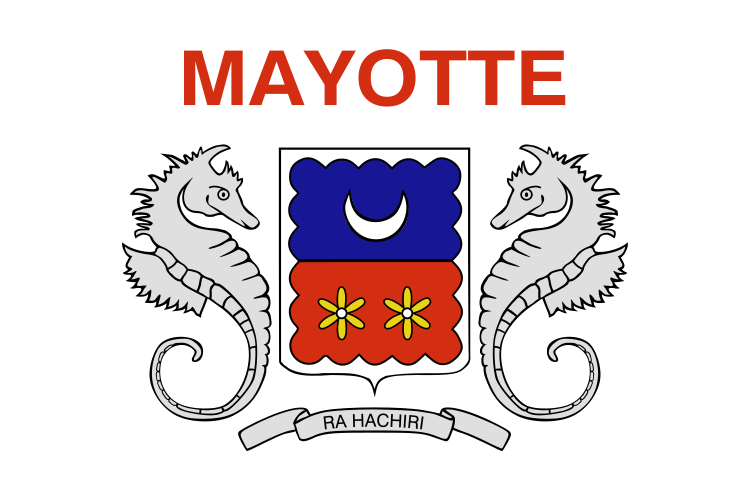
Mayotte
Location Info
- Continent: Africa
- Country: Mayotte
- Coordinates: -12.8275 , 45.1662
Trust Info
Verified Geographic Researcher Reviewed
🌍 Continents
Overview
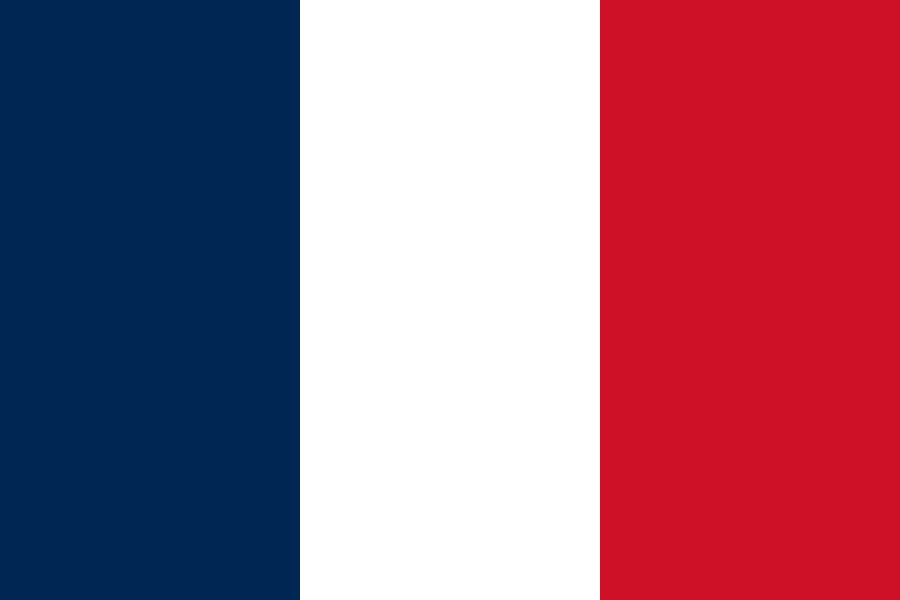
Mayotte is an overseas department and region of France located in the northern Mozambique Channel in the western Indian Ocean. Positioned between northwestern Madagascar and northeastern Mozambique, it is the oldest volcanic island in the Comoros archipelago. The territory consists of two main islands, Grande-Terre and Petite-Terre, along with several smaller islets, all enclosed by one of the largest coral lagoon systems in the world.
Historically, Mayotte opted to remain part of the French Republic during the 1974 decolonization referendums that saw the other Comorian islands gain independence. It officially became a French department in 2011 and an outermost region of the European Union in 2014. Today, Mayotte is characterized by a rapidly growing population, a unique blend of African, Arab, and French cultures, and an economy heavily supported by French public administration and agricultural exports.
Truth & Facts
| Total Land Area | 374 km² |
| Coastline Length | 185.2 km |
| Estimated Population | 347,536 |
| Median Age | 17.3 years |
| Status | Overseas Department (DOM) |
| Prefecture | Mamoudzou |
| Cession to France | 1843 |
| Departmentalization Referendum | 2009 |
| Currency | Euro (EUR) |
| Main Export | Ylang-Ylang Essence |
| Drinking Water Sources | Surface Water (64%) |
| University Institution | CUFR Mayotte |
| Main Hospital | Centre Hospitalier de Mayotte |
| Primary Religion | Sunni Islam |
| Highest Peak | Mount Benara (660m) |
| Marine Natural Park | Parc Naturel Marin de Mayotte |
| International Airport | Dzaoudzi–Pamandzi (DZA) |
| Internet TLD | .yt |
| Emergency Number | 17 (Police), 18 (Fire) |
| Head of Departmental Council | Ben Issa Ousseni |
| EU Status | Outermost Region |
| Electricity Provider | EDM (Électricité de Mayotte) |
| Total Fertility Rate | 4.4 children/woman |
| Staple Crops | Banana, Cassava, Rice |
| Iconic Mammal | Dugong |
📑 Table of Contents
Overview
Mayotte is a French overseas department and region located in the northern Mozambique Channel of the Indian Ocean. As a sovereign part of the French Republic and an outermost region of the European Union, it represents a strategic European outpost in Southeast Africa. The archipelago is composed of two primary islands, Grande-Terre and Petite-Terre, surrounded by a coral reef that encloses one of the world's largest lagoons.
- Official Name: Department of Mayotte
- Capital: Mamoudzou
- Sovereignty: France
- Total Area: 374 km²
- Time Zone: UTC+3 (EAT)
History
Mayotte's history is defined by its strategic position as a maritime crossroads. Originally settled by Bantu-speaking peoples and later influenced by Arab and Malagasy arrivals, the island became a sultanate in the 15th century. In 1841, Sultan Andriantsoly sold the island to France to protect it from neighboring raids, making Mayotte a French colony in 1843.
- 15th Century: Establishment of the Maore Sultanate.
- 1843: Mayotte becomes a French colony.
- 1974: Mayotte votes to remain French while Comoros gains independence.
- 2011: Status changed to Overseas Department.
- 2014: Becomes an EU Outermost Region.
Geography
Geologically, Mayotte is the oldest volcanic island in the Comoros archipelago, formed approximately 7.7 million years ago. Its terrain is characterized by ancient volcanic peaks, deep ravines, and fertile valleys. The island is entirely surrounded by a double barrier reef system, providing calm lagoon waters and diverse marine habitats.
| Feature | Details |
|---|---|
| Highest Point | Mount Benara (660 m) |
| Archipelago | Comoros Islands |
| Lagoon Size | 1,500 km² |
| Key Islets | Mtsamboro, Bandrélé |
Climate and Weather
Mayotte experiences a tropical marine climate with two distinct seasons. The hot and humid season runs from November to May during the northeastern monsoon, often bringing significant rainfall. The cooler, dry season lasts from May to November, characterized by southern winds and lower humidity.
- Hot Season: 24°C to 30°C average.
- Dry Season: 20°C to 25°C average.
- Annual Rainfall: High, exceeding 2,000mm in some areas.
- Natural Hazards: Potential for cyclones during summer months.
Population and Demographics
The population of Mayotte is remarkably young, with a median age of approximately 17 years. It is among the most densely populated regions of France. The demographic profile is primarily Mahoran, with significant communities of Comorian and Malagasy descent, alongside French expatriates.
- 2026 Estimate: 347,536 residents.
- Population Density: ~927 people per km².
- Official Language: French.
- Local Languages: Shimaore and Kibushi.
Culture and Lifestyle
Mahoran culture is a vibrant synthesis of African, Arab, and French influences. Islamic traditions play a central role in social structure and daily life, though they coexist with French legal and administrative frameworks. Traditional dances, such as the Deba and M'biwi, remain popular expressions of cultural identity.
- Religion: 95% Sunni Muslim.
- Social Structure: Influenced by matrilineal traditions.
- Arts: Traditional pottery and basketry.
- Dress: Salouva is the traditional wrap for women.
Festivals and Events
Events in Mayotte often revolve around the religious calendar and cultural celebrations. The Mahoran Cultural Festival is a key highlight, showcasing local music, crafts, and storytelling. Additionally, French national holidays are observed throughout the territory.
- Eid al-Fitr & Eid al-Adha: Major religious festivals.
- Bastille Day (July 14): National French holiday.
- Mayotte International Film Festival: Cultural exchange event.
- Whale Festival: Celebrating the arrival of humpback whales.
Food and Cuisine
Cuisine in Mayotte is based on local staples like cassava, plantains, and rice, heavily influenced by Swahili and French culinary techniques. Seafood is the primary protein source, often prepared with coconut milk and various spices including cloves and cinnamon.
- Mataba: Crushed cassava leaves cooked in coconut milk.
- M'tsolola: Fish or meat stew with green bananas.
- Rougail: Spicy condiment made with tomatoes and chili.
- Tropical Fruits: Coconuts, mangoes, and papayas are abundant.
Economy and Industries
Mayotte's economy is predominantly service-oriented, with the public sector accounting for over 60% of GDP. Agricultural exports, particularly ylang-ylang and vanilla, provide essential foreign revenue, while fishing and construction are growing local industries.
| Sector | Main Activity |
|---|---|
| Public Admin | Healthcare, Education, Infrastructure |
| Agriculture | Ylang-Ylang, Vanilla, Cinnamon |
| Fishing | Artisanal and Aquaculture |
| Retail | Imports from Metropolitan France |
Cost of Living
The cost of living in Mayotte is generally higher than in metropolitan France for imported goods due to high shipping costs and a specific local tax known as 'octroi de mer.' However, local produce and services can be more affordable.
- Currency: Euro (€).
- Imports: Most food and machinery are imported.
- Housing: High demand leads to elevated rental prices in urban centers.
- Utilities: Water and electricity costs are influenced by limited local resources.
Employment and Business
The labor market in Mayotte is characterized by a large public sector and a growing informal economy. Business regulations align with French law, including the 35-hour work week and the national minimum wage (SMIC), which has been gradually adjusted toward metropolitan levels.
- Major Employer: Government of France / Local Department.
- Business Structures: SARL, SAS, and Auto-entrepreneur models.
- Focus Areas: Construction, digital services, and renewable energy.
Real Estate and Housing
Housing in Mayotte is a mix of modern French-style urban developments and traditional informal settlements. The French government has launched several initiatives to modernize housing infrastructure and provide social housing to the expanding population.
- Urban Centers: Mamoudzou and Koungou.
- Informal Housing: Significant portion of the population lives in 'bangas'.
- Market Trends: High demand for secure, modern apartments for civil servants.
Transportation and Connectivity
Transport in Mayotte relies on a road network that encircles Grande-Terre and a vital ferry link (the Barge) between the two main islands. The Dzaoudzi-Pamandzi International Airport provides essential air links to France and regional neighbors.
- The Barge: Frequent passenger and vehicle ferry between Mamoudzou and Dzaoudzi.
- Taxi-Collectif: Primary mode of public land transport.
- Port of Longoni: Deep-water port for international shipping.
Infrastructure and Utilities
Modernizing infrastructure is a key priority for local authorities. This includes expanding water treatment plants, increasing electricity production via thermal and solar power, and improving waste management systems.
- Electricity: Provided by Électricité de Mayotte (EDM).
- Water: Managed via reservoirs and a desalination plant.
- Telecoms: 4G/5G coverage in main urban areas.
Education
The education system in Mayotte follows the French national model. However, high birth rates place significant pressure on school infrastructure, necessitating the constant construction of new classrooms and double-shift schedules in some areas.
- Primary/Secondary: Mandatory schooling from age 3.
- Higher Ed: University Center of Mayotte (CUFR).
- Challenges: Language barrier for students whose first language is Shimaore.
Healthcare
Healthcare is provided through the Centre Hospitalier de Mayotte (CHM) and a network of peripheral clinics. The system faces challenges from rapid population growth and high demand for maternity and pediatric services.
- Central Hospital: Located in Mamoudzou.
- Clinics: Distributed across municipalities for primary care.
- Aviation Medic: Used for evacuations to Réunion for specialized care.
Tourist Attractions
Mayotte's attractions are primarily centered on its natural beauty and unique biodiversity. The double barrier reef and vast lagoon offer world-class opportunities for diving and marine life observation.
- N'Gouja Beach: Known for swimming with green sea turtles.
- Mount Choungui: Iconic peak with 360-degree views.
- Lake Dziani: Emerald green crater lake on Petite-Terre.
- Whale Watching: Seasonal humpback whale migration (July-Oct).
Things to Do
Visitors and locals alike engage in activities focused on the lagoon and the island's mountainous interior. Hiking and water sports are the most popular recreational pursuits.
- Diving and Snorkeling: Exploring the barrier reef.
- Hiking: Ascending Mount Benara or the Saziley Peninsula.
- Lagoon Tours: Boat trips to white sand islets (Îlot de Sable Blanc).
- Kayaking: Exploring the mangrove forests.
Best Places to Visit
From the bustling markets of the capital to the serene beaches of the south, Mayotte offers diverse environments within its small land area.
- Mamoudzou: For culture, markets, and the main harbor.
- Petite-Terre: For the airport, Lake Dziani, and Moya Beach.
- Saziley National Park: For baobabs and secluded beaches.
- Mtsamboro Island: Famous for its oranges and fishing.
Travel Guide
Traveling to Mayotte requires planning due to its remote location. As a French department, entry requirements are similar to the Schengen Area for most, though Mayotte is not part of the Schengen zone itself.
- Entry: French/EU citizens only need an ID; others may need a visa.
- Transport: Car rentals are recommended for exploring Grande-Terre.
- Communication: French is essential for official business.
Nearby Places
Mayotte's closest neighbors are the other islands of the Comoros archipelago and Madagascar. Regional travel is mostly conducted via air from Pamandzi.
- Anjouan (Comoros): The closest neighboring island.
- Madagascar: Located to the southeast.
- Réunion: A major regional hub and another French department.
Environment and Nature
Mayotte is home to several endemic species and critical habitats. The terrestrial environment features dry forests and mangroves, while the marine environment is protected by a National Marine Park.
- Lemurs: The Mayotte brown lemur (Maki) is found throughout the island.
- Flora: Baobabs and ylang-ylang trees are common.
- Marine Life: Dugongs, dolphins, and manta rays inhabit the lagoon.
Government and Administration
Mayotte is governed as a single-department region. It is represented in the French Parliament by two deputies and two senators. Local government consists of 17 municipalities (communes).
- Prefect: The state representative appointed by Paris.
- Departmental Council: Manages local budgets and social services.
- European Representation: Part of the EU as an OMR.
Safety and Public Services
Public safety is managed by national French forces. While the island is generally safe, typical precautions regarding personal property are advised, particularly in crowded urban areas.
- Security: Gendarmerie Nationale and Police Nationale.
- Emergency Services: Fire and rescue (SAMU/SDIS) are available.
- Consular Services: Handled through the Prefecture.
Best Time to Visit
The best time to visit Mayotte depends on whether the traveler prefers hiking or marine life observation. Generally, the dry season is most comfortable for all activities.
- May to October: Cooler, drier weather; best for hiking.
- July to October: Peak whale-watching season.
- Avoid January to March: Peak cyclone risk and heavy rains.
Local Business Directory
The business landscape is centered in Mamoudzou and the industrial zone of Kawéni. Major companies include those in retail, logistics, and telecommunications.
- Retail: Jumbo Score and Sodifram are major supermarkets.
- Banking: BFC, BNP Paribas, and Credit Agricole.
- Telecoms: Orange, SFR, and Only.
General Information FAQs
Where is Mayotte located?
Mayotte is located in the Indian Ocean, in the northern part of the Mozambique Channel. It lies between the northern tip of Madagascar and the coast of Mozambique in East Africa.
What is Mayotte known for?
Mayotte is primarily known for its massive double barrier reef, its diverse marine life including sea turtles and whales, and being the 101st department of France.
Why is Mayotte famous?
It is famous for having one of the world's largest enclosed lagoons and for its unique political status as a French territory within the African geographic region.
What country or region is Mayotte part of?
Mayotte is an integral part of France (a French Overseas Department) and is located in the African region of the Indian Ocean.
What is the population of Mayotte?
As of early 2026 estimates, the population of Mayotte is approximately 347,536 people.
What languages are spoken in Mayotte?
French is the official language. However, most residents speak Shimaore (a Swahili dialect) or Kibushi (a Malagasy dialect) as their first language.
What time zone is Mayotte in?
Mayotte operates on East Africa Time (EAT), which is UTC+3.
What are the key facts about Mayotte?
Key facts include its 374 km² land area, its status as a volcanic island, its use of the Euro, and its high population density.
What makes Mayotte unique?
Its uniqueness stems from its rare double barrier reef system and the blend of French secular administration with traditional Islamic culture.
How large is Mayotte in area?
Mayotte has a total land area of 374 square kilometers (approximately 144 square miles).
History FAQs
What is the history of Mayotte?
Mayotte was originally a sultanate. It became a French protectorate in 1841 after being ceded by Sultan Andriantsoly and later became a full department of France in 2011.
When was Mayotte established?
The Maore Sultanate was established around 1500. French administration began in 1843.
What major historical events happened in Mayotte?
Key events include the 1843 cession to France, the 1974 referendum to remain French, and the 2011 transition to an overseas department.
Who were important historical figures from Mayotte?
Sultan Andriantsoly is notable for ceding the island to France; Zéna M'Déré was a leader of the 'Mahoraises' movement that campaigned to stay French.
How has Mayotte developed over time?
It has evolved from a traditional sultanate into a modern French department with significant infrastructure development funded by the European Union and France.
Geography & Environment FAQs
What is the geography of Mayotte?
Mayotte is a volcanic archipelago featuring hilly terrain, coral reefs, and mangroves. The main islands are Grande-Terre and Petite-Terre.
What natural features surround Mayotte?
The island is surrounded by a large coral lagoon and the deep waters of the Mozambique Channel.
Are there mountains, rivers, or lakes near Mayotte?
Yes, Mount Benara is the highest peak. There are several small rivers and the volcanic crater lake Dziani on Petite-Terre.
What is the elevation of Mayotte?
The elevation ranges from sea level to 660 meters at the summit of Mount Benara.
What ecosystems exist around Mayotte?
Ecosystems include tropical dry forests, extensive mangrove swamps, and a diverse coral reef lagoon.
Climate & Weather FAQs
What is the climate like in Mayotte?
Mayotte has a tropical marine climate, which is warm and humid for most of the year.
What is the average temperature in Mayotte?
Temperatures typically average between 24°C and 30°C throughout the year.
What is the weather like throughout the year in Mayotte?
There is a wet season from November to April and a dry, cooler season from May to October.
Does Mayotte experience extreme weather?
Yes, Mayotte can be subject to tropical cyclones and occasional droughts.
What is the best time of year to visit Mayotte?
The dry season, from May to October, is considered the best time due to lower humidity and pleasant temperatures.
Population & Society FAQs
What is the population density of Mayotte?
The density is approximately 927 people per square kilometer, making it very densely populated.
What ethnic groups live in Mayotte?
The population is primarily of Mahoran, Comorian, and Malagasy origin, with a smaller number of French from the mainland (Metropolitans).
What religions are practiced in Mayotte?
The vast majority (about 95%) of the population practices Sunni Islam, with a small Christian minority.
What is daily life like in Mayotte?
Daily life is a mix of traditional Mahoran customs and modern French administrative routines, with a strong focus on community and family.
How diverse is the population of Mayotte?
It is quite diverse within the context of the Indian Ocean, blending African, Arab, and European cultural elements.
Culture & Traditions FAQs
What cultural traditions are important in Mayotte?
Important traditions include religious festivals, traditional dances like the Deba, and the practice of matrilineal inheritance in many families.
What festivals are celebrated in Mayotte?
Religious holidays such as Eid and French national days like July 14th are the main celebrations.
What cultural landmarks exist in Mayotte?
Landmarks include the historic mosque at Tsingoni and the traditional administrative buildings in Dzaoudzi.
What traditional clothing or customs are common in Mayotte?
Women frequently wear the Salouva, a colorful two-piece traditional garment. Customs often involve communal meals and traditional music.
What arts and crafts are associated with Mayotte?
Basket weaving, pottery, and the production of aromatic oils like ylang-ylang are traditional crafts.
Food & Cuisine FAQs
What foods is Mayotte known for?
Mayotte is known for its seafood, tropical fruits, and dishes made with coconut milk and cassava.
What traditional dishes originate from Mayotte?
Mataba (cassava leaves) and M'tsolola (a green banana and fish stew) are iconic traditional dishes.
What are the best restaurants in Mayotte?
While dining varies, most popular restaurants are found in Mamoudzou and near the beaches of N'Gouja and Sakouli.
What local ingredients are commonly used in Mayotte cuisine?
Coconut, cassava, plantains, fresh fish, and spices like vanilla and cloves are staples.
What food markets or street foods are popular in Mayotte?
The Mamoudzou market is the main hub. Street foods include grilled meat (mabawa) and samoussas.
Economy & Business FAQs
What are the main industries in Mayotte?
Public administration, agriculture (perfume essences), fishing, and the building/construction sector are the main industries.
What economic activities drive the economy of Mayotte?
The economy is driven by French government spending, agricultural exports, and small-scale retail and services.
What businesses operate in Mayotte?
A mix of French national companies (banks, telecoms) and local small-to-medium enterprises in retail and logistics.
Is Mayotte an important economic center?
It is a regional hub in the Mozambique Channel, particularly for French and European interests in the area.
What are the major exports or products from Mayotte?
Ylang-ylang essence, vanilla, and farmed fish are the primary export products.
Employment & Jobs FAQs
What job opportunities are available in Mayotte?
Most opportunities are in the public sector (teaching, health, administration), construction, and retail.
What are the major employers in Mayotte?
The Prefecture, the Departmental Council, and large retail groups like Sodifram are the largest employers.
What skills are in demand in Mayotte?
Skills in construction, education, healthcare, and digital services are currently in high demand.
Is Mayotte a good place to work?
It offers unique professional challenges in a developing French department, though infrastructure and cost of living can be difficult factors.
What is the unemployment rate in Mayotte?
Official figures often indicate high unemployment, though a large portion of the population participates in the informal economy.
Cost of Living FAQs
Is Mayotte expensive to live in?
For imported goods and electricity, yes, it is often more expensive than mainland France.
What is the average cost of living in Mayotte?
It varies widely; local staples are cheap, but a European-style lifestyle with imported products is costly.
How much does housing cost in Mayotte?
Rent in urban Mamoudzou is high due to limited supply of modern, secure housing.
What are average food and utility costs in Mayotte?
Electricity and water are relatively expensive. Food costs depend on whether one buys local or imported French brands.
Is Mayotte affordable compared to nearby cities?
It is generally more expensive than cities in the Comoros or Madagascar due to its integration with the French economy.
Housing & Real Estate FAQs
What types of housing are available in Mayotte?
Housing ranges from modern concrete apartments and villas to traditional sheet-metal 'bangas'.
What is the average home price in Mayotte?
Modern villas in secure areas can be expensive, often exceeding prices in many provincial French cities.
Is it better to rent or buy property in Mayotte?
Most expatriates rent. Buying property can be complex due to traditional land tenure issues.
Which neighborhoods are popular in Mayotte?
Mamoudzou, Kawéni, and Petite-Terre are popular for accessibility and services.
How has the property market changed in Mayotte?
There has been a surge in construction of modern social housing and administrative buildings over the last decade.
Transportation FAQs
How do you get to Mayotte?
Primary access is by air to Dzaoudzi-Pamandzi International Airport, with flights mainly from Paris, Réunion, and Madagascar.
What is the nearest airport to Mayotte?
The only major airport is Dzaoudzi-Pamandzi International Airport (DZA).
Does Mayotte have railway connections?
No, there are no railways in Mayotte.
How reliable is public transportation in Mayotte?
Public transport consists of taxi-collectifs (shared minibuses), which are frequent but can be crowded and unscheduled.
What major highways or roads connect to Mayotte?
Main national roads (Route Nationale) connect the northern and southern tips of Grande-Terre.
Education FAQs
What schools are located in Mayotte?
There are numerous public primary and secondary schools (collèges and lycées) following the French curriculum.
Are there universities in Mayotte?
Yes, the Centre Universitaire de Mayotte (CUFR) in Dembeni provides higher education.
What is the literacy rate in Mayotte?
The literacy rate is lower than in mainland France but has been rising steadily with improved school attendance.
What educational opportunities exist in Mayotte?
Students can pursue vocational training or academic degrees locally or through grants to study in Réunion or France.
Is Mayotte a good place for students?
It offers localized higher education, though many students move to mainland France for specialized university studies.
Healthcare FAQs
What hospitals are available in Mayotte?
The main facility is the Centre Hospitalier de Mayotte (CHM) in Mamoudzou.
Are there emergency medical services in Mayotte?
Yes, the SAMU (Service d'Aide Médicale Urgente) provides emergency response.
What healthcare facilities exist in Mayotte?
Includes the main hospital, various dispensaries, and private pharmacies.
Is healthcare affordable in Mayotte?
Public healthcare is accessible and covered by the French social security system (with local adaptations).
Are specialized medical services available in Mayotte?
Some specialties are limited; complex cases are often transferred to Réunion.
Tourism & Travel FAQs
What are the top tourist attractions in Mayotte?
The double barrier reef, N'Gouja Beach, and Mount Choungui are the top sites.
What are the best things to do in Mayotte?
Diving, whale watching, and hiking to the peaks or crater lakes are highly recommended.
Is Mayotte worth visiting?
Yes, for travelers seeking authentic nature and world-class marine life without large crowds.
What landmarks should visitors see in Mayotte?
Mount Choungui, the Dziani crater lake, and the historic buildings of Dzaoudzi.
How many days should tourists spend in Mayotte?
A stay of 7 to 10 days is usually sufficient to see both main islands and explore the lagoon.
Nearby Places FAQs
What places are near Mayotte worth visiting?
The nearby islands of Comoros (Grand Comore, Mohéli, Anjouan) offer similar volcanic landscapes.
What cities or towns are close to Mayotte?
The nearest international cities are Moroni in Comoros and Mahajanga in Madagascar.
What natural attractions are near Mayotte?
The Mitsamiouli beaches in Comoros and the Nosy Be archipelago in Madagascar are close by.
What day trips can be taken from Mayotte?
Day trips are mostly limited to boat excursions around the islets within the lagoon, like Îlot de Sable Blanc.
What famous destinations are within reach of Mayotte?
Madagascar and Réunion Island are reachable via short flights.
Safety FAQs
Is Mayotte safe to live in?
Yes, though it faces social challenges and residents are advised to take standard safety measures against petty crime.
Is Mayotte safe for tourists?
Yes, tourists are generally safe, but should avoid walking alone at night in unlit areas or remote beaches.
What is the crime rate in Mayotte?
Petty crime and burglary are common issues; violent crime against tourists is rare.
What emergency services operate in Mayotte?
Police, Gendarmerie, and Fire services operate 24/7.
What safety tips should visitors follow in Mayotte?
Secure your belongings, use reputable transport, and stay updated on local weather alerts during cyclone season.
Lifestyle & Living FAQs
Is Mayotte a good place to live?
It offers a tropical lifestyle and unique cultural experience, though it requires adaptation to island logistics.
What recreational activities are available in Mayotte?
Mainly outdoor activities like snorkeling, hiking, and traditional communal celebrations.
Is Mayotte family-friendly?
Yes, the culture is very child-oriented and there are many family activities centered on the beach.
What outdoor activities are popular in Mayotte?
Pirogue racing, lagoon fishing, and forest trekking.
What makes life enjoyable in Mayotte?
The natural scenery, the warmth of the local community, and the slow pace of life.
Practical Information FAQs
What travel tips should visitors know about Mayotte?
Rent a car to explore Grande-Terre, carry cash for local markets, and learn a few words of Shimaore.
What local customs should visitors respect in Mayotte?
Dress modestly outside of beaches, ask before taking photos of people, and respect Islamic prayer times.
How accessible is Mayotte for international visitors?
It is relatively accessible via air from France, but international flight options are limited compared to larger hubs.
What services are available for tourists in Mayotte?
Hotels, car rentals, dive centers, and guided hiking tours are available.
What important information should travelers know before visiting Mayotte?
Mayotte is a malarial zone, so preventative measures are advised; also check current water supply status.