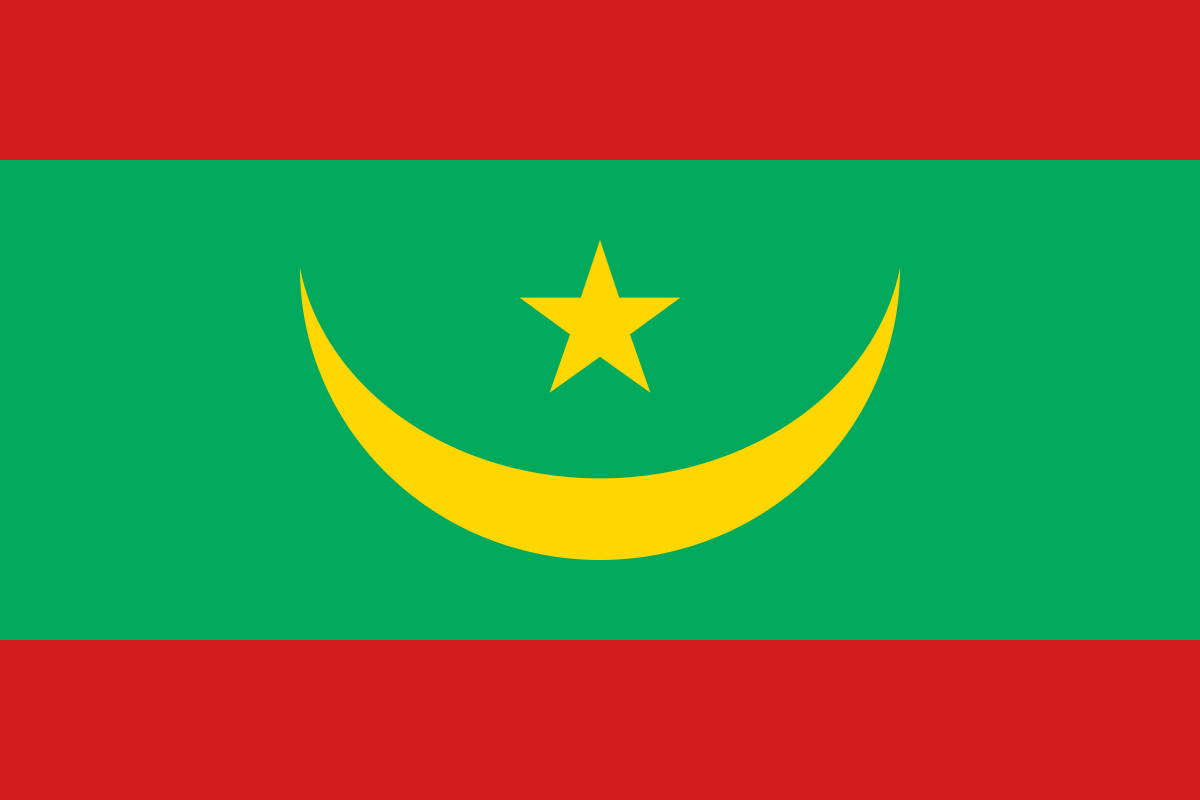
Mauritania
Location Info
- Continent: Africa
- Country: Mauritania
- Coordinates: 21.0079 , -10.9408
Trust Info
Verified Geographic and Statistical Information
🌍 Continents
Overview
Mauritania, officially the Islamic Republic of Mauritania, is a vast country situated in Northwest Africa. It serves as a geographic and cultural bridge between the Maghreb region of North Africa and sub-Saharan West Africa. Approximately three-quarters of its territory is covered by the Sahara Desert, with the Atlantic Ocean forming its western border and the Senegal River marking its southern boundary.
Historically, the region was a pivotal hub for trans-Saharan trade routes and the birthplace of the Almoravid Empire. Today, the nation’s economy is heavily reliant on its abundant natural resources, particularly iron ore, fisheries, and emerging offshore gas reserves. With its capital at Nouakchott, Mauritania maintains a unique social fabric composed of Arab-Berber and various West African ethnic groups.
Truth & Facts
| Total Area | 1,030,000 sq km |
| Highest Point | Kediet ej Jill (915 m) |
| Estimated Population | 4.9 million |
| Official Language | Arabic (Hassaniya) |
| Capital | Nouakchott |
| Number of Regions | 15 Wilayas |
| Independence Date | November 28, 1960 |
| Currency | Mauritanian Ouguiya (MRU) |
| Major Export | Iron Ore |
| Electricity Access | Approximately 48% |
| Main University | University of Nouakchott Al Aasriya |
| Life Expectancy | 65 years |
| Dominant Religion | Islam |
| UNESCO Sites | 2 |
| National Parks | Banc d'Arguin, Diawling |
| Longest Train | The Iron Ore Train |
| Internet Penetration | 58% |
| Emergency Number | 117 (Police) |
| Voting Age | 18 |
| Organizations | UN, AU, Arab League, OIC |
| Main Water Source | Aftout Es Saheli project |
| GDP Growth | 4.5% |
| Livestock Population | Over 20 million head |
| Official Newspaper | Chaab (Arabic/French) |
📑 Table of Contents
Overview
Mauritania is a sovereign state in Northwest Africa, bordered by the Atlantic Ocean to the west, Western Sahara to the north and northwest, Algeria to the northeast, Mali to the east and southeast, and Senegal to the southwest. It is a land of transition, merging the Arab-Berber cultures of the north with the diverse ethnic groups of sub-Saharan Africa.
The nation is largely desert-dominated, but its strategic coastal location has made it a significant player in the regional economy. The capital, Nouakchott, is home to a significant portion of the population and serves as the administrative and economic heart of the country.
History
The history of Mauritania is deeply rooted in trans-Saharan trade and Islamic scholarship. Between the 3rd and 7th centuries, the migration of Berber tribes brought the camel to the region, revolutionizing trade. In the 11th century, the Almoravid movement originated here, eventually spreading Islam across the Maghreb and into Spain.
- Arrival of Berber tribes and the camel (3rd-7th Century)
- The rise of the Almoravid Empire (1040)
- Expansion of trans-Saharan trade routes
- French colonial rule and the creation of French West Africa (1904)
- National independence gained in 1960
Geography
Mauritania's geography is defined by the Sahara Desert, which covers approximately 75% of the land. The terrain is mostly flat, with vast arid plains broken by occasional ridges and plateaus. The coast is largely sandy, with the exception of the Bay of Nouadhibou.
| Region | Primary Feature |
|---|---|
| North/Center | Sahara Desert / Adrar Plateau |
| South | Senegal River Valley / Sahel |
| West | Atlantic Coastal Plain |
Climate and Weather
The climate is predominantly hot and arid. Rainfall is minimal in the north, while the southern Senegal River valley receives seasonal monsoon rains between July and September. Dust-laden Harmattan winds are common during the dry season.
- Average summer temperatures: 32°C to 45°C
- Annual rainfall in the north: <100mm
- Annual rainfall in the south: 200mm to 500mm
- Humidity is higher along the Atlantic coast
Population and Demographics
Mauritania's population is a multicultural mix. The three main ethnic groups are the Bidhan (Moorish Arab-Berber), the Haratin (Arabic-speaking descendants of enslaved people), and the Afro-Mauritanian groups (Pulaar, Soninke, and Wolof).
- Total Population: ~4.9 Million
- Urbanization rate: ~55%
- Official Language: Modern Standard Arabic
- National Languages: Hassaniya, Pulaar, Soninke, Wolof
Culture and Lifestyle
Life in Mauritania is heavily influenced by Islamic traditions and nomadic heritage. Even in urban areas, social structures remain tied to tribal affiliations and family networks. Hospitality is a core value, often expressed through the traditional three-cup tea ceremony.
- Traditional attire: Daraa (men) and Melhafa (women)
- Social significance of the tea ceremony
- Strong oral tradition and poetry
- Traditional music using the Tidinit and Ardin
Festivals and Events
Religious holidays follow the Islamic lunar calendar and are the most significant events. National holidays celebrate independence and political milestones.
- Independence Day: November 28
- Eid al-Fitr: End of Ramadan
- Eid al-Adha: Feast of Sacrifice
- International Nomad Festival in Tichitt
Food and Cuisine
Mauritanian cuisine reflects both North African and West African influences. Dates and camel milk are staples in the desert, while fish is dominant on the coast. Thieboudienne (cheb-u-jen) is a popular rice and fish dish shared with Senegal.
- Thieboudienne: Rice and fish
- Méchoui: Roasted whole lamb
- Couscous: Wheat semolina with meat/veg
- Harira: Hearty soup
Economy and Industries
The economy is driven by mining and fishing. The state-owned SNIM operates one of the world's largest iron ore mines. Recent developments in offshore natural gas (GTA project) are expected to transform the national budget.
| Industry | Key Product |
|---|---|
| Mining | Iron Ore, Gold, Copper |
| Fishing | Octopus, Sardinella |
| Energy | Natural Gas, Solar |
Cost of Living
The cost of living in Mauritania is generally moderate compared to Western nations but high relative to local wages. Imported goods, especially electronics and certain food items, can be expensive due to logistics.
- Rent in Nouakchott: Moderate
- Local food: Affordable
- Fuel: Government subsidized but fluctuates
- Electricity: High in comparison to regional neighbors
Employment and Business
A large portion of the workforce is engaged in subsistence agriculture and livestock. The formal sector is dominated by mining, government services, and telecommunications.
- Major employers: SNIM, Tasiast Gold Mine, Government
- Increasing opportunities in the renewable energy sector
- Active informal trade network
Real Estate and Housing
Housing in urban areas like Nouakchott ranges from traditional villa-style homes to modern apartments. In rural areas, many people still live in traditional tents (Khaymas) or simple mud-brick houses.
- Expanding suburbs in Nouakchott (Tevragh Zeina)
- High demand for secure expat housing
- Growing investment in coastal property
Transportation and Connectivity
The most famous transport feature is the Iron Ore Train. Road networks connect the main cities, but many desert tracks require 4WD vehicles. Public transport consists mainly of shared taxis and buses.
- Iron Ore Train: Zouérat to Nouadhibou
- International Airports: Nouakchott-Oumtounsy
- Major Ports: Nouadhibou and Nouakchott
Infrastructure and Utilities
Infrastructure development is a government priority, with significant investments in water pipelines and solar energy plants. Internet and mobile coverage have improved drastically in the last decade.
- Aftout Es Saheli: Major water project
- Sheikh Zayed Solar Plant in Nouakchott
- Fiber optic backbone expansion
Education
The education system includes traditional Quranic schools (Mahadras) and a formal Western-style system. Higher education is centered in the capital.
- University of Nouakchott Al Aasriya
- Higher Institute of Professional Education
- Focus on increasing female enrollment
Healthcare
Public healthcare facilities are available in major cities, but rural access remains a challenge. Specialized care often requires travel to North Africa or Europe.
- National Hospital in Nouakchott
- Military Hospital services
- Improvement in maternal health indicators
Tourist Attractions
Mauritania offers unique desert landscapes and historical sites. The ancient desert cities (Ksour) are prime examples of medieval Saharan architecture.
- Chinguetti: The Seventh Holy City of Islam
- Banc d'Arguin National Park: UNESCO site
- Guelb er Richat: Eye of the Sahara
- Terjit Oasis
Things to Do
Activities in Mauritania are primarily focused on nature, history, and culture. Desert trekking and bird watching are among the most popular pursuits.
- Trekking the Adrar Plateau
- Riding the Iron Ore Train
- Bird watching in the Diawling National Park
- Surfing at Nouadhibou
Best Places to Visit
Beyond the capital, the interior and the coast offer the most striking experiences. Ancient cities provide a glimpse into the past, while the coast offers natural beauty.
- Chinguetti
- Nouadhibou
- Atar
- Oualata
Travel Guide
Travelers require a visa for most nationalities, which is usually obtainable on arrival. Respect for Islamic customs is mandatory. Travelers should monitor local news for safety updates regarding desert travel.
- Visa on arrival available at Nouakchott airport
- Respect local dress codes
- Alcohol is prohibited
Nearby Places
Mauritania is connected to its neighbors via road and air. The border with Senegal is a major trade crossing. Western Sahara is accessible via the northern border at Guerguerat.
- Saint-Louis, Senegal
- Dakhla, Western Sahara
- Bamako, Mali
Environment and Nature
Environmental challenges include desertification and overfishing. The Great Green Wall initiative is active in the south to combat the encroaching Sahara.
- Protection of the Atlantic coastline
- Conservation of the monk seal in Nouadhibou
- Management of the Senegal River ecosystem
Government and Administration
The administration is divided into 15 Wilayas. The President is the head of state and appoints the Prime Minister. The legal system integrates civil law with Islamic principles.
- Executive: President and Prime Minister
- Legislative: National Assembly
- Judicial: Supreme Court
Safety and Public Services
Security has improved significantly in recent years. The Gendarmerie and Police maintain order in urban areas, while the military secures border zones.
- Emergency services: 117 (Police), 118 (Fire)
- Low violent crime rates against foreigners
- Strict border controls
Best Time to Visit
The cooler months from November to March are the most pleasant for visiting. The summer months (May-September) are extremely hot and may see sandstorms.
- November to March: Cool and dry
- July to September: Rainy season in the south
- Avoid mid-summer for desert travel
Local Business Directory
Commercial activity is centered in Nouakchott and the port city of Nouadhibou. Major sectors include mining services, logistics, and retail.
- Chamber of Commerce of Mauritania
- Nouadhibou Free Zone Authority
- Banks: BCM, BMCI, Maurisbank
General Information FAQs
Where is Mauritania located?
Mauritania is located in Northwest Africa, bordered by the Atlantic Ocean, Senegal, Mali, Algeria, and Western Sahara.
What is Mauritania known for?
Mauritania is known for its vast Saharan landscapes, the ancient libraries of Chinguetti, iron ore mining, and the world's longest iron ore train.
Why is Mauritania famous?
It is famous for being a bridge between the Arab and African worlds and for its unique heritage as an Islamic Republic with deep nomadic roots.
What country or region is Mauritania part of?
Mauritania is part of the African continent and is traditionally considered part of the Maghreb and the Sahel regions.
What is the population of Mauritania?
As of 2024, the population of Mauritania is estimated to be approximately 4.9 million people.
What languages are spoken in Mauritania?
Arabic is the official language. Hassaniya is the common spoken dialect. Pulaar, Soninke, and Wolof are national languages, and French is used in business.
What time zone is Mauritania in?
Mauritania is in Greenwich Mean Time (GMT/UTC+0).
What are the key facts about Mauritania?
Key facts include its capital Nouakchott, its independence in 1960, and its economy's reliance on iron ore and fishing.
What makes Mauritania unique?
Its combination of vast Sahara desert dunes meeting the Atlantic coastline and its blend of Arab and West African cultures make it unique.
How large is Mauritania in area?
Mauritania covers an area of approximately 1,030,000 square kilometers, making it the 28th largest country in the world.
History FAQs
What is the history of Mauritania?
The history spans from ancient Neolithic settlements to the Almoravid Empire, followed by centuries of trans-Saharan trade and French colonial rule until 1960.
When was Mauritania established?
The modern state of Mauritania was established upon its independence from France on November 28, 1960.
What major historical events happened in Mauritania?
Major events include the Almoravid conquest, the Saharan slave trade era, French colonization, and the 1970s Western Sahara conflict.
Who were important historical figures from Mauritania?
Important figures include Moktar Ould Daddah (first president) and various religious scholars from the ancient Ksour cities.
How has Mauritania developed over time?
Mauritania has moved from a predominantly nomadic society to one with increasing urbanization and industrial focus on mining and energy.
Geography & Environment FAQs
What is the geography of Mauritania?
The geography consists mostly of flat desert plains, with some plateaus in the center and a fertile valley along the Senegal River in the south.
What natural features surround Mauritania?
Natural features include the Atlantic Ocean to the west, the Sahara Desert to the north/east, and the Senegal River to the south.
Are there mountains, rivers, or lakes near Mauritania?
The Senegal River is the primary river. There are no major permanent lakes. The Adrar and Tagant plateaus provide the highest elevations.
What is the elevation of Mauritania?
Most of the country lies between 200 and 500 meters. The highest peak is Kediet ej Jill at 915 meters.
What ecosystems exist around Mauritania?
Ecosystems include the hyper-arid Sahara, the semi-arid Sahelian savanna, and the rich coastal marine ecosystem of Banc d'Arguin.
Climate & Weather FAQs
What is the climate like in Mauritania?
The climate is desert-like: hot, dry, and windy. The south has a semi-arid climate with a short rainy season.
What is the average temperature in Mauritania?
Average temperatures range from 20°C in winter to over 40°C in peak summer months in the interior.
What is the weather like throughout the year in Mauritania?
Winter (Nov-Feb) is mild and pleasant. Summer (May-Oct) is extremely hot. Late summer brings occasional rain to the south.
Does Mauritania experience extreme weather?
Yes, Mauritania experiences severe droughts and frequent sandstorms (Harmattan).
What is the best time of year to visit Mauritania?
The best time to visit is between November and March when temperatures are cooler.
Population & Society FAQs
What is the population density of Mauritania?
Mauritania has a very low population density, with about 4.7 people per square kilometer.
What ethnic groups live in Mauritania?
The population includes Bidhan (Moors), Haratin, and Afro-Mauritanians (Pulaar, Soninke, Wolof).
What religions are practiced in Mauritania?
Islam is the official religion and is practiced by nearly 100% of the population.
What is daily life like in Mauritania?
Daily life is centered around family, religious practice, and social gatherings often involving traditional tea.
How diverse is the population of Mauritania?
Mauritania is highly diverse, serving as a crossroads between Arab-Berber and sub-Saharan African ethnicities.
Culture & Traditions FAQs
What cultural traditions are important in Mauritania?
Key traditions include nomadic hospitality, the tea ceremony, and the preservation of ancient Islamic manuscripts.
What festivals are celebrated in Mauritania?
Major festivals include the Islamic Eids, Independence Day, and cultural festivals in ancient cities like Chinguetti.
What cultural landmarks exist in Mauritania?
Significant landmarks include the Friday Mosque of Chinguetti, the ancient city of Oualata, and the stone structures of Tichitt.
What traditional clothing or customs are common in Mauritania?
Common clothing includes the blue or white Daraa for men and the colorful Melhafa for women.
What arts and crafts are associated with Mauritania?
Mauritania is known for intricate leatherwork, silver jewelry, and traditional weaving.
Food & Cuisine FAQs
What foods is Mauritania known for?
It is known for dates, camel milk, fish dishes, and roasted lamb (Méchoui).
What traditional dishes originate from Mauritania?
Dishes include Thieboudienne (rice and fish), Couscous, and various meat stews.
What are the best restaurants in Mauritania?
Most high-quality restaurants are in Nouakchott, serving Lebanese, French, and local cuisine.
What local ingredients are commonly used in Mauritania cuisine?
Common ingredients include millet, rice, dates, lamb, and a variety of Atlantic fish.
What food markets or street foods are popular in Mauritania?
Popular street foods include grilled meat skewers and small fried snacks found in the markets of Nouakchott.
Economy & Business FAQs
What are the main industries in Mauritania?
The main industries are mining (iron ore, gold), fishing, and livestock agriculture.
What economic activities drive the economy of Mauritania?
Extractive industries (mining) and the export of fish are the primary drivers of the GDP.
What businesses operate in Mauritania?
Major businesses include the national mining company SNIM, Tasiast (Kinross), and various telecommunications firms.
Is Mauritania an important economic center?
It is a regional leader in iron ore production and is becoming a significant player in the African natural gas market.
What are the major exports or products from Mauritania?
Major exports are iron ore, gold, copper, fish, and processed fish products.
Employment & Jobs FAQs
What job opportunities are available in Mauritania?
Jobs are primarily found in mining, fishing, government, and the growing energy sector.
What are the major employers in Mauritania?
The largest employers are the government and the Société Nationale Industrielle et Minière (SNIM).
What skills are in demand in Mauritania?
Technical skills in engineering, mining technology, and specialized fishing roles are in high demand.
Is Mauritania a good place to work?
It offers opportunities for specialists in extractive industries, though the living environment can be challenging for some.
What is the unemployment rate in Mauritania?
The unemployment rate typically fluctuates around 10-11%, with higher rates among the youth.
Cost of Living FAQs
Is Mauritania expensive to live in?
For expats, the cost of maintaining a Western standard of living can be relatively high due to imports.
What is the average cost of living in Mauritania?
The cost varies; local staples are cheap, while imported goods and electricity are relatively expensive.
How much does housing cost in Mauritania?
In Nouakchott, rent for a 2-bedroom apartment ranges from $400 to $1,000 depending on the neighborhood.
What are average food and utility costs in Mauritania?
A monthly grocery bill for one might be $200-$300. Utilities can be high due to air conditioning costs in summer.
Is Mauritania affordable compared to nearby cities?
It is generally more expensive than Dakar (Senegal) for imported items but cheaper in terms of local livestock products.
Housing & Real Estate FAQs
What types of housing are available in Mauritania?
Options include traditional villas, modern apartments in Nouakchott, and basic rural dwellings.
What is the average home price in Mauritania?
Home prices in upscale Nouakchott can exceed $200,000, while smaller homes in other towns are significantly cheaper.
Is it better to rent or buy property in Mauritania?
Most expatriates and short-term workers choose to rent. Buying is common among the local population.
Which neighborhoods are popular in Mauritania?
Tevragh Zeina in Nouakchott is the most prestigious neighborhood, hosting many embassies and businesses.
How has the property market changed in Mauritania?
The market has seen rapid growth in Nouakchott as the city expands and infrastructure improves.
Transportation FAQs
How do you get to Mauritania?
Most international visitors arrive via Nouakchott-Oumtounsy International Airport.
What is the nearest airport to Mauritania?
The main hub is Nouakchott (NKC). Nouadhibou (NDB) also has an airport for regional flights.
Does Mauritania have railway connections?
There is one railway line connecting the mining center of Zouérat to the port of Nouadhibou.
How reliable is public transportation in Mauritania?
Intercity buses and shared taxis are reliable but can be uncomfortable for long journeys.
What major highways or roads connect to Mauritania?
The Trans-African Highway 1 (Cairo-Dakar) runs along the coast of Mauritania.
Education FAQs
What schools are located in Mauritania?
There are numerous public primary and secondary schools, alongside private international schools in the capital.
Are there universities in Mauritania?
Yes, the University of Nouakchott Al Aasriya is the primary institution for higher education.
What is the literacy rate in Mauritania?
The literacy rate is approximately 67%, with higher rates among the younger generation.
What educational opportunities exist in Mauritania?
Opportunities exist in vocational training for mining and fishing, as well as traditional Islamic studies.
Is Mauritania a good place for students?
It is a hub for students of Islamic theology and Arabic language from across the region.
Healthcare FAQs
What hospitals are available in Mauritania?
Major hospitals include the Centre Hospitalier National and the Hopital Militaire in Nouakchott.
Are there emergency medical services in Mauritania?
Emergency services are limited outside the major urban centers.
What healthcare facilities exist in Mauritania?
Facilities include public hospitals, regional health clinics, and a growing number of private clinics in the capital.
Is healthcare affordable in Mauritania?
Public healthcare is subsidized, but patients often have to pay for medicines and certain supplies.
Are specialized medical services available in Mauritania?
Basic specialized services are available in Nouakchott, but complex cases are often referred abroad.
Tourism & Travel FAQs
What are the top tourist attractions in Mauritania?
Top attractions include Chinguetti, Banc d'Arguin National Park, and the Adrar mountains.
What are the best things to do in Mauritania?
Things to do include desert trekking, visiting ancient libraries, and fishing in the Atlantic.
Is Mauritania worth visiting?
For travelers interested in untouched desert landscapes and deep history, it is a highly rewarding destination.
What landmarks should visitors see in Mauritania?
The Mosque of Chinguetti and the monolith of Ben Amera are must-see landmarks.
How many days should tourists spend in Mauritania?
A typical tour of the highlights takes between 7 and 10 days.
Nearby Places FAQs
What places are near Mauritania worth visiting?
Saint-Louis in Senegal and the coastal city of Dakhla in Western Sahara are popular nearby destinations.
What cities or towns are close to Mauritania?
Rosso (on the Senegal border) and Zouérat (in the north) are major nearby towns.
What natural attractions are near Mauritania?
The Senegal River Delta and the vast dunes of the Sahara extending into Mali and Algeria.
What day trips can be taken from [Location]?
From Nouakchott, one can take a day trip to the beach at Les Terrasses or local fishing ports.
What famous destinations are within reach of Mauritania?
The Canary Islands and Morocco are accessible via short flights from Nouakchott.
Safety FAQs
Is Mauritania safe to live in?
Nouakchott and Nouadhibou are generally safe for residents, though standard urban safety precautions apply.
Is Mauritania safe for tourists?
Yes, but tourists are advised to stay within recognized travel corridors and avoid remote border areas.
What is the crime rate in Mauritania?
Violent crime is low; petty theft in crowded markets is the most common concern.
What emergency services operate in Mauritania?
The Police, Gendarmerie, and Protection Civile (Fire/Rescue) are the primary emergency services.
What safety tips should visitors follow in Mauritania?
Travel with a guide in the desert, carry identification, and respect local religious customs.
Lifestyle & Living FAQs
Is Mauritania a good place to live?
It offers a unique, slow-paced lifestyle for those who appreciate desert culture and quiet environments.
What recreational activities are available in Mauritania?
Recreation includes fishing, desert excursions, and social visits.
Is Mauritania family-friendly?
The culture is very family-oriented, though recreational facilities for children are limited in urban areas.
What outdoor activities are popular in Mauritania?
Dune bashing, camel riding, and coastal camping are popular.
What makes life enjoyable in Mauritania?
The strong sense of community and the dramatic, serene beauty of the natural environment.
Practical Information FAQs
What travel tips should visitors know about Mauritania?
Always carry cash (Ouguiya), as credit card acceptance is limited outside major hotels.
What local customs should visitors respect in Mauritania?
Dress modestly, avoid eating in public during Ramadan, and always ask before taking photos of people.
How accessible is Mauritania for international visitors?
Accessibility is improving with more flights from Europe and Africa, though interior travel requires planning.
What services are available for tourists in Mauritania?
Tour operators in Atar and Nouakchott provide guides, 4x4 rentals, and desert camp arrangements.
What important information should travelers know before visiting?
Mauritania is a dry country (alcohol is banned), and the climate can be physically taxing due to heat and dust.